Tag: Arun Jaitley

  • Media and entertainment industry hails Union Budget 2017

    Media and entertainment industry hails Union Budget 2017

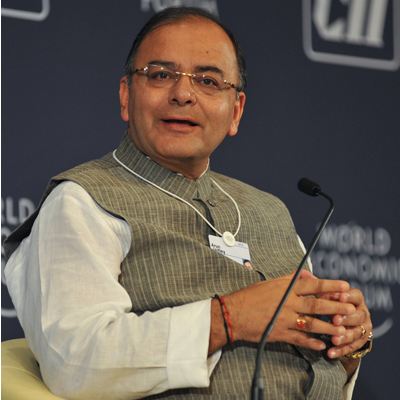
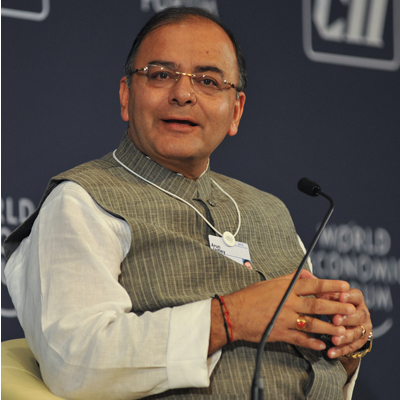
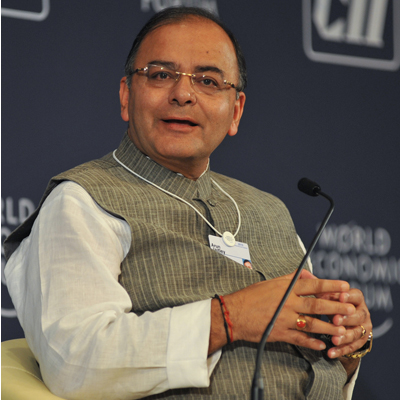
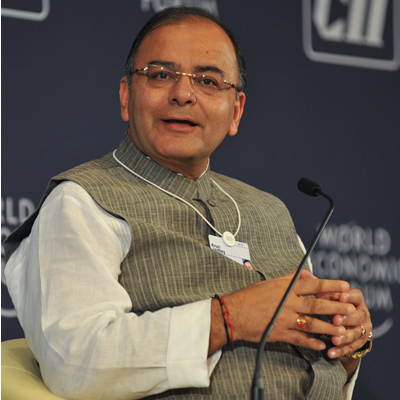
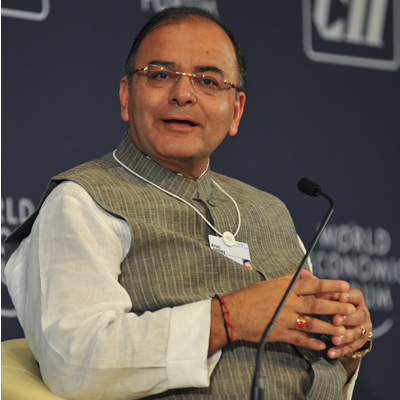
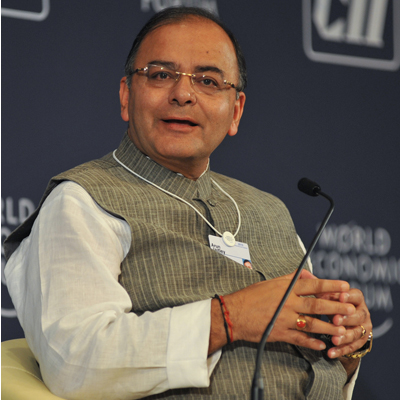
    MUMBAI: On 1 February, the finance minister Arun Jaitley made significant announcements during the presentation of the Union Budget 2017. Although, there was no specific mention of measures for the media and entertainment industry, certain steps which have been taken to boost the economy have been appreciated by the industry, but it also disappointed some.

    The budget 2017 mainly focused on boosting the infrastructure and lifting rural income besides bringing in reforms in the financial sector such as the abolition of the Foreign Investment Promotion Board (FIPB) so as to facilitate a new policy for foreign direct investment (FDI). The budget also focused on digitisation — allocating Rs 10, 000 crore to boost the rural fibre optics network, which came as a great news for many in the media and broadcast industry.

    Indiantelevision.com reached out to several industry stalwarts to find out how they interpreted the Union Budget 2017. Here’s what they had to say:

    Viacom18 group CEO and CII Media and Entertainment Committee chairman Sudhanshu Vats said, “Much had been speculated about the economic slowdown post demonetisation. With this budget, the government has taken important steps to boost the economy in a structured manner, building on the promise of transparent growth. Steps to liberalise the FDI regime further coupled with the abolishing of FIPB and tax reforms for MSMEs are bound to have impact in the foreseeable future. This budget has seen some positive solutions to tackle poverty in our country including one of the highest allocation of funds to MNREGA and rationalisation of rate for the lower personal tax slabs. I am particularly enthused by the strong reforms push for digitization and look forward to digital transactions increasing in the country. This also augurs well for digital consumption of video content. The move to cap political donations in cash at Rs 2000 and all-cash transactions at Rs 300,000 are also much-needed, bold steps that are in line with the government’s commitment to uprooting corruption. With Swaach Bharat being close to our hearts, the budget has built further on this theme in a welcome move. I’ve said this before and will say it again: as the M&E sector we have a lot to gain from buoyance in the economy at the aggregate level and I believe this Budget has delivered on that front.”

    Zee Entertainment Enterprises Limited (ZEEL) MD and CEO Punit Goenka stated, “Budget 2017 speaks a lot about the government’s positive and committed approach towards creating a stronger and balanced economy. Being directionally right and focused on spending in growth-centric areas, it clearly reassures the fact that remonetisation is in.”

    Times Network MD and CEO M K Anand said, “After the recent massive policy implementation of demonetisation, my expectation was of some radical reforms. I was a bit disappointed on that count. However, enhanced provision for MNREGA and allocations for rural, agriculture and allied sector and a clear push for the affordable housing sectors is the silver lining. Agriculture and real estate are the most important employment generating sectors in India. This should improve the rural situation which is still recovering from demonetisation. Hopefully, that will have a ripple effect on spending and the larger economy.”

    Says ABP COO Avinash Pandey, “The Union Budget 2017 was disappointing as far as the expected incentive for the broadcast business is concerned. Service tax remains the same. Most importantly, there is no parity with the print sector. The ‘wow’ factor was missing (in the budget) as far as the business is concerned. Disposable income is going to increase, and hence the quantum of spending. Economy may revive after the implementation of the budget.”

    Network 18 president revenue and Forbes India CEO Joy Chakraborthy is hopeful, saying, “We are seeing it as a positive budget. The budget is going to help consumption. Significant measures to improve electrification is eventually going to help the television industry. The general sentiment is that it is, overall a positive budget. Once people start spending money, consumption will be there and subsequently advertising too will follow.”

    Says, BBC Worldwide – ‎BBC Worldwide India South East Asia and South Asia SVP and GM Myleeta Aga, “Overall a positive popular budget with personal income tax changes in line with the government’s declared intention to collect more taxes from the rich and reduce the tax burden on the middle income group.”

    She added, “I was particularly encouraged to hear that the GST roll out will not be delayed. Operationally, for the production business, this will complicate working across states but this disruption should be temporary. Continued emphasis on the digital economy and increasing digital transactions will boost growth of e-commerce.”

    SAB group CEO Manav Dhanda said, “Overall, there has been positives for the media and entertainment sector post the Union Budget. As digitization is the next big thing now, the end of March 2018 will see a great growth for digital video consumption across OTT. The youth can now have great opportunities laid for them by initiating the skill India mission that aims to start 100 India International centres. Also, since digitization is on a high, setting up high speed internet in 1.50 Lakh Gram Panchayat is a good move and will give a boost to internet penetration in India. There is no increase service tax by the government and is a positive outcome particularly for the M&E sector, a stable and positive fiscal situation is good for the economy which will also give an impetus to our advertising sales projections. Increased public spending through various schemes and focus on infrastructure investments should further help to accelerate economic growth. The economy seems to have being slowing down since demonetisation, impacting almost all sectors and one hopes this budget to act as a catalyst to propel the growth in the media sector as well.”

    KPMG India partner tax Naveen Aggarwal said, “The Budget was based on broad themes of curbing black money, boosting individual spending, ensuring transparency and providing much needed impetus to agricultural and rural sector, infrastructure and digital economy.”

    He added, “While the announcement to abolish FIPB in light of successful e-governance was surprising, further liberalisation in FDI policy will be keenly watched in context of M&E industry. Lastly, the FM provided much needed assurance on roll-out of GST as per schedule, confirming GST council finalising majority of its recommendations.”

    He further added, “Similar to last two years, the Budget did not bring much respite or specific announcements benefiting M&E industry. While the expectation of overall reduction in corporate tax rate and abolition of MAT was given a miss, the proposal to reduce corporate tax rate for MSMEs to 25% (having turnover up to Rs 50 crore) and increasing the MAT credit entitlement (from 10 to 15 years) is a welcome move and will benefit medium scale service companies in M&E sector.”

  • FM wants DTH to help Swayam, industry skeptical

    FM wants DTH to help Swayam, industry skeptical

    NEW DELHI: The Government today said linkage to direct to home platforms would help widen the Swayam platform to be launched with at least 350 online courses. 

    Finance Minister Arun Jaitley in his budget for 2017-18 said this would enable students to virtually attend the courses taught by the best faculty; access high quality reading resources; participate in discussion forums; take tests and earn academic grades.

    He noted that access to Swayam would be widened by linkage with DTH channels, dedicated to education.

    However, sources in the DTH industry told indiantelevision.com that the implications of this would have to be seen as it was not clear whether the linkage had any monetary aspect to it.

    Also Read:

    DTH channels being launched by September to impart education: Javadekar

    Only Dish TV carrying HRD ministry’s educational TV channels

    PSLV-C34 successfully launches 20 satellites in a single flight

  • FM wants DTH to help Swayam, industry skeptical

    FM wants DTH to help Swayam, industry skeptical

    NEW DELHI: The Government today said linkage to direct to home platforms would help widen the Swayam platform to be launched with at least 350 online courses. 

    Finance Minister Arun Jaitley in his budget for 2017-18 said this would enable students to virtually attend the courses taught by the best faculty; access high quality reading resources; participate in discussion forums; take tests and earn academic grades.

    He noted that access to Swayam would be widened by linkage with DTH channels, dedicated to education.

    However, sources in the DTH industry told indiantelevision.com that the implications of this would have to be seen as it was not clear whether the linkage had any monetary aspect to it.

    Also Read:

    DTH channels being launched by September to impart education: Javadekar

    Only Dish TV carrying HRD ministry’s educational TV channels

    PSLV-C34 successfully launches 20 satellites in a single flight

  • Guest Column: The ‘make or break’ budget

    Guest Column: The ‘make or break’ budget

    The recent cash ban has sucked a lot of momentum out of one the world’s fastest growing economy. Finance Minister Arun Jaitley is meticulously examining ways which can boost the slumping economy, as a result of s. No budget is effortlessly manageable, but 2017 is certainly taking challenges to a new high with several global and national factors to take note of.

    Arun Jaitley should be immaculately prepared as this is one of the most awaited budgets ever, in the history of India. The fourth budget of the NDA term, this budget demands to be the beautiful balance of crisis management and future prospectus. The government, a couple of months ago was of the notion that they will be able to reap a humongous amount of money as unreturned old currency notes. In the government’s perspective, this sum could have been later invested in infrastructural development along with other progressive measures. This plan seems to have misfired with a huge chunk of ‘unamounted’ currency finding its way back to the banks. This concern has to be dealt with caution, immediately.

    One factor that can be attributed to the demonetisation effect is the increased collection of direct taxes. This may further culminate in more of such fraudulent cases giving into the pressure and larger chunks of money being deposited in the banks as some kind of income.

    Expectations are riding high as government may benefit the salaried class by increasing the margin of the income tax slab. Taking into consideration the existing miniature base of the tax payers in the country, many experts have warned the government against taking such a move.

    The government clearly has to strike a balance between staying loyal to the fiscal deficit roadmap and borrowing large amounts to spend on improving the economy. As a nation that’s pacing towards becoming a global power, the minister will have to bring down the fiscal deficit to three per cent of GDP in FY18 to maintain the stability. Many have observed based on the current scenario that the government may announce a target of 3.5 per cent which is slightly more achievable.

    By far, the hardest challenge would be to make up for the crack caused by the private sector’s unwillingness to invest in the economy due to debt-heavy balance sheets and insufficient demand. Also, scrapping the fiscal plans would require exaltation by rating agencies will need time to be set up. The alternative would not be a cakewalk either; not loosening the grip on fiscal deficit could weaken demand in the economy more.

    For capital markets, it’s a mixed scenario. On a positive note, there might be some extra incentives for new investors in equity markets. But as a flipside, it is being assumed that the government may increase the threshold for long term capital gains to three years from the current one year. The current system favors long term investors as they do not have to pay long term capital gains when they sell. This privilege is often taken advantage of by several high net worth individuals to launder their unaccounted income, by counterfeiting long term capital gains.

    Prime Minister Narendra Modi mentioned that the financial markets must make a fair contribution to nation-building through taxes and we are looking forward to a revolutionary budget that’s inclusive of all.

    public://Untitled-3_11.jpg

    (Santosh Nair is the editor of Moneycontrol. The views expressed here are personal, and Indiantelevision.com need not necessarily subscribe to them)

  • Guest Column: The ‘make or break’ budget

    Guest Column: The ‘make or break’ budget

    The recent cash ban has sucked a lot of momentum out of one the world’s fastest growing economy. Finance Minister Arun Jaitley is meticulously examining ways which can boost the slumping economy, as a result of s. No budget is effortlessly manageable, but 2017 is certainly taking challenges to a new high with several global and national factors to take note of.

    Arun Jaitley should be immaculately prepared as this is one of the most awaited budgets ever, in the history of India. The fourth budget of the NDA term, this budget demands to be the beautiful balance of crisis management and future prospectus. The government, a couple of months ago was of the notion that they will be able to reap a humongous amount of money as unreturned old currency notes. In the government’s perspective, this sum could have been later invested in infrastructural development along with other progressive measures. This plan seems to have misfired with a huge chunk of ‘unamounted’ currency finding its way back to the banks. This concern has to be dealt with caution, immediately.

    One factor that can be attributed to the demonetisation effect is the increased collection of direct taxes. This may further culminate in more of such fraudulent cases giving into the pressure and larger chunks of money being deposited in the banks as some kind of income.

    Expectations are riding high as government may benefit the salaried class by increasing the margin of the income tax slab. Taking into consideration the existing miniature base of the tax payers in the country, many experts have warned the government against taking such a move.

    The government clearly has to strike a balance between staying loyal to the fiscal deficit roadmap and borrowing large amounts to spend on improving the economy. As a nation that’s pacing towards becoming a global power, the minister will have to bring down the fiscal deficit to three per cent of GDP in FY18 to maintain the stability. Many have observed based on the current scenario that the government may announce a target of 3.5 per cent which is slightly more achievable.

    By far, the hardest challenge would be to make up for the crack caused by the private sector’s unwillingness to invest in the economy due to debt-heavy balance sheets and insufficient demand. Also, scrapping the fiscal plans would require exaltation by rating agencies will need time to be set up. The alternative would not be a cakewalk either; not loosening the grip on fiscal deficit could weaken demand in the economy more.

    For capital markets, it’s a mixed scenario. On a positive note, there might be some extra incentives for new investors in equity markets. But as a flipside, it is being assumed that the government may increase the threshold for long term capital gains to three years from the current one year. The current system favors long term investors as they do not have to pay long term capital gains when they sell. This privilege is often taken advantage of by several high net worth individuals to launder their unaccounted income, by counterfeiting long term capital gains.

    Prime Minister Narendra Modi mentioned that the financial markets must make a fair contribution to nation-building through taxes and we are looking forward to a revolutionary budget that’s inclusive of all.

    public://Untitled-3_11.jpg

    (Santosh Nair is the editor of Moneycontrol. The views expressed here are personal, and Indiantelevision.com need not necessarily subscribe to them)

  • Budget ’17: OTT players hoping for tax rationalisation to boost growth

    Budget ’17: OTT players hoping for tax rationalisation to boost growth

    MUMBAI: 2016 was indeed a critical year for the over-the-top (OTT) services in India. In an emerging market like India, the potential of more content consumption is certainly a reality. Increasing availability of smart phones, internet penetration, affordable data rates, 4G rollout, availability of good quality content and new entrants have led the OTT industry to bloom in 2016 and the trend is likely to continue. But the segment players are also looking up to the government for a clearer economic roadmap after the shockwaves of demonestisation.

    “The entertainment industry has always been on the forefront of economic contribution. Though it is expected that GST rollout (as and when it happens later this year) would bring about more uniformity in the system of paying multiple taxes, it is also expected that finance minister Arun Jaitley will announce reforms, which will help control piracy issues in the country and help boost video on demand market in India,” said Muvizz.com COO and co-founder Abhayanand Singh.

    Zee’s business head of digital for India Archana Anand opined that 2016 will go down as the year in which the wheels were set in motion for the growth of OTT. According to her, OTT platforms likely to become the go-to source of entertainment in the coming years, particularly for the millennials, who do not have easy access to a TV set and for whom it’s really about the content and not the size of the screen. But for that economic incentives are also needed from the government.

    Echoing similar views, Web Talkies chairman and managing director Virendra Shahaney asserted the government needs to beef up digital infrastructure like Internet and faster implementation of free wi-fi projects. “A relaxed taxation policy for start-ups would be welcome and tax breaks for start-ups should increase to five years with a significant improvement in ease of doing business,” he added.

    Pointing out that India downloaded six billion apps in 2016 making service usage the highest globally, Dekkho co-founder Tanay Desai said ,”The BHIM app has been downloaded 10 million times already indicating a healthy potential payment pipeline. GST will aid online payments for users as well as brands by reducing tax barriers across states in India and the industry looks forward to additional (tax) relaxation measures in the upcoming Budget.”

    Also Read:

    Budget ’17: Media segments seek succour, digital direction from govt

  • Budget ’17: OTT players hoping for tax rationalisation to boost growth

    Budget ’17: OTT players hoping for tax rationalisation to boost growth

    MUMBAI: 2016 was indeed a critical year for the over-the-top (OTT) services in India. In an emerging market like India, the potential of more content consumption is certainly a reality. Increasing availability of smart phones, internet penetration, affordable data rates, 4G rollout, availability of good quality content and new entrants have led the OTT industry to bloom in 2016 and the trend is likely to continue. But the segment players are also looking up to the government for a clearer economic roadmap after the shockwaves of demonestisation.

    “The entertainment industry has always been on the forefront of economic contribution. Though it is expected that GST rollout (as and when it happens later this year) would bring about more uniformity in the system of paying multiple taxes, it is also expected that finance minister Arun Jaitley will announce reforms, which will help control piracy issues in the country and help boost video on demand market in India,” said Muvizz.com COO and co-founder Abhayanand Singh.

    Zee’s business head of digital for India Archana Anand opined that 2016 will go down as the year in which the wheels were set in motion for the growth of OTT. According to her, OTT platforms likely to become the go-to source of entertainment in the coming years, particularly for the millennials, who do not have easy access to a TV set and for whom it’s really about the content and not the size of the screen. But for that economic incentives are also needed from the government.

    Echoing similar views, Web Talkies chairman and managing director Virendra Shahaney asserted the government needs to beef up digital infrastructure like Internet and faster implementation of free wi-fi projects. “A relaxed taxation policy for start-ups would be welcome and tax breaks for start-ups should increase to five years with a significant improvement in ease of doing business,” he added.

    Pointing out that India downloaded six billion apps in 2016 making service usage the highest globally, Dekkho co-founder Tanay Desai said ,”The BHIM app has been downloaded 10 million times already indicating a healthy potential payment pipeline. GST will aid online payments for users as well as brands by reducing tax barriers across states in India and the industry looks forward to additional (tax) relaxation measures in the upcoming Budget.”

    Also Read:

    Budget ’17: Media segments seek succour, digital direction from govt

  • CNN-News18’s ‘Axe The Tax’ to present wishlist to FM

    CNN-News18’s ‘Axe The Tax’ to present wishlist to FM

    MUMBAI: CNN-News18 through its budget programming #BudgetAfterDeMo will endeavour to look at expectations from different sections of society from Budget 2017 with special emphasis on decoding and analysing the impact of demonetisation.

    Post demonetisation, people, in general, are expecting major tax sops from finance minister Arun Jaitley. CNN-News18 provides a platform to the viewers to voice their expectations on various taxation policies from the Union Budget through its award-winning show, Axe The Tax.

    The show will air on 28 January at 7:30 pm and on 29 January at 1:30 pm.

    This special campaign of the channel, which as completed 10 years, will present six key suggestions to the finance minister this year for changes to the country’s taxation rules. The suggestions will be based on viewer’s feedback and from consultations with top tax analysts.

    In the past, many of the suggestions have found mention in the Union Budget thus making it a truly impactful and effective initiative.

  • CNN-News18’s ‘Axe The Tax’ to present wishlist to FM

    CNN-News18’s ‘Axe The Tax’ to present wishlist to FM

    MUMBAI: CNN-News18 through its budget programming #BudgetAfterDeMo will endeavour to look at expectations from different sections of society from Budget 2017 with special emphasis on decoding and analysing the impact of demonetisation.

    Post demonetisation, people, in general, are expecting major tax sops from finance minister Arun Jaitley. CNN-News18 provides a platform to the viewers to voice their expectations on various taxation policies from the Union Budget through its award-winning show, Axe The Tax.

    The show will air on 28 January at 7:30 pm and on 29 January at 1:30 pm.

    This special campaign of the channel, which as completed 10 years, will present six key suggestions to the finance minister this year for changes to the country’s taxation rules. The suggestions will be based on viewer’s feedback and from consultations with top tax analysts.

    In the past, many of the suggestions have found mention in the Union Budget thus making it a truly impactful and effective initiative.

  • High profile executive departures in 2016

    High profile executive departures in 2016

    MUMBAI/NEW DELHI: As the year comes to a close, let’s take a dekko at the major parting of ways between individuals and companies and also in companies themselves that hit the Indian broadcast, cable, satellite TV sectors. The list is definitely not comprehensive but the effort has been to try and cover what we at indiantelevision.com consider major split ups, including in the government.

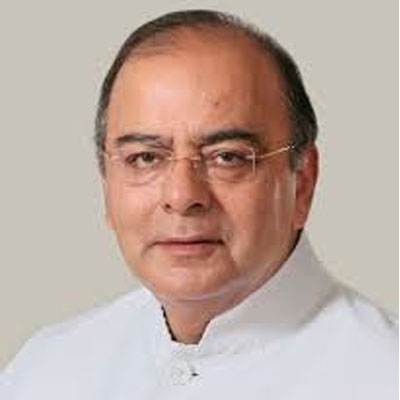
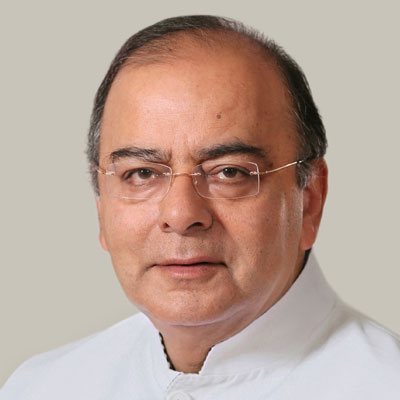
    Arun Jaitley: One of the most powerful politicians in the country was entrusted by PM Modi some very important portfolios when the BJP-led government came to power mid-2014.

    In a cabinet reshuffle in November 2014, Jaitley was also handed the important ministry of information & broadcasting (MIB) and he headed three ministries at one time, including the all-powerful Ministry of Finance.

    However mid-2016, MIB was handed to M. Venkaiah Naidu. Critics said it was PM’s way of sending a message to Jaitley, but with three ministries under him, it was asking too much from the man even as brilliant as he is. Jaitley retains the portfolios of  Corporate Affairs and Finance — and, probably, could turn out to be PM Modi’s best lieutenant in the all-out war on black economy declared via  demonetisation of high-value currency notes and other proposed measures .  

    Jawhar Sircar: A senior bureaucrat-academecian, he quit the government to take up in 2012 the challenging post of CEO of India’s pubcaster Prasar Bharati, overseeing the monolithic Doordarshan and the widely-reached All India Radio.

    An outspoken person and a hard taskmaster, Sircar attempted to bring about a revolution in Prasar Bharati’s way of functioning and improve its revenue and reach.

    Partially successful, he met with lot of resistance trying to change a slothful giant. In private, he admitted that what frustrated him was that the pubcaster is manned by a bunch corrupt, no-good, job-for-life-security-seeking blokes, who wanted to retain the status quo.

    With his tenure scheduled to end in first quarter of 2017, a “tired” Sircar (as per his own admissions on social media) finally threw in the towel and sought early retirement in October 2016, which was granted by the government. Sircar returned to his home base in Kolkata to lead a  retired life and giving talks on issues related to primarily arts. 

    Arnab Goswami: The popular anchor had made shouting out his guests as the trademark of his prime time show – News Hour on Times Now. So one only expected his departure to be as noisy – though it was unfathomable by many who thought he and the channel were one – conjoined at the hip.

    And Arnab did not disappoint. The media went berserk: mainline and trade portals, social media, could not stop talking about his departure for weeks, months, and they have not stopped even as the year is coming to a close.

    Goswami’s new venture, believed to be on the cutting edge of technology — and news – is christened Republic.

    Ashok Venkatramani: The CEO of ABP News saw the news network being reinvented, rebranded and recreated from Star News to ABP News a few years ago without losing viewership and business. Venkatramani strengthened the companys financials, brough in systems and rigour making ABP News a viable business operation. He improved the company’s margins, keeping costs under control, even as he expanded ABP News Network’s portfolio to five TV channels, six mobile products, six websites and three additional revenue verticals. Venkatramani quietly resigned without any hullabaloo in November after serving out his notice period. He was replaced by Atideb Sarkar, the son of ABP editor in chief Arup Sarkar.

    Rahul Shivshankar: He left News X in November 2016 to fill the the big shoes left behind by Arnab Goswami. The Kartikeya Sharma owned NewsX flourished under his ediorial leadershup of three years during the TAM era. The journey after BARC’s evolution was not  as good, but the former Headlines Today journalist has his own following.

    Known to be an insightful, incisive journalist, Shivshankar joined Times Now on 15 December as Chief Editor, returning to the company after six years.

    Shivshankar was Senior Editor in his previous stint at the Times Now. And he seems to have done well as Arnab’s replacement. Times Television Network CEO MK Anand has come on record to state that the news network’s viewership share has stayed intact, unaffected by the larger than life news anchor’s departure.

    Sameer Ahluwalia: In one of the more controversial moves, Zee Business head Sameer Ahluwalia parted ways with Zee Media Corp Ltd (ZMCL)  Ahluwalia was associated with the Zee Network for 19 years  and was known to be a close confidante of ZMCL chairman Subhash Chandra.

    Samir’s name was embroiled in the case of the alleged extortion of Rs 100 crore along with Zee News Editor-in-chief Sudheer Chaudhary. To make matters clear, the management had immediately accepted his resignation.

    RK Arora: Zee Media has seen a lot of changes in 2016, with RK Arora being one of those who made an entry and then an exit. Known for his industry acumen and powerful contacts, RK Arora quit Zee Media as executive director and chief cxecutive officer after a stint of around 15 months.

    Arora had joined Zee in May 2015 and parted ways in August 2016. The former News Nation strategic and operational head and ITV Network senior executive has moved onto a new venture JK Media and got into the business of running television news once again.

    Zee Media Group CEO News cluster Bhaskar Das: Leadership to him means delivering outcomes and not outputs. Identifying and mitigating pain-points come naturally to him. With a career spanning over three years, he was responsible for driving up the revenue of all news channels from the cluster that includes channels such as Zee News, Zee Business, Zee 24 Taas (Marathi) and 24 Ghanta (Bengali).

    Earlier this year, he was moved to Zee Entertainment’s media sales arm, Zee Unimedia. As the president and chief growth and innovation officer, he heads the group’s news business operations, including the digital properties.

    CNBC TV18 CEO Anil Uniyal: After working with the TV18 Broadcast for more than 15 years, Uniyal decided to hop on to the Raghav Bahl-Bloomberg venture. An insight provocateur, catalyst, a leader, he  served the network in various positions such as business director for Forbes, head of TV 18 Media operations, COO for Network 18 and lastly CEO for CNBC TV 18 and CNBC Awaaz. Uniyal joined as the CEO to lead Bahl’s joint venture with  Bloomberg.

    CNBC Awaaz and CNBC Bazaar editor Sanjay Pugalia: Right after the exit of Uniyal, Pugalia called it a day at Network18. He moved on after 12 years as editor of CNBC Awaaz and CNBC Bajar. Further, under his leadership CNBC Awaaz went to the number 1 position in its segment. Pugalia played an important role in the launch of Star News in India. He went on to join as president and editorial director of both, Raghav Bahl’s The Quint and Bloomberg Quint.

    India TV  CEO Paritosh Joshi: It’s all about respect and relationships for him. Acting as a strategist at India TV since 2012, he was brought on board as CEO in November 2015. While everyone hoped that this would be a long association, it was clearly taxing for him as he continued to commute between two metros. He has completed the circle and is back to being a strategist. The primary reason behind his exit was to return to his family in Mumbai. After quitting as the CEO of Star CJ Network in 2012, Joshi planned on starting his own venture in the media and entertainment space. He founded Principal, an advisory to advise clients on corporate strategy, marketing, revenue enhancement and other issues.

    Zee Digital Debashish Ghosh: With the explosion in the OTT and VOD ecosystem, opportunities are coming a-plenty for professionals. Zee Digital Convergence CEO Debashish Ghosh put in his papers at Zee Digital and hopped on board the Chinese tech and consumer electronics major LeEco. The salt and pepper coloured hair head took over as the new COO at LeEco’s India outfit in June 2016. While at Zee, he had taken charge of all the digital businesses of the Essel Group in India as CEO and whole time board director of India.com network in February 2013. He started his career with the Times of India Group in 1990 and worked as head of technology and advertising operations to becoming Times Business Solutions CEO in 2012.

    Zee TV Business Head Pradeep Hejmadi: From a broadcasting company to an audience measurement system and back to broadcasting, Hejmadi has seen it all. With multi-dimensional understanding of the media businesses, he moved from Nickelodeon India as director for business and operations to spearhead TAM media research as senior VP. He was responsible for revenue generation, client management, new business development and new product development. In July 2014, Zee Entertainment Enterprises Ltd (Zeel) appointed him as the business head of its flagship Hindi entertainment channel Zee TV.  Hejmadi called his last at Zee in May  2016 after spending two years with the company.

    Disney India CEO Siddharth Roy Kapur:  Kapur was one of the newsmakers  of the year 2016. He is married to the beuatiful Vidya Balan and his brothrs Aditya and Kunal have made a mark for themselves in Bollywood as on-screen talent.

    Siddharth quit Disney India as managing director in October to explore his own business interests. He was replaced by Mahesh Samat, the former CEO, who returned to the position that he held between 2008 and 2012, and officially took charge on November 28.

    While working for the company, Kapur introduced the Indian Broadway version of the timeless classic ‘Beauty and the Beast’, which was a huge success, apart from launching a slate of Bollywood projects for the studio and fine tuning the network’s channel bouquet.

    He joined UTV in 2005, took over as chief executive officer of UTV Motion Pictures in 2008 and after the integration of UTV with The Walt Disney Co. (India) in 2012, held the role of managing director-studios.

    He was promoted as managing director of Disney India in 2014.


    S.N. Sharma: He left a company he helped cofound to assist Reliance Industries boss Mukesh Ambani’s Jio to roll out a national cable TV and broadband network. But earlier this year, cable vet SN Sharma quit Jio to go back to his  original home DEN Networks.

    His former boss  Sameer Manchanda gave him a call and told him he needed his help to whip the floundering national MSO into shape. SN – not one to ignore a challenge – took up the assignment. Pradeep Parmeswaran the DEN CEO stepped down,  paving  the way for Sharma to come back, and continued  as an advisor to the company.

    Sharma has his task cut out but he has been taking strong but effective  steps with the company’s national jont ventures and he is steering it strongly into broadband. He  has confessed his stint at Reliance Jio has imbibed in him a telecom rigour which should go a long way in helping steer  DEN Networks into the fast lane.


    Jagdish Kumar Pillai: The buzz was anyway gaining in strength; that Jagdish Kumar was counting his days at the national MSO – probably the most respected nationally. And that he had got the go-ahead to depart from both the Hathway Cable & Datacom management and director Viren Raheja who has been spearheading his father Rajan  Rahejas’s  cable TV venture.

    With cable TV ARPUs being restrained the company is being restructured with Jagidish quitting and being replaced by Hathway broadband president  Rajan Gupta who was named the managing director. President – video business T. Panesar was also elevated as CEO-video business.

    Jagdish who was with the MSO for around half a decade said he was taking a sabbatical before making his  next move.