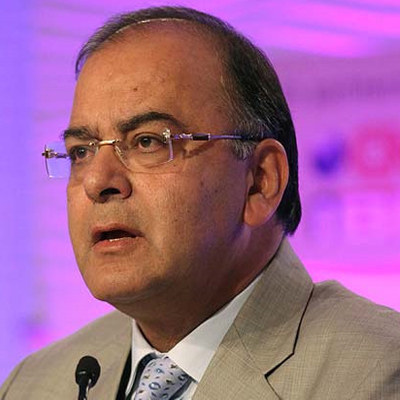
Tag: Arun Jaitley

  • SRFTI lauds proposed ‘Institute of National Importance Status’ by FM

    SRFTI lauds proposed ‘Institute of National Importance Status’ by FM

    KOLKATA: Praising the proposal made by Finance Minister Arun Jaitley to accord Satyajit Ray Film and Television Institute (SRFTI) in Kolkata the status of ‘Institute of National Importance,’ its director has said that the move would open up new vistas in education of aspirants as well as boost international collaborations.


    FTII Pune and SRFTI Kolkata, the two premium film institutes in the country, would be accorded the status of institutes of national importance, Finance Minister Arun Jaitley said in his budget speech in Lok Sabha on Thursday.


    “It is good to know that SRFTI is being considered important on a national scale. It will open up new avenues for education in cinema and television. We have collaborative projects but this status will provide a boost to further partnerships globally,” SRFTI director Sanjaya Pattanayak said.


    Veterans from the Bengal film and television industry also lauded the decision. “Education in filmmaking is important,” they added.


    Experts feel that though Bengal was supposed to get more in terms of textile, agriculture and farming, the Budget mentioned nothing on those lines. “It is good that the minister at least thought about SRFTI. It will help students who are keen to take television and cinema as career options,” experts added.

  • FinMin gives Prasar Bharati enhanced grants-in-aid

    FinMin gives Prasar Bharati enhanced grants-in-aid

    NEW DELHI: The grants-in-aid for Prasar Bharati has been raised from the revised estimates of Rs 2089.56 crore in 2013-14 to Rs 2421.58 crore, even as there is no separate investment by the government in the pubcaster for the second year in a row.


    Interestingly, the grants-in-aid for Prasar Bharati had been raised in the interim budget (for four months) by the previous government to Rs 2331.58 crore which remains the same and the only difference is in the addition of Rs 90 crore for Kisan TV.


    In the budget for 2014-15 presented in Parliament, Finance Minister Arun Jaitley has made provision of Rs 200 crore from Internal and Extra-budgetary resources for Prasar Bharati and the total plan outlay for broadcasting is Rs 731.58 crore.


    An explanatory memorandum says that the grants-in-aid is meant for meeting the salary and salary related expenditure. In addition, there is a proposal for Kisan TV for making available information to farmers across the country for which a provision of Rs 100 crore was announced. I&B Ministry secretary Bimal Julka confirmed to indiantelevision.com that the Planning Commission had sent a note about setting aside Rs 100 crore for Kisan TV.


    Expenditure on salaries of Prasar Bharati has fallen on the shoulders of the government since all Prasar Bharati employees who were in employment as on 5 October 2007 have been given deemed deputation status.


    The total budget of the Information and Broadcasting Ministry has been raised to Rs 3316 crore for 2014-15 against the revised budget of Rs 2855.03 crore (against the initial allocation of Rs 3035.65 crore) for the year 2013-14.     


    The budgetary allocations in most sectors have remained the same as proposed by the then Finance Minister P Chidambaram in the interim budget earlier this year on 17 February in view of the forthcoming elections, apart from Kisan TV and some other smaller changes.


    The allocation under ‘Secretariat – Social services’ covering centenary of cinema celebrations and digitisation of cable television among other things has gone up to Rs 126.55 crore as against the revised estimates of Rs 79.72 crore. Other subjects under this head include the National Film Heritage Mission, anti-piracy measures, promotion of Indian cinema overseas, production of films and documentaries, and setting up a centre of excellence for animation, gaming and visual effects. The explanatory note adds that Secretariat – Social services also covers expenses on development of community radio, and development support to the north-east as well as Jammu and Kashmir and ‘other identified areas’. Interestingly, the allocation in this sector is Rs 3 crore less than the proposal by Chidambaram in the interim budget.


    The allocation under the film sector has, unlike last year, been increased to Rs 135.81 crore for 2014-15. The budget for the film sector for 2013-14 was Rs 117.17 crore while the revised estimates had put this figure at Rs 116.42 crore. There is an additional outlay of Rs 7.18 crore towards certification of cinematographic films.


    For the fifth year in a row, the government has not announced any investment in the National Film Development Corporation.


    The allocation for Press Information Services which includes grants to the Press Council of India has been marginally increased to Rs 65.44 crore from last year’s revised estimates of Rs 57.56 crore to meet the expenses for the Press Information Bureau, the Press Council of India, and to the Press Trust of India for running the non-aligned countries news pool.


    The allocation to the Electronic Media Monitoring Centre has been increased substantially to Rs 13.75 crore from the revised estimates of Rs 7.17 crore in 2013-14. The EMMC was set up for monitoring television and radio channels for violation of programme and advertising codes.


    The allocation for advertising and visual publicity has been lowered to Rs 230.37 crore against the revised estimates of Rs 241.6 crore and budget allocation of Rs 239.06 crore for 2013-14, covering expenditure incurred by the Directorate of Advertising and Visual Publicity for publicity campaigns through advertising and other printed materials, as well as through radio, television, exhibitions and other outdoor campaigns. The allocation is thus just Rs 3 crore more than that made by Chidambaram.


    The allocation for research and training in mass communication has been doubled to Rs 33.54 crore (as proposed in the interim budget) as against the revised estimates of Rs 15.91 crore and the budgetary allocation of Rs 17.85 crore for 2013-14. This covers the Indian Institute of Mass Communication and the Research and Reference Division of the I&B Ministry which collects and collates basic information on subjects of media interest for providing assistance to the Ministry and to its media units, Indian missions overseas, and newspapers and news agencies.


    There is a major increase in the lump sum provision for projects/schemes for development of north-eastern areas including Sikkim to Rs 100.5 crore for 2014-15. The budgetary allocation was Rs 90.5 crore in 2013-14 which had come down in the revised estimates to Rs 74 crore.

  • Online & mobile advertising service tax levy: Industry says ouch!

    Online & mobile advertising service tax levy: Industry says ouch!

    MUMBAI: Budget 2014 brought with it the announcement that the 12.36 per cent service tax would be levied on online and mobile advertising also. These two were earlier exempt from the levy which was applicable to advertising on television. Finance minister Arun Jaitley, however, chose to continue to keep the much larger print media sector out of the tax net. Service tax on advertising on TV had been hiked to 12 per cent (plus 3 per cent sucharge) from 10 per cent in 2012, by the then government. The new levy will come into effect from a date to be notified after the passing of the Finance Bill.


    Indiantelevision.com spoke to digital agency heads to check out whether they were ok with the inclusion of online and mobile advertising under the service tax umbrella.


    “Okay to be on par with others”

    Online marketing and ad agency Pinstorm Technologies  founder & CEO Mahesh Murthy doesn’t think that it is a big issue. “We are now a grown-up industry and though the tax that’ll be mopped up here will be just around Rs 500 crore, I’m okay with us being treated on par with taxes on broadcast,” says Murthy.


    “The grey area here is what exactly constitutes advertising in the online world. Is a Facebook post by a brand an ad? What about a tweet by an influencer? What about native content-driven solutions being used by sites like Buzzfeed? I believe the definition of what exactly constitutes digital and mobile advertising would help a lot. Right now there isn’t any clarity,” observes Murthy.


    It can be noted that all agencies were charging service tax as it was in non-exempt category. Only recently it was moved to the exempt category.


    Online digital agency ibs MD Sabyasachi Mitter thinks the industry will be going back to how things were a little over a year back.


    “At the agency the billing complication is reduced as we don’t need to raise different bills for media cost and commission. Also, reconciliation becomes easier. For most clients who take input credit it will also not be a big deal. What will happen is for clients who release pay orders for all inclusive budgets, the spendable value will go down, ” mentions Mitter.


    Vdopia APAC VP Preetesh Chouhan says bringing online advertising in the service tax ambit will help digital players understand whether the medium has arrived or not.


    “As a video advertising company, our numbers show that we are witnessing an amazing organic growth of both online and mobile audiences and this is not going to change. So my opinion is that tax levied will not affect how brands are allocating spends on digital media. It could be a good opportunity to see if we have made the final transition from niche to mainstream advertising,” says Vdopia VP-APAC Preetesh Chouhan.


    “Time to re look at online advertising budgets”


    Digital L&K Saatchi & Saatchi CEO and managing partner Anil Nair expected this to happen.


    According to him it will mean that brand managers and media companies will have to relook at their online budgets and account for accommodating the service tax component now given that their overall budgets are already fixed.


    “It may augur well for social media though as monies could be diverted into content, apps etc. While online display will see a marginal cut back for a couple of quarters till it picks up again,” says Nair.


    “While some sections of the industry are not happy with the online and mobile advertising being included under the service tax, we believe that the philosophy of pruning the negative list in order to promote GST in the industry, is in the right direction and thus inclusion of such services in the taxation is a small price to pay in the short-term,” said PricewaterhouseCoopers leader- entertainment & media practice India Smita Jha.


    Foxymoron co-founder Suveer Bajaj believes the finance minister’s decision is likely to have a negative  impact as most brands and large corporations have already budgeted their online media spends for the year.


    “This would imply that these marketing and advertising budgets would eventually get undercut. Owing to the fact that, online and digital advertising in India is fairly nascent, this move might discourage new entrants to the industry and allocation of spends towards digital marketing. The speedy rate at which the industry was evolving now faces a setback,” adds Bajaj.


    Bajaj, however, says the budgetary initiative to set aside  close to Rs 500 crore for the digital India programme to ensure connectivity at the grass-root level is laudable. “Brands and organisations on digital will now also focus on the rural markets, if they haven’t already so through the online mediums. Going forward, there will be a paradigm shift in the communication and marketing strategies by digital and technology agencies to specifically target this new audience by including unique and innovative rural marketing campaigns,” he opines.


    HDFC Life senior executive VP marketing Sanjay Tripathy thinks this move will have an impact on the growth of this medium. He also states that this might lead to cut down on marketing spends in the coming days.


    According to Future Group president (customer strategy) and CEO (Bengal warriors & T24) Sandip Tarkas the announcement is a bit of a hit but not a surprise. “As we move towards a GST regime, this anomaly had to be removed. This also reflects the growing size of online ad market which is large enough to be taxed,” says Tarkas.


    Industry leader and Hungama Digital Media Entertainment MD & CEO Neeraj Roy speaks for the entire online industry in this comment he sent out to publications.  “The aspect of bringing back online advertising into the service tax ambit, whilst it is still a fledgling segment, is almost a conflicting action and not a welcome move.”


  • Customs duty imposed on telecom products not covered by Information Technology Act

    Customs duty imposed on telecom products not covered by Information Technology Act

    NEW DELHI: Basic customs duty at 10 per cent has been imposed on specified telecommunication products that are outside the purview of the Information Technology Agreement as part of an attempt to boost domestic production and reduce dependence on imports.


    The Telecom Equipment Manufacturing Association (TEMA)  is all smiles about this largesse from the finance minister. It states that it is likely to generate 500,000 jobs over the next three years.


    TEMA chairman emeritus N.K. Goyal gives his perspective: ” The Government signed ITA 1 on 25th March 1997 and committed import of duty free on 217 items. However, several items which were not covered under ITA 1, were also imported Duty Free. So, now this has been corrected by levy of import duty on non ITA-1 items. While ITA allowed import of finished product duty free, domestic manufacturers paid taxes on import of components used for making a complete unit which made indigenous production of electronic products expensive and wiped out almost entire hardware production in India. This budget gives a positive signal that while India will meet all its WTO commitments, it will also support domestic manufacturing. This will go in long way to promote indigenous manufacturing of telecom equipment.”


    Some of the telecom gear which will see an increase in production, TEMA, says are VoIP phones and some network equipment, which will be in high demand during the roll out of 4G services. It expects that the move will push industry production to around Rs 25,000 crore, while the requirement of 3G and 4G equipment is expected to be worth Rs 10,130 crore and 12,660 crore in 2015-16. On the whole it stated that the telcos will be pumping in close to Rs 5.21 lakh crore by 20120 to expand their networks.


    Noting that the demand for electronics is growing very fast, Finance Minister Arun Jaitley in his proposals for 2014-15 announced that all inputs/components used in the manufacture of personal computers would be exempted from four per cent special additional duty (SAD). Education cess has been imposed on imported electronic products to provide parity between domestically produced goods and imported goods.


    An exemption of four per cent SAD on PVC sheet and ribbon used for the manufacture of smart cards has also been proposed.

  • Sensex turns positive, rises 150 points

    Sensex turns positive, rises 150 points

    MUMBAI: Just as Finance Minister Arun Jaitley presented Budget for the year 2014-15, stock markets showed positive signs. However, by the end of the day it had fallen lower than its opening value. At 3:34 pm the Sensex closed at 25,372.75, down 72.06 points and Nifty ended trading at 7,567.75, falling by 17.25 points. Among specific sector indices Midcap index was up 0.35 per cent, Realty index up 4.67 per cent and Bank Nifty down 1.25 per cent. The IT index was down by 0.96 per cent while infrastructure index  was up by 0.15 per cent.


    At 3:10 pm was when the Sensex turned negative and was down 81 points at 25,363. The  Nifty down 17.3 points at 7,568 but at 1:16 pm the Sensex was trading at 158 points higher at 25,603.61 and Nifty was up  by 45 points at 7,630.


    At 1:00 pm the realty index was up by 1.05 per cent but at 12:20pm, the 30-share benchmark BSE sensex was down 139.75 points, or 0.6 per cent at 25,305.06 points


    Sensex stocks like Wipro rose by 2.2 per cent while IT giant Infosys rose by 1.5 per cent.


    Stocks of Sesa Sterlite fell by 2.5 per cent along with Bharti Airtel whose stocks were down by 2.4 per cent. The stock exchange’s power and banking indices were down by 1.5 per cent each.


    Shares of defence companies and financial services companies, with interests in insurance, rose after Jaitley raised the cap for foreign direct investment (FDI) in these two sectors by up to 49 per cent.


    Financial services firms Reliance Capital and Bajaj Finserv were up by 1.9 per cent each, while Max India rose by 2.7 per cent.


    “Difficult as it may appear, I have decided to accept this target as a challenge,” Jaitley said, adding that the fiscal deficit would be brought down to 3 per cent of GDP by 2017. “We cannot leave behind a legacy of debt for our future generations.”


  • TV sets to get cheaper: Budget 2014

    TV sets to get cheaper: Budget 2014

    MUMBAI: Even as India has one of the highest cable TV homes in the world, it is set to get even higher with the latest announcement from Finance Minister Arun Jaitley for Budget 2014.


    While speaking in the Parliament, Jaitley stated that electronic goods such as TV sets and personal computers will be cheaper. He has announced proposal to make cathode ray tube (CRT) TVs cheaper as well as encourage manufacture of LED and LCD panels of TVs.


    The basic custom duty on LED panels below 19 inches will be made nil. CRT TVs have also been exempted from custom duty to help the poor.  The announcements have been made to boost the domestic manufacturing sector.


    “Cathode ray TVs are used by weaker sections who cannot afford to buy more expensive flat panel TVs. I propose to exempt colour picture tubes from basic customs duty to make cathode ray TVs cheaper. The duty concession will help revive manufacturing of TVs in the SME sector and create employment opportunities. At the same time, to encourage production of LCD and LED TVs below 19 inches in India, I propose to reduce the basic customs duty on LCD and LED TV panels of below 19 inches from 10 per cent to Nil. Further, to encourage manufacture of LCD and LED TV panels, I propose to exempt from basic customs duty specified inputs used in their manufacture,” said Jaitely. 


    Soon after the announcement, global analytical company providing ratings, research and risk and policy advisory services CRISIL tweeted that after this, the price of LCD/LED TVs (that constitute 51 per cent of sales) will reduce by Rs 1000.


    PricewaterhouseCoopers leader- entertainment & media practice India Smita Jha added, “We also believe the reductions in customs duty on LCD and LEC of sub-19 panels will also indirectly provide filip to the national digitisation agenda.”


  • We will digitise DD’s analogue terrestrial network: Prakash Javadekar

    We will digitise DD’s analogue terrestrial network: Prakash Javadekar

    MUMBAI: Information and Broadcasting Minister Prakash Javadekar has told the Lok Sabha that the government is serious about its plan of digitising Doordarshan’s analogue terrestrial network.


    With this, according to Javadekar, Doordarshan will be able to invite private free-to-air TV channels for meaningful business plans.


     Responding to questions in the Lok Sabha on 9 July, Javadekar said that the Ministry has granted permission for 795 channels to uplink from the country in both the news and non-news genres.


    Surprisingly, even after the huge number of permissions granted, close to 235 applications are still pending for inter-ministerial clearances. Javadekar said that in the last three years and the current year, the Ministry had received 200 applications for new channels in various languages, of this 105 were for Malayalam and Kannada language channels.


    He also reaffirmed the government’s stance on the launch of ‘Krishi’ channel for the farmers.  The same was also proposed by the Finance Minister Arun Jaitely in the Lok Sabha as he tabled Budget 2014.

  • National sports academies for major sports: Arun Jaitley

    National sports academies for major sports: Arun Jaitley

    MUMBAI: The sports sector in India has received a major push in the Budget 2014 presented by Finance Minister Arun Jaitley.


    The FM announced that provisions will be made to set up National sports academies for major sports in India. While announcing setting up of a sports university in Manipur, Jaitley also allocated Rs 100 crore for Asian and Commonwealth games training.


    Jaitley also announced sops for sports in Jammu and Kashmir. He proposed to allocate Rs 200 crore for upgradation of sports facilities in the state.


    PricewaterhouseCoopers leader- entertainment & media practice India Smita Jha said, “You would agree with me that the Sports sector in India is much in need of transformation. Budgetary allocations towards upgrading sports infrastructure, training, nurturing best talent and setting up a sports university are in the right direction though the funds allocated are significantly less than what are needed. However, we welcome the recognition from the government that this sector requires significant investment.

  • North east India to get new channel Arun Prabha

    North east India to get new channel Arun Prabha

    MUMBAI: After announcing the new Rs 100 crore 24 hour channel for farmers in the country, Union Finance Minister Arun Jaitley has declared that a new channel will also be launched for the seven sisters in north east India.


    To be called ‘Arun Prabha’, Jaitley said that the channel will highlight the rich culture of the north east. However, he did not specify either the time frame within which it will be launched or the investment that will be put into it.


    Last year, talks were on between the government and the Prasar Bharati for launching an additional channel for NE. Currently, DD North East telecasts programmes in Assamese, English and other regional dialects with various types of programmes. Prasar Bharati CEO Jawhar Sircar had been touring the area last year to find out the feasibility for this channel, subject to government investment.

  • Government to invest Rs 100 crore in Kisan Television

    Government to invest Rs 100 crore in Kisan Television

    MUMBAI:  The much awaited budget from the new Finance Minister Arun Jaitley has begun and the first announcement for the media industry is in the form of the proposed new TV channel for farmers- Kisan Television dedicated to the interests of the agriculture and allied sector.


    While presenting the Budget 2014 in the Parliament, Jaitley stated that the government will be investing Rs 100 crore for the channel that will give real time information on new farming techniques, water conservation, organic and farming etc.


    A few weeks ago, Information and Broadcasting Minister Prakash Javadekar had stated that Kisan Television will be launched soon and Jaitley’s announcement reaffirms the government’s commitment to it.


    The 24 hour channel, to be called DD Kisan, is being worked upon with the help of Prasar Bharati. Prior to winning the election, BJP had stated that if it came to power, it would explore setting up of regional Kisan TV channels.


    Soon after the announcement, Zeel MD and CEO Punit Goenka tweeted “Kisan TV for farmer education was a good one!!”


    Added PricewaterhouseCoopers leader- entertainment & media practice India Smita Jha, “Announcement of launch of Kisan TV and Aruna Prabha TV are also welcome in the context of their respective situations but hope these channels are commercially viable and do not add further burden to Public Service Broadcaster, Prasar Bharati, which is already under severe financial pressure.”