Tag: Arun Jaitley

  • M&E items get GST relief from 15 November 2017

    M&E items get GST relief from 15 November 2017

    NEW DELHI: In a major relief to the media and entertainment (M&E) sector, the goods and services tax (GST) has been slashed on a large number of items including electrical apparatus for radio and television broadcasting from 28 per cent to 18 per cent.

    Although the government has failed to address the primary issue of entertainment tax which is a great dampener in view of the losses due to video piracy, the reliefs announced are a winner. The change in taxation is effective from midnight of 15 November 2017.

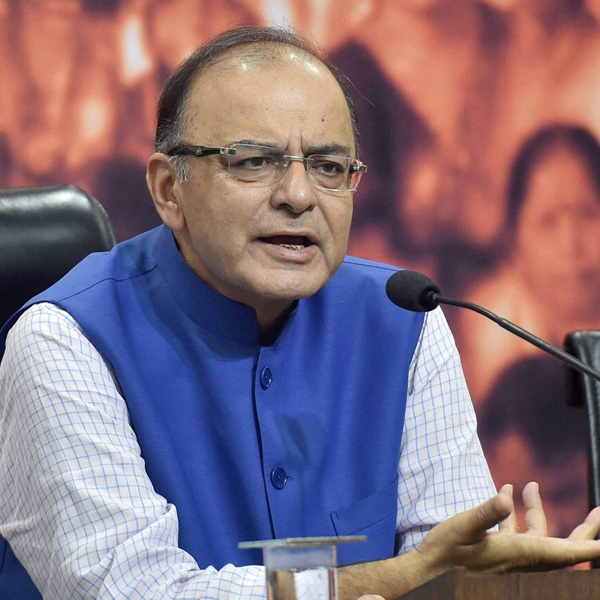
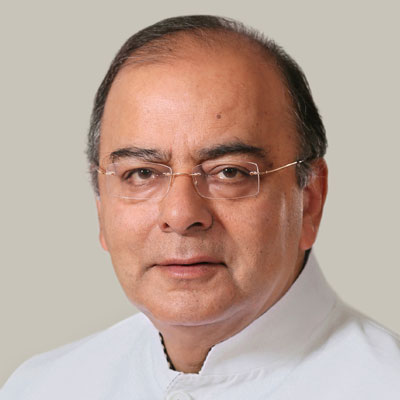
    In its last meeting held in Guwahati in Assam, the GST council under the chairmanship of finance minister Arun Jaitley agreed to cut the GST on several items in the M&E sector.

    Goods on which the council had recommended reduction of GST rate from 28 per cent to 18 per cent in the M&E sector are:

    1. Electrical apparatus for radio and television broadcasting

    2. Sound recording or reproducing apparatus

    3. All musical instruments and their parts

    4. Cinematographic cameras and projectors, and image projector.

    The cable TV sector may also get some relief as the relaxation also covers:

    5. Wire, cables, insulated conductors, electrical insulators, electrical plugs, switches, sockets, fuses, relays, electrical connectors

    6. Electrical boards, panels, consoles, cabinets etc for electric control or distribution

    Apart from this, the council announced exemption from IGST/GST in temporary import of professional equipment by accredited press persons visiting India to cover certain events, broadcasting equipment, sports items, testing equipment, under ATA carnet system. These goods are to be re-exported after the specified use is over.

    The council also said that in order to obviate dispute and litigation, it is proposed that irrespective of whether permanent transfer of Intellectual Property (IP) is a supply of goods or service:

    (i) permanent transfer of IP other than Information Technology software attracts GST at the rate of 12 per cent.

    (ii) permanent transfer of IP in respect of Information Technology software attracts GST at the rate of 18 per cent.

  • Reduce GST on film industry, IMPPA pleads to FM Jaitley

    Reduce GST on film industry, IMPPA pleads to FM Jaitley

    NEW DELHI: The Indian Motion Pictures Producers Association (IMPPA) has urged the government to fix 5 per cent as the maximum GST rate that should be charged on all goods and services connected with the entertainment industry including entertainment tax.

    In a letter to finance minister Arun Jaitley, IMPPA President T P Aggarwal said, “This will provide life to an industry which is being crushed under the heavy burden of tax and which needs immediate help and support of the government to survive”.

    Pointing out that IMPPA was the oldest body of filmmakers having been set up in 1937, Aggarwal said the film industry has been burdened with the extreme end of high GST.

    “In all other products, tax is levied after recovery of cost of production as well as input credit where all taxes and GST paid are adjusted in the GST payable,” he added. But in the film industry, GST has to be paid on goods and services as well as on sale of tickets irrespective of the fact whether the expenses incurred on making the film along with taxes paid thereon have been recovered or not.

    GST in the form of entertainment tax has to be paid on the sale of tickets from the first ticket onwards where it has been fixed at the highly unreasonable level of 18 per cent for tickets up to Rs 100 and 28 per cent for tickets more than Rs 100.

    The letter said that the imposition of uniform 18 per cent GST on majority of goods and services is also largely responsible for the miserable state of the film industry because very few films are profitable propositions and majority of films are disasters leading to the annihilation of the producers.

    Aggarwal wrote that the government should be “providing free entertainment to the people who pay so many taxes.” Instead, it levies heavy entertainment tax which has to be paid by the poor citizen on films. Producers deserve to get the full money since the films are self-financed without any government aid.

    He said that very few hit films make money while the rest are reeling in losses. Meanwhile, both the central and state governments cash in by imposing GST at every level. He demands that the practice of state governments choosing their own amount of entertainment tax must be abolished.

  • Live digital video now on Bloomberg|Quint, plans cable and DTH foray

    Live digital video now on Bloomberg|Quint, plans cable and DTH foray

    MUMBAI: Bloomberg|Quint has announced the launch of its digital live streaming service in India. At the launch, Bloomberg|Quint live-streamed the Bloomberg India Economic Forum, which featured the finance minister Arun Jaitley as the keynote speaker.

    The service is now available on its website and top social platforms, and pending regulatory approvals, will debut on leading cable and DTH platforms.

    Bloomberg|Quint, a partnership between Bloomberg Media and Quintillion Media, which claims to reach over two million monthly users across its on-site and partner platforms.

    At the launch, a panel discussion was held with NITI Aayog (National Institution for Transforming India) CEO Amitabh Kant, Edelweiss Group chairman and CEO Rashesh Shah, Kotak Mahindra president – consumer banking Shanti Ekambaram, and Larsen & Toubro director and CFO R. Shankar Raman.

    Bloomberg|Quint’s digital streaming service will include comprehensive live programming on a daily basis, from global and domestic markets, coverage to views from the most influential newsmakers in business and finance. Starting with pre-market cues and news, the service will provide consumers with live insights into the markets throughout the day, culminating with perspective and analysis in the evening.

    “We set out to create India’s premier digitally-led multi-platform media company, so the launch of live streaming video content is a step in achieving this,” said Bloomberg Media Group CEO Justin B. Smith.

    Quintillion Media founder Raghav Bahl added, “Consumers can look forward to compelling video content on key India market developments in the office, at home or on the go on their mobile phones.”

  • Prasar Bharati Board favours separate DD News Hindi & English channels

    NEW DELHI: The Prasar Bharati Board is inclined towards bifurcation of the Doordarshan News channel into two – one for Hindi and another for English. However, the Board has sought the views of Doordarshan before taking a final decision.

    In a recent meeting, Prasar Bharati sources told indiantelevision.com that the Board had felt that having separate Hindi and English news channels would also help to increase its viewership in rural areas for the Hindi channel and in urban or semi-urban areas for the English News as there would be greater variety.

    DD News is the country’s only 24-hour terrestrial TV news channel, as all private channels are satellite-based. The Prasar Bharati board approved the proposal to start a 24-hour news channel in place of DD Metro and it was launched on 3 November 2003.

    The DD News mobile app for Android[ and Apple was launched on 7 May 2015 by then I&B Minister Arun Jaitley.

    Initially Doordarshan had launched a news channel in partnership with CNN, DD CNNi in 1995.

    Later DD again launched its DD News channel by replacing DD Metro in 2003 and assured its availability on terrestrial mode. It telecasts news bulletins daily in Hindi, English, Sanskrit, and Urdu, apart from broadcasting for the hearing impaired.

    It carries a daily evenig bulletin known as Metro News where Delhi links to news readers in Mumbai, Chennai, and Mumbai to give news from their respective areas.

    It also beams a unique bulletin twice a week known as Good News, where it gives news of individuals who take initiative to improve the enviroument and society around them.

    Regional news units attached to different Doordarshan Kendras also telecast daily news bulletins in regional languages. News headlines and breaking news updates are regular features.

  • GST webpage created on PIB website

    NEW DELHI: A special webpage on the Goods and Services Tax (GST) on the website of the Press Information Bureau was launched by the principal director-general A P Frank Noronha.

    Goods and Services Tax (GST) will come into effect on 1 July. GST will completely transform the indirect taxation landscape in the country involving both, the central and state levies. In a departure from normal practice, GST will be administered together by the centre and states.

    Earlier, the ministry of information and broadcasting had set a frequently asked questions and a basic understanding of GST on its website.

    The webpage on GST is a one-stop information platform for all information on the new tax regime. It contains press releases issued till date on the Goods and Services Tax (GST) in both Hindi and English languages. The webpage also contains various presentations, FAQs etc on GST.

    Video clips of press conferences conducted with regard to GST by Finance Minister Arun Jaitley; Workshop conducted by Revenue Secretary Hasmukh Adhia; Various video clips on GST including educational videos, TV Spots and Radio jingles as prepared by CBEC are also available on the webpage. Video links of programmes on GST by DD News can also be accessed.

    YouTube, Twitter, Facebook etc updates on GST are integrated into the webpage for easy access on social media platforms. Various Infographics on GST have been compiled along with the Advertisements issued. Finance Minister’s quotes and bytes on GST after GST Council meetings have also been uploaded on the webpage.

  • GST on set-top boxes & optic fibre down to 18%

    GST on set-top boxes & optic fibre down to 18%

    NEW DELHI: The Goods and Services Tax (GST) for set top boxes has been reduced to 18 per cent from the previously announced 28 per cent.

    Similarly, the GST Council also reduced the tax on coaxial cables and optical fibre to 18 per cent from the hitherto 28 per cent in both cases.

    Finance Minister Arun Jaitley said: “After considering recommendations of fitment committee, rates are being reduced in the case of 66 items.” 

    Jaitley is also the chairman of the GST Council. He said that there were 133 representations and these were considered.

    Other items relating to the electronics and the media and entertainment industry in which GST was reduced are: 

    public://gst.jpg

  • India TV’s ‘Samvaad’ to take stock of Modi’s three years of governance

    MUMBAI: India TV that has made a mark with its outstanding on-ground initiatives is back with its Political Mega Conclave ‘Samvaad’. The same shall coincide with the completion of three years of the Narendra Modi led Government in office. ‘Samvaad’ shall be held in New Delhi on 15 May 2017.

    With this Full-Day affair and in its true role of being democracy’s fourth estate, Nation’s true News leader India TV is set to question the establishment to bring to fore the facts that matter to the masses in general and to specific strata of the businesses, society or nation in particular.

    This top initiative shall be about not only taking toll of ‘the change’ the present dispensation has been able to bring in from when they picked up the baton of Governance in May 2014 but also ‘measuring its performance’ against their manifesto. Samvaad shall also strive to highlight the agenda and expectations for the remaining term of two years.

    India TV Chairman & Editor-in-Chief Rajat Sharma shall lead the charge along with his team of Premier Anchors to put to test the regime that arguably enjoys the strongest public support even in the distant times, despite large-scale non-populist decisions effected.

    It’s a given that like all previous India TV on-ground initiatives this Conclave too shall be a spectacle with a galaxy of the biggest political decision makers and influencers from both ruling & opposition benches muscle it out.

    An impressive gathering of high profile delegates including top Corporate honchos, Media personalities and other Newsmakers from across the country shall add a most anticipated layer for the avid political watchers & analysts through this initiative.

    Political bigwigs like Amit Shah, Arun Jaitley, Rajnath Singh, Smriti Irani, Nitin Gadhkari, Dharmendra Pradhan, Ravi Shankar Prasad and Rajiv Pratap Rudi are not only expected to come and but make some big rippling statements that may be of the prime interest for the electorate of world’s biggest democracy.

    Influential leaders from the opposition camp including Raj Babbar, Pramod Tiwari, Renuka Chaudhry, Randeep Singh Surjewala and Manish Tiwari amongst others. Other top dignitaries expected to attend include Subramanain Swami, Mehbooba Mufti, Harsimrat Kaur Badal, Mohammad Salim, Badruddin Ajmal, Zafar Sareshwala and Dr. Nirmal Singh etc.

    India TV MD & CEO Ritu Dhawan while announcing the second edition of the initiative said, “If I put it in most simple terms, our friends from the media fraternity can most certainly expect big headlines that would obviously mean a big political news feed for our audience.”

  • Copyright Board may become part of Intellectual Property Appellate Board

    NEW DELHI: The Copyright Board may soon be a part of the Intellectual Property Appellate Board (IPAB).

    Though the move was hardly unexpected in view of representations by creative artists, the modus operandi of making this part of the Finance Bill came as a surprise.

    Although Intellectual Property was shifted from Human Resource Development Ministry to the Department of Industrial Policy and Promotion (DIPP) early last year, several stakeholders including writers, software producers and singers and musicians felt that copyright should not be part of one single Ministry or Department.

    The Finance Bill 2017 piloted by the finance minister Arun Jaitley and passed in the Lok Sabha earlier this week has proposed this merger

    The Bill proposes an amendment to the Copyright Act so as to transfer the functions of the Copyright Board to IPAB which as of now deals only with matters relating to trademarks, patents and geographical indications.

    There is also a proposal to amend the rules pertaining to qualifications, appointment and other terms of service of the members of IPAB as provided under the Trade Marks Act. It introduces Section 89A to the Act which leaves these matters to be solely governed by Section 179 of the Finance Act 2017 in respect of members appointed after the commencement of this Act. The Central Government will then make rules in this regard.

    Being a money bill, the Finance Bill had to go the Lok Sabha first and then receive assent of the Rajya Sabha, which is only empowered to make suggestions. It will become law after receiving the Presidential assent.

    The Finance Bill also proposed merger of seven other tribunals (including the Competition Law Appellate Tribunal and the Cyber Appellate Tribunal) with other existing tribunals.

    However, the move of including several non-finance/taxation related amendments in a money bill has not gone unnoticed, and some opposition parties see this as a way of by-passing the Rajya Sabha where the Government would otherwise have difficulty in getting controversial legislation through.

    However, Finance Ministry sources said these amendments are related to government expenditure.

    Meanwhile, the ministry of information and broadcasting confirmed to indiantelevision.com that on the applications of several film bodies, it was working on an alternative for overseeing implementation of IPR laws for the entertainment industry.

  • Times Network unveils second leg of Remonetise India campaign

    MUMBAI: Prime minister Narendra Modi would surely approve Ditto with the finance minister Arun Jaitley.

    The Times Network is getting into the second phase of its drive which seeks to give an impetus to the initiative by the two most powerful leaders in India to nudge Indians towards cashless transactions, digital money and paying taxes.

    Called – Remonetise India – Invest in the Nation (Help your Help), it follows the first leg Remonetise India – A Citizen’s Pledge. The second part of the campaign was flagged off with a TVC yesterday that will be promoted across the Times Network channels and additionally in 300+ multiplexes. It is being supported by a digital contest where viewers will be gratified with goodies to promote participation.

    The TVC will run almost 20-25 times each day on the Times Network’s channel bouquet. Ads will also appear in parent company Bennet Coleman & Co’s print publications and on sister firm ENIL’s Radio Mirchi stations nationally. These will continue across the Times media group until 31 March 2017, following which the pay taxes phase will commence.

    Says Times Network MD and CEO MK Anand: “At a time when the nation is attempting to leapfrog economically, we believe that regulation, infrastructure and technology are not enough to jumpstart socio-economic change. Behavioural and cultural transformation are as important, if not more. This is where a uniquely positioned media group like Times Network can help. Through the ‘Remonetise India’ campaign, we aim to focus on making changes in everyday behaviour of urban Indians so that the benefits of this disruptive reform (demonetisation) flow in the right manner. One of the pledges under Remonetise India is to help others around us to go digital and benefit from the new economy. The second phase of the campaign ‘Help your Help’ is a call to capable urban citizens to help and aid others in achieving financial inclusion.”

    The first phase included activities like Telethon, Go-Cashless Rally and Sahayata Camps. The telethon witnessed the participation of key influencers, policy makers and opinion leaders like Ministry of Commerce and Industry Minister for Commerce Nirmala Sitharaman, Niti Ayog CEO Amitabh Kant and Infosys founder Narayana Murthy who answered questions on the way forward for the remonetisation movement.

    Then B-town celebrities like Sonam and Anil Kapoor, R Madhavan, Shilpa Shetty, Sonu Sood and Manoj Bajpayee supported this initiative and came together to be the agents of change to help bring India’s economy back on track.

    Additionally, the network organized Sahayta Camps which were supported by actress Taapsee Pannu who encouraged people to get Pan Cards, Aadhaar Cards and open bank accounts (Jan Dhan Yojana Accounts) for the development of Digital India.

    Finally, the Go-Cashless rally took place to drive awareness about digital transactions and save cash for those who can’t do without cash.

    The Times Network will continue with these activities across India to take the movement forward in phase II and phase III as well.

    With a viewership base of around 4.5 crore English speaking Indians, it is likely to have an impact on those who are most likely to follow the new vision that Modi has set out for the nation.

    Publicis South Asia MD and CCO Bobby Pawar points out that the three-step campaign was conceived during a conversation that the agency and the Times Network team was having about the consequences of demonetization.

    “We saw that it was causing pain,” he says. “The media primarily focused on the immediate impact of demonetization. Because most of the transactions were in cash, businesses got affected, raises got affected, employment got affected and people started losing jobs. We kept saying that we have to be forward thinking about the change that is being attempted by the government. We started with seeding it on social and doing things on-ground and then taking it to mass media. One of the biggest challenges was apathy. To make people go beyond themselves was a tough task. Even if we move a few thousand people, it will be a big thing. This is a long term thing and will take a lot of efforts. Post us, other brands will also start talking about it.”

    Adds the TVC’s director Karthik Bhatt: “We have created a light hearted film in which we have highlighted that we want to make a small change which will benefit everyone in the long run, rather than the focusing on the big tidal change. We got the brief and I immediately went on a recce to the Sahatya camps to see what the situation really is. I saw people who did not have any PAN card or Aadhar card but were willing to have one. There were volunteers filling their forms. We have used references from what actually happened at the camp. 26 January was my first visit and we shot the film on 5 February. We had the film ready in 10 days times. We did not want to get to preachy; we just wanted to tell you to help them. If they want to be a part of the system, they need to understand the process and once that happens they will get regular.”

    Also Read :

    http://www.indiantelevision.com/television/tv-channels/news-broadcasting/unsponsored-remonetise-india-simulcast-on-all-times-channels-without-ads-170115

    http://www.indiantelevision.com/mam/media-and-advertising/ad-campaigns/taapsee-endorses-cashless-economy-campaign-170206

  • Media and entertainment industry hails Union Budget 2017

    Media and entertainment industry hails Union Budget 2017

    MUMBAI: On 1 February, the finance minister Arun Jaitley made significant announcements during the presentation of the Union Budget 2017. Although, there was no specific mention of measures for the media and entertainment industry, certain steps which have been taken to boost the economy have been appreciated by the industry, but it also disappointed some.

    The budget 2017 mainly focused on boosting the infrastructure and lifting rural income besides bringing in reforms in the financial sector such as the abolition of the Foreign Investment Promotion Board (FIPB) so as to facilitate a new policy for foreign direct investment (FDI). The budget also focused on digitisation — allocating Rs 10, 000 crore to boost the rural fibre optics network, which came as a great news for many in the media and broadcast industry.

    Indiantelevision.com reached out to several industry stalwarts to find out how they interpreted the Union Budget 2017. Here’s what they had to say:

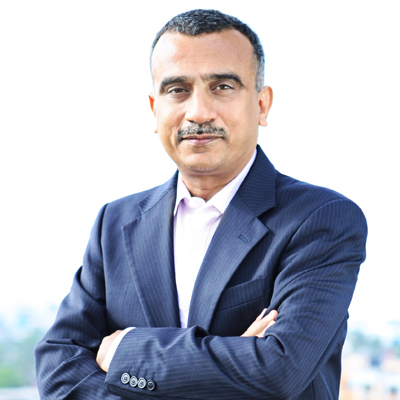
    Viacom18 group CEO and CII Media and Entertainment Committee chairman Sudhanshu Vats said, “Much had been speculated about the economic slowdown post demonetisation. With this budget, the government has taken important steps to boost the economy in a structured manner, building on the promise of transparent growth. Steps to liberalise the FDI regime further coupled with the abolishing of FIPB and tax reforms for MSMEs are bound to have impact in the foreseeable future. This budget has seen some positive solutions to tackle poverty in our country including one of the highest allocation of funds to MNREGA and rationalisation of rate for the lower personal tax slabs. I am particularly enthused by the strong reforms push for digitization and look forward to digital transactions increasing in the country. This also augurs well for digital consumption of video content. The move to cap political donations in cash at Rs 2000 and all-cash transactions at Rs 300,000 are also much-needed, bold steps that are in line with the government’s commitment to uprooting corruption. With Swaach Bharat being close to our hearts, the budget has built further on this theme in a welcome move. I’ve said this before and will say it again: as the M&E sector we have a lot to gain from buoyance in the economy at the aggregate level and I believe this Budget has delivered on that front.”

    Zee Entertainment Enterprises Limited (ZEEL) MD and CEO Punit Goenka stated, “Budget 2017 speaks a lot about the government’s positive and committed approach towards creating a stronger and balanced economy. Being directionally right and focused on spending in growth-centric areas, it clearly reassures the fact that remonetisation is in.”

    Times Network MD and CEO M K Anand said, “After the recent massive policy implementation of demonetisation, my expectation was of some radical reforms. I was a bit disappointed on that count. However, enhanced provision for MNREGA and allocations for rural, agriculture and allied sector and a clear push for the affordable housing sectors is the silver lining. Agriculture and real estate are the most important employment generating sectors in India. This should improve the rural situation which is still recovering from demonetisation. Hopefully, that will have a ripple effect on spending and the larger economy.”

    Says ABP COO Avinash Pandey, “The Union Budget 2017 was disappointing as far as the expected incentive for the broadcast business is concerned. Service tax remains the same. Most importantly, there is no parity with the print sector. The ‘wow’ factor was missing (in the budget) as far as the business is concerned. Disposable income is going to increase, and hence the quantum of spending. Economy may revive after the implementation of the budget.”

    Network 18 president revenue and Forbes India CEO Joy Chakraborthy is hopeful, saying, “We are seeing it as a positive budget. The budget is going to help consumption. Significant measures to improve electrification is eventually going to help the television industry. The general sentiment is that it is, overall a positive budget. Once people start spending money, consumption will be there and subsequently advertising too will follow.”

    Says, BBC Worldwide – ‎BBC Worldwide India South East Asia and South Asia SVP and GM Myleeta Aga, “Overall a positive popular budget with personal income tax changes in line with the government’s declared intention to collect more taxes from the rich and reduce the tax burden on the middle income group.”

    She added, “I was particularly encouraged to hear that the GST roll out will not be delayed. Operationally, for the production business, this will complicate working across states but this disruption should be temporary. Continued emphasis on the digital economy and increasing digital transactions will boost growth of e-commerce.”

    SAB group CEO Manav Dhanda said, “Overall, there has been positives for the media and entertainment sector post the Union Budget. As digitization is the next big thing now, the end of March 2018 will see a great growth for digital video consumption across OTT. The youth can now have great opportunities laid for them by initiating the skill India mission that aims to start 100 India International centres. Also, since digitization is on a high, setting up high speed internet in 1.50 Lakh Gram Panchayat is a good move and will give a boost to internet penetration in India. There is no increase service tax by the government and is a positive outcome particularly for the M&E sector, a stable and positive fiscal situation is good for the economy which will also give an impetus to our advertising sales projections. Increased public spending through various schemes and focus on infrastructure investments should further help to accelerate economic growth. The economy seems to have being slowing down since demonetisation, impacting almost all sectors and one hopes this budget to act as a catalyst to propel the growth in the media sector as well.”

    KPMG India partner tax Naveen Aggarwal said, “The Budget was based on broad themes of curbing black money, boosting individual spending, ensuring transparency and providing much needed impetus to agricultural and rural sector, infrastructure and digital economy.”

    He added, “While the announcement to abolish FIPB in light of successful e-governance was surprising, further liberalisation in FDI policy will be keenly watched in context of M&E industry. Lastly, the FM provided much needed assurance on roll-out of GST as per schedule, confirming GST council finalising majority of its recommendations.”

    He further added, “Similar to last two years, the Budget did not bring much respite or specific announcements benefiting M&E industry. While the expectation of overall reduction in corporate tax rate and abolition of MAT was given a miss, the proposal to reduce corporate tax rate for MSMEs to 25% (having turnover up to Rs 50 crore) and increasing the MAT credit entitlement (from 10 to 15 years) is a welcome move and will benefit medium scale service companies in M&E sector.”