Tag: Arun Jaitley

  • MPs push for fresh guidelines to promote India as film destination

    MPs push for fresh guidelines to promote India as film destination

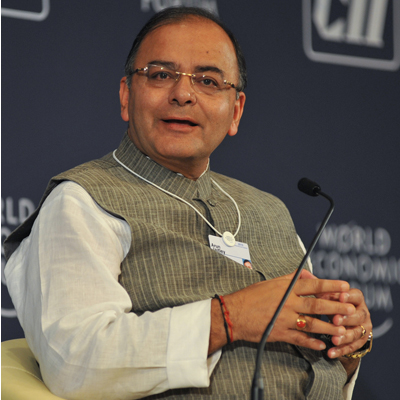
    NEW DELHI: Information and Broadcasting Ministry (I&B) Arun Jaitley said that all efforts need to be taken to give the concept of India as a film destination a strong ‘Brand Push’ to promote India as a soft power.


    The branding could be undertaken by creating and promoting a capsule that incorporated the key features of India’s professional ability, that is skills, human resources, diverse locales, filming support from institutional structures and core strengths of India’s film industry. This capsule needed to be showcased at all major international film festivals as part of the efforts to promote the ‘filming destination concept.’


    The Minister was chairing a meeting of the Consultative Committee of Members of Parliament attached to the I&B Ministry to discuss the issue of “India as a soft power – As a Filming Destination.” Minister of State Rajyavardhan Singh Rathore was also present in the meeting.


    Jaitley said the topic for discussion was extremely important in view of the efforts being made to project India’s ability and standing as a soft power and a filming destination. The concept would not only facilitate the contours of growth of the film industry but would also promote the diversity of India to the world through the medium of films and cinema. This initiative and proactive stance would boost the inflow of tourism in India from other countries. Jaitely also emphasized that there was a need to simplify procedures and rules in order to promote the idea in letter and spirit.


    A presentation was made on behalf of the Ministry giving an overview of the steps and initiatives undertaken so far to promote India as a soft power. The presentation provided an overview of the processes involved to promote filming in India with reference to the multi pronged strategy adopted by the Ministry. Specific references were made to promotion to film festivals and film bazaars, co-production units, the proposed legislative framework and policy initiatives to promote skill development in the film industry.


    Members of the Committee gave suggestions to ensure that the concerns of the stakeholders were addressed and the idea was implemented in totality. It was emphasized that skill development was a critical area and necessary measures needed to be taken by the Government and the industry together.


    It was also suggested that rules and guidelines for promoting the destination concept required a relook. Laws and rules needed to be in sync with contemporary technological tools. It was also mentioned that the concept required collaboration and partnership between the ministry and the state governments and other stakeholders.

  • “There is a growing difference in the way the economies are performing”: Jack Lew

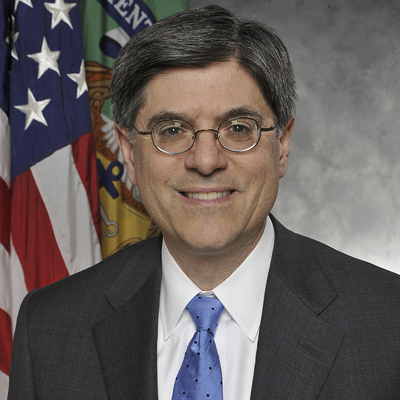
    “There is a growing difference in the way the economies are performing”: Jack Lew

    In an exclusive interview US treasury secretary Jack Lew tells NDTV Profit that he believes that the recovery in US is not fragile though he remains concerned about the pace of growth in other parts of the globe. He says the US will push back very hard when it sees countries acting unfairly on currencies.


    He remains optimistic on India and hopes that reforms will make investment environment more attractive here. His message to Finance Minister Arun Jaitley is to give more clarity to investors on policies.


    In an interview with NDTV Profit executive editor Prashant Nair, he speaks on Make in India, optimism about India, how to battle slowdown and much more.


    Excerpts… 


    Nair: The global economy is growing at different speeds, very different speeds. The US has picked up growth, expectations are quiet high-Eurozone has slowed down, deflation fears persist there, China which is slowing down and of course India where hopes are very high with the new government taking charge. How is it all going to pan out, what are the prospects for the global economy looking like? I have got someone who has got the answers- Jack Lew who is the Secretary to the US Treasury and I am really honored to have him with me here. Thanks very much Sir.


    Lew: Great to be with you Prashant.


    Nair: So you are just back here from the G-20 meeting. What was the message, what was the take away from that meeting?


    Lew: I think there was a common focus in the G-20 meeting on the need for growth and the need for stability and we had lot of discussions on both the topics. You know I think the challenge that the global economy faces is to have the whole global economy picking up, not just dependence on the United States to be the sole driver. I think that coming out of the financial crisis US has demonstrated alongwith a number of other countries like UK that when you use all the policies leverage that you have, you can change the course of your economy’s future. You need to use monetary policy, you need to use fiscal policy that help grow demand and you need to do structural reforms so that there is confidence in future and flexibility in the economy. That was my message at the G-20.


    Nair: You think other economies aren’t doing that well or they are maybe too late in the game?


    Lew: I think that it is challenging in each system to use each of the tools. Certainly it is challenging in our system and it’s not always as quick and as simple as you want it to be. I think that what we have shown is that when you do deploy all the tools it has the right effect. If you rely too heavily on any one of the tools it is not going to be as powerful. I think that the challenge is to bring particularly the fiscal tools in some places and the reform tools in other places into gear when the monetary tools are already being deployed, I think it will be more effective strategy If all these leverages were used.


    Nair: What’s your view on US economy? I read somewhere you said that it has turned a corner.


    Lew: I think it has turned a corner, I think if you look at the economic growth over these past six months, the past year we are seeing a dramatic change from the past. We are seeing sustained growth in jobs, we are seeing even an increase in wages which were slow to come, but over the last year there is over 2% increase in wages. We are seeing strength in manufacturing and we are even seeing a comeback in the housing and construction sector which has been the slowest part of the economy to recover from the recession that was really driven by the collapse in that area. I think that what we have now in US is the kind of recovery that will feed on itself and grow but we can’t look at the US as if it is an island all by itself. So we are very much concerned that there needs to be more growth in other parts of the global economy as well. I don’t think it is the situation like we saw even in 2012, where the US recovery was fragile and headwinds from global economy growing not as strong as it should, that were a real risk. I think that now we are going to continue to grow, the question is how fast and I would like our economy to grow as fast as it possibly can for us to grow as many jobs as we possibly can. But I think the global economy really needs morefor there to be more growth in other places as well, and that’s why we carry the message that we do.


    Nair: You know some have said that the FED will increase interest rates. It will start to raise interest rates sometime in 2015, what you said is important that growth is self sustaining in the US now and it feeds into itself. So, if that’s the case, a) FED rate hike will happen and second there is no reason for more stimulus in the US now, is that clear now?


    Lew: Now Prashant, it is a well-established tradition that treasury secretaries do not comment on the monetary policy in US, the FED will have to make a decision based on its valuation of the data as it comes in and I will leave that to the FED and the very able chair Janet Yellen.


    Nair: What do you make of what is happening in the Eurozone and what should happen there now?


    Lew: Well I think in the Eurozone there are multiple things that are challenging right now. I think there has been a reluctance to use the fiscal tools because there are some countries which have fiscal space others that don’t. Having deployed the monetary policy tools, I think were Europe to use some of its fiscal space, to grow demand, it would actually make monetary policy more effective. It will help to get the economy moving. There is also need for reforms. I think that ideally you will see the structural reforms and the demand moving together and you have all 3 levers being deployed. It has been challenging and it’s not the first time that we have made that argument. I think I heard more people making that argument at this last G-20 than I have in the past. I think there is a growing sense but obviously Europe has to make its own decisions. At the same time, I think Europe has some real challenges both with the situation in Ukraine and in Greece, where stability is something that they need to maintain. That is why it is so important that the global community comes together and have a financial package that will support Ukraine and the Ukraine will make the reforms that it needs to going forward in order for it to be released. And I think it is important that all parties in the Eurozone, as I have said several times clamp down the rhetoric and work on a practical solution that everyone can agree to.


    Nair: Most countries are devaluing their currencies to try to stimulate their exports because the domestic demands is not there. China as some say is on the verge of launching a massive programme which again will sort of devalue & push the Yuan down.I would like your thoughts on what’s happening in terms of currencies and specifically your thoughts on China?


    Lew: Look I think that there obviously is a growing difference in the way the economies are performing, which is leading to some differentials in currency valuations. There is a very big difference between countries that use domestic tools for domestic purposes, macroeconomic tools to grow their economy which is something that in the world community we have agreed to and we in the United States have used in QE for example.On the other hand, it is another thing to target your currencies for the purpose of gaining unfair trade advantage. We have been clear, that kind of unfair policy is something that we won’t pose and we will push back very hard on. On the other hand we do understand that macro- economic tools need to be used. But on the back of what I said about using all the levers, I think it is a mistake to over rely on any one lever. And using all the levers I think we will actually prevent some of that and I think it would be a very big mistake for the world to get into a situation where I think there is kind of a race to devalue.


    Nair: For India-here the prospects are looking better and better. Financial markets have been very appreciative of the change in the past structure here over the last year with the new government. International investors seemed to be quite bullish. You interacted with business leaders here, what’s your perception about what’s going on here?


    Lew: Well Prashant, I met today-both leaders of the Reserve Bank and leaders in the business community. Tomorrow I will be meeting in Delhi with Finance ministry officials and other leaders in the government and I met in Washington at international meetings and a number of occasions with our colleagues. I think there is a great deal of enthusiasm for the reform agenda that the Prime Minister has put forward. I hear it internationally, I hear it from business leaders in India, I hear it from business leader in the United States. I think India is a very attractive investment opportunity for American institutional investors. The desire for US in the economic relations is strong on both sides and I think it is in our mutual interest. So I actually think this is a relationship that we can continue to develop and the reforms that the prime minister has talked about will make India even more attractive target for investment.


    Nair: What do you make of the ‘Make In India’ campaign of the government or the flagship program of the Prime Minister Modi?


    Lew: I think that there are many aspects of the program there that are designed to make it easier do business in India and to get manufacturing and other jobs growing. I think that India has no shortage of talent, it has no shortage of entrepreneurs. The reform program will I think take away some of the obstacles that have made it hard for people in India to do business and for others to come and do business. So I think that if the reforms are implemented as they have been planned, it should lead to significant job creation and investment. We look forward as I say to having strong United States- India partnership. The President came here again for second visit, the first US president to come twice. In those meetings he discussed the importance of the economic relationships and I am here now to continue that dialogue.


    Nair: You will be meeting the Finance Minister Mr. Jaitley, what are the 2 or 3 things you would ask him to do in terms of reforms that you spoke about?


    Lew: I think that the importance of making the investment environment in India, one that is attractive even more attractive to foreign investors is important. There has been over the years a sense of difficulty of getting clarity in certain areas and some rules that were more rigid, that would make it ideal. I think that in terms of the domestic economy, the reforms they have been talking about in terms of making it easier to do business and having the legal changes to make the structures of doing business work better are very important, and I think the budgetary ideas-though I haven’t seen the new budget but the budgetary ideas-cutting back on subsidies and freeing up resources to invest in the future should make the economy both more efficient and build the foundation for future growth.


    Nair: Have you seen this kind of interest amongst US corporations to come to India, after the new government?


    Lew: Yes, when the Prime Minister was in Washington a few months ago there was some extraordinary turnout of business leaders. And its not just that they came, but there is an enthusiasm and the hope that the reforms would go from being campaign platforms to being policies that are implemented. I think that there is real interest and I think that you will see that going forward.


    Nair: You know one big focus area for the new government is adding jobs, a million jobs a month, and there has been some amount of debate about how to do it, whether to do what China did a few decades back, you know big factories, lots of workers, keep the currency under control, is that going to work? The RBI governor feels it won’t work, the world has changed, I would just like your thoughts on this.


    Lew: I don’t believe that there is one solution to creating jobs in any economy. The economy as large as India’s, with population as large as India has, there is going to be need for many different areas of economic growth. So there will be some growth in manufacturing that looks like large factories. There will be other things-where more entrepreneurs are doing start-ups that create the economic engine for the future. I think that if India is able to design its economic program to encourage some more risk taking, some more entrepreneurship that will lead to changes that will open up small and large doors. And you know, large companies start as small companies and large factories start as small ones.


    Nair: You were at the UID Centre that’s been one of the flagship programmes by the last government that has been continued by the new government and sort of talks about inclusion, all kinds of inclusion.


    Lew: I thought it was very impressive. Inclusive financing is very important. To sign up 800 million people in a program where they have access to banking services, many for the first time ever, is extraordinary. What I saw today was technology that was simple and was working. People were enthusiastic about having access to banking services and who understood that it was important in terms of both a place to do their banking and a way to build their credit history, and to have access to financial products in the future. So I think access to financial services is correctly important in developed and developing economies. And what India has done at this scale is truly impressive.


    Nair: Thanks very much for your time and its truly an Honour Sir.


    Lew: Thank you very much for having me.
  • Arun Jaitley bats for making printed material available in digital medium

    Arun Jaitley bats for making printed material available in digital medium

    NEW DELHI: Information and Broadcasting Minister Arun Jaitley today stressed that books and other knowledge products presently in printed format ought to be made available through digital medium in view of the shift in technology paradigms.


    The new digital medium would provide enhanced accessibility and affordability of information to a wider audience.


    The publication India 2015 brought out by Publications Division and New Media Wing reflected a great tradition of authentic and updated information on different aspects of India’s development.


    Jaitley said the digital version of ‘The Making of the Constitution of India’ documentary was a fine instance of utilizing the digital media for archival and preservation of knowledge traditionally held in printed form. Digitization of printed books having valuable information on India’s development would be useful reference material for the youth and to the audience worldwide.


    Despite multiple platforms, the relevance of the traditional formats still existed as in the case of India/Bharat 2015 Reference Annual.


    As a rich repository of relevant information, India/Bharat 2015 Reference Annual would be a good addition to all the libraries, the Minister added. Minister of State Rajyavardhan Rathore was also present on the occasion. 


    Speaking earlier, I&B secretary Bimal Julka said the unique feature of this year’s Reference Annual was the addition of a special chapter on flagship programmes of the Government such as Swachh Bharat Mission, Make in India and Pradhan Mantri Jan Dhan Yojana. A diary of national events have also been added this year.


    To ensure mobility and easy accessibility, the e-version of the Reference Annual would be made available in the next year. Digitizing, archiving, and preserving rich knowledge content available in print format would be given priority. 


    India/Bharat – 2015 holds place of pride among the annual publications of this genre as being an exhaustive and authentic repository of information about the activities, progress and achievements of various ministries and departments of Government of India during the year. The publication deals with all aspects of developments from rural to urban, industry to infrastructure, science and technology, art and culture, polity, economy, health, defence, education and mass communication.


    The 59th year of publication of Reference Annual has seen an increase in its print order to 11,5000 copies this year up from 37,000 copies in 2007.

  • Technological touch points leading to convergence in media: Jaitley

    Technological touch points leading to convergence in media: Jaitley

    NEW DELHI: Information and Broadcasting Minister Arun Jaitley has said that the future belonged to digital media due to its reach, scale, variety and accessibility as technology influenced change in the communication landscape.


    The technological thrust also impacted the nature of information dissemination in view of changes taking place globally across platforms. These rapid changes had led to a convergence of technological touch points in the media space, impacting the nature and flow of information dissemination.

     
    Jaitley said the nature and character of news dissemination had undergone change due to the challenges thrown by 24×7 television consistently. The camera today had become the prime mover for defining content and setting the agenda, thereby impacting the flow of news.


    The remarks were made while inaugurating the workshop on ‘Streamlining Government Communication’ organised by Press Information Bureau under the aegis of the Ministry here.


    On the relevance and importance of government communication in the changed communication paradigm, Jaitley said the environment today offered a tremendous opportunity to stakeholders within the government to disseminate credible, factual, relevant and reader friendly information. A large constituency even today existed which required authentic and credible information from the government. The Minister called upon the participants to package data, facts and information keeping in mind contemporary tools and trends, media requirements and content for opinion makers and analysts in the media space.


    Regarding the packaging of Government information, the Minister emphasized that Government Departments needed to optimally utilize their websites to place accurate and credible information. The website platforms were an important medium to address concerns of stakeholders who required information related to the policies and initiatives of the Government. The content of the website needed to be in a language which was easy to read and understand. Each Ministry also needed to cultivate the mechanism of reaching out to those stakeholders who constituted the wider assembly of people including representatives of the people/civil society, etc.


    Jaitley also referred to the need to utilize different tools available in the social media space i.e. Twitter, Blog, Facebook to enhance the reach of Government communication. During the course of the address, the Minister also mentioned that the media needed to take a comprehensive view of the decision making process while highlighting the decisions taken by the Government. In his remarks to the participants, Minister of State Rajyavardhan Singh Rathore said the current communication perspective was driven by speed, accuracy, brevity and clarity of thought. It was imperative to utilize new tools of communication for enhancing outreach to a wide range of stakeholders. Perception management had also become a critical tool in the communication paradigm and needed to be addressed in totality.


    In his opening remarks, I&B secretary Bimal Julka gave an overview of the efforts being made by the Ministry of I&B to position the communication approaches of the Government. Julka outlined the key initiatives undertaken by the Ministry to address the new challenges in the context of adopting a 360 degree approach, integrated media planning and initiatives undertaken in the social media space. Julka also outlined the specific initiatives undertaken for Swachh Bharat Mission, Beti Bachao, Beti Padhao and PM’s Jan Dhan Yojana along with efforts of the Ministry in addressing the crisis situation. Emphasizing the need of integrating the IEC component within proposals for consideration/approval, secretary called upon the participants to formulate the Cabinet proposals wherein the IEC component was an inbuilt part of the said proposal. This would enhance the communication efforts and address the budgetary requirements.


    In his welcome address, PIB director general (Media and Communications) Frank Noronha referred to the critical role being played by PIB in view of the paradigm shift in the media space and the needs and requirement of stakeholders. He also highlighted the need for synergy among various Ministries/Departments for better outreach of Government policies/programmes.


    The one day Workshop discussed various perspectives/issues on Changing Media Scenario viz Emergences of Social Media, Communication of Financial Policy of the Government to Regional Media’, and ‘PMO Perspectives on Media Communication among others through Technical Sessions, Panel Discussions, Open-house Discussions, Question & Answer Sessions, etc. The Workshop is being attended by officers of the level of Joint Secretary and above along with Private Secretaries to Ministers from various Ministries and Departments. The Workshop aims to integrate the enhanced role of Government communication through various media platforms.  


    Cabinet Secretary Ajit Seth said in the new communication environment, there was a need to integrate and synergise government efforts in a professional and calibrated manner. This was critical in view of the change in the mode, nature and content of communication. The need of the hour was to device modalities to deliver services and access to information. This would enable the government to engage with citizens and receive feedback. Ministries and departments need to be geared up to address the challenges of information dissemination especially in the social media space. There was a need to put in place strategies to utilise social media as a tool to interact with the people.


    Seth added that in the recent past, efforts had been made to mainstream communication in addressing disaster and emergency situations as there is a dearth of information in such situations. The challenge was also in view of the different communication requirements of concerned stakeholders and recipients. The officers of Press Information Bureau need to be empowered and given timely information.


    Elaborating, the Cabinet Secretary mentioned that in view of the recent initiatives of the government such as “Digital India”, the crowdsourcing method had been adopted. This in turn reiterated the need to have a strategy for addressing issues in totality. In view of the framework adopted for the current workshop, states should be encouraged to organise such workshops on a similar pattern.


    Inviting suggestions for the forthcoming Civil Services Day on how to equip civil servants professionally in order to discharge their responsibilities better, he mentioned that one of the areas for discussions could be enhancing the ability of civil servants to communicate.

  • DD Kisan set for launch on Baisakhi

    DD Kisan set for launch on Baisakhi

    NEW DELHI: The launch of the 24-hour channel devoted to farmers and rural India – DD Kisan – has been pushed back by three months to Baisakhi Day on 14 April as Doordarshan has still to complete all the formalities relating to staff and programme. 


    The channel was earlier slated to launch on Makar Sankranti on 14 January but Information and Broadcasting Minister Arun Jaitley has now been assured that all arrangements would be completed by mid-April. 


    As per information available with Indiantelevision.com, the assurance was given in Jaitley’s customary morning meeting with senior officials of his Ministry as well as Prasar Bharati. 


    Jaitley sought full details of the work done on the channel, for which he had set aside Rs 100 crore in the Budget in his capacity as Finance Minister. However, the budget for I&B Ministry shows an allocation of Rs 90 crore for the same in the year 2014-15.


    DD sources told Indiantelevision.com that the Minister had been assured that all preparations would be completed by mid-April. It was also stated that 14 April is a very important day for farmers as it marks the start of the sowing season.


    Apart from Jaitley and Miniser of State Rajyavardhan Singh Rathore, I&B secretary Bimal Julka, Prasar Bharati CEO Jawhar Sircar and senior DD officials were present in the meeting held earlier this week. 


    Noting that the proposed Doordarshan Kisan is a dedicated channel for the farmers to give them information targeted to address the wholesome edutainment needs of a farmer to adopt and adapt to modern scenario, the national broadcaster had in early December invited proposals for programmes under the Self Financing Commissioned (SFC) Scheme. 


    DD sources said that the content expected for DD Kisan will primarily address the developmental needs of the farmer addressing ‘Core Agriculture’, ‘Critical Support’ and ‘Essential Ancillary’ areas, keeping in mind the varied Agro-Economic Zones, Climatic Areas, Different Crops and the need to address the target audience spread across various states but will have to be entertaining and engaging. 


    The content on DD Kisan will be in Hindi with regional dubbing. 


    The genres for which it invited proposals were: Documentaries/Features (Field Based); Magazines/Docu Dramas (Field Based); Cookery Shows/Biographies; Daily Soap/Fiction Serials/Family Serials/Thrillers; film song based programmes; Reality Shows/Game Shows; and Mandi Bhav/Bazar Bhav/Agro Based Bulletins.


    In addition, DD Kisan will have a new segment for iconic characters plus content packaging where animation characters will convey the agricultural themes and desired messaging. It is expected that the participants under this category will also provide layouts of the channel’s packaging. 


    The channel will also have a segment for edited feature films where the entire film is expected to be capsuled with anchor based presentation for 60 minutes. 


    In the Bazar Bhav/ Mandi Bhav segments, updates from the mandis including the template will be required to be provided, which will give the core audiences suitable direction and help in the agricultural activity. 


    Ministry sources highlighted Prasar Bharati’s plan to take inputs from different Agricultural Universities and Institutes to develop rich content for the channel. 


    DD is hoping to engage people in the fields of production as well as marketing in positions ranging from senior to mid to junior level. 


    There are a total of 67 vacant posts of post production professionals, visual graphics designer, record keeper, senior videographer, junior videographer, senior production executive, production executive, senior creative editor, creative editor, senior presenter, presenter, copy editor–cum-writer, programme trainees, head- sales & marketing, and senior sales & marketing executive.


    Other steps being taken by Prasar Bharati for this channel include: production of in-house and outsourced content; liason with relevant ministries to get inputs for channel content and for which advertisements will be issued; calculation of budget and expenditure for the channel; crowd sourcing for channel name, logo, jingles etc; issue of advertisement for channel packaging and branding along with look and feel and montage.


    A consultation meeting has been held with various educational institutes for a rich content and to create a ‘Resource Persons Group’ and this would be a continuous process.


    Meanwhile, the Krishi Darshan programmes of Doordarshan are being telecast under the “Mass Media Support to Agriculture Extension” funded by the Agriculture Ministry focusing on dissemination of modern agricultural techniques by involving experts from various fields like insurance, banking, credit for farmers, State Government schemes on agriculture/ fisheries/veterinary science/water and soil conservation/social forestry etc.


    In addition, a programme Mera Gaon Connection telecast at prime time on DD National also introduces modern agricultural techniques to the viewers.  


    The mass media support to agricultural extension and focused publicity campaigns has been strengthened to reach out to all farmers including small and marginal. 

  • Increase in FDI cap: a boon or a curse?

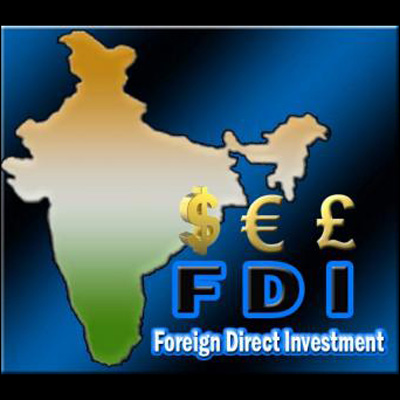
    Increase in FDI cap: a boon or a curse?

    MUMBAI: From a recent speech of Information and Broadcasting (I&B) Minister Arun Jaitley, speculation was drawn of a probable increase in foreign direct investment (FDI) cap from 26 per cent to 49 per cent. The current government has always been in favour of FDI and on numerous occasions stated FDI as one of the major aspects behind economic growth and reform. 


    The government has already taken steps towards increasing FDI in various departments, railway and defense being among them. Hence the speculation of increase in FDI cap in media may soon turn into reality.


    Foreign investment will certainly ensure development of channels, more employment and better quality, but will it in return take away editorial freedom? Will Indian media be a victim of foreign dictatorship or will it manage to keep its integrity alive despite foreign investment? Will we have Indian CEOs and reporters after the investment or will strategic affairs slip away from Indian entrepreneurs? A larger democratic debate on the issue is extremely important and Indiantelevision.com took the initiative to find the answers from media stalwarts.


    NDTV executive vice chairperson KVL Narayan Rao said, “On this FDI development my comments are personal remarks and not a point of view of the company. I welcome this increase whole heartedly as it will allow more investments and result to better service in terms of producing quality programmes. And the only difference we are having is added investment; we will continue to have Indian editor in chiefs, reporters and video journalists.”  


    On the speculated increase in FDI cap to 49 per cent, News Nation network CEO RK Arora said, “Increase in FDI will be extremely favourable, news industry needs to expand and the increase in FDI cap to 49 per cent will be a boon for us. Moreover we see increase in other departments so why not in this industry. If we are to match the standards with international content we need investments from foreign investors.” 


    For Arora, there is no harm in increasing FDI to 49 per cent “but the investment should not dictate the strategic affairs, and there shouldn’t be any interference in editorial freedom,” he added.


    Though the news industry is extremely positive about the possible increase, none of them are ready to compromise with strategic and editorial affairs. 


    Focus News managing editor Shailesh Kumar said, “If FDI is increased in news it would be a very good decision as most of the channels are going through a tough time and we need investment from other sources to rejuvenate the industry.”


    ABP News CEO Ashok Venkatramani is of the same opinion. “We (ABP News) are in total favour of the increase and I don’t see any possibilities of editorial or strategic affairs getting influenced due to any investment. If this actually happens then we will develop and grow big. Hence I am very happy that the point has been raised. We welcome the increase in FDI cap,” he said.


    No second thoughts came from any of channels; while they unanimously welcomed the increase in FDI cap to 49 per cent, they also held a firm grip on not compromising with editorial or strategic affairs. 


    Now it remains to be seen how things develop and whether the issue is debated at the top level. Considering the fact that the current government is concentrating on building an open market scenario to ensure economic growth and reform, speculations of a possible increase in FDI cap to 49 per cent can soon be a reality.

  • Ad Cap: Broadcasters buoyed by Arun Jaitley’s comment

    Ad Cap: Broadcasters buoyed by Arun Jaitley’s comment

    MUMBAI: While delivering speech at the first Justice J. S Verma Memorial lecture Information and Broadcasting Minster of India Arun Jaitley opposed the concept of Ad Cap in channels. He termed this concept as a contradiction to the Article 19 (i) A of Indian constitution. 


    Jaitley had said, “With the growth of digital platforms, news channels are going to find it immensely difficult to survive. The definition of news has changed; it was accuracy then and spontaneity now.” 


    With this Jaitley stressed on the fact that as news is now immediately available on the digital platforms, lesser people will tune into the television for the same.


    NDTV executive vice-chairperson KVL Narayan Rao said, “If this development turns real it will put an end to the lengthy sustaining debate. We will be extremely delighted and grateful to the government as we have been campaigning for this since a long time now. It will strengthen the development and bring a balance as the distribution charge is very high and the major source of revenue is advertisement.”


    The Minister, during his speech also noted how distribution costs were “phenomenally high.” He was of the opinion that low revenues in the media industry is a threat as it leaves direct effect on quality in terms of news gathering and reporting. “Low revenue will result in numerous amalgamations and takeovers,” Jaitley had said.


    Speaking to Indiantelevision.com on Jaitley’s remark on Ad Cap, Multi Screen Media president Rohit Gupta said, “We were never in favour of ad cap and see this comment of the Minister as a positive step. This will enable us to develop and hence I appreciate and welcome the statement.”


    The I&B Minster had also mentioned that many a times he come across speeches that he actually never delivered. According to him, these things happened due to two reasons: 1) Misinterpretation by the reporter in charge, and (2) In order to generate more TRP both are directly proportional to revenue. “If adequate revenue is generated then companies will have better reporters and there will be less thrive for TRP and hence the final product will be more credible,” he said.


    Appreciation also came from India TV editor in chief and chairman and News Broadcaster’s Association president Rajat Sharma. “News broadcasters have been raising this issue for more than a year now, I am happy that Arun Jaitley has understood the problem. He has realised that ad cap will make news channels unviable but more important is the minister’s view that the ad cap is against freedom of expression provided in the Constitution of India.”


    Focus News managing editor Shailesh Kumar termed it as a move in the right direction. He said “If the remark of I&B Minister on Ad Cap turns into a decision, it will be a blessing for the channels. Most of the channels are going through a tough time and need to generate more revenue.”


    On the other hand, Zeel MD and CEO Punit Goenka was of a slightly different opinion. While speaking to Indiantelevision.com, Goenka said, “It is a good move for news and music channels.” Separating his channel from the others, he further added, “Zee will continue to follow the ad cap. The ministry comes up with such statements and many fall for the trap.” 


    Jaitley concluded his speech by saying, “It will be music to Rajat (Sharma) and other media person’s ear on hearing this view from me. My I&B Ministry, a couple of years ago came out with a statutory amendment to law saying no channel will telecast advertising beyond so many minutes, since then I am struggling in my own mind as how this meets the challenge of Article 19 (i) A (of Indian Constitution). Is the government suppose to say how much news and how much advertisement or it should be viewers prerogative to switch when it turns monotonous.”  


    The controversial law was invoked by the Authority in May 2012 and it was disputed by television broadcasters, who had also challenged the jurisdiction of Telecom Regulatory Authority of India (TRAI) in this regard before the Telecom Disputes Settlement & Appellate Tribunal (TDSAT).


    The News Broadcaster’s Association (NBA) along with others had challenged the ad cap rule, contending that TRAI does not have jurisdiction to regulate commercial air time on television channels. The Delhi High Court panel led by Chief Justice G Rohini and Justice Rajiv Sahai adjourned the petition till 24 March, 2015. 


    Meanwhile TRAI gave assurance of taking no action against any channel till the matter is resolved in court. The regulator’s instance, directed all channels to keep a record of the advertisements run by them. It can be noted that the ad cap case was adjourned to 21 January, 2015 when it last came up for hearing on 20 November, 2014.


  • Ad cap conflicts with fundamental rights: Arun Jaitley

    Ad cap conflicts with fundamental rights: Arun Jaitley


    NEW DELHI: Reiterating that the government is not inclined to interfere in the content or the business of media entities, Information and Broadcasting minister Arun Jaitley has said he is not in favour of a cap on advertising for TV or print media. 

    In the first J S Verma Memorial Lecture, Jaitley wondered how a 12-minute cap could be reconciled with the fundamental right of freedom of speech.

    “It will be music to the years of media persons. My ministry, a couple of years ago, came out with a statutory law that no channel will telecast advertisements beyond so many minutes. I have been struggling, in my own mind, since then as to how this meets the challenge of Article 19(1)A,” Jaitley said. 

    The ad cap law brought in by the Telecom Regulatory Authority of India (TRAI) has been legally challenged and the matter is pending in court. 

    Jaitley was also in favour of increasing FDI in media from the current cap of 26 per cent, saying when foreign newspapers were anyway available online in India, there was no point opposing the move. He said, “The debate over whether foreign media should be allowed to establish in the country and the extent of foreign equity has been made irrelevant by technology. Today, sitting here, I can access any newspaper in the world over internet.” 

    Referring to the financial pressure on modern media, he said, “The financial model of most media organizations is becoming challenging. The cost of news distribution has become huge. Cost of circulation is high. Most are unable to sustain. This is leading to consolidations and mergers. Those with deep pockets are acquiring media.” 


    The minister said that the media, in the spirit of fairness, must carry a disclaimer with respect to news where there was a conflict of interest. 

    Jaitley said financial pressure on media affected the quality of news and its credibility. Because of this, media houses spend less and less on news collection, hire less reporters who are not paid well, he said.


    He stressed on the challenge posed by digital media to the traditional forms of news dissemination and pointed out how newspapers and magazines abroad were shutting down in favour of digital platforms. He, however, said that the revenue model for digital media was not clear and it was still evolving. 


    He also raised the issue of cross-media ownership and said in his concluding remarks that it was an issue that needed to be debated. “Most jurisdictions world over ban cross-holdings in the media. Can all mediums be vested with one person? How is larger public interest going to be impacted by this? It should be debated,” Jaitley said.

  • “Digital has emerged as alternative platform for information dissemination”: Arun Jaitley

    “Digital has emerged as alternative platform for information dissemination”: Arun Jaitley

    MUMBAI: The Minister for Finance, Corporate Affairs and Information & Broadcasting, Arun Jaitley has said that in the last two decades, conventional contours of the issues pertaining to freedom and responsibility of media had changed due to changes in the nature and content of media and the definition of news. 


    According to the Minister, news in the electronic media today is being defined by what the camera could capture. “In the current paradigm, technology has become a driving force for these changes. The impact of technology was profound as information dissemination was taking place 24×7 across different technological tools and media platforms including the digital space,” he added.


    Jaitley stated this while delivering the first Justice J. S. Verma Memorial lecture on the ‘Freedom & Responsibility of Media’ organised by the News Broadcasters Association.  


    Elaborating further, Jaitley said that technological developments had defied the contours of censorship and the challenges for the media lay within, in the context of ownership patterns, financial sustainability and financial models, which led to aberrations such as paid news.


    According to Jaitley, the challenges before the media were to ensure quality, credibility along with the responsibility to play the role of an educator in handling sensitive issues. The challenge also lay in maintaining high ethical standards on the issue of conflict of interest where media needed to be very careful.


    Regarding digital media, the Minister said the financial models would evolve as the medium matured. The digital platform also needed to evolve its own standards of responsibility as it had emerged as an alternative platform for information dissemination.  


    The Minister further mentioned that media responsibility was critical in addressing matters related to security, social tension, privacy of the individual and the issues that involved a subjudice connotation. “Media needs to avoid the conduct of parallel trials in reporting matters that were subjudice,” he said, adding that constructive deliberations on all issues relating to media freedom and responsibility needed to be initiated amongst all stakeholders. 


    During the course of his address, Jaitley recalled the outstanding contribution of Justice J. S. Verma in the domains of Human Rights, gender equality, probity and media freedom as the conscience keeper of the society. 


  • CNBC-TV18 celebrates the business stalwarts of India

    CNBC-TV18 celebrates the business stalwarts of India

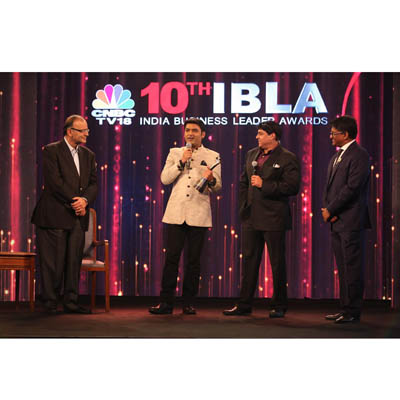
    MUMBAI: “We Will Lead the Way, the Way We Have Led, Triumphs Behind, Triumphs Ahead” was the slogan that resonated at the 10th chapter of the flagship India Business Leaders Awards (IBLA) – Asia’s most renowned awards for Excellence in Leadership hosted by CNBC-TV18, India’s leading business television. The IBLA witnessed some of the biggest and eminent members of the business fraternity and recognize and honour the visionaries who have strived hard to change the face of India Inc and place it on the global pedestal. The 10th IBLA was presided by Hon’ble Finance Minister of India, Shri. Arun Jaitley, and was adjudged by stellar jury of reputed members at the Regal Room at Trident hotel, Mumbai on January 09th, 2015.

    In an aim to celebrate the spirit of leadership and excellence in the business arena of India, the India Business Leader Awards credits individuals and organizations that have symbolized corporate excellence and have taken Indian Business to a new stratum of fame. The ‘India Business Leader Awards’, CNBC-TV18’s flagship awards for leadership in business and the economy, recognized the leaders who ingeniously piloted their organizations in these times of economic turmoil.

    The singular idea for IBLA this year was to honor those poised to champion it. IBLA emphasized on the selection of winners across categories that have showcased men and women who have shown the ability, shared the vision, and have the capacity to rise above the current volatility and see the long term goal of putting India on the world map

    In what would be an interactive and a first of its kind session with Hon’ble Finance Minister Shri. Arun Jaitley aimed to get a glimpse on what could be expected in terms of economic policies and Budget 2015 in the months to come from the the Finance  himself. In response to the type of budget expected this year, Shri. Arun Jaitley said, “A budget is a very important occasion. It should indicate the direction of policies and major announcements should be made every week or fortnight regarding budget decisions in the same direction”. On fixing the fiscal gap, the Finance Minister continued to say that “a higher fiscal deficit is unfavourable to the economy as it hits the credibility of the country to curtail its spending. Also, rating agencies tend to alter their ratings based on this important parameter which, in turn, makes borrowing. Major disinvestment decisions will be taken before the 31st of March 2015”.

    The IBLA jury consisted of distinguished names such as Mr. N. R. Narayana Murthy- Founder – Infosys Limited, Mr. Deepak Parekh – Chairman – HDFC ltd, Mr. D Shivakumar – Chairman and CEO, PepsiCo India Holdings Pvt. Ltd., Mr. Cyril Shroff- Managing Partner of Amarchand & Mangaldas & Suresh A. Shroff & Co., Mr. Harish Manwani- Non Executive Chairman- Hindustan UniLever.

    Speaking about the awards, Anil Uniyal, CEO of CNBC-TV18 and CNBC AWAAZ said, “For years, we have recognized leadership and applauded India’s outstanding leaders with the CNBC-TV18 India Business Leader Awards. And now as we celebrate two very special milestones – 15 years of CNBC-TV18 and 10 years of CNBC-TV18 India Business Leader Awards – the occasion is twice as momentous. With the Hon’ble Finance Minister gracing this edition of the awards, and all key business leaders joining us on the evening of the 9th it was truly a celebration of our success”

    The Young Turk of the Year was Hector Beverages – maker of Paperboat. Co-Founders Neeraj Kakkar and Neeraj Biyani accepted the award on behalf of the organisation. Speaking on the recognition, Neeraj Kakkar said, “We would like to thank IBLA for recognizing our dream and hard work. In our pursuit to walk down the memory lane and bring back childhood memories alive, we have bottled the traditional Indian drink in the form of Paperboat”. Neeraj Biyani who spoke on the growth prospects of Hector Beverages, said, “We believe that we can co-exist with the bigger players while creating our own space in the packaged beverage segment. We would like build on our product portfolio in India which by itself is a huge market while we would want to go global in a few years from now”.

    Google India won the trophy for the Brand of the Year for their famous commercial on reunion. CNBC-TV18 raised an interesting point on Google India’s, decision for an ad that speaks about the past, despite being a company that redefines future. The Vice President and Managing Director of Google India, Rajan Anandan, who summarized the rationale behind the ad said, “The Internet is all about transforming lives and our lives are about the past as much as it is about the future and Google India believes that the internet truly changes these lives. We are touched to see how India and the world reacted to this ad and this award resonates that we are headed in the right direction. I would like to thank our creative partners, Ogilvy India and IBLA for this honour”.

    The most deserved Lifetime Achievement winner, S. Ramadorai, erstwhile CEO and MD of Tata Consultancy Services and Chairman, National Council on skill development, congratulated CNBC-TV18 on completing 15 years in the industry and on the 10th year of Indian Business Leader Awards (IBLA). He thanked the Hon’ble Finance Minister, Shri Arun Jaitley and the respectable jury members on conferring him with the honour and credited the success to the employees of TCS.

    The 10th India Business Leaders Awards once again stood as a truly defining moment for the leaders and the companies that won the award. Every year, the IBLA sets new standards for excellence to become a trend-setter in recognizing and awarding the best in the industry, and this year, it left no stone unturned to celebrate the spirit of excellence in business leadership in India.

    The winners of the India Business Leadership Awards 2015 are listed below: