Tag: Arun Jaitley

  • Shashi Kapoor to receive Dadasaheb Phalke award

    Shashi Kapoor to receive Dadasaheb Phalke award

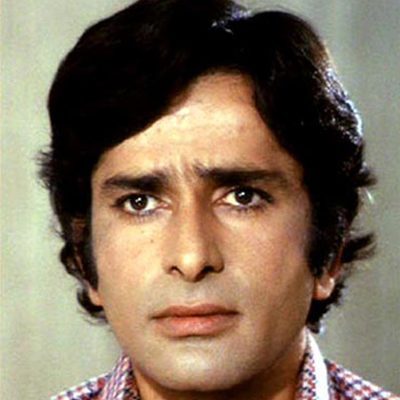
    NEW DELHI: Veteran film actor and producer Shashi Kapoor, who charmed his way in Bollywood as an actor with his unique mannerisms, will receive the 46th Dadasaheb Phalke Award for the year 2014. 


    The award is conferred by the Central Government for outstanding contribution to the growth and development of Indian cinema. The award consists of a Swarn Kamal (Golden Lotus), a cash prize of Rs 10 lakhs and a shawl. 


    The award is given on the basis of recommendations of a Committee of eminent persons set up by the Government for this purpose. This year, a five member jury consisting of eminent film personalities, after due deliberations, unanimously recommended Kapoor for the prestigious award. 


    Information and Broadcasting Minister Arun Jaitley conveyed his congratulations on the occasion. 


    Born on 18 March 1938, Shashi Kapoor is the youngest son of the late Prithviraj Kapoor and the youngest brother Raj Kapoor, both of whom have also been conferred this award. While Prithviraj Kapoor received this award in 1972, Raj Kapoor received it in 1988.


    Shashi, who hails from arguably the largest film family in the world, started acting from the age of four, He acted in plays directed and produced by his father while travelling with Prithvi Theatres. He started acting in films as a child in the late 1940s. His best known performances as child artist were in Aag (1948) and Awaara (1951), where he played the younger version of the character played by his elder brother Raj. Shashi also worked as assistant director in the 1950s. 
     

    Shashi made his debut as a leading man in the 1961 BR Chopra film Dharmputra and went on to appear in more than 175 Hindi films, some of them made by his brother Raj under the banner RK Films among them Satyam Shivam Sundaram. He was a very popular actor in Bollywood during the 60s, 70s and until the mid 80s. 
     

    Shashi was one of India’s first actors to go international. He is known internationally for starring in many British and American films and the team of producer Ismail Merchant and director James Ivory starred him in The Householder (1963), Shakespeare Wallah (1965), Bombay Talkie (1970) and Heat and Dust (1982). He also starred in other British and American films such as Siddhartha (1972) and Muhafiz (1994). His last film as actor was in 1998 in the English Side Streets and also was the narrator the same year for the feature Jinnah
     

    In 1978, Shashi set up his production house Film Valas, which produced critically acclaimed films such as Junoon (1978) which starred his wife Jennifer Kendall, who was well-known on the British theatre scene, Kalyug (1981), 36 Chowringhee Lane (1981), Vijeta (1982) which introduced his son Kunal and Utsav (1984). He also produced and directed a fantasy film titled Ajooba, which had Amitabh Bachchan and Rishi Kapoor in the lead role. Jennifer passed away in 1984.


    He also set up Prithvi Theatres in Mumbai to promote theatre as his father had always been a theatre actor along with acting in films. Prithvi Theatres is managed by Shashi’s daughter Sanjana. 
     

    Shashi was honoured with Padma Bhushan in 2011. He is also a recipient of three National Film Awards.

  • Prasar Bharati asks for additional Rs 112 crore for supplementary demands

    Prasar Bharati asks for additional Rs 112 crore for supplementary demands

    NEW DELHI: An additional sum of Rs 111.98 crore has been sought by Finance Minister Arun Jaitley for providing additional grants-in-aid – General of Rs 1.98 crore, and grants-in-aid – salaries Rs 110 crore for Prasar Bharati.


    The demands have been made in the Supplementary Demands for Grants tabled in Parliament by Jaitley, who also holds the Information and Broadcasting portfolio.


    A sum of Rs 1.5 crore has been demanded for meeting additional expenditure towards providing grants-in-aid – general for National and International Children’s Film Festival under the Plan Scheme; Promotion of Indian cinema through film festivals and film markets in India and abroad.


    Grants-in-aid – salaries totalling Rs 1.85 crore has also been sought towards providing to the Children’s Film Society, India (Rs 4 lakh), Satyajit Ray Film and Television Institute in Kolkata (Rs 83 lakh), Indian Institute of Mass Communications (Rs 80 lakh) and Press Council of India (Rs 18 lakh).


    In the case of these three demands, the Minister said, “As savings are available in the same section of the grant, a token supplementary is sought.”


    A sum of Rs 5.7 crore has been demanded for upgradation of the Siri Fort Complex (Rs 40 lakh), building infrastructure of Films Division (Rs 50 lakh), and the Electronic Media Monitoring Centre (Rs 4.8 crore). The Minister has said, “Taking into account the savings of Rs 2.49 crore available in the same section, a technical supplementary for the balance amount of Rs 3.21 crore is sought as equivalent savings are available in the revenue section of the grant.”


    In addition, the supplementary demands for grants have sought a sum of Rs 3.24 crore as capital outlay.  


  • FM Radio Phase III first batch to have e-auction of 135 channels

    FM Radio Phase III first batch to have e-auction of 135 channels

    NEW DELHI: A total of 135 private FM radio channels will be auctioned in the first batch covering 69 cities in Phase III based on the reserve price formula approved by the Cabinet in 2011, the Parliament was informed on 20 March.


    This covers towns and cities, which already have FM but have vacancy for more, apart from areas which do not have FM Radio.


    Information and Broadcasting Ministry officials told Indiantelevision.com that the process would be completed by April-end.


    Speaking in the Lok Sabha, I&B Minister Arun Jaitley said that apart from news that will be taken from All India Radio (AIR) under conditions to be mutually agreed with Prasar Bharati, Phase III will consider as non-news and current affairs live coverage of sports events of local nature, information pertaining to weather and traffic, cultural events and festivals, topics relating to examinations, results, admissions, career counsel availability of employment opportunities and public announcements pertaining to civic amenities.


    In addition, categories not permitted at present, may subsequently be permitted by the Ministry from time to time, the Minister said.


    In reply to a separate question, Minister of State Rajyavardhan Rathore said that there is no proposal for community radios before the Ministry.


    The largest beneficiaries of the first batch are Maharashtra including Mumbai with 26 channels in 13 towns, Uttar Pradesh comes next with 22 channels in eight cities, followed by nine channels in six towns of Rajasthan and eight channels in five cities in Tamil Nadu. 

  • CNN IBN names winners across categories for Indian Of The Year

    CNN IBN names winners across categories for Indian Of The Year

    MUMBAI: Recognizing the remarkable achievements and contributions of Indians, who have tirelessly worked towards strengthening India’s foundation in the last calendar year, CNN-IBN named the winners of its Indian of the Year Award 2014.


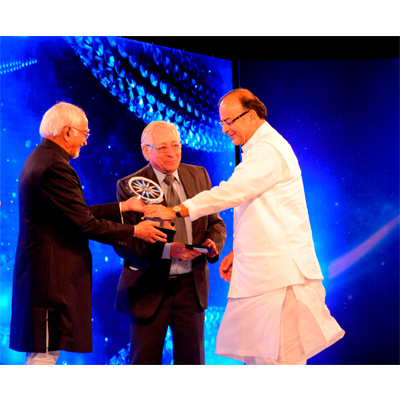
    At a star-studded awards ceremony held in New Delhi, winners across politics, sports, entertainment, business, public service and Global Indian categories amongst others were announced and felicitated by the vice president of India Mohammad Hamid Ansari.


    The grand finale of the award ceremony will be telecast on CNN-IBN on 21 March at 2 pm followed by a repeat at 8 pm.


    CNN-IBN INDIAN OF THE YEAR 2014


    Narendra Modi: In 2014, India witnessed an epic political battle, at the centre of which was none other than Narendra Modi. Running a never seen before electoral campaign, addressing over 450 rallies across the country, Modi finally won what he called ‘the Verdict of Hope.’ He is our Indian of the year 2014 for making the story of Lok Sabha elections 2014 – the story of Narendra Modi.


    Speaking on the occasion IBN Network CEO Avinash Kaul said, “It has been our privilege to have felicitated some of the most successful Indians who have made the nation proud and set an example for all of us. I extend my heartfelt congratulations to all the winners of the CNN-IBN Indian of the Year 2014”.


    CNN-IBN managing editor Radhakrishnan Nair said, “It is our great pride and pleasure that CNN-IBN Indian of the Year is considered one of the most prestigious awards in the country today. The award is our earnest effort to appreciate the outstanding contribution of our fellow Indians and their allegiance in making India shine. I wish all the winners hearty congratulations.”


    The winners across different categories are:


    Politics


    Arun Jaitley: For proving his dynamism by eliminating all ambiguity and unresolved leadership issues within the BJP, post the Vajpayee – Advani era. A man for all seasons, he has played a crucial role in projecting Narendra Modi as BJP’s PM candidate.


    Sports


    Jitu Rai: For his phenomenal record that started in June 2014 with three World Cup Medals including a Gold, followed by the Commonwealth Gold, a world championship Silver, an Olympic ticket and last but not the least, India’s first Gold at Incheon – a remarkable feat from an Indian shooter.


    Business


    N Chandrasekaran: For his ability to push boundaries that has made Tata Consultancy Services amongst the most valuable IT services companies in the world. Under N Chandrasekaran’s leadership the $13 billion-plus software gorilla has sprinted way ahead of others in growth and valuation metrics.


    Entertainment


    Chetan Bhagat: For being a literary superstar, whose bestsellers have been adapted into record breaking movies and who has introduced millions to English fiction. An investment banker, an author of seven best-selling novels and now a screenplay writer, Chetan Bhagat’s versatility is inimitable.


    Public Service


    Tongam Rina: For continuing her journalism of courage in the face of extreme adversity. Not even bullets could silence this journalist! Even after being shot at close range in 2012, Tongam Rina, the associate editor of Arunachal Times continues to write against injustice.


    Global Indian


    Satya Nadella: For successfully breaking the glass ceiling at the largest software company in the world. The third CEO in technology giant Microsoft’s history, Satya Nadella has successfully turned Microsoft into a company with a much broader and holistic view and driven a new level of openness.


    Popular Science


    K Chandrasekhar Rao: For leading the oldest statehood movement of India to realization and helping create India’s 29th state – Telangana. A mass leader who resuscitated the Telangana movement, K Chandrasekhar Rao is now the first Chief Minister of India’s newest state.


    P Vijayan: For being the force behind the Student Police Cadet Project and initiating several novel schemes to promote education among poor children. IPS officer P. Vijayan’s own journey from a child labourer to an IPS officer is an inspiration to many.


    Special Achievement


    Kangana Ranaut: For being amongst the few actresses in the Hindi film industry to have successfully carried films as a protagonist. Ranaut stirred up the nation with her critically applauded performance in Vikas Bahl’s commercial success Queen followed by an experimental film Revolver Rani


    Pankaj Advani: For adding to his amazing legacy in Billiards and Snooker and raising the profile of these sports in India. The only Indian to have won twelve World titles at 29, Pankaj Advani created history by winning an incredible Four World titles in 2014.


    Outstanding Achievement


    Kailash Satyarthi: For being at the forefront of the movement to end child slavery. Kailash Satyarthi founded and leads the ‘Bachpan Bachao Aandolan’ organization that has rescued over 82,000 children from a life of exploitation. An engineer by profession, Satyarthi has dedicated all his efforts to combat child labour and child trafficking.


    Azim Premji: For launching the Azim Premji Philanthropic initiative in 2014 to fund non-profit organizations working in key areas like nutrition, disabilities and governance. Premji has given away more than four billion dollars in the last four years, making him one of India’s biggest philanthropists.


    Lifetime Achievement


    The Indian Space Research Organization (ISRO): With a committed team of scientists and engineers, ISRO has proved itself time and again as one of the best teams in cracking the mysteries of space exploration. It made its mark with Chandrayaan, its mission to the moon and now with its Mars mission, Mangalyaan, India has stamped its mark as a major space power.


    CNN-IBN INDIAN Of The Year 2014


    Narendra Modi: In 2014, India witnessed an epic political battle, at the centre of which was none other than Narendra Modi. Running a never seen before electoral campaign, addressing over 450 rallies across the country, Modi finally won what he called ‘the Verdict of Hope.’ He is CNN-IBN’s Indian of the year 2014 for making the story of Lok Sabha elections 2014 – the story of Narendra Modi.


    IBN Network CEO Avinash Kaul said, “It has been our privilege to have felicitated some of the most successful Indians, who have made the nation proud and set an example for all of us. I extend my heartfelt congratulations to all the winners of the CNN-IBN Indian of the Year 2014.”


    CNN-IBN managing editor Radhakrishnan Nair added, “It is our great pride and pleasure that CNN-IBN Indian of the Year is considered one of the most prestigious awards in the country today. The award is our earnest effort to appreciate the outstanding contribution of our fellow Indians and their allegiance in making India shine. I wish all the winners hearty congratulations.”


    Instituted in 2006, this is the ninth edition of CNN-IBN Indian of the Year. Over the years, the awards have achieved prestige and credibility unmatched by others in the media industry. The awards adhere to a transparent selection process that includes the IBN Editorial Board drawing a list of nominees, further ratified by a Jury panel, consisting of a select group of distinguished personalities, bestowed with the most prestigious Padma honours.
     

  • No plans to launch a separate DD channel for documentaries: Jaitley

    No plans to launch a separate DD channel for documentaries: Jaitley

    NEW DELHI: The Government today said that Prasar Bharati has no plans to launch an exclusive Doordarshan (DD) channel for documentaries.


    It may be noted that earlier, the Films Division and the Indian Documentary Producers Association (IDPA), in separate proposals, had urged the Information and Broadcasting Ministry to launch a separate documentary channel.


    However, DD is soon launching a 24×7 channel exclusively for farmers and rural population of India, DD Kisan, which will be an educational-cum-entertainment channel encompassing all facets of life of a farmer.


    Information and Broadcasting Minister Arun Jaitley said DD has also planned to launch an new additional 24×7 satellite channel for North East Region called Arunprabha.


    Meanwhile, consequent to the bifurcation of former Andhra Pradesh State into Telangana and Andhra Pradesh, a new channel named Saptagiri from Vijayawada was inaugurated on 27 September last year to cater to the population of the state of Andhra Pradesh. 

  • Airwaves are public property & community radio stations are an extension of that concept: Jaitley

    Airwaves are public property & community radio stations are an extension of that concept: Jaitley

    NEW DELHI: Information and Broadcasting Minister Arun Jaitley said today that the government was committed to ensuring that ‘airwaves’ constitutes property of the people or the community and there is no interference of the state in creating any monopoly in this regard.


    He said Community Radio as a medium of communication constituted an integral component of the right to free speech and expression. This medium of information dissemination formed a part of the “Airwaves”.


    Inaugurating the 5th National Community Radio Sammelan on the theme “Community Radio for Good Governance” here, Jaitley said community radio as a platform of communication formed a part of the tripartite stakeholder partnership: the broadcaster, the person disseminating the information and the listener, who was keen for information, knowledge and dissemination of facts.


    Jaitley said radio had acted as an instrument for dissemination in the past, and would also do so in the future, in which community radio would play a critical role for the expansion of radio content. Community Radio as a concept was vibrant as it facilitated the expansion of an idea – a concept that discussed a range of issues including culture, languages and practices, amongst others.


    He hoped the Sammelan would provide a roadmap to the ministry to fine tune the blueprint for policy interventions in the future.


    The Minister said the Government was committed to ensuring that the sector was expanded and strengthened to achieve the goals of inclusive growth through social change. The Sammelan also offered an opportunity to highlight the relevance of flagship schemes through the medium to people, who in turn could benefit by such interventions. Sessions on Agriculture and Community Radio, Role of the Medium in promoting Water and Sanitation with emphasis on ‘Swachh Bharat Abhiyaan’ and the relevance of the medium in the context of Jan Dhan Yojana were innovations adopted for the Conference.


    A compendium on ‘Community Radio for Good Governance’ was released on the occasion by Jaitley and Minister of State for I&B Rajyavardhan Rathore.


    I&B Secretary Bimal Julka said the Community Radio Model offered a third model of radio broadcasting in addition to commercial and public broadcasting. As a platform for communication they served geographic communities and communities of interest. Community radio, rural radio, cooperative radio, and development radio hold the key to unite India’s linguistic and ethnic diversity and improve economic development.


    Referring to a Supreme Court ruling of 1995, Julka said airwaves were declared public property to be used for promoting public good and ventilating plurality of views, opinions and ideas, and the role of community radio was important in this context.


    He also outlined the recommendations of the Telecom Regulatory Authority of India (TRAI) on Community Radio Stations (CRS) permissions and related issues. The terms of permission are to continue to be for five years; the duration of advertisement on a CRS is to continue to be five minutes per hour; the stipulations that rates for advertisement approved by the Directorate of Advertising and Visual Publicity on CRS are lowest and exclusive to DAVP are to be relaxed in case of CRS. Julka specifically mentioned the role and relevance of CRS during disaster management situations and said that as the medium played a critical role in the given situations consultations with NDMA would be held to outline the detailed guidelines for the said purpose.


    He also referred to the TRAI recommendations related to the allowance to be given to CRS to broadcast news and current affairs content, sourced exclusively from All India Radio (AIR) in its original form or translated into in its local language/ dialect. This would enhance the mandate of the medium in the context of operating partnership with AIR.

    Jaitley and Rathore also presented the 4th National Community Awards in various categories.


    The Conference assumes importance in view of outlining the vision for community radio in India. One of the key highlights of the three day Sammelan is the session on Access to Justice for poor and marginalized communities in the context of the role of community radio and the work done by the National Legal Services Authority. The Conference will also deliberate upon the integration of CRSs and PRIs. The role of CR stations in promoting livelihood generation and other economic activities would be discussed. Sessions on Community Learning, Emerging Demography and Migration would provide critical inputs in taking the process forward. 


    The Sammelan has brought together Community Radio Operators, policy makers, Ministries/Departments, the UN and other international bodies like UNICEF and UNESCO and other stakeholders for exchange of ideas and cross learning.


    The sessions will highlight the vision of the Community Radio movement in India and its role in setting the agenda on the development discourse at the local level. 

    The Ministry has been organizing the National Community Radio Sammelan every year since 2011. The Ministry has also been organizing intensive Awareness Workshops in various parts of the country to increase awareness about Community Radio. Sixty three workshops have been organized so far. These workshops have proved to be useful not only to operate CRS in an effective way. 

    The Ministry has so far issued 409 permissions to set up community radio stations in the country. Out of this, 179 stations have become operational while others are in the pipeline.

  • Fifth National Community Radio Sammelan to commence in capital, Jaitley to inaugurate

    Fifth National Community Radio Sammelan to commence in capital, Jaitley to inaugurate

    NEW DELHI: The fifth National Sammelan for Community Radio Stations will be inaugurated in Delhi on 16 March by Information and Broadcasting Minister Arun Jaitely.


    Minister of State for I&B Rajyavardhan Rathore will also be present on the occasion.


    The Sammelan will bring together Community Radio Operators, policy makers, Ministries/Departments, the UN and other International bodies like UNICEF and UNESCO and other stakeholders for exchange of ideas and cross learning.


    The sessions will highlight the vision of the Community Radio movement in India and its role in setting the agenda on the development discourse at the local level. 

    The three-day workshop will discuss several important issues such as the role of community radios in good governance, sustainability, content sharing and programming for development. It will delve into the role that Community Radio can play in community learning, promoting livelihoods and agriculture, promoting water conservation and sanitation, strengthening Panchayati Raj Institutions, financial inclusion, legal literacy and facilitating access to justice for marginalized communities.


    A compendium containing inspiring stories of community radios from all over the country will be released. 

    The National Community Radio Awards would also be presented to promote better programming on CR stations and motivate CR operators to achieve goals of community empowerment. 

    The Ministry has been organising the National Community Radio Sammelan every year since 2011. The Ministry has also been organising intensive Awareness Workshops in various parts of the country to increase awareness about Community Radio. Sixty three Workshops have been organized so far. These workshops have proved to be useful not only to operate Community Radio Stations in an effective way. 

    The Ministry has so far issued 409 permissions to set up community radio stations in the country. Out of this, 179 stations have become operational while others are in the pipeline.


    The Ministry has also streamlined the approval process for setting up of Community Radio Stations. The applicants can now apply online and track the status of their pending application through a Comprehensive Community Radio Management Information System. A Facilitation Centre has also been set up, with a Toll Free number (1800-11-6346) for providing information. Efforts have also been taken by the Ministry to enable Community Radio Stations to sustain themselves. The Ministry has also introduced a Plan Scheme to provide financial assistance to existing and new community radio stations for infrastructure/equipment/training/capacity building etc. 


    The Ministry has also been advocating with various stakeholder Ministries like Health, Rural Development, Panchayati Raj, Science and Technology and Tribal Affairs to use the medium of CR to reach out to the masses.  

  • Soft launch of Kisan TV on 23 March; Prasar Bharati working on north-east TV channel: Jaitley

    Soft launch of Kisan TV on 23 March; Prasar Bharati working on north-east TV channel: Jaitley

    NEW DELHI: Kisan TV, which is slated for formal launch on Baisakhi Day 14 April as a 24-hour channel devoted to farmers and rural India, will have its soft launch on 23 March.


    In a report on action taken on promises made in the budget presented by him in July, Finance Minister Arun Jaitley said the Standing Finance Committee (SFC) had given its “in-principle” approval on 5 November. (This is the first time that a Finance Minister has appended an action-taken report on his last budget while presenting the budget for the new fiscal year.)


    Jaitley, who holds the Information and Broadcasting portfolio as well, said Prasar Bharati is also actively working on a 24×7 television channel for the north-east, for which the clearance of the SFC had been forwarded to the pubcaster on 24 September. The channel is expected to provide a strong platform to rich cultural and linguistic identity of the region.


    Referring to his announcements relating to Digital India, Jaitley said that a draft cabinet note on e-Kranti has been finalized, an Expenditure Finance Committee (EFC) note on National Information Infrastructure had been circulated, an EFC note on Common Services Centre was under finalization, and the first meeting of the Apex Committee on Digital India was held on 26 November.


    The Kisan TV channel was to have been launched on Makar Sankranti Day (14 January) but Jaitley had now been assured that all arrangements would be completed by mid-April.


    In a meeting held in January, Jaitley sought full details of the work done on the channel, for which he had set aside Rs 100 crore in the Budget in his capacity as Finance Minister.


    However, the budget for I&B Ministry showed an allocation of Rs 90 crore for this in the year 2014-15 and the budget for 2015-16 shows an allocation of Rs 45 crore grants-in-aid. Of the Rs 90 crore allocated, only Rs 21.68 crore had been utilised as per the revised estimates for 2014-2015. 


    DD sources told Indiantelevision.com that the Minister had been assured that all preparations would be completed by mid-April. It was also stated that 14 April is a very important day for farmers as it marks the start of the sowing season.


    Noting that the proposed Doordarshan Kisan is a dedicated channel for the farmers to give them information targeted to address the wholesome edutainment needs of a farmer to adopt and adapt to modern scenario, the national broadcaster had in early December invited proposals for programmes under the Self Financing Commissioned (SFC) Scheme.


    DD sources said the content expected for DD Kisan will primarily address the developmental needs of the farmer addressing ‘Core Agriculture’, ‘Critical Support’ and ‘Essential Ancillary’ areas, keeping in mind the varied Agro-Economic Zones, Climatic Areas, Different Crops and the need to address the target audience spread across various states but will have to be entertaining and engaging.


    The content on DD Kisan will be in Hindi with regional dubbing.


    The genres for which it invited proposals are: Documentaries/Features (Field Based); Magazines/Docu Dramas (Field Based); Cookery Shows/Biographies; Daily Soap/Fiction Serials/Family Serials/Thrillers; film song based programmes; Reality Shows/Game Shows; and Mandi Bhav/Bazar Bhav/Agro Based Bulletins.


    In addition, DD Kisan will have a new segment for iconic characters plus Content Packaging where animation characters will convey the agricultural themes and desired messaging. It is expected that the participants under this category will also provide layouts of the channel’s packaging.


    It will also have a segment for edited feature films where the entire film is expected to be capsuled with anchor based presentation for 60 minutes.


    In the ‘Bazar Bhav’ /Mandi Bhav’ segments, updates from the Mandis including the template will be required to be provided, which would be required to give the core audiences suitable direction and help in the agricultural productive activity.


    To begin with, each producer has to send in the synopsis of 26 episodes but this may be extended if necessary.


    Under the scheme of self-financed commissioning, the Producer will produce the programme at his own risk and cost and on the selection of the programme, Doordarshan will market it, telecast the same and pay the producer for his services after a specified period of time.


    Self-financed commissioning of programmes through outside producers could be done for DD’s national channels, regional language channels, state networks, regional and local services.


    DD shall, at its discretion and in accordance with its programme requirements, select producers suo moto for production of programmes on its channels by following the procedure outlined below. DD may also consider proposals submitted by producers on their own.


    Ministry sources said Prasar Bharati had said inputs would be taken from different Agricultural Universities and Institutes to develop rich content for the channel and the same would  be disseminated among the farmers.


    DD is hoping to engage people in the fields of production as well as marketing in positions ranging from senior to mid to junior level.


    There are a total of 67 vacant posts of Post Production Professionals, Visual Graphics Designer, Record Keeper, Senior Videographer, Junior Videographer, Senior Production Executive, Production Executive, Senior Creative Editor, Creative Editor, Senior Presenter, Presenter, Copy Editor–Cum-Writer, Programme Trainees, Head- Sales & Marketing, and Senior Sales & Marketing Executive.


    Other steps being taken by Prasar Bharati for this channel include: production of in-house and outsourced content; liaison with relevant ministries to get inputs for channel content and for which advertisements will be issued; calculation of budget and expenditure for the channel; crowd sourcing for channel name, logo, jingles etc; issue of advertisement for channel packaging and branding along with look and feel and montage;


    A consultation meeting has been held with various educational institutes for a rich content and to create a ‘Resource Persons Group’ and this would be a continuous process.

  • Sports broadcasters expect reforms from budget 2015

    Sports broadcasters expect reforms from budget 2015

    MUMBAI: Private sector is one of the largest contributor to Indian economy the first step towards economic reform would be making an investor friendly scenario. With a vast market like India if private sector is refraining from investing then there are certain issues at the bureaucratic level, which are hampering the economic growth. In such a scenario the biggest challenge is to garner trust, not by compromising with national security independence but by policies. Policies that rejuvenate investors to invest exp. Be it in Madison Square or Sydney Allphones Arena, the entire Indian diaspora was promised a better business friendly India by Prime Minister Narendra Modi, which laid foundation to skyscrapers of aspirations.


    Now emphasising on the current business workflow in India, a company has to abide by both central state laws, which turns out as an obstacle. Moreover government often intervenes in the financial strategic affairs of a private company. Sports broadcasting industry is one of the sufferer of such obligations. Broadcasters purchase content from  firms by paying the amount demed, but while producing the content they are forced to follow certain regulations, which indirectly decides how much should be charged for the content.


    Opposing such intervention Ten Sports CEO Rajesh Sethi told Indiantelevision.com, “In India, private sector is a huge contributor to the economy with digitization process in its final stages sports media can play a key role in economic growth provided we are backed with business friendly policies. The matory sharing of sports feed is something that directly hits us, though it’s not an issue related to the budget, I would certainly like the government to look into such issues. Moreover, we purchase content from somewhere by paying certain amount regulations restricts us when it comes to selling it. So the next level of de-regularisation or de-tarrifisation is something that I expect from this budget. I have high expectations from Arun Jaitley as he is someone who has immense knowledge of finance economics understs the problems that we are facing. He has delivered so far I hope he does in this budget too.”


    That somehow sums up the private sports broadcasting industry’s aspirations from budget Jaitley.


    The perspective of government broadcasting sector came from Doordarshan (DD) deputy director general C K Jain. Hailing the concept of Make in India he insisted that the government should reduce dependence on Chinese products. “I expect the government to remove service taxes from advertisements as we also have the same functions responsibilities. Also I would request the government to treat us as a government entity exempt us from various taxes liabilities. From sports perspective, service tax on advertisements is certainly a botheration should be dealt with.”


    Sharing his personal expectation Jain added, “Make In India has the potential to play a key role in economic growth provided government pays special attention to it. The local manufacturers need to be backed financially with loans tax rebates. The poor of the country needs to be benefited from the budget, as the goal is to uplift the poor to middle class, which will reduce the dependence in subsidies. If subsidies are reduced government will have more money which they can spend other important sectors.”     


    The Finance Minster has been criticised as pro private sector in recent past after he decided not to intervene in a legal battle between DD Star regarding World Cup. The Sports Act of Prasar Bharati forces private channels to share feed of any event of international importance with pubcaster DD, which enables them to showcase it live. Now the act was brought to ensure that one who cannot afford private channels gets access to events of such magnitude. Which is a fair call considering every citizen in the country has a right to information should not miss the World Cup or Olympics as they cannot afford private channels. The problem is with sharing the feed with cable subscribers. BCCI, Nimbus Communications the two sports channels (ESPN Star) went to court with a plea that no cable television network could broadcast such sports events without a licence from the content owners. 


    In an affidavit, Star Sports had said that it was losing around Rs 290 crore every year by sharing its sports signals with Doordarshan was expecting to lose around Rs 120 crore by sharing the telecast of the World Cup this year. Under the Act, the rights holder gets 75 per cent of the revenue from the telecast on DD. The remaining 25 per cent is retained by DD.


    While Jaitley plans to increase GDP reduce fiscal deficit through his financial proposal policies the entire nation’s eyes ears are glued to his words even as you read this report today (28 February, 2015) with immense expectations aspirations. It remains to be seen if Jaitley company makes it or breaks it.

  • I&B budgetary allocations up by Rs 600 crore; Prasar Bharati’s grants-in-aid upped

    I&B budgetary allocations up by Rs 600 crore; Prasar Bharati’s grants-in-aid upped

    NEW DELHI: The total budget of the Information and Broadcasting Ministry has been raised to Rs 3711.11 crore for 2015-16 against the revised budget of Rs 3176.80 crore (against the initial allocation of Rs 3316 crore) for the year 2014-15. This was announced by Finance Minister Arun Jaitley to the Parliament on Saturday, while presenting the Union Budget 2015 – 16.


    Additionally, the grants-in-aid for Prasar Bharati have been also raised from the revised estimates of Rs 2361.54 crore in 2014-15 to Rs 2824.55 crore for 2015-16, apart from an investment of Rs 200 crore by the government in the pubcaster.


    The investment in the pubcaster was stopped over the past two years but has been revived this year in the budget for 2015-16.


    Although the grants-in-aid for Prasar Bharati had provided for Rs 90 crore for the Kisan TV channel in the budget presented by Jaitley in July last year after the new government took over, the revised estimates for 2014-15 show the amount as Rs 21.68 crore and this amount has been raised to Rs 45 crore in the budget for 2015-16.


    An explanatory memorandum says that the grants-in-aid is meant for meeting salary and salary related expenditure. In addition, there is a proposal for Kisan TV for making available information to farmers across the country.


    (Expenditure on salaries of Prasar Bharati has fallen on the shoulders of the government since all Prasar Bharati employees, who were in employment as on 5 October, 2007 have been given deemed deputation status.)


    The allocation under ‘Secretariat – Social services’ covering centenary of cinema celebrations and digitisation of cable television among other things has gone up to Rs 235.23 crore as against the revised estimates of Rs 92.81 crore. Other subjects under this head include the National Film Heritage Mission, anti-piracy measures, promotion of Indian cinema overseas, production of films and documentaries, and setting up a centre of excellence for animation, gaming and visual effects. The explanatory note adds that Secretariat – Social services also covers expenses on development of community radio, and development support to the north-east as well as Jammu and Kashmir and ‘other identified areas’.


    The allocation under the Film Sector has been reduced to Rs 130.69 crore for 2015-16. The budget for the film sector for 2014-15 was Rs 135.81 crore while the revised estimates had put this figure at Rs 128.40 crore. There is an additional outlay of Rs 7.68 crore towards certification of cinematographic films.


    For the sixth year in a row, the government has not announced any investment in the National Film Development Corporation (NFDC).


    The allocation for Press Information Services, which includes grants to the Press Council of India has been marginally increased to Rs 71.45 crore from last year’s revised estimates of Rs 65.47 crore to meet the expenses for the Press Information Bureau, and the Press Council of India.


    For the first time after almost three decades, there is no allocation to the Press Trust of India for running the non-aligned countries news pool. (The pool had been established in the eighties but had gradually ceased to exist, although the allocation to PTI had continued.)


    The allocation to the Electronic Media Monitoring Centre has been reduced marginally to Rs 10.41 crore from the revised estimates of Rs 12.52 crore in 2014-15. The EMMC was set up for monitoring television and radio channels for violation of programme and advertising codes.


    The allocation for advertising and visual publicity has been more than halved to Rs 91.02 crore against the revised estimates of Rs 210.48 crore and budget allocation of Rs 230.37 crore for 2014-15, covering expenditure incurred by the Directorate of Advertising and Visual Publicity for publicity campaigns through advertising and other printed materials, as well as through radio, television, exhibitions and other outdoor campaigns.


    The allocation for research and training in mass communication has been raised marginally to Rs 26.26 crore as against the revised estimates of Rs 24.48 crore and the budgetary allocation of Rs 33.54 crore for 2014-15. This covers the Indian Institute of Mass Communication and the Research and Reference Division of the I&B Ministry, which collects and collates basic information on subjects of media interest for providing assistance to the Ministry and to its media units, Indian missions overseas, and newspapers and news agencies.


    There is an increase in the lump sum provision for projects/schemes for development of North-eastern areas including Sikkim to Rs 92 crore for 2015-16. The budgetary allocation had been Rs 100.5 crore in the 2014-15 but had come down in the revised estimates to Rs 75.2 crore.


    The Minister has also proposed a Centre for Film Production, Animation and Gaming in Arunachal Pradesh for the North Eastern states. Though there is no separate budgeting for it, Ministry sources told indiantelevision.com that this will come under the lump sum provision for the North East and from the Development of North Eastern Region Ministry.