Tag: Arun Jaitley

  • DD spends 29% of annual expenditure on terrestrial distribution

    DD spends 29% of annual expenditure on terrestrial distribution

    NEW DELHI: Around 29 per cent of the total expenditure of Doordarshan is spent on terrestrial distribution annually, the Parliament was told today.


    However, Prasar Bharati says that the viewership data received at present still does not show the terrestrial viewership for rural viewers separately, Minister of State for Information and Broadcasting Rajyavardhan Rathore said.


    In January 2003, Doordarshan had set up four digital transmitters, one each at Delhi, Mumbai, Kolkata and Chennai on an experimental basis using Digital Video Broadcasting Transmission (DVB-T) System to gain experience in digital transmission technology.


    As part of the 11th Plan Scheme, four High Definition TV (HDTV) digital High Power Transmitters (HPTs) have been installed at Delhi, Mumbai, Kolkata and Chennai and are ready for commissioning.


    A total of 63 digital HPTs (40 in 11th Plan and 23 in 12th Plan) have also been approved as part of digitisation schemes. Out of 63 digital HPTs, 16 digital HPTs are ready for commissioning and another three digital HPTs are at advanced stage of completion. Action has been initiated for setting up of remaining 44 digital HPTs.


    Replying to a separate question, I&B Minister Arun Jaitley said against funds amounting to Rs 155 crore allocated in 2014-15 by the Prasar Bharati from the funds given by the Government for modernization schemes, Prasar Bharati had reported an expenditure of Rs 153.37 crore.


    He added that against funds amounting to Rs 237 crore allocated in 2015-16 to the pubcaster, an expenditure of Rs 41.46 crore had been incurred till October 2015.


    The Expert Committee for Prasar Bharati had recommended digitisation of Terrestrial TV operations based on commercial viability.


    However, Rathore said there is no time-line at present for Analogue Terrestrial TV switch off.


    The switch-off is currently happening only in the digital addressable systems (DAS), with the third phase being completed by this month end and the final phase slated for December 2016.

  • CNN-IBN bags 3 journalism awards at the Ramnath Goenka

    CNN-IBN bags 3 journalism awards at the Ramnath Goenka

    MUMBAI: CNN-IBN has bagged 3 awards at the prestigious Ramnath Goenka Excellence in Journalism Awards at a grand ceremony held on 23 November 2015 at ITC Maurya in New Delhi.


    The senior editor of the channel, Karma Paljor roped the award in the category of on the spot reporting for his coverage of Cyclone Phailin in the year 2013. The bureau chief of Bengaluru, Deepa Balakrishnan, was awarded in the category of reporting on politics and government for exposing the nexus between mining and politics against the backdrop of the impending elections in the state. Senior associate editor, Marya Shakil has bagged the award in the reporting on politics and government category for her outstanding coverage of the General Elections 2014. 


    The awardees were felicitated by the chief guest – honorable minister of finance, corporate affairs and information and broadcasting, Arun Jaitley.


    Commenting on this the A+E Network TV18 president and IBN Network CEO Avinash Kaul asserted, “At   CNN-IBN, we hold ourselves to the highest standards in terms of journalistic excellence. Our teams constantly push the envelope to bring content to our viewers that is relevant, insightful and impactful. It is thus heartening and humbling to be recognized for our work.”


    Ramnath Goenka Excellence in Journalism Awards was started in 2006 to honour the late Ramnath Goenka, freedom fighter and founder of The Indian Express Group.  These awards acknowledge accuracy, courage, credibility and fairness in journalism, and honour the best and the brightest in Indian media every year.

  • IFFI 2015 to feature 200 films from 89 countries; Anil Kapoor to inaugurate

    IFFI 2015 to feature 200 films from 89 countries; Anil Kapoor to inaugurate

    NEW DELHI: Around 32 years after he first featured in a lead role, veteran actor Anil Kapoor will inaugurate the International Film Festival of India (IFFI) this month in Goa, which will feature a total of 187 films from 89 countries in the international section.


    In addition, the Indian Panorama will have 26 feature and 21 non-features in the Festival, which will open at Panaji on 20 November with the film The Man who knew Infinity by Mathew Brown. The film is a true story about the friendship between Indian mathematician Ramanujan and Professor GH Hardy that forever changed the world of mathematics.


    The Festival organised by the Directorate of Film Festivals of the Information and Broadcasting Ministry in association with the Goa Government will conclude on 30 November. It will have special classes in filmmaking in collaboration with the American Academy, which awards the Oscars.


    Noting that IFFI had become a global brand in the world of cinema, I&B Minister Arun Jaitley said that Spain is the focus country this year and the special focus within the country was on cinema from the north eastern states.


    The competition section will have 15 films including two from India and will be judged by a jury headed by filmmaker Shekhar Kapur. The other members will include Michael Radford, Julia Jentsch, Suha Arraf and Jeon Kyu-Hwan.


    The Panorama films were selected by a 13-member Feature jury headed by filmmaker Aribam Syam Sharma and a seven-member non-feature jury headed by Rajendra Janglay.


    Apart from Jaitley, those present at the press meet were Minister of State Rajyavardhan Rathore, Goa Chief Minister Laxmikant Parsekar, I&B Secretary Sunil Arora, Festival Director Senthil Rajan, and Special Secretary J S Mathur. Jaitley also released the poster for the 46th Festival at the press conference.


    Jaitley agreed to consider a suggestion that the opening of IFFI should not clash with the International Children Film Festival of India in Hyderabad, which is held every second year. However, he said this could not be done this year.


    Jaitley said the Festival promoted excellence and provided an opportunity to showcase the best domestic and international talent.


    The Spanish package would have the films of master Spanish filmmakers Carlos Saura and Pedro Almadovar along with contemporary filmmakers like Alejandro Amenabar. The section would also feature Spanish actress Leticia Dolera’s directorial debut Requirements to Be a Normal Person.


    Jaitley said IFFI this year would feature a special section on ‘World Cinema Restored Classics’ to highlight the idea of film restoration. This would feature a package of classics to put spotlight on National Film Heritage Mission (NFHM). 


    The Minister added that the film festival will also introduce a new segment – First Cut – to recognise young talent in the field of cinema and would screen some of the outstanding directorial debuts of 2015. The section would feature emerging filmmakers including Brian Perkins (Golden Kingdom, USA) and Michael Klette (Solness, Germany) among others. The festival in association with the Oscar Academy will also promote skill development in filmmaking through master classes on varied topics like sound designing, film archive and film editing.


    Jaitley said IFFI would include a special award – ICFT- UNESCO Fellini Prize – in collaboration with the International Council for Film, Television and Audiovisual Communication (ICFT), Paris and UNESCO. The award would be presented to a film, which reflects the ideals of peace, tolerance, non-violence and friendship promoted by UNESCO. 


    Answering questions, Jaitley said that film festivals all over the world were now linked to a city and therefore there was no plans to shift the festival out of Goa, which had hosted it since 2004.


    Arora added that IFFI was the biggest Film Festival in Asia and a leading platform for art and creativity. He said Goa had been the perfect venue for the past 11 years for the film festival.


    The focus on the north east at IFFI will include a Special Retrospective on Aribam Syam Sharma along with a unique segment featuring next generation filmmakers from the north east.


    Answering questions, Rajan said that there was a film from Pakistan apart from other SAARC countries as well. Speaking to Indiantelevision.com Rajan said that while the Film Federation of India (FFI) and the Federation of Western India Cine Employees (FWICE) had decided to boycott the Festival, they had not barred individual filmmakers from taking part. Furthermore, steps were being taken to address their grievances.


    IFFI will also be organising a special seminar on Film and Cultural diversity. A special series titled ‘In Conversation’ with eminent Indian filmmakers such as Shyam Benegal and Vettrimaran will also be organised to discuss films and the art of filmmaking with the audience. 

  • I&B minister Arun Jaitley asks media to strike a balance

    I&B minister Arun Jaitley asks media to strike a balance

    NEW DELHI: Information and Broadcasting Minister Arun Jaitley today cautioned the media to strike a fine balance between freedom of speech and expression and the reasonable restrictions so as to maintain public order and integrity and sovereignty of India.


    He said free speech is an aid to good governance in view of the changes taking place in the media landscape and the scope and content of issues related to Right to Freedom of Speech and Expression.


    The overall scenario was also influenced by technological tools that brought about a change in the form, style and method of dissemination. These developments also impacted the definition of news, which today was increasingly being influenced by the camera and channel driven mode.


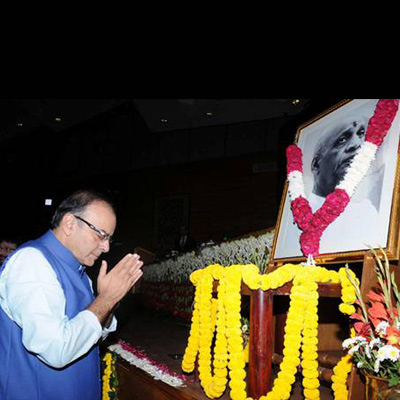
    Jaitley made these remarks while delivering the Sardar Patel Memorial Lecture 2015 on: “Is it possible to impose reasonable restriction on Freedom of Speech & Expression given today’s media landscape,” which was organised by All India Radio on behalf of Prasar Bharati.


    The Minister referred to the evolution of media and the right to freedom of speech and expression. Citing global examples, Jaitley brought out the finer aspects of the freedom of speech vis-?-vis privacy; need to protect the source of information in public interest and media restraint with regard to matters that were sub-judice. He said that these issues had generated discussions amongst academicians, media fraternity and other concerned stakeholders.


    The Minister lauded the judiciary for its role in expanding the scope of Right to Freedom of Speech and Expression over the years. Various judicial pronouncements had underlined the spirit of the idea behind the Right to Freedom of Speech and Expression under the Constitution and correlated contemporary developments, issues and changes in the media space. 


    Judicial pronouncements subsequently in specific cases focused on issues pertaining to the idea of reasonableness related to restrictions under the Article 19 (2) of the Constitution in the interest of sovereignty, security and public order. Nonetheless due to the pluralistic character of the media space, it was important to exercise caution taking into account public order and sensibilities. He said that these restrictions could only be imposed by law and were specific rather than general so as to prevent misuse.


    Regarding the media landscape, Jaitley said satellite television had brought about a sea change in the presentation of news. In the current scenario, the recipient of information had the right to information and knowledge which was also being considered part of the debate under Right to Freedom of Speech and Expression.


    The dissemination process in the social media space had also impacted the information flow and contributed to the public debate and setting of agendas in the policy framework. Social media had led to the empowerment of citizens by giving them a voice. Decision makers were increasingly using social media to gauge public sentiments on government policies making public reactions, among other things, the new agenda setters for governance.


    Jaitley touched upon the global practices being followed in the context of social media restrictions. He referred to the ‘right to be forgotten’ incorporated by the European Court of Human Rights, which empowered the state authority to remove the reference of the aggrieved person from internet citing citizen’s right to privacy. He also spoke about the jurisdictional principles with respect to reasonable restrictions on Freedom of Speech and Expression in the light of changes and issues that had been raised in this context.


    These lectures started in 1955 and the first Memorial lecture was delivered by Sri C. Rajagopalachari.  In this series, the speakers in the previous years included Dr. Zakir Hussain, Morarji Desai, and Dr. A.P.J. Abdul Kalam.

  • Stockmarket reacts to buzz on FDI raise to 100 per cent in DTH, cable TV firms

    Stockmarket reacts to buzz on FDI raise to 100 per cent in DTH, cable TV firms

    MUMBAI: Is the government going ahead with the Telecom Regulatory Authority of India’s August 2013 recommendation of allowing a hike in foreign direct investment (FDI) in content carriage companies to 100 per cent from the current 74 per cent? And in news channels from 26 per cent to 49 per cent?


    No formal announcement has come as yet, but the buzz is that  the Narendra Modi-led government is indeed looking at TRAI’s recommendations which have been gathering dust on the ministry of information and broadcasting’s shelves at Shastri Bhavan in Delhi.  A while ago finance and MIB minister Arun Jaitley had stated that technology had made FDI limits on news channels redundant.


    Apparently, an inter-ministerial committee is examining that proposal (which was part of TRAI’s consultation paper released in 2013)   along with those relating to hiking the foreign investment limits in cable TV direct-to-home (DTH), internet TV, mobile TV, HITS (headend-in-the sky) and teleports from 74 per cent to 100 per cent.


    But the buzz generated by a Press Trust of India report was enough to lead to  a rise in the share prices of at least two listed content carriage firms  – the Essel group owned Dish TV and the Sameer Manchanda promoted DEN Network on 21 September. DEN, along with the Rajan Raheja promoted Hathway Cable have been enabling themselves to be in  a position to hike the foreign investment limits in their firms  to 74 per cent.


    Dish TV shares closed at Rs 116.45, 6.59 per cent higher than its previous close. To be fair to Dish TV, the share is being tipped by almost every investment advisory firm as a stock to be bought as it has been showing an improvement in its financial performance.


    At an early stage of the day (Monday) Den Network’s share were up by 1.53 per cent priced at Rs 129. The day, however,  ended with  its shares at Rs 126 down by 0.35 per cent compared to the previous close. Other listed MSOs such as  Siticable, Hathway and Ortel Communications, also saw similar downward movement in their stocks after climbing earlier in the day.

  • NXT Digital ‘hits’ Indian market with total outlay of Rs 5000 crore

    NXT Digital ‘hits’ Indian market with total outlay of Rs 5000 crore

    NEW DELHI : After three and half years of struggle, Hinduja’s Headend In The Sky (HITS) platform NXT Digital finally got rolling with a total project outlay of approximately Rs 5000 crore. The mammoth investment will be utilised as the business continues to design and develop new products and services for a growing customer base as well as strive to enhance its own standards.


    Information and Broadcasting Minister Arun Jaitley officially launched the venture in the presence of Hinduja Group chairmanAshok Hinduja and Grant Investrade MD Tony D’Silva.


    Launching the platform, Jaitley said, “Multiple carriage technologies will provide customers more choice as to which technology platform to choose.”


    While Hinduja Ventures has set an initial budget of Rs 5000 crore for the project, the chairman is open to investing more if necessary. “We are here to aggressively back this initiative and if necessary we will invest double or triple the allocated budget. Last mile operators (LMOs) are the one who started the business by laying the first cable and this venture is for them,” Hinduja said.


    The HITS project will not only facilitate over 100 million homes go digital in Phase III & IV digitisation markets but will also raise the standards of quality of service. 


    To acquire the base model of a Cable Operators Premises Equipment (COPE), one has to pay Rs 10.60 lakh while the premium one can be acquired after a payment of Rs 14 lakh. The amount appears high for the LMOs but Hinduja said that the Group also has a finance group, which would help the LMOs. “The project has a lot of securities and the investment is certain to provide returns so it is a safe investment. We have insurance schemes for the operators so their investment is safe,” he added.


    According to D’Silva, the consumer will have to pay a maximum of Rs 50 per month. NXT Digital is presently equipped to beam up to 500 channels and this capacity can be raised to 1000. The earth station is in Sector 62 in Noida in the National Capital Region (NCR) of Delhi. NXT Digital has six transponders at present.


    D’Silva also noted that it was interesting that the last two phases of Digital Addressable Cable TV System (DAS) provided for only 32 per cent of the revenue though they would cover a much larger area.


    The DAS Phase III and IV areas, which are estimated to have more than 120 million home, are the prime focus of NXT Digital. To succeed in occupying 15 per cent of the market, the company will have to provide set top boxes (STBs) to 20 million home, which is a huge demand to supply. However, Hinduja is bullish about meeting the demand on time and optimistic that the platform will not face a situation where there will be shortage of boxes.


    NXT Digital is also positioning itself as a adopter of the government’s Make in India, Digital India and Skill India initiatives, which according to Hinduja was the byword for the Group. The LMOs in the DAS III and IV areas have to be skilfully equipped with modern technologies that NXT Digital will be bringing in.


    Asked about how his system was different from the already existing – NSTPL’s JainHits – Hinduja said that the aim of the Hinduja Group was to protect the LCOs because it was they who had built this industry in the late eighties. “Therefore, the LMO will not lose out in any way, will be fully in charge of his own company, and will have full freedom to operate in his own way,” he said.


    When queried as to why it had taken the Group three years to get a licence when there was no cap on HITS, Hinduja said, “Formalities take time.”


    He also said that wherever someone tries to bring in transparency in any system, there are objections. He was also conscious that there was competition in the field and this may even lead to some legal hassles, but his Group was prepared for everything.


    Hinduja said that he was conscious of the matter relating to NSTPL pending in TDSAT, which sought that broadcasters treat HITS players at par with multi system operators (MSOs). He said the NXT Digital viewpoint had been presented at the hearings.


    Senior Hinduja executive Aubin Das said that the NXT Digital platform also took efforts to curb the issue of piracy and if LMOs attempt to put on the channel of a broadcaster in the slots meant for local channels, it could be immediately traced and stopped.


    Commenting on the training and development initiatives Castlemedia director Vynsley Fernandes said, “We are travelling to every nook and corner of the country to skilfully equip and train people about our technological upliftment and it is a chain system. Around 200 people have been trained under a ‘Train the Trainer’ programme and they will train others. And we are not equipping them only about NXT Digital we are introducing them to the next generation.”


    D’Silva said that under NXT Digital, the LMO gets to continue their ownership, enter into broadcasting deals, do packaging and pricing according to market demands, acquire STBs at cheaper rates, run up to 16 local channels, and compete with direct-to-home (DTH) operators.


    He added that DTH was on Ku-Band, which got disturbed in rainy or inclement weather, but HITS being on C-Band will not be disturbed. Furthermore, the HITS headend was on ground while DTH had to depend on satellites. Furthermore, NXT Digital will be able to service both DAS and non-DAS areas.


    NXT Digital focused marketing and subscription drive in the Phase III & IV markets. The company has so far travelled across 400 districts in 20 states to contact and inform the cable fraternity there about its offerings. As of now it has 14 vans touring various parts of the country to give live demonstrations to LMOs and LCOs. 


    Welcoming the move, Maharashtra Cable Operators Federation president and task force member Arvind Prabhu said, “I would like to congratulate AP Hinduja, with this initiative he actually kickstarts the process of digitisation. Mr Hinduja thought about the last mile operators and came up with NXT Digital, which will help LCOs getting their due. The other HITS platform is providing the COPE at a cheaper price and that will be a challenge. The pricing that we got from them are really good but considering the fact that DAS III and DAS IV areas do not come under ratings I believe there can be further negotiation with the broadcaster. Overall I believe it’s a move for the LCOs.”


    LCO from Assam and Task Force member Md Iquebal Ahmed also welcomed the HITS venture. “Operators cannot afford headends and MSOs take total advantage of it and in that context, it’s a great initiative. But the content pricing needs to come out transparently. Affordable pricing is what we are looking forward to.”

     

  • Ad cap case to be heard on 23 September, news channels seek clarity on MIB stand

    Ad cap case to be heard on 23 September, news channels seek clarity on MIB stand

    NEW DELHI: The challenge to the advertising cap of 12 minutes per hour by the News Broadcasters Association (NBA) and others in the Delhi High Court will be heard on 23 September.

    The NBA sought adjournment on the ground that it wanted to discuss the issue with the Information and Broadcasting (I&B) Ministry to seek certain clarifications.

    According to information available with Indiantelevision.com, this comes in the wake of a statement made by I&B Minister Arun Jaitley in January this year that there should be no ad cap in the print or electronic media.

    The order that the Telecom Regulatory Authority of India (TRAI) will not take action against any channel pending the petition will continue. In an earlier hearing, the Court had, at the regulator’s instance, directed that all channels keep a record of the advertisements run by them.

    The NBA had challenged the ad cap rule, contending that TRAI does not have jurisdiction to regulate commercial airtime on television channels.

    Apart from the NBA, the petition has also been filed by Sarthak Entertainment, Pioneer Channel Factory, E24 Glamoru, Sun TV Network, TV Vision, B4U Broadband, 9X Media, Kalaignar, Celebrities Management, Eanadu Television and Raj Television.

    The news and regional broadcasters fear that the capping of commercial airtime will curtail their ad revenues. They also argue that the ad cap must be brought only after the benefits of cable TV digitisation start showing. 

    Meanwhile, TRAI recently released results of their records, which show that around 36 news channels apart from 105 General Entertainment Channels (GECs) have violated the ad cap by telecasting ads for more than 12 minutes an hour.

  • Complete Works of Mahatma Gandhi e-version prepared by Publications Division

    Complete Works of Mahatma Gandhi e-version prepared by Publications Division

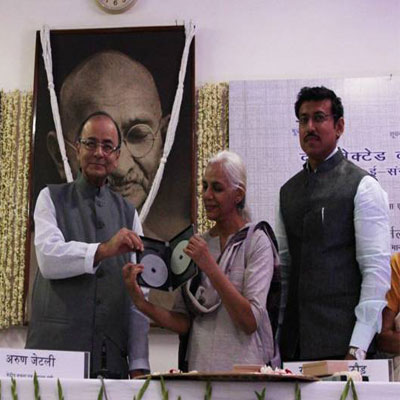
    NEW DELHI: The electronic version of the Collected Works of Mahatma Gandhi (CWMG), a monumental document of Gandhi’s words as he spoke and wrote day after day beginning from 1884 till 30 January, 1948 was released today by Information and Broadcasting Minister Arun Jaitley at Gandhi Peace Foundation.


    The e-version was also uplinked on the Gandhi Heritage Portal, a comprehensive repository of authentic Gandhiana. The portal hosts e-CWMG in a searchable PDF format to ensure easy and free accessibility of the CWMG for people across the world.


    Jaitley announced that the Hindi version of the monumental work CWMG (Sampoorna Gandhi Vangmaya) would be digitised soon. Minister of State (I&B) Rajyavardhan Rathore, Secretary (I&B) Sunil Arora and members of the Expert Committee were present on the occasion. 


    Speaking on the occasion, Jaitley said the intrinsic and heritage value of the e-CWMG Project had the collaboration and partnership of institutions that have been founded and nurtured by Gandhiji himself. Jaitley said that this digitised version of the CWMG would be instrumental in preserving the valuable national heritage and disseminating it for all humankind. 


    Arora said in order to preserve the invaluable heritage of Gandhi and make it available to future generations for all times to come, the Publications Division had taken up the task of preparing the e-version of the 100 volumes of GWMW in 2011. He added that in order to maintain the authenticity of this important work, it was decided to have a facsimile-based version in electronic form for preservation. It was also decided to make it into a searchable master copy in PDF format so that people could benefit of Gandhi’s life and thought in a simple and easy manner.


    The CWMG, published by the Publications Division, is a monumental document of Gandhi’s words, which he spoke and wrote in the period 1884 to 1948. In this series, his writings, scattered all over the world, have been collected and constructed ethically and with stringent academic discipline and loyalty.


    The CWMG took about 38 years in the making (1956-1994). They are a series of one hundred volumes, running into over 55,000 pages, intricately connected across the series, as an integrated whole. The CWMG-original-KS-edition volumes were published in the years 1956 to 1994.The Electronic Master Copy (Volumes 1 to 100) recently prepared is in the form of a searchable PDF beta version, matched with the original-KS-edition fully verified with the original source-documents. It retains the original architecture – volume structure, font structure, line structure, page structure – including its visual look – fully and loyally.


    The task of preparing the Electronic Master Copy of the CWMG-original-KS-edition has been accomplished by the Gujarat Vidyapith, Ahmedabad, India on behalf of DPD.  Execution of the task involved an intensely focused, organic, and stringently supervised effort over a period of four years.  A Committee of three experts constituted for the purpose of supervising this work had the following eminent Gandhian scholars: Gujarat Vidyapeeth former VC Prof. Sudarshan Iyengar, Sabarmati Ashram Preservation & Memorial Trust director Prof. Tridip Suhrud and renowned Gandhian Schola Dinaben Patel.

  • Ad cap violation by 141 TV channels even as case to come up in September

    Ad cap violation by 141 TV channels even as case to come up in September

    NEW DELHI: Even as the advertising cap case is to come up for further hearing before the Delhi High Court on 8 September, a study shows that a total of 141 television channels comprising 36 news and current affairs channels and 105 non-news channels, continue to telecast more than 12 minutes of advertising and commercials per hour in violation of the set rules.


    The study shows that while the highest of these is 22.66 minutes by India TV and the lowest is 12.04 minutes, there are at least 17 news and 19 non-news channels clocking more than 15 minutes per hour. 


    While asking the Telecom Regulatory Authority of India (TRAI) not to take any coercive action against any channel pending hearing of the case, the Court had asked all channels and TRAI to keep a record of the advertising time consumed including commercials. 


    The petition had been filed by the News Broadcasters Association (NBA) and some channels challenging the TRAI decision to implement the directive of 12 minutes contained in the Cable Television Networks (Regulation) Act 1995. The Information and Broadcasting Ministry and TRAI are the respondents in the petition.


    Interestingly, I&B Minister Arun Jaitley had in January this year said that he was not in favour of any ad cap in the print or electronic media.


    In the petition, the news channels have taken the plea that they are free to air and therefore do not get any subscription fee from the viewers as the GEC channels do.


    TRAI says that the information is based on the data submitted by the broadcasters and TRAI bears no responsibility for the figures given. 


    According to information available to TRAI, the rest of the news channels are carrying less than 12 minutes of average duration per hour of advertisements (Commercial & Self promotional) during peak hours (7 – 10 PM) from 30 March to 29 June.


    Among the news channels, the lowest is Mathrubhumi News with 12.42 minutes and among the GEC channels, the highest is 18.69 by B4U Movies and the lowest is 12.04 by Jaya Max.

  • BBC toasts to India’s rising economy with special business shows

    BBC toasts to India’s rising economy with special business shows

    MUMBAI: As the latest set of GDP figures are expected to show, India is on track to be the world’s fastest growing major economy this year. Taking a cue from this growth, the BBC is planning to bring tales of India’s development to its global audiences.


    Drawing on its news and programme making teams in India and the UK, BBC World Service, BBC World News and BBC.com/news will be delivering a wealth of content examining all aspects of India’s business, political and cultural life.


    The season launches with India Rising on Thursday, 27 August. This will be a pan-BBC News day of content delivered by reporters based in India working with journalists from the business and economics units.


    For BBC World News TV, business editor Kamal Ahmed will be reporting live from Delhi looking at how Prime Minister Narendra Modi’s reforms have progressed and how UK companies are faring. On the other hand, Yogita Limaye will be travelling across the country visiting Indian firms hungry to expand abroad, whereas World News Asia business correspondent Karishma Vaswani will live in Mumbai with a range of guests, with coverage for the international news channel’s shows Global, Impact and World Business Report


    There will also be a round-up edition of India Business Report. Listeners on BBC World Service will hear from the correspondents as well as Indian economist and philosopher Amartya Sen, while Business Daily will explore the need for investment to help provide new opportunities for the millions living in poverty. There will also be content on BBC.com/news including animations, video and explainers to help audiences understand the data and what it means for India. Plus people can get involved using social media via #indiarising2015.


    Speaking to Indiantelevision.com, Vaswani says, “Seasons will focus on the economic progress of India, and whether the nation is ready to be a replacement of China in terms of economic growth. I just interviewed RBI governor Raghuram Rajan, whereas Kamal Ahmed will interview finance minister Arun Jaitley. It will be two days of quality business content.”


    The India market is of immense importance to BBC and the British pubcaster is committed to present sublime content for the region. “I won’t say one episode of seasons or a certain interview is our goal. The expectation is to provide editorial quality to Indian audience,” asserts Vaswani.


    The focus on India will continue over the coming months with content across BBC World Service Radio, BBC World News TV and online at bbc.com/news.


    “With India’s economic performance under the spotlight, this is the perfect time to take an in-depth look at the country’s rapidly evolving business and financial landscape – from successes to areas of challenge – and focus on the people whose daily lives underpin the economy. For our listeners in India and around the world, we’ll also be discussing India’s dynamic arts scene, its wonderful food culture, and the importance of education for the next generation of growth,” said BBC World Service English controller Mary Hockaday.


    BBC Global News editorial and digital director Richard Porter added, “The BBC has a long history of broadcasting to and from India and we know our audiences here value what we do. Indeed bbc.com remains the number one international news site in India. Launching this season gives the BBC’s award winning international services the chance to showcase our commitment to this important market.”