Tag: Arun Jaitley

  • FICCI demands infrastructure status for broadcast industry in pre-budget memo

    FICCI demands infrastructure status for broadcast industry in pre-budget memo

    NEW DELHI: The Indian broadcast, cable and direct-to-home (DTH) sectors have been demanding a infrastructure status for the industry as well as seeking all benefits and incentives available for the infrastructure industry including the availability of finance at a concessional rate.


    To this effect, the Indian Broadcasting Foundation (IBF) had earlier this month urged the Union Government to grant “Infrastructure Status” to the broadcasting industry.


    Now, making this demand, the Entertainment Wing of FICCI has said in a pre-budget memorandum to Finance Minister Arun Jaitley that the sector should be allowed tax concessions as per Section 80-IA of the Income Tax Act.


    The digitisation process and the deployment of set top boxes (STBs) are heavy capital oriented and thus require huge investments, which may force various amalgamations and thus they should be allowed to set off accumulated losses and unabsorbed depreciation allowances to be carried forward as per Section 72 A of the Act, the industry body said.


    Parity with Manufacturing Industry under Section 72A of the Act


    It also said that the disparity between the service and the manufacturing sector is very adversely affecting the growth and consolidation of the Service sector.


    The tax benefits under Section 72A of the Act in respect of amalgamation or de-merger (carry forward and set off of accumulated loss and unabsorbed depreciation allowances) are currently limited to industrial undertakings or a ship, hotel, aircraft or banking. The definition of industrial undertaking should be widened to include service industry, broadcasters and content production companies.


    Rationalisation of Indirect taxes


    The rate of taxes, which range from 30 – 70 per cent, especially the entertainment tax imposed by the states, over and above the service tax, are punitive in nature, FICCI said, adding that such punitive level of taxation incentivises unhealthy practices, such as piracy, revenue leakage on account of under reporting of revenues, etc. It is important that the overall taxation level is brought down for the sector as a whole.


    State Entertainment tax legislations levy high taxes on the subscription earned by cable operators and DTH operators. The non-availability of credit of central taxes against the state taxes and vice versa increases the tax burden on the entertainment industry. In addition to this, the Central Government has levied service tax at 14 per cent on the transfer of copyrights, which is already being taxed as ‘goods’ under the various state VAT legislations.


    Payment for Content Production


    FICCI said there is ambiguity since the tax authorities have been adopting a view that the payment towards production of content is in the nature of fees for technical services and subject to tax at the rate of 10 per cent under section 194J of the Act whereas Explanation III to section 194C of the Act clarifies that payments made towards a contract, concerning broadcasting and telecasting including production of programmes for such broadcasting or telecasting, would fall under the definition of ‘work’ for the purpose of section 194C of the Act.


    It suggested that to avoid difference in positions adopted by the tax payer and tax department on applicability of relevant section and to mitigate resultant litigation and hardship, a clarification may be issued regarding appropriate classification of content production services and applicability of relevant section for withholding of taxes.


    Carriage Fees/Placement Charges


    FICCI has demanded that the Government should provide a clarification that the payments made towards carriage fees are not in the nature of royalty or fees for technical services and TDS is required to be made on such payments as per section 194C of the Act.


    It said that the tax department is contending that since cable operators are providing technical services, payments made towards placement of channels is subject to TDS under section 194J of the Act.


    Broadcasters pay placement or carriage fee to the cable and DTH operators to place their channel in prime bands, which in turn enhances the viewership of the channel. Such charges are paid under a contract merely for placing the channel on agreed frequency bands.


    Deduction of tax at source under Section 194H on the “15% agency commission”


    FICCI recommended a clarification that no taxes need to be deducted at source by broadcasters on the “15 per cent agency commission” as mentioned in the invoice raised by broadcasters to advertisement agency or advertisers.


    FICCI said the 15 per cent agency commission mentioned by broadcasters in its invoices for ad airtime sale raised on ad agency or advertisers is merely a presentation in the invoices and not a real transaction. Neither the broadcasters nor ad agency recognises the same as revenue or expense. It is customary in nature, as is also evident from the fact that even on the invoices raised directly on advertisers; the said 15 per cent agency commission appears.


    Broadcasters are not supposed to make any payments towards 15 per cent agency commission mentioned in the invoice, as there is no agreement or arrangement to pay such the commission with ad agencies or advertisers. In fact, broadcasters do not make any payment in respect of the said commission mentioned on the invoices.


    At the outset, FICCI said that the Indian media and entertainment industry grew from Rs 918 billion in 2013 to Rs 1026 billion in 2014, registering an overall growth of 11.7 per cent. The industry is estimated to achieve a growth rate of 13 per cent in 2015 to touch Rs 1159 billion. The sector is projected to grow at a healthy CAGR of 13.9 per cent to reach Rs 1964 billion by 2019.


    As per FICCI, television clearly continues to be the dominant segment but strong growth had been posted by new media sectors. Gaming and digital advertising recorded a strong growth of 22.4 per cent and 44.5 per cent compared to the previous year.


    The benefits of Phase I and II of cable digital addressable system (DAS) rollout, and continued Phase III rollout are expected to contribute significantly to strong continued growth in the TV sector revenues and its ability to invest in and monetise content. The sector is expected to grow at a CAGR of 15.5 per cent over the period 2015-2019.


    Tax Exemptions for Radio Broadcasting


    While noting that radio is anticipated to see a spurt in growth after rollout of FM Phase III licensing, FICCI asked the Government to consider providing tax holiday of five years for new capital investment in Phase III; reduce customs duty on capital equipment for radio broadcasting to four per cent; and consider service tax exemption for billings to service recipients covered in the negative list.


    Tax Holiday for five years for setting up of new screens


    Noting that the film sector had shown a minimal growth of 0.9 per cent in 2014 over 2013, FICCI said there had been an increase in piracy, since the number of screens for viewing films had not increased in proportion to the increase in number of films and the number of people viewing these films.


    FICCI said that it was essential to extend the benefit to cinema owners in terms of 80-IB of the Act to multiplexes constructed after March 2005 to encourage the set-up of multiplexes and thereby improve the density of cinema houses in the country. This will encourage setting up of new screens in India and help in improving screen density.


    Reduction of prescribed time limit under Rule 9A and 9B


    FICCI suggested that the existing period of 90 days before end of the financial year (under Rule 9A and 9B of IT Rules) is suitably reduced to grant relief to assessees whose feature films have incurred losses and have been released for exhibition in the last quarter of the financial year.


    Under Rule 9A of the Income Tax Rules, if a film producer sells all rights of exhibition of his feature film, the entire cost of production is allowed as a deduction in computing the profits and gains of such previous year.


    However, if the film producer does not sell all rights of exhibition of his film, it is released for exhibition on a commercial basis at least 90 days before end of the financial year and the film producer is eligible to claim deduction of the entire cost of production. Otherwise, a feature film is released for exhibition on a commercial basis within a period 90 days before end of the financial year and the producer is eligible to claim deduction of cost of production only up to a ceiling limit and any excess cost of production is carried forward to the next financial year. This ceiling limit is the amount of revenues generated by the feature film in the financial year.


    In certain cases where not all rights of exhibition of a feature film are sold and it is released for exhibition on a commercial basis within 90 days before end of the financial year, the feature film performs poorly and it is exhibited only for a short duration. Consequently, the film producer may not recover costs. In such cases in view of the prevailing IT Rules, the film producers are unable to claim a deduction of entire production cost and, the loss is to be carried forward to the next financial year. Accordingly, such film producers are unable to claim losses in the year the feature film is released for exhibition despite no further scope of income. A similar situation exists in the case of expenditure of distribution rights in view of Rule 9B of IT Rules.


    Exemption of Service Tax on major inputs/input services


    FICCI recommended that major inputs / input services that are used in relation to theatrical rights in movies, be exempted from service tax. Since the major inputs/input services used in relation to revenue earned from theatrical rights are taxable, the CENVAT credit of service tax paid on such inputs/input services is blocked in the supply chain due to applicability of CCR. Eventually such taxes result in increase of the cost of production thereby defeating the purpose of providing an exemption on the output service.


    Re-instatement of the Service Tax exemption on Transmission of digital cinema


    FICCI also recommended reinstating the exemption to digital cinema service distributors, as it existed earlier under notification 12/2007 ST of 1 March, 2007, which had been rescinded with the introduction of the negative list.


    Service tax on transmission of digital cinema is a direct cost to the producers since the same is in relation to theatrical exhibition of cinematograph film (which is an exempt service with effect from 1 April, 2013) and hence no credit can be availed of such service tax.


    Clarity on export status of post-production services


    FICCI asked for clarity on the inclusion of post-production activities in the exclusion to this Rule. Alternatively, the second proviso to the Rule 4(a) of the POPS Rules be re-worded.


    Given the various technological advances in the Indian film industry, many Indian entities are hired by foreign producers for carrying post production activity. For such activities, the content is temporarily imported into India (either physically or electronically) and re-exported after completion of service. Post-production activities, which may be performed in India, do not find explicit mention in the proviso that carves out exceptions to the performance based rule in POPS Rules.


    Service Tax exemption to on-screen advertising in cinemas


    The industry body said on-screen advertising in cinemas and multiplexes should be exempted from levy of service tax.


    After 1 October, 2014, the negative list of services was amended and on-screen advertising within cinemas is liable to service tax.


    The on-screen advertising within cinemas caters to advertisers with small businesses, with limited resources. For large advertisers, on-screen advertising is a secondary medium of advertising at best and they have a small contribution to onscreen advertising within cinemas. The on-screen advertising forms an important source of revenue for the exhibitors, which are already reeling under the pressure of multiple taxes. Re-instatement of service tax on such revenue will only increase their tax burden.


    Applicability of Service Tax on food and beverages sold within Cinemas


    The food and beverages (F&B) sold in theatres during movies are subject to VAT under local state laws and the same is paid by the exhibitors. But with effect from 1 April, 2011, restaurant services became taxable whereby services rendered by any air-conditioned restaurant serving alcohol were made liable to service tax and later with effect from 2013 the condition of serving alcohol was withdrawn. However, it is still not clear whether the sale of F&B by cinema halls and multiplexes is covered in this service.


    Unlike restaurants, there is no seating arrangement, no cutlery is provided and no waiter serves F&B and hence there is no element of service involved in any meaningful manner.


    FICCI said levy of service tax is intended on “restaurants” rendering certain services and is not intended on sale of food, beverage and snacks from candy counters in cinema theatres.


    Service Tax exemption on entry to award functions, musical performance etc.


    The Union Budget of 2015 had amended the negative list of services and effectively withdrawn the unconditional service tax exemption, which was granted to tickets for award functions, music events, sports events etc. With effect from June 2015, service tax is payable when the consideration for admission to entertainment events such as award function, concert, pageant, sporting event etc. is more than Rs 500 per person.


    However, FICCI said payment for admission to any event is already liable to a high state entertainment tax and levying of a service tax of 14 per cent over and above the high rates of entertainment imposes a high burden on the entertainment sector.


    The industry body asked for a clarification to specify that the value of ticket for the purpose of levy of service tax on such admission (where the ticket price is more than Rs 500) should be the value excluding Entertainment tax. It also wanted clarification on if service tax is payable, the same should be computed on a value exclusive of Entertainment tax and accordingly no service tax should apply on entertainment tax amount.


    Customs Duty exemption on film equipment under the ATA Carnet


    The ATA Carnet permits duty free temporary admission of goods into a member country. The list of exempted products covers filming equipment too. However, there is no Customs Notification in order to exempt the import of filming equipment from the levy of Customs Duty, on the lines of the ATA Carnet.


    FICCI recommended that Customs Duty should be exempted on film equipment under ATA Carnet. The film production equipment is very expensive and not easily available in all countries because of which the film producers are compelled to temporarily import the same on lease for the purpose of producing the film. In absence of a customs notification to exempt filming equipment, the ATA Carnet duty exemption benefit cannot be extended to import of filming equipment.

    These imports significantly increase the burden of tax on the film producers.


    Proposals for Animation, Gaming and VFX Industries


    FICCI also made some recommendations for the Animation, Gaming & Visual Effects (VFX) industries.


    It asked for a 10-year tax holiday for the Animation, Gaming, and VFX industries; and removal of withholding tax on revenues accruing from sales of mobile games in non-India markets as well as removal of withholding tax on the development contracts given to mobile game developers outside India.


    FICCI also asked for removal of withholding tax paid by expats working in India for Indian mobile game development companies.


    The Minimum Alternate Tax (MAT) applicability for units undertaking animation work in SEZ should be withdrawn to encourage export of animated contents.


    The industry body wanted restoration of STPI advantage scheme for AVGC or ITES for another 10 to 20 years and cover/encourage exports as well as IP creation.


    To promote domestic gaming market, excise duty on local manufacture should be brought down to nil (similar to film and music industry). This will enable CVD to be brought to zero also. The effective reduction in taxes would be around 15 per cent. Import duty on consoles (gaming hardware) to be brought down to zero per cent to increase the installed base to enable the local developer ecosystem to flourish.


    There should be a provision of 50 per cent reimbursable MDA (Market Development Assistance) for travel and registration fees to international market events.


    The Government should extend support under Market Development Assistance (MDA) activity for Indian companies to exhibit by setting Indian Pavilions in the world markets. What is needed is to help bringing local production companies to international markets, collect and disseminate information and support creating the infrastructure needed for a healthy media market to develop.
  • Kamal Haasan, Gautam Ghose join Benegal’s committee on film certification

    Kamal Haasan, Gautam Ghose join Benegal’s committee on film certification

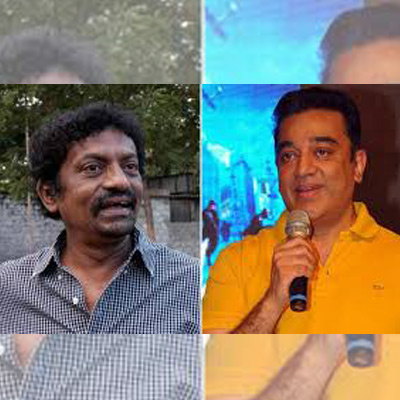
    NEW DELHI: Filmmaker Gautam Ghose and actor-filmmaker Kamal Haasan have been added to the Committee headed by Shyam Benegal to suggest a paradigm that ensures that artistic creativity and freedom do not get stifled/curtailed even as films are certified.


    Benegal said it had been felt that more regions of the country should be given representation on the panel.


    The Committee had over the weekend held its first meeting with Information and Broadcasting Minister Arun Jaitley, Minister of State Rajyavardhan Rathore, and Secretary Sunil Arora.


    The other Members of the Committee include filmmaker Rakeysh Omprakash Mehra, creative director Piyush Pandey, media veteran Bhawana Somayya, National Film Development Corporation MD Nina Lath Gupta and Joint Secretary (Films) Sanjay Murthy as Member Convenor. The Committee has been requested to submit its recommendations within two months.  


    When setting up the Committee on New Year’s Day, the Ministry had said that “in most countries of the world there is a mechanism/process of certifying feature films and documentaries,” an official release also said that the attempt should also be that “the people tasked with the work of certification understand these nuances.”


    The recommendations of this Committee are expected to provide a holistic framework and enable those tasked with the work of certification of films to discharge their responsibilities keeping in view this framework. 


    The note said Indian films have a glorious history and a whole lot of Indian films have enriched the cultural milieu of the country besides making astonishing advances in technical aspects of film making.


    During their deliberations, the Committee would be expected to take note of the best practices in various parts of the world, especially where the film industry is given sufficient and adequate space for creative and aesthetic expression.


    The Committee will recommend broad guidelines and procedures under the provisions of the Cinematograph Act 1952, Rules for the benefit of the chairperson and other members of the Screening Committee. The staffing pattern of Central Board of Film Certification would also be looked into in an effort to recommend a framework, which would provide efficient and transparent user friendly services.

  • Andhra Pradesh CM writes to Arun Jaitley seeking 6-month extension on DAS Phase III

    Andhra Pradesh CM writes to Arun Jaitley seeking 6-month extension on DAS Phase III

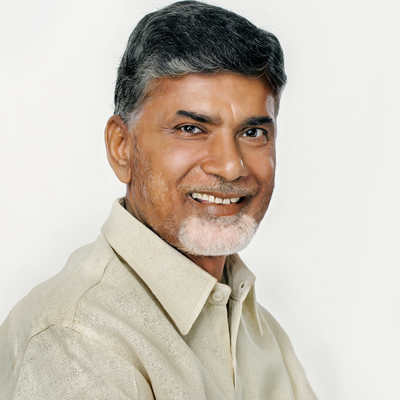
    MUMBAI: With an aim to address the concerns of 800+ multi system operators (MSOs) and 9000+ local cable operators (LCOs) across 13 districts serving 1.3 million households in Andhra Pradesh, the state’s chief minister N. Chandrababu Naidu has written to the Information and Broadcasting minster Arun Jaitley seeking a six-month extension to the Digital Addressable System (DAS) Phase III deadline, which expired on 31 December, 2015.


    The signed letter, a copy of which is with Indiantelevision.com, says, “Only a few MSOs have got Digital License, mainly due to to non-affordability of digital headends and lack of technical know-how. As a part of AP Fiber Grid AP Government envisages to support there MSOs/LCOs by setting up a multi-tenanted digital cable headend that can be utilised as, ‘Infrastructure as a Service & Platform as a service’ facilitating the operations to apply for digital MSO license and sustain their areas of operation. This will help a large number of operators/employees who are surviving on this industry directly and indirectly.”


    The letter further adds, “In view of the initiative and the special situation in Andhra Pradesh, the commissioning of AP Fiber Grid is required to enable MSOs/LCOs to utilise this network infrastructure ad to partner with this project. As this model is going to be uniform among all operators interested in associating with Fiber Grid, the cable operators may not be willing/able to invest for STBs in advance to meet the present deadline. Hence, it is requested to consider extending the phase III Digitisation target date by six months beyond 31 December, 2015.


    Highlighting the status of the AP Fiber Grid Project, Naidu further informed that: 


    .   AP Government has initiated Fiber Grid project to digitise the households in Andhra Pradhesh through both aerial and underground optical fiber cable network.


    .   Work is in progress to lay 24 core ADSS optical fiber cable for a length of around 22000 kms over electrical poles. It is planned to complete this work by June 2016 under phase 1 of Fiber Grid.  2449 PoPs (Points of Presence) will be set up at identified electrical substantiations to house the electronics.


    .   Laying of underground Fiber for a length of around 60000 Kms will be taken up under Phase II in association with government of India.


    .   Dedicated Network Operations Center (NOC) equipped with all digital Headends providing Video (TV Channels, Data (Internet) and Voice (telephone) services also be commissioned by June 2016 facilitating all service providers to utilise the fiber grid with the model of infrastructure as a service & Platform as a Service.


    .   It is planned to enrol the LCOs as Last Mile Operators (LMOs) to provide services to households connecting to Fiber Grid PoPs (points of presence) through their existing network.


    .   The MSOs can be enrolled as ‘multi service providers,’ offering Internet and TV services by connecting to NOC of Fiber Grid and delivering through last mile operators. 


    At the time of filing this story, the AP CM’s office was yet to receive a reply to the letter from Jaitley.

  • Artistic creativity shouldn’t get curtailed while certifying films: Jaitley

    Artistic creativity shouldn’t get curtailed while certifying films: Jaitley

    NEW DELHI: Information and Broadcasting Minister Arun Jaitley today said artistic creativity and freedom should not get curtailed while certifying feature films or documentaries.


    At the same time, he noted that there is a mechanism in most countries of the world for certifying films and documentaries. 


    Addressing members of the Shyam Benegal Committee set up on New Year’s Day to examine the present guidelines, he said the film certification guidelines need contemporary interpretation and they should be made as non discretionary as possible.


    Minister of State Rajyavardhan Rathore was confident that the Committee of Experts under the chairmanship of Benegal would provide a holistic framework for interpretation of the provisions of Cinematograph Act 1952 and Rules that could help the Chairperson and other members of the Central Board of Film Certification Screening Committee.


    Benegal said there is a need to move towards a new system of grading films in terms of age, maturity, sensibility and sensitivity instead of censorship. 


    The two Ministers and I&B Secretary Sunil Arora held wide ranging interaction with the Committee in Mumbai today. 


    The Ministry had asked the Committee to recommend broad guidelines for certification of films by the Central Board of Film Certification (CBFC).


    Other members of the Committee including filmmaker Rakyesh Omprakash Mehra, advertising and communication expert Piyush Pandey, veteran film journalist Bhawana Somayaa, NFDC managing director Nina Lath Gupta and Joint Secretary (Films) Sanjay Murthy were present.


    The Committee will study the existing procedure being followed by the CBFC for certification of original films, their dubbed versions as well as recertification of films for screening on other media platforms. 


    The Committee will also study various directives of courts as well as notifications issued by other Government agencies like the Health & Family Welfare Ministry, Environment & Forests Ministry, and Animal Welfare Board of India etc, which have a bearing on the process of film certification. 


    The staffing pattern of CBFC would also be looked into in an effort to recommend a framework, which would provide transparent and user friendly services.

  • IBF urges Centre to grant ‘infrastructure status’ to broadcasting industry

    IBF urges Centre to grant ‘infrastructure status’ to broadcasting industry

    MUMBAI: In a bid to push the digitisation agenda, the Indian Broadcasting Foundation (IBF) today urged the Union Government to grant “Infrastructure Status” to the broadcasting industry, including direct to home (DTH) and cable sectors.


    At a pre-Budget consultation meeting, chaired by Union Finance Minister Arun Jaitley, IBF stressed that the expected investment in STBs (set-top boxes) and optical fibre network alone would be to the tune of Rs 25,000 – 30,000 crore.


    “In the present era of convergence, distinction between Telecom, IT and Broadcasting sectors is getting blurred. Telecom is already treated as an ‘infrastructure service.’ Broadcasters and distribution platforms will be aided with better and affordable financing options in the present capital-intensive growth phase if broadcasting sector is accorded infrastructure status. This will also provide a level playing field to the broadcasting sector with telecom and ISP industry,” IBF secretary general Girish Srivastava said at the high level meeting.


    The Foundation also urged the Government to reduce customs duty on STBs to five per cent from the present 10 per cent. “The Finance Act, 2013 had increased customs duty on STBs to 10 per cent from earlier five per cent. In order to push digitisation, customs duty on STBs should be reduced to the earlier level of five per cent if not entirely removed,” Srivastava added.


    On the direct tax front, IBF urged the Finance Ministry to allow carry forward of losses in case of amalgamation/merger. “Currently all industrial undertakings in manufacturing, software, electricity and telecom sectors are allowed carry forward of losses in case of merger/amalgamation. Media and Entertainment industry should be granted a similar status by amending Section 72(A)(7)(aa) of the Income Tax Act,” IBF said in its presentation.


    Another proposal presented by IBF related to tax withholding on transponder charges. Finance Act, 2012 retrospectively included payment of transponder hire and other charges as royalty. However, these are not regarded as royalty under DTAA definition of royalty. IBF requested the Ministry of Finance that the definition of royalty under the Indian Income Tax Act and Treaty (DTAA) be aligned so that the credit of withholding tax is available to the foreign satellite service providers.

  • Print media should adapt itself to digital technologies: Jaitley

    Print media should adapt itself to digital technologies: Jaitley

    NEW DELHI: In the rapidly growing digital era, the print media needs to accept the challenges put forth by the Digital and Information age according to Information and Broadcasting Minister Arun Jaitley.

    The internet revolution and fast changing technology presented a big challenge to the Print Media across the world to maintain its presence and sustained growth. However, India remained an exception wherein Print registered growth owing to an increasing demand and subscriber base for regional newspapers. 

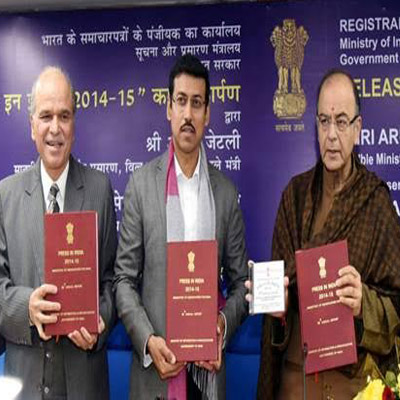
    Releasing the 59th Annual Report on Print Media – “Press in India 2014-15” – prepared and compiled by Registrar of Newspapers for India here today, Jaitley said that Print Media had to contend with the information flow disseminating from electronic media which weakened the dividing line between news and opinion. 

    The emerging viewpoint had brought certain shrillness in the debates and discussions. Print Media, thus, had a role to play in maintaining objectivity and preserving the sacred nature of news. It was important to also understand that emerging viewpoints surfaced due to the vastness of the media universe where different perspectives were put forth on a given issue.

    Minister of State for I&B Rajyavardhan Rathore was also present during the event.  

    The Minister said that it was time for magazine journalism to reinvent itself since the options for the readers were expanding due to alternatives such as digital and social media. Jaitley said the worldwide trends show that many popular magazines had shifted to the online digital edition, since it’s time for instantaneous news with fast changing world, news and technology. Hence, the shelf life for news being collated in magazines was considered outdated.

    Special Secretary J S Mathur gave an overview of the publication and highlighted the journey of Press through history. He also touched upon the changes being brought forth in the media space, especially the Print Media.

    The Annual Report “Press in India- 2014-15” was prepared on the basis of analysis of annual statements filed by the registered publications. The report provided broad analysis of the general trend of the Indian Press based on the claimed circulation.

    The print media registered a growth of 5.80 per cent over the previous year as a total of 5,817 new publications were registered during 2014-15 and 34 publications ceased their operation. Out of the total 1,05,443 publications registered as on 31 March, 2015, the largest number of newspapers and periodicals registered in any Indian language was in Hindi with a figure of 42,493 publications followed by English with 13,661 registered publications. Out of 1,05,443 registered publications, 14,984 were dailies and bi-tri weeklies and remaining 90,459 were of other periodicities. 

    State-wise analysis shows that Uttar Pradesh with 16,130 publications was at top position at the end of 2014-15. Maharashtra with 14,394 publications and Delhi with 12,177 publications were at second and third position respectively.

    The total claimed circulation of publications stood at 51,05,21,445 in 2014-15 as against 45,05,86,212 copies per publishing day in 2013-14. The number of Annual statements received in RNI for the year 2014-15 was 23,394 against 19,755 in 2013-14 registering an increase of 18.42 per cent. As per report, circulation-wise, Hindi Publications continued to lead with 25,77,61,985 copies per publishing day followed by English with 6,26,62,670 copies and Urdu with 4,12,73,949 copies per publishing day.

    The report also carried different Chapters viz. ownership of newspapers, analysis of daily newspapers, language wise study of the press and analysis of registered newspapers.

    Main highlights of the Indian Press in 2014-15 are as follows:-

  • Government’s e-calendar 2016 gives link to AIR, DD News

    Government’s e-calendar 2016 gives link to AIR, DD News

    NEW DELHI: Information and Broadcasting Minister Arun Jaitley said conventional technology did not lose its importance despite the latest trends in technology.


    He was speaking after releasing the Government Calendar 2016, which he said would take forward the developmental agenda of the government highlighting one developmental theme or focus area each month. Each calendar sheet emphasised a particular goal and priority area, which concerned the people at large.


    Minister of State Rajyavardhan Rathore said that the Calendar 2016 enabled people to give feedback to the government. It also gave them access to PIB press releases, tweets and news from All India Radio and Doordarshan news. 


    The calendar is on the theme of ‘Vikas ki Nayi Udaan’. I&B secretary Sunil Arora was also present on the occasion.


    Releasing the digital version of the calendar, Rathore said it had several features to reach the target audience especially the youth and citizens who sought information on programmes and policies. He further stated that success of the schemes of the Government depended largely on the awareness levels of citizens.


    The digital version of the calendar will facilitate the information flow to the youth who were quite aware of new techniques and methods. The Minister also highlighted the initiatives being taken by DAVP to facilitate online functioning including enhancing outreach and promoting transparency. There was also an idea within DAVP to come up with advertisements targeted at specific audiences.


    The calendar has been designed and printed by the Directorate of Advertising and Visual Publicity (DAVP). It is printed in 11 languages apart from Hindi. It is distributed to all Panchayat zilla parishads, centrally aided schools; all missions abroad apart from all elected representatives Central Government Gazetted officers. 


    With the theme ‘Vikas ki Nayi Udaan’ the calendar highlights various developmental schemes launched by Government of India. It centers on Beti Bachao Beti Padhao, Mudra Yojna, smart cities, PMKYV, Jan Dhan Yojna, Digital India, Health, Power and Employment for all, farmers’ welfare and port-led development. The Calendar 2016 ends with Ashtalakshmi that lays stress on development in the North East. The Department of Posts is responsible for distribution of the Calendar across the country.

  • MSOs, LCOs upbeat about Hinduja’s NXT Digital HITS platform

    MSOs, LCOs upbeat about Hinduja’s NXT Digital HITS platform

    MUMBAI: The Indian television industry is bracing itself for the third phase of digitisation as the deadline for Digital Addressable System (DAS) ends on 31 December, 2015.

    Phase III deadline of digitisation is what the broadcast ecosystem has been talking for a year now. While on the one hand, the government of India has time and again made it clear that there will be no extension of deadline, which is 31 December, 2015, on the other, stakeholders are pointing fingers at the system as the teething issues like inter-connect agreement (ICA), CPS deals et al are yet to be taken care of. In a recent notice the Ministry of Information and Broadcasting (MIB) headed by Arun Jaitley and MoS RajyavardhanSingh Rathore, has asked broadcasters to stop beaming analogue signals to all MSOs. Now with only days to go, people are still unclear as to what’s ahead.

    Amidst the chaos of litigations between stakeholders and various pot-shots being fired, Hinduja’s Headend In The Sky (HITS) platform NXT Digital found its calm in doing actual ground work before launch.

    Harvard Business School professor Rosabeth Moss Kanter once said, “Leaders must pick causes they won’t abandon easily, remain committed despite setbacks, and communicate their big ideas over and over again in every encounter.” And that’s exactly what the team helming NXT Digital did. Prior to its launch on 16 September, the HITS platform carried out road shows involving Last Mile Operators (LMOs) in over 19 cities spread across the length and breadth of the country to communicate the new idea.

    While the initial reactions from the operators weren’t that encouraging, the lack of collaboration on-ground between existing MSOs and LCOs turned out to be a blessing in disguise for NXT Digital, which in turn fuelled its penetration into the hinterland. Now, MSOs and LCOs that Indiantelevision.com spoke to are upbeat about the new platform.

    An independent MSO from the North Eastern Province tells Indiantelevision.com, “I recently invested Rs 50 lakh to establish a cable head-end but as of now I don’t know how much I will be charging the consumers. The Cost Per Subscriber (CPS) model is not even talked about yet. Broadcasters are giving out different deals to different MSOs. If anybody asks me for a suggestion, I would tell them to go for HITS as it is a much more transparent platform.”

    Another impeding problem that the industry will soon face is a serious crisis of Set-Top-Boxes (STBs). While the boxes are assembled in India, the components are still being shipped from China. “The components have not yet been ordered. While a few have placed the first round of orders, there are many who are yet to do that. It takes three months for the components to be delivered from China and then an additional one month to assemble them. So it is certain that the boxes will not reach on time. The STB crisis will be there for NXT Digital too,” said a senior official of an established MSO.

    However, NXT Digital is unperturbed. A senior official of the company says, “There was going to be a set-top box crisis and we always knew about it. Hence we placed an order for four million boxes and there are close to 1.1 million boxes available for us at this stage. So NXT Digital is pretty sorted from the STB point of view.”

    If sources are to be believed, Star is charging Rs 38 for its bouquet in DAS Phase III areas, whereas the Zee bouquet costs close to Rs 30. Sony Pictures Networks India (erstwhile Multi Screen Media) is pricing its bouquet at Rs 24, while India Cast is charging Rs 20.

    On the other hand, NXT Digital is charging Rs 71 per box. “It’s a good deal. It’s just that they don’t have Zee in their package yet. But I don’t think it will take long for them to get them in,” says a reputed member of a Southern cable federation. “They are giving a total of over 300 channels and if there is a spike in demand, they have the infrastructure to meet it too. So it’s a good long term investment.”

    NXT Digital follows a prepaid model, which the Indian ecosystem is not yet used to. “That’s not really a big issue; people usually get used to it. I am getting a lot of positive feedback from the industry about the HITS platform. However, there’s one thing that I will request Mr Tony to look at and that is the exchange of STBs. People are not ready to forget the STB investment that they have already made to have one. If they give an exchange offer, it would be great for us,” opines an LMO.

    Now it remains to be seen how NXT Digital proceeds further and to what extend they succeed in capitalising the hinterlands.

  • DD Freedish set to beam up to 250 channels under 12th Plan

    DD Freedish set to beam up to 250 channels under 12th Plan

    NEW DELHI: Doordarshan’s free-to-air (FTA) direct-to-home (DTH) Freedish, which currently has only 64 slots for television channels and is expected to go up to 112 by March-end, has received a shot in the arm for upgradation to 250 TV channels under the 12th Plan.

    Information and Broadcasting Minister Arun Jaitley told Parliament that the Department of Space had agreed in principle to provide additional transponders on new GSAT 15 satellite required for 250 TV channels

    Meanwhile, he said that DD was facing issues in implementing Conditional Access System (CAS), which is a part of upgraded system. But it had now decided to adopt Indian Conditional Access System (Indian CAS), which is being finalised by Department of Electronics and Information Technology. As was reported earlier by Indiantelevision.com, DD is acquiring the Bangalore based ByDesign India’s CAS.

    Late last year, the Department of Electronics and Information Technology (DeitY) approved a proposal by ByDesign India to develop an Indian conditional access system. ByDesign was to receive a support amount of Rs 19.79 crore from DeitY to develop the new system in association with Centre for Development of Advanced Computing (C-DAC).

    The ByDesign model is totally indigenous and built for DVB-C setup. This CAS solution will enable broadcasters to control access to their services by viewers, and thereby enabling them to extend their business models to subscription based schemes. 

    Apart from the TV channels, Freedish also beams 21 All India Radio (AIR) channels. 

    DD director general C Lalrosanga had earlier told Indiantelevision.com that the DTH player will switch over to MPEG 4 from the current MPEG 2 in two phases. “The first phase may begin by early next month,” he informed.

    Meanwhile even as regional channels of DD switched over to INSAT 4B, DD’s main channels have also shifted to GSAT 10, which was launched in September 2012. The regional channels were shifted in view of End of Life (EOL) of INSAT-3A as declared by Indian Space Research Organisation. Four new transponders have been provided for these channels on INSAT-4B by ISRO. 

    It has 12 Ku-Band, 12 C-Band and 6 lower extended C-Band Transponders. 

    Now GSAT 10 started transmission on C-Band transponders.

    The channels that have been switched to GSAT 10 are DD National, DD News, DD Bharati, DD Sports, DD Urdu, DD India, Rajya Sabha TV and DD HD.


    Department of Space sources told this website that GSAT 15 satellite will ultimately accommodate Freedish, as it has more capacity of transponders to provide more bandwidth and better coverage. 

    GSAT-15 satellite, launched recently, has planned its mission for 12 years and this satellite will be located at same direction of INSAT-3A / INSAT-4B satellite at 93.5° East Longitude.

    GSAT-15 carries 24 Ku-band transponders with 36 Mhz high bandwidth.

    GSAT-15 also has two GAGAN navigational payloads and 2 Ku-Band beacons. This satellite will be use mainly for Direct to Home services, radio navigation services and VSAT services.

  • Aaj Tak’s power packed fourth summit to kickstart on 11 December

    Aaj Tak’s power packed fourth summit to kickstart on 11 December

    MUMBAI: The fourth edition of Hindi heartland’s biggest summit – Agenda Aaj Tak also known as the Hindi Jagat ka Mahamanch will be held this year on 11 and 12 December.


    The two day conclave will see the convergence of key names across politics, entertainment and sports.


    The event, in its fourth year, will focus on the biggest subjects in the national mind space right from politics, social issues, industry initiatives, culture and more, thus setting the stage for the most crucial national decisions.


    The list of speakers include prominent politicians like Arun Jaitley, Nitin Gadkari, Suresh Prabhakar Prabhu, Ravi Shankar Prasad, Smriti Irani along with the likes of Brinda Karat, Akhilesh Yadav, PA Sangma, Shivraj Singh Chouhan, Salman Khurshid, Asaduddin Owaisi and Mehbooba Mufti Sayeed.


    From the sports background eminent personalities like Imran Khan and Kapil Dev along with stars from the entertainment industry like Ranveer Singh, Deepika Padukone, Sonam Kapoor, Sunny Deol, Anupam Kher, Adnan Sami and Annu Kapoor will also be present at the summit.


    The conclave will open with the session, Vikas Ka Express Way with Minister of Shipping, Road Transport and Highways Nitin Gadkari and Lok Sabha Congress leader Mallikarjun Kharge.


    The Congress party leader Anand Sharma and CPI leader Brinda Karat with cabinet minister Ravi Shankar Prasad will discuss the impact of PM Narendra Modi in the session Thehar Gayi Modi Lehar? UP CM Akhilesh Yadav will lay out his plans in the session Akhilesh Ki Agni Pariksha, while CBI director Anil Sinha will answer the big question of Kab Aayega Dawood?


    Kiren Rijiju and P.A. Sangma will share their point of view during North East Par Seedhi Nazar. Senior BJP leader and CM of Madhya Pradesh Shivraj Singh Chouhan will outline his achievements during Dus Ka Dum.


    The World Cup winning captains from both sides of the border Imran Khan and Kapil Dev will speak on Sabse Bade Khiladi.


    The second day of the conclave will start with finance minister Arun Jaitley explaining his vision and plan to revive Indian economy during Main Hoon Na, while J&K leader Mehbooba Mufti Sayeed will share plans for Jammu Kashmir in Mission Kashmir.


    Shayari v/s Smiley will add to the entertainment quotient with poets Munawwar Rana, Kumar Vishwas, author Amish Tripathi and actor & TV presenter Annu Kapoor.


    The session of Terror Ka Tension will have discussions on plans to counter terrorism with the police commissioners of Delhi, Mumbai and Bangalore, Bhim Sain Bassi, Ahmed Javed and N. S. Megharikh respectively.


    Sunny Deol will speak in the session Yamla, Pagla, Deewana while Anupam Kher and Ashutosh Rana will discuss the contentious issue of intolerance.


    Pakistan’s High Commissioner to India, Abdul Basit will share his views in Pakistan Ke Dil Mein Kya Hai, while Bollywood heartthrobs Ranveer Singh and Deepika Padukone will let their heart out during the session Bollywood Ke Mastaane.