Tag: Arun Jaitley

  • Blossoming of a ‘Sunrise’ industry, with help from a ‘Sunshine’ Budget

    Blossoming of a ‘Sunrise’ industry, with help from a ‘Sunshine’ Budget

    Literary purists will expect an op-ed on the media and entertainment sector’s budget wish-list to begin with a reference to Chanakya’s Arthashastra or Manu’s Manusmriti; and rightly so, for they contain priceless public policy principles that hold good even today. However, as someone who is tasked with navigating an innovative organisation that takes pride in its ability to win the hearts of Indians across the world, I will opt for a more recent, relevant and simpler quotation, with a creative twist:

    ‘Kuch to phool khilaye ‘aapne’, aur kuch phool khilane hai Mushkil yeh hai bag me ab tak, kaante ‘kuch’ purane hai’

    Shri Arun Jaitleyji

    Honourable Finance Minister, Government of India

    28 February, 2015, Union Budget Speech

    Last year, the FM listened to two of our industry’s requests. Withholding tax rates on payment of royalty were reduced to 10 per cent and a new, comprehensive foreign trade policy (SEIS) ensured that service sectors are treated at par with their counterparts in manufacturing. This time we have three sets of requests: those that remain from last year, those that are relatively more recent and those that are apply uniformly to all industries.

    Irrespective of which part of the value chain they might represent, all industry stakeholders will agree that consolidation is a much-needed, ongoing business reality that is critical for our sector to flourish. It is only natural that as this trend gathers steam, the regulation should treat our sector at par with other sectors like telecom and software when it comes to the carrying forward of losses in case of a merger or amalgamation. All this needs is an amendment in Section 72A of the IT Act to include the ‘broadcasting, media and entertainment sector.’ The second issue is an oft-repeated one and refers to the treatment of hire charges for transponders as royalty. This leads to an unnecessary tax burden given that there is no transfer of technology taking place. Moreover, even foreign jurisdictions don’t treat these payments as royalty. A simple clarification from the authorities can help resolve this issue.

    Amongst the more recent requests, the first pertains to how we treat payments for content production. These are not ‘fees for technical services’ (u/s 194J) and should instead be treated as ‘work’ (u/s 194C). This will bring clarity regarding the applicability of withholding taxes and help reduce litigation. The other pertains to the sponsorship of ground events. Currently, despite the recipient of the service paying service tax in entirety, set off of CENVAT credit is not available to the sponsorship service provider. This anomaly needs to be corrected.

    The final category pertains to requests that will help industry at large and not just our sector. However, this very aspect makes them even more critical for the M&E sector given our role as a ‘force-multiplier.’ Around $18 billion of investment proposals have been received in electronics manufacturing under the ambitious ‘Make in India’ programme, driven mainly by mobile handset manufacturers. Without high-quality engaging video content, that device with a 5-inch HD screen, 64GB storage and oodles of computing power has practically no use. Media rights are the single largest contributor to almost all sporting leagues in this country. FMCG companies spend a significant portion of their top-line (~10-15 per cent) on advertising because it contributes significantly to their growth. The moot point here is that we power several ecosystems, beyond our own. In keeping with this philosophy the top four requests are (1) reduction in Minimum Alternate Tax (MAT) rate (2) utilisation of credit of Education Cess and Secondary and Higher Education Cess lying in CENVAT balance (3) allowing CENVAT credit on Swachh Bharat Cess (SBC) and (4) removing restrictions on claiming CENVAT Credit.

    While MAT may eventually have lesser relevance (as corporate tax rates and the number of exemptions available to companies reduce), it is in the transitory period that a reduction in the MAT Rate (ideally coupled with the possibility of claiming MAT Credit over an indefinite period of time) can be extremely beneficial. On the issue of Education Cess and Secondary and Higher Education Cess, a simple clarification will suffice. Finally, the Swachh Bharat mission is a unique, much-needed effort that has several positive externalities. So much so, that many organisations are, in their individual capacity, trying their best to support it. At MTV we’ve launched the Junkyard Project, where we are helping with the cleaning and beautification of junkyards. In its current avatar, it is likely that the burden of the SBC will be passed on to the end consumer, after the effects of cascading. Therefore, it will be helpful if CENVAT Credit is allowed on the Swachh Bharat Cess. The government has placed huge emphasis on the ease of doing business. A smooth, seamless flow of tax credits is a critical aim in this regard. As a precursor to the GST regime, it will be helpful if all restrictions on claiming CENVAT credit are removed, including those related to timelines and specific inputs and input services.

    At Viacom18 we take the value of ‘listening deeply’ very seriously. In addition to some of the points above, my op-ed before the last year’s Budget had also argued for a more ‘innovative’ style of dissemination of the budget speech (‘engaging, multi-lingual, audio-visual with info graphics’). I hear that this time around the Finance Ministry has launched an official YouTube channel. Clearly the prashaasan is listening. Now it’s our turn to switch on the TV sets on and grab the popcorn. We’re all ears for Budget 2016.

    (These are purely personal views of Viacom18 group CEO by Sudhanshu Vats and Indiantelevision.com does not necessarily subscribe to these views.)

  • Jaitley, Bar Council deplore attacks on media; SC asks police to ensure safety

    Jaitley, Bar Council deplore attacks on media; SC asks police to ensure safety

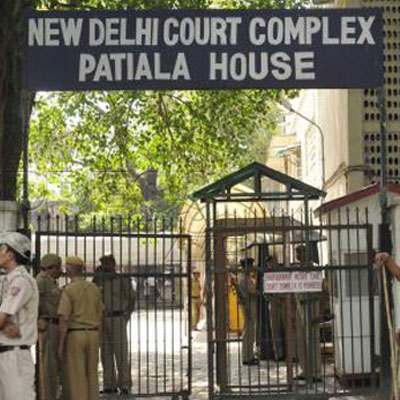
    NEW DELHI: Even as the Bar Council of India condemned the attacks by lawyers on media persons at Patiala House courts where the Jawaharlal Nehru University Students Union Kanhaiya Kumar was being produced, the Supreme Court asked the Delhi Police to ensure the security of all including media persons.

    The apex court also agreed to hear a petition by media persons in this regard. 

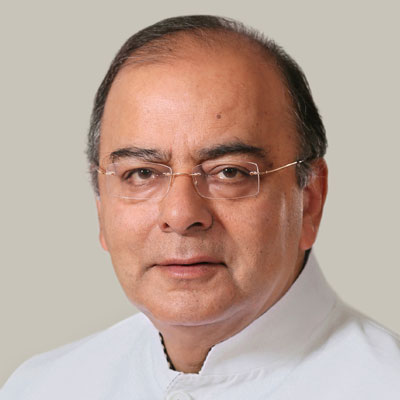
    Information and Broadcasting Minister Arun Jaitley, himself an eminent lawyer, also condemned the attacks in a tweet, saying: “Media has an unhindered right to report. Attack on Media persons is highly improper and condemnable.” 

    Media persons in Mumbai and Kolkata also held demonstrations in support of their Delhi colleagues. As was previously reported by Indiantelevision.com, the News Broadcasters Association (NBA) also deplored the attacks.

    Earlier reiterating that attacks on journalists discharging their professional duties was not acceptable, the Press Council of India had sought a report from the Delhi Police regarding the assault on media persons in the Patiala House Court complex.

    The events at Patiala House court resulted in a massive outrage and top editors of national media and hundreds of journalists yesterday demonstrated on the streets demanding action against those involved in beating up members of their fraternity in police presence and sought Supreme Court’s intervention in protecting freedom of speech.

  • Jaitley, Bar Council deplore attacks on media; SC asks police to ensure safety

    Jaitley, Bar Council deplore attacks on media; SC asks police to ensure safety

    NEW DELHI: Even as the Bar Council of India condemned the attacks by lawyers on media persons at Patiala House courts where the Jawaharlal Nehru University Students Union Kanhaiya Kumar was being produced, the Supreme Court asked the Delhi Police to ensure the security of all including media persons.

    The apex court also agreed to hear a petition by media persons in this regard. 

    Information and Broadcasting Minister Arun Jaitley, himself an eminent lawyer, also condemned the attacks in a tweet, saying: “Media has an unhindered right to report. Attack on Media persons is highly improper and condemnable.” 

    Media persons in Mumbai and Kolkata also held demonstrations in support of their Delhi colleagues. As was previously reported by Indiantelevision.com, the News Broadcasters Association (NBA) also deplored the attacks.

    Earlier reiterating that attacks on journalists discharging their professional duties was not acceptable, the Press Council of India had sought a report from the Delhi Police regarding the assault on media persons in the Patiala House Court complex.

    The events at Patiala House court resulted in a massive outrage and top editors of national media and hundreds of journalists yesterday demonstrated on the streets demanding action against those involved in beating up members of their fraternity in police presence and sought Supreme Court’s intervention in protecting freedom of speech.

  • Paradigm shift in I&B Ministry to digitise: Arun Jaitley

    Paradigm shift in I&B Ministry to digitise: Arun Jaitley

    NEW DELHI: Information & Broadcasting minister Arun Jaitley today said there has been a paradigm shift to digitise various Government Publications in order to reach out to online readers globally.

    Releasing the print and digital versions of India 2016 and Bharat 2016, the Minister said digital version of the books will be 25 per cent cheaper than print versions and will also help in saving paper consumption. Jaitley also stated that Annual Reference Book was an asset and a repository of information for all stakeholders.

    Additionally, the Minister launched the online payment service and subscription of popular journals and Employment News of the Publications Division through Bharat Kosh, Non Tax Receipt portal of the Finance Ministry.

    While launching the online subscription service, he said that the objective of technology was to provide solutions to complicated issues. He mentioned that Bharat Kosh portal would enable direct transfer of money received from the sale of journals to the Consolidated Fund of India.

    Jaitley also launched the service of sale of printed version of the prominent books of the division through e-commerce platforms such as Flipkart. The Reference Book India 2016 along with 49 other important titles would now be available on Flipkart.

    I&B Secretary Sunil Arora said that India Reference Book was a signature book brought out by Publications Division. It was a ready reference for academicians and students preparing for various competitive examinations and should be a must read for anyone who wanted authentic and credible information about India.

    The digital versions of the Publications Division books would be available on Kobo for online readers.

  • Paradigm shift in I&B Ministry to digitise: Arun Jaitley

    Paradigm shift in I&B Ministry to digitise: Arun Jaitley

    NEW DELHI: Information & Broadcasting minister Arun Jaitley today said there has been a paradigm shift to digitise various Government Publications in order to reach out to online readers globally.

    Releasing the print and digital versions of India 2016 and Bharat 2016, the Minister said digital version of the books will be 25 per cent cheaper than print versions and will also help in saving paper consumption. Jaitley also stated that Annual Reference Book was an asset and a repository of information for all stakeholders.

    Additionally, the Minister launched the online payment service and subscription of popular journals and Employment News of the Publications Division through Bharat Kosh, Non Tax Receipt portal of the Finance Ministry.

    While launching the online subscription service, he said that the objective of technology was to provide solutions to complicated issues. He mentioned that Bharat Kosh portal would enable direct transfer of money received from the sale of journals to the Consolidated Fund of India.

    Jaitley also launched the service of sale of printed version of the prominent books of the division through e-commerce platforms such as Flipkart. The Reference Book India 2016 along with 49 other important titles would now be available on Flipkart.

    I&B Secretary Sunil Arora said that India Reference Book was a signature book brought out by Publications Division. It was a ready reference for academicians and students preparing for various competitive examinations and should be a must read for anyone who wanted authentic and credible information about India.

    The digital versions of the Publications Division books would be available on Kobo for online readers.

  • “Media should hold the government’s feet to the fire to realise Make In India:” CNN’s Fareed Zakaria

    “Media should hold the government’s feet to the fire to realise Make In India:” CNN’s Fareed Zakaria

    MUMBAI: The Make In India week inaugurated by Prime Minister Narendra Modi on 13 February has made Mumbai a site of several activities. All for a united cause — to spearhead a thriving environment of manufacturing industries in India and invite foreign direct investment (FDI) in several industry sectors.

    While the vision of Make In India has gone from being a popular Twitter hashtag to actual substantial talk about the real issues that need to be addressed about manufacturing in India, there is a long way to go before India establishes credibility among global investors as a nation of producers and innovators. As the pressure on the government to deliver on the already established brand of ‘Make In India’ increases, one can’t go without wondering the role of media in the scheme of things.

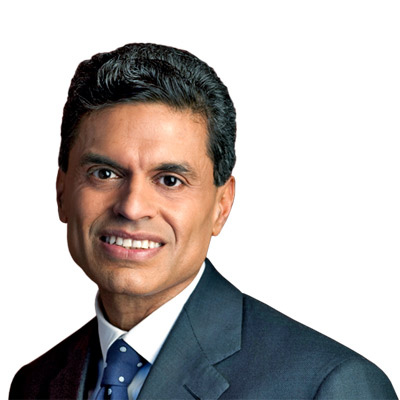
    Make In India week has given media, especially Indian media, enough fodder to make several headlines. From broadcasters allotting dedicated programming on the topic, to publications releasing special editions on the same; it seems media has had a field day since the ‘week’ was launched. And rightly so, thinks popular CNN news anchor Fareed Rafiq Zakaria of the Fareed Zakaria GPS fame.

    “I think that if there are more efforts like this, it does help the media play a more substantial role. What the Indian government is realising is that they have a serious image and brand problem. I have noticed that in Indonesia; the finance minister and trade ministers are much more attentive towards the communication of their reform policies than their Indian counterparts,” Zakaria shares while attending the CNN – Asia Business Forum 2016, which was part of the day two activities at Make In India week in Mumbai.

    He later had a one-on-one with Finance Minister Arun Jaitley to expand on the government’s executive strategy when it comes to reforms aimed at manufacturing.

    “But that is changing now,” Zakaria says adding on the significance of media in propagating the government’s brand building campaign for Make In India. “People are realising they have to sell, and to sell they need to build credibility for which presentation is essential and that is where Indian media will play a role.”

    On the flip side however, one has to ask if Make In India is a marketing effort or a reform effort? Even if there is a marketing element to it, the next question is if it will only scratch the surface with the campaigns, or will Make In India really address the issues that are at the grass root of manufacturing in India? Wherein comes the crucial role of media in connecting the two realities instead of being swept away by the hype.

    Expressing his take on it Zakaria adds, “The problem with manufacturing is that you have significant regulatory, tax and infrastructure problems. Those are the reason that you don’t get manufacturing booming in India. Now, could that change? Yes, but I haven’t seen the big bang reforms. I have noticed some good improvement reforms that the government is undertaking but it still needs that big push. For that the Indian media has to step in and be the mouthpiece of the people who are part of the manufacturing industry. They have to keep putting pressure on the government to see the deliverance of such reforms.”

    Expanding on the role of media in making Make In India successful, Zakaria says, “India has a lot of natural constituencies for natural reforms. There are many who still want the old system because they get patronage from it like subsidies, employment for families. Those are the people you hear from… who you don’t hear from are the unemployed youth, the under employed people in agriculture. We hear a lot from the voices of the past but we need to hear more from the country’s future.  Media can be the voice of the future for India’s aspirations and hopes. They should hold the government’s feet to the fire and keep them there. Right now, frankly the government isn’t facing a serious opposition so the media has to play that role,” Zakaria signs off.

  • “Media should hold the government’s feet to the fire to realise Make In India:” CNN’s Fareed Zakaria

    “Media should hold the government’s feet to the fire to realise Make In India:” CNN’s Fareed Zakaria

    MUMBAI: The Make In India week inaugurated by Prime Minister Narendra Modi on 13 February has made Mumbai a site of several activities. All for a united cause — to spearhead a thriving environment of manufacturing industries in India and invite foreign direct investment (FDI) in several industry sectors.

    While the vision of Make In India has gone from being a popular Twitter hashtag to actual substantial talk about the real issues that need to be addressed about manufacturing in India, there is a long way to go before India establishes credibility among global investors as a nation of producers and innovators. As the pressure on the government to deliver on the already established brand of ‘Make In India’ increases, one can’t go without wondering the role of media in the scheme of things.

    Make In India week has given media, especially Indian media, enough fodder to make several headlines. From broadcasters allotting dedicated programming on the topic, to publications releasing special editions on the same; it seems media has had a field day since the ‘week’ was launched. And rightly so, thinks popular CNN news anchor Fareed Rafiq Zakaria of the Fareed Zakaria GPS fame.

    “I think that if there are more efforts like this, it does help the media play a more substantial role. What the Indian government is realising is that they have a serious image and brand problem. I have noticed that in Indonesia; the finance minister and trade ministers are much more attentive towards the communication of their reform policies than their Indian counterparts,” Zakaria shares while attending the CNN – Asia Business Forum 2016, which was part of the day two activities at Make In India week in Mumbai.

    He later had a one-on-one with Finance Minister Arun Jaitley to expand on the government’s executive strategy when it comes to reforms aimed at manufacturing.

    “But that is changing now,” Zakaria says adding on the significance of media in propagating the government’s brand building campaign for Make In India. “People are realising they have to sell, and to sell they need to build credibility for which presentation is essential and that is where Indian media will play a role.”

    On the flip side however, one has to ask if Make In India is a marketing effort or a reform effort? Even if there is a marketing element to it, the next question is if it will only scratch the surface with the campaigns, or will Make In India really address the issues that are at the grass root of manufacturing in India? Wherein comes the crucial role of media in connecting the two realities instead of being swept away by the hype.

    Expressing his take on it Zakaria adds, “The problem with manufacturing is that you have significant regulatory, tax and infrastructure problems. Those are the reason that you don’t get manufacturing booming in India. Now, could that change? Yes, but I haven’t seen the big bang reforms. I have noticed some good improvement reforms that the government is undertaking but it still needs that big push. For that the Indian media has to step in and be the mouthpiece of the people who are part of the manufacturing industry. They have to keep putting pressure on the government to see the deliverance of such reforms.”

    Expanding on the role of media in making Make In India successful, Zakaria says, “India has a lot of natural constituencies for natural reforms. There are many who still want the old system because they get patronage from it like subsidies, employment for families. Those are the people you hear from… who you don’t hear from are the unemployed youth, the under employed people in agriculture. We hear a lot from the voices of the past but we need to hear more from the country’s future.  Media can be the voice of the future for India’s aspirations and hopes. They should hold the government’s feet to the fire and keep them there. Right now, frankly the government isn’t facing a serious opposition so the media has to play that role,” Zakaria signs off.

  • Crowdsourcing of ideas on social media helps Govt firm up policies: Jaitley

    Crowdsourcing of ideas on social media helps Govt firm up policies: Jaitley

    NEW DELHI: Information and Broadcasting Minister Arun Jaitley today said the innovative approach to crowdsource ideas from people provided government an opportunity to understand their perspective on major flagship programmes of the government.


    The minister also complimented the winners of the social media contest in various categories organised by New Media Cell of his Ministry as part of 67th Republic Day celebrations for providing fresh ideas through social media platforms.


    Minister of State for Information & Broadcasting Rajyavardhan Rathore and Secretary Sunil Arora were also present during the occasion.


    The contests were held on the Ministry of I&B Social Media platforms – Facebook (www.facebook.com/inbministry), Twitter (@MIB_India) and a specially designed webpage (http://www.graffiti.inbministry.in) where Graffiti were invited from participants on various flagship programmes of the Government.


    The competition was open for a fortnight from, 1 – 14 January, 2016. The winners of the contest were provided a unique opportunity to witness the Republic Day Parade, 2016 at New Delhi. The travel and accommodation arrangements of all these winners were sponsored by the I&B Ministry.


    For the Graffiti wall, the themes were Start Up India, Stand Up India; Digital Empowerment; Entrepreneurs of Young India; Skilled India, Powerful India; Make In India; Financial Security to All and Housing For All. The graffiti contest received as many as 419 entries across all themes.

  • Crowdsourcing of ideas on social media helps Govt firm up policies: Jaitley

    Crowdsourcing of ideas on social media helps Govt firm up policies: Jaitley

    NEW DELHI: Information and Broadcasting Minister Arun Jaitley today said the innovative approach to crowdsource ideas from people provided government an opportunity to understand their perspective on major flagship programmes of the government.


    The minister also complimented the winners of the social media contest in various categories organised by New Media Cell of his Ministry as part of 67th Republic Day celebrations for providing fresh ideas through social media platforms.


    Minister of State for Information & Broadcasting Rajyavardhan Rathore and Secretary Sunil Arora were also present during the occasion.


    The contests were held on the Ministry of I&B Social Media platforms – Facebook (www.facebook.com/inbministry), Twitter (@MIB_India) and a specially designed webpage (http://www.graffiti.inbministry.in) where Graffiti were invited from participants on various flagship programmes of the Government.


    The competition was open for a fortnight from, 1 – 14 January, 2016. The winners of the contest were provided a unique opportunity to witness the Republic Day Parade, 2016 at New Delhi. The travel and accommodation arrangements of all these winners were sponsored by the I&B Ministry.


    For the Graffiti wall, the themes were Start Up India, Stand Up India; Digital Empowerment; Entrepreneurs of Young India; Skilled India, Powerful India; Make In India; Financial Security to All and Housing For All. The graffiti contest received as many as 419 entries across all themes.

  • FICCI demands infrastructure status for broadcast industry in pre-budget memo

    FICCI demands infrastructure status for broadcast industry in pre-budget memo

    NEW DELHI: The Indian broadcast, cable and direct-to-home (DTH) sectors have been demanding a infrastructure status for the industry as well as seeking all benefits and incentives available for the infrastructure industry including the availability of finance at a concessional rate.


    To this effect, the Indian Broadcasting Foundation (IBF) had earlier this month urged the Union Government to grant “Infrastructure Status” to the broadcasting industry.


    Now, making this demand, the Entertainment Wing of FICCI has said in a pre-budget memorandum to Finance Minister Arun Jaitley that the sector should be allowed tax concessions as per Section 80-IA of the Income Tax Act.


    The digitisation process and the deployment of set top boxes (STBs) are heavy capital oriented and thus require huge investments, which may force various amalgamations and thus they should be allowed to set off accumulated losses and unabsorbed depreciation allowances to be carried forward as per Section 72 A of the Act, the industry body said.


    Parity with Manufacturing Industry under Section 72A of the Act


    It also said that the disparity between the service and the manufacturing sector is very adversely affecting the growth and consolidation of the Service sector.


    The tax benefits under Section 72A of the Act in respect of amalgamation or de-merger (carry forward and set off of accumulated loss and unabsorbed depreciation allowances) are currently limited to industrial undertakings or a ship, hotel, aircraft or banking. The definition of industrial undertaking should be widened to include service industry, broadcasters and content production companies.


    Rationalisation of Indirect taxes


    The rate of taxes, which range from 30 – 70 per cent, especially the entertainment tax imposed by the states, over and above the service tax, are punitive in nature, FICCI said, adding that such punitive level of taxation incentivises unhealthy practices, such as piracy, revenue leakage on account of under reporting of revenues, etc. It is important that the overall taxation level is brought down for the sector as a whole.


    State Entertainment tax legislations levy high taxes on the subscription earned by cable operators and DTH operators. The non-availability of credit of central taxes against the state taxes and vice versa increases the tax burden on the entertainment industry. In addition to this, the Central Government has levied service tax at 14 per cent on the transfer of copyrights, which is already being taxed as ‘goods’ under the various state VAT legislations.


    Payment for Content Production


    FICCI said there is ambiguity since the tax authorities have been adopting a view that the payment towards production of content is in the nature of fees for technical services and subject to tax at the rate of 10 per cent under section 194J of the Act whereas Explanation III to section 194C of the Act clarifies that payments made towards a contract, concerning broadcasting and telecasting including production of programmes for such broadcasting or telecasting, would fall under the definition of ‘work’ for the purpose of section 194C of the Act.


    It suggested that to avoid difference in positions adopted by the tax payer and tax department on applicability of relevant section and to mitigate resultant litigation and hardship, a clarification may be issued regarding appropriate classification of content production services and applicability of relevant section for withholding of taxes.


    Carriage Fees/Placement Charges


    FICCI has demanded that the Government should provide a clarification that the payments made towards carriage fees are not in the nature of royalty or fees for technical services and TDS is required to be made on such payments as per section 194C of the Act.


    It said that the tax department is contending that since cable operators are providing technical services, payments made towards placement of channels is subject to TDS under section 194J of the Act.


    Broadcasters pay placement or carriage fee to the cable and DTH operators to place their channel in prime bands, which in turn enhances the viewership of the channel. Such charges are paid under a contract merely for placing the channel on agreed frequency bands.


    Deduction of tax at source under Section 194H on the “15% agency commission”


    FICCI recommended a clarification that no taxes need to be deducted at source by broadcasters on the “15 per cent agency commission” as mentioned in the invoice raised by broadcasters to advertisement agency or advertisers.


    FICCI said the 15 per cent agency commission mentioned by broadcasters in its invoices for ad airtime sale raised on ad agency or advertisers is merely a presentation in the invoices and not a real transaction. Neither the broadcasters nor ad agency recognises the same as revenue or expense. It is customary in nature, as is also evident from the fact that even on the invoices raised directly on advertisers; the said 15 per cent agency commission appears.


    Broadcasters are not supposed to make any payments towards 15 per cent agency commission mentioned in the invoice, as there is no agreement or arrangement to pay such the commission with ad agencies or advertisers. In fact, broadcasters do not make any payment in respect of the said commission mentioned on the invoices.


    At the outset, FICCI said that the Indian media and entertainment industry grew from Rs 918 billion in 2013 to Rs 1026 billion in 2014, registering an overall growth of 11.7 per cent. The industry is estimated to achieve a growth rate of 13 per cent in 2015 to touch Rs 1159 billion. The sector is projected to grow at a healthy CAGR of 13.9 per cent to reach Rs 1964 billion by 2019.


    As per FICCI, television clearly continues to be the dominant segment but strong growth had been posted by new media sectors. Gaming and digital advertising recorded a strong growth of 22.4 per cent and 44.5 per cent compared to the previous year.


    The benefits of Phase I and II of cable digital addressable system (DAS) rollout, and continued Phase III rollout are expected to contribute significantly to strong continued growth in the TV sector revenues and its ability to invest in and monetise content. The sector is expected to grow at a CAGR of 15.5 per cent over the period 2015-2019.


    Tax Exemptions for Radio Broadcasting


    While noting that radio is anticipated to see a spurt in growth after rollout of FM Phase III licensing, FICCI asked the Government to consider providing tax holiday of five years for new capital investment in Phase III; reduce customs duty on capital equipment for radio broadcasting to four per cent; and consider service tax exemption for billings to service recipients covered in the negative list.


    Tax Holiday for five years for setting up of new screens


    Noting that the film sector had shown a minimal growth of 0.9 per cent in 2014 over 2013, FICCI said there had been an increase in piracy, since the number of screens for viewing films had not increased in proportion to the increase in number of films and the number of people viewing these films.


    FICCI said that it was essential to extend the benefit to cinema owners in terms of 80-IB of the Act to multiplexes constructed after March 2005 to encourage the set-up of multiplexes and thereby improve the density of cinema houses in the country. This will encourage setting up of new screens in India and help in improving screen density.


    Reduction of prescribed time limit under Rule 9A and 9B


    FICCI suggested that the existing period of 90 days before end of the financial year (under Rule 9A and 9B of IT Rules) is suitably reduced to grant relief to assessees whose feature films have incurred losses and have been released for exhibition in the last quarter of the financial year.


    Under Rule 9A of the Income Tax Rules, if a film producer sells all rights of exhibition of his feature film, the entire cost of production is allowed as a deduction in computing the profits and gains of such previous year.


    However, if the film producer does not sell all rights of exhibition of his film, it is released for exhibition on a commercial basis at least 90 days before end of the financial year and the film producer is eligible to claim deduction of the entire cost of production. Otherwise, a feature film is released for exhibition on a commercial basis within a period 90 days before end of the financial year and the producer is eligible to claim deduction of cost of production only up to a ceiling limit and any excess cost of production is carried forward to the next financial year. This ceiling limit is the amount of revenues generated by the feature film in the financial year.


    In certain cases where not all rights of exhibition of a feature film are sold and it is released for exhibition on a commercial basis within 90 days before end of the financial year, the feature film performs poorly and it is exhibited only for a short duration. Consequently, the film producer may not recover costs. In such cases in view of the prevailing IT Rules, the film producers are unable to claim a deduction of entire production cost and, the loss is to be carried forward to the next financial year. Accordingly, such film producers are unable to claim losses in the year the feature film is released for exhibition despite no further scope of income. A similar situation exists in the case of expenditure of distribution rights in view of Rule 9B of IT Rules.


    Exemption of Service Tax on major inputs/input services


    FICCI recommended that major inputs / input services that are used in relation to theatrical rights in movies, be exempted from service tax. Since the major inputs/input services used in relation to revenue earned from theatrical rights are taxable, the CENVAT credit of service tax paid on such inputs/input services is blocked in the supply chain due to applicability of CCR. Eventually such taxes result in increase of the cost of production thereby defeating the purpose of providing an exemption on the output service.


    Re-instatement of the Service Tax exemption on Transmission of digital cinema


    FICCI also recommended reinstating the exemption to digital cinema service distributors, as it existed earlier under notification 12/2007 ST of 1 March, 2007, which had been rescinded with the introduction of the negative list.


    Service tax on transmission of digital cinema is a direct cost to the producers since the same is in relation to theatrical exhibition of cinematograph film (which is an exempt service with effect from 1 April, 2013) and hence no credit can be availed of such service tax.


    Clarity on export status of post-production services


    FICCI asked for clarity on the inclusion of post-production activities in the exclusion to this Rule. Alternatively, the second proviso to the Rule 4(a) of the POPS Rules be re-worded.


    Given the various technological advances in the Indian film industry, many Indian entities are hired by foreign producers for carrying post production activity. For such activities, the content is temporarily imported into India (either physically or electronically) and re-exported after completion of service. Post-production activities, which may be performed in India, do not find explicit mention in the proviso that carves out exceptions to the performance based rule in POPS Rules.


    Service Tax exemption to on-screen advertising in cinemas


    The industry body said on-screen advertising in cinemas and multiplexes should be exempted from levy of service tax.


    After 1 October, 2014, the negative list of services was amended and on-screen advertising within cinemas is liable to service tax.


    The on-screen advertising within cinemas caters to advertisers with small businesses, with limited resources. For large advertisers, on-screen advertising is a secondary medium of advertising at best and they have a small contribution to onscreen advertising within cinemas. The on-screen advertising forms an important source of revenue for the exhibitors, which are already reeling under the pressure of multiple taxes. Re-instatement of service tax on such revenue will only increase their tax burden.


    Applicability of Service Tax on food and beverages sold within Cinemas


    The food and beverages (F&B) sold in theatres during movies are subject to VAT under local state laws and the same is paid by the exhibitors. But with effect from 1 April, 2011, restaurant services became taxable whereby services rendered by any air-conditioned restaurant serving alcohol were made liable to service tax and later with effect from 2013 the condition of serving alcohol was withdrawn. However, it is still not clear whether the sale of F&B by cinema halls and multiplexes is covered in this service.


    Unlike restaurants, there is no seating arrangement, no cutlery is provided and no waiter serves F&B and hence there is no element of service involved in any meaningful manner.


    FICCI said levy of service tax is intended on “restaurants” rendering certain services and is not intended on sale of food, beverage and snacks from candy counters in cinema theatres.


    Service Tax exemption on entry to award functions, musical performance etc.


    The Union Budget of 2015 had amended the negative list of services and effectively withdrawn the unconditional service tax exemption, which was granted to tickets for award functions, music events, sports events etc. With effect from June 2015, service tax is payable when the consideration for admission to entertainment events such as award function, concert, pageant, sporting event etc. is more than Rs 500 per person.


    However, FICCI said payment for admission to any event is already liable to a high state entertainment tax and levying of a service tax of 14 per cent over and above the high rates of entertainment imposes a high burden on the entertainment sector.


    The industry body asked for a clarification to specify that the value of ticket for the purpose of levy of service tax on such admission (where the ticket price is more than Rs 500) should be the value excluding Entertainment tax. It also wanted clarification on if service tax is payable, the same should be computed on a value exclusive of Entertainment tax and accordingly no service tax should apply on entertainment tax amount.


    Customs Duty exemption on film equipment under the ATA Carnet


    The ATA Carnet permits duty free temporary admission of goods into a member country. The list of exempted products covers filming equipment too. However, there is no Customs Notification in order to exempt the import of filming equipment from the levy of Customs Duty, on the lines of the ATA Carnet.


    FICCI recommended that Customs Duty should be exempted on film equipment under ATA Carnet. The film production equipment is very expensive and not easily available in all countries because of which the film producers are compelled to temporarily import the same on lease for the purpose of producing the film. In absence of a customs notification to exempt filming equipment, the ATA Carnet duty exemption benefit cannot be extended to import of filming equipment.

    These imports significantly increase the burden of tax on the film producers.


    Proposals for Animation, Gaming and VFX Industries


    FICCI also made some recommendations for the Animation, Gaming & Visual Effects (VFX) industries.


    It asked for a 10-year tax holiday for the Animation, Gaming, and VFX industries; and removal of withholding tax on revenues accruing from sales of mobile games in non-India markets as well as removal of withholding tax on the development contracts given to mobile game developers outside India.


    FICCI also asked for removal of withholding tax paid by expats working in India for Indian mobile game development companies.


    The Minimum Alternate Tax (MAT) applicability for units undertaking animation work in SEZ should be withdrawn to encourage export of animated contents.


    The industry body wanted restoration of STPI advantage scheme for AVGC or ITES for another 10 to 20 years and cover/encourage exports as well as IP creation.


    To promote domestic gaming market, excise duty on local manufacture should be brought down to nil (similar to film and music industry). This will enable CVD to be brought to zero also. The effective reduction in taxes would be around 15 per cent. Import duty on consoles (gaming hardware) to be brought down to zero per cent to increase the installed base to enable the local developer ecosystem to flourish.


    There should be a provision of 50 per cent reimbursable MDA (Market Development Assistance) for travel and registration fees to international market events.


    The Government should extend support under Market Development Assistance (MDA) activity for Indian companies to exhibit by setting Indian Pavilions in the world markets. What is needed is to help bringing local production companies to international markets, collect and disseminate information and support creating the infrastructure needed for a healthy media market to develop.