Tag: Artificial Intelligence

  • Has advertising finally begun to embrace AI?

    Has advertising finally begun to embrace AI?

    MUMBAI: Artificial intelligence (AI), a tool that uses logic to mimic the human brain, has been the buzzword in the advertising industry for quite some time now. 

    AI was founded as an academic discipline in the year 1956, and in the years since, the technology has experienced several waves of optimism, followed by disappointment and the loss of funding (known as an AI winter), thereafter by new approaches and success.

    People often tend to use the term AI interchangeably with machine learning (ML), but they are completely different tools. While AI is the broad concept of teaching machines with data to do things in an efficient way, ML is the technique of using algorithms to process data, learn from insights and make predictions that train AI. As Wunderman AI’s global leader Robbee Minicola rightly says, “You can have machine learning without AI, but you can’t have AI without machine learning.”

    With the implementation of AI in advertising and marketing, brands can discover the price at which networks are willing to pay for an impression and identify the optimum times of data to serve an ad for target consumers.

    public://IKEA.jpg

    AI’s potential for improving campaign effectiveness is only just being unearthed with a limited understanding of impact. AI-driven elements like image and voice recognition on smartphones, algorithm-based viewing suggestions for Netflix and Google’s real language analysis in search are now gaining mainstream status. It is believed that AI will soon become indispensable in advertising. 

    The concept of ‘technological singularity’, in which machines become better at developing themselves, is a reality but human intervention will always be required. Isobar executive vice president Gopa Kumar doesn’t believe in giving everything to automation and AI as it is an indispensable part of the future media ecosystem.

    According to Adobe’s 2018 Digital Trends report, top-performing companies globally are more than twice as likely to be using AI for marketing (28 per cent vs 12 per cent). The report also found that less than one in five global respondents said their companies are pushing forward with AI and nearly half of respondents said their organisation has inconsistent integration between technologies.

    Although advanced and matured markets like the US, UK, China and Japan have been early adopters of the technology, India is catching up at a fast pace because of its risk-taking ability. Programmatic platforms and advertising are the first kind of AI intervention in advertising and is increasingly becoming more and more pervasive. 

    It is still early days for AI in India as compared to the western world in understanding and implanting these technologies. Havas Media Group India MD Mohit Joshi believes that the adoption of technologies is already happening, however, reaching the US level of adoption will require the clients to be equally convinced and more importantly give them some ‘use case’ success stories. 

    Programmatic advertising will contribute to more than 60 per cent of advertising in the next two years in India which is the currently world average.

    Isobar India EVP Gopa Kumar thinks that AI in India is still at a very nascent stage and in media it is just being initiated. He adds that though it will take a while to be the prime choice, but once it does, its adoption will be widespread and then the usage of AI in advertising will be across platforms and mediums. 

    In India, sectors like BFSI, e-commerce and FMCG have been able to make the most of artificial intelligence, big data analysis and machine learning to have better connect with consumers and enhanced consumer experience. But there’s a lot to learn from the daddies like IKEA and Alibaba.

    public://alss.jpg

    Since AI is an expensive tool and hiring an agency for it is often expensive, advertisers today are looking at building their own in-house AI capacities. With benefits including improved consumer engagement through personalisation, leaner marketing operations and cost savings on ad serving, the return on investment (RoI) prospects are rather appealing for advertisers. What it does require is a heavy initial investment in hardware and software for data collection and processing and acquiring the right talent.

    Dentsu Aegis Network chief data officer Gautam Mehra admits that AI is not a magic sauce and it will not change the brand’s RoI overnight and clients (brands) need to understand their business challenges before they plan on investing in these technologies. “The primary challenge for any advertiser is how do you know which data to go after and how do you bring that data into your warehouse (cloud or physical) and maintain that data warehouse to give data insights. Brands need to trust data and have a data driven culture in the organisation,” he adds. 

    Not all advertisers may understand the technicality of AI and the automation of basic data processes and the implementation of integrated analytics. This is precisely where advertising agencies can help their clients, both as trusted advisers and execution partners.

    The lack of good media infrastructure is a barrier to better implementation of AI in India. Our challenge is how do we make AI actionable because our other mediums are not evolved enough and we don’t have programmatic OOH or digital OOH except at airports. Mehra asks how do we bring about a real time change in media when our media itself is not programmatic? While India’s radio is still terrestrial, a majority of set-top boxes for television are not trackable and, therefore, there is reliance on BARC data. 

    India is still a data-starved market and AI works only on data. Joshi concludes that the biggest challenge for India will be getting the right talent, as we need great data scientists and the best of them ignore the media space.

    While India is on its way to becoming AI-ready, some major players including Vodafone, Myntra, Flipkart, HSBC Bank and SBI Bank have started putting in the effort to adopt the technology.

    Also Read :

    The Glitch to leverage GroupM data to reach rural India

    2017 – The year of long-format ads

    How iProspect’s Vivek Bhargava foresaw a digital future two decades ago
    Talent retention is key, says Mindshare’s Prasanth Kumar

  • Is India ready for the impact of AI on marketing?

    Is India ready for the impact of AI on marketing?

    MUMBAI: From self-driving cars to voice assistants Siri and Alexa, artificial intelligence (AI) is expeditiously becoming popular. While one may think of AI only as intelligent robots or technology, it encompasses everything from Google’s search algorithm to e-commerce to geo-target and understanding consumer behaviour. 

    AI has taken a hold of the advertising and marketing industry too along with big data, analytics, machine learning (ML), and chatbots. Not one advertising or marketing conference goes by without one or more sessions on the subject. 

    It was in 2017 that marketers realised the leverage AI and ML provided. But the reality is far from the hype as marketers in India and around the world are still unacquainted with the technology and the benefit it can add to business.

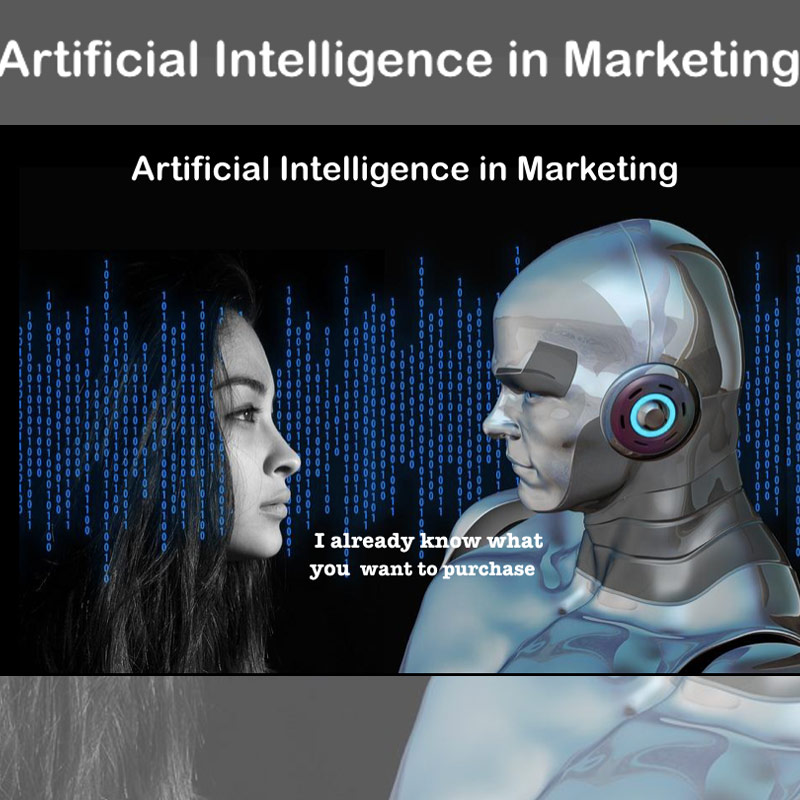
    Today, companies are gathering thousands of records from each consumer touch point. They have the entire database of what their consumer is searching for, from which device and how long before they actually purchase it. Companies can also trace the consumer’s likes and dislikes by scrutinising their customer profile. This large set of data about consumer behaviour, which is also known as big data, provides definite information to brands that can help their business. This is where AI comes into the picture.

    public://kirin.jpg

    AI in marketing terms consists of machine learning, deep learning and natural language processing applications. But the hard reality is that many of the tools that are being marketed as AI are still in their primitive form and there is a long way before companies can actually begin to use AI to yield better results. Currently, a lot of brands feel the urgency to adopt the modern and new technologies to keep up with the changing marketing dynamics, but AI, just like any other technical tool, is not a magic solution and requires time, resources and money. 

    Though the name sounds fancy, it may not be essential for every brand to jump on the bandwagon. Agencies, being industry experts, first need to familiarise themselves with how best to use AI for their client before even discussing client readiness of AI in marketing strategy. Setting the record straight, The Glitch managing partner and business head Kabir Kochhar says that the first step to getting clients interested in using these tools by showing them the money. “Showing improved return on investment will get clients to take notice and giving them deeper insights into their customers will allow and inform them on their future product roadmaps,” he says. 

    public://goolge.jpg

    For instance, predictive analytics allows online players like Amazon, Netflix, Hotstar, Myntra, Flipkart and YouTube among others to surface and finesse recommendations. Putting together information from diverse datasets is a common use of AI. Even the most advanced tech firms in Silicon Valley are just beginning to unearth its possibilities. Dentsu Aegis Network chief data officer Gautam Mehra suggests that if media companies do not catch up, it’s definitely going to affect them as we do see the local OTT players and even telecoms such as Jio building significant data practices.

    In spite of all the automation and move to programmatic, there are large parts of media planning and strategy that are still being done laboriously by human intervention. While stating that currently only some really sharp media planners will come up with half a dozen hypotheses and run tests that either prove or disprove the same, Indigo Consulting national head of strategy Devang Raiyani believes that going forward, a few startups will lead this and big media players will wait till some of them acquire critical mass and acquire them. 

    The revolution of AI in marketing has been propelled by the advent of affordable and advanced data analytics tools, extensive datasets and a growing acceptance of the data-driven approach to marketing decision making by marketers. With the advent of cloud computing, it’s very easy to scale without having to make large upfront investments. Most of the cost to use an AI system is rarely the system itself, but in ensuring you have the right data in the right format prepared for the AI engine. While stating that certain AI systems require some level of initial investment in technology, Mehra points out that these, however, sustain themselves within a year and hence it’s not really a CapEx investment in that sense. And then there are AI systems that are absolutely turn-key and pay-per-use.

    It is a herculean task for agencies to convince clients unaware of AI to use the technology. In such cases, Raiyani opines that the best way is to prove the use-cases at the fringes, create a few proof of concepts before betting big as the challenge with most Indian companies is that data available is not very clean and highly fragmented across touch-points. He believes that it will be the GAFAs (Google – Apple – Facebook – Amazon) of the world who will lead this change.

    Kochhar thinks that the grasp of terms such as AI and big data are theoretical and in practice, we’re just scratching the surface on how AI can transform industries. “For now, agencies need to think of it as a tool of inspiration for the copywriter as it will essentially eliminate a bunch of A/B testing we currently do to see the effectiveness of communication,” he says.

    AI in creative advertising has been touted as a replacement to human copy although there’s still a long way to go for that since, in advertising, context is everything and the nuances of language still need to be mastered. AI will help throw up more insights based on user interaction with ads and act as a guide showcasing the types of communication routes that can have a higher impact on the end user. 

    Also Read :

    FabIndia sets aside 40% on digital advertising

    Vodafone India modernises for IoT-ready future

    How iProspect’s Vivek Bhargava foresaw a digital future two decades ago

    Talent retention is key, says Mindshare’s Prasanth Kumar

  • Guest column: Digital outlook for 2018

    Guest column: Digital outlook for 2018

    MUMBAI: The year 2017 is behind us and, as we peek into 2018, there is so much to look forward to. The digital landscape is so dynamic and ever-evolving that an annual trend-spotting article would be unfair. But still there are key areas where digital is heading and I can safely say that 2018 is going to be a year of technology and innovation. 2018 is also the year of the dog, according to the Chinese calendar, and brands and agencies who remain loyal to their technological prowess and who are open to newer territories will emerge as differentiators in the cluttered space. 

    Consolidated big data

    Data is going to the king going forward. Empirical evidence suggests that with exhaustive consumer behaviour and spending patterns, marketers can position their brands accordingly. This, coupled with improved data analysis and research, can improve customer experiences and journeys, personalise marketing initiatives and make the whole experience meaningful and convenient.

    AI will lead the way

    If AI were added to the mix, it becomes a formidable weapon in interpreting data. The data is useless unless there is an intelligent way of analysing it. And AI does that precisely. 2018 will be the year we will see this going mainstream. AI will help to not just optimise customer experiences but also reduce marketing investments by finally removing the subjective nature around the question of what worked and what didn’t.

    Focus on visual search  

    The latest mobile phone from Google has a feature called Google Lens. This was used by Nokia also few years ago but Google is now backing it with their redoubtable AI technology. For instance, Google Lens will help users learn all about a retail outlet by simply pointing their phone camera at it.  The search could throw up discount coupons, too, leading to direct footfalls. Visual search can be leveraged by retail and travel brands. As the feature matures, we will see use cases across the spectrum. 

    Algorithms will keep evolving

    Machine learning will make algorithms much smarter and we will see marketing models changing. 2018 may just be the year that will define the direction marketing automation will take in years to come.

    Blockchain and IndiaChain

    Blockchain was the buzzword of 2017. Blockchain was used by Bitcoin but the scope is not limited to cryptocurrencies only. In lay man’s terms, blockchains are encrypted and secured distributed ledgers of economic transactions. On the same lines, NITI Aayog has an ambitious plan to develop its own blockchain called IndiaChain. The idea is to build a distributed ledger system that makes data manipulation virtually impossible through verification by other stakeholders in the network. Not just across the nation, once operational, IndiaChain will also be the largest blockchain in the world. What’s in it for marketers? Well to start with, Indian fintech companies will benefit a lot from IndiaChain. It will allow them to leverage this network to their advantage. This will speed up contract enforcements, minimise fraudulent transactions, increase transparency and precision in operations.

    Talk and search

    Back in 2016, when Google introduced its new assistant and messaging platform, there were quite a few eyebrows raised. The question was, in the cluttered messaging environment, was this any different? Well to be fair, Google has answered its detractors. The Google Assistant can engage in a two-way conversation with the user and this has been possible because of Google’s language-processing algorithm. With the rise of voice-driven search assistants from Amazon and Apple, spoken search-terms will be the norm.

    The author is founder and CEO of Tonic Worldwide. The views expressed are personal and Indiantelevision.com may not subscribe to them.

    Also Read :

    India ad spend to grow by 12.5% in 2018: DAN report

    Industry applauds Sam Balsara as he turns 67

  • 55% marketers make better decisions with machine learning: iProspect report

    55% marketers make better decisions with machine learning: iProspect report

    MUMBAI: Digital agency iProspect has released its third annual Future Focus whitepaper geared to examine how machines and technology are impacting marketing and advertising in the year ahead. The paper takes a look at how brands can make the most of machines in 2018, from facilitating seamless consumer experiences to delivering greater efficiencies.

    iProspect interviewed 250 of its global clients, including FTSE 100 and Fortune 500 companies, and used real-time feedback to outline key insights and priorities necessary for businesses to thrive in our fast-moving, high expectation digital economy.

    Feedback shows that the transformative impact of voice, artificial intelligence (AI) and machine learning (ML) is being felt across the entire business landscape with 55 per cent of marketers surveyed agreeing that ML will allow them to make better decisions in 2018. 56 per cent of the marketers surveyed highlighted effective management of large data sets to deliver personalisation and relevant one-to-one experience as their main priority in 2018.

    The 2018 Future Focus whitepaper discusses some new machine rules. Brands enhanced customer experience by closing the gap between consumer expectation and brand reality. While 2017 was about understanding how best to connect data to understand consumers better, 2018 will be the year where marketers put consumers firmly at the centre of communications.

    The concept of ‘consumer moments’ will become widespread in 2018, encouraging marketers to seek out data signals that help them understand not just who their customers really are, but what are the moments that matter most as those consumers interact with brands at different stages of the purchase journey.

    Digital assistants have become the new gatekeepers and are set to fundamentally change the relationship between brands and consumers. According to market intelligence company Tractica, more than 700 million people use some form of digital assistant today, be it Siri on their mobile phone, or Amazon’s Alexa via a home device. With word error rate now at parity with humans, digital assistants can understand us better than ever, and usage of assistants is expected to soar to almost two billion by 2021. Within the next five years, most of the developed world will be using a digital assistant in one form or another to automate and manage many aspects of their daily lives.

    And it’s not just millennials who are early adopters of this technology. Forrester estimates that while 66 per cent of 18-24 year olds are using digital assistants, almost 40 per cent of the 70+ age group are also engaged. For marketers, this represents a new challenge in 2018 and beyond on learning how to market not to the consumer, but to the machine.

    AI & ML have transformed marketing and it is time for brands to get ahead of the intelligence curve. Simply put, AI aims to emulate human cognitive capabilities through artificial systems. One of the specialities of AI is machine learning, which enables computers to solve a problem by themselves, learning through examples, rather than being programmed especially to solve a distinct problem. If AI and ML capabilities are sought-after by tech companies, it’s because those companies understand the benefits for customer experience (eg., personalised recommendations on Netflix), security (eg., fraud detection on Paypal transactions), or product development (eg., autonomous cars for Uber).

    In 2018, we can expect mainstream brands to truly start testing the potential of AI and ML in advertising, taking marketing efforts to the next level. ML has the power to improve efficiency, help scale personalisation, and predict consumer behaviour with greater accuracy. As a result, 2018 will bring greater investment and experimentation in this area.

    VR will take commerce to new horizons and the distance between inspiration and conversion is now smaller than ever. Global e-commerce sales reached nearly $1.9 trillion in 2016, and are forecasted to grow to $3.9 trillion in 2020. As consumers expect to be able to buy everything, everywhere and at any time, this staggering growth will be increasingly supported by ecosystems which weren’t designed to be transaction first, but are now developing commerce features.

    There will be a rise of Amazon, the ‘everything store’. There can be little doubt that 2017 was a significant year for Amazon, as its seemingly irresistible expansion broke new ground across some of the biggest categories in the world. Amazon’s enormous capital power and evident knack for winning in any division it turns its attention to means it truly is becoming the oft-quoted ‘everything store’, apparently achieving the impossible — major, simultaneous expansion without sacrifice of either product or profit.

    Yet the company remains highly secretive, rarely announcing its intent or offering strategic insight. This means that as Amazon claims not only more net shoppers, but also creates new shopper behaviours, the onus is on today’s marketers to be proactive, rather than reactive, in developing their understanding of it. The good news is that there’s no more opportune time to learn than now. As Amazon finally turns its attention to the long dormant opportunity in ads by outlining plans for it to become a major income stream, marketers should seize the opportunity to get in at ground zero and start including it on media plans today.

    iProspect global chief strategy officer Shenda Loughnane says, “Advances in ML will allow for greater effectiveness and efficiency in marketing communications, freeing both marketers and agencies to focus on adding strategic value. Brands will need to understand how to balance the human versus machine elements of their business in order to leverage the full value of both.”

    iProspect India CEO Rubeena Singh adds, “In an increasingly complex digital economy, ML is set to play a pivotal role in our ecosystem. In India, we are already feeling these forces of change are driving better data understanding, enabling personalised conversation at scale and delivering greater efficiencies. We are at an inflection point where brands need to learn how to marry human capital and machines in order to succeed in the transformation that lies ahead.”

    Advances in ML will allow for greater effectiveness and efficiency in marketing communications, allowing both marketers and agencies to focus on adding strategic value, whilst allowing machines to take on more of the more complex administrative tasks associated with digital optimisation.

  • Govt extends support to M&E sector in fighting digital piracy

    Govt extends support to M&E sector in fighting digital piracy

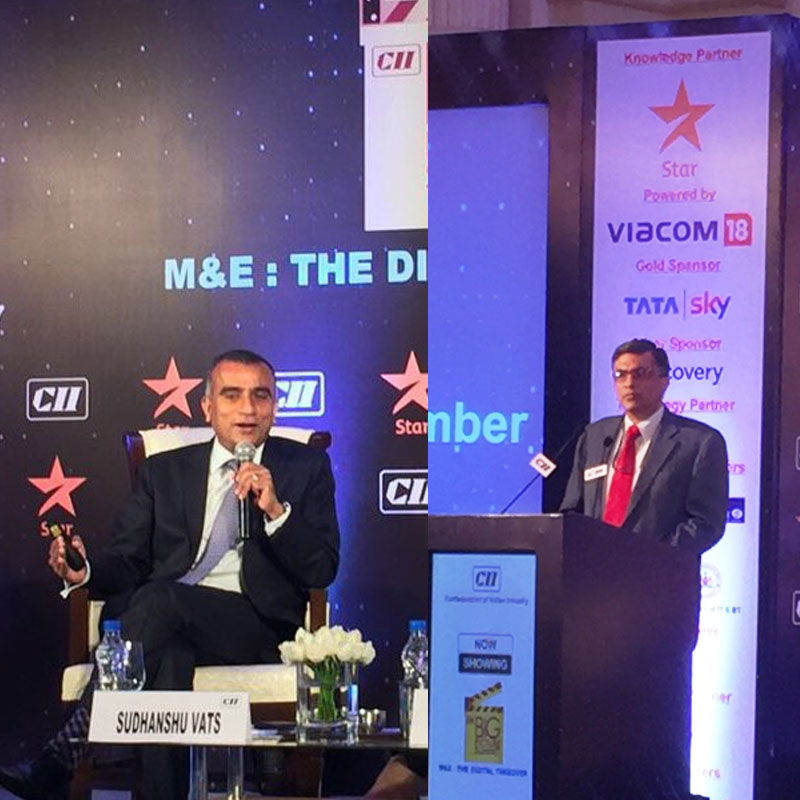
    NEW DELHI: The government of India yesterday stressed that it stood alongside the media and entertainment (M&E) industry in fighting digital piracy to safeguard loss of revenue and ease norms for doing business, while CII entertainment committee head and Viacom18 group CEO Sudhanshu Vats, on behalf of the industry, admitted that automation could result in loss of jobs leading to challenging times, but said the core of the industry will be ‘automation-proof’.

    “The government will stand with you on the issue of digital piracy,” department of industrial policy & promotion (DIPP) joint secretary Rajiv Aggarwal told the audience on Tuesday at the CII-organised Big Picture Summit here, adding that they were exploring a national anti-piracy regulation or regime and there was no need to get further into enacting complicated laws but finding solutions based on global experiences.

    Digital or online piracy is not only a big global challenge for the M&E industry, but has awakened stakeholders in India too who are feeling the heat of heavy loss of revenue due to rampant piracy of Indian content worldwide.

    Pointing out that the Indian government is alive to the issue of digital piracy and the potential of the M&E industry in being able to generate revenues and employment in the country, Aggarwal said that they were looking at how global and some local bodies (like PIPCU of the UK, TIPCU in Telangana and Maharashtra’s online anti-piracy unit) were addressing this challenge.

    Dwelling further on this issue, he exhorted the industry stakeholders to give feedback that will help India in forming a strong case and point of view for submission at WIPO where discussions are on to formulate standards for a global broadcast treaty.

    This year’s Big Picture Summit, an annual two-day conference on issues related to M&E industry, has been themed `The Digital Takeover’, which lays emphasis on the creeping digitisation in general and of delivery services like cable, HITS and OTT, and an impending automation (egged on by the likes of AI) of the various industry sectors.

    TRAI non-committal on exploring auctioning of TV licences

    SK Gupta, telecom regulatory authority of India (TRAI) secretary, which is the telecoms and broadcast regulator, while dwelling on various issues of the recently issued recommendations on net neutrality said the organisation’s efforts have always laid emphasis on consumer interest, while creating a level playing field for all players.

    Incidentally, at a time when the FCC has dismantled net neutrality norms in the US, put in place by the Obama regime earlier, favouring walled gardens of content and premium tiered pricing of various services, India’s TRAI has upheld net neutrality stating that all content should be made available to all distribution platforms on a non-discriminatory basis, apart from other level playing initiatives.

    Later, asked by journalists on the sidelines whether TRAI was exploring a consultation paper on auctioning of TV licences or permissions on the advice of the ministry of information and broadcasting (MIB), Gupta said he at least was not aware of any such move. He was non-committal when pressed on the issue.

    Asian Age newspaper a week back had reported that the government was exploring auctioning of television channel frequencies on the lines of telecoms spectrum, coal blocks and FM radio licences. Reason: bid to increase government revenues as presently permission to uplink and/or downlink TV channels cost a fixed amount with the applicant fulfilling certain set out financial norms, apart from getting clearances for satellite space and internal security. The newspaper report had added that MIB had sought advice from TRAI in this regard. What the report did not clarify was whether the auctioning was of TV licences pertained to DTT (digital terrestrial transmission) or satellite-delivered TV channels later distributed by cable and online.

    M&E industry holds key to creating future-proof, dynamic workforce: Vats

    Earlier in the morning, setting the agenda for the two-day conference, CII entertainment committee head and Viacom18 group CEO Sudhanshu Vats in his opening address said that the theme of ‘Digital Takeover’ was a topic that had “loads of nuances” that needed to be addressed in a proper perspective.

    “In my honest assessment, this is an extremely provocative theme – and one that can mean different things to different people. I can imagine some of my colleagues from the broadcast sector feeling upset. I can also imagine what some of my younger colleagues, who are already social media influencers thinking – this theme is passé, the takeover was complete a few years ago. I don’t want to pick a side at this stage and I’m certain that no definitive side can be picked,” Vats said, adding that he hoped the theme would help delegates form their own distinctive understanding of the future of the Indian industry in general.

    Pointing out that digital takeover could mean greater automation and fewer human jobs, a trend that could is likely to play out slowly in India because of availability of cheap labour, Vats said the Indian M&E sector directly employs between 1.1-1.2 million Indians and in the next five years one million more jobs would be added, thereby playing a role in “assuaging the challenge”. He added: “If we achieve breakout growth, that number can also touch five million. However, I would like to draw your attention not to the number of jobs but to their quality.”

    Explaining that skills, like creativity, story-telling, emotional intelligence and cognitive ability, in M&E sector were most ‘non-routine’ jobs, Vats said, “These are also the skills that can be transferred to other sectors, making us a part of the solution. Of course, we too will face our share of the burden. Some roles will be automated, and the media organisation might look very different in 2027, but our core will still be automation-proof.”

    Vats also pointed out that the private sector needed to be more ‘creator-friendly’ or ‘freelancer-friendly’, which also meant that the M&E sector could hold the key to “creating a future-proof, agile, dynamic workforce” that can take its skills and drive impact across industries even as the government continued to create a better business environment.

     ALSO READ:

    M&E industry to hit Rs8 trillion revenue by 2022: report


  • Taproot springs a design Myntra

    Taproot springs a design Myntra

    BENGALURU: Myntra, India’s leading platform for mass premium fashion will be launching a multi-media campaign by the end of this week, revealed Myntra Fashion chief marketing manager Gunjan Soni.

    Soni spoke with www.indiantelevision.com during an event today when Myntra announced that it has witnessed 80 per cent year-on-year growth with an industry leading revenue run rate of US$ 1 billion. The acquisition and turnaround of Jabong and the recently concluded festive season have contributed to this growth and strengthened Myntra’s position on its path to profitability says the company.

    Speaking about the soon-to-be-launched campaign, Soni said, “We are launching our campaign this Saturday about how we have become category leaders in various areas, so this particular campaign is about sports. I think a lot of people are surprised when we say fashion and sports. About 30 per cent of our business is sportswear including sports shoes. We are picking sports as a category and we are launching a specific sports destination on Myntra. To Support that, we are driving a mega 360 degree communication around it – that includes TV, outdoor, digital, radio, we are covering it all. Taproot is the creative agency and Maxus the media buying agency.”

    “When brands talk about sports, they usually use mega sports stars and they always portray very high profiles. We need to be more related. Our story is that a normal person wanting to lead a fit life and the message we want to convey is that no matter which sport you want to play to stay healthy, Myntra is the destination to get the gear. We are looking at Rs 10 to 15 crore kind of spends for this campaign that will run for about a month,” further revealed Soni.

    On Myntra’s and Jabong’s achievements, Myntra and Jabong CEO Ananth Narayanan said, “We are at the forefront of fashion in India today with over 18 million (1.8 crore) monthly active users. Our unique approach to leverage technology to decode fashion has helped us become the fastest growing online fashion platform. Myntra, Jabong and Flipkart together have 70 per cent market share in the country today and will continue to grow this by empowering brands and customers. We are on track to achieve scalable and sustainable growth and will be EBITA positive in FY-18.”

    In this phase of growth, Myntra says that it is using technology to empower its customers and brands. For customers it is leveraging Artificial Intelligence (AI) and Machine Learning for a personalised shopping experience, better product discovery and assisted buying. The company has introduced several features to enhance customer experience resulting in Myntra being 20 points ahead on NPS than the industry. To its brand partners, Myntra provides brand performance and analytics support, customer insights to develop a loyal fan base and enable engagement. In line with this, it has launched a new portal which will provide brands with customised insights and competitive intelligence reports to manage their performance on the platform.

    The company will also launch iconic global fashion labels Hugo Boss and Hackett which will be available on the platform.

  • Taproot springs a design Myntra

    Taproot springs a design Myntra

    BENGALURU: Myntra, India’s leading platform for mass premium fashion will be launching a multi-media campaign by the end of this week, revealed Myntra Fashion chief marketing manager Gunjan Soni.

    Soni spoke with www.indiantelevision.com during an event today when Myntra announced that it has witnessed 80 per cent year-on-year growth with an industry leading revenue run rate of US$ 1 billion. The acquisition and turnaround of Jabong and the recently concluded festive season have contributed to this growth and strengthened Myntra’s position on its path to profitability says the company.

    Speaking about the soon-to-be-launched campaign, Soni said, “We are launching our campaign this Saturday about how we have become category leaders in various areas, so this particular campaign is about sports. I think a lot of people are surprised when we say fashion and sports. About 30 per cent of our business is sportswear including sports shoes. We are picking sports as a category and we are launching a specific sports destination on Myntra. To Support that, we are driving a mega 360 degree communication around it – that includes TV, outdoor, digital, radio, we are covering it all. Taproot is the creative agency and Maxus the media buying agency.”

    “When brands talk about sports, they usually use mega sports stars and they always portray very high profiles. We need to be more related. Our story is that a normal person wanting to lead a fit life and the message we want to convey is that no matter which sport you want to play to stay healthy, Myntra is the destination to get the gear. We are looking at Rs 10 to 15 crore kind of spends for this campaign that will run for about a month,” further revealed Soni.

    On Myntra’s and Jabong’s achievements, Myntra and Jabong CEO Ananth Narayanan said, “We are at the forefront of fashion in India today with over 18 million (1.8 crore) monthly active users. Our unique approach to leverage technology to decode fashion has helped us become the fastest growing online fashion platform. Myntra, Jabong and Flipkart together have 70 per cent market share in the country today and will continue to grow this by empowering brands and customers. We are on track to achieve scalable and sustainable growth and will be EBITA positive in FY-18.”

    In this phase of growth, Myntra says that it is using technology to empower its customers and brands. For customers it is leveraging Artificial Intelligence (AI) and Machine Learning for a personalised shopping experience, better product discovery and assisted buying. The company has introduced several features to enhance customer experience resulting in Myntra being 20 points ahead on NPS than the industry. To its brand partners, Myntra provides brand performance and analytics support, customer insights to develop a loyal fan base and enable engagement. In line with this, it has launched a new portal which will provide brands with customised insights and competitive intelligence reports to manage their performance on the platform.

    The company will also launch iconic global fashion labels Hugo Boss and Hackett which will be available on the platform.

  • Tata Elxsi to showcase latest innovations & solutions in BroadcastAsia 2016

    Tata Elxsi to showcase latest innovations & solutions in BroadcastAsia 2016

    MUMBAI: Tata Elxsi, a global design and technology service leader in the Broadcast industry, today announced its participation in BroadcastAsia/ CommunicAsia 2016, where it will be showcasing its latest innovations and solutions in Broadcast, Communications, IoT and Artificial Intelligence. 

    Our solutions not only address the key challenges faced by the industry today but are also future-ready positioning us in the forefront of transforming the MSO and Broadcast businesses. These include Globally Deployable RDK Suite – Prime, FalconEye Test Automation and QoE Monitoring, Artificial Intelligence and Big Data Analytics, DevOps, Internet of Things Platform and Connected TV and Multiscreen Application. We work with the Top 5 MSOs, STBs/ Gateway vendors globally, establishing our leadership in this domain.

    Tata Elxsi senior VP strategy and marketing Nitin Pai said, “The telecom and broadcast sector are undergoing significant transformation, especially with phenomenal digital adoption. While the services on broadcast are increasingly adopting OTT video delivery and using big-data analytics to provide an enhanced, all-pervasive consumer experience, the telecoms are undergoing a larger change with the advent of SDN/NFV, virtual CPEs, Artificial Intelligence based prediction and automations and 5G wireless.  There is a huge demand to create newer platforms and services on the intersections of these technologies for applications like SmartCities, Industry 4.0 and IoT. The emergence of such new intersections across vertical market segments creates interesting possibilities for new business models. ComminicAsia/ BroadcastAsia is a great platform to share key trends, innovations, solutions and experiences from Tata Elxsi.”

    Tata Elxsi’s showcase at BroadcastAsia/ CommunicAsia (Booth 1 H3-07) will include solutions across the following categories:

    Develop, Test & Deploy: We work with leading operators across the world, helping them strategize next generation quad-play services – right from planning, development, testing to integration and deployment support. This includes next generation IMS/ DOCSIS implementations and new services around IoT, Smart Home, Healthcare, etc. 

     Launch, Analyse & Monetise: We provide a unified OTT platform to launch your content services across platforms with integrated 24×7 monitoring QoS/QoE support and content analytics. This allows delivery of enhanced consumer experiences and effectively monetises content.

     Transforming to Agile Networks: We have been solving problems for operators and OEMs globally for next generation network solutions with SDN/NFV and vCPE development and deployments. These include industry’s first implementation of holistic software defined networking architecture – with secure communications for Healthcare and a pioneering validation solution for end-to-end validation of a leading MSO’s NFV architecture.

  • Tata Elxsi to showcase latest innovations & solutions in BroadcastAsia 2016

    Tata Elxsi to showcase latest innovations & solutions in BroadcastAsia 2016

    MUMBAI: Tata Elxsi, a global design and technology service leader in the Broadcast industry, today announced its participation in BroadcastAsia/ CommunicAsia 2016, where it will be showcasing its latest innovations and solutions in Broadcast, Communications, IoT and Artificial Intelligence. 

    Our solutions not only address the key challenges faced by the industry today but are also future-ready positioning us in the forefront of transforming the MSO and Broadcast businesses. These include Globally Deployable RDK Suite – Prime, FalconEye Test Automation and QoE Monitoring, Artificial Intelligence and Big Data Analytics, DevOps, Internet of Things Platform and Connected TV and Multiscreen Application. We work with the Top 5 MSOs, STBs/ Gateway vendors globally, establishing our leadership in this domain.

    Tata Elxsi senior VP strategy and marketing Nitin Pai said, “The telecom and broadcast sector are undergoing significant transformation, especially with phenomenal digital adoption. While the services on broadcast are increasingly adopting OTT video delivery and using big-data analytics to provide an enhanced, all-pervasive consumer experience, the telecoms are undergoing a larger change with the advent of SDN/NFV, virtual CPEs, Artificial Intelligence based prediction and automations and 5G wireless.  There is a huge demand to create newer platforms and services on the intersections of these technologies for applications like SmartCities, Industry 4.0 and IoT. The emergence of such new intersections across vertical market segments creates interesting possibilities for new business models. ComminicAsia/ BroadcastAsia is a great platform to share key trends, innovations, solutions and experiences from Tata Elxsi.”

    Tata Elxsi’s showcase at BroadcastAsia/ CommunicAsia (Booth 1 H3-07) will include solutions across the following categories:

    Develop, Test & Deploy: We work with leading operators across the world, helping them strategize next generation quad-play services – right from planning, development, testing to integration and deployment support. This includes next generation IMS/ DOCSIS implementations and new services around IoT, Smart Home, Healthcare, etc. 

     Launch, Analyse & Monetise: We provide a unified OTT platform to launch your content services across platforms with integrated 24×7 monitoring QoS/QoE support and content analytics. This allows delivery of enhanced consumer experiences and effectively monetises content.

     Transforming to Agile Networks: We have been solving problems for operators and OEMs globally for next generation network solutions with SDN/NFV and vCPE development and deployments. These include industry’s first implementation of holistic software defined networking architecture – with secure communications for Healthcare and a pioneering validation solution for end-to-end validation of a leading MSO’s NFV architecture.