Tag: Artificial Intelligence

  • Spotify leverages Scibids’ AI to boost customer acquisition

    Spotify leverages Scibids’ AI to boost customer acquisition

    Mumbai: Headquartered in Paris, Scibids, which works in the area of artificial intelligence (AI) for digital marketing, recently launched a campaign. This, it said, helped music streaming service Spotify deliver a 30 per cent increase in registrations at a 24 per cent lower cost per registration.

    Spotify leverages programmatic marketing to run customer acquisition campaigns. In order to further turbocharge its marketing ROI, Spotify recently introduced Scibids’ artificial intelligence solutions into its ad tech stack.

    Scibids AI worked with the Google Display and Video 360 team and Spotify’s agency, MatterKind, to create custom algorithms that were specifically engineered to boost Spotify’s customer acquisition. Google’s DSP platform, Display and Video 360, has some of the most advanced tools for advertisers, allowing them to create and push sophisticated algorithms to optimise campaigns. Scibids, as an AI solution customisable to the needs of a brand’s media buying strategies, created algorithms designed specifically to improve Spotify’s cost per registration.

    Scibids managing director- Asia Pacific Rahul Vasudev said, “Scibids is proud to partner with Spotify and MatterKind, who share our vision of smarter optimization enabled by AI. In this case, the challenge on the Google Display & Video 360 platform was to break the glass ceiling of performance and turn exchange-based media buying into a competitive acquisition channel for Spotify. Results like these prove that AI has the ability to dramatically improve marketing ROI by carrying out real-time computations that were previously impossible. The icing on the cake is that the teams can then focus on more value-adding tasks.”

    Spotify head of media, CRM & partnerships Shipra Srivastava said, “We leveraged the power of AI to unlock scale with efficiency by using Scibids AI to add custom insights to Display and Video 360’s bidding mechanism. This proved to be useful in optimising not only the top of the funnel but deeper metrics for us as well.”

    The challenges for digital marketers looking for efficient brand and sales growth have multiplied, and the imminent demise of cookies and other identifiers means that running addressable marketing is actually becoming more difficult. Scibids said that it has built an AI that extracts the most discerning combination of variables for each campaign, enables reach on the open web and creates optimal algorithms to optimise KPIs as DSP campaigns start scaling up.

    Scibids added that it has recently also started operations in India with Samir Karpe as the country manager with teams across Mumbai, Delhi and Bangalore.

  • Lightbulb.ai raises $1.5 mn in pre-seed funding round from investors

    Lightbulb.ai raises $1.5 mn in pre-seed funding round from investors

    MUMBAI: Lightbulb.ai, an emotion AI and engagement analytics platform has raised a pre-seed funding round of $1.5 million from investors Chiratae Ventures and 9Unicorns. The other investors participating include Anthill Ventures and AI-led video-editing company, VideoVerse. The funds raised by this early-stage start-up will be deployed to deepen the datasets for their machine-learning technology & expand the product offering of emotion and engagement insights gathered from a user’s video, audio and speech inputs for a variety of industries. 

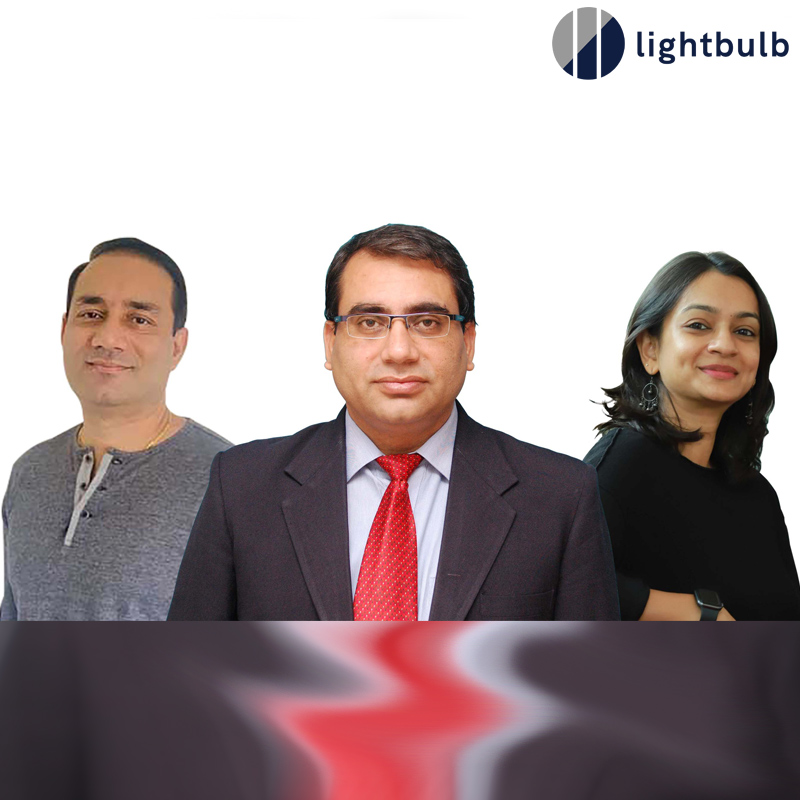
    Lightbulb is the brainchild of second-time entrepreneurial trio – Ritu Srivastava, Yogesh Sachdeva and Vishal Soni – who have earlier built and exited Obino, a digital health & weight-loss coaching start-up, that offered health-management solutions across a variety of health conditions. Their successful exit to US-based health conglomerate Roundglass Partners in 2017, paved the way for their next venture. With a minimum viable product (MVP) launch in late 2021, Lightbulb has had an opportunity to validate its product and market hypotheses before zeroing in on its go-to-market (GTM) plans.

    With four patents already in the pipeline and datasets spanning millions of faces across geographies and ethnicities, Lightbulb aims to help businesses that offer remote user experiences, to solve for higher engagement by mapping user emotion & engagement in real-time! From analysing user engagement during live meetings/calls to researching the emotional impact of pre-recorded content and asynchronous user experiences on consumers, Lightbulb offers nuanced solutions that are relevant to industries such as online learning, sales enablement and consumer research. 

    With insights from early customers pouring in, Lightbulb is fast-tracking growth on its multi-modal product & this early-stage capital infusion will help accelerate Lightbulb.ai in building its product & engineering teams, particularly in the fields of data science, machine learning and consumer insights and prepare itself for an early launch in the US market. The company was exclusively advised on this transaction by PepperTree, an advisory firm run by ex-bankers Akshi Mehta & Ankur Goyal.

    Lightbulb.ai co-founder and CEO Ritu Srivastava said, “We are privileged to be supported by some of India’s most prestigious early-stage institutional investors, with vast experience in helping deep-tech B2B SAAS companies build & scale global products in international markets. And are deeply grateful for the trust that they have placed in us at this early stage!” 

    Co-founder & CPO Vishal Soni said, “Customer decisions are emotional & not rational! Since current feedback modes are post-facto, by the time actionable intelligence reaches decision makers, opportunities are lost. Lightbulb enables businesses to measure emotion data & transmit actionable insights to decision-makers in real-time, helping them acquire and retain better.”

    Co-founder & CTO Yogesh Sachdeva said, “Our focus is now on developing a powerful platform that can power significant value-adding emotion ai products with high accuracy levels across ethnicities and age groups & applicability across multiple industries.”

    “Leveraging an intelligent emotion recognition platform through video interaction, Lightbulb is leading the next wave of innovation in this space. We are excited to partner with the founding team at Lightbulb, as they disrupt leading industries like education, banking, mental wellness etc,” said Chiratae Ventures India Advisors founder & chairman Sudhir Sethi.

    9Unicorns Accelerator Fund co-founder & managing director Dr Apoorva Ranjan Sharma said, “While emotion ai is at a nascent stage, it is an exponentially growing technology with a wide variety of use-cases across multiple industries. Lightbubl.ai holds the potential to be relevant across multiple market verticals and that is a strong indicator of how valuable the company will be in the future. As the world becomes more chaotic, the importance of emotion AI will only grow. We are excited to support the team as they enhance the accessibility and utility of emotion AI.”

    “We are excited to support Lightbubl.ai at this stage of its growth trajectory. They have shown great promise so far and we are deeply interested in the solutions that they are building for media and consumer research markets. Media tech is an explosively growing field and we are sure that Lightbulb will be able to make a clear space for itself in this market and scale with speed!”, said Anthill ventures CEO Prasad Vanga.

    “As a company that also harnesses the power of AI, we recognise the potential that emotion AI has as a technology. We are thrilled to be a part of this journey and are confident the team will build a long-term product solution with strong fundamentals,” said Videoverse strategy lead Siddhant Bhandari.

  • CAMM Summit 2022: Experts highlight the advantage of AI for marketers

    CAMM Summit 2022: Experts highlight the advantage of AI for marketers

    Mumbai: Artificial intelligence (AI)  has been a buzzword for a long time now! From content creation to customer support, AI is now everywhere. Interestingly, AI has also touched down the marketing industry. And to discuss the importance of AI and data in the marketing sector, the second day of IndianTelevision.com’s CAMM Summit and Exhibition 2022 witnessed an insightful panel discussion on the topic: ‘AI & Data – Your Tools for Better Efficiency.’

    Moderated by Pixis chief executive officer (Europe & APAC) Neel Pandya, the panel had marketing leaders including WATConsult managing partner Sahil Shah, Ferns N Petals chief technology officer Vasanth Kamatgi, Timex Group head of marketing & e-commerce Ajay Dhyani, and BFSI global technology leader Suresh A Shaan.

    Experts believe that AI can be very helpful in improving the data analysing speed and also to increase the efficiency of marketing campaigns. To begin with, Pandya explained his idea of AI. He feels AI is everywhere.

    How marketers look upto artificial intelligence?

    Taking the discussion further, he asked Dhyani if the Timex Group has ever integrated artificial intelligence approaches in their marketing campaigns?

    To which, Dhyani said that Timex Group has not used artificial intelligence in its marketing campaigns so far but they have come across various case studies and reports on how artificial intelligence is emerging and how companies across the sectors are using it.

    “We are excited to see the efficient use of artificial intelligence and are clearly looking to integrate it in our marketing campaigns,” he highlighted.

    Adding to it, Ferns N Petals’ Kamatgi said, “AI is a very powerful tool and it will change everything, from the way we live to the way we operate our business.”

    He further stated that Ferns N Petals started using AI back in 2018 for better product recommendation.

    Sharing the outcomes of using AI as a tool, he said, “we experienced mixed results, right now we need to work a lot to get better results because efficient use of AI requires smart applications and filtration of data and we are working in this direction.”

    He also told that Ferns N Petals recently concluded its annual business plan and artificial intelligence is going to be the biggest investment of the company. “We have a pipeline of 28 news cases that are supposed to go live in coming times. However, we have not decided the estimated time yet but we are working on it,” Kamatgi asserted.

    Explaining how they will integrate artificial intelligence in their marketing plan, he further said, “we will be applying AI for efficient product recommendations, classification of products, better search, product sequencing, multi-labeling and so on.”

    After listening from the marketers how they are using and planning to use artificial intelligence, Pandya highlighted how artificial intelligence has been helping the marketers. He said, “artificial intelligence is largely doing three simple things- automating the bidden budget which is currently planned manually, better customer targeting and creating more and more personalisation for the potential customers.”

    Metaverse – The next big thing in adtech world

    Shifting the conversation to the vision for the next step in the internet’s evolution – metaverse, Pandya asked WATConsult’s Shah, “Is metaverse or meta just a buzzword or are marketers really trying to do something which will help them and the industry?”

    “Metaverse is a fad to me,” Shah noted. “I am not sure if the metaverse is going to be there for a long time or not. We will get to know it with time.”

    He also said that after talking to a lot of gaming experts he realised that the term has suddenly become so popular after Facebook named its parent company as Meta. Otherwise the gaming industry has been operating in the metaverse for a long time.

    Furthermore, he shared how marketers are using metaverse. He said, “If we look from the marketing perspective, a lot of companies are now investing in metaverse. For example Nike opened a store which is just amazing. But the question is how many people are going to use it? And what is the return on investment in metaverse?”

    “The only concern here is the critical masses and consumers are not headed towards metaverse as of now,” he highlighted.

    How will marketers cope up with the cookie-less world?

    In the next part of the conversation, Pandya moved towards the most critical concern of marketers that is the removal of cookies. There’s been a lot of talk around how this announcement by Google will make it difficult for marketers to do audience profiling and reach out to the right audience at the right time.

    Throwing the next question to BFSI global technology leader Suresh A Shaan, Padnya asked, “how do you think a cookieless world is going to affect the ad and marketing world and how marketers will cope-up with the change?”

    Shaan answered, “now marketers need to switch to personalisation to a greater extent. People easily connect when the campaign is derived from an emotional perspective. Hence personalisation will emerge as a helpful tool for marketers.”

    Other panelists also agreed to him and shared how they are adopting personalisation. Sharing how marketers are going hyper personalised Shaan highlighted a few campaigns from Flipkart where the e-commerce company hired regional celebrities to go personalised for their consumers.

    Will artificial intelligence lead to job cuts?

    Concluding the session, Pandya asked one quick question to panelists, “Will artificial intelligence take away human jobs in the coming time..?”

    While Shah and Dhyani think that artificial intelligence will not take away jobs, Kamatgi thinks that it will definitely take away a few jobs. “I think in urban areas it will lead to a job cut but in rural areas it will not,” Shaan opined.

    “Well! I also think that artificial intelligence will not take away human jobs; rather it will add more power and liberty to manpower,” Pandya commented.
  • GUEST COLUMN: AI-powered influencer marketing redefining the landscape in 2022

    GUEST COLUMN: AI-powered influencer marketing redefining the landscape in 2022

    Mumbai: From Facebook recasting itself into a metaverse to marketers executing new lines of thought for sailing through yet another year amidst the pandemic, 2021 was indeed a roller coaster year for the digital marketing industry. However, one phenomenon which flourished all through was influencer marketing.

    The thriving influencer marketing arena in India is expected to grow at a compound annual growth rate (CAGR) of 25 per cent till 2025 to reach a size of Rs 2,200 crore (Source: GroupM INCA’s India Influencer Marketing Report). Globally, the industry is set to increase by approximately $13.8 billion by 2022 end (Source: 2021 State of Influencer Marketing Benchmark Report). What’s more, the induction of AI into influencer marketing is going to completely change the dynamics of decisions & ROI from it.

    With a plethora of types of influencer relationships and ongoing campaigns, supervising it the right way will be pertinent to a brand’s success.

    Data and analytics are now at the centerstage with marketers focusing on when and where to run campaigns, what kind of influencers, and how many influencers to engage with. By measuring the impact and performance of influencer campaigns, Data-driven influencer marketing is not only helping marketers calculate the ROI, further optimise the campaigns but is also helping them identify new opportunities and shortlist key influencers for future collaborations- while keeping a close eye on consumer preferences.

    As tools, artificial intelligence (AI), machine learning (ML), and natural language processing (NLP) are redefining the way brands conceptualise and execute influencer marketing by integrating quantitative and qualitative metrics in a relevant way. Such AI-driven influencer marketing campaigns will improve quality audience check and success measurements. Let’s deep dive into this…

    The right Influencer: In the recent influencer campaign meetings ‘The right influencer’ term is being used by brands on a continuous basis and they need a more detailed understanding of the selection. This process is going to be governed by AI technology by the end of this year since it’s all based on the data & if we are able to process those calculations in microseconds instead of minutes then this hunt will certainly get more interesting.

    With a few common filters we can easily narrow down the list but if we actually want to go in-depth for any decent-sized campaign, it consumes a lot of time and effort which can be easily tackled with AI-based tools. AI-based influencer marketing systems are steadily being leveraged to analyze the minutest of data from an influencer’s social media profile including every content piece posted by them.

    Marketers are looking to partner with those influencers whose online persona and style resonates with their brand’s image- to ensure that those influencers’ audiences are more likely to engage with their brand. AI-powered influencer marketing is helping brands analyse the performance of multiple influencers across various social media platforms irrespective of the language being used. Such scalability will further expand this year as marketers analyse diverse metrics including the reach and engagement metrics of individual posts.

    The Game of Fake Audience: While it can become really tricky to analyse the authenticity of the audience manually, AI is changing this game altogether. With the right algorithmic factors and by considering the step-by-step evolution of ML in this process, brands and agencies can make the right decision without too much time allocation.

    Reporting: ML & AI can assist marketers by generating very insightful analysis. The industry stakeholders are seeking to understand the reach and impact of influencer campaigns on multiple levels, even when the campaign is not huge in scale. AI will definitely help in exploring the influencer marketing insights on a level that the market hasn’t explored before and hence add many layers to what brands and agencies are doing so far.

    2022 will be a game-changing year when it comes to AI’s influence in the world of influencer marketing. It will play a crucial role in tracking sentiment to shortlisting influencers of all sizes and influencing brands in the way they define their goals and prioritise authenticity. The growing market of D2C brands in India is steadily increasing their budgets and now also want to control their data and creator relationships with the help of AI tools. 2022 will further raise the excitement with new influencer marketing trends unfolding for D2C brands, e-commerce companies, digital marketing, and advertising agencies.

    This year will see an escalation of influencer marketing growth as digital marketers will combine innovative strategies with data-driven marketing. 

    (About the Authors: Shreyansh Bhandari is the Lyxel&Flamingo co-founder and COO; Veda Bashishtha is the LYRKL co-founder and CEO)

  • GUEST COLUMN: Is AI a threat to digital marketing industry in terms of employment?

    GUEST COLUMN: Is AI a threat to digital marketing industry in terms of employment?

    Mumbai: Artificial Intelligence (AI) has been one of the celebrated buzzwords of all time across various industries. It has been answering a lot of questions and taking humankind to new places, quite literally, with customer service like chatbots and autopilot driving machines.

    With people adopting the digital way of living, brands aggressively engage with digital technologies and innovation to propel their marketing efforts. AI is disrupting nearly every digital experience and has altered the way consumers interact with services.

    The deployability of AI-led technologies and the difference it has brought in achieving customer satisfaction is now posing a serious threat to digital marketers. With AI’s agility, it is normal for marketers to be a little insecure. However, the day when AI takes over digital marketing jobs is still years away. On the contrary, automation creates more opportunities than it is killing, with vacancies for AI coders and AI software handlers.

    Seven in 10 marketers claim to have a comprehensive AI strategy. Undoubtedly, organisations have found various machine learning applications that can benefit marketing endeavours.

    Customer service chatbots are one of the everyday uses of AI. It allows brands and businesses to offer 24/7 service to their customers and address basic queries. AI gives advertisers an edge by offering a tailormade digital advertising experience. and allows advertisers to acquire factual information for customer profiling such as age, gender, geographies and behaviours. This data further will enable marketers to create effective ads.

    AI technologies such as Augmented and Virtual Reality are also stealing the limelight by the way they are revamping the online shopping experience.

    Marketing professionals are also aligning Artificial Intelligence towards marketing content creation. With stacks of data accumulated by AI, marketers can easily decide on the content that will drive engagement. AI has been efficient in predictive analysis, allowing marketers to identify potential customers and strategies that will yield better results.

    Despite the significant advancement witnessed by AI, there are still some aspects that consistently need human intervention and expertise.

    Creative quotient: No matter how advanced, machines are still lagging in keeping pace with the human brain. Creative problem solving, music creation, painting landscapes, photo and video editing remain a few aspects where AI fails to perform. On the other hand, AI has been bringing a revolution in cutting down repetitive tasks such as creating customer profiles, sending personalised messages and scheduling.

    Decision-making: AI is adept at assisting humans but can’t have the final say. It requires a considerate amount of critical thinking and analysis to govern any marketing action. AI is crucial for acquiring data but cannot strategise or develop a plan on its own.

    The human touch: AI has proven effective at answering all the questions hurled at it by customers, but AI cannot build customer relationships due to the lack of emotional connection. The responses provided by AI-powered chatbots are restricted to their programming, whereas humans share similar experiences with other people, which forms a sense of relatability and understanding.

    AI is dependent on humans: AI is a technology developed by humans and cannot function independently. Therefore, it is dependent on humans to be programmed and be successful at performing a task. In addition, AI machines need to be upgraded as per the market’s changing landscape, which again requires human expertise.

    AI may still not be powerful enough to take up creative jobs, but it definitely eliminates a lot of human intervention from monotonous and routine jobs. As a result, businesses have been quick to deploy automation to boost productivity and mitigate the costs of resources.

    (About Author – Sahil Chopra is iCubesWire founder and CEO)

  • GUEST COLUMN: Venturing into AI world – Dealing with the Cookiepocolypse

    GUEST COLUMN: Venturing into AI world – Dealing with the Cookiepocolypse

    Mumbai: Technological advancements have been at the helm of our evolution. The last decade witnessed some stellar advancements and shifts in our behavior. Recalling a few; we upgraded from 3G to 4G almost in a blink, smartphones and tabs lead the device usage stats and social media has become the new “news finder.” The most important “world wide web feature,” that has been around for a couple of decades, and now is on the verge of sunset is cookies.

    And with this development being pronounced crucial by leading tech firms including Google and Apple, naturally, the most pressing question in every marketer’s mind is, how do we continue to target effectively in a cookieless world? The answer certainly is – Artificial Intelligence (AI).

    The rise of the new change

    Cyberlaw caretakers are under the constant dilemma of addressing the rising concerns about how digital consumer data is being gathered, stored and utilised. Browser giants like Apple Safari, Firefox, and Google Chrome have either already unplugged their third-party cookie storage approach or are working towards the same.

    This means the digital marketing space is transforming rapidly. However, this doesn’t necessarily ring a bell of disaster for the marketers. Pico targeting and communication with relevance between businesses and users can still see the light of the day by maximizing first-party data collection on websites. This consent-based data gathering helps to boost the users’ trust, dependency and retention on the platform.

    But the marketing fraternity’s concern remains – how do we precisely target communication to the select user cohorts without cookies? The answer, as mentioned earlier, most definitely is by using artificial intelligence. As the times change, our transformation from digital natives to AI natives is just a few miles away. And the cookieless web world might as well streamline the situation more ardently.

    How can AI help deal with a cookieless web?

    To begin with, AI systems comprise complex neural networks that are trained with billions of data points. On the back of this data, the AI begins to learn and understand actions, predict results and recommend best-suited actions to achieve the desired marketing goal. The most heartening news for marketers is the fact that AI has immense capabilities to provide deep insights into the constantly evolving customer base and improve the understanding brands and businesses have of their users. And all of this without cookies.

    From enabling multichannel communication to relevant advertising, AI has the calibre to effectively cement the gap that will spring up in the cookieless world. Thousands of advanced AI models analyze and learn from billions of first-party data with the help of deep learning algorithms and NLP. This further helps the AI to make accurate predictions and provide recommendations in real-time.

    As we move towards more stringent privacy frameworks, AI is already revealing high efficiency in improving ROI and amping up business growth incredibly. Additionally, with AI holding the omnichannel communication fort high, marketers can precisely target user cohorts across multiple channels without worrying about the lack of cookies.

    (About Author: Neel Pandya is the Pixis CEO for Europe and APAC)

  • GUEST COLUMN: How Artificial Intelligence is transforming the world of digital marketing

    GUEST COLUMN: How Artificial Intelligence is transforming the world of digital marketing

    Mumbai: From Siri to Tesla Car, and Google AI to Alexa, Artificial Intelligence is now impacting every aspect of our lives. It is designed and programmed in a way to mimic and think like a human being. With data as the new oil in the marketing world, intelligence will be needed to derive meaningful insights to improve the marketing mix.

    With the vast potential of collecting, analysing, applying, and learning data, artificial intelligence is transforming the digital strategies of various sectors. With its advancement, it is also impacting and dominating the world of digital marketing.

    We all know digital marketing uses online platforms to advertise products and services of the brand. A study conducted by Salesforce revealed that almost 51 per cent of marketers are already using AI, as of 2018. But, after the pandemic, customers, as well as businesses, took the digital way resulting in an unprecedented surge in the way people experience the digital ecosystem, where our lives had literally moved online.

    Here are some insights on how AI is playing a pivotal role in the field of digital marketing:

    Customer Insights Integration

    Customer insight integration basically refers to the analysis of customer behaviour. Insights in this perspective refer to the metrics that show, how well a certain content is performing. For example: On LinkedIn, when one uploads an image/video, AI immediately scans the image for nudity/sensitive content and rejects or removes it from the timeline. Alternatively, if your status has more comments on a particular post, the algorithm amplifies it to the second and third network of users. On another popular digital platform, Spotify, the app recommends playlists based on the user’s choices. A similar algorithm is deployed by Amazon when you see recommended products based on your past purchase. Most popular digital platforms, through AI, are able to paint a virtual personality of the user, based on past behaviour and actions online.

    Real-Time Tracking

    Artificial intelligence also allows real-time tracking and lets the marketers know how a certain post is performing in an instant. For marketers, this means faster A/B testing of content, better analysis, and swift deployment of better strategies to produce more content of what’s working.

    Enhances Customer Experience

    Artificial Intelligence uses the theory of machine learning to study its user. They observe the pattern of the user’s choices by monitoring what s/he likes or dislikes. After observing the patterns, they show content to users according to their preferences and likes. This makes marketing virtually personalised and the user engages more with the content as per his/her preference, stimulating dopamine. And it’s not rocket science to note that a happy user is most likely to buy a product or service.

    Chatbot

    Chatbots are designed in such a way that it can stimulate human conversation with the help of pre-defined texts and sentences. With the introduction of AI in digital marketing, it has enhanced the customer experience by providing them 24×7 customer care services. A study conducted on American Businesses and Customers who have used chatbots revealed that 64 per cent of Americans agreed on the availability of chatbots 24×7, on any day as its best feature 24×7. An erstwhile long content that had a dedicated FAQ page has now turned into an interactive session where the bot addresses your most common concerns and directs you to a human when needed.

    Email marketing

    AI can also help email marketers reach the right customers at the right time, ensuring that messaging is relevant, engaging, and more likely to convert. It can also allow you to better analyse what types of messaging, subject lines, design, and images get the best results. With Artificial Intelligence, it has become a lot easier to send the customer personalised emails. 

    With data-driven marketing strategies ruling the roost, Artificial Intelligence is the hero that ‘makes sense of the data, analyses the data, creating a virtual persona of the intended audiences, and predicts ‘better’ strategies to target them. And this is probably just the start of how AI will transform the face of marketing as we know it.

    (Nikhil Sharda is EVP – creative & digital communications at Scroll Mantra. The views expressed in the column are personal and Indiantelevision.com may not subscribe to them.)

  • Lustral Water launches AI & IoT-based smart water purifier

    Lustral Water launches AI & IoT-based smart water purifier

    MUMBAI: Homegrown B2C model-based company, Lustral Water has launched what it claims is ‘the world’s first’ Artificial Intelligence (AI) & Internet of Things (IoT) enabled water purifier with inbuilt sensors.

    The Water Purifiers remove toxins and harmful bacteria but retain the necessary minerals and vitamins, the company said. In addition, these purifiers are ingrained with new-age technology that keeps a tab on consumer’s water intake, pH level, TDS level, turbidity, mineral content, water temperature etc through smartphones. 

    Lustral Water CEO and founder Aditya Patnaik said, “Even today over 50% of India’s population doesn’t have access to clean drinking water. They are dependent on boiled water or simply consuming undrinkable water. We firmly believe that with cutting-edge and futuristic technology transforming even the unthinkable things into a distinct possibility, access to clean drinking water shouldn’t be a far-fetched idea.”

    He further added, “Lustral Purifiers are cost-effective with great health benefits as we offer WHO recommended standards of water. We don’t offer filtered water; we offer a healthier version of clean drinking water infused with necessary minerals and vitamins. Our purifiers are equipped to provide valid water in domestic houses. On top of that, everything is absolutely automatic and requires little to no human interference. If the water quality goes down, the purifier is equipped to alert an expert technician immediately so that consumers won’t have to worry about these things.”

    The purifiers are equipped to send requests to the nearest service engineer as soon as the water quality goes down, said the company. The brand believes that consumers should have access to validated data to know what is happening inside the purifier and consume water only after inspecting the quality. 

    Lustral Water has registered a 22 per cent month-on-month growth in traffic since its inception in Bengaluru. The brand is now planning to launch its state-of-the-art water purifiers in new tier II markets such as Jaipur, Lucknow, Ahmedabad, and Bhubaneswar.

  • ZEE ropes in Nitin Mittal as president – technology & data

    ZEE ropes in Nitin Mittal as president – technology & data

    Mumbai: Leading media conglomerate Zee Entertainment Enterprises Ltd. (ZEE) on Tuesday appointed Nitin Mittal as president – technology & data.

    Prior to joining ZEE, Mittal was the founder CEO & board member for SOLV, a company focused on creating an open platform for B2B commerce, credit, payment, logistics and skilled workforce for the SME segment in India. At Zee, he will lead strategic initiatives in Tech, Data, Artificial Intelligence (AI) & Machine Learning (ML) and Digital across the company to support the ZEE 4.0 transformation, said the company on Tuesday.

    The announcement is part of the media conglomerate’s strategic plans to support its digital pivot, drive exponential growth across digital platforms and fortify the broader transformation it has embarked on, in line with the ZEE 4.0 approach.

    “We have taken concerted efforts and reworked our digital strategy in order to build robust digital assets to enhance the user experience. We are taking concrete steps to further upgrade our technological capabilities, and I am sure with Nitin’s expertise, we will enhance the value proposition of our digital products to create consumer delight,” said ZEE Entertainment Enterprises Ltd, MD & CEO, Punit Goenka.

    The transformation process aims at creating a digitally adept, data first company that will be a leader, in all formats of content consumption, both linear and digital, across India and key international markets.

    Mittal will also lead the engineering team and work closely with president – digital businesses & platforms, Amit Goenka to enhance the customer experience across ZEE5 and support the growth plans of the OTT Platform in India and across the world.

    “The pace of technology-led innovation in the media and entertainment ecosystem is rapidly rising, and a strong blend of technology, data and talent are the critical determinants to succeed in this space. I am glad to welcome Nitin Mittal to our leadership team to drive the digital transformation journey of ZEE 4.0 forward,” said ZEE Entertainment Enterprises Ltd, president – digital businesses & platforms, Amit Goenka.

    Commenting on his new role, Mittal said, “My job at ZEE is to worry about technology in the future. If you want to have a great future you have to start thinking about it in the present, because when the future’s here, you won’t have the time. (Brockman 2003). I’m committed to helping our clients and various teams’ professional dreams come true. As an organization we aim to create an environment that sparks innovation. I will do my best to support and implement the great ideas the teams come up with.”

    Mittal has two decades of experience, during which he has worked with National Payments Corporation of India (NPCI) to build the Unified Payments Interface (UPI) framework for the country and with the Unique Identification Authority of India (UIDAI) on reframing the Aadhar platform to drive the exponential growth of its coverage in India. He was also associated with Standard Chartered, IBM, TESCO, BNY Mellon, Wipro and the Future Group in the past.

  • Dentsu’s content creation engine now leverages the power of GPT-3 model

    Dentsu’s content creation engine now leverages the power of GPT-3 model

    MUMBAI: Dentsu Asia Pacific’s Data Sciences division has unveiled a GPT-3 powered content generation engine. The engine is designed to produce several iterations of creative copy tied to historic and predictive performances of content and is embedded in dentsu Marketing Cloud (DMC) – the media-marketing giant’s proprietary consumer insight and intelligence platform for creative and performance marketers.

    Generative Pre-trained Transformer version 3 (GPT-3 or GPT 3) by OpenAI is, by far, the most powerful language model in history. By linking GPT-3 with performance data, this content generation engine puts the power of artificial intelligence-led copy-creation in the hands of every creative across dentsu.

    Dentsu Webchutney & dentsumcgarrybowen India chairman Sidharth Rao said, “While compelling storytelling is paramount to connecting brands with their audiences, data enables one to move beyond a single limiting thought to unlock the full potential of an idea. As a digital-first creative network, products such as the GPT-3 powered content engine will enable our teams to mitigate the pressure that content creation requires through the intelligent use of technology to drive efficient creative product and deliver better customer experiences.”

    Available in 15 languages and applicable globally, the product is extremely easy to use. The GPT-3 powered Creative Engine will be merged with dentsu international’s marquee data-driven marketing engine – the dentsu Marketing Cloud. Users simply feed the engine with a seed social media caption, theme or topic and the engine generates several iterations of the best predicted performing caption(s) or post copy within a few seconds. The underlying intelligence of the tool can apply quantitative analysis to both pre and post-live-testing cycles and uses AI & ML (machine learning) to predict how audiences will engage and react to any creative message in real-time.

    “AI & ML allow for the intelligent processing of information to deliver better efficiencies. With neuro-linguistic programming and deep learning coming to the forefront of data-driven creative messaging, enabled by GPT-3 and its applications, the link between effective creative messaging and content generation at scale is entering its golden era. The use of this new technology within our creative product is testament to intelligence augmentation at the driving seat of creative innovation and yielding better outcomes for clients and marketing practitioners the world over,” added dentsu Programmatic CEO & dentsu Asia Pacific chief data officer Gautam Mehra.