Tag: Artificial Intelligence

  • Anand Gandhi create stunning storyboard with artificial intelligence

    Anand Gandhi create stunning storyboard with artificial intelligence

    Mumbai: Anand Gandhi, known for pushing the boundaries of ideas and possibilities in cinema, games or tech, has taken to Instagram to share something cutting-edge – images from a film storyboard that he created purely using AI technology.

    These gorgeous images are from a hard science-fiction film that he announced in 2019 called Emergence. Since 2015, he has been speculating about a pandemic that brings the world to a halt. Ironically, the film was delayed because of the Covid-19 pandemic.

    In the post, Gandhi shared, “My exposure to text to image AI happened when I visited MIT Media Lab a decade ago. Computer vision is going to inform our futures in ways I can only vaguely speculate, limited by the ceiling of my imagination.”

    His audiences and industry peers couldn’t contain their excitement at these images. Actor Vijay Verma commented, “This looks extraordinary, Anand.” Many other users also begged, “Please make this happen!”

    Whether Anand Gandhi actually intends to make this now is anybody’s guess. Regardless, we can’t wait to see what he comes up with next!

  • Full stack developer: The next big thing in technology?

    Full stack developer: The next big thing in technology?

    Presently, full stack developer has emerged to be a highly sought career alternative worldwide. Companies are hiring full stack developers in huge numbers. A Full Stack Developer must possess a vivid knowledge of the front end, version control, the back end, debugging, database management, operating system, and system design. Therefore, the demand for full-stack developers is increasing because of their inclusive technical knowledge in various fields.

    What is Full Stack Development?

    Full Stack Development is an end-to-end application software development. This software development encompasses a front end as well as a back end. The user interface is the main part of the front end, while the back end comprises application workflows as well as business reasoning.

    What is the next big thing in technology?

    Technology is expanding at an unbelievable rate. Every business is using technology to elevate its offerings. The usage of technology was different before the pandemic. However, after the recent pandemic, the usage of technology in full-stack development has changed. In this article, we are going to discuss those contemporary trends.

    1. Artificial Intelligence (AI)
    Realising the importance of confidentiality of business and data, companies have started to adopt Artificial Intelligence. AI is considered to be the next-generation technology. And it has already entered the commercial market around the world. It has become essential for full-stack developers to master AI. An Artificial Intelligence expert will contribute to the development and growth of the company. AI specialists will also be able to comprehend customers’ requirements and behaviours.

    2. Blockchain
    Blockchain has mushroomed enormously in recent years. Various companies are opting for and investing in blockchain. This technology simplifies monetary transactions of companies. Hence, it is highly recommended for a full-stack developer to acquire proficiency in blockchain. Then the specialist can look after the transfer of money, government transaction, digital currency transaction and land transaction.

    3. Machine Learning (ML)
    Companies have ultimately understood the worth of Machine Learning. Thereafter, this technology has seen a spike in its growth. Machine Learning procedures can analyse data from previous experiences and can improvise its predictions and decisions. Hence, a Full-stack developer must know Machine Learning to bag the benefits and opportunities for his company.

    4. Code Development
    One of the latest trends is low code-development. Coding a program is a slow process. Therefore low-code development was invented. This code does not require complicated coding and offers logical understanding. It helps the customers to understand the software and customise it according to their requirements. Low code development helps in digital transformation and the development of complicated industrial solutions.

    5. Programming Language
    Learning Computer Language or Programming Language is extremely important for a Full-stack developer. All applications and web pages are developed with the help of Programming Languages. One of the most popular Computer Languages is JavaScript. This language is extremely easy and flexible to use.

    6. Mixed Reality
    Mixed Reality is one of the recent inventions. It has opened many unimaginable opportunities with the passing years. It was only possible because there was an incredible improvement in computer vision, input system, graphics and visualisation techniques. Mixed reality includes two main parts: Virtual Reality and Augmented Reality. This technology mixes real and natural environments and creates an absolute virtual environment. This gives users an out-of-the-world experience. This is generally used in the commercial, health care and, gaming sectors.

    Conclusion

    A career in Full-stack development is quite lucrative. This is because of the high remuneration and job availability. If you are willing to commence a career as a Full-stack developer, then get yourself enrolled in a Full-stack developer course. Join the online courses offered by Imarticus to explore and bag more opportunities.


  • GUEST ARTICLE: Impact of 5G in marketing and communication

    GUEST ARTICLE: Impact of 5G in marketing and communication

    Mumbai: While the 5G discourse has been mainly centred on autonomous vehicles and telecom capabilities, the truth is that there is more to this emerging technology than simply enhancing our mobile connectivity. To elaborate, 5G will accelerate technological innovation by enabling AI and machine learning (ML) at the edge, bringing with it unprecedented new enterprises and technological capabilities. According to the report, 1.4 billion devices will be connected to 5G by 2025, opening up a world of possibilities for explosive data. As new devices and technologies are created across industries, what used to take years or months to reach the market will now be accomplished at breakneck speed.

    5G network design and connectivity are rapidly becoming more widely available. It can benefit from the rising availability of this service in a variety of ways, including marketing and communications. The faster the customers and prospects can connect to and navigate the network, the happier they’ll be. 5G ensures that more people can connect to and utilise your network or website more quickly and consistently, even when traffic levels are higher than usual.

    So, what does this all ultimately mean for marketing and communication?

    Because many industries are expected to be impacted, marketing and communications professionals must be ready to develop their messaging and properly explain the results of 5G to key influencers and stakeholders. Here’s how it works:

    5G will help in enhancing experiential marketing

    The promise of 5G — from high-power edge computing to lightning-fast speed — is an opportunity for both consumers and companies. Communication can help brands to position themselves in the community as visionaries, discussing trends and projections while emphasising the growth of their business and generating interest and enthusiasm about the beneficial effects of brands in the community through 5G. Marketing will also assist in allowing the consumer to personally experience the brand or product and obtain brand rewards through 5G. Experiential marketing has always been known for highlighting a brand’s physical presence. With 5G, brands can use artificial intelligence (AI), virtual reality (VR), and augmented reality (AR) approaches to communicate with those who are still striving to reach consumers faster.

    5G technology opens up AR and VR

    Online interactions will increasingly revolve around immersive experiences, and 5G will make this transition more seamless. Virtual reality experiences can take the role of video in marketing by immersing the client in the experience rather than simply showing them what is available. For example, you could allow a customer to enter the store where they want to buy something; allow them to try on hundreds of different items of clothing without entering a changing room; or even allow them to dine with their favourite celebrity.

    Personalization

    Data collection is probably going to get much better under 5G. Discovering your customer might take less time. From this, marketing and communication will be able to help brands know how they can connect with their target audience and consumers faster. Due to such fast connectivity, they can also help brands connect with the media. Such technology will also help marketing by making brands more personalised and immersive experiences for their consumers.

    Marketing and communication will become more interactive

    With 5G’s high-speed capabilities, communication may become more appealing in addition to being more prevalent in the media. Marketing will become more interactive, which was previously thought to be impossible. However, 5G may make this tactic more feasible for marketing professionals. It will become more digital and immersive in the future.

    5G signifies that more individuals can connect to and use the companies’ experiences or goods more swiftly and reliably. The future of marketing and communication will help brands connect with customers and prospects faster and more passively, boosting the brand’s image and awareness with the aforementioned points.

    The author of this article is Scenic Communication co-founder Anindita Gupta.

  • OTTplay releases a series of TVCs with AI-based personalised recommendations

    OTTplay releases a series of TVCs with AI-based personalised recommendations

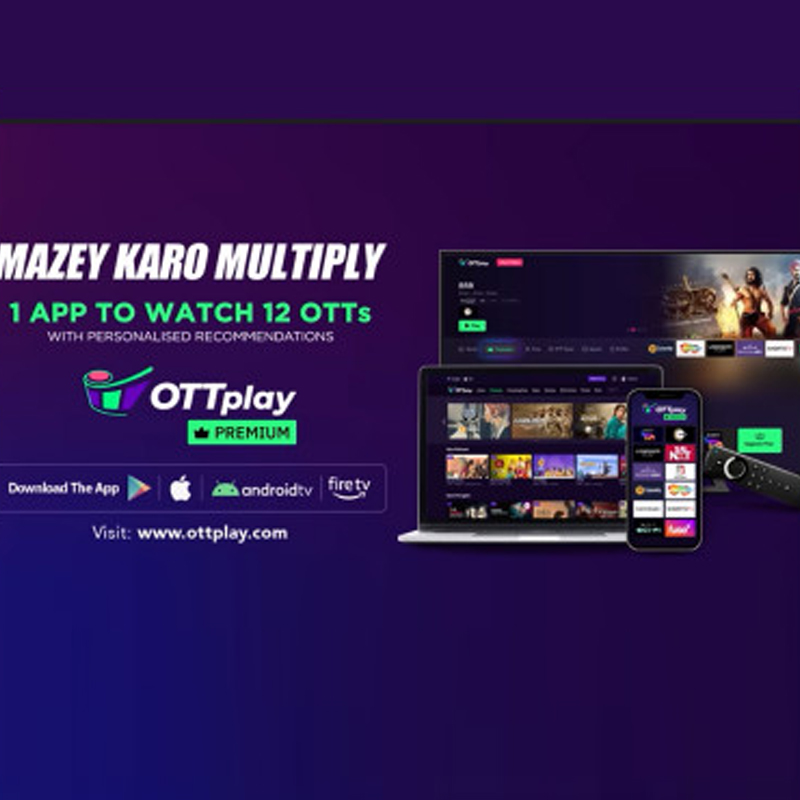
    Mumbai: OTTplay has announced the launch of its first-of-its-kind personalised artificial intelligence-based feature that recommends content from a library of over 65,000+ web-series, movies, and shows, in 18+ genres and across many languages.

    The platform has tapped into the latest AI-powered technology and developed the feature in-house to equip audiences with smart recommendations. The platform aspires to democratise content offered across OTT platforms by handing it over, thus empowering the users to discover content they are most likely to enjoy.

    The one-of-its-kind streaming platform is promoting the unique AI-based feature with its all-new digital ad campaign with an all-new tagline “OTTplay se pucho, OTTplay pe hee Dekho aur Majey Karo Multiply!”

    Considering this is an innovative concept introduced in India, the digital ad aims to educate audiences about the benefits of the feature. The 20-second teaser videos are quirky and filmic, making fun of the inherent difficulties in selecting the most crucial piece of content to watch—’Aaj kya dekhun.’

    The three ad films, “Alien,” “Exorcism,” and “Interrogation,” which are each based on different scenarios, are focused on figuring out the solution to this biggest puzzle and cleverly plugging OTTplay in the process.

    With its personalised recommendation feature and the recently launched OTTplay Premium, which offers access to the content of 12 OTTs with a single subscription, OTTplay solves the problems of “OTTplay se poocho and OTTplay pe dekho” giving a glimpse into the OTT ecosystem in India’s future for content discovery.

    Commenting on the latest AI-based feature, OTTPlay co-founder & CEO Avinash Mudaliar said, “As category creators, OTTplay’s latest AI-powered technology has revolutionised content navigation in India’s OTT ecosystem. We are razor focused on providing audiences with the convenience to discover and consume content from across OTT platforms. Our recommendation engine analyses user activity on the platform and aims to showcase curated content based on user preferences, making the content consumption experience seamless.”

  • Guest article: What to know about the modern marketing playbook in the era of web 3.0 and AI

    Guest article: What to know about the modern marketing playbook in the era of web 3.0 and AI

    Mumbai: For quite a while now, two terms have been making very speedy rounds in marketing circles-web3.0 and artificial intelligence. This new wave of the internet is set to disrupt the way marketing is done globally, commanding quick and agile systems. The reason: this is where the consumers of the future are. As marketing tactics change along with the advent of the digital revolution, new standards will be established at the same time, drastically altering modern marketing.

    What is web 3.0, and what are the new trends it brings to the table

    The third generation of the internet, or web 3.0, integrates data in a decentralised manner to provide a quicker and more individualised user experience. Constructed with the help of artificial intelligence, machine learning, and the semantic web, it uses the blockchain security system to improve privacy and provide an immersive experience with a marketing opportunity. So, businesses stand to benefit from an online presence here, and marketers will get a stronger opportunity to connect with their target customers.

    Web 3.0’s degree of functionality has been attained in the previous two web generations. Its technical ancestor, known as web 1.0, was born in 1989 and reached its prime in the 1990s and early 2000s. Then came web 2.0, which reached its maturity in the middle of the 2000s and introduced the novelty of collaborating and communicating online.

    A rich and interactive marketing experience

    A marketing challenge today is delivering a hyper-personalised experience at a time when users are expected to have more control over their data. And it indicates that reaching out to both present and future consumers will soon become more difficult. Users now create information on the internet as well as consume it, which is helpful for marketing. Here is where web 3.0 components such as AI help make sense of the massive creator data.

    Web 3.0 marketing uses the rapidly changing internet to improve results. For instance, marketers can examine customer chats using natural language processing technologies. AI has also been utilised to further personalisation, particularly in the areas of online content rendering and presentation, the delivery of e-commerce goods, and automated customer assistance. A greater symbiotic link between humans and machines will lead to more web 3.0 features having a significant impact on marketing. Besides this, the other brilliant arms of web 3.0 are NFTs and the metaverse, which is an all-consuming version of the internet that uses tools like virtual reality (VR) and augmented reality (AR) to work, play, and amuse others in a 3D environment.

    How to market effectively on Web 3.0

    Any kind of creative work can be represented by NFTs, giving advertisers the opportunity to reach consumers with a range of interests. They can be implemented into customer loyalty programmes where participants are given the chance to acquire exclusive products. This is being done to perfection by brands like Taco Bell, Macy’s, and Budweiser.

    Immersive surroundings, virtual user identities, and a working virtual economy are all distinctive aspects of the Metaverse. Its objective is to mirror physical environments and lives in digital form, thus enhancing human potential. The metaverse offers marketers the chance to connect with consumers in a brand-new setting where they are fully engaged. Businesses will have the ability to increase their reputation by highlighting the assured security of blockchain transactions.

    Web 3.0/AR & VR are being touted as game-changers in modern marketing. Given its immersive and ‘phygital’ nature, interoperability, and collaboration capabilities, however, an ongoing commitment to the platform is key. Many web 3.0 principles are still up for dispute.

    Web 3.0 is still being defined as a whole since there isn’t a single, agreed definition of what it exactly is. In other words, we are creating the aircraft while we fly. Despite this, there is no denying that web 3.0 is changing the way that the modern corporation interacts with its clients. In addition to the numerous potential advantages for early adopters, marketers should be actively involved in the process of establishing this next phase of the internet because they have a duty to future generations. Numerous companies have begun experimenting in this realm, including brands like Airtel, MakeMyTrip, Amazon and Swiggy.

    In one classic example Alpenliebe brand house which comprises candies, pop & Eclair collaborated with Nickelodeon’s annual awards property – Kid’s Choice Awards which screened in the metaverse. Hosted at Decentraland which is one of the biggest metaverse platforms globally, the brand organized a quirky entry for its participants where they were asked to form their own ‘’Avatars’’ upon registrations. A slime pool, a blimp pool, slime fountains & fun slides also appealed to the kids. The metaverse event was mobile friendly which delivered an immersive user experience and created good brand value.

    Again, for companies like Starbucks, technology need not alienate us. To quote Tata Starbucks director of marketing, category, loyalty and digital Deepa Krishnan, who is also a jury member at MMA India Smarties 2022, the future will be all about marrying technology with purpose, experiences, and value by getting to know consumers, their interests, and preferences and making their lives simpler through deep analytics, harnessing multi-point data and insights.

    Five years ago, marketers were beginning to shift more spends online through advertising and digitisation, notes Krishnan, adding that the pandemic hastened that significantly. “The future will be about bringing the offline experience online. It is going to be about humanising the digital. People realise and appreciate the power of human connections and are increasingly craving community-driven engagements. How a brand connects with its consumers is still very much significant and will always remain paramount,” she adds.

    Revolutionising the marketing and advertising industry

    The future customer won’t be susceptible to today’s issues, such as obtrusive marketing and inadequate data protection, thanks to a solid foundation. But for businesses looking for success in the new era of the internet, AI and the metaverse-based research technology will not only introduce them to the developing web 3.0 marketing but will also give them access to the consumer and market intelligence necessary to grow a company.

    The author of this article is MMA India country head Moneka Khurana.

  • Explurger App downloaded by 1.3 mn users; expands footprint to 50+ countries

    Explurger App downloaded by 1.3 mn users; expands footprint to 50+ countries

    MUMBAI: Explurger, an AI-powered intuitive social media app that lets users connect and share their moments with friends and family online said that it has crossed several milestones in a short span of time. The gamified social media app has expanded its footprint to over 50 countries, been downloaded by 1.3 million users, and seen a three-fold increase with over 900,000 new members being added in just three months itself.

    Explurger App highlights:
    • Downloaded over a million times from the App Store and Play Store
    • Gained over 900,000 new users in three months
    • Over 226 million people have been invited by registered users
    • Users are on average spending 15-minutes on the app, which is at par with other popular social media apps
    • Over 612,897 ‘Explurger-ins’ (location check-ins) have been posted by users so far via the app
    • Users have cumulatively covered 63,179,971 miles, which is equivalent to circumnavigating the globe more than 2,537 times
    • A total of 190,794 rewards have been accessed through the app

    Till date, over 75 per cent of users who installed Explurger have synced their contacts with it, showing that they trust and enjoy this social media app and want their friends to join them as well. This has resulted in over 226 million invites being sent out by registered Explurger users to those who are not yet on this platform.

    Explurger founder & CEO Jitin Bhatia said, “Our sign-up rate increased substantially post-launch in June. We are seeing higher traction in engagement, with an increased number of posts per day. We appreciate the enthusiasm of our user community, which has steadily risen and has crossed the one million download mark in less than three months. There is no doubt the numbers will grow exponentially as our users continue inviting more people to come and create thriving travel communities on our platform.”

    Explurger also has an 80 per cent sign-up rate with an average engagement time of over 15 minutes, which is at par with other global social media apps. The app also claims to have a 90 per cent retention rate of users who have travelled over 1,000 miles and have AI-based travelogues in at least three cities.  

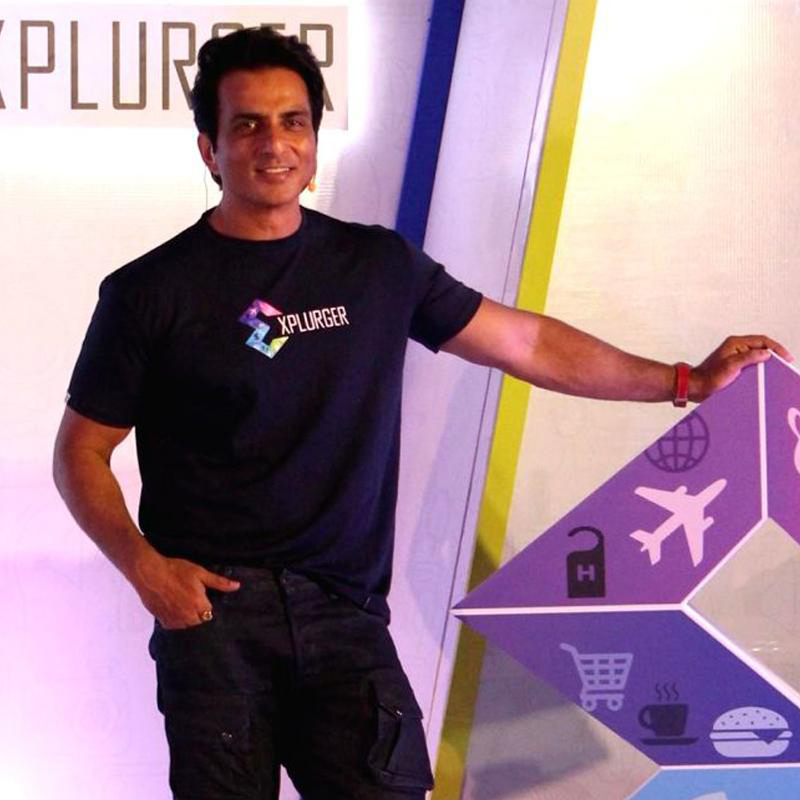
    “The bucket list has also turned out to be a popular feature in Explurger. If you see someone Explurge-in at an interesting place, you can add that place to your bucket list. This isn’t your run-of-the-mill bookmarking feature. The app will automatically remind you when you are in that area. So even if it happens after years and you have forgotten, Explurger will notify you that you had saved it in your list,” shared Explurger co-founder Sonu Sood.

    Explurger has been selected by Google as one of the top 100 promising startups and top 30 mobile startups in India. An AI-powered social media app with a gamified user experience, it lets users connect and share their moments with friends and family online. The app goes beyond just sharing pictures and videos, it uses cutting-edge AI to automatically create travelogues of the memories users share on their profile. Whenever a user creates a post or ‘Explurge-in’, the app’s AI updates the travelogue, so every mile, city, country, pub, and club gets added.

    Each user’s Explurger level goes up as in-app engagement increases, leading to more recognition on the platform. Users accrue rewards based on their activity, which in turn can be redeemed later. Currently, Explurger has more than 40 top brands on board as part of its rewards system and over 190,794 rewards have been accessed by users.

    Explurger has been part of the Appscale Academy, a growth and development programme launched by MeitY and Google, where Indian start-ups are mentored on building high-quality apps for a global audience. The social media start-up was also recently recognised by Google in its Top 10 Innovative Apps in India list.

  • DPhi appoints Bconnect Communications as its communication partner

    DPhi appoints Bconnect Communications as its communication partner

    Mumbai: Belgium and India based DPhi has appointed a new-age integrated marketing communication agency — Bconnect Communications — to manage its external communication across pan India.

    DPhi is an artificial intelligence (AI)-focused community platform. Chanukya Patnaik founded the company in 2020 with the goal of educating and building AI for everyone in order to solve key challenges for humanity.

    Headquartered in Delhi, Bconnect Communication will look into the strategic communication for DPhi as it is important to convey the right message to the audience about the brand initiatives.

    On its collaboration with Bconnect Communications, DPhi founder Chanukya Patnaik said, “We are glad to onboard Bconnect Communications as our communication partner. We’ve worked with them on a few engagements before getting into this longer collaboration. Neha and her team showed great enthusiasm, ownership, and a keen willingness to make an impact. Most importantly, they are well connected across most Indian media outlets and have shown remarkable results in a short span. This collaboration will help DPhi reach a wider audience, and we are looking forward to it.”

    Bconnect Communication founder and director Neha Bahri said, “Business-to-business technology is our core forte. It is the most demanding segment right now in the global and Indian markets. Our strong business acumen in the sector and past experience in the B2B and AI space gives us an edge in working on our strong portfolio of clients. I believe we will be able to deliver through a mix of communication strategies.”

    DPhi said that it has fostered AI-driven innovation among several companies and has solved social and business problems, including predicting earthquakes to save lives, safeguarding NFTs, building an AI powered lens for the blind and many others.

    DPhi claims to provide free AI and data science courses by industry experts from large tech companies or startups worldwide. It claims that over 100K learners across 150 countries have benefited from its courses in the past two years.

  • GUEST COLUMN: The role of AI and ML in the media industry

    GUEST COLUMN: The role of AI and ML in the media industry

    Mumbai: There is truly no such thing as “show business!” We have seen the world of entertainment and media shape shift over the last few years, and more dramatically ever since the world around us changed in the wake of the pandemic. The entertainment industry showed a massive fillip during the lockdown years, but not in the way that was expected. The new age of media and social media platforms have transformed the way entertainment is consumed today, and the role of technology has become far more intrinsic along the way too. Everything from how we create, publish, and share textual, audio, and video content to the increasing accessibility of production technologies such as high-resolution cameras, content development software, and smartphones is changing. The landscape is burgeoning with tech-driven innovation both from the delivery and consumption ends of the spectrum.

    With revenue expected to exceed $9.5 billion in 2022 when video ad tech is taken into account, the importance of AI and ML in the media and entertainment sector can no longer be dismissed. While it may not have been an obvious use case earlier, today, harnessing AI and ML to better target homes with advertisements, automate more operations, and secure the operators’ content and services is only the tip of the iceberg. AI has already demonstrated its promise in the music business by producing beautiful tunes and in the world of art with a strong aesthetic influence. It will be interesting to see how AI in entertainment is likely going to have a marked influence on how people interact with movies, television shows, videos, sports, and games.

    Glimpses of this shift are already apparent today. Media firms realise the growing competition they face with new players in the market, right from OTT platforms to social media platforms, vying for the consumer’s attention. There is a swelling urgency to not only produce more content more rapidly but also ensure that the quality and intrigue of the content produced remains top-notch.

    Enter AI and ML.

    There are myriad applications for these two cutting edge technologies, to enable a massive uptick for media and entertainment businesses, right from beta testing of content to gauge interest to creating interactive content to even assessing the right platform for maximum success and viewership. There is a role for AI and ML to play the hero that saves the day at every juncture.

    Some of the emerging areas of application for AI and ML are:

    Knowing your audience: With increased choices comes the problem of plenty too. Audiences that were previously limited to a few platforms for satiating their entertainment appetite are inundated with a plethora of choices. In such a landscape, knowing audience preferences becomes business critical, and media companies that can harness the power of machine learning to understand their audiences more keenly are going to have a definite advantage as we move ahead by being able to provide relevant and engaging content to each individual every single time.

    Feel with your audiences: It’s not enough to just know who your audience is. A step up from the data intelligence that AI and ML provide is understanding how audiences feel each time they view content that is produced by you. Testing your audience’s emotions can help you dive deeper into how the content was consumed and perceived in order to make future bets that are likely to help you win viewer share and also ensure stickiness in an era when customer/viewer acquisition costs are only climbing up.

    Deliver to your audiences: How many times have you heard the phrase “right place, wrong time”? Marketing leaders understand the critical importance of timing in reaching out to customers. The same content that finds resonance at a particular time can have a diametrically opposite response when you catch the consumer at the wrong hour. Emotion AI can help you not only understand how much of the content delivered is falling on the right side of the scale to ensure better results for your targeted campaigns. Retiring the spray and pray approach could be very possible if advertisers and marketers can tap into the hidden potential that emotion AI helps unlock for all the video content that is being produced for their brands’ success currently.

    Engage your audience: If only we could read the minds of our users to know exactly what they have understood and where the gap remains, all our efforts to produce better content in any context would be multiplied. This function is offered by all major corporations, like YouTube, Netflix, Spotify, etc., to improve the dependability and usability of their services.

    AI is also capable of adjusting video quality for internet speed. AI can analyse the internet connections of various viewers in various regions to handle this issue, and it can compress videos without sacrificing their quality to provide a buffer-free streaming experience.

    Advertising and the media

    Advertising, design, and content promotion are just a few of the marketing and trade applications of artificial intelligence in the entertainment industry. The greatest AI algorithms to use when developing solutions for advertising and marketing that are results-driven. With the use of AI-driven marketing software apps, companies may address the needs and preferences of their audience, develop marketing plans, and create efficient customer-centric digital solutions. For instance, AI in the media sector may quickly produce hundreds of eye-catching graphic designs for advertising. Thanks to such cutting-edge and revolutionary technology, manual labour has been substantially reduced, and productivity has increased. Using emotion AI, the advertiser can understand the best demographic to pinpoint their campaign towards to get maximum output.

    For example, if the emotion AI indicates that a person gets the feelings of passion and attachment while watching a football match, it can help the sportswear company understand that this particular audience and this medium work best to reach them through their campaign. By checking the pre-launch creative intelligence output and post-launch creative intelligence output, the campaigns will become more focused.

    Development of AR/VR

    As we are already seeing with the usage of AR in advertising, it’s important to note that in addition to the fundamental use of AI in entertainment, AR and VR app development will also make this area more compelling and immersive. We will be able to watch events from all angles, enabling us to have experiences that are richer and better. AI will assist us in comprehending the sensation of the actual, live event. AI may, however, be used to produce interactive content for AR and VR. With a set of goggles and AI technology, the entertainment sector may work miracles and produce magnificent scenes.

    Consumer interest is naturally drawn to the creation of virtual reality content for cooking shows, reality shows, and live events and programmes based on artificial intelligence. Watching television and movies with true emotional effects won’t be a pipe dream with all these modern technological advancements; it will certainly become a reality. To make this a reality and to understand the concrete effect of the content, Emotion AI will be a tool that will be pathbreaking and extremely important for advancements in terms of what kind of content would be precise for different pieces and scenarios.

    Harnessing Emotion AI

    For any piece of content to succeed, gaining and sustaining the attention of the audience in question is key. If the audience isn’t engaged from the beginning, one has already lost the plot. It, therefore, becomes imperative that the industry puts its best foot forward by testing creatives before the final launch—it helps to gauge the potential. Pre-testing content using Emotion AI helps empower the creators to better understand how pre-launch video creative intelligence can help drive better business outcomes. Emotion AI testing with a pre-defined target audience helps content creators ascertain whether the content is evoking the right kind of reciprocal emotional response. It empowers the creators to understand zones of high and low engagement and modify content for maximum engagement. The organisations can have the emotional AI response outputs mapped to multiple variables of age, gender, geography, time of day, etc., ensuring that the content is never out of flavour.

    Subtitles and automatic transcription

    International media companies should provide material that is relevant to audiences in different locations. As a result, businesses must offer precise and appealing multilingual subtitles for their video content platforms. It may take thousands of hours and effort to hand write subtitles for several films and TV series in a variety of languages. Additionally, finding the ideal applicant to accurately translate text into several languages is challenging.

    Thus, to bridge this existing gap, the powers of AI-based technologies like deep learning and machine learning are harnessed for natural language processing to transcribe movies, music videos, and TV episodes into many languages. To reach a larger audience and foster user engagement, the voice of the movie is translated into several languages with subtitles and audio commentaries.

    For instance, YouTube’s artificial intelligence helps its publishers easily access their material by automatically generating closed captions for videos posted to the platform.

    Metadata tagging

    With the huge amount of content being created every minute, making this content visible to viewers can be an unnerving task for media and entertainment companies. Distributors and media producers like CBS Interactive are utilising artificial intelligence-based video intelligence technologies to thoroughly analyse the footage by detecting and framing things in order to add appropriate tags in order to carry out this task on a wide scale. As a result, any content held by media firms is easily discoverable, regardless of its bulk.

    Due to the intense rivalry and the changing nature of the market, the economic and business models needed to flourish in the digital world are difficult and call for a considerable change in mentality and approach. Customers are the core of the media industry because they are now more powerful than ever. Organisations all across the world are realising that the customer is really the king and cannot be disregarded. By unravelling and experimenting with AI and ML, media and entertainment houses are maximising their business performance and enhancing the user experience and entertainment value with greater efficiency.

    The author of the article is Lightbulb.ai co-founder and CPO Vishal Soni.

  • Trai seeks views on Big Data & AI adoption to improve telecom services in future

    Trai seeks views on Big Data & AI adoption to improve telecom services in future

    Mumbai: The 5G spectrum auction that happened recently is a big step towards the launch of new internet and telecom experience in India. 5G will take India’s telecom services to the next level and bring it at par with countries like China, the US, and South Korea.

    A step towards fueling future innovation, the government is now trying to leverage & integrate artificial intelligence (AI) and big data (BD) in the telecommunication sector as both are inherently synergistic. To make this possible, The Telecom Regulatory Authority of India (Trai) has released a consultation paper on “Leveraging AI and BD in the telecommunication sector.” The regulatory body has asked its stakeholders to submit any consent and issues regarding the consultation paper by 16 September & 30 September will be the last date for counter comments.

    5G would bring advancement in the media & entertainment industry as the consumers soon be able to access faster internet speed and services. It will enable faster download speeds, lower latency (the response time to transfer computer information), greater flexibility and ability to support more devices.

    Through the 5G auction, a total of 51.2 GHz spectrum was sold and 71 percent of total spectrum was put up for sale. It helped the government to earn a record Rs 1.5 lakh crore recently.

    Further, the telecom regulator, in its consultation paper, sought opinions on areas where the telecom networks’ present and future capabilities could be used to leverage AI and BD. The paper also presented examples of AI and BD already deployed in telecom networks by the operators in India & other jurisdictions.

    Leveraging AI and BD in 6G era

    The regulator also looked at developments happening in the 6G and possibilities emerging in the 6G era to leverage AI and BD in the telecom sector as well as other sectors where telecom can play an important and crucial role.

    The consultation paper followed the department of telecom’s referral to Trai in June 2019, in which the department requested a recommendation on leveraging AI and BD in a synchronised and effective manner to improve the overall quality of service, spectrum management, network security, and reliability.

    The paper stated, “It has been noted that 5G and beyond networks will provide a plethora of data that may be useful for telecom as well as other sectors. Edge computing in the 5G era may offer opportunities to other sectors to train and validate their AI models in the telecom networks.”

    “In 5G and beyond, networks may also offer privacy-preserving architectures to adopt and accelerate AI and BD in other sectors,” the paper added.

    The paper covered risks associated with the adoption of AI and BD, such as unethical use, bias in data and algorithms, model instability, regulatory and legal noncompliance, and risk mitigation methods and mechanisms. Further, there is a risk of privacy among users, which includes data exploitation, the risk of identification and tracking, and individual profiling.

    It also further stated, “If privacy concerns are not addressed and trust is not instilled among the users, then it may become one of the biggest concerns in the adoption of AI.”

    The paper’s focus was on privacy concerns and their impact on developing intelligent solutions. The paper identified and presented various solutions and initiatives that may be taken to address the risks and concerns. It also suggested ways to overcome these constraints for faster adoption of AI.

    Trai mentioned in its paper that they also noted the latest developments in the field of AI, which may be useful in multi-domain, multi-vendor, and multi-AI model environments.

  • Eros Investments collaborates with IIT Bombay to develop AI-based script generating tool Kurosawa

    Eros Investments collaborates with IIT Bombay to develop AI-based script generating tool Kurosawa

    Mumbai: Global media, entertainment and technology portfolio of ventures Eros Investments has announced a strategic collaboration with IIT Bombay to design and develop an AI-based tool for automatic script generation.

    Named Kurosawa, after the celebrated Japanese film director Akira Kurosawa, the software will assist film makers in developing the plot and script of movies by generating a full-length feature film script. IIT Bombay will also create a whitepaper on Kurosawa for academic and research purposes.

    The teams from IIT Bombay and Eros have been collaborating on Kurosawa for over a year. Kurosawa will help identify the right genre, output logline, and synopsis and deliver a potentially hit script that can be customized further as required. In the current phase, Kurosawa can generate multiple engaging plots and scenes basis single input. For example, it can create genre-specific movie plots, basic genre(s) and a short 2-3 sentence prompt. It can also create scenes in a standard screenplay format basis a brief description.

    Automatic Movie Script Generation is a subfield of Natural Language Generation (NLG). The machine can learn plot and scene generation from the pre-existing data with minimum human intervention.

    Eros Investments director Swaneet Singh said, ” This association between Eros Investments and IIT Bombay is an excellent example of the amalgamation of the left and right brain. Kurosawa is a pioneering and cutting-edge technology that will revolutionize the entertainment sector. The tool will enable scriptwriters to focus on creativity and quality while doing the groundwork for them. This innovation marks a new milestone for Eros Investments that will be used as a case study in the future.”

    IIT Bombay dean of research and development Prof. Milind Atrey, added, “Kurosawa will be a huge opportunity to transform the art of storytelling with proficiency and improve efficiency for content creators. We welcome collaboration with Eros investments, led by Prof. Pushpak Bhattacharyya from IIT Bombay, to provide automation to the process of scripting in the entertainment industry. As the outcome of the research, IIT Bombay will also be jointly launching a white paper on Kurosawa that will be used for academic and research purposes, further supporting the upcoming generation looking to make a mark in the industry.”

    Kurosawa is based on the latest deep learning and natural language processing technologies. It is led by Prof. Pushpak Bhattacharyya, known for his artificial intelligence and machine learning expertise, and an internationally renowned research group. He is a professor in the computer science and engineering department at IIT Bombay and is a Fellow of the National Academy of Engineering (2015) and Abdul Kalam National Fellow (2020). Prof. Bhattacharyya is supported in this project by the students from IIT Bombay who are a part of the curriculum.