Tag: Artificial Intelligence

  • Australia forces Netflix and Disney+ to bankroll local content

    Australia forces Netflix and Disney+ to bankroll local content

    MUMBAI: Australia has stopped asking nicely. The government will introduce legislation this week forcing streaming platforms to invest in Australian drama, children’s shows, documentaries and educational content—or face the consequences.

    Any service with more than a  million Australian subscribers—Netflix, Disney+, Amazon Prime and others—must commit at least 10 per cent of their local expenditure, or 7.5 per cent of revenue, to homegrown productions. It’s a quota system that puts streamers on par with free-to-air and pay television, which have long faced similar obligations.

    The rules were meant to arrive in July last year but got tangled in trade politics. Concerns about how they would mesh with Australia’s free trade agreement with America led to a pause. The government blamed difficulty negotiating with Washington during an election year. After Donald Trump’s victory, questions swirled about whether the quotas could trigger retaliatory tariffs.

    With both elections now behind them and the US-Australia relationship stable, Canberra has pushed ahead. Tony Burke, arts minister, and Anika Wells, communications minister, framed the move as a jobs safeguard for an industry increasingly threatened by artificial intelligence.

    “Since their introduction in Australia, streaming services have created some extraordinary shows,” Burke said. “This obligation will ensure that those stories—our stories—continue to be made.”

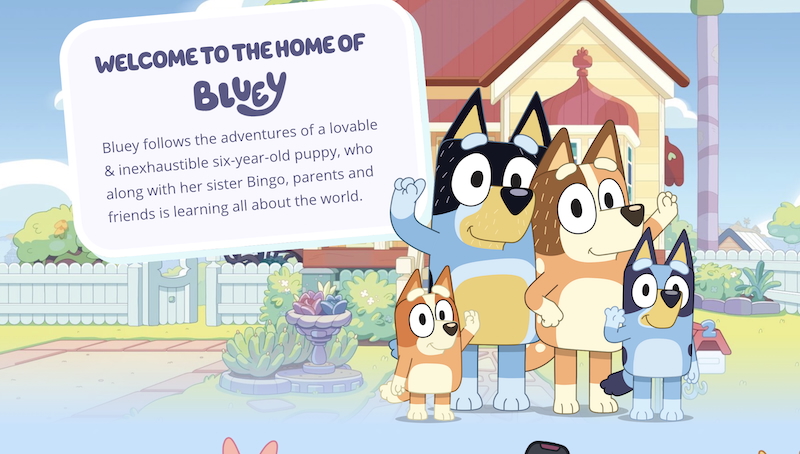
    Wells pointed to Bluey, the children’s programme that became a global phenomenon, as proof of concept. Australian content connects people with “who we are” and shares that with the world, she said.
    The government hasn’t explained how it will calculate the two quota options—10 per cent of expenditure or 7.5 per cent of revenue—leaving room for future friction with the platforms.

    The Australian model raises an obvious question: could India impose similar quotas? While Netflix, Amazon Prime Video and Lionsgate Play are commissioning o9r acquiring local content, it’s unclear whether they’re hitting anything close to a 10 per cent threshold. Indian regulators have repeatedly failed to enforce local quotas on television channels, making it unlikely they’ll succeed with streamers.

    But the precedent matters. If Australia can strong-arm global platforms into funding local productions without sparking a trade war, other markets may feel emboldened to try. For now, India’s streaming landscape remains a free-for-all—heavy on local content by choice, light on obligation by design. Whether that changes depends less on regulatory ambition than political will. And in India, that’s always been in short supply.

  • Truecaller launches AI-powered platform ‘advantage’ that boosts smarter ad targeting

    Truecaller launches AI-powered platform ‘advantage’ that boosts smarter ad targeting

    MUMBAI: When AI meets communication, magic happens. Truecaller, the global communications platform, has unveiled advantage, an AI-powered recommendation engine designed to revolutionise how businesses engage users in high-attention moments.

    Built on a central intelligence hub that continuously learns from user interactions, adVantage tailors messages across business messaging, contextual advertising, and enterprise solutions. By analysing anonymised, aggregated data in real time, the platform delivers highly personalised, privacy-safe experiences for consumers while helping businesses optimise engagement and drive growth.

    “Relevance is the new currency,” said Truecaller global CEO Rishit Jhunjhunwala. “advantage ensures businesses don’t just reach users, they understand them and provide value at every touchpoint. It’s central to our strategy of building scalable growth engines and redefining how businesses create impact.”

    The platform’s pilot phase showed impressive results: open rates jumped 400 per cent on Truecaller’s messaging platform, with up to a 50 per cent lift in click-through rates across high-intent sectors like automotive, fintech, edtech, and e-commerce. The framework reaches over 200 million users, transforming brand awareness into measurable outcomes.

    Advantage operates through three modules: Discover: Identifies new, relevant audience segments and expands visibility; engage: ee-targets users to boost mid-funnel performance and guide conversions; perform: optimises key business outcomes such as leads, app installs, and direct commerce automatically.

    “Truecaller advantage gives businesses a real edge,” said advantage lead  Liniker Seixas. “Multiple AI models continuously learn and optimise campaigns, ensuring every investment drives stronger results.”

    By harnessing Truecaller’s ecosystem, advantage empowers brands to reach the right audience, deepen engagement, and accelerate conversions, all while staying privacy compliant.


  • Meta maps India’s digital evolution from creators to AI and micro dramas

    Meta maps India’s digital evolution from creators to AI and micro dramas

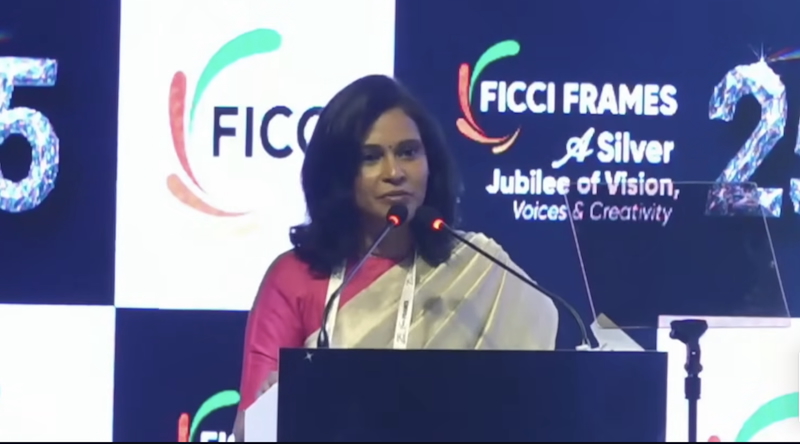
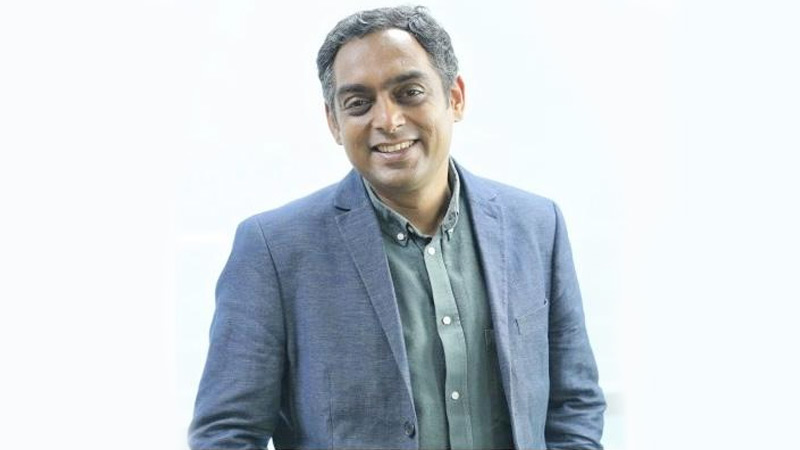
    MUMBAI: At the 25th edition of Ficci Frames, Meta’s top leadership: Sandhya Devanathan, vice president, Meta India, and Meta India managing director and country head Arun Srinivas, laid out a comprehensive view of how India’s digital, entertainment, and creator ecosystems are evolving at breakneck speed. 

    From the rise of Gen Z as the dominant consumer force to the explosion of short-form video, AI-driven content, and micro-dramas, both leaders stressed on how India is not just adapting to global digital trends, it is carving them. 

    “India’s growth is unique and inevitable,” Devanathan said, opening her session on New Age Tech Platforms: Redefining Access, Innovation and Scale. “One trillion dollars of our future economy will be driven by digital.”  

    With over four billion reels shared globally every day, she noted, India stands out as both the largest creator market and a leader in the innovation of content. 
    That digital drive, she explained, rests on India’s growing online base of over 650 million social media users and 270 million online shoppers. Yet, she noted that to make prosperity more inclusive, more small businesses need to come online. Only about five million of India’s 65 million SMEs are currently digitally enabled.
    “The Indian creator economy is among the most vibrant in the world,” Devanathan noted. “Creators here aren’t just entertainers, they are entrepreneurs, cultural catalysts, and small businesses rolled into one.”

    Meta, she explained, continues to invest heavily in tools that empower creators to monetise their craft: from performance insights and AI-powered production aids to immersive advertising formats that help brands connect authentically with their digital-native audiences. 

    Devanathan also highlighted the versatility of “many Indias”: the digitally savvy India, the vernacular-first India, and the emerging India Each requires its own approach to content, access and engagement. “Winning in India,” she said, “means understanding these layers of India and building for all.”
    Meta, she noted, sits at the heart of this digital revolution. India is now home to the largest community of Instagram creators and the biggest user base for Meta AI worldwide. The country also boasts one of the world’s largest Whatsapp communities, with over 200,000 small businesses using “Click to Whatsapp” to drive sales every month.
    Beyond platforms, Meta is investing in digital infrastructure, from the Project Waterworth subsea cable (a subsea cable network that will span 50,000 kilometres and will reach depths of up to 7000 metres) to supporting data centres that fuel AI innovation. Devanathan also spoke about Meta’s work with the Nudge Institute and Pragati AI for Impact, which harnesses artificial intelligence for social good. 

    Building on that foundation, Arun Srinivas focused on the behavioural shifts defining media and entertainment consumption in India today, particularly among Gen Z and gen Alpha audiences.

    “Gen Z isn’t the future; they’re the present,” he exclaimed. “They are already shaping how content is discovered, processed, and shared.”

    According to Srinivas, the average Gen Z consumer processes information three times faster than previous generations and takes less than 1.5 seconds to decide whether to engage with a piece of content. “They need less attention, but more repetition,” he noted, explaining how frequency, rather than single exposure, now drives brand recall and conversions.

    He also pointed to India’s massive short-form video boom, with 97 per cent of Indians watching short videos daily, surpassing television viewership. “Linear TV time is declining month on month,” he said, adding that this isn’t limited to urban India, “rural and small-town audiences are consuming just as much, if not more.”

    Among the new frontiers Srinivas spotlighted was the rise of micro dramas: serialised short videos running between one and five minutes per episode.

    “This is storytelling redesigned for the mobile-first world,” he said. “India’s short-form drama market could touch 10 billion dollars by 2030, driven by vernacular content and tier-II and tier-III audiences.”

    Startups and creators are already experimenting with dubbed Korean and Chinese mini-series adapted for Indian viewers, marking a new phase in the fusion of entertainment and digital innovation.

    Both Devanathan and Srinivas emphasised the transformative role of artificial intelligence across Meta’s platforms, from content creation and personalisation to ad optimisation and discovery.

    “AI isn’t replacing creativity; it’s amplifying it,” Devanathan said. “It’s enabling creators to produce higher-quality work faster, and helping brands find the right audiences with precision.”

    Srinivas added that more than four million advertisers globally used AI-generated creatives last quarter, producing over 15 million ad assets  and achieving double-digit ROI improvements compared to campaigns created by humans. 

    Outlining Meta’s larger ambition, he noted that the company aims to make Meta AI the world’s most widely used personal assistant. “With more than 100 billion dollars invested in AI in just four years, we’re building systems that make digital creativity more accessible and intelligent for everyone,” he said.
    Bringing that vision to life, Devanathan closed her session with an AI-generated video: a vivid cascade of colours that unfolded into the words, “Change is the canvas from which opportunity paints its masterpiece.” 

    Both leaders saw eye to eye on one message, that India’s digital future will be built at the intersection of creators, commerce, and connection.

    Srinivas highlighted how Meta’s latest tools, such as the Edits app for easy video production and new AI-powered creative platforms, are enabling India’s vast creator base to thrive. Meanwhile, Devanathan emphasised Meta’s partnerships with brands, small businesses, and policymakers to foster a sustainable, inclusive digital ecosystem.

    “Our goal,” she said, “is to ensure that India’s creative economy doesn’t just grow in size, it grows in diversity, opportunity, and global influence.”

    Concluding the session, Srinivas offered a peek into Meta’s newest innovation, the Ray-Ban Meta smart glasses, designed to merge content, communication, and AI assistance in one device.

    “These glasses are a glimpse of a future where connection becomes truly immersive,” he said.

    As both Devanathan and Srinivas made clear, India’s digital landscape is entering a new chapter, one driven by speed, creativity, and intelligence. With the next generation of consumers redefining how content is created and consumed, Meta’s vision is not just to keep pace, but to help build the infrastructure of tomorrow’s digital culture. 


  • Micro-dramas set to race to $9.5 b global market as China leads the charge

    Micro-dramas set to race to $9.5 b global market as China leads the charge

    SINGAPORE: Micro-dramas, once a fringe curiosity, are now a juggernaut. China’s revenues rocketed from $0.5 billion in 2021 to $7 billion in 2024 and will overtake the domestic box office this year, according to Media Partners Asia’s latest study, The Micro Drama Economy 2025.

    More than 830 million Chinese viewers are tuning in, nearly 60 per cent paying or transacting. Profitability is no longer theoretical: DramaBox booked $323 million in revenue and a $10 million net profit last year, while ReelShort (Crazy Maple Studio) has scaled fast despite heavy costs.

    Outside China the market hit $1.4 billion in 2024 and is on track for $9.5 billion by 2030. Affluent women aged 30–60 drive demand in the United States, while younger mobile-first audiences dominate Asia.

    Artificial intelligence is accelerating the boom, from content personalisation and rapid creative iteration in China to dubbing and localisation worldwide.

    “There are too many players with limited differentiation and too much churn, but winners are emerging,” said MPA executive director Vivek Couto. “Production is cheap but distribution is costly. Success depends on speed, scale and repeatable IP. China shows what’s possible when content is tied to social and payments rails, while the US proves the global opportunity. Japan, Korea, India, Southeast Asia and Latin America are next.”

    The report maps viewership patterns, key demographics and profitability benchmarks, charting how micro-dramas leapt from niche experiment to multi-billion-dollar global category.

  • Gitika Sharan takes charge of marketing at Wadhwani AI Global

    Gitika Sharan takes charge of marketing at Wadhwani AI Global

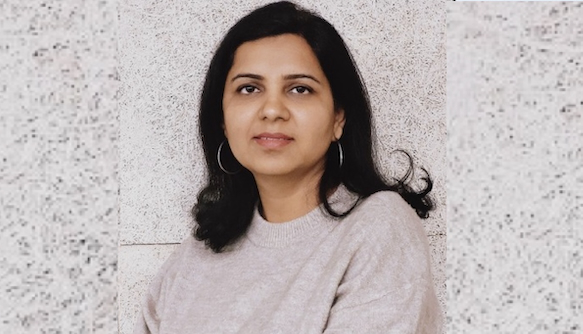
    MUMBAI: Gitika Sharan has been appointed head of marketing and communications at Wadhwani AI Global, the artificial intelligence non-profit applying technology to solve challenges in the Global South.

    Sharan joins from Welspun World, where she was general manager martech. Before that, she spent over four years at Indira IVF group, heading internal and external communications, CSR and ESG initiatives, and franchisee operations. Her earlier stints included senior communications roles at Platinum Guild International, MSL Group, Ogilvy PR and Burson.

    In her new role, Sharan will shape Wadhwani AI Global’s brand voice and outreach as it works on AI-led interventions in agriculture, public health and other development priorities. 

    “We are applying AI to address some of the most pressing challenges in the Global South… the focus is on ensuring technology truly serves communities and creates sustainable impact,” she said.


  • Reliance joins hands with Google Cloud to put India’s AI future on steroids

    Reliance joins hands with Google Cloud to put India’s AI future on steroids

    MUMBAI: Reliance Industries has never done things by halves. On 29 August, India’s largest private company unfurled its latest grand project: a sweeping expansion of its alliance with Google Cloud, centred on a new, dedicated AI-first cloud region in Jamnagar, Gujarat. The ambition is as audacious as it is familiar. Having once upended India’s telecoms industry with Reliance Jio and cheap data, Mukesh Ambani is now training his firepower on artificial intelligence, promising to democratise access to computing muscle for the world’s most populous country.

    The project is being pitched as India’s “AI leapfrog moment.” Reliance will design, build, and power state-of-the-art cloud facilities, all running on renewable energy and plugged into Jio’s sprawling fibre and digital network. Google will provide the brains: its AI hyper computer, a secure and integrated generative AI stack, and the know-how to run workloads of breath taking intensity. The facility, Reliance says, will meet global service-level standards and support the most demanding AI use cases—from training large models to building next-generation applications for consumers and enterprises.

    Why Jamnagar? The coastal city is already the beating heart of Reliance’s refining and petrochemicals empire. It is also becoming a symbol of the company’s reinvention: its green energy giga factory is rising there, and now the AI cloud campus will sit alongside it. Running on renewable power, the project ticks boxes for sustainability even as it scales to hyper speed. Jio, meanwhile, will string high-capacity fibre links connecting Jamnagar to metros like Mumbai and Delhi, effectively wiring India’s AI ambitions to its business and political capitals.

    Mukesh Ambani cast the partnership in almost civilisational terms: “Just as Jio and Google came together to democratise the internet for every Indian, we will now democratise intelligence for every Indian,” he declared. The subtext was clear: Reliance does not want to merely be a customer of AI; it wants to be the platform on which India builds its AI future.

    For Google, the tie-up is equally strategic. The American giant has long struggled to monetise India at scale, despite Android’s dominance. Its alliance with Reliance, first forged through a $4.5bn investment in Jio Platforms in 2020, has been its best bet. Sundar Pichai, Google’s boss, was almost wistful: “Our work together over the last decade has helped bring affordable internet access to millions. And now, we are building on this to help shape the next leap with AI. This is only the beginning.”

    The beginning it may be, but the context is fiercer. Microsoft has partnered with the Adani group to push Azure into Indian enterprises. Amazon Web Services (AWS) has invested heavily in local data centres. By anchoring Google Cloud in Reliance’s infrastructure, Ambani is offering it the biggest distribution muscle in the country—from India’s biggest retailer to its mightiest mobile operator.

    Reliance has always built moats around scale and integration. Hydrocarbons fed petrochemicals; petrochemicals funded telecoms; telecoms birthed digital platforms; retail wrapped around them. Now AI is being woven into every strand. Reliance’s retail arm, one of the world’s fastest-growing, will be powered by predictive analytics and AI-first services. Its digital platforms can churn out generative-AI-powered customer tools. Even its energy and refining business can tap AI for predictive maintenance, efficiency, and emissions management.

    The bet is as much about geopolitics as economics. AI compute has become a strategic resource, akin to oil in the 20th century. By hosting a dedicated, hyperscale AI cloud region in India, Reliance and Google are hedging against global bottlenecks in semiconductors and compute availability. They are also offering Indian enterprises and the government a “sovereign-flavoured” cloud alternative to relying wholly on Western or Chinese platforms.

    The entire project will be underpinned by Reliance’s push into renewable power. The AI data centres, notorious for their energy hunger, will be fed through Reliance’s green energy parks and hydrogen initiatives. Jio’s high-capacity fibre, spanning metros and regions, adds the digital sinew to match the green muscle. The combination allows Reliance to brand the initiative not merely as profitable, but as sustainable—a key card to play with regulators, policymakers, and global investors.

    For India, the stakes are towering. Domestic enterprises, startups, and public sector organisations often face prohibitive costs in accessing cutting-edge AI compute. By pooling Reliance’s infrastructure with Google’s stack, the hope is to lower barriers and accelerate adoption. Small businesses may soon have access to AI tools that were once the preserve of Silicon Valley. Universities and research institutes could run high-performance AI models without prohibitive cost. And the government could scale citizen-facing AI services in health, education, and agriculture.

    But challenges remain. Building AI facilities is one thing; ensuring India has the talent, regulation, and guardrails to use them responsibly is another. AI also raises thorny issues of bias, surveillance, and security. Reliance’s ambition to become India’s AI backbone will inevitably attract scrutiny—whether from privacy hawks, antitrust watchdogs, or foreign competitors.

    Yet, if history is a guide, Reliance has a knack for bending markets to its will. When Jio entered telecoms in 2016, it offered free calls and dirt-cheap data, triggering a brutal price war that wiped out rivals and left India with the world’s cheapest mobile internet. Now, Ambani appears ready to repeat the trick with AI: offer access at scale, bundle services across Reliance’s ecosystem, and set the floor so low that competitors struggle to keep up.

    The Jamnagar AI cloud, then, is not just about servers and software. It is about a new architecture of power: technological, economic, and political. If it works, Reliance and Google may indeed make India a global leader in artificial intelligence. If it fails, it could end up as another white elephant in the deserts of Jamnagar.
    For now, though, one thing is certain. India’s AI race has just been given a jolt of steroids—and Mukesh Ambani is holding the syringe.

    (The picture featured above is representational of two businessmen joining hands and there is no intention to insinuate that it  resembles either Mukesh Ambani or Sunder Pichai. It is an AI generated image)

  • Indian cinema turns to artificial intelligence for epic Hanuman film

    Indian cinema turns to artificial intelligence for epic Hanuman film

    MUMBAI: Indian cinema is preparing to push the boundaries of filmmaking with what producers claim will be India’s first theatrically released motion picture created entirely using artificial intelligence (AI), centred on the Hindu deity Hanuman.

    Chiranjeevi Hanuman – The Eternal, scheduled for worldwide release on Hanuman Jayanti in 2026, represents an ambitious fusion of ancient mythology and cutting-edge technology that could reshape how religious epics are brought to the screen.

    Abundantia Entertainment, the production house behind hits including Airlift and Ram Setu, is partnering with Collective Media Network’s Historyverse division on the project, which draws from the Ramayana and Puranic texts to create what they describe as a “visual odyssey.”

    The film is being developed by more than 50 engineers from Galleri5, the technology arm of Collective Artists Network, working alongside cultural scholars and literary experts to ensure narrative authenticity. Even the soundtrack will break new ground, composed by Trilok, billed as the world’s first AI-powered band that blends Indian spiritual traditions with contemporary sound.

    “We constantly push boundaries of storytelling possibilities, and I am delighted that we are partnering with Vijay and his amazing team at Collective to harness cutting-edge tech and tools to tell one of India’s most iconic stories,” said Abundantia Entertainment founder & CEO Vikram Malhotra.

    The project reflects growing confidence in AI’s creative potential within India’s entertainment industry, which has traditionally relied on star power and elaborate song-and-dance sequences to draw audiences. By choosing Hanuman—revered by hundreds of millions as a symbol of devotion, strength and faith—the producers are making a bold statement about technology’s role in preserving and reinterpreting cultural heritage.

    Collective Artists Network founder & chief executive Vijay Subramaniam emphasised the company’s commitment to “authenticity and cultural stewardship”, promising “complete transparency about the role of AI in the creative process.” This approach addresses potential concerns from religious groups about technological interpretation of sacred stories.

    The timing is significant, as India’s film industry grapples with rising production costs and increasing competition from streaming platforms. AI-generated content could potentially reduce expenses while enabling more spectacular visual effects than traditional methods allow.

    Abundantia, founded in 2013 by former Viacom18 Motion Pictures chief operating officer Malhotra, has built its reputation on “uniquely Indian stories”, from the patriotic thriller Airlift to the biographical drama Shakuntala Devi. The company’s upcoming slate includes Subedaar starring Anil Kapoor and collaborations with acclaimed directors including Hansal Mehta.

    Collective Artists Network has expanded rapidly through acquisitions including Under 25 Universe and Terribly Tiny Tales, positioning itself at what Subramaniam calls the convergence of “culture, creators, and technology”. The company operates Big Bang Social, a platform for brand-creator collaborations, and has launched Collective Media Network to broaden its content reach.

    The Hanuman project represents more than technological experimentation—it’s a test of whether Indian audiences will embrace AI-generated storytelling for their most cherished cultural narratives. Success could open the floodgates for similar projects, while failure might reinforce traditional approaches to mythological cinema.

    The 2026 release date on Hanuman Jayanti, the festival celebrating the deity’s birth, suggests producers are confident in their ability to create something worthy of such a significant cultural moment. Whether audiences agree will determine if this marks the beginning of a new era in Indian filmmaking or merely an expensive experiment.

  • AI reshapes market research: insights get faster, sharper, smarter

    AI reshapes market research: insights get faster, sharper, smarter

    MUMBAI: The Market Research Society of India (MRSI) turned the spotlight on AI’s game-changing role in insights at a buzzing webinar on 25 June, titled The Future is AI: Revolutionising Market Research for Tomorrow’s Insights.

    Hosted by independent marketing measurement consultant Sunder Muthuraman, the session featured ,  Ipsos India practice lead – innovation, understanding & client advisory  India Krishnendu Dutta, and ITC Foods, vice president – head of insights and analytics  Vara Prasad.

    Vara Prasad kicked things off by breaking down AI’s impact on market research—declaring traditional methods slow and outdated in a world that demands speed and scalability. At ITC Foods, AI now does the heavy lifting: mining public data, analysing sentiment in customer care calls, listening to social chatter for trend-spotting, and even crafting product concepts. With predictive dashboards in the mix, AI is also helping sharpen business strategy. “AI needs context to shine,” said Prasad, adding that when trained right, it can evolve into a serious innovation engine.

    Krishnendu Dutta pulled back the curtain on Ipsos’s “Facto” — a bespoke AI sandbox built for researchers to safely explore new tools without the chaos. From translation to topline extraction and even creating agentic personas that replace dusty old segmentation decks, Facto is bringing AI to daily insight generation. Ipsos is also tapping into synthetic data to stretch the life and depth of small datasets.

    But both speakers hit pause on the hype with a key reminder: AI won’t replace humans—it’ll supercharge them. Whether it’s prompt engineering, model training or strategic activation, the real magic still needs a human touch.

    To watch the full session, click here.

  • NDTV gets real about artificial intelligence with new AI squad

    NDTV gets real about artificial intelligence with new AI squad

    MUMBAI: NDTV is placing its bets on silicon rather than scribes, announcing the formation of a dedicated artificial intelligence team to shake up its digital media game. The news broadcaster has enlisted Aayushman Choudhary, a tech entrepreneur with startup scars and coding credentials, to head up the new unit as head of AI.

    Chief product officer Rohan Tyagi, who has done his rounds at TikTok, Triller and Zee, is clearly betting that algorithms can do more than just sort cat videos. The AI team will focus on three key battlegrounds: automating journalism workflows and mining audience insights, supercharging personalisation engines, and cooking up fresh revenue streams powered by machine learning.

    Choudhary brings a mixed bag of entrepreneurial adventures to the newsroom. The Delhi-based techie spent a year building his own venture, Underhive Inc, before NDTV came calling in May. His CV reads like a startup hopscotch game—co-founding photo editing firm AfterShoot, doing a stint as head of technology at gaming platform Winbee, and even moonlighting as an entrepreneur in residence at venture capital firm Antler.

    The appointment signals NDTV’s recognition that the future of news lies not just in breaking stories but in breaking code. With traditional media houses scrambling to stay relevant in the digital arms race, the broadcaster is hoping artificial intelligence might just provide the human touch it needs to connect with audiences.

    Whether Choudhary can teach machines to sniff out scoops remains to be seen, but NDTV is clearly ready to let the robots have a crack at reinventing the newsroom.

  • Cyber villains multiply their mischief as web attacks surge by a fifth

    Cyber villains multiply their mischief as web attacks surge by a fifth

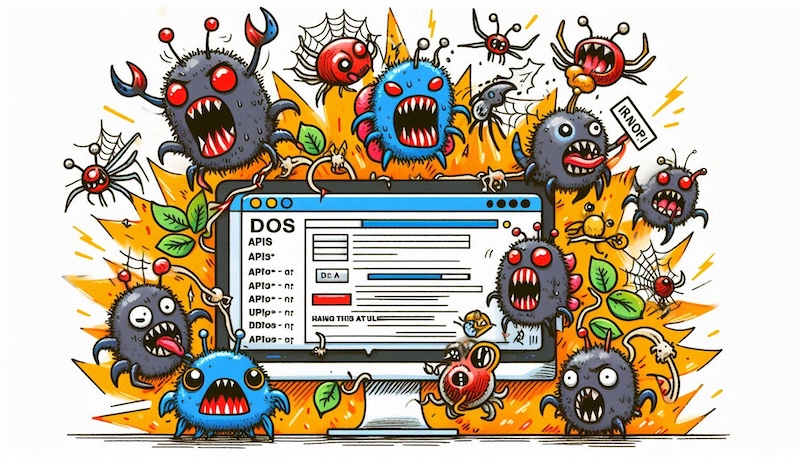
    MUMBAI: The internet’s dark side got considerably darker in 2024, with web application and API attacks surging by 21.4 per cent to a staggering 887.4 billion attempts globally, according to CDNetworks’ latest State of WAAP Report. If that sounds like a lot, it is—roughly 1.52 billion attacks were thwarted daily throughout the year. That makes it almost a trillion attacks in total in just one year alone. 

    The cybercriminal economy is booming, and artificial intelligence has become both sword and shield in this digital arms race. Terabit-level DDoS attacks—the sort that can flatten entire digital infrastructures—increased nearly tenfold compared to 2023, with 219 such behemoths recorded. Most alarmingly, 86 per cent of these mega-attacks lasted longer than 10 minutes, suggesting attackers have ditched the old hit-and-run playbook for prolonged sieges.

    Gaming platforms bore the brunt of this digital violence, accounting for 57.38 per cent of network-layer DDoS attacks. The sector’s misfortunes peaked with a bone-crushing 2 terabit-per-second assault in March and an application-layer attack exceeding 31 million requests per second in June. As one CDNetworks engineer put it, these weren’t just attacks—they were “digital carpet bombings.”

    E-commerce sites found themselves equally besieged, with bot attacks against online retailers skyrocketing from 18 per cent to 46.2 per cent of all bot traffic. The culprits? Sophisticated scalping bots that have evolved into integrated systems capable of mimicking human behaviour across multiple stages—from login to payment processing. These aren’t your grandmother’s clunky web scrapers; they’re AI-enhanced digital locusts that adapt to security measures in real-time.

    The rise of generative AI has democratised cybercrime, lowering the barrier to entry for would-be digital marauders. CDNetworks’ platform detected a 114.7 per cent year-over-year increase in blocked bot traffic intercepted by its AI-powered defences. The message is clear: if you’re not using AI to defend yourself, you’re bringing a knife to a gunfight.

    API security emerged as another Achilles’ heel, with attacks surging 147 per cent. Most troubling, 78 per cent of these attacks occurred after user authentication—suggesting that once hackers get past the front door, they’re often free to ransack the digital house. Traditional security models that focus solely on perimeter defence are proving woefully inadequate.

    The assault wasn’t evenly distributed. Gaming, e-commerce, and media & entertainment sectors topped the target list, with attackers showing a particular fondness for disrupting digital experiences during peak usage periods. The fourth quarter saw a concentration of attacks, with cybercriminals capitalising on holiday shopping seasons and major game releases.

    HTTP protocol violations accounted for 71 per cent of web vulnerabilities exploited, reflecting a 12.17 per cent increase year-over-year. Meanwhile, the humble Syn flood attack remained the weapon of choice for DDoS perpetrators, accounting for 43 per cent of all attacks—proof that sometimes the old ways are still the best ways.

    Not all the news was grim. CDNetworks’ AI-powered bot management successfully blocked 67 per cent of malicious bot traffic in 2024, up from just 40 per cent in 2023. The platform’s crowning achievement came on 1 October, when it successfully mitigated a massive attack targeting a major browser game platform in Southeast Asia—a 1.24 terabit assault at the network layer and over one million queries per second at the application layer—with zero downtime.

    The report’s recommendations read like a cybersecurity manifesto: phase out single-layer protection strategies, invest heavily in AI capabilities, prioritise unified WAAP platforms over siloed tools, elevate API security from afterthought to centrepiece, and partner with providers offering end-to-end support.

    As one CDNetworks executive noted: “The days of reactive cybersecurity are over. In 2024, we saw attackers using AI to probe 50,000 API endpoints in a single operation, boosting attack efficiency by up to 40 times. The only way to fight AI is with better AI.”

    The message for businesses is stark: adapt or become another statistic. With cyber-attacks showing no signs of slowing and AI making both attackers and defenders more capable, the digital Wild West is only getting wilder. The question isn’t whether your organisation will be targeted—it’s whether you’ll be ready when the digital desperados come calling.