Tag: ARPU

  • Tata Sky awaits MIB approval for Rs 250 crore investment

    Tata Sky awaits MIB approval for Rs 250 crore investment

    MUMBAI: Direct to home (DTH) operator Tata Sky has been applying a wait and watch policy not only for transponder space, but also for an approval from the Information and Broadcasting Ministry (I&B), for an additional Rs 250 crore investment.


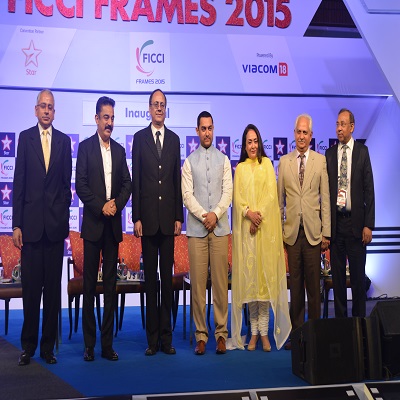
    “The money for the project has already come. But, if the approval doesn’t come in the next 48 hours, I will have to return that money to the foreign investors,” said Tata Sky MD & CEO Harit Nagpal, while addressing the inaugural session at FICCI FRAMES 2015.


    Responding to this, I&B Ministry additional secretary JS Mathur said, “Well, we had granted the approval a month back, and then Tata Sky realized that for the route it wanted to take with the investment, it had to reapply and this is the reason it is taking time.”


    Taking cue from Prime Minister Narendra Modi’s ‘Digital India’ campaign, Nagpal said, “The enabler of connectivity is broadband.”


    As per Nagpal, with low Average Revenue Per User (ARPU), putting fresh wires in the country would not give any return on investment. “Otherwise, there are enough hungry entrepreneurs, who would have used the opportunity. And if they haven’t, means that conditions are not viable in the country,” opined Nagpal.


    The country, though has hundreds miles of wires all over, which can carry broadband, and all it’s waiting for is an enabling and uniform environment, to use this infrastructure and deliver broadband to the consumer. “The rest as has happened in telecom, will happen,” he added.


    According to Nagpal, the industry lacks new thinking. “If anybody finds a successful format, 20 others follow and copy. I have seen general entertainment channels (GECs) being launched as pay TV, churning out the same content, and then either vanishing or becoming free to air (FTA). They lose viewership and distribution and then they are forced to carry 20-22 minutes of advertisement, which the regulator starts questioning and they are then seen sitting in courts,” he said.


    The problem, as per Nagpal, is not the producers, but the economics of the business, the restrictions and the permissions needed to do business. “All this restricts the producer from taking risks and choosing a safe and successful path,” he said.


    Nagpal, further went on to say, “I don’t think there is room for more Stars, Zees and Sonys. Also there is one Arnab and one Barkha, you can’t have too many of them. It is the niche, which will take us forward, and they are low investment and high return product.”


    Flair of creativity and new ideas is the key ingredient in the media and entertainment sector. “The deeper I travel, the more gems I see, but the production centres in the country are all located in the big cities. There is need to take production centres in smaller towns, where the talent is and create more self employed professionals in those areas,” he added.


    According to Nagpal, while the rules for setting up, funding and running the business are in place, one still needs to follow rules and ask for permission at every step. “Things have improved in the past few months and the government is keen to clear files, faster than ever before,” he said.


    The only way the industry can grow, as per Nagpal, is by allowing the businesses to inform and not seek approvals and also by self regulation. “In case we violate the law, issue penalties, cancel the licence,” he announced.


    Touching upon the movie business, Nagpal said that while we make the highest number of films, the industry is still not making money. “We have reached a choking point in terms of adding screens and it is marred by either high cost of real estate or the long list of approvals,” he said.


    According to Nagpal, the increasing number of digitized homes will help more producers to monetize their production. “This has already started, a lot of films are breaking even only on the basis of selling their rights to cable and satellite,” he said.


    The country has seen digitisation of 42 cities. Touching upon the condition in the digitized cities, Nagpal said, “The local cable operators are running the digitised area and the multi system operators (MSOs) are watching. Customers are not getting packages they want and neither are they getting value added services. The customers are willing to pay, unlike what is being projected by LCOs.”


    Digitisation is equal to automation. “The new role of the LCO is to be of a service provider to the MSO and not a partner. I think this needs to be thought about,” concluded Nagpal. 
  • Dish TV aims to boost ARPU with differential pricing strategy

    Dish TV aims to boost ARPU with differential pricing strategy

    MUMBAI: Taking the path that cable operators often do, Direct To Home (DTH) operator Dish TV has decided to offer differential pricing across different cities.


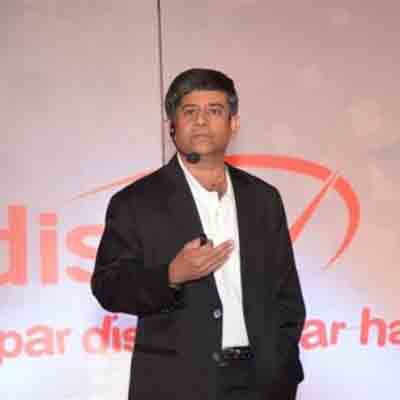
    Dish TV chief operating officer Salil Kapoor tells Indiantelevision.com that with the DTH operator having over 40 High Definition (HD) channels and superior quality, the consumers would not mind the “marginal jump.”


    According to Kapoor, Indian consumers can no longer be treated as “one size fits all,” especially in metro segments. Kapoor believes that the consumer today has the capacity to pay slightly more for a quality product. “This differential pricing is our strategy to give a boost to our Average Revenue Per User (ARPU),” Kapoor informs.


    As part of the first phase, metro cities such as Delhi, Mumbai, Kolkata and Pune will be targeted. Each pack in these four cities will now cost an additional Rs 10. The revised prices came into effect from 26 February, 2015.  


    Dish TV has already introduced differential pricing for its regional brand, Zing. While in Maharashtra, the pack price is pegged at Rs 189, in the state of Odisha it has been priced at Rs 175. Since the strategy worked successfully for its sub brand Zing, Kapoor is of the opinion that it would also work for Dish TV. 


    While the packages have currently been introduced for the metros, no decision on other cities has been taken as yet.

  • 2014: A year of improved subscriber numbers

    2014: A year of improved subscriber numbers

    The year 2014 has been better than the previous year, in terms of the share of numbers for all direct to home (DTH) players. Subscriber additions were higher and there was more stability in the overall industry. In terms of price discounting, people were more rational through the year. Overall, it has been a much better year than 2013.

    Increased subscriber numbers and ARPU

    Overall additions in subscribers, for all the DTH players, were higher in the magnitude of 25-30 per cent than the previous year.

    That apart, the churn came down substantially, not only for Dish TV, but for all the other DTH players as well.

    2014 also saw a rise in the Average Revenue Per User (ARPU). But there are still problems, since the whole cable TV system hasn’t stabilised and gross billing hasn’t been fully implemented. Though, we do see some encouraging signs, in terms of people getting down to doing that now.

    DTH has been able to take price increases through the year. There was a price increase which took place in April, at the magnitude of 8-9 per cent. But the big collection from the ground will happen only once cable TV gets its act together.

    Different people calculate ARPU differently. For example, Dish TV calculates it on subscriber revenue, whereas Airtel Digital TV, as per its published figures, looks at gross numbers, and so do others. So there is no common matrix being used across the industry for definition of ARPU. But having said that, at the consumer level, the consumer prices are in the average price range of Rs 250-275.

    Challenges in 2014

    One of the major challenges that we continue to present to both the state and central government is on the high level of taxation on DTH. Apart from the taxation element which we have been presenting, we are the only industry which is subject to service tax and entertainment tax. While we were hoping for some relief in the last budget, we didn’t get that, we hope we will get some relief in the coming year.

    Secondly, there is no clarity on the licence fee issue, even though the Telecom Regulatory Authority of India (TRAI) issued a recommendation, there has been no action on that front.

    So while we lived in continued uncertainty in 2014, we hope that the government will take some steps in 2015. People have invested more than Rs 25000 crore in the industry, so at least we have the right to know what the law of the land will be going forward.

    The new launch Zing

    It has been an extremely successful product in all the geographies we launched. The specific proposition that we had, which was regional first and targeting the entire product mix around consumption has clicked very well with the customers. So we are very pleased with the way things have come.

    Highs and lows of 2014

     For Dish TV, it has been a fairly stable year. We regained our share leadership for about last three to four quarters. We launched a significant and tactical product in Zing which has helped us capitalize on the phase III and IV areas. The high point has been that we have been able to, post the balance sheet adjustment that we did last year, been able to get back on the growth path, which is what we have always said and we achieved that in 2014.

    The low point is at two levels: At one level, the whole issue of taxation and licence fee kept dragging for the whole year. Secondly, we expected the cable TV and broadcaster system to stabilize the whole regime. The whole issue of getting proper addressability and customers to actually choose and compare products has still not happened.

    Delayed Digitisation

    First and foremost, the manner of digitisation needs to be addressed. What has happened in the first two phases is simply the change of pipe. This has not been supported by addressability and that is the reason there has been no or marginal change in the revenue flow.

     Until and unless these issues are addressed, a non-addressable digitisation is of no help to anybody, neither to the government nor the stakeholders. We hope that by the time they get down to it, we will have some better roadmap of how to achieve that.


    (These are purely personal views of Dish TV CEO R C Venkateish and indiantelevision.com does not necessarily subscribe to these views)

  • 2014: The year that changed landscape of distribution

    2014: The year that changed landscape of distribution

    2014 has been the most exciting and an eventful year for us in the Media and Distribution Industry. The phrase “There is never a dull moment” is so apt to define the year of 2014 that changed the landscape of distribution so significantly and posed challenges like never before. The year started on a promising note for the Industry with the impact of digitisation settling down and the benefits of this shift starting to roll in. Reduction in carriage fees and an upswing in subscription revenues indicated change, yet the industry continued to grapple with implementation of packaging at the retail level.

    Value chain as a whole moved towards a more structured form, with constituents at each level moving from an adhoc/ flat fee commercial arrangement to CPS model. Subscription flow from LCO to MSO which was significantly low in analog era started growing. Wider choice at the subscriber end also helped growth in ARPUs.

    One of the biggest changes that shall significantly impact the distribution model is BARC becoming a reality. It is set to redefine the way all of us look at distribution. Expansion in LC1 markets and forthcoming BARC measurement is pushing every broadcaster expand visibility to the deepest, darkest corners of the country. Such is the scope of expansion that it will require any organisation 24-30 months to plan, execute and brace one of the biggest change in the history of distribution.

    DTH industry saw a major shift this year in their outlook towards the business. Almost all of them moved away from the customer acquisition mode to better profitability. While the story of subscriber acquisition was not exceptionally different over the previous year, DTH companies managed churn, HD and ARPU increasingly well.    

    No other year has seen a bigger storm than 2014 in the Regulatory environment. There were so many storming changes that touched every stakeholder in the distribution chain. TRAI came out with regulatory changes like Disaggregation, DAS phase III and IV, Commercial establishments and Ad-Cap. The new regulatory environment posed new challenges such as keeping partners together, protecting bottomline revenue and remaining relevant in the new regime. Postponement of digitisation in phase III & IV caused recalibration of business plans by all stakeholders. TRAI’s regulatory change for commercial establishments affected an entire revenue stream of broadcasters and the matter continues to be fiercely litigated.

    Going into 2015, we strongly believe the industry will undergo some paradigm shifts in the way we do business. Implementation of RIOs in cable will see packaging in cable become a reality. Digital platforms hence shall compete effectively. Carriage fee, a big cost for broadcasters will get reduced to miniscule or only exist for FTA channels. HD and broadband in cable will see a big swing to drive revenues significantly for the cable companies. More interesting deals like DEN-Snapdeal shall emerge. DTH players shall equally bring about next level of offers to bring more value to the subscribers such as OTT, 4K boxes, TV Everywhere, and Binge viewing being offered to the consumers.

    For us here at IndiaCast UTV, the year 2014 was equally exciting. In face of compelling challenges, we en-cashed on the opportunities to attain significant growth. There is ample evidence that we are moving forward and in the right direction. In light of disaggregation, IndiaCast UTV was successfully appointed as the authorised agent for TV 18, Disney UTV and ETPL and the broadcasters reposed full faith in the our team. Transcending these regulatory changes, we emerged stronger than ever.

    On the DTH front, we saw all our renewals happening during the year. We had to up our ante and attain a fair share for the unmatched content that the network stands for. It was tough convincing the platforms but eventually they saw sense in the value we bring to the table. We are proud to say that we were able to stitch our multi-year content deals with all the DTH platforms at a healthy growth rate. On the visibility front, we embarked upon the biggest challenge to put in place an entire LC1 team and collectively put in thousands of manpower hours to expand our reach across the length and breadth of the country. Our ratings in the past few months are a testimony to the efforts of the affiliate team who seeded our channels in a number of new networks across smaller markets.

    The year also saw us successfully launching and distributing the third Hindi GEC “EPIC” which expanded the GEC space by offering a season based formats based on Indian Mythology and folklore. Viacom18 gave a myriad of entertainment options with Colors being the frontrunner in Hindi GEC space, launch of new Hindi GEC “Rishtey”, MTV Indies creating a new space in Music genre and by launching “24” – India’s first international non-reality format show with international standard production quality. TV 18 maintained its leadership position and added a business news channel in Gujarati called CNBC Bajar to its portfolio. The regional offering was strengthened by launching four news channels under the ETV banner – Kannada, Bangla, Gujarati and Haryana.

    This year has seen IndiaCast UTV coming of age, adding stability and propelled us to achieve more. We are confident of setting new benchmarks for ourselves and for the industry and embark on a larger journey which will see us coming out stronger than ever before. We are looking forward to an exciting and eventful 2015.


     (These are purely personal views of IndiaCast UTV Media Distribution EVP Amit Arora and indiantelevision.com does not necessarily subscribe to these views)

  • HSBC raises Hathway’s target price to Rs 432

    HSBC raises Hathway’s target price to Rs 432

    MUMBAI: HSBC Securities and Capital Markets’ latest report on multi system operator (MSO) Hathway Cable & Datacom has improved its rating from ‘normal’ to ‘overweight’.


    While it continues to value Hathway using a DCF based approach, it has raised the target price from Rs 276 to Rs 432. This is on the assumption of 12.5 per cent WACC, cost of equity of 13.5 per cent and cost of debt of 11 per cent.


    One of the main reasons for this is the expectation of increase in Average Revenue Per User (ARPU). HSBC expects gross billing to increase in phase I markets by around 15 per cent and phase II by around 10 per cent over the next two quarters. Gross ARPU is estimated to grow at 16 per cent CAGR from its earlier 8 per cent.


    Increase in ARPU would mean a near 10 to 20 per cent rise in cost, despite the incentives that are being offered by Star’s new RIO deals. The report also says that moving to prepaid would be necessary, even if it is restricted to Star  channels for now as in the long run it would allow MSOs to scale up to full prepaid gradually over the next 18-24 months.


    “LMOs will need to move to a prepay backend. Both these factors are positive for the sector and in our view build a long-term case for ARPU improvement, fewer bad debts, reducing friction between MSO and LMO relations, improving the industry structure and allowing the industry to benefit from sector consolidation,” it states.


    The report also highlights that if Star is successful in reaping benefits out of its new RIO policy, other big networks may follow suit, though not in the immediate 12 months.


    This apart, HSBC also sees broadband ARPUs increasing with a more robust DOCSIS 3.0 platform but with a slight concern on the slow pace of subscriber net addition. The delay in digitisation is positive for cable TV industry to consolidate market share in the first two phases. Side by side, issues such as revenue share and prepaid billing can be sorted and easily applied in phases III and IV.


    HSBC has raised its medium- term EBITDA estimates by 11 per cent (FY16e-21e CAGR of 13.5 per cent), cable TV ARPU assumptions by 12 per cent (FY16e-21e CAGR of 11 per cent) and broadband ARPU by 8 per cent for the same period.


  • Leading MSOs decide to put Star channels on a la carte in Mumbai

    Leading MSOs decide to put Star channels on a la carte in Mumbai

    MUMBAI: The leading multi system operators (MSOs) in Mumbai, except Hathway Cable and Datacom, have agreed to put all Star channels on a la carte. With IndusInd Media and Communications Limited (IMCL) being the first one to agree to the demands of Maharashtra Cable Operators Federation (MCOF), the others including Den Networks, Digicable and Siti Cable have also agreed to give the Star network channels only on viewer’s choice.

    Starting immediately, all the Star channels will go off air from all the platforms. “A landmark decision has been taken today. All the leading MSOs have agreed to put Star channels on a la carte, on the rate published by the broadcaster in the Reference Interconnect Offer (RIO),” informs MCOF president Arvind Prabhoo adding that the MSOs have agreed to forego their share and will sell the channels on the RIO price only.

    “The last mile owner (LMO), depending on the area he is dealing with, will add the collection charges and give it to his customer,” he says.

    As reported earlier by Indiantelevision.com, the cable operators in Mumbai have already started with their surveys to find out which customer wants which Star channels. “We will start informing the customers about the Star channels going a la carte and will switch on those channels which the subscriber wants,” informs Prabhoo adding that the only way to increase the Average Revenue Per User (ARPU) is by putting channels on a la carte.

    With all the other MSOs, at least in Mumbai moving to a la carte, one will have to wait and watch the packaging that Hathway comes up with. “We will be announcing the packages by 1 December,” says a source from Hathway.


  • Hathway reports 19.6 per cent y-o-y revenue growth, lower loss in Q2-2015

    Hathway reports 19.6 per cent y-o-y revenue growth, lower loss in Q2-2015

    BENGALURU: Indian multi system operator (MSO) Hathway Cable and Datacom Limited (Hathway) reported 5.3 per cent growth in Q2-2015 with total Income from Operations (TIO) of Rs 263.51 crore versus the Rs 250.22 crore in Q1-2015 and 19.6 per cent more than the Rs 220.28 crore in Q2-2014. HY-2015 TIO at Rs 513.73 crore was 11.9 per cent more than the Rs 459.23 crore in HY-2014.

     
    The company reported loss of Rs 39.26 crore in Q2-2015, as compared to the loss of Rs 0.927 crore in the immediate trailing quarter. The current quarter’s loss was lower than the loss of Rs 44.45 crore for Q2-2014. The company’s HY-2015 (year to date) loss increased slightly to Rs 40.19 crore from Rs 39.13 crore in HY-2014.

     
    Note: 100,00,000 = 100 lakh = 10 million = 1 crore

     
    Hathway’s EBIDTA calculated based on the figures submitted by the company in Q2-2015 fell 8.8 per cent to Rs 40.03 crore (15.2 per cent of TIO) from Rs 43.87 crore (17.5 per cent of TIO) in Q1-2015 and was 4.2 per cent more than the Rs 38.41 crore (17.4 per cent of TIO) in Q2-2014. EBIDTA for HY-2015 fell 30.6 per cent to Rs 83.9 crore (16.3 per cent of TIO) from Rs 120.80 crore (26.3 per cent of TIO) in HY-2014.

     
    Let us look at the other figures reported by Hathway:

     
    Total Expenditure (TE) in Q2-2015 at Rs 274.27 crore (104.1 per cent of TIO) was 7.9 per cent more than the Rs 254.1 crore in Q1-2015 and was 17.6 per cent more than the Rs 233.19 crore in Q2-2014. HY-2015 TE at Rs 528.37 crore (102.9 per cent of TIO) was 22.5 per cent more than the Rs 431.29 crore in HY-2014.

     
    A major fraction of TE is the pay channel cost for Hathway. The company’s pay channel cost in Q2-2015 at Rs 96.81 crore (36.7 per cent of TIO) was 12.8 per cent more than the Rs 85.81 crore (34.3 per cent of TIO) in Q1-2015 and 41.7 per cent more than the Rs 68.30 crore (31 per cent of TIO) in Q2-2014. HY-2015 pay channel cost at Rs 182.61 crore (35.6 per cent of TIO) was 44.1 per cent more than the Rs 126.75 crore in HY-2014.

     
    The company reported 6.3 per cent higher depreciation and amortization expense (depreciation) in Q2-2015 at Rs 50.78 crore versus the Rs 47.75 crore in Q1-2015 and was 1.1 per cent lower than the Rs 51.32 crore in Q2-2014. Depreciation in HY-2015 at Rs 98.54 crore was 6.1 per cent more than the Rs 92.86 crore in HY-2014.

     Hathway’s finance cost in Q2-2015 at Rs 30.39 crore (11.5 per cent of TIO) was 4.2 per cent more than the Rs 29.17 crore (11.7 per cent of TIO) and was 28.2 per cent more than the Rs 23.71 crore (10.8 per cent of TIO) in Q2-2014. Finance cost for HY-2015 at Rs 59.56 crore (11.6 per cent of TIO) was 31.4 per cent more than the Rs 445.32 crore (9.9 per cent of TIO) in HY-2014.

     
    Employee Benefit Expense (EBE) in Q2-2015 was Rs 16.03 crore, for Q1-2014 it was 14.55 crore and for Q2-2014 it was Rs 14.58 crore.

     
    Hathway says that it is continuing aggressive plans to digitise its CATV customer base and has further seeded 250,000 boxes in the current quarter taking its digital subscriber base to 84 lakh and has seeded nearly 72 per cent of its subscriber base. It says that it has nearly 700,000 STB’s in stock.

     
    The company says that its content deals with the major broadcasters is in place now and it will use the stability in its content contracts to push for an increase in the ARPU realised from the markets it serves. While ARPU increase took a pause in current quarter, phase 1 ARPU remained close to Rs 90, while it was close to Rs 55 in the phase 2 areas.

    Hathway has informed BSE that the Board of Directors of the Company at its meeting held on 13 November 2014, inter alia, has considered and approved the Subdivision of face value of Equity Shares into Equity Shares of smaller amount than is fixed in the Memorandum of Association; i.e. to subdivide 1(One) equity share of Rs. 10/- each to 5 (Five) equity shares of Rs. 2/- each, subject to approval of shareholders.

     
    Click here to read the full financial report


    Click here to read the unaudited financial release


  • IDOS 2014: ‘Digitisation delay is good if industry fixes issues’

    IDOS 2014: ‘Digitisation delay is good if industry fixes issues’

    GOA: The cable TV industry, which had earlier expressed disappointment over the government’s decision to postpone cable TV digitisation in phase III and IV, now believes that delay in digitisation is good if the industry, after getting a breathing space, fixes various issues, which it witnessed in the phase I and II.


    The extension would not strain the financial health of the industry as the need of the hour is to see digitisation on track after the timeline shift and create value and increase the Average Revenue Per User (ARPUs).


    Some experts feel that the additional inventory carrying costs and investments in infrastructure that the industry is incurring now, would impact their topline and thus have a brunt on the bottomline.


    Also, with the stable government now at the centre led by NDA, media companies can raise capital and the industry is quite bullish about the valuation benchmark.


    The government had previously set a target of digitising the cable TV services in the entire country by December 2014. Information and Broadcasting Ministry recently issued a notification as per which the deadline for the areas which came in phase III was extended from 30 September  2014 to 31 December 2015 and phase IV for December 2016.


    “Delay is never good. But, if one implements the learning from the first two phases, it may have a positive impact. Phase I and II haven’t so far reaped any fruits with zero value creation. The players are still fixing billing and other issues,” says HSBC Analyst Telecom associate director Rajiv Sharma, during a panel discussion on ‘Ecosystem Economics of the Future’ in Goa at IDOS 2014.


    According to Exponentia Capital principal Neeraj Bhatia, the delay is a welcome development. “It was required considering the ground reality. The earlier deadline was impractical,” he adds.


    “The earlier phases involved capital expenditure as more revenues were flowing through the system. MSOs were collecting less and paying more, as a result of which they saw no net benefit. So we started to question the business model and whether digitisation had anything for MSOs,” opines Bhatia.


    “We are not ready for phase III and IV,” he informs.


    The delay has given a breathing space to the MSOs to figure out the next step. “One needs to take a stand on various economic issues. This includes gross billing among others which impact people,” says Axis Bank group head strategic corporate group Salil Pitale.


    Citing reasons for the problems faced in other phases, Sharma informs that the cable industry is a fragmented one with just six big MSOs, around 6,000 other MSOs and 70,000 LCOs.


    According to the experts, value creation comes from customer ownership and thus investors will continue to invest.


    The rollout of the next two phases, after the delay will be smoother as it could bring some consensus amongst stakeholders. In phase III and IV, the stakeholders should ensure that revenue comes from day one and not after two years, opines Sharma.


    “While there was a tug of war between the MSOs and LCOs in the earlier two phases that need not be the case going forward. Both need to look forward and pool money,” says Bhatia.


    The extension has also thrown an opportunity for MSOs to opt for voluntary digitisation, feel the experts.


    There are a few financial investors who are getting excited about the growth story that digitisation proposes. “Delay is good as it also allows the MSOs and LCOs to resolve the billing issue,” explains Bhatia.


    There are mixed opinions on the extension of digitisation deadline. The big question now is: ‘Can the cable TV industry fix the issues in the next one year by executing the lessons learnt?’

  • Siti Cable to roll out DOCSIS 3 broadband in Delhi and NCR in Q2-2015

    Siti Cable to roll out DOCSIS 3 broadband in Delhi and NCR in Q2-2015

    MUMBAI: Siti Cable, the multi system operator (MSO) from the Essel group is looking at expanding its business in other parts of the country. In a document given to investors, it has asked shareholders for approval to increase its authorised share capital, give authority to the board of directors to create charges/mortgages in respect of borrowings and issuance of equity shares or securities convertible into equity share of up to $100 million.


    The company says that the reason for loss was under declaration of subscriber base and low average revenue per user (ARPU). With digital addressable system (DAS) being implemented, the MSO hopes to generate higher revenue from subscription. Siti Cable also has already become EBIDTA positive this year.


    For digitisation implementation, it has procured and deployed large number of set top boxes (STBs), leading to periodical amortization, leading to inadequate profits.


    In order to improve its situation, the MSO has proposed a few measures. It is looking at expanding its business in north, south and central India, apart from its stronghold of east India. It is preparing strategies for increasing its digital market share and becoming a strong player in DAS areas. The company is rolling out its value added services (VAS) plans across the country in phased manner. Broadband services are intended to be rolled out on advance DOCSIS 3 technology in Delhi and NCR in Q2-2015, besides having broadband subscriber base in eastern region.


    Meanwhile, the increase in productivity will be measured in terms of EBIDTA margin, rationalisation of expenses, standardisation of process and systems to shift focus from individual centric approach to system driven approach and additional incremental profit by rolling out VAS.


    The BOD is asking for approval to “create such charges, mortgages and hypothecations on all or any part of assets or immovable properties of the Company wherever situated, both present and future, and/or whole or part of the undertaking(s) of the Company of every nature and kind whatsoever together with power to take over the management of the business and concern of the Company in certain events, to or in favour of banks, financial institutions, any other lenders or other investing agencies and trustees for the holders of debentures, bonds, other instruments to secure rupee/foreign currency loans hereinafter collectively referred to as “loans”) to secure the amount(s) borrowed or to be borrowed by the company from time to time for due repayment of the principal together with interest, charges, costs, expenses and all other monies payable by the company in respect of such borrowings.”


    It is also seeking approval for authorisation of loan and investments by the company. The BOD is asking approval for “giving any loan to any person or other body corporate, giving any guarantee or providing security in connection with a loan taken by any other body corporate or person; and/or acquiring whether by way of subscription, purchase or otherwise, the securities of any other body corporate; up to financial limit of Rs 1000 crore over and above limits available under Section 186 of the Companies Act, 2013, notwithstanding that the aggregate of the investments and loans so far made or to be made and the guarantees so far given or to be given by the company and securities so far provided and to be provided, exceeds the limits/will exceed the limits laid down under Section 186 of the companies act, 2013 read with companies (meeting of board and its powers) rules 2014.”


    For issuing shares, it is seeking approval to “offer, issue and allot in one or more tranches, to investors whether Indian or foreign, including foreign institutional investors, financial institutions, non-resident Indians, corporate bodies, mutual funds, banks, insurance companies, pensions funds, individuals or otherwise whether shareholder(s) of the company or not, through an issue of equity shares or bonds, debentures and/or any other securities including foreign currency convertible bonds or depository receipts convertible into equity shares of the company at the option of the company or the holder of such security, including by way of qualified institutional placement (QIP) to qualified institutional buyers (QIB) in terms of chapter VIII of the SEBI regulations, through one or more placements of equity shares (hereinafter collectively referred to as ‘Securities’), in domestic and/or one or more international markets whether by way of private placement or otherwise, in one or more tranches, so that the total amount raised through such issue(s) of securities shall not exceed Rupee equivalent of $ 100 million.”


    It has also appointed VD Wadhwa as the executive director for a period of three years from 12 August 2014.

  • DTH sector in India to grow sales at 19 per cent CAGR between 2013-18: MPA

    DTH sector in India to grow sales at 19 per cent CAGR between 2013-18: MPA

    MUMBAI: India’s direct-to-home (DTH) satellite pay-TV sector remains a growth oriented industry with significant potential for strategic and financial investors, according to a new report published by Media Partners Asia (MPA).


    The report, entitled ‘India DTH Market Overview–Key Dynamics & Future Outlook’, forecasts that India’s DTH pay-TV sector will generate revenues of $ 4.04 billion by 2018, a CAGR of 19 per cent from $ 1.71 billion in 2013 and by 2023 the sector will generate revenues of $ 5.6 billion. In an earlier report, MPA had said that the DTH active subscriber base will increase from 37 million in 2013 to 60 million by 2018 and 70 million by 2023. This implies a 39 per cent share of the overall market by 2023 and a 56 per cent share of the digital pay-TV market.


    DTH operators have been working together to improve the overall economics for the business by reducing the amount of free viewing offered to new subscribers and recalculating the incentives dealers receive for renewing subscriptions.


    ARPU growth, according to the report, will be partially limited as DTH expands nationally, with low-income homes coming into the mix, although MPA sees a greater contribution from high- ARPU HD subscribers. According to the report, HD represented 6.9 per cent of the total active DTH base in 2013; which MPA expects to grow to 16.1 per cent by 2018 and to 20.1 per cent by 2023. MPA sees total DTH ARPUs expanding from $ 4.0 per month in 2013 to $ 5.7 by 2018.


    Digital TV (DTV) has started to gain widespread acceptance across consumer households in India, driven largely by the growth of DTH satellite pay-TV platforms. Data from MPA indicates that DTV penetration, including digital cable and digital free and pay DTH platforms, has grown from less than 1 per cent in 2006 to 46 per cent as of 31 December 2013.


    The six DTH pay-TV operators in the market have in aggregate contributed to 23 per cent penetration as of 31 December 2013, providing a level of market leadership due to superior capitalisation and a stronger consumer focus built around product strength and innovation, including tiering, HDTV and DVR services.


    “DTH operators have been working together to improve the overall economics for the business by reducing the amount of free viewing offered to new subscribers and recalculating the incentives dealers receive for renewing subscriptions. ARPU growth will be partially limited as DTH expands nationally, with low-income homes coming into the mix, although we also see a greater contribution from high-ARPU HD subs. HD represented 6.9 per cent of the total active DTH base in 2013; we expect this to grow to 16.1 per cent by 2018, and to 20.1 per cent by 2023,” said MPA India VP Mihir Shah.


    Key market trend highlights of the report:


    Rational focus: Operators are increasingly focused on growing profits as opposed to solely increasing volume, often at the expense of profitability. As a result, operators have increased their basic prices, while at the same time reducing the trade margin arbitrage by Rs 200-250 to minimise rotational churn. Although subscriber additions post October 2011 have witnessed some slowdown. According to MPA both the quality of subscribers and ARPUs will continue to improve going forward.


    DTV mandate: MPA believes that the implementation of mandatory cable digitisation by the government will be an important catalyst for growth in the DTH sector. DTH operators are relatively well positioned due to the strength of their B2C businesses (as opposed to B2B approaches amongst cable MSOs) and their experience and investment in tiering, subscriber management and billing and sales and marketing. In addition, as part of its reforms, the government has now permitted international companies to own up to 74 per cent of cable and DTH platforms.


    HD penetration: As per MPA’s report, HD penetration will grow significantly in the future, rising from less than 7 per cent of active DTH subscribers currently to over 20 per cent by 2020. MPA’s estimates are based on benchmarks in the US, UK, Latin America and Southeast Asia. In the UK, incumbent DTH operator BSkyB currently has more than 50 per cent of its subscriber base adopting HD. Malaysia’s Astro has also demonstrated laudable rates with 49 per cent penetration at present on its DTH platform. Increase in HD channel offering is critical for growth in HD penetration. However for some of the mature global operators, MPA sees HD penetration as a percentage of total subscribers capping out at 60-65 per cent.


    Upside capped by tax and regulation: A ~30 per cent drain of gross DTH subscription revenues – comprising a 12 per cent service tax, 8-10 per cent entertainment tax and a 10 per cent license fee – continues to hamper the industry’s ability to improve profitability. Although industry stakeholders are lobbying the government to change the license fee terms and make deductions based on adjusted gross revenue, these are yet to be finalised. A further cap on future industry upside comes in the form of spectrum issues resulting from the absence of an open skies policy that would allow DTH operators to directly source transponder capacity from foreign satellite operators, as opposed to the current system of going through the Indian Space Research Organisation’s (ISRO’s) commercial arm Antrix.


    Consumer proposition, technology key to future subscriber additions: Ramping up subscriber additions as analog cable subscribers turn to digital will largely depend on the consumer proposition offered by the DTH and cable operators. Gaining an increased share of new subscribers will hinge on designing and marketing innovative and simple packaging structures, bearing in mind that analog cable subscribers are used to an all-you-can-eat single package structure. Technology will also be key, as compression standards and middleware deployed by operators will play a crucial role, though not immediately visible, in differentiating service offerings and providing HD and value added services (VAS) such as interactive services, 3D and VoD.