Tag: Arora

  • Video’s the way forward for Cisco

    Video’s the way forward for Cisco

    MUMBAI: With the ever increasing demand for video services, Cisco is among a clutch of companies that views video as the next big thing.

    Cisco TV coupled with Cisco STBs, caters to over 300 million homes globally and over 30 million households in India. The Cisco Videoscape Unity platform fulfils the demand for video on multiple screens, empowering service providers and media companies to create and connect new synchronised, personalised and intuitive multi-screen experiences at great speeds.

    Video is the next big thing for us: we see the way video will be personalised, consumed and delivered to be very dynamic believes Arora

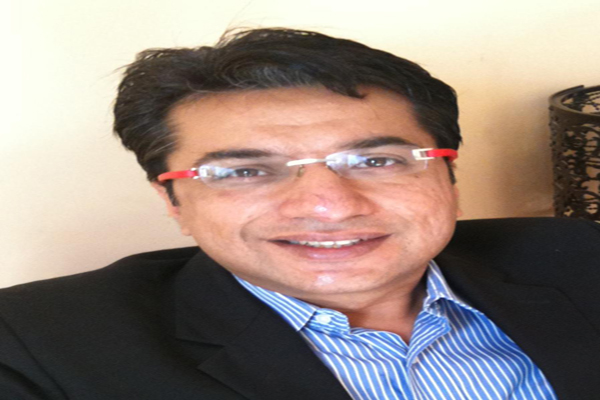
    Says Cisco India & SAARC service provider – regional sales manager Sandeep Arora: “For Cisco, network is the platform for business enablement. Video is the next big thing for us: we see the way video will be personalised, consumed and delivered to be very dynamic.”

    “There are multiple ways by which we are driving digitisation in India and helping our partners in what we call as a glass to glass strategy, so if you see our technology platforms, we serve from the IRDs – which is a picture coming from the lens of the camera to the glass of the TV screen,” adds Arora.

    Cisco Videoscape Unity brings expertise in building comprehensive carrier-class cloud products and a flair for designing award-winning user experiences that implement each provider’s unique brand and vision. Cisco then engineers this vision into a coherent and deployable multi-screen product.

    “So while we are enabling technology platforms, we are also enabling business platforms, and since it’s a very capex (capital expenditure) driven industry, we are also using our financial arm – Cisco Capital – to drive that high capex worth of business going forward. So in the end, we are just focusing on providing the right value for the end consumer by using the Cisco technology and to be a part of the immersive experience,” says Arora.

    Six to seven years ago, Cisco acquired Scientific Atlanta – its largest acquisition till date – and over the years, it has been acquiring multiple companies to enhance its network capabilities and platform technologies. “So be it content aggregation, content creation or content distribution, all of this need to come together and we need to drive this experience,” says Arora.
    About digitisation, Arora says there have been many anxious moments during phase I and phase II. “There is a technical digitisation that has happened – with the seeding of STBs in homes – but the business digitisation is still evolving – where the revenue is pumped in – and what we are looking at is it kicking in and that’s where the business model starts functioning,” he explains.

    A behavioural change is also taking place, according to him, which is necessary for the success of both technical and business digitisation. “So with phase III and IV of digitisation approaching soon, we are moving to the bottom of the pyramid, and each phase will have its unique set of requirements and challenges, the fragmentation will also increase as digitisation penetrates further. The audience being addressed is very different, so we need to keep thinking how to redefine ourselves as we move forward,” he points out.

    While others may aspire to offer either quick and powerful cloud-based services or customer-specific experiences, Cisco Videoscape Unity is unique in that it offers both.

  • Dentsu India makes two key appointments

    Dentsu India makes two key appointments

    MUMBAI: Dentsu India has made two senior level appointments. It has appointed C.P. Arora as Group chief financial officer and Suprotim Day as chief films officer.

    Arora has joined Dentsu from JWT, Delhi where he was working as VP and executive commercial director and replaced Nobuki Sakai who was seconded to Dentsu India early last year.

    Dentsu India executive chairman Rohit said, “Both will partner me in our endeavour to significantly strengthen our service quality delivery to our clients.”

    As Group CFO, Arora will now be responsible for the financial plans, P&L management, policies, and accounting practices of the Dentsu India Group. He will also lead the accounting, budgeting, fund management, and financing functions of all the Dentsu India Group companies.

    On his new role, Arora said, “After over a decade in advertising, I knew it was time for a fresh start. Interactions with Dentsu’s global and India management gave me an understanding of Dentsu‘s India ambition and growth plans. The role offered to me was not only challenging and inspiring but also something that could be the logical next step for me professionally.”

    As strategic business partner with JWT, Delhi at both the corporate and business unit level, CP tracked financial efficiency and profitability, risk management, legal and compliance and overall financial operations for JWT Delhi Office.

    Arora comes in with nearly 20 years of experience in financial
    management. He is a strategic financial planner with expertise in designing and implementing systems/procedures to facilitate internal financial control, SOX Compliance and enhance the overall efficiency of the organisation.

    Day has moved in from UK’s production house Stink, where he was heading London’s operations in India. He was instrumental in setting up a JV between Stink and QED Films in India. The production house serviced agencies such as JWT, McCann Erickson, Ogilvy, Leo Burnett, Lowe, Publicis and Cheil Communications among others.

    Day said, “After my years in the film production business, I am excited to get back to the agency fold. The function of a film department is to raise the bar and ensure that the creative and client partner’s expectations are more than satisfied. With my new role at Dentsu India, I look forward to partner with the creatives to produce outstanding campaign work that takes brands to the next level of trust with the consumer.”

    Day brings in over 25 years of experience in the production and direction of commercials. He has been in the forefront of producing advertising films for clients like PepsiCo, Airtel, Sony, Nokia, ESPN, Hero Honda, Frito Lays, Samsung, Electrolux, Mitsubishi, Dabur, McDonald‘s and Nestle.

    Prior to this, Day has led the films department at JWT Delhi for over 5 years. Some of his most recent films include the KitKat ‘Squirrel’, the Cannes Award winning, Airtel ‘Endless Goodbye’ and the Mountain Dew ‘Wing Suit’ flying spot with Salman Khan.

  • Chandra exhorts industry to sink differences

    Chandra exhorts industry to sink differences

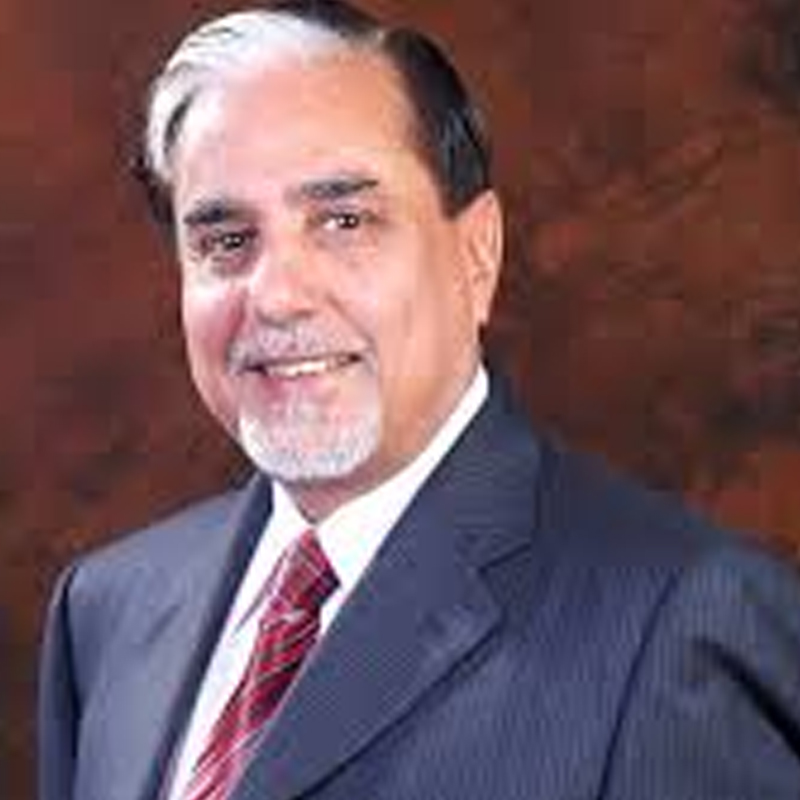
    NEW DELHI: While exhorting broadcasting industry to sink differences for collective benefit, Zee Telefilms chairman and maverick media entrepreneur Subhash Chandra today posed several issues before the government and sector regulator, including level playing field vis-à-vis telecom companies.

    “Let us all work together for long term benefits as blaming each other will not help. Let us work in partnership,” Chandra appealed to various constituents of the industry while delivering a keynote address at the India Broadband Digital Networks Forum organized here by Indiantelevision.com and Media Partners Asia. 

    Citing the example of CAS, Chandra wondered if all the stakeholders felt that addressability is good for the industry, how come it hasn’t yet become a reality in India.

    “Simply because vested interests (including broadcasters and cable fraternity) worked against CAS’ implementation since 2003,” Chandra said.

    Though he sought a more liberal regulatory regime both in terms of pricing and policies in the presence of I&B secretary and Trai chief , he agreed with both of them that comparison of the Indian market with the likes of US and UK is uncalled for as the former has its own needs and peculiarities.

    “If we had followed the American model, it would have needed investments worth $ 150-200 billion to bring the cable TV market to a level it now enjoys in terms of penetration, revenue and employment generation in India,” Chandra said.

    Earlier, information and broadcasting secretary SK Arora in his keynote address made a fervent pitch for digitalization of broadcasting services, which is imperative to keep pace with global trends and changing business models of media companies.

    “In terms of size and magnitude, the potential of the Indian broadcasting industry remains…and it’s quite a challenge to identify the impact that emerging technologies would have on business models of companies,” Arora said.

    Pointing out that India needs to design its own “solutions” keeping in mind the socio-economic scenario (read good services at low prices), Arora said regulations would be guided by the principle that “consumer is king.”

    According to the government official, in the 11th Five-Year Plan, the work on which is presently underway, the government is attempting to address the issue of digitalisation through “public-private partnership.”

    “We are encouraging and nudging them (the industry players) to move towards digitalisation,” Arora said, adding the first phase of it is expected to be completed by 2010 coinciding with Delhi playing host to the Commonwealth Games.

    Concurring with Arora, Telecom Regulatory of India (Trai) chief Nripendra Misra said arrival of digital technology, which gives more choice to consumers, and rapid convergence of services like telecom, infotech and broadcasting were two major trends of the television industry.

    However, Misra admitted that unregulated growth and lack of addressability had thrown up its own problems for the broadcast and cable industry.

    In such a scenario, DTH and CAS will have far-reaching impact on the industry, Misra said.

    Unfazed by widespread criticism of some pricing diktats of Trai earlier, Misra said that the regulator’s endeavour is to spread level playing field for all and formulate policies that are based to encourage efficiency, financing, development and equality.

    Though he admitted various legal lacunae is hampering a move towards unified licencing (whereby one single licence would enable delivery of telecom and broadcast services) at present, he envisaged in future cable networks might provide telecom services and give competition to telecom companies.

    “Convergence is being seen as an opportunity (in India)…but any development globally has to be seen in the Indian context,” Misra said, adding Trai will be coming out soon with a consultation paper on IPTV again.

    Meanwhile, at the start of the event, Indiantelevision.com founder and editor-in-chief Anil Wanvari and MPA executive director Vivek Couto gave a snapshot of the Indian broadcast industry and the trends that have emerged over the last few years increasingly leading towards convergence.

    The morning session was attended by industry luminaries and senior government officials, including John Malone-controlled Liberty Media board member Shane O’ Neil.

  • I&B ministry fails to list B’cast Bill for Parliament

    I&B ministry fails to list B’cast Bill for Parliament

    NEW DELHI: Indian policy-makers seem to be having second thoughts on a draft broadcasting legislation that was proposed to be introduced in Parliament session, which started Monday.

    In the list of business that Parliament is to transact during the monsoon session, the Broadcast Bill, which the information and broadcasting ministry had proposed to introduce in the House, is missing.

    A senior government official admitted that there might be some “re-think” on a draft that had been sent to other ministries for feedback and the I&B ministry now “doesn’t seem to hurry through the Bill.”

    This is an ample indication that the Bill, termed draconian by the media industry, is highly unlikely to be introduced during the monsoon session, giving the media industry to lobby more effectively against and attempt to muzzle the media.

    Still, the government official added that not listing the Bill at this juncture doesn’t mean that it cannot be pushed through in Parliament for discussion later towards the end of the ongoing session.

    “It all depends on what the I&B ministry thinks. If it thinks more consultation is needed on the draft, then it would do so. If it can complete all the work quickly and get the Cabinet’s nod, then the Bill could be introduced in Parliament this session only,” the official explained.

    Last week a senior I&B ministry official had told Indiantelevision.com that feedback from other ministries were still awaited and the compilation work would take more than 15 days time.

    The government has been facing flak from the industry and elsewhere too on the clandestine manner in which it drafted a Cabinet note on the Broadcast Bill.

    Last week, as part of government-industry interaction, I&B secretary assured Confederation of Indian Industry’s media committee that a concept note on the draft Broadcast Services Regulatory Bill would be circulated for getting views of the media industry as inputs into the government’s decision-making process.

    Arora had lamely justified restrictive provisions in the proposed Bill as ones designed to facilitate the industry’s growth and not to micro-manage its functioning.

    He had explained the need for the Bill and a proposed media regulator with wide ranging powers was to provide “legislative backing to executive decisions” taken by the government in recent times.

    This legislative backing was required, he had told captains of the media industry, as most of the executive decisions have been challenged in court and the government has been asked to show legislative sanction for its actions.