Tag: Arnab Goswami

  • Is blaming the watchdog politicos’ new defence matra?

    Is blaming the watchdog politicos’ new defence matra?

    MUMBAI: The countdown to the general elections has well and truly begun, what with political parties and their prime ministerial hopefuls engaging in an unending game of one-upmanship.


    What is surprising though is that this time round, the fourth estate, otherwise hailed as ‘the watchdog of democracy’, is at the receiving end of this mud-slinging match.


    For starters, two years after an Indian Express report about the controversial movement of two army units towards the national capital, General VK Singh, who was the then army chief, opted to call the reporters ‘presstitudes’ while dismissing the article as ‘the fable of a sick mind’.  


    Then, Arvind ‘Aam Aadmi’ Kejriwal, during his recent speech at Rohtak in Haryana, alleged that Mukesh Ambani had bought some TV channels and newspapers and asked them to give extensive coverage to Rahul Gandhi and Narendra Modi.


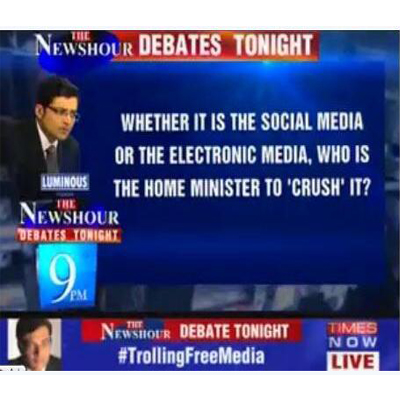
    Just the other day, at a Congress function in Solapur, Union Home Minister Sushil Kumar Shinde threatened “to crush elements in the electronic media spreading false propaganda” although he clarified the very next morning that he was targeting “social media, not journalism”.


    And while on the subject of social media, readers will recall how West Bengal Chief Minister Mamata Banerjee, known for her stiff stance on most issues, got a Jadavpur University Chemistry Professor arrested for allegedly circulating ‘anti-Mamata’ cartoons on the Internet in 2012.


    The same year, a similar fate befell a small scale industrialist who was arrested for allegedly posting ‘offensive’ messages on social media targeting Union Finance Minister P Chidambaram’s son Karti.


    Yes, social media can often be a double-edged sword but what is equally important is that it has given the aam aadmi a voice.


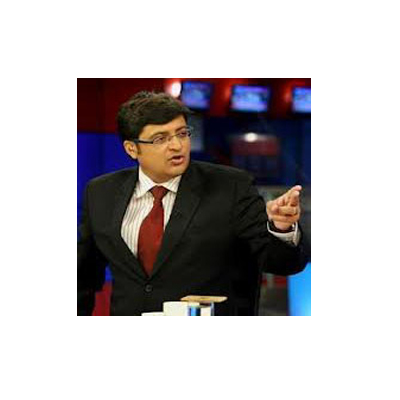
    Times Now Editor-in-Chief Arnab Goswami puts it correctly when he says that the media is variously termed as good or bad depending on whether it praises or bashes politicians. Indeed, politicos trolling media to suit their purpose was the subject of a News Hour debate not so long ago while #Trollingfreemedia had the Twitterati debating the issue endlessly.


    So much so, the Editors Guild came out in protest with a statement that read: “Ironically, leaders who built up reputations and support by engaging the public through the media are now turning on the very media when they come under critical scrutiny.”


    The News Broadcasters Association (NBA) too issued a press statement saying: “A news channel’s endeavour is to cover news-worthy events across all segments of national and international life and to present news to viewers, which is current and relevant. The media provides a service that is essential for any democratic society. This is particularly important when the most fundamental aspect of a democracy, the elections are round the corner. At such a time, the media plays an indispensable role in enabling citizens to stay well informed and make important choices. There can be no acceptable reason for attacking the media on frivolous, unsubstantiated grounds. Intimidation and preventing the media from performing its duties amounts to interfering with the freedoms enshrined in and guaranteed by the Constitution.”


    The NBA specifically appealed to political leaders across parties and public figures not to level baseless charges against the media and keep the discourse civil and sane.


    Somehow, now media has become everyone’s punching bag. Nonetheless, journalistic maturity is needed without losing the enthusiasm, energy and insightfulness.

  • Broadcast Editors’ Association elects 15 member editorial panel

    Broadcast Editors’ Association elects 15 member editorial panel

    MUMBAI: The Broadcast Editors’ Association (BEA), the apex body of editors of news TV channels, elected its office bearers recently. The election process took place at an AGM held in New Delhi. The BEA decided to retain the status quo and unanimously took the decision and re-elected Shazi Zaman (ABP News) as the president of the body while Arnab Goswami (Times Now) was re-elected as vice president.  Deepak Chaurasia from India News was elected as the vice-president of BEA .

    Live India’s editorial boss NK Singh  was elected general secretary. There was good news for the India Today Group as well with  Supriya Prasad of Aaj Tak  being  elected treasurer of BEA.

    The 15-member executive committee of the BEA comprises: Shazi Zaman (ABP News), NK Singh (Live India), Arnab Goswami (Times Now), Deepak Chaurasia (India News), Ashutosh (IBN7), Sonia Singh (NDTV), Ajit Anjum (News 24), Vinay Tewari (CNN-IBN), QW Naqwi (India TV), Shailesh Kumar (News Nation), Supriya Prasad (Aajtak), Vinod Kapri (News Express), Dibang (senior journalist), Satish K Singh (senior journalist), and Pranjal Sharma (senior journalist).

    The BEA also constituted a credentials committee for inducting new members as the news industry has been proliferating with channels seeking to become members . The committee consists of: :  Shailesh Kumar (News Nation), Sanjeev Paliwal (IBN7) and Supriya Prasad (Aajtak).

  • When Arnab vanished, almost

    When Arnab vanished, almost

    What happens when the nation’s most vociferous, most articulate news show anchor goes missing? Well, the nation goes into overdrive, demanding to know the whereabouts of the host it has come to love, or hate, as the case may be.

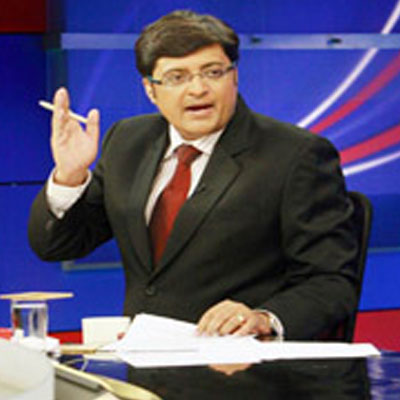
    We’re talking about Arnab Goswami, Times Now Editor-in-Chief and presenter of The Newshour, one of the most widely-watched and debated shows on the channel. Goswami’s disappearing act last week, though brief, was enough to set off a cacophony of telephones ringing at the Times Now office. And much like Arnab’s familiar rant on the show ‘The Nation wants to know’, viewers wanted to know where in God’s name was Arnab?

    Unable to deal with so many telephone calls, The Newshour even put out a tweet saying: “Our viewers have been asking about Arnab. To them, we would like to say that he will be back on Monday at 9pm on show again”. However, the calls continued unabated. A Times Now employee described the number of calls and emails inquiring whether Arnab had taken ill as ‘astonishing’ and that “Only celebrities get such calls, don’t they?”

     
    Forget the cold vibes between BJP prime ministerial candidate Narendra Modi and the party’s tallest leader LK Advani, it was Arnab who was the topic on social media.
     

    The twitterati took to their favourite website with a vengeance, sending out both love and hate tweets for the man who loves to play devil’s advocate on The Newshour. Some went on to draw parallels between Arnab’s absence from The Newshour with that of say a Salman Khan from Bigg Boss or Amitabh Bachchan from KBC. Others made unfavourable comparisons with other news anchors in tweets like: “Barkha Dutt to undergo a face implant to look like Arnab Goswami to boost NDTV TRPs” and even derided tongue-tied panellists as: “Panellists on The Newshour speechless as they’re used to speaking for just 10 seconds with Arnab around…”.

    Still others heaved a sigh of relief as “they could finally turn up the volume of their television sets rather than turn down.” Forget the cold vibes between BJP prime ministerial candidate Narendra Modi and the party’s tallest leader LK Advani, it was Arnab who was the topic on social media. So with such an iconic presence missing, did the channel lose out on TRPs or did other news channels make most of the opportunity. Only next week will tell… that is when the TAM ratings are out…

    The collective impact of regulation and the creeping tyranny of the minority have stifled innovation in our industry and, dare I say, in the economy as whole. At 15 per cent, we may grow at thrice the rate of the GDP but that is more a reflection of our topline economic growth than the health of our industry. At this rate, it will take us another 15 years to hit $100 billion in value and by then, we will be just three per cent of the world media market. This is just unacceptable.

    Till then, both those who love and hate Arnab can sit back and watch his shenanigans as he returns today same time same show on your favourite news channel…

  • When Arnab vanished, almost

    When Arnab vanished, almost

    What happens when the nation’s most vociferous, most articulate news show anchor goes missing? Well, the nation goes into overdrive, demanding to know the whereabouts of the host it has come to love, or hate, as the case may be.


    We’re talking about Arnab Goswami, Times Now Editor-in-Chief and presenter of The Newshour, one of the most widely-watched and debated shows on the channel. Goswami’s disappearing act last week, though brief, was enough to set off a cacophony of telephones ringing at the Times Now office. And much like Arnab’s familiar rant on the show ‘The Nation wants to know’, viewers wanted to know where in God’s name was Arnab?


    Unable to deal with so many telephone calls, The Newshour even put out a tweet saying: “Our viewers have been asking about Arnab. To them, we would like to say that he will be back on Monday at 9pm on show again”. However, the calls continued unabated. A Times Now employee described the number of calls and emails inquiring whether Arnab had taken ill as ‘astonishing’ and that “Only celebrities get such calls, don’t they?”


    ________________________________________________________________________

    Forget the cold vibes between BJP prime ministerial candidate Narendra Modi and the party’s tallest leader LK Advani, it was Arnab who was the topic on social media.
    _____****________________________________________________________________

    The twitterati took to their favourite website with a vengeance, sending out both love and hate tweets for the man who loves to play devil’s advocate on The Newshour. Some went on to draw parallels between Arnab’s absence from The Newshour with that of say a Salman Khan from Bigg Boss or Amitabh Bachchan from KBC. Others made unfavourable comparisons with other news anchors in tweets like: “Barkha Dutt to undergo a face implant to look like Arnab Goswami to boost NDTV TRPs” and even derided tongue-tied panellists as: “Panellists on The Newshour speechless as they’re used to speaking for just 10 seconds with Arnab around…”.


    Still others heaved a sigh of relief as “they could finally turn up the volume of their television sets rather than turn down.” Forget the cold vibes between BJP prime ministerial candidate Narendra Modi and the party’s tallest leader LK Advani, it was Arnab who was the topic on social media. So with such an iconic presence missing, did the channel lose out on TRPs or did other news channels make most of the opportunity. Only next week will tell… that is when the TAM ratings are out…


    The collective impact of regulation and the creeping tyranny of the minority have stifled innovation in our industry and, dare I say, in the economy as whole. At 15 per cent, we may grow at thrice the rate of the GDP but that is more a reflection of our topline economic growth than the health of our industry. At this rate, it will take us another 15 years to hit $100 billion in value and by then, we will be just three per cent of the world media market. This is just unacceptable.


    Till then, both those who love and hate Arnab can sit back and watch his shenanigans as he returns today same time same show on your favourite news channel…

  • Times Now ups ad rates amidst slowdown

    MUMBAI: English news channel Times Now has taken up the challenge of upping its ad rates when the advertising economy is in the midst of a slowdown. Buoyed by ratings, the channel has hiked ad rates by 30 per cent across all time bands and its prime time 9 pm property ‘News Hour‘, anchored by Arnab Goswami, by 50 per cent.

    Times Now, ET Now and zoOm CEO Avinash Kaul explains the rationale behind the move. “Times Now has had a high base of loyal viewers through its focus on hard-hitting and incisive news analysis. We continue to reign supreme in the English news genre for the 5th consecutive year and look forward to setting higher benchmarks for ourselves and for the industry. With our ever-increasing viewership share, we are positive that Times Now will always be the primary choice for the advertisers,” he says.

    But how much does Times Now charge advertisers? “The channel charges Rs 3000 to Rs 3500 on an average for a 10 second spot and Rs 20,000 for News Hour,” says Times Now, ET Now and Zoom chief sales officer Hemant Arora.

    Media buyers are not too sure that the revised rates would succeed. Several senior executives Indiantelevision.com spoke to believed that the targets were too aggressive without taking into account the ground reality.

    Platinum Media CEO Basabdutta Chowdhury offered a mixed reaction. “News Hour, going by its popularity and perception, may be able to attract the rates the channel is targeting. It is a case of demand and supply and in this case, the demand is there. But when it comes to the average rate increase by 30 per cent, I am not so sure. Considering the current economic climate, the advertisers may be reluctant to pay extra.”

    Kaul believes this is a calculated move. “We have not revised our ad rates in a long time. We are only correcting the rates. When it comes to increasing the rates, there is never a ‘good’ time, but one has to make a start. We have just come out of a bad (economic) year and the budget looks optimistic. We expect the year to be better and hope to capitalise on the good sentiment.”

    News broadcasters, who are struggling to post modest ad revenue growth, consider this as a bold move. “While the ad rates are the purview of individual news channels, it is a fact that they have been undervalued until now. It has been the effort of news broadcasters to increase the ad rates on their channels. I believe it is a bold move on the part of Times Now and we need to wait and watch how it pans out for them. It is not going to be easy,” says the chief executive officer of a rival network.

  • ‘To not take a position is not a virtue’ : Times Now Editor-in-Chief Arnab Goswami

    ‘To not take a position is not a virtue’ : Times Now Editor-in-Chief Arnab Goswami

    A late player in the news game, Times Now sits at the top with its hard news stance and round-the-clock news focus.


    The Mumbai terror attack coverage is where the tide turned in Times Now‘s favour as the older players ceded ground. Though it is still a close chase in the ratings race, the channel has stayed ahead at a time when the news genre is finding it difficult to expand.


    Some critics have attributed the channel‘s success to its sensational treatment of hard news. Times Now Editor-in-Chief Arnab Goswami, the architect behind the channel‘s uprise, however, believes that the channel has stayed away from it and also kept a distance from the mixing of news and gossip.


    For a channel that just completed four years, the bespectacled Goswami does not hesitate to take a point of view in an obvious case of right and wrong. “In the Ruchika case, we called Rathore a molestor DGP,” he argues. As he says, “to be unsure of news is not a virtue.”


    In a candid interaction with Indiantelevision.com‘s Gaurav Laghate, Goswami shares his views on the definition of news, the relevance and importance of hard news vs sensationalism and the leadership of the channel he manages.


    Excerpts:
     
     
    Did the coverage of 2611 Mumbai terror attack help Times Now increase its viewership share?

    Yes, 26/11 increased our viewership share. We were No 1 even before that but the channel‘s consistent leadership gap grew from then on.


    Many people believe that it‘s because of something different that we did during the terror attacks. I can‘t pinpoint at what we did differently because I was live all the time. So I can‘t give a comparative view. But yes, after that there has been an upsurge in our viewership.


    If you look at all weeks after 2611, there would be about 60 weeks or so that have passed. And we have been number one in 99 per cent of the weeks since 26/11.


    What data are you quoting? Tam says in 25+ All India market, the competition is neck-to-neck…

    We take 25+ AB, 1 million-plus towns. This is the market that everyone considers when it comes to English news channels.


    We are 13-14 per cent ahead of our closest competitor NDTV in this market, and we are very happy with this viewership figure. There is no competition in that sense.


    But from the content point of view, have you incorporated any changes in news gathering after the attacks?

    We don‘t have to do it. Those who may have made mistakes would have to do it. We did not make any mistakes, so there is no question of making any change or taking any corrective step.


    But isn‘t the overall quality of news journalism declining?

    Quality keeps increasing. There is more news content today than there was 2-3 years back. The focus on hard news is coming back. Yes, there are lots of channels which show programmes not centred on hard news, but the excesses are fewer.


    There is a strong code of conduct which seems to be working. So, all in all, I think the last 2-3 years have been good for the news channel industry.


    So you think NBA is the right body to tackle the issues of content regulation? Or is there a need for an independent body?

    I strongly believe that self-regulation is the only way out. Both the NBA (News Broadcasting Association) and the BEA (Broadcast Editor‘s Association), of which I am an active member, are the best forums to carry out that self regulation. There is no scope for slightest government interference in regulatory processes. And I think there is total unanimity amongst them.


    ‘Yes! I had a point of view in the Ruchika case. We called Rathore a molester DGP. Is that wrong? We called the killer of Francis Induwar a Maoist terrorist‘


    Not government interference, but a body like OfCom (UK) may be?

    No. I think the way people are regulating right now is good enough. You don‘t need a new regulatory system. You don‘t have to reinvent the wheel. Self regulation is working, it should be encouraged and that‘s that.


    Are news channels running the risk of dipping into sensationalism to shed the image of bland coverage?

    I don‘t do sensationalism. I don‘t believe in sensationalism, so I don‘t want to discuss sensationalism as it has nothing to do with me.


    But what is sensational and what is not is sometimes a matter of perception. For some people even covering the IPL may be sensationalism. These are subjective matters and I don‘t want to pass a sweeping judgment on it.


    Times Now has completed four years on 1 February. Where do you find yourself today?

    It is quite apparent to us in the Times Now newsroom that almost every other English news channel and several Hindi news channels follow us. I find it flattering.


    What has changed is that with the leadership of Times Now, people in this country are given the news clearer, faster and more directly than any channel or group in the past has given them. People love that. Whether or not it will work for other channels to copy us, I don‘t know. But so far, it doesn‘t seem to be working.


    I will say that Times Now has set totally new standards in news reporting, which some seem to be taking a cue from. And I am happy about that. Besides that news is news, definition of news does not change anywhere.


    And what is the USP of Times Now?

    The USP of a news channel has to be news. I don‘t believe that getting 100 people to sit together and talk for 100 minutes is the job of a news channel. Some channels still do it.


    In my view that is an antiquated approach. Some people believe that the town hall approach, where you get 100 people to sit and talk, is what a news channel should be doing. I don‘t think so.


    So you come to Times Now; it‘s the only place among the news television channels in India today which has news every second, every minute. It works for us.


    So what were the high points in these four years?

    In 2007, when we hit the No. 1 spot for the first time, and within 15 months after entering the market, it was a major high point for me and my team.


    The opportunity to make a real change in our society, and be part of a campaign that reopened the Ruchika case recently, personally was a very big high point.


    I will not call 26/11 a high point, because it was not. It was a painful experience for all of us. But in terms of objectivity of our reporting, it was a high point. My reporters did not hype, did not over dramatize; they were straight forward, to the point and honest. And I think the difference showed. Professionally it was a high point, though personally it was a sad event for all of us.


    And when we completed 2009, we won 50 weeks out of 52, it was a high point. You see, to win is good but to win decisively, like we did in 2009, and that too without any major news event besides the elections is a high point for us.

    For me, staying there is more important than getting there. It means a lot to me and my team. Biggest high point was that my core editorial team has supported me and stayed with me in every step since launch. Many of them are behind the camera, but they run the systems in the channel and help us stay No 1.


    So what all has changed during these four years?

    Oh! Dramatic changes… Times Now today and Times Now when it launched… In fact, there is a new thing happening daily on the channel. On an average, we have introduced over 200 changes, which may be in production style, graphics, shows, nature of reportage… it may vary. I am a great believer of innovation and I think one of the reasons we have won is because we have a very innovative team. But that‘s the beauty of our business which constantly enables us to change according to what‘s happening around us.


    That‘s where we stand out from competition. They do the same and they look the same. But may be it‘s got to do with the youth and energy of Times Now and the average age of our team compared to competition. We have got far more energy and passion as compared to any of our competitors.


    ‘Some people believe that the town hall approach, where you get 100 people to sit and talk, is what a news channel should be doing. I don’t think so‘
     

    Aren‘t you disturbed that the news genre has shrunk as per Tam data?

    I am not concerned about the news genre. I am concerned about my share in the news genre. But what it means is that despite Times Now gaining share, the others collectively are losing. So the others should be worrying.


    I am very pleased with our viewership trend, because it is just growing. If I go by latest Tam figures for the C&S 25+ AB market, we are averaging about 36-37 per cent channel share.


    But why is the news genre shrinking?

    I do not think news genre is shrinking. Everything is relative. The viewership of news channels is greatly dependent on news events. So when there is a major event, you may find a 25 per cent jump and it may not grow further till the next event. But it will not fall majorly. So it means that people who came to you largely stayed with you.


    Now within this share, why Times Now is growing and why NDTV or CNN IBN and other channels are shrinking is something they should be worried about. My relative share is increasing week on week. My polynomial is showing an upward curve. 

     
    Today there is a lot of gossip shown on news channels. So is hard news dying?

    I don‘t think that people will accept gossip after some time. You cannot mix up news and gossip. And so it‘s best if we don‘t cross that line. A lot of gossip passes as news on many channels, but not on Times Now.


    Hard news is what I believe in; it is the only thing that we do, and the only reason why Times Now is No. 1.

     
    You said your focus is on news only. You don‘t see the need for specific features and shows?

    We do specific shows – The Newshour at the very critical 9 pm slot holds almost 60 per cent share. None of the other English news channels come close. Weekend shows like Total Recall is hugely successful. We have feature programming, but yes, I do not believe in diluting news with features. 

     
    Do you consciously take an aggressive stance on television?

    To not take a position is not a virtue, to prevaricate is not a virtue, and to be unsure of news is not a virtue. You look at all the stories recently, and you ask yourself which channel do I remember? Answer is Times Now.


    Take the Australian racial attacks, for instance. Nowhere my reporting was stilted or prejudiced. Similarly, the BT Brinjal case. To not talk about the health issues with BT Brinjal is not appropriate. Similarly, questions raised on RK Pachauri. To report the questions is not taking a position. So the reporting we do is transparent and honest. People see it and accept it. Let viewers decide.

     
    But you have very strong opinions which are visible on the screen.

    If there is an obvious case of right or wrong, I can‘t pretend not to know what is right and what is not. And if in that situation, I prevaricate or chose to be silent, then that is wrong.


    Yes! I had a point of view in the Ruchika case. We called Rathore a molester DGP. Is that wrong? We called the killer of Francis Induwar a Maoist terrorist. On the contrary, you should ask people, who do not call them Maoist terrorists, why they are not calling them that. I am stating the fact.


    I am sure in what we do and my viewers are sure that Times Now will not deliberately keep the truth away from them.

     
    You say news should be popular and not populist. But isn‘t this a very thin dividing line?

    It is a thin line but the challenge of our job is to be sure on which side of the line you are in. There is not a single story where people can say we did anything populist on Times Now.


    My concern is not with my competitors but with my viewers. We have never done anything which is factually incorrect, ethically wrong, or journalistically compromised. And as long as we don‘t do any of these three, we don‘t need to explain where we stand.

     
    What do you think about investigative journalism?

    Ours is not an investigative channel, it is a news channel. There is nothing called 100 per cent investigative channel, neither is Times Now, nor is any other channel. I am no expert in investigative journalism. 

     
    But some channels have investigation teams…
    I don‘t have. You should ask the channels which have had or have special investigation teams. What I can certainly tell you is that I don‘t take or do sting operations from anybody or for anybody.
     

    How much focus is on the website, timesnow.tv?

    We have a very successful website. And we are continuing to innovate on it. There is a lot of synergy between Timesnow.tv, Indiatimes and TimesofIndia.com.


    We have large viewership through these synergies, which we continue to build and expand. And in the future, this is going to be a major thrust area for us. We are planning to increase and revamp our online content, reach and connectivity. This is the area we will be working a lot on in 2010. 

     
    Times Now had taken a very strong stance against Pakistan. But after Times Group‘s “Aman Ki Asha” campaign, it has mellowed down?

    It is not true. What we do on the news and what we do on the campaign Aman Ki Asha are not mutually contradictory. And we have done several shows on Aman Ki Asha, of which some have been the highest rated shows.


    But it doesn‘t mean that we do not report on what Qureshi or Gilani say. Whether the peace process will really move forward or it is just symbolic – we do both. There is no contradiction in this. 
     

    Does the network strength help?

    With campaigns like Aman Ki Asha, it does. It also gives us access to lots of quality content. And our news stories sometimes find space in Times of India, purely on merit of course. So there is a natural synergy.

  • News channels urge PM to scrap proposed curbs

    News channels urge PM to scrap proposed curbs

    MUMBAI/NEW DELHI: Indian democracy will be damaged if the government decides to go ahead with the proposed curbs on news channels, leading broadcasters said late Monday.

    Stressing on the point that media needs ‘self-regulation and not regulation,” 15 editors of news channels said in a letter to prime minister Manmohan Singh that “the proposed measures to gag the electronic media have caused immense disquiet in the journalistic fraternity and amongst all those who believe in the freedom of expression.”

    The editors have sought for an urgent appointment with the prime minister and have urged Singh to immediately suspend the proposed measures.

    Earlier, the ministry for information and broadcasting had recommended amendment in the law so that government can restrict news coverage during emergencies.

    In their letter to the prime minister, who also holds the charge of information and broadcasting ministry, the editors have mentioned that “the media is the watchdog to keep democracy and democratic principles alive. If instruments of the state begin to regulate us, the damage to democracy and all stakeholders in democracy would be irreparable. It is all the more surprising that this is happening when you are directly holding charge of the ministry of Information and Broadcasting.”

    Meanwhile, the editors, in a separate statement said that if the Cable Television Networks (Regulation) Act is amended, then many officials like district magistrates and sub-divisional magistrates) and commissioners of police will have the power to block live transmission of any channel and confiscate transmission equipment.

    “The worst aspect of the proposal is the plan to provide visuals and footage through a nodal agency in any situation which is deemed ‘nationally important’. What it means is television channels can no longer cover communal riots and even agitations like the one seen in Rajasthan during the Gujjar Andolan,” stressed editors.

    The editors further emphasised the fact that the existing laws already arm the government with substantial powers to legally act against channels which are violating the conditions laid out under the licensing agreements. And the fact that the government has decided to proceed and amend the law indicates that the intention behind such a move is more to gag and disallow the media from performing its duties and not so much to create a penal provision against violators.

    The editors also declared that they understand that their right comes with responsibility to function according to the highest standards of ethics and national interest.

    The editors at the end stated the need of the government to take a mature and constitutional view of their proposed amendments. “The government must not go ahead with the proposed amendments which would be the worst possible assault on the Fourth Estate, a critical role in the world’s largest and most vibrant democracy,” they added.

    Finally, the editors have requested the prime minister to personally meet at the earliest and have stated that these measures “may for all times taint this government as one that tried to impose draconian measures on media.”

    The letter is signed by Ajit Anjum (News 24), Arnab Goswami (Times Now), Ashutosh (IBN7), Barkha Dutt (NDTV 24X7), Deepak Chaurasia, Milind Khandekar (Star News), N K Singh (ETV), Pankaj Pachauri (NDTV India), QW Naqwi (Aaj Tak), Rajdeep Sardesai (CNN IBN), Satish K Singh (Zee News), Shazi Zaman (Star News), Supriya Prasad (News 24), Vinay Tiwari (CNN IBN) and Vinod Kapri (India TV).

  • NBA’s News Broadcasting Standards (Disputes Redressal) Authority begins operation

    NBA’s News Broadcasting Standards (Disputes Redressal) Authority begins operation

    NEW DELHI: News Broadcasters Association’s (NBA) “News Broadcasting Standards (Disputes Redressal) Authority” which was formed earlier on 22 August, 2008 to enforce NBA’s code of ethics and broadcasting standards has begun operation from today 2 October.

    Headed by former chief justice and former NHRC chairperson Justice J S Verma the nine member authority includes historian Ramachandra Guha, former Nasscom chief Kiran Karnik, JNU don Dipankar Gupta and economist and ex-under secretary general of UN, Nitin Desai who are four members from non-news television background while its editor-members are, India TV managing editor Vinod Kapri, Zee News group editor B V Rao, Star News managing editor Milind Khandekar and Times Now editor-in-chief Arnab Goswami.

    At a press conference organised in Delhi, Verma said, “This is an initiative taken by the Indian news television industry and I am more than happy to be a part of this. It is good to see that the broadcasters have realised the need to come together to regulate the industry. We would try to resolve the grievances keeping the interest of the audiences and broadcasters.”

    As per the self- regulation mechanism if any broadcaster, television journalist or news agency is found guilty of showing in appropriate content the authority can warn, admonish, censure, express disapproval against or impose a fine of Rs 1 lakh upon the broadcaster, television journalist or news agency.

    The Authority can even recommend to the concerned authority for suspension, revocation of license, accreditation of such broadcaster, television journalist or news agency.

    When asked about the amount of fined levied is too low for broadcasters, Verma replied, “it’s not a matter of charging Rs 1 lakh or one rupee as the fine; it’s the matter of self-respect. One time fine might not tarnish a broadcaster’s reputation but if it’s repeated then I am sure even the broadcaster will worry about its reputation being mottled both in the industry and in front of the viewers.”

    The functioning of the authority is restricted to the members of NBA which has 14 broadcasters with 130 channels including regional channels like Sun TV, ETV and general English and Hindi news channels as its members.

    Within fourteen days from the date of receipt of a complain, a copy of the complain alongwith a notice requiring the broadcaster to show cause why action should not be taken against it, will be sent to the broadcaster against whom the complaint has been made.

    According to the Authority the maximum time that will be taken to resolve complains will be three months.

    It is mandatory for the Authority to meet at least once in every two months. And the quorum of such meeting would consist of at least five members including the chairperson and two more members from non-news television background and two members from editors’ side of the table.

    The summary of every enquiry would be available on NBA’s website which will be launched in another 10 days, through press release and in the annual report of NBA which will be published in various newspapers.

  • NBA sets up News Broadcasting Standards Authority to redress disputes

    NBA sets up News Broadcasting Standards Authority to redress disputes

    NEW DELHI: In its effort to self-regulate, the News Broadcasters Association (NBA) has formed the ‘News Broadcasting Standards (Disputes Redressal) Authority’ to enforce NBA’s code of ethics and broadcasting standards.

    The authority will become operational from 2 October.

    Says NBA president and TV Today Network CEO G Krishnan, “Self-regulation is the only and the best way of keeping a check on the content shown by news television channels. We have drafted one of the best self-regulation mechanisms. The government should not intervene in the business of press as it is against the fundamental right of the constitution which grants freedom of speech.”

    Former chief justice and former NHRC chairperson Justice J S Verma will head a nine-member authority which comprises historian Ramachandra Guha, former Nasscom chief Kiran Karnik, JNU doyen Dipankar Gupta and economist and ex-under secretary general of UN, Nitin Desai, as the four members from non-news television background. The panel’s editor-members are: India TV managing editor Vinod Kapri, Zee News group editor B V Rao, Star News managing editor Milind Khandekar and Times Now editor-in-chief Arnab Goswami.

    When asked whether the mechanism is restricted to only English and Hindi news channels, Krishnan said, “The self-regulation mechanism is applicable to all the members of NBA and new members are also welcome to join us.”

    As per the self-regulation mechanism, if any broadcaster, television journalist or news agency is found guilty of showing inappropriate content, the authority can warn, admonish, censure, express disapproval against or impose a fine upon the broadcaster, television journalist or news agency.

    The authority can even recommend to the concerned authority for suspension, revocation of licence, accreditation of a broadcaster, television journalist or news agency.

    “The broadcaster, television journalist or news agency is found showing content which is inappropriate will be asked to pay a fine of Rs 0.1 million. And then further action will be taken if the situation persists,” said Krishnan.

    The summary of every enquiry would be available on NBA’s website, through press release and in the annual report of NBA which will be published in various newspapers.

  • Three-way tussle in the English news channel arena

    Three-way tussle in the English news channel arena

    The English news channel market, unlike the situation existing in the Hindi arena, is not about cutthroat competition and a constant search for new and ever more outrageous attention grabbing news pegs. A three player fight for bragging rights as well as a more broadbased target audience allows for far greater ‘traditional news’ play among the channels.


    A detailed analysis of the English news channels using Tam data (All India, C&S 15+, all day parts) during the one-year period beginning January 2007 reveals that there is no clear leader in the genre.


    2007 has seen the number one position baton changing hands between the three – NDTV 24×7, CNN IBN and Times Now more than. Still, looking at average annual relative shares it is NDTV 24X7 that is ahead by a nose with 29.75 per cent. In second spot is CNN IBN with 28.5 per cent average annual relative share, just ahead of Times Now which at 27.25 per cent.


    Hovering in a range between 28 and 31 per cent, NDTV 24X7 was in the top position in the February to June period. In July-August, with 28 and 30 per cent respectively NDTV 24X7 lost the crowning position to CNN-IBN. Occupying 28 per cent in November, NDTV 24X7 had to give away the top place to Times Now. It rounded off the year sharing 29 per cent each with Times Now to be in the top place.


    On the other hand CNN IBN started the year in the top position with 31 per cent but handed over the reins to NDTV 24X7 thereafter. Picking up in the months of July and August with 32 per cent and 30 per cent respectively, the relative share of CNN IBN started falling drastically and hit 25 per cent in November and 28 per cent in December.


    CNN IBN editor-in-chief Rajdeep Sardesai said, “I feel that sometimes too much is inspected of the frills, but making the cake is the real challenge. That is my biggest worry: how do you relentlessly make quality news without getting into the ratings war.”


    In terms of market share, though Times Now has seen some highs and lows in the year, yet the English news channel has displayed the best progress overall of the three. In its second year since launch, Times Now has been able to break the two-channel shackle in the English news genre.


    It started the year with relative share as low as 22 per cent. It gained in February to April period to reach 31 per cent but started slipping down since then dabbling between 25 to 26 per cent. It hit 31 per cent in November and for the first time held the highest position. Even though it fell to 29 per cent in December, yet it retained its top place to end the year on a high note.


    Times Now editor-in-chief Arnab Goswami said: “Our idea was to get into the minds of the viewer which we successfully did in 11 months of launch in 2006, the year of our launch. The clear target was to become the default news habit of the country. And we closed 2007 as the unquestionable number 1 news channel in India not just in the English news channel space but even when putting Hindi and English news channels together. It is a good feeling. But what gives me satisfaction as a journalist is that we have set the modus operandi. We have broken 90 per cent some of the biggest stories of 2007.


    “Newshour at 9 PM is doing well. We are the clear number 1 in this segment. People watch news channels for news. So instead of having niche shows in an important band time, we have news at 6 pm, 9 pm.


    “We have our sports show at 8:30 pm. We do not place a show in a particular slot just to compete with others in the same slot. Only a confident channel can do that. I do not pass off as a sports show where two people sit in a studio and keep blabbering. The game is more dynamic,” he asserts.


    For Hindi News channel market leader Aaj Tak’s English sibling Headlines Today though, the story continues to be that of the straggler. With an average annual relative share of 11.6 per cent, it had managed its highest of 14 per cent in November. It gathered 13 per cent each in January, June and August. It has its lowest of 9 per cent in May.


    Meanwhile, international news channels BBC World and CNN have an average annual relative market share of 1.3 per cent and 1.5 per cent respectively.


    Still, as Sardesai correctly points out, the news channel battle is not just about eyeballs but perception. “The future battle will be of perceptions, of influence, or being thought leaders. In CNN IBN. That’s been our aim, to be thought leaders,” he avers.