Tag: Arnab Goswami

  • “The journalism I follow is journalism of opinion:” Arnab Goswami

    “The journalism I follow is journalism of opinion:” Arnab Goswami

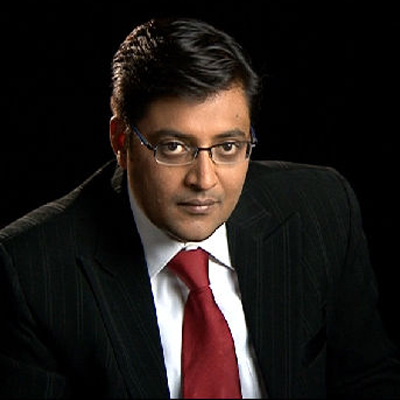
    GOA: The second day of the 10th edition of Goafest started with a zealous key note from Times Now editorial director and editor-in-chief Arnab Goswami.


    Seconding the image that he’s built with his different mode of journalism, Goswami said, “The formula of stating an opinion as a journalist is wrong is not true and my presence here today proves that. The journalism I follow is journalism of opinion and is not PR driven. If my opinion helps bringing about a change, I will opine and not shy behind the wall of neutrality. When you know there is something wrong, you don’t need to be neutral. When the facts prove something, you don’t need to be neutral.”


    A tad different in his approach to journalism when compared to his peers, Goswami has oft been accused of promoting sensationalism, being over the top loud and what not. In his keynote, the senior journalist addressed some of the accusations that have been levied on him time and again. They are as follows:


    Sensationalism: “I know I am accused of sensationalism. Let us go back to the initial stages of Times Now… a small kid was lying at the bottom of a 60 feet deep bore well. We covered it with supreme priority for three continuous days till the kid was rescued alive. We did it because a poor kid was always neglected. Had it been a politician’s or a celebrity’s child, the treatment would have been different. It is because of the OB Vans that the small kid’s life became a national issue and everyone was praying for the kid. We were accused of sensationalism after the coverage, but our coverage then ensured that no such bore well is left unfilled now, which saves small kids from facing the trauma that Prince went through and hence I am proud of sensationalizing, and if it does good to the people of India we will keep doing it.”


    Getting Too Involved in the Story: “I know I am accused of getting too involved in a story, which eventually ends up with me taking sides and compromising neutrality. In 2011, we got to know about a small accounting error from a group of Indians on British soil. We analysed the facts and the story was on air. Early next morning, young journalists came running to me and said: ‘Sir, Kalmadi is responding to our story.’ A small report shaking a person of Kalmadi’s magnitude was not normal. I got thousands of calls and one of them was from a person I love – the late Vinod Mehta. He told me: ‘What did you do? Why is everyone so anti-Arnab because of one report? There is something beyond what you have reported… dig deep and find out.’ The entire team got involved. We didn’t sleep, we didn’t think anything else and after a week of investigation, what we came out with was a historical moment for the Indian media — the unveiling of Commonwealth Game Scams, which started the journey of unveiling scams in the public forum. So if getting too involved brings in such revolutions, I promise in future too, no matter how much ever we are criticized, we will keep getting too involved.”


    Not Giving Chance To Others To Speak: “Well once I decided that I will let the other person speak and that day became a historical day for the Indian media. And the person was Rahul Gandhi. After that day, there is nothing more left for him to speak anymore. He came with a script in his head and my motive was to make him speak out of that script and the moment I succeeded in doing it, he revealed many hidden secrets. With that the people of India came to know about his feeble nature, which set the tone for the Narendra Modi led government. Well, now we don’t even know where he is, so it’s not that I don’t let others speak, it’s just that I stop them from speaking what they have pre-scripted and is not relevant and accurate.”


    The keynote was followed by a Q&A round where advertising fraternity representative Prasoon Joshi asked Goswami numerous questions. Answering on the ’Shame in Sydney’ episode that was run after India’s defeat against Australia in the ICC Cricket World Cup semi-finals, which saw substantial criticism on social media platforms, Goswami said, “I have no regrets on running that episode. Criticising a defeat is not a crime and we also appreciate them when they win. It is not something new. Over the years, we saw every defeat in a big match was aggressively criticised. Cricket fans had a problem with the word shame, which is a different argument. We are open to criticism but that doesn’t mean I have any regret airing that episode.”


    Goswami’s speech about how Times Now is all about bringing about a change amidst a gathering of advertisers and agencies, could have had multiple motives. However, that didn’t stop him from taking a dig at rivals. 


    While he didn’t exactly criticise others for airing content that he didn’t agree with, at the risk of sounding pompous, he said, “I think I hardly have any rivals.” Goswami’s intention was most likely to tell the advertising fraternity that Times Now was beyond competition when it came to viewership and popularity.

  • Times Now expose against VVIP culture gains support

    Times Now expose against VVIP culture gains support

    MUMBAI: Almost seven decades since India gained Independence, the roughshod riding ways of the politicians and the VVIPs had pushed aside the rights of the common man and made their everyday life more than difficult. But the ongoing campaign by news channel Times Now against the VVIP Raj has made people come together against such culture.


    In keeping with the Times Now ‘Action Begins Here’ campaign launched on 25 February, it has created an impact with people from all walks of life rising in unison to voice against the VVIP culture. The expose on the VVIPs causing inconvenience and hardships to people even during emergencies has seen the campaign gather momentum claims the channel.


    The channel first highlighted the special privilege at the railway station in Chandigarh, a special lane for VVIPs where they would zoom past while one was left to battle traffic jams. It resulted in the ‘Only for VVIPs’ lane being now opened for all.


    It also brought to light the reserved special wards in a hospital in Bangalore for the VVIPs even as commoners struggled for a bed and even if they got one, they had to contend with rats and mosquitoes. Then, in Hyderabad where a special lane leads the VVIPs straight to the tarmac of the airport even as normal traffic leaves many a passengers stranded for hours!


    On 8 March the channel flashed the traffic snarl from outside Mumbai’s National Sports Club of India (NSCI) near Haji Ali to the Bandra-Worli Sea Link only because the Maharashtra Chief Minister’s presence at the club made the cops stop other cars from entering NSCI. This led to unruly scenes as people argued with the cops. Later, the CM apologized for the inconvenience caused and promised immediate action into the matter.


    The hashtag #VVIPRacism was trending on social media. There were over 26,000 tweets and 33.4 million impressions on Twitter in less than 48 hours. The issue trended globally at number one slot for more than 30 minutes during the News Hour show on 8 March.


    The tweets and Facebook reactions are continuing to flow says the channel. Till 9 March morning these figures jumped to 347.1 million potential impressions. (Time Period: 25 February till 2 March, 10 am).

  • News channels’ budget special

    News channels’ budget special

    MUMBAI: Will Arun Jaitley successfully meet the expectations of the common man or are the aspirations too high? Will we get new schools and colleges? Will the number of AIMS increase? What will happen to health security? Will medical treatments become more affordable? Will there be any rationalization of taxation?

    The Ministry of Finance will be under the spotlight in the coming days as the country seeks answers to many such questions.

    Indiantelevision.com takes the opportunity to throw a set of questions to various news channels on their plans and offerings to meet viewer’s aspirations.

    ET Now

    The theme for Budget 2015 for the channel is Budget for Achhe Din. “This being the first full-fledged budget from Modi government, the common man’s and various stakeholders’ expectations for achhe din are really high and this perhaps would be the chance for the government to testify the promises made,” says ET Now managing editor R Sridharan.

    With the budget being a highly anticipated event, news channels are gearing to grab as much attention as possible. ET Now is content with the advertiser response. “The response has been phenomenal and we have brought on-board the maximum (and exclusive) budget sponsors within our category. Besides, we have sold out complete inventory on FCT and non FCT elements during budget week and budget day,” adds channels spokesperson .

    Budget also tests the editorial prowess. “All stakeholders of the budget viz. India Inc., market participants, traders, retail investors and the common man would largely depend on us to bring the fastest news updates, analysis, reactions and verdict on the budget,” he says.

    ET Now is looking at providing the most comprehensive and decisive analysis on budget to its viewers. “Every year our budget verdict is closely watched. This year we have a power packed line-up of pre-budget programming named Budget Marathon all through the budget week, which will consist of budget debates, a daily call-in show on personal finance and special editions of our extremely popular show market makers,” he informs.

    So why should one tune into ET Now? Sridharan says, “The sheer depth and expertise of ET Now’s budget coverage will be unmatched as compared to any other English business news channel. Foremost economist Swaminathan Aiyar and Motilal Oswal joint managing director Raamdeo Agrawal will lead ET Now’s programming on budget day. Aiyar, is the most respected economic expert in India who has been analysing budgets for more than 45 years now. In addition to our seasoned anchors, ace fund manager Punita Kumar Sinha will also be part of our stellar line up of experts. With the combined might of these three, the viewers will gain tremendous insights and knowledge ranging from economy, markets, finance and investments.”

    “Each of our experts is a stalwart in his or her area. Be it institutional investors or retail investors, market participants look to our panel to get the most decisive analysis of budget proposals. We have the most authoritative voices on the channel,” he informs.

    NDTV Network

    NDTV, as part of its budget special, will throw all the key questions to find out if the Narendra Modi led government will be able to live up to the expectations of 1.25 billion Indians.

    The channel, through its budget programming, will find out if the growth stimulus is pro-subsidy or pro-investment?

    NDTV senior vice president corporate affairs and senior editor real estate Manisha Natarajan says that the first full budget will be the Modi government’s first real acid test. “Join NDTV as we balance the numbers and find out how Budget 2015 affects you,” she says.

    The programming of the 24 hours English news channel NDTV 24/7 during budget will be as follows:

    Pre-Budget programmes

    23 and 24 February: Budget ADDA at 5:30 pm. In the build up to the Union Budget, Shweta Rajpal Kohli will be joined by the captains of the industry to outline their wishlist for the first proper budget of the Narendra Modi government.

    26 February: Rail Budget Live (12–1 pm): The rail budget presentation will be followed by analysis with railway industry experts and policy makers.

    27 February: Economic Survey Special (9-10 pm). Senior economists, industry voices and policy makers debate and discuss the Economic Survey 2015.

    28 February: Union Budget 2015. Industry and political voices, policy makers and economists join Prannoy Roy and Shweta Rajpal Kohli from 9 am to 3 pm to look at the Narendra Modi government’s first budget.

    9-11 am: Pre-Budget expectations and analysis

    11 am – 1 pm: Budget Speech Live from Parliament

    1-3 pm: Post Budget analysis

    The scheduling of the network’s business channel NDTV Profit is as follows:

    Betting on the Budget: Presented by Prashant Nair, the viewer will get insights into the expectations of the financial markets from the Union Budget. The show will have top-notch market participants who will discuss and debate what the budget can do for the economy and of course for the financial markets.

    B-School Budget: Moderated by Shweta Rajpal Kohli, in this show young business students talk about their perceptions and understanding of the budget and how they might perhaps do it differently.

    Budget ADDA: In the build up to the Union Budget, captains of industry outline their wishlist for the first proper budget of the Narendra Modi government. The show will be anchored by Shweta Rajpal Kohli.

    Programming on Budget Day 

    Name – Union Budget 2015

    Anchors – Vikram Chandra and Prashant Nair

    Timing – 8 am to 5 pm 

    Pre Analysis – 8 am to 11 am 

    Budget Speech – 11 am to 1 pm 

    Post speech analysis – 1 pm to 5 pm 

    News X

    When queried about its special coverage for budget 2015, NewsX editor in chief Rahul Shivshankar says, “NewsX has a new mission for the new NDA government for their first budget – Mission 10 per cent. This is also our branding for the coverage, which will all dovetail into this special theme- how to attain double digit growth for India.”

    NewsX will be breaking the mould with a new virtual gfx (graphics) technology to present the big numbers in the budget.

    Talking about the motto of News X, Shivshankar says, “We believe that one of our primary functions is to ensure that the voice of the common person reaches the newsmakers. We are doing a series of roundtables with experts and opinion makers which will be suggestive of what the government focus for the budget should be.”

    During the budget, viewers tune in to a channel to follow the editorial content. The channel with better content garners more viewership. “NewsX has a detailed roll out plan for budget programming. From 19-27 February, our programming Your Budget, Your Expectations would highlight the expectations of the common person from the FM and PM. From 21-25 February on our budget show Mission 10 per cent at prime time, we will debate on issues like growth, fiscal deficit, tax, growth and aspirations of the youth with eminent panel of experts. From 27-28 February our prime focus will be on the political and economic implications of the Rail Budget and Union budget including Economic Survey. Overall, our editorial focus will be to be non jargonistic, to simplify the numbers and ensure the coverage is detailed yet tailored to the common person,” he informs.

    The panel of experts is a very important part of any presentation and the NewsX panel of experts will have former advisor to PMO Subhashish Gangopadhyay, Vivian Fernandes, former cabinet secretary TSR Subramanian, economist BB Bhattacharya, founder Air Deccan/Industrialist Captain Gopinath, senior journalist MK Venu, convener economic cell BJP PN Vijay, direct tax expert KPMG Prashant Kapoor and personal tax expert KPMG Ashish Gupta.

    When asked why should people choose NewsX over others Shivshankar replies, “For clarity. It’s as simple as that. We put the viewer before the numbers.”

    Times Now

    Times Network’s 24 hours news channel Times Now has named its special coverage Super Budget in concurrence with the theme that this budget will perhaps be a kick-starter for the next phase of growth.

    Super Budget 2015 will be a congregation of debate shows, interviews, analysis and discussions with Times Now editor in chief Arnab Goswami and economists like Omkar Goswami, Lord Meghnad Desai, Dr. Rajeev Kumar and Sunil Alagh who will discuss issues regarding the common man’s expectations from the budget 2015,” says a Times Now spokesperson.

    The channel is known for its innovative adaptations, as during every special presentation it comes with a new technical innovation. The budget will be another effort to showcase innovate formats both in terms of technology and editorial styles.

    When questioned about the impact of budget presentation in news channels, the spokesperson asserts, “The budget is a crucial exercise that plays a key role in determining not just the economy but also impacting our lives. Viewers watch news channels for information around the budget, how the subject matter experts are reacting to the budget and how the budget will impact our life. Times Now tries to simplify the budget by analyzing it in simple terms bereft of jargons.”

    The channel will continue its strategy of bringing the budget to its viewers in a simple and understandable form. “We will be analysing how the budget will impact our daily lives and the impact it will have on corporate and the markets. With a range of experts from industry the analysis is aimed to be sharp and fast with path breaking graphics to support the same,” he adds.

    With all the news channels having more or less the same presentation, it is highly challenging to emerge as viewer’s choice. “In all budgets, Times Now has been the choice of viewers. We have managed to garner record shares in each budget. With a team that comprises two of India’s best voices on economics in Dr. Omkar Goswami and Lord Meghnad Desai, the channel promises to deliver sharp analysis. Additionally experts like Dr. Rajiv Kumar, Sunil Alagh and Sanjeev Sanyal will provide industry viewpoints to the budget. All this packaged in an interesting format makes for exciting viewing,” reiterates the spokesperson.

    Ad rate hike

    According to media buyers, the news channels will see a minimum hike of 50 per cent in the ad rate. A media executive says, “Budget is one of the major event for news channels and they prepare special marketing campaigns for it so that brands come and endorse.”

    Another executive from the media planning community adds on condition of anonymity, “The hike in ad rate is directly proportional to content in store. Better content delivered by prominent dignitaries grabs more attention and hence the channel get better price for their ad slots.”

    Though economic reform is a 365 days agenda, the general budget plays a vital role in the economic condition of the country. It remains to be seen if budget 2015 takes India, which was recognised as ‘fragile five’ couple of years back, one step forward towards the fantastic or favourite five in global economy.

    (The channels are listed in alphabetical order and not on the basis of viewership ratings or accolades.)  
  • “Couldn’t have asked for better timing”: The Viral Fever’s Arunabh Kumar

    “Couldn’t have asked for better timing”: The Viral Fever’s Arunabh Kumar

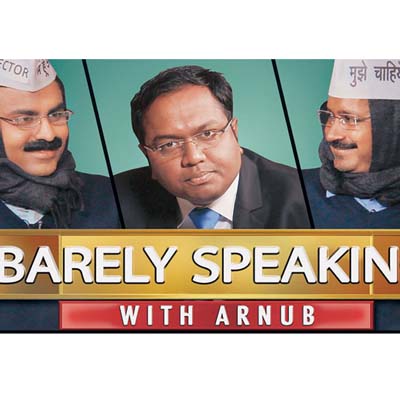
    MUMBAI: On 10 February when Aam Admi Party (AAP) founder Arvind Kejriwal created a history of sorts by winning the Delhi assembly elections by a record win of 67 seats, social media was abuzz with another first he had scored as an Indian politician. The muffler man was the first Indian politician to feature on a satire show on a digital network, The Viral Fever (TVF).


    How tough was it to convince Kejriwal to come on board for the flagship show Barely Speaking with Arnub? “We were talking to Kejriwal since October last year but he was busy with his campaign. He was well aware of the bitter-sweet thought provoking content we present. While we were unhappy with the delay, we could not have asked for a better timing and release,” The Viral Fever founder and CEO Arunabh Kumar tells Indiantelevision.com.


    The show, which was uploaded on 9 February, has garnered 2,251,010 views on YouTube so far.


    The digital network also partnered with Times of India (TOI) as part of its The Great Indian campaign. Kumar says when TOI started the second leg of the campaign The Great Indian Litterbug, they were simultaneously in talks with Kejriwal. 


    “The campaign was about the common man indulging in littering while the symbol of the AAP party, which is the broom, stood for cleaning up the act. We thought it was a great fit in such a way that people would not know it was branded integration,” adds Kumar.


    The host of Barely Speaking is seen imitating India’s most popular news anchor Arnab Goswami of Times Now. When asked if he has been confronted anytime by the real “nation wants to know” anchor, Kumar is of the opinion that imitation is flattery and it is not a major concern as the network has partnered with the Times Group for different associations. “Let’s hope we are able to convince him to come on board for our show and have an ultimate showdown,” he says.


    When queried whether India was ready for a subscription based model going by the rise in video on demand (VOD) platforms, Kumar says that their network has a product called the TVF Box Office where people can watch movies they have missed by paying for it.


    “Rocket Singh has sold 30,000 tickets in three years on Google Play and Sulemani Keeda, a very tiny film which didn’t even get a decent release sold 10,000 tickets in less than 10 days. This has been able because of the traction the Viral Fever has been able to garner,” the founder explains.


    The network has a total strength of 70 people and took a total of 36 hours to shoot the interview with Kejriwal and upload it on the online channel. Previously Bollywood star Shah Rukh Khan too has made an appearance on the show. When asked who are the other guests he looks to get on board, Kumar says “I think there are Shah Rukh’s of various different industries that we plan to get on board. But Bollywood always makes up for good content and at the same time the younger upcoming actors are open at laughing at themselves.”


    The network also has a small division called the TVF Tube, which is headed by Samir Saxena. This segment looks at producing content for television. Saxena has directed the popular online show Permanent Roommates. “Permanent Roommates is globally the most watched web series on YouTube. It is at the number one spot. There is no other branded fiction property more popular than Permanent Roommate on YouTube,” boasts Kumar.


    The network has so far worked with 30 different brands for brand integrations. It has produced shows with brands such as Airtel, Flipakart, P&G and are currently also working with Kingfisher.


    Speaking on the road ahead, Kumar informs that their non-fiction vertical Recycle Bin will be pushed a lot this year. They are also looking to work with different partners for different genres of programming. Thirdly the company is also looking at enhancing its technology to disseminate content better. Talking about the cost involved, Kumar says, “For us cost does not reduce because the size of the screen reduces. We believe great content cannot be produced at a cheap cost. We can literally get Rs 10 out of Rupee one of content.”


    In his concluding remarks Kumar says that their one key challenge is to make Indian audiences respect great content. “Because they seem to be enslaved completely by Bollywood, which I think we have managed to change to certain extent the value and core remains to create and serve and disseminate premium content at par with global standards,” concludes Kumar.

  • Times Now comes with creative campaign to question crisis

    Times Now comes with creative campaign to question crisis

    MUMBAI: News channel Times Now has launched a campaign with the conviction to shape a better tomorrow. It was since the New Year that the channel had started to strengthen the core philosophy of the brand through sharp-focused positioning with ‘Times Now: Action Begins Here.’ The channel also launched a series of hard-hitting, issue-based films to raise social issues that bothers the society on a daily basis.


    Times Television Network CEO & managing director MK Anand said, “’Action Begins Here’ truly articulates what Times Now stands for, it explains what we are really doing. As India’s leading news brand, we are well aware of the power our voice has in society. And we constructively use that power to give voice to issues that affect our nation and raise the right questions that lead to Action. Action that leads to concrete solutions, to change for a better India. The re-positioning will be reflected in the overall brand communication coupled with intense and engaging content.”


    Times Now editor in cheif Arnab Goswami added, “Times Now has been the popular choice for more than seven years as the number one channel. We have changed news delivery from deadpan to passionate; from uninvolved to journalism that steps forward to fight for the citizen. ‘Action Begins Here’ is a campaign that reflects this new age journalism, and showcases our fundamental strength of direct reporting to viewers across the globe.”


    The 360 degree marketing plan includes extensive print, OOH, cinema, digital and cross-channel promotions.


  • TAM or BARC, the market has to decide: Sir Martin Sorrell

    TAM or BARC, the market has to decide: Sir Martin Sorrell

    MUMBAI: They are known as the lions who go for the kill in their respective fields. One heads the world’s largest advertising communications group by revenue, which he has built up in around three decades. And the other is known for his innate ability to decimate almost every guest who dares to be a part of his nationally televised daily news show.


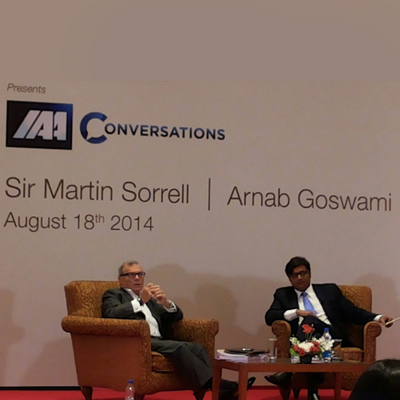
    Yes, we are talking about none other than WPP CEO Sir Martin Sorrell and Times Now editor-in-chief Arnab Goswami who got together on stage to have  a public chat under the umbrella of the Indian chapter of the International Advertising Association (IAA) in Mumbai.


    Before the IAA conversation between the two commenced almost all those assembled – the who’s who of the media industry – were hard pressed to second guess as to who would have the upper hand: the calulator (read: Sorrell, as The Economist had once labelled him, when he battled with David Ogilvy to take over O&M) or the microphone (read: Arnab).


    Their curiosity was laid to rest quickly  and it became clear that it would not be a “I’ll eat you up for high tea”  Arnab interview when it was Sorrell who fielded the first question, querying how the 2014 Lok Sabha elections went for him. Goswami laughingly responded saying that  not many know that the  Congress (I) took out an internal report to know the reasons for the debacle. And the number one reason in that report was Arnab Goswami as he was the only TV journalist to have interviewed the party’s vice president Rahul Gandhi.


    And with India’s sad performance during the ongoing Test series in England, cricket was bound to be spoken about. Talking about the recession of ‘91-‘92, Sorrell took the example of how he handled the situation comparing it to the crisis the Indian team was going through and how MS Dhoni should be handling it.


    So, do you still push yourself, asked Goswami. And yes, came the  prompt reply from the man who believes that with the development of the new technologies, the way people consumed media has changed over the years due to disruption. “If you see what consumers consume and what our clients invest in, there are two major differences. The first being the traditional media which consists of magazines and newspapers, 20 per cent is invested in it and on the other side, 46 per cent is invested on mobile,” said Sorrell. He  emphasised that though the study represents the west, India is also headed in the same direction.


    Responding to Goswami’s question about the position of Indian media in the next 20-30 years, Sorrell highlighted that with the economic changes taking place in the country under the new government, the country can only move forward.  “India is in a better position than the US because it leapfrogged from legacy media to smartphones. And the country will play an important role in  digital growth as well,” he asserted adding that the traditional businesses need to be digitised at the earliest, as Indian media needs to go with the flow.


    However, not everyone at the audience believed in Sorrell’s India digital growth design. Madison World chairman Sam Balsara believes that in the country where print and TV is still booming, digital cannot overtake the two here at least for some time now.


    A firm believer in data and gut, Sorrell also believes that media has to play the roles of both – influencing the market behavior and analysing it too.


    After a few more exchanges on what role data plays in Sorrell’s businesses, the conversation shifted from media and advertising to television and the ongoing case of television viewership ratings in India.


    Kantar Media, part of the WPP Group, the 50 per cent shareholder in Indian television ratings agency TAM Media Research had moved the Delhi High Court when the government, early this year, approved the regulations policy guidelines for TV rating agencies. According to it, no single entity can hold paid-up equity in excess of 10 per cent simultaneously in a rating agency and a broadcaster, advertiser or advertising agency and is compelled to increase the panel home size by 10,000 ever year until the size reaches 50,000 panel homes.


    “In a country of 1.2 billion, just a few thousand peoplemeters. The math doesn’t match up. Did you really need a regulation to tell you to increase the sample data?” asked Goswami who added that he has been waiting for 15 years to ask the question.


    To this, Sorrell said that the decision to increase the number of peoplemeters was taken long before the regulations came out. “One must not forget that the number of peoplemeters reflects the cost of science. Anywhere in the world, the industry has to pay for that cost. The research agency has three equal partners, that is, one-third is media agencies, one-third advertisers and one-third broadcasters. It involves cost and the industry needs to contribute to it.”


    He went on to add  that the way media is consumed is changing and so the media rating agencies too will have to change. He cited the example of TV networks in the US using ‘C7 ratings’, which includes same-day viewing plus seven additional days, as opposed to three, and how WPP was the first one to recognise that change.


    “The market had decided for the 10,000 peoplemeters then, and later on the government decided to increase that,” he added.


    Does Sorrell see TAM and BARC working together?


    “The market will have to decide that; if they are ready to pay for both then good. However, if we look elsewhere, the  market doesn’t pay for two rating currencies,” he said.


    To this BARC India CEO Partho Dasgupta smiled and said, “It’s good that he acknowledged that there can be only one currency.”


    The two-hour long conversation ended with Goswami asking Sorrell that if he would start his career all over again like he did at 40 then what would be on his mind. “I would have started maybe a little earlier, say 30-35 years of age, and gone private after collecting all my assets,” he replied.


    Spoken like a true number cruncher.

  • Arnab Goswami’s rendezvous with Sir Martin Sorrell

    Arnab Goswami’s rendezvous with Sir Martin Sorrell

    MUMBAI: World’s most respected marketing professional WPP CEO Sir Martin Sorrell and India’s popular news anchor Times Now editor-in-chief Arnab Goswami will meet up this August.


    Courtesy, International Advertising Association (IAA), as both will be part of a discussion on 18 August as part of IAA’s Conversations series of the Indian Chapter.


    “We find the IAA Conversations offering an excellent opportunity to engage two well-known media professionals in a meaningful dialogue on wide-ranging professional and personal topics. Sir Martin Sorrell, is one of the most important powerful media professionals in the world and our own Arnab Goswami is one of the most popular faces of news television in the country,” said IAA India Chapter and vice president-development Asia Pacific Srinivasan K Swamy.


    Event chairperson Dr Bhaskar Das added, “Both Sir Martin Sorrell and Arnab Goswami are great to listen to. And now when they sit together at the IAA Conversations, we are sure to not just have a lively session but also see some interesting insights coming up. People who follow ‘Frankly Speaking with Arnab’ will see a similar program but in a live format. An open-to-audience Q&A will follow the discussion.”


    The event will be held at the ITC Grand Central Hotel in Mumbai.

  • Times Now eyes ‘super’ viewership this budget

    Times Now eyes ‘super’ viewership this budget

    MUMBAI: Times Now, it seems, has made ‘super’ its trademark for shows. After a successful ‘Super Primetime’ that was created during the elections and is on-air even now, the English news channel is creating a special band of shows targeting the budget.


    ‘Super Budget 2014’ will be a congregation of debate shows, interviews, analysis and discussions with Times Now editor in chief Arnab Goswami and economists like Omkar Goswami, Lord Meghnad Desai, Dr Rajeev Kumar and Sunil Alagh who will discuss issues regarding the common man’s expectations from the budget 2014.


    Some of the ‘Super Budget 2014’ shows include Budget Roundtable that is a series of two shows of one hour each with Goswami, Times Now political and economy editor Navika Kumar and will air on 28 June and 5 July. Budget Expectation: World’s Eye on India will show the world’s expectation from the budget with international panelists such as Jagdish Bhagwati and Andrew Ferris. The show will go on air on the same two days for half an hour each. My Budget Wish-list is a series of vignettes that give the common man a chance to voice his opinion of what he wants from this year’s budget.


    Speaking on the new programming lineup Times Now, ET Now and zoom chief marketing officer Jatin Bhatt said, “After the highly successful general elections campaign where we garnered the highest numbers by far, we are looking at strengthening our lead by the line up towards the budget. Times Now will have a 360 degree consumer centric marketing program with innovations will help us get more viewers, achieve higher growth and viewership numbers.”


    Digital medium is being used to find out audiences’ wish-list for the same. Both the union budget and the railway budget will be covered live on the channel.

  • Senior journalists scrutinise media at RedInk Awards 2014

    Senior journalists scrutinise media at RedInk Awards 2014

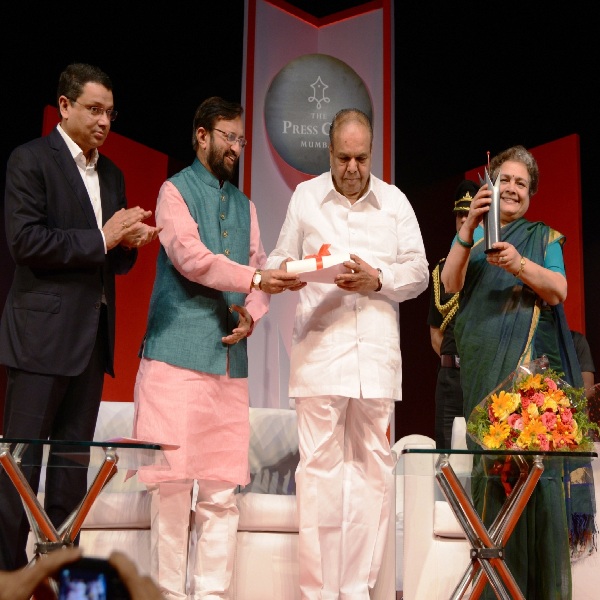
    MUMBAI: It was an awards night, albeit not for celebrities, but for the hard working journalists aka the fourth estate of the country. The fourth edition of the RedInk Awards organised by the Press Club of Mumbai saw 30 journalists from print, broadcast and online media receiving awards in various categories for their outstanding writing and research.


    Press Club of Mumbai president Gurbir Singh opened the ceremony with a few thoughts on the state of media in the country today. “Media today is in crisis. Retrenchments are happening, companies are closing, new ones are starting. There is something wrong with the way media is conducting itself. Is it a shortage of funds or the way the business is being done,” he questioned.


    His voice was not alone. A discussion followed on ‘Elections 2014: Were we fair or did we stoke the NaMo wave’ which involved IBN18 editor-in-chief Rajdeep Sardesai, Times Now editor-in-chief Arnab Goswami and Divya Marathi chief editor Kumar Ketkar alongside O&M creative director Piyush Pandey and moderated by former journalist and current Star India CEO Uday Shankar. While Sardesai and Ketkar remained critical of the role of media today, Shankar and Goswami agree that the future is very bright.


    Maharashtra governor K Sankaranarayanan and new Information and Broadcasting Minister Prakash Javadekar were the guests of honour for the evening. While Javadekar said that he would look into establishing a law to prevent attacks on press, the governor had some personal anecdotes to share regarding the media.


    “Today, as a politician, just serving the people isn’t enough. You have to be friends with journalists,” he said in what appeared to be an answer to Goswami’s earlier comment that journalists should not be emotionally connected with politicians. “Paid news is much talked off. I ask the media why do they show it and they say they don’t have money. If you ask a thief why are you stealing he says ‘I don’t have money’,” he said.


    Sankaranarayanan said that the media world in India is so competitive that if one person isn’t there another will come in his place. “I watch Arnab’s debates sometimes. Today at 9:00 pm I don’t know what has happened. He is not there. It is a great loss to the people,” he added amidst loud applause.


    Mrinal Pande who was the first woman editor of the Hindi daily Hindustan and who retired recently as the chairperson of the Prasar Bharati was honoured with the RedInk lifetime achievement award. 

  • Rajdeep Sardesai and Arnab Goswami poles apart on future of journalism

    Rajdeep Sardesai and Arnab Goswami poles apart on future of journalism

    MUMBAI: The venue: the National Centre of Performing Arts auditorium in south Mumbai. The occasion: a panel discussion that preceded the Press Club of India’s Red Ink Awards. On stage were IBN18 editor-in-chief  Rajdeep Sardesai, Times Now editor-in-chief Arnab Goswami, and Dainik Divya Marathi chief editor Kumar Ketkar, O&M national creative director and chairman Piyush Pandey. And for a change it was they who were grilled by Star India CEO Uday Shankar, a former journalist himself. The topic: Elections 2014: were we fair or did we stoke the NaMo wave?’

    Shankar set the pace for the panel when he spoke first, stating that it is he who would be asking the questions and no one would be allowed to answer – in all probability taking a jab at Arnab. As the audience burst into laughter,  he then told Rajdeep to open the debate by speaking his mind.

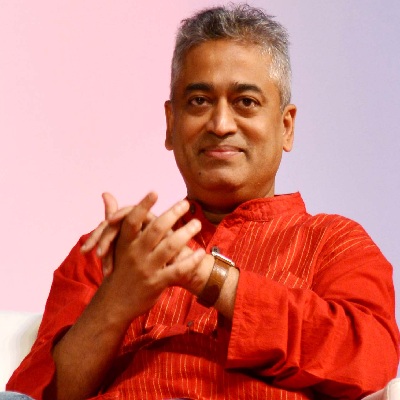
    Dressed as casually as one can get, in a red kurta, simple trousers and chappals, Sardesai delivered a hard hitting monologue on Modi and the kind of journalism that exists in India now.

    “Modi had the most  innovative and sustained campaign that we have ever seen in an Indian election,” he said, while pointing out that Congress president Rahul Gandhi was like a kid in kindergarten in front of Modi. But he also said that it was unfair to blame the media for creating the NaMo wave.

    “Some channels have abandoned the basic role of media. They are now doing cheerleading or supari journalism to get more viewers and ratings. Modi was not subject to the intense scrutiny in the last two years that the others were subject to. While he was brilliant with his social media strategy and communication he was spared the ignominy that others were subject to. Some channels elevated Narendra Modi to God. He is a good politician and communicator but not a messiah. Some journalists need to ask themselves if they want to do journalism or hagiography,” he added.

    On the other hand, Arnab instantly put himself and his channel in the spotlight by stating that one of the positives of being located in Mumbai, far away from the hub of channels (Noida) was that it keeps him disassociated with politicians.

    “I am not romantically involved with any political party so I don’t end up having a bitter break up with them. My distance with politicians is both physical and psychological. We in India are overawed by them. Modi was the focus because there was no competition. We are not dependent on politicians for ratings. There is no scientific evidence that Modi gets ratings,” he said while also stating that he wasn’t aware of this supari journalism that Rajdeep referred to.

    “The next 10 years of journalism to me are very bright,” said Arnab. A view that Shankar totally endorsed. Said he: “The future of journalism is bright because we do something that is essential to the society. We should not be cynical about the media, without them the country would not have been what it is.”

    However, Arnab’s view seemed to have irked Rajdeep who in the latter part of the discussion said, “We can state that in 10 years things will be great and things are going to change, but arrogance is the downfall of every journalist! At our time, it was never that what the anchor said would matter more than what the guests said.”

    Ketkar who comes from the print side of the media and was the senior most scribe on the panel let loose his spleen as he lambasted the electronic media for sidetracking and sideswiping print publications.

    “It is the electronic media that sets the tone for the next day’s morning headlines in the paper by these discussions. The people don’t set the agenda, the media does. The media has covered how miserable Bihar is but no mention of the Gujarat floods when Modi was campaigning at the height of his campaign trail. So, it is not just that you have to speak more about something, but by also not showing something you can stoke the fire,” he said.

    While the three editors did not refrain from taking digs and potshots at each other for the kind of journalism that is being resorted to, it was Piyush Pandey – the man behind the Narendra Modi election campaign –  who gave his insights on what led to NaMo wave. He pointed out that no matter what Modi did, he never gave the media a chance to ignore him; he made sure he was in the public eye, consistently giving out the right message that the public wanted to hear. “The media rode the Modi wave. It did not create it,” he said.

    While the very topic was sidelined, the editors were deeply engaged in pontificating on the state of journalism in the country with Goswami being the most optimistic about it.

    Having recently taken a month long break from his editorial duties, Rajdeep was the most vocal about the fact that news television needs to find its bearings quickly.

    “The idea that the television makes or breaks will not hold anymore. I really think that we have lost the capacity to go beyond the dramatic headline. We have lost our nerve. We need to introspect and ask ourselves : are we willing to do a serious interrogation of the Gujarat model, positive and negative?” he questioned. The fact that the BJP did well in places where cable TV did not reach efficiently was also brought out by Shankar and Sardesai.

    While the discussion didn’t see any real conclusion, it did end with a valuable point to ponder: whether journalists were getting too emotionally involved with politicians?

    Shankar had the last word on this. Said he:  “I think there is too much reverence even now in Indian media and on the other hand, there is too much emotional attachment. Either we are just cynical or when we go there we get sucked in. There has to be a balance in between. Overall, I think we shouldn’t be cynical about media. We have lots to capture and improve but without the media, this place, this country would be much worse.”