Tag: Arnab Goswami

  • Arnab Goswami becomes first journalist to ring opening bell at BSE

    Arnab Goswami becomes first journalist to ring opening bell at BSE

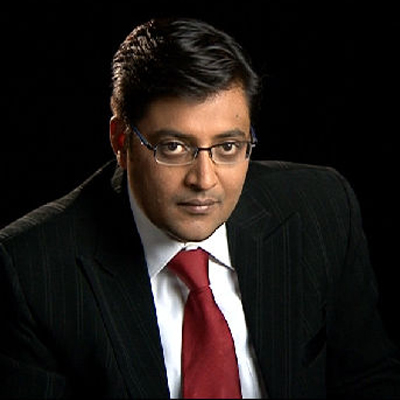
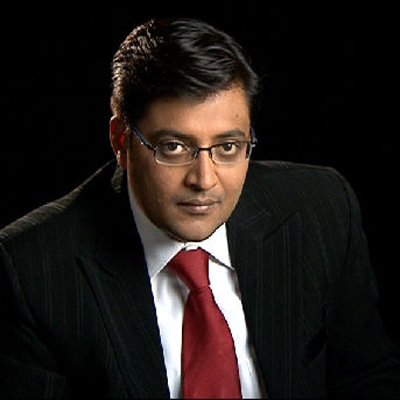
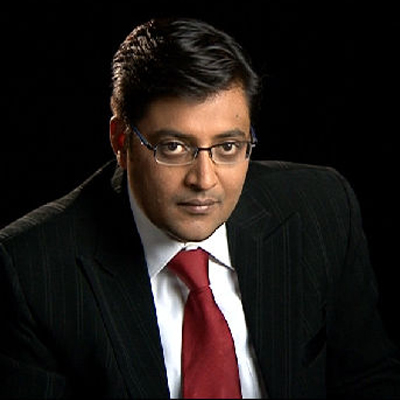
    MUMBAI: Times Now and ET Now president news and editor-in-chief Arnab Goswami has become the first journalist in the 140 year history of the Bombay Stock Exchange (BSE) to be ringing the opening bell, thus marking the opening of proceedings at the exchange.


    He was accompanied by BSE MD & CEO Ashishkumar Chauhan, along with other officials of the exchange.


    Chauhan said, “We are pleased to have Arnab Goswami at the Bombay Stock Exchange for the opening bell-ringing ceremony. This event marks another significant milestone for Asia’s oldest stock exchange as it celebrates its 140th anniversary, and  Goswami’s presence has enhanced the celebrations.”


    Goswami added, “I am happy that someone from the media has been given the honour to ring the opening bell at this august institution, and I am humbled to have been chosen for it. This is the most important financial institution in the business capital of India, and is a place where great capital and wealth are generated for the nation. This year, BSE is celebrating 140 eventful years, and on behalf of the entire media fraternity, I wish it all the best.”

  • “Four smaller channels don’t match up to Times Now:” Arnab Goswami

    “Four smaller channels don’t match up to Times Now:” Arnab Goswami

    MUMBAI: Reporting an event and informing viewers with occurrences from that event is no longer enough for a news channel in India. Week 23 of calendar year 2015 showed the television industry some never before incidences.

    When the Broadcast Audience Research Council (BARC) India announced its ratings for week 22, it showed how India Today Television pipped Times Now to take the pole position in the English News genre. And that’s something Times Now did not like!


    The zest to go back to number one saw Times Now and ET Now news president and editor-in-chief Arnab Goswami getting into action mode on the first day of the week, which incidentally is Sunday – a day when he is generally off action. The Sushma Swaraj – Lalit Modi controversy turned out to be just the right fodder and Goswami exploited the opportunity by covering the news as extensively as possible. The action that began in the Times Now studio certainly irked the then number one India Today Television’s Rahul Kanwal and he even took to Twitter to express his disdain by tweeting the following:

    Not only that, another tweet from Kanwal read as below:

    While Goswami in his coverage mentioned time and again that he broke the Keith Vaz – Lalit Modi story, Kanwal tweeted his reservations thus:

    The week got over, Times Now regained pole position after securing 345 (000s sum), whereas India Today Television managed 151 (000s sum) followed by NDTV 129 (000s sum). 


    Commenting on the ratings and indirectly responding to Kanwal and other channels Goswami said, “My experience has been that leadership is built by doing the news, not by negative marketing campaigns. Each time someone mocks or apes us, our viewership grows. There is a big lesson in this fact. Besides, the massive public response to our LalitGate expose matches the growing number of our viewers. Four smaller channels don’t match up to Times Now. I think it is time for the smaller channels to realise that aping the leader, or spending a lot of money mocking the leader is futile.” 


    Now it remains to be seen if this jingoism continues and how it affects viewers and if ever any other channel succeeds to grab the pole position. Overall, not only is the news industry providing news, it is also making headlines.

  • Arnab Goswami elevated as president news and editor-in-chief Times Now, ET Now

    Arnab Goswami elevated as president news and editor-in-chief Times Now, ET Now

    MUMBAI: Arnab Goswami has added responsibilities as he now takes over as Times Now and ET Now president-news and editor-in-chief.


    Bennett & Coleman managing director Vineet Jain in an official email said, “In order  to reinforce  our commitment to growth,  we would  like to prepare  the future  leadership of the Times Network  with the elevation of Arnab Goswami as president  – news  &  editor-in-chief  Times Now and ET Now.”  


    This apart, the network has also elevated Jagdish Mulchandani as he takes charge as president – finance and distribution with immediate effect. In his new role, Mulchandani will continue to lead and drive all strategy and operations for finance and distribution besides traffic and administration across Times Network.


    Praising Goswami and his work so far, Jain said, “Arnab has successfully achieved and maintained the leadership position for Times Now in English general news for the past several years. In addition to the Times Now editorial responsibility, he will now  lead the  ET Now  editorial team with immediate effect.”


    Jain also highlighted Mulchandani’s successful stint as Times Network CFO. “He has constructed a sharp and effective distribution infrastructure in the last year which has improved our penetration and business performance greatly,” added Jain.


    “Times Network has maintained its leadership position over the last several years in the various niches that it operates in. The latest elevations are in line with our commitment to maintain our high growth rate and reinforce our leadership position in all endeavours,” said Times Network CEO & MD MK Anand. 


  • IAA Debate: Will mobile take over TV as primary screen three years from now?

    IAA Debate: Will mobile take over TV as primary screen three years from now?

    MUMBAI: With mobile proliferation in the country and the advent of 4G, the big question remains whether mobile will be the primary screen for news and entertainment in India in three to four years from now?


    At Melt 2015, the Indian Advertising Association (IAA) organised a riveting debate on the same with a panel comprising Times Now editor in chief Arnab Goswami and The Hindu MD and CEO Rajiv Lochan, who teamed up to debate against the motion, whereas Madison Media group CEO Vikram Sakhuja and The Quint.com founder and seasoned entrepreneur Raghav Bahl argued for the motion.


    ET Now journalist Sonali Krishna moderated the debate. The audience, which comprised the who’s who of the media, advertising and marketing industry, was the ultimate judge of the debate.


    All four participating members were given seven minutes to put forth their argument. Sakhuja kick started the debate by basing his argument on the power and features of a smart phone and also the connection that the device has built with consumers in recent years. He was of the opinion that the mobile is something that a person picks up the first thing in the morning and puts down the last at night. The prime connect of Sakhuja’s piece was when he asked people in the audience who had a mobile to raise their hand. Of course, it came as no surprise that the entire hall put their hand up.


    However, that aside, his opponents also made sensible rebuttals to portray counter arguments. The prime base of Sakhuja’s argument was the ability of mobile phones and how it enables consumer to consume content while in motion.


    Goswami, who in his inimitable style kept putting counter facts and figures in between Sakhuja’s speech initially, took to the floor by basing his piece on the reach and accessibility of television as opposed to the limitations of the mobile phone. Goswami said that the hands that went up when asked if they had a mobile phone, do not represent the entire country and there are people beyond them too who have limited access to smartphones and high speed internet.


    Goswami also focused on the affordability quotient and how by paying certain sum of money, an entire house consisting multiple members can enjoy action on television while the investment is way more when it comes to consumption of content on mobile phones, which is less mass and hence gets lesser reach or viewership as compared to television.


    Though Goswami’s opponents made numerous attempts to break him by interrupting and putting forth questions, as always he was least deflected and managed to put way more in justifying his stand.


    Giving a pass to the mumbo jumbo of statistics, Bahl justified his stand by speaking about consumer behavior and how it can change drastically within a short span of time. He stated the example of mobile phone and the high initial rates associated with it, which in turn placed it as a product for the elite class and totally irrelevant to the middleclass or lower middle class. However, in a short span during 2001 to 2005 everything changed drastically and now a vegetable vendor sits with his cart and sends the vegetable price to consumers over mobile phone using Whatsapp. Many in the audience appreciated Bahl’s arguments and examples as the foundation of his argument was that statistics are derived from past occurrences and hence predicting the duration required to bring a change in consumer behavior on the basis of available statistics cannot be justified.


    Not missing the chance even once, Goswami and Lochan interrupted him at numerous occasions. However, one such instance turned into a light banter between Goswami and Bahl, which got the audience on the edge of their seats. Bahl, during his speech, mentioned, “News is consumed in bits and bytes,” to which Goswami countered by saying, “I run a two hour long news show, which cannot be called as bits and bytes and is widely watched.” Bahl immediately launched the direct war by saying, “The show you run is not news but opinion.” Not letting Bahl continue with his point, Goswami retaliated by saying, “Raghav, you launched a news channel, which never managed to get half my ratings.”


    However, before things could go out of control, Krishna interjected and called for the debate to go on smoothly.


    Adding more substance to the few points already made by Goswami, Lochan also touched upon the qualitative aspect and his major issues were poor available infrastructure, which is in a buffering mode. He also made a point on the basis of health issues and stated mobile phones are a hazard to health and hence there are possibilities of people refraining from using the device.


    Once the four speakers had put forth their points, in the concluding statements they acknowledged all the arguments put forward.


    A message that Goswami repeatedly tried to convey through his comments, which were directed towards Sakhuja – a media planning and buying representative, was that Sakhuja was standing on the wrong side and should make a shift. The message was not only directed at Sakhuja but was an indirect attempt to convey that television is still the primary screen and advertisers should rate them undisputedly.


    After rounds of arguments and counter arguments there was no clear winner that was depicted through audience reaction. However, IAA president Srinivasan Swamy declared Goswami and Lochan as the winners of the debate, which was considered as the official verdict.

  • Times Now takes on NaMo govt’s one-year anniversary with special shows

    Times Now takes on NaMo govt’s one-year anniversary with special shows

    MUMBAI: Prime Minister Narendra Modi’s government has completed one year of governance after it swept to power with a thumping win of 282 seats in the Lok Sabha elections in 2014.


    Under the Modi wave, the country saw some key decision-making and initiatives. A year on, it is now time to review the BJP’s performance. So has the past one year seen the PM’s most promised reforms move the big way and speedily? Have the NaMo policies for the masses been effective and beneficial? From banking to labour to general schemes to social security, how good or bad has it been? Times Now will bring to its viewers an exhaustive and in depth overview with details on the minutest of moves from 22 – 16 May, 2015 with Modi 365.


    Modi 365 on Times Now, shall look at the hits and misses, the politics behind the big moves, the real issues that have been looked at, India’s foreign policies and how or if it has worked. The channel aims at giving the nation a voice to raise important issues, ask the right questions and take action that brings about a positive change in the society. The special programming and broadcast will have a wide participation from those who matter and have been in the know of things – from ministers and politicians to bureaucrats besides the master observers.


    Starting with a special Super Prime Time debate on 22 May, the series shall cover The Home Stretch (Politics First) on 23 May at 6.30 pm, followed by Real Politik Special at 7.30 pm, debates with expert on 23 and 24 May at 9 pm. Modi 365 will also have the C Voter Opinion Poll on the Modi government’s first year in power on 25 May at 7 pm.

  • BARC week 19: Star dominates GEC; Sony leads sports

    BARC week 19: Star dominates GEC; Sony leads sports

    MUMBAI: Star India’s Hindi general entertainment channel (GEC) Star Plus continues to dominate the satellite waves.


    According to Broadcast Audience Research Council (BARC) India’s Week 19 analysis, Star Plus leads with a rating of 163554 (000’s sum). With 144899 (000’s sum), Viacom 18’s Colors is placed at the second position while Star India’s other entity in the same genre Life OK with 121931 (000’s sum) sits comfortably at the third position over Zee TV 99794 (000’s sum).


    Sab with 73738 (000’s sum) is the only channel from Multi Screen Media (MSM) to feature in the top 5 channels in GEC category.  


    Star Plus’ dominance is not limited amongst channels only but the most popular programme with 2442 (000’s sum) Saath Nibhaana Saathiya also comes from the broadcaster. Zee TV’s Kumkum Bhagya with 1917 (000’s sum) is placed second, followed by Colors’ Sasural Simar Ka at the third position with 1818 (000’s sum).


    MSM emerged as the clear dominant in the sports category courtesy the Indian Premier League (IPL). Sony Max and Sony Six, official broadcasters of the IPL are placed on the first and second slot with 187924 (000’s sum) and 52731 (000’s sum) respectively.


    Backed by the strong fan base of WWE action and UEFA Champions League, Ten Sports with 15954 (000’s sum) managed to clinch its third spot back from Star Sports1.


    The Hindi News broadcasting space did not see much of a change in the list of top three channels as Aaj Tak with 14155 (000’s sum) continued to be in the first spot. Meanwhile, a close battle for the second spot was witnessed between ABP News with 12981 (000’s sum) and India TV with 12589 (000’s sum).


    Times Now led by the flamboyant Arnab Goswami continued the dominance in the English News broadcasting space with 378 (000’s sum) followed by Headlines Today at 296 (000’s sum). Narrowing the gap, 236 (000’s sum) NDTV 24/7 was placed third in the list of top three.


    Viacom’s Nick led the kids’ genre with 70516 (000’s sum) closely followed by Turner International’s Pogo with 67397 (000’s sum). Disney with 52086 (000’s sum) was placed at the third place.


  • Nalin Mehta’s ‘Behind a Billion Screens’ examines Indian TV industry

    Nalin Mehta’s ‘Behind a Billion Screens’ examines Indian TV industry

    MUMBAI: India is a country where television forms the most important part of one’s life. Everybody watches television, everybody has an opinion on it and everybody thinks they know exactly what is wrong with it. 


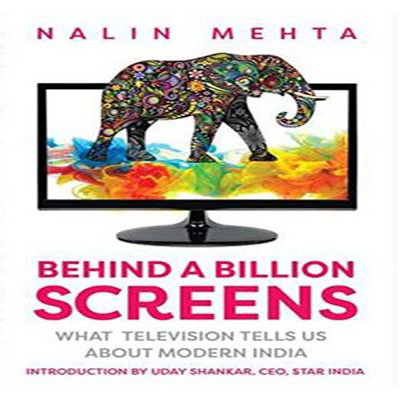
    It’s a topic that often raises a lot of heat and smoke but too little light. Throwing some light on this trend of television is author and journalist Nalin Mehta’s new book ‘Behind a Billion Screens.’


    The book closely examines how television works in India, how TV channels make their money or not, how this is changing and what this means for the cacophony that appears on our screens.


    The book, which was initially going to be a joint effort by Star India CEO Uday Shankar and Mehta, was later written independently by the latter.
    The book answers key questions like:


    • Who owns Indian television? Just how much is it controlled by politicians, corporations and real estate companies? What are the patterns of control nationally and across regional languages? How does India compare with other countries and why does this matter?


    • What explains television’s terrible crisis of content? Is there really no market for intelligence in India and is dumped down content the only thing that audiences want? Why do channels keep behaving like Bollywood producers of the 1980s who kept churning out the same old tired formula films till a new multiplex-savvy breed of film-makers started challenging old orthodoxies? Is there a talent problem or management problem or a crisis of business models?


    • What is wrong with current government controlling system on television and why this ‘terrible-backend’ needs to change? Indian television continues to be controlled by outdated regulations, even as it is mired in public battles for greater regulation, as called for by Justice Katju. Studying the role of the Ministry of Information and Broadcasting, Telecom Regulatory Authority of India (TRAI), state governments and the judiciary, this book answers just how much control the state still has on broadcasting, why its jugaad nature of regulation is now unsustainable and why a major change is needed.


    • Does self-regulation work? How did self-regulatory bodies governing television come into being and what has been their factual record? Has self-regulation made any difference to programming or is it simply a chimera only designed to keep government out?How does India compare to other countries?
    • Does public broadcasting still matter, what exactly is wrong with Prasar Bharti and how can it be fixed?


    • Is television becoming irrelevant in the digital age? How is television shape-shifting in response to mobiles and the net, how are companies changing their businesses and programming, where is India going and how different is India from the rest of the world.


    The book highlights how India’s $15 billion media and entertainment industry – including television, print, radio, digital media – is growing at roughly 14 per cent a year. This, by some accounts, is impressive, benefitting immensely from the tailwinds of GDP growth of the last decade. But the stark fact is that even at $15 billion, India’s entire media taken together is just about one fourth the size of Google ($59 billion in revenues) – a fourteen-year-old company that is younger than most major Indian TV channels.


    “Let us not even go that far. If the entire Indian media was a company, it would rank seventh or eighth in India! Media is a globally growing industry but our participation in that ecosystem is zero and India is hardly factored into the global thought process of technology or content,” the book points out.


    Mehta, in the book, highlights how India is drunk on its own volumes: the largest number of newspapers in circulation, the second largest number of television viewers and millions of digital consumers. Digital, in particular, is an indictment of our creative and strategic limitations.


    “We have over 700 million mobile screens and yet we do not have a relatively unique content proposition for the medium. So, our ability to convert that into corresponding value is disappointing. Both in business and creative terms, the Indian media and entertainment sector still remains much smaller than it should be in a country of 1.2 billion people,” the book says.


    Even at these volumes, the reach as a percentage of population is not spectacular. India has 100 million households with no television, their time spent on it is abysmally low when compared to global standards; some 350 million people read the newspaper – but that tells us how many do not read!


    Mehta points out that in television, India needs a lot more content and this will come not only by scaling up production but through a fundamental transformation of the ecosystem. Resources, talent and every related facet have to evolve dramatically. For example, the production infrastructure in Mumbai, studio space, access to talent is creaking and unable to keep pace with the demand.


    Despite all the gloom and doom, India’s media and entertainment sector has consistently delivered impressive growth rates for the past few years. But, this is not a sector whose value is measured just by the size of its financial contribution. Media and entertainment remains central to defining the direction of India’s social and economic path; its work remains key to the imagination and inspiration of a billion Indians every day; and its health will be central to the ethos and values of the society we collectively shape.


    Mehta, through the book, says that with Narendra Modi’s new government in place, since May 2014, there is a renewed focus on reassessing things and trying to improve them. 

    “We need to make the case, for example, digitisation is not just about putting boxes and laying cables. It entails a fundamental transformation of the way we look at media and there is an opportunity for Indian media and content to move from just being a provider of entertainment content to being a creative industry, like the IT sector, for example, that plays a much larger role in the overall economic vision for the country,” Mehta opines in the book.


    He further writes that the media has been more than just a silent victim. Too often, the news media has focused on what is sensational rather than what is important. Too often, the point of news seems to be to reduce the extraordinary diversity of the country to the most banal, a contest between extremes that canonly be resolved through a shouting match on live television. With singular dominant narratives, the trend seems to be to create heroes on a particular day only to label them as thugs and crooks the next.


    Until recently, for a long time the media–government equation seemed like a broken relationship, and one that has had dire consequences for both the industry as well as the government. The failure to establish credibility and importance meant the industry perennially stayed on the back foot, defending itself against every new wave of regulation aimed only at curtailing its wings further. In return, governments were not able to leverage either the impact that mass media can have in India or harness the power of media as an economic engine that can create jobs and wealth.


    The book, in order to put things in perspective, says, “As a $15 billion industry, we employ over six million people. This can be so much more significant and meaningful. According to official estimates, about fifteen million people are entering the job market every year while the country is generating only about three million new jobs a year. This means that we are adding, as filmmaker Shekhar Kapur eloquently put it, a city of unemployed people as big as Delhi every year. And yet, the lens often used to look at this industry is largely one of glamour and propaganda and the biggest debate is on how to control and contain it.”


    There are 161 million cable and satellite homes but the measured universe so far is much smaller. “I do not know how many subscribers I have with a particular MSO and the MSO doesn’t know how many households his LCO delivers the signals to. The same is true in advertising too. The country’s premier media agencies can’t even seem to agree on a fact as basic as the size of the advertising market. One leading agency recently estimated the total market size to be Rs 35,000 crore, while the other, equally illustrious, estimated it to be Rs 29,000 crore. A variance of no less than 20 per cent! The ambiguity in data for other sectors of the media and entertainment industry is no less. Numbers are supposed to be the foundations of rational business decisions but how can we make decisions when professionals in the business of numbers can’t get their numbers straight?”


    Reacting on the book, Shankar said, “Nalin is probably the best media academic in India…this book is a seminal contribution to the evolving debate about the role of the Indian media.”


    Author and India Today Group consulting editor Rajdeep Sardesai added, “Excellent… an incisive and much needed study of how television is changing in India.”
    Times Now editor in chief Arnab Goswami said, “Fantastic… Nalin has beautifully pieced together the real, untold story behind the sound bytes.
  • Prannoy Roy to receive RedInk Lifetime Achievement Award

    Prannoy Roy to receive RedInk Lifetime Achievement Award

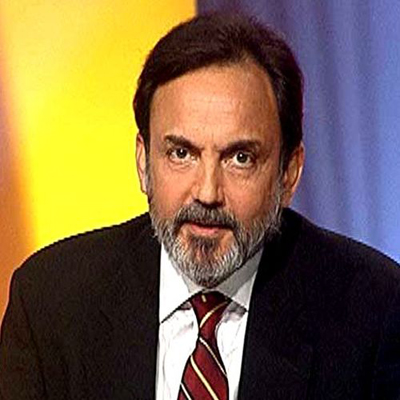
    MUMBAI: NDTV Group executive co chairman Dr Prannoy Roy has been awarded the 2015 RedInk Award for Lifetime Achievement for Excellence in Journalism for his consistent and pioneering contribution to news television in India. Dr Roy will be honoured for his service to journalism at a glittering ceremony on Thursday, 30 April in Mumbai at the Jamshed Bhaba Auditorium, NCPA.


    Dr Roy along with his wife and journalist Radhika Roy in 1988, were the first to set up a television news production company called New Delhi Television, now called NDTV. In later years, Dr Roy made a mark for his incisive and pioneering coverage of election news and changed the way people consumed TV news with his ground-breaking programmes such as ‘The News Tonight’ and ‘The World This Week’. After years of producing the news for Star News, Dr Roy launched his own broadcasting network with NDTV 24X7, NDTV India and other channels in 2003. NDTV, one of the largest news networks in the country today, has set up benchmarks for good, ethical and no-frills news coverage.


    The RedInk Award for ‘Journalist of the Year’, instituted for the first time, has gone to Sreenivasan Jain of NDTV for his consistent investigative work epitomized in his series ‘Truth versus Hype’ and other programmes. Times Now editor in chief Arnab Goswami was selected as the ‘Impact Editor’ of the Year for his ability to capture eyeballs and expand audience reach with his ‘News Hour’ show. Scroll.in will be awarded the ‘News Start-up of the Year’ for scaling up its influence rapidly as an alternative source of news and features.


    Judging for the RedInk Awards, which includes as many as 10 categories have just been completed, and as many as 24 journalists who have produced outstanding and impactful stories in calendar 2014 will also receive awards along with Dr Prannoy Roy, Sreenivasan Jain, Arnab Goswami and Scoll.in on 30 April at the NCPA.


    Judging process proved to be a herculean task with over 800 entries in the print/online category and nearly 250 stories from television journalists. Each of the categories – politics, crime, environment, sports, human rights, etc – had a dedicated jury of senior persons with domain knowledge assigned to judge the entries. A special curator was also assigned to sift the large number of entries in each section and guide the judges.  

  • Goafest 2015: Arnab Goswami, Prasoon Joshi, JWT steal the show

    Goafest 2015: Arnab Goswami, Prasoon Joshi, JWT steal the show

    GOA: It was raining beers, the sun scorched the land and the beach was calm. The scene was from one big ‘creative’ gathering in Goa. This creative lot has the power of changing the fate of a brand with a 30 second ad or one well crafted hoarding. Yes, we’re talking about the mighty Indian advertising frat, which had assembled for Goafest 2015 this past weekend.


    The fest started on 9 April, 2015 and before lighting of the lamp, beer bottles were opened! Regardless of the high spirits, all keynotes saw huge attendance as more than 70 per cent of the ballroom was always occupied over the weekend, which is immense success for the organizers.


    The seminars were followed by rain dances and a sailing competition in the afternoon, whereas the evening had everyone on tenterhooks as the Abby Awards were distributed. One after another, a creative piece found recognition as metals were distributed. The award ceremony was followed by an after-hours party.


    Highlights of the event:


    · Eminent speakers came and shared their thoughts and vision on the platform about various issues.


    · Arnab Goswami’s session, on the second day, saw a packed auditorium for the first time, while his speech on stage was as always flamboyant; the counter reaction from a less known individual was a surprise. Whenever Goswami ended a sentence with a question mark, the man unceremoniously shouted from the audience. The banter went to that extent that organizers stopped the session and asked the man to leave the room. However, as soon as the issue was resolved, Goswami continued with his keynote.


    · There were more number of females receiving awards as compared to the males. The women representation in Goafest indicated that Indian women were empowered with every skill, no matter the field.


    · Prasoon Joshi was felicitated by the organizing committee and that was one of the greatest moments of the entire festival. He shared bits and bytes of his advertising journey and concluded by singing the song he wrote on Nirbhaya.


    · The youngest CEO Suhash Gopinath shared his story how he became a CEO at such an early age and ignited the entrepreneurship fever in every youth present in the hall.


    · Rejuvenating live performances from Indiva, Rodney and others got everyone dancing, while East India Comedy forced everyone to laugh.


    · JWT with 35 metals lead the metals tally where as Linen Lintas won the solo Grand Prix.


    Low notes of the event:


    · While there were speakers of huge stature, the moderating quality was average as the moderator failed to get much out of the speakers.


    · The gold and silver winners were invited on stage to receive metals but the ad or the creative piece they were credited for was abruptly displayed. On a gathering where the entire advertising fraternity was cherishing each other’s work, the entire creative piece should have been displayed uninterruptedly.


    · The hosting was sub-standard. There were too many oops moments, where a lady was introduced as Mister and vice versa. During the award ceremony too, flaws were very much visible. For a fest of this magnitude, the standard cannot be compromised with.

  • MK Anand upbeat about Times Network’s revamp

    MK Anand upbeat about Times Network’s revamp

    GOA: Times Television Network has revamped itself as Times Network with a new tagline – ‘Now or Nothing’ and a new logo. The new logo will sport a pyramid with a red dot on the top.


    It may be recalled that Indiantelevision.com was the first to report about Times Network’s re-branding plans.  


    The network has five different channels under it, which were launched in different period of times. Of the five channels, apart from ZoOm all the other channels end with Now – Times Now, Romedy Now, Movies Now, and ET Now. “That’s where the ‘Now or Nothing’ tagline comes from,” informs Times Networks CEO and managing director M K Anand.


    “We have strong branches but the trunk needs to be strengthened and the revamp is to ensure that. Moreover, we don’t want to restrict ourselves as a television network only. Hence we decided to break a few boundaries and expand. Our new logo is a pyramid, which signifies the population of the country and the red tip on the top is our target audience. This will ensure that everyone in the network will have the same corporate identity. All the brands should complement and respect each other in the network. ‘Now or Nothing’ is a credo that we have been following since inception. It’s just that we made it a network motto,” Anand says.


    Every revamp comes after detailed research and analysis and has the ability to impact and change consumer behaviour and consumption patterns. When queried about this, Anand tells Indiantelevision.com, “Firstly, the change of the network’s logo won’t leave an impact on the channel’s creatives. Here the consumers are trade, advertisers, DTH companies and MSOs and not the viewers. The most important consumer of this revamp are our 1000+ employees, who now know that they are no longer an employee of a particular channel, team or floor but a member of the entire network.”


    Anand goes on to say that Times Network would soon be launching the Times Now app, which will have both broadcast content and fresh content. “This is a serious attempt from our side to establish ourselves on the digital platform. In three months’ time, we are planning to launch the app with an aim to be a leader in that fraternity too,” adds Anand.


    A presence on the digital platform with apps has almost become mandatory for most networks. However, the revenue model for these avenues remains a challenge. “How much ever we might want to adopt a subscription model for our digital platforms, it is currently not possible due to technical deficiencies and consumer behaviour. Hence we will follow the advertising revenue model,” asserts Anand.


    Times of India already has an app, which offers news updates. Now with the launch of the Times Now app, will the two compete with each other? To this, Anand says, “Yes we will and there is no problem in that. Our app will have more videos but yes we will also provide news and if that means competing with the Times of India app, we will.”


    Speaking about BARC’s roll-out of television ratings data by the end of April, which also means the end of TAM’s tenure, Anand says, “The statistics won’t have much of an impact, nor will it turn out to be a game changer. Instead of one, now the other will conduct the survey. Having said that, I was initially concerned about structural changes and new figures that would be rolled out by BARC. However, it has now been cleared that the structure will be the same but the sample size has definitely increased. I don’t think we will see a ‘ratings dark’ period. Not receiving ratings for a week or two is not likely to leave too much of an impact.”