Tag: Aritificial intelligence

  • IBC 2025: Media moguls and tech titans converge as Amsterdam buzzes with AI ambition

    IBC 2025: Media moguls and tech titans converge as Amsterdam buzzes with AI ambition

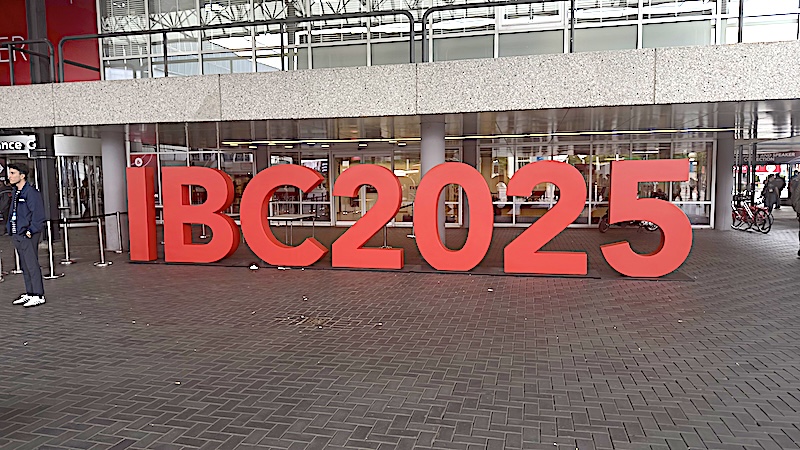
    AMSTERDAM: Amsterdam’s RAI convention centre became the epicentre of media’s digital revolution last week as 43,858 industry professionals descended on IBC2025, the world’s largest broadcasting and entertainment technology show. From global media giants to plucky start-ups, 1,300 exhibitors and 600 speakers gathered to chart the future of an industry in the throes of transformation.

    The event’s success reflects an industry caught between disruption and opportunity. Visitors from 170 countries—from veteran broadcasters to streaming insurgents—came seeking answers to questions that keep chief executives awake at night: how to harness artificial intelligence without losing the human touch, and how to stay relevant as viewing habits fragment across countless platforms.

     IBC chief executive Michael Crimp declared the event had “delivered real business outcomes” with “overwhelmingly positive feedback.” 

    What struck him most, he said, was the prevailing “sense of optimism and purpose”—a notable sentiment in an industry more accustomed to existential dread.

    The debut of Future Tech in Hall 14 captured much of this optimism. Here, punters could witness live demonstrations of generative and agentic AI, immersive media experiences, and cloud-native workflows. France Télévisions showcased a 5G-enabled aircraft, whilst others explored private networks and sustainable innovation—all buzzwords that would have seemed like science fiction a decade ago.

    “We’re witnessing a pivotal moment of innovation,” said Tata Communications global business leader Brijesh Yadev. The hyperbole may be familiar, but the underlying sentiment rings true: the industry is scrambling to reinvent itself before others do it for them.

    This urgency was palpable in the quality of conversations on the show floor. Gone were the days of casual networking; exhibitors reported “more strategic” discussions focused on “future-looking solutions” and “next-phase investments.”

    The conference programme reflected these concerns, with packed sessions on AI, new business models, and sustainability. Icons like Thelma Schoonmaker, the Oscar-winning editor who worked with Martin Scorsese, provided creative inspiration alongside more prosaic technical papers on practical innovation.

    Perhaps most tellingly, the industry is finally acknowledging that technology alone won’t save it. IBC2025 emphasised people and talent, with initiatives focused on skills development and inclusion. 

    The show floor itself told the story of an industry in flux. Established giants like Amazon Web Services, Microsoft, Sony, and Samsung rubbed shoulders with newcomers such as Baron Weather, Momento, and Remotly. Each hall showcased advances in production, distribution, and streaming—the building blocks of tomorrow’s entertainment ecosystem.

    For all the talk of transformation, IBC2025 proved that some things endure. The event remains the world’s essential meeting place for media professionals. In an increasingly digital world, the value of face-to-face connection—and the deals that flow from it—appears undiminished.

    Whether this optimism translates into sustainable business models remains to be seen. But for four days in Amsterdam, at least, the industry felt confident about its ability to shape its own destiny rather than have it shaped by others.
  • Indian startup claims to solve Bollywood’s dubbing dilemma with AI lip-syncing

    Indian startup claims to solve Bollywood’s dubbing dilemma with AI lip-syncing

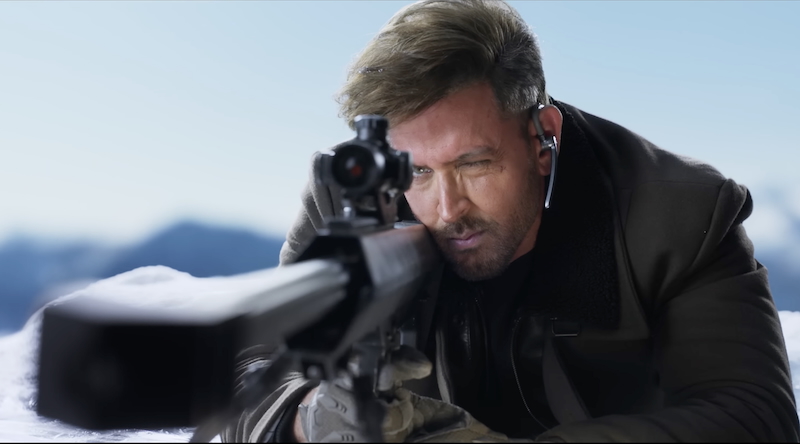
    MUMBAI: An Indian artificial intelligence startup reckons it has cracked one of cinema’s most vexing problems: making dubbed films look authentic. NeuralGarage’s VisualDub technology has been deployed on War 2, releasing on 14 August, to create what the company claims is the world’s first film visually transformed from one language to another whilst maintaining the illusion of native production.

    The Bollywood sequel, originally shot in Hindi, has secured a straight film certificate for Telugu distribution—not as a dubbed version but as an ostensibly original Telugu production. Neural Garage co-founder & chief executive Mandar Natekar describes this as a “fundamental shift” in content production and distribution.

    The technology addresses a chronic irritant in global film distribution: poorly synchronised dubbing that breaks audience immersion. Traditional dubbing overlays foreign-language audio whilst retaining the original actor’s mouth movements, creating a jarring disconnect that many viewers find off-putting.

    VisualDub purports to solve this by digitally altering actors’ facial movements to match the target language’s phonetic patterns, creating the visual impression that performers originally spoke in the dubbed tongue. The result, Natekar claims, allows producers to sell multilingual versions as distinct original films rather than mere translations.

    The commercial implications could be substantial. Indian cinema’s linguistic fragmentation has long constrained box office potential, with Hindi films struggling in southern states where Telugu, Tamil and other regional languages dominate. Conversely, southern blockbusters rarely achieve pan-Indian success without extensive dubbing campaigns.

    If VisualDub delivers on its promises, producers could command premium pricing for what appears to be multiple “native” productions whilst incurring costs for just one shoot. Natekar suggests this could double or treble pre-release distribution revenues.

    The startup, which has garnered backing from Google’s GenAI Accelerator and AWS’s Global GenAI programme, also won TechCrunch’s Battlefield competition in 2024 and this year’s SXSW innovation award. Such endorsements suggest the technology has impressed seasoned investors and technologists.

    Yet scepticism is warranted. Previous attempts to digitally manipulate actor performances—from CGI de-aging to deepfake technology—have often fallen into the “uncanny valley”, where near-human animations feel disturbingly artificial. Moreover, the cultural nuances embedded in regional cinema extend far beyond language, encompassing gestures, expressions and performance styles that may prove difficult to algorithmically adjust.

    The broader implications stretch beyond Bollywood. Hollywood studios spend millions dubbing blockbusters for international markets, whilst streaming platforms like Netflix invest heavily in local-language content production. A reliable visual dubbing solution could dramatically reduce these costs whilst expanding addressable audiences.

    Natekar envisions actors transcending linguistic boundaries entirely: “Hrithik Roshan can now be a Telugu, Tamil, or even a Spanish actor. Tom Cruise in Bhojpuri? Now possible.”

    Such grandiose claims invite scrutiny. The proof will lie not in technical demonstrations but in audience acceptance. If War 2 performs strongly in Telugu markets without viewers detecting artificial manipulation, VisualDub may indeed herald a new era in global content distribution.

    For now, the technology represents another front in artificial intelligence’s assault on creative industries. Whether it liberates content from linguistic constraints or merely creates more sophisticated fakery remains to be seen. What’s certain is that traditional dubbing studios should be paying attention.

  • WPP Media officially rises from GroupM, blending AI and ad muscle in $60bn makeover

    WPP Media officially rises from GroupM, blending AI and ad muscle in $60bn makeover

    MUMBAI: WPP has pulled the plug on GroupM and plugged in something slicker: WPP Media, its all-new, AI-charged global media company. The move signals a seismic shift in the advertising giant’s playbook, as it bets big on “creative personalisation at scale” in the AI age.

    The newly minted outfit unites more than $60 billion in annual media investment across 80-plus markets and claims to work with over 75 per cent of the world’s top advertisers. Mindshare, Wavemaker and EssenceMediacom aren’t going anywhere—they’re now operating as bespoke agency brands under the WPP Media umbrella, powered by shared tech, data and production firepower.

    At the heart of this revamp is WPP Open, the group’s AI-enabled marketing platform backed by a cool £300m annual investment and heavyweight AI partnerships. It’s billed as the ultimate integration engine—fusing creative, production, data, commerce and media delivery in one turbocharged stack.

    WPP Media CEO Brian Lesser explained: “Consumers already expect advertising to be relevant and engaging and buying experiences to be seamless; those expectations are only going to accelerate in the age of AI. WPP Media is built for a world in which media is everywhere and in everything. By investing in our AI-powered product, integrating our offer with data and technology, and equipping our people with future-facing skills, we’re helping our clients to stay ahead of rapidly changing consumer behavior and unlock the limitless opportunities for growth that AI will create.”

    WPP CEO Mark Read highlighted: “We believe that WPP is the strongest marketing partner for the world’s leading brands in the AI era, where technology and talent converge. The move to WPP Media continues our strategy to simplify and integrate our offer for clients. While GroupM was built for a time when media scale mattered most, WPP Media reflects the power of AI, data and technology and simpler, more integrated solutions.”

    It’s not just about the tech, though. The company says it’s doubling down on people—investing in learning and development to future-proof talent for the AI-powered marketing world.

    Points out Read: “Our vision for the future is clear – marketing that is informed by data, led by seamlessly connected teams of brilliant people, and full of new opportunities for our clients.”

    To spread the word, WPP is rolling out a cross-channel B2B blitz aimed squarely at CMOs and C-suite suits. The message: AI is here, it’s hungry, and it needs humans to thrive.

    In true WPP flair, the relaunch isn’t just a name change. It’s a brand makeover, a tech upgrade, and a culture reset—all rolled into one. As the world’s biggest advertisers brace for an AI tidal wave, WPP Media is positioning itself as the surfboard.

  • AI, aye captain – Rishad Tobaccowala  fires up GoaFest with his human touch about artificial intelligence

    AI, aye captain – Rishad Tobaccowala fires up GoaFest with his human touch about artificial intelligence

    GOA:  Who knew a masterclass in artificial intelligence could feel this human?

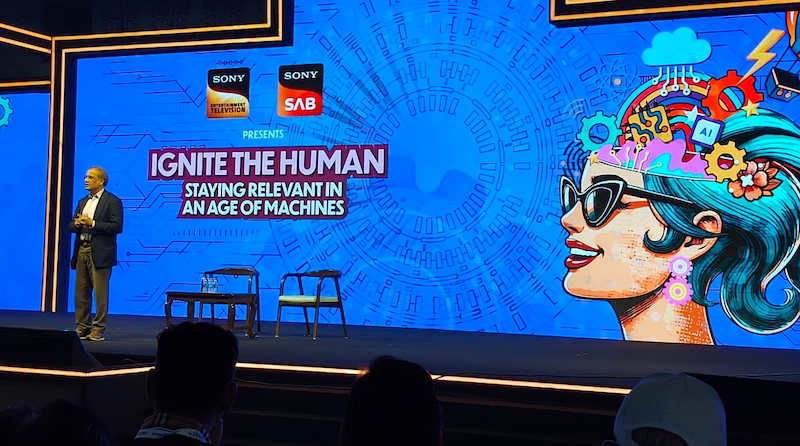
    At the 2025 edition of GoaFest, held at Taj Cidade de Goa Horizon, marketing sage and Publicis Groupe senior advisor Rishad Tobaccowala kicked off the event with a keynote that was equal parts wake-up call and soul-stirring sermon. In a session titled Ignite, Tobaccowala didn’t just warn the ad world about AI, he challenged it to rekindle its human spark.

    The thesis? 

    AI isn’t just the next big thing, it’s already bigger than we think. “AI in 2025 is still underhyped,” he declared, noting that many businesses still haven’t grasped how deeply it’s reshaping the fundamentals. And he came bearing receipts.

    Forty years ago, a desktop computer cost 5,000 dollars and ran on 1.5 million transistors. Today, your smartphone is 10 times cheaper and runs on 1.5 billion transistors. “The cost of computing has dropped by a factor of 10 million,” he said, with the drop in information distribution costs also approaching zero. “And now, the cost of knowledge and experience is heading the same way.”

    But here’s the kicker: that doesn’t make AI a differentiator, it makes it infrastructure. 

    “Saying you have AI is like saying you use electricity,” Tobaccowala quipped. “You won’t survive without it. But it’s not what will set you apart.”

    What will? HI — Human Ingenuity, Intuition, Interaction, and Inspiration.
     

    Rishad Tobaccowala

    In a world where machines are smarter, faster, and cheaper, he argued, what remains irreplaceable is human originality. “When AI gives everyone the same data and tools, storytelling, creativity and trust become your only real edge,” he said, reaffirming marketers’ role as custodians of emotion and meaning.

    Peppered with zingers, analogies, and a 220-second cheese brand startup powered by GPT-4, the session also made serious points about leadership in a rapidly shifting world. “If you’re planning to retire after 2026, think again,” he warned. “Most people won’t be replaced by AI, they’ll be replaced by other people using AI better.”

    He also tore into the cult of corporate scale. “You’ll see billion-dollar companies with less than 100 employees,” said Tobaccowala, who himself pays $225 every month month to access top AI models from eight platforms, outperforming Fortune 500 firms stuck in bureaucratic inertia.

    His call to action? 

    Rethink everything. “If you were starting your company today, would it look like it does now? No. Then why are you still running it that way?” From burning outdated mental models to embracing immigrant thinking (outsider mindset, underdog innovation), his message was clear: adapt or become obsolete.

    Rishad Tobaccowala

    He concluded with his signature “six Cs” for survival in the AI age: Cognition, Creativity, Curiosity, Communication, Collaboration, and Convincing, a new operating system for human relevance.

    As for jobs? “Work will change more between 2019 and 2029 than it has in the past 50 years,” he said, forecasting a rise in gig-style, goal-focused work over traditional employment. “The future of work is about getting things done, not filling jobs.”

    In a festival famous for its flair, Rishad Tobaccowala delivered a rare thing, a lecture that didn’t just ignite the mind, but lit a fire in the heart.