Tag: Argho Bhattacharya

  • Brands navigate trust, AI and culture to thrive in today’s media landscape

    Brands navigate trust, AI and culture to thrive in today’s media landscape

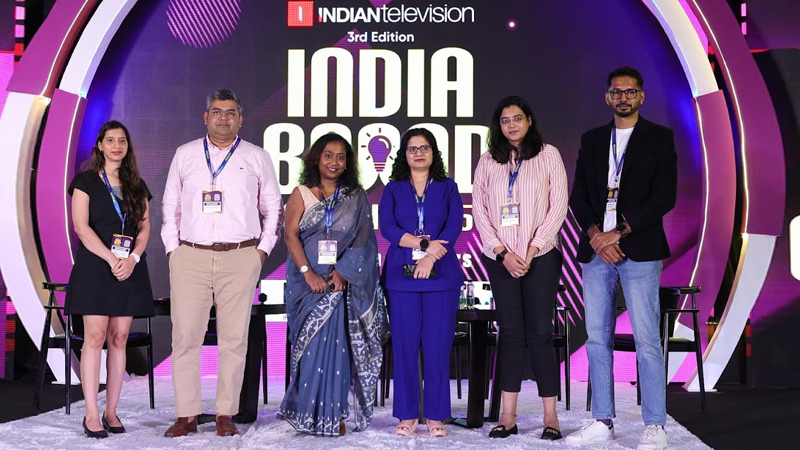
    MUMBAI: If marketing is war, then the battlefield is shifting from loud campaigns to sharper trust-building, from chasing clicks to curating culture. That was the resounding theme at the session “Driving Performance and Brand Reputation in a Dynamic Media Landscape” at the 3rd India Brand Summit 2025, where five marketing heavyweights unpacked what it takes to stay relevant when algorithms, attention spans, and authenticity collide.

    On stage were Harshita Hemnani (Bharti AXA Life Insurance), Argho Bhattacharya (Payu), Sayantani Das (Jumboking Burgers), Ritu Mittal (Bayer South Asia), and Anita Subramanian (JLL), with Abhishek Pujar of IAS steering the discussion.

    The conversation quickly zoomed in on artificial intelligence not as a futuristic buzzword but as an everyday reality. Mittal argued, “AI-generated content is a broad term not all of it is bad. If brands use AI to scale authentic storytelling and create contextual variations, it’s a powerful ally. But when AI content becomes clutter or poor quality, that’s when reputations get dented.”

    Das agreed that authenticity must rule over noise. “The brand will win not by shouting the loudest, but by being contextual and authentic,” she said, pointing out how creative variations and asymmetric segmentation now matter more than ever in cutting through digital saturation.

    Culture, too, emerged as a defining battleground. “You can’t drop a generic festive message and expect it to resonate,” said Hemnani. “Brands need to mirror the cultural mood whether it’s Diwali, Pongal or Christmas and be seen in environments reflecting joy, togetherness, and Indianness.”

    For Subramanian, real estate marketing offers lessons in nuance: “Trust is everything. Technology can scale, but human-led experiences are irreplaceable. That’s where AI works best augmenting, not replacing, authenticity.” She highlighted how launches today are often creator-led, citing international examples where communities turn content into commerce.

    Bhattacharya, from PayU, brought in the customer lens. “Consumers don’t care about brands, they care about what you can do for them. Value is the keyword, whether it’s price, quality, or convenience. Festivals amplify this tendency to spend, but the trick is to stay transparent, relevant, and valuable.”

    When the debate turned to balancing short-term performance with long-term reputation, the panel agreed there’s no either/or. “It’s not performance versus brand anymore, it’s about balance,” said Mittal. “Whether that’s 70-30 or 50-50 depends on your category and consumer priorities, but both are critical for sustainable growth.”

    Looking ahead, panellists predicted disruption from agentic AI, niche AI tools for smaller cohorts, and experience-driven marketing that fuses data with human insight. As Mittal summed up: “Responsible AI, trust, and personalisation will define the winners. In the long run, transparency and authenticity will separate brands that thrive from those that fade.”

    With over 300 delegates in attendance, the session reinforced a striking truth: in an era where algorithms increasingly decide visibility, the ultimate differentiator remains deeply human trust, culture, and value.

  • AI rewires adland: Programmatic performance is the new marketing must-have

    AI rewires adland: Programmatic performance is the new marketing must-have

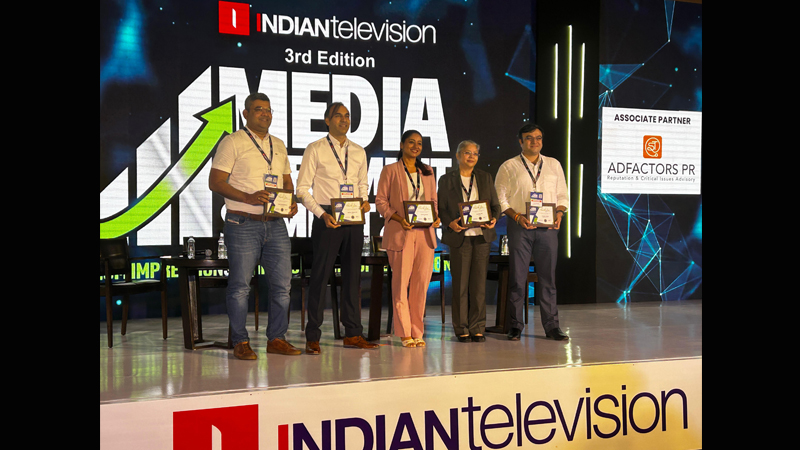
    MUMBAI: No bots were harmed in the making of this conversation—but several were summoned. At Indiantelevision.com’s Media Investment Summit 2025, the panel ‘The Future of Programmatic & Performance Advertising: How Smart Can AI Get?’ brought together a league of marketers who’ve all but handed over their media briefs to machine learning.

    Moderated by Deloitte south Asia ED Irvinder Ray, the session explored how programmatic advertising has gone from being a budget line item to becoming the spine of digital media strategy.

    Kotak Life Insurance EVP & head – digital business Prasad Pimple laid out the insurance conundrum, “Not all customers can buy all products. We filter prospects by income band, age, and even eligibility”. With such a defined funnel, precision targeting is critical. “Everything we do today is data-informed, whether the data comes from our CRM or platforms like Google”, he added.

    AI, for Kotak, is now part of the underwriting pipeline, campaign segmentation, and even voice-based customer profiling—making programmatic indispensable for performance and compliance alike.

    Fino Payments Bank head of marketing Prashant Choudhari backed automation with a marketer’s pragmatism. “At any given point, at least 50–60 per cent of my media budget is programmatic. It helps with frequency capping, cost control, and better storytelling”, he said.

    Choudhari explained how programmatic empowers smaller brands to punch above their weight. “It frees up time to work on narrative and creativity. Technology does the grunt work, and marketers focus on emotion”, he added.

    “Walking into a bar and being greeted by name is personal. Being handed your usual drink without asking—that’s personalisation with memory”, said PayU Payments head of marketing Argho Bhattacharya. He used the analogy to illustrate how programmatic media and zero-party data allow brands to predict—not just reflect—consumer needs.

    Bhattacharya cited how PayU moved from cohort-based messaging to individual targeting. “We no longer set campaigns by clusters. We do it by individual intent”, he said, citing PIN-code-level targeting for telecom dealers and energy providers, which delivered a campaign click-through rate (CTR) of 2.9 per cent and a brand uplift of 25 per cent.

    Sachdeva also introduced the idea of always-on learning loops—real-time feedback mechanisms that adapt messaging based on ambient conditions like AQI, rain alerts, or commute times. “We don’t just predict needs. We mirror the environment”, he added.

    Blis associate director sales Ishika Sharma focused on creative optimisation and exclusion logic. “We ran a campaign where creatives changed not just by city, but by street, down to the PIN code”, she said. The campaign avoided targeting existing customers by mapping Wi-Fi footprints and excluding IPs already associated with a service.

    She warned against overstepping. “Too much targeting becomes surveillance. We must balance personalisation with respect”, she added.

    VDO.AI CBO Akshay Chaturvedi explained how AI helps balance brand building with performance. “We used AI to layer performance KPIs over branding campaigns, so nothing was wasted. A single video could deliver awareness and CTR”, he said.

    Chaturvedi also stressed multi-channel orchestration. “We use our own AI engine to decide what content to push where—Youtube, Zee5, Whatsapp, or the client’s CRM. It’s all synchronised”, he said.

    The panel agreed that programmatic has shifted from being a media tool to a business enabler. Whether it’s AQI-based insurance ads or pizza shops pinging you mid-commute, the future of advertising is smarter, faster, and sharper.

    As Ray concluded, “Tech can find the segment. But it takes human insight to tell the story. AI and marketers aren’t in competition—they’re co-authors”.