Tag: Arcopol Chaudhuri

  • From ream to reel: The boom in book to screen adaptations in India

    From ream to reel: The boom in book to screen adaptations in India

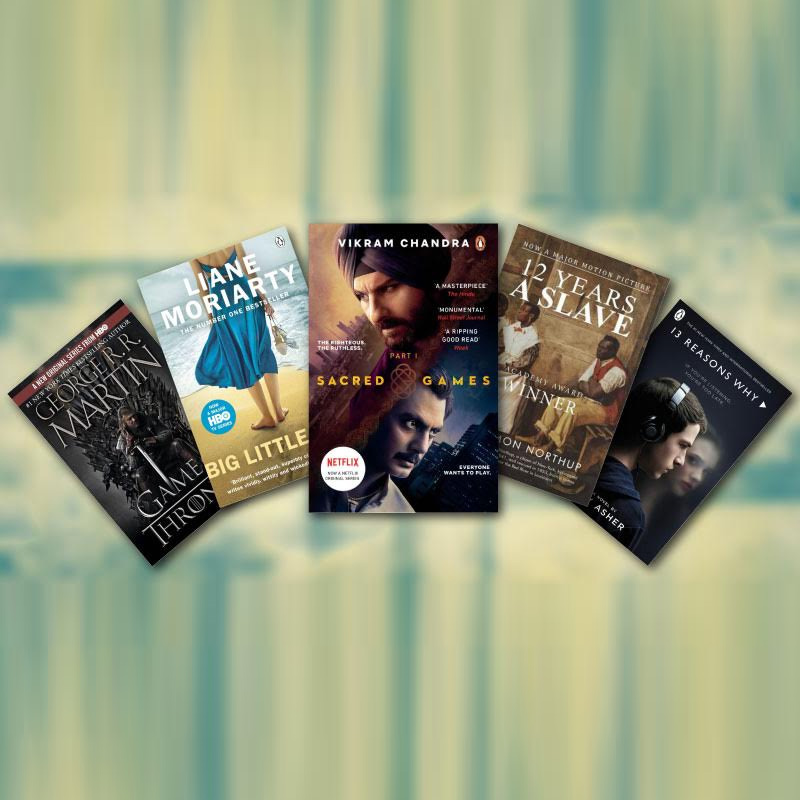
    MUMBAI: From golden age classics like Gone with the Wind and To Kill a Mockingbird, to the more recent young adult adaptations of the 2010s like The Hunger Games and The Fault in Our Stars, Hollywood has a legacy of churning out book to screen iterations. Fortunes in tinseltown have been built on entertaining the masses with 70mm productions of their favourite tomes, be it children's stories (Wizard of Oz, Harry Potter) or suspense thrillers (The Shining, Gone Girl), historical dramas (Schindler's List, Argo) and romantic fiction (Pride and Prejudice, The Notebook). While there have been constant refrains of "the book is better than the movie" by the public, Hollywood has seldom been inclined to buck the trend of motion picture or TV adaptations of mass-market publications. In fact, the massive success of Game of Thrones, whose original source material is A Song of Ice and Fire saga by George R R Martin, led to a renewed interest and spurt in adapting novels for the small screen (think The Handmaid’s Tale, American Gods, Big Little Lies et al)

    But when it comes to Bollywood, historically there has been a dearth of book to screen adaptations. While they have been around for a long time – Satyajit Ray's Pather Panchali (1955) was based on Bibhutibhushan Bandyopadhyay's novel of the same name – their frequency became too few and far in between to really count. Indian audiences were blessed with the occasional gem like Mira Nair’s The Namesake, but mostly, they're used to sub-par replications of frothy Chetan Bhagat paperbacks.

    However, book adaptations in recent years have improved, in both quantity and quality – in fact, we appear to be in the midst of a high-profile book-based production boom. Adapting a hit book isn’t a guarantee of success, but producers, more than ever, are perusing bookshelves for inspiration for the next big show or movie.

    So what has changed? When did books become a foundation for popular films and series? And what does it mean for the future of producers, authors and book publishers alike?

    If one were to pin-point the resurgence of this trend, it was Sacred Games, Vikramaditya Motwane and Anurag Kashyap’s cerebral tour de force adapted from Vikram Chandra’s massive 2006 tome of the same name, which proved to be a game-changer in the Indian OTT space. The dystopian series Leila was also based on the book by Prayaag Akbar; and the cricket drama Selection Day had its roots in the novel by Aravind Adiga. Red Chillies Entertainment’s Bard of Blood was penned by the young Indian author Bilal Siddiqi.

    Beyond OTT platforms, other content producers are also looking at books as source material. Endemol Shine India has recently acquired rights to Richa Mukherjee's Kanpur Khoofiya Pvt Ltd, Chitra Banerjee Divakaruni's unreleased book Lioness: The Last Queen, Salil Desai’s novel The Sane Psychopath along with Damyanti Biswas' crime novel You Beneath Your Skin

    Book to Screen adaptation

    HarperCollins India rights and backlist manager Arcopol Chaudhuri mentioned that in India, screen adaptations from novels have gathered pace over the past five years thanks to new and emerging broadcasting platforms, primarily driven by OTTs.

    Endemol Shine India CEO Abhishek Rege explained that adapting a book comes easy to content producers. “With adaptation, it is like a certain level of the story is already prepared and the other important aspect is popularity. If you have a certain book that is popular, you would want to use it for your story because there is a certain type of fan following which will come to watch it. I think it is something that will be continued as a book right acquisition model. Currently, OTTs need content to fill up their library, and books offer ready material, it kind of cuts short the mainline process. That is why book rights are going to be popular in the coming years.”

    Applause Entertainment content head Deepak Segal also highlighted that long-form dramas have opened many opportunities for content creators. The episodic format allows creators to deep dive into the storyline, sketch different and longer character arcs and allows them to innovate with the plot. With the digital boost, it has become one of the important mediums of storytelling as earlier the adaptations were restricted to films. This helps create more opportunities for everyone – creators, talent, platforms etc.

    Choosing Stories

    For Segal, the story is one of the key deciding factors while choosing a book. Aspects like relevance and connectivity with the audience are thoroughly examined. He said, “With India’s Most Fearless, we knew that this subject is of national importance and we wanted to highlight the storyline in four parallel tracks which the audiences have not seen.”  

    Another parameter that Applause Entertainment looks into is the shades of the character, the uniqueness to bring out a progressing reaction in the audiences. Segal further discusses the subject with the creative team, on how to pan it out into eight to ten episodic series, keeping the audiences engaged and entertained with strong storytelling at the core. Then the creative team makes an observation on how the characters will scale and how much potential it offers to build a room for innovation.

    To help writers sell their books to filmmakers and content producers, Sidharth Jain has started ‘The Story Ink’, India’s first story company. Jain said, “There are very few players in India who have been pursuing screen adaptations. But what we are doing new is to take the screen adaptation business from mere agenting to curating content strategy. I don’t think of us as an agency as it is more like a platform for writers. While we work on a fee model, we are in the business of turning books into projects.”

    Picking Genres

    Rege discovered that post Covid2019, audiences want to see happy stories. The studio is currently focusing on creating light-hearted shows. In terms of understanding viewers’ preferences, Rege uses metrics that are released by some agencies as a report for digital media consumption. Apart from this, there are different reports available that talk about genres. He also reaches out to OTT platforms to understand their research and consumer feedback.

    By contrast, Segal is looking at all sorts of genres as he wants to reach out to all buckets of audiences. “Today the viewers are open to exploring different genres and as content creators, we want to have diverse offerings. Digital has become a great way to gather insights, understand consumer psychology and their points of view on topics. It gives leverage to mould out setup, characters and storytelling,” he added.

    Jain stated that biographies and real stories have been in great demand recently. But a solid thriller, horror or mystery always makes for a good adaptation.

    Process of book adaptation

    Rege revealed that the team at Endemol Shine directly reaches out to authors and inquire if they are represented by any agents or publishers. Nowadays there are a lot of agents that work on book to series productions, and it is not the publishers who hold the rights. There is a set structure on how books are adapted to screen. Endemol Shine follows rules from global learning and then applies that to the contract. It also keeps the rights of all languages as well. When the story pans out the team decides on what could be made from it, whether it is for film, television, OTT and in what language. Packaging is another critical aspect. Post that, the director for that genre, writer, and then the cast is finalised.  

    At The Story Ink, the team has a recommendation-driven approach to pitching. They study the content strategy of the platform, map access to talent and available resources of the producer – and then recommend the right story to them for consideration. Jain added, “We don’t send out lists or catalogues. Our approach is very boutique and curated. I work with authors, publishers, and literary agents. Usually, I find a book that I feel should be adapted and then I reach out to them (the author first and then the publisher). But now, increasingly, authors are reaching out to me on their own.”

    Chaudhuri mentioned that the process involves the licensing of audio-visual rights to the producer, for a fee. The publisher or the author can reach out to the producer to pitch a book and solicit interest to license the rights. “Alternatively, producers/filmmakers themselves reach out to the publisher to acquire the rights for books they're interested in adapting for the screen.”

    According to Neelakantan, in India, the concept of IPR is still in its infancy. Usually, the writer is paid a lump sum for the book adaption rights. Theoretically, an author can put any conditions, but in practice, once the rights are sold, the author does not have any control over the product, he claimed. “Unlike books, films and television are industries and have their own constraints and demands and has scant space for writer’s ego. Once you sell the rights, it is better to forget having any creative control over it.”

    Jain disclosed that writers get somewhere around Rs 15-30 lakh and then the amount is divided between the agency and the writers, and sometimes, the publishing house.

    New Found Interest

    Is content producers newfound interest in books as source material for films and series because of the success of big-screen adaptations of Chetan Bhagat’s novels? Jain held the view that the real reason is the entry of international streaming giants like Amazon and Netflix. They are seeking better content and that’s putting pressure on the limited talent and story pool that is there in the industry.

    On the other hand, Anand Neelakantan, the bestselling author of Asura: Tale of the Vanquished and the Ajaya series, opined that not all books lend themselves for film or TV production. “The screenplay is a concise art, and many stories cannot be told in a short time of two hours. That is why there are so few screen adaptations that have lived up to the standards set by the books. Original series is a better medium to adapt novels, while the film is better served by adapting short stories or novellas. Of course, exceptions are there to this rule,” he shared. Neelakantan has written screenplays for several popular TV series, including Star TV’s Siya Ke Ram, Sony’s Mahabali Hanuman and Colors TV’s Chakravarthi Samrat Ashoka.

    According to Neelakantan, creative writing, on the whole, is moving towards the screen these days – be it movies, television or the OTT platforms. “It is the way to go. That does not mean other forms of writing would die out but would become more and more niche. Films did not finish off plays or poetry but superseded most other forms of storytelling in sheer reach and commercial power. Like any other field, those who keep pace with change in society and technology would retain leadership.”

    Impact of OTT platforms on writers 

    The question arises: are streaming giants like Netflix, Amazon, Disney+Hotstar and various other platforms changing the way books are being written, especially in India? There is a possibility that more and more writers are writing with a view of making their books accessible across audiences through these multi-media platforms.

    Jain pointed out that authors pen stories that inspire them, and OTT platforms rarely, if ever, influence how they write. Good and compelling stories will always work, in any medium. He said, “Thousands of books get published in a year, but a fraction of those will make it to screen. But yes, I believe some writers will make a lot of money because of the emergence of new platforms. Also there is no time for creators to write stories. It is at times difficult to meet the demand. In certain cases where we take on development of the scripts for books to screen adaptation, we always stay focused on what’s the best way for the audiences to enjoy the story – whether they have read the book or not. Organic and honest storytelling, keeping in mind the expectations from the format+medium will always work best.”

    Future of book adaptations

    From content creators, agencies to authors, everybody’s of the opinion that going forwards, book to screen adaptations are bound to grow by leaps and bounds. With the focus of strong storytelling at its core, this is something that will be explored more and more in the future.

    Chaudhuri contended that due to increasing demand, studios will invest more in writers' rooms. Said he: “A few years down the line, the film industry awards and the National Awards will have a category for 'best adapted screenplay', like they always do at the Academy Awards.”

    Neelkanth held the view that more books will get adapted as there is a paucity of content in the show industry. He concluded, “Book adaption does not depend on the commercial success of books. If you have a compelling story and you know how to tell it well, it does not matter how many copies the book sold. The film/ TV industry would lap up the books that would yield you a lifetime worth of royalty of a best seller in one go. So, all the writers out there, keep writing.”

  • ‘In India, we want games to be the prime reason why people buy PCs’ : Quentin Staes-Polet – Kreeda Games CEO and co-founder

    ‘In India, we want games to be the prime reason why people buy PCs’ : Quentin Staes-Polet – Kreeda Games CEO and co-founder

    Quentin Staes-Polet is the CEO and co-founder of Kreeda Games, one of the first Indian internet companies dedicated to massively multiplayer online gaming (MMOG). The company received its first round of funding in March 2007 from US based IDG Ventures and Japan’s Softbank.

    Kreeda’s flagship Bollywood music and dance game Dance Mela (The Carnival of Dance) recently made it to the Changemakers gaming honours and according to Quentin, it managed to do so because it successfully merged fitness and entertainment into a deeply localized game for India.

    In an interview with Indiantelevision.com’s Arcopol Chaudhuri, Quentin talks about the opportunities, challenges and gives his perspective on the larger gaming industry in India, which is beginning to gradually stand-up on its own feet.

    Excerpts:

    Your first round of funding took place in March. When is the next round likely to take place?
    Well, I cannot share that with you, but it’s not anytime soon. We’re quite satisfied with the way things are going at the moment. Corporate interest in the gaming business is increasing, not just in India, but globally as well.

    The gaming industry in India is still at a nascent stage. How is Kreeda combating alternate entertainment options like TV and cinema in this phase?
    Gaming is the TV of the future. And there’s online gaming as well. With the bandwidth increasing, we see a lot of interactivity coming in. Although India is still a couple of years away from where we can get healthy bandwidths, we see the combat happening slowly and surely.

    What’s the current size of the current gaming industry in India?
    The Indian gaming market is very very small. Currently it is evaluated at about $5 million. Nobody really knows the exact size and there are various numbers floating around. It is estimated to reach $200 million by 2010.

    But frankly, I wouldn’t bet on any of the numbers. Because a lot of these numbers are part of revenues paid to companies outside India.

    Has the gaming industry woken up to in-game advertising?
    We’re one of the first few companies to have deployed in-game advertising. I can’t tell you which brands are advertising, but the good news is we have the necessary technology to incorporate it into our games.

    What are the advantages it offers to advertisers compared to conventional mediums?
    In-game advertising is a much better media for advertising than TV because the user involvement is so high and it allows for content integration. It’s not interruptive nor is it intrusive. Customization features are high and I can even make it the sole reason why the user is playing it.

    What about measurability? How is Dance Mela a valuable proposition for an advertiser?
    Indeed, the best part is the measurability it offers. For online and mobile games at least, the advertiser comes to know exactly how many users are interacting with his brand and what demographic do they comprise. Being an immersive medium, it offers much more promise to the advertiser.

    There’s a notion that a gamer is too immersed in the game to actually notice brands in the background?
    Well, I’d beg to differ on that. Ad avoidance is high on TV too. Unless of course, you customize the branding to the gamer. The idea is to create intelligent clickable opportunities for the advertiser. For example, I create a shop inside my game where the user can buy branded accessories which helps him improvise his gameplay.

    What revenue model is likely to work in a market like India?
    For us, I think subscription model is a little early in India. A game where there is no entry level fee, can be monetized at whatever the gamer is willing to give – his disposable income, in this case.

    What offerings has Kreeda lined up, post Dance Mela?
    We are looking to release 3-4 games a year. Dance Mela will be our flagship product for the next few months. The strategy is to pick up successful games from abroad and localize them for India. We’ll be looking at sports games, adventure games and games which are easily adaptable to Indian cultural milieu.

    How challenging was it to localize Dance Mela?
    Bollywood and dance are two themes that are very strong in India. This helped us get in new gamers, especially females. Dance is a strong theme – we couldn’t have had Korean dancing, Chinese – dance has its own identity and Dance Mela is, therefore, the most localized game in this world. It is the deepest example of localization in any country. We devoted about eight months putting into place the characters, dance steps, clothes, sets and music for Dance Mela.

    So is that what your strategy going to be from now on? Licensing them from abroad or developing games in-house?
    Actually a high-end game takes about two years to launch. But we licensed the game from China and then localized it for India, fine tuning several aspects of the game for the Indian gaming audience. It’s easier and more sensible to do this, for a market like India and the returns involved.

    Why aren’t you developing games in-house?
    As long as the gaming market crystallizes in India, we don’t see developing games ourselves. The costs are anything between $3 million-$15 million, which makes no sense in a market that is emerging. As the market matures, we would look at developing our own games. India is a unique market and there is vast potential for developing games specifically targeted towards Indian gamers. We will do it eventually, but only when the market justifies the cost and effort involved.

    Our strategy is to pick up successful games from abroad and localize them for India
    How much are existing international gaming majors like EA a challenge to your business in India?
    The gaming majors are not a challenge at all. They cater to a hardcore gaming audience – people whom we at Kreeda are not after. Of course, we would love it if they played Dance mela as well, but then to be a successful gaming company in India, you need to think 100 times that number. You compare that to the projected $200 million and you think it’s not going to happen.

    Look at China – the country jumped from zero to $1.5 billion in a period of seven years. In 1999-2000, China was no different than India in terms of internet connectivity and PC penetration, amongst other things.

    So what according to you is going to be a compelling reason for people to take up gaming?
    In US and China, the reason for PC penetration has been the perks it offers in the form of broadband connectivity, softwares and games. In India, as a gaming company, we want games to be the prime reason why people buy PCs. Gaming should be the driver of PC penetration in India.

    What’s the audience strategy for Kreeda right now – converting existing gaming population to Dance Mela or wooing a fresh audience base?
    We would be looking to convert them of course, but that’s not an audience we’ll be banking on in the long term. Currently there is a gaming population of 50,000 to 60,000 in India today, we look to expanding that to 2-4 million in the next few years.

    Which genre is going to be the catalyst for growth in this sector – mobile, console, PC, online gaming?
    Well, I think its going to be across genres. Console gaming will offer premium experience and will contribute a larger share to the gaming revenue. Meanwhile, mobile gaming already has the advantage of a huge user base which is waiting to be aggressively tapped once connectivity issues are resolved. But the PC and online gaming scene is most promising since penetration in both broadband and PCs is showing rapid growth.

    How much have perceptions towards gaming been a challenge in India? Violent actions packed games are a strict no-no, if academic opinion is to be believed?
    Perceptions, of course, matter but as of now that’s not a cause for concern for us, since Dance Mela is not a violent game. There is moderation involved and we make sure that there is no abuse in any form. For the gaming industry right now, there are many more issues much more than perception that are worrying.

    What are these issues?
    Distribution, PC penetration, marketing channels. There is still no entity yet, that takes care of the distribution requirements of the entire country.

    And how is Kreeda addressing these issues?
    We’re tying up with retailers who are embracing box-game distribution for the first time. We are setting up our own sales force who visit internet cafes and take our games over there.

    What hurdles are you facing while you do this?
    The biggest hurdle we are facing is that the retail scene in India is undergoing a huge churn in terms of nature of operations, infrastructure and monies involved. It’s great in a way since it gives us many more outlets, but the scene is slightly messy right now.

    Is the market too fragmented right now?
    The scene is very fragmented. In India, to reach your game to all the malls in the country there is no single channel distributor. Plus there are transaction issues involved like octroi and transportation which add to the costs of an emerging retail distribution scene for gaming. However, we are hopeful that it will stabilize very soon.

    It’s not just our problem, even majors like Sony, Microsoft and Apple are facing similar issues for selling their boxes and iPods in India.

    What is Kreeda’s presence across shelves in India?
    Currently we are in about 4,000 retail stores and 2000 internet cafes across the country.

    What payment mechanisms are you offering users?
    The current crop of payment options include credit cards for transactions over the internet and prepaid cards. We are also introducing our own gaming cards which can be used at internet cafes where our games are present.

    How are you promoting Dance Mela?
    We are planning to associate with college festivals where we can give students a full-demo of Dance Mela and our company profile. Soon we will also be looking at associating with a TV programme where the game will be integrated into the show’s proceedings. Our objective is to reach 1 million users by March 2008 and we’re working aggressively on our sales strategy to reach that target.

    How does a start-up company like Kreeda see the inroads of Reliance’s Zapak in the gaming market? Are they creating an over-powering presence?
    I think Zapak’s entry is great for the gaming industry. We’re all grateful to Reliance for taking so much interest in this market. Thanks to Zapak, curiosity and following has increased dramatically in the country. The sector is just emerging – there are 4-5 players when there is space for about 50. We’re right now creating a pie and then we will work together in growing it. When it’s grown big enough, we can fight for market share.

    If you were to do a SWOT analysis, how would the gaming sector look like?
    The strengths would include interactivity, demand, business models and high profit margins in India. The weaknesses are distribution, perception and novelty while the opportunities comprise cafes distribution, Indian retail boom, advertising and educational gaming

    As for threats, fragmentation is definitely there. The government might also come up with a regulatory policy when the industry scales up.

  • ‘Challenges of cultural adaptability of international formats in India are tremendous’ : Siddhartha Basu- Synergy Adlabs CMD

    ‘Challenges of cultural adaptability of international formats in India are tremendous’ : Siddhartha Basu- Synergy Adlabs CMD

    Synergy Communications founder Siddhartha Basu shot to fame as the curt quizmaster in BBC’s Mastermind India. But he sure knows a thing or two about drama. And that comes across as no surprise since he has a background in theatre.

    No wonder then that Basu was able to blend drama and quiz in the immensely popular Amitabh Bachchan-hosted show Kaun Banega Crorepati (KBC) that turned around the fortunes of Star Plus.

    Post the acquisition of Synergy by Adlabs, Basu now plans to scale up operations to produce content across various genres. And he is already making inroads into the regional content market.

    In an interview with Indiantelevision.com’s Arcopol Chaudhuri, Basu speaks about how the Adlabs association has helped and shares his views on the rapidly changing Indian television scenario. He hopes the relationship between content providers and broadcasters will be redefined.

    Excerpts:

    How has the acquisition of stake by Adlabs helped Synergy grow its business?
    With the Adlabs association, we have the resources to specialize in various genres and programmes. We may not have been able to do this as we were a small production house. We were known for large productions, quality of content and conduct. But whatever new challenging projects we took up in the recent past, we did not have the resources. We needed the manpower and the infrastructure to strengthen our hands as content producers to make quality programming across all genres.

    The association with Adlabs, thus, gives us a more sound financial grounding and standing amongst the competition. It empowers us not only to grow creatively, but also as a business.

    Have you expanded your production facilities post the formation of Synergy Adlabs?
    It’s a developing story. We are already functioning through two production offices in Delhi and Mumbai. Adlabs has made substantial investments in high-end infrastructure and equipment, which we are using for Jhalak Dikhla Jaa and our fiction show Jiya Jale.

    Are you looking at producing regional content as well?
    We are looking at a couple of assocations down South. Synergy Adlabs has taken a strategic stake in Chennai-based production house Shri Om Comtech, which will serve as our hub for producing Tamil content, to begin with.

    Which shows are you producing on the regional front?
    Post our association with Shri Om Comtech, we already have two daily shows on air on Kalaignar TV. One is Manjal Mahime at 8:30 pm, while the other one is Akkatangai in the afternoon at 1:30 pm. Both the shows are doing well.

    In the coming days, we are also looking to produce regional content in languages for Malayalam, Telugu, Kannada. But we have done regional content before as well. That was before the Adlabs association. It was a cricket-based quiz show called Howzzat which aired on Tara. But then again, regional content is our secondary market. Hindi GEC programming still remains our primary interest.

    Will Synergy Adlabs make inroads into films and animated content?
    We are currently focused only on television. But we’re going to go deeper into providing dubbing services, creating promos and formats.

    How would you describe the existing equation between content providers and broadcasters?
    Till now, it’s been a very one sided relationship and the plea from broadcasters has been that you operate under slender margin of profits and be happy about it.

    There has been lack of accountability on key creative and programming decisions on many occasions. Often you have proxy producers and creative directors, who are arbitrary and unaccountable and it becomes a ridiculous situation.

    We fortunately have had cordial relationships with broadcasters, but that has been the generic equation between the channel and production house. They retain the IPR and we work on a commissioned basis. We are hoping to see that equation change and settle down into something that benefits both parties.

    With the huge demand for content coming from the existing and upcoming channels, how do you see the relationship evolve between the content providers and the broadcasters?
    I think content producers have a wonderful opportunity now by not only creating content for the new players but also for the existing players. We will now have to generate more, produce better and produce it on better terms. When I say better terms, I don’t just mean better financial terms, but with better control over the content. There is ownership of the formats we as content producers own and create and in our case, we are looking at associations and relationship, not only as a job shop where a network merely uses a content producer on a work-for-hire basis. Hopefully, you should see production houses literally work as producers, maybe get into a revenue sharing arrangement, or establish their presence as a production partner. And that’s the kind of association we are seeking.

    Which broadcasters have you really enjoyed working with?
    We’ve had a good working relationship with almost all broadcasters – Star, Sony and now even Sahara’s Filmy.

    Any shows that you’re doing for Zee?
    No shows for Zee at the moment.

    Kaun Banega Crorepati (KBC) really took Star Plus up the ratings ladder. Ironically, the channel, it seems needs another KBC to make it regain its lost audience share to Zee.
    I think shows like KBC and Sa Re Ga Ma Pa work as tent poles, since they lift the overall audience share. Indian Idol did something similar for Sony. So there are several non-fiction shows which act like that. But to really lift a channel, you need all kinds of programmes and a variety in programming, which creates a bandwagon effect.

    You have been largely associated with quiz-based shows. Until last year you worked on Jhalak Dikhla Jaa, which is a celebrity-dance show. What prompted the foray into this genre?
    We’ve been best recognized for our format shows. But it was always a desire to do a variety of genres. Today, we as a production house are looking to specialize in all genres – of which talent shows are one. We are also handling a couple of fiction projects. The motive will be to associate with every genre thoroughly and professionally. We somehow got linked to the quiz-based shows.

    Till now, it’s been a very one sided relationship between content providers and broadcasters. We are hoping to see that equation change

    There were a number of quiz based shows that followed Kaun Banega Crorepati, none of which could replicate it’s success. Why do you think quiz-format shows have dried up now?
    I think it depends upon what the format is. In one sense, for some formats, the audience base is becoming much larger and on the other hand, some shows make it even more fragmented. So certain formats will appeal across segments and communities, like KBC did. That was a sort of tent pole effect it created.

    But as it happens in films and television, there were attempts made to replicate the format in some way or the other and they did not work. Some shows work, some don’t. It’s not necessarily the format that is to be blame. But we hope to tap popular genres for wider appeal. Bollywood Ka Boss is one such show – it’s a film based quiz show and we hope that it will catch up. At the end of the day, a show has to have a specialized audience.

    How much has KBC changed the profile of your company?
    The profile, I believe, changes with every new show that we do. With Jhalak Dikhla Jaa, the question mark transformed into an exclamation mark. A quiz master had now put on his dancing shoes. We are known for our thorough backend technological setup for the execution of television programming, a certain quality of content and class of presentation. That is the benchmark we will take to any genre we work upon.

    We have seen different phases in the Indian television scene. There was the time ofHum Log, Buniyaad and Mahabharat. Then there were the soaps which continue even today. Now reality TV and talent hunts have become popular. How do you view this change?
    I think Indian television is at the cusp of change. We’re still seeing the dominance of ultra-traditional soaps – a dulhan is titled bahu in one and lakshmi or a beti in another soap and there’s the saas that comes along as well (laughs). So we are becoming a nation of weepy family soaps.

    Which direction is Indian television moving in? Any genres of programming that are still missing?
    I don’t think it’s moving in one direction. I think we are still in an adolescent phase. The range within which we have been operating is still very limited. This is something that will now start finding definition. We are still a very amateur television watching community. We’ve been used to Doordarshan, which created a sort of a monoculture. Surprisingly we had a lot of variety then within those one or two channels of the public broadcaster, than we do now.

    The reason why I see the change coming is because broadcasters are actively seeking things that differentiate and mark them out. There are still so many genres that are waiting to be tapped – comedy in the form of sitcoms is something that’s missing.

    Do you see more of localization coming in?
    Definitely. I think Indian television will get intensely local. People with the raw, strong local cultures and flavours will see rapid growth. And these are audiences who are not looking at the Hindi GECs and English channels. Regional channels are more dynamic and they will experience a strong following. The storylines and concepts adopted by the regional channels are often more liberated and open-minded than the ultra-modern, regressive approach adopted by Hindi GEC programmes. Some trends will be borrowed across both genres of channels as a cross fertilization process.

    It is said that interactive TV is the key driver to the future of television programming?
    Interactivity of programming is important and they will drive key shows, but fatigues will set in after a point of time. Audiences will want to participate – maybe vote, for a dancer, a singer they really like. But you cannot build an entire programming strategy around that.

    What kind of associations or affiliations are you looking to build up internationally?
    We are looking to forge associations with various format owners and not merely confine ourselves to one. We have worked in the past with Endemol and even on Bluffmaster, but then how many of our broadcasters are keen on format shows? Very few.

    Why is that?
    Several factors account for it. It’s the cost, the complications, restrictions, adaptability and also the format that must deliver for them. In many ways, the Indian market is responsible for it. Here Thums Up outsells Coke, so you can’t have a McDonalds outsell the existing local delights. You cannot transplant a certain experience already tried in one country and hope that it will work. It’s a cautious decision. India is the only country in the world where Dancing with the Stars is Indianised, indigenised with the rules as well. So the challenges of cultural adaptability in India are tremendous.

    What are your views on the existing audience measurement practices?
    I think our advertisers and broadcasters are too heavily dependant on it. And I don’t think that’s a rational approach and I question it. Look at the number of SMS votes the talent hunt shows receive…they run into several lakhs. And the existing rating system merely confines itself to seven thousand boxes. So it’s far from a perfect system. And in a heterogenous demographic for a country like ours, the measuring system is full of ifs and buts.

    Okay. When are you getting back to hosting a show?
    Me as a host? No. I’ve never really fancied myself much in front of the camera. I’ve always liked to be involved in the conceptualization and execution of programming. I know the kind of effort that goes into it and there is enormous amount of satisfaction in putting a certain piece of communication together.

    How did you narrow down upon Boman Irani as a host for Bollywood Ka Boss?
    Boman is a fantastic host on stage. He’s also a national Bollywood buff. He can sing, joke, dance, do impersonations and can really perform. Having said that, it was the channel (Filmy) which really circled on him and was game for it. And I went along. Even the format of the show was something they were very keen on. The show aims to find the best informed person in the world of Bollywood.

    When is KBC back for its next season?
    Sometime next year. And Shah Rukh Khan’s hosting it. The agenda is different everytime. In KBC 2, it was about conquering the weekends. In KBC 3 it was about strengthening the 9-10 pm slot. You never know what they decide upon this time. Would you believe, once upon a time the Sunday 9-10 am slot was the most sought after slot since it aired Mahabharata!