Tag: archive

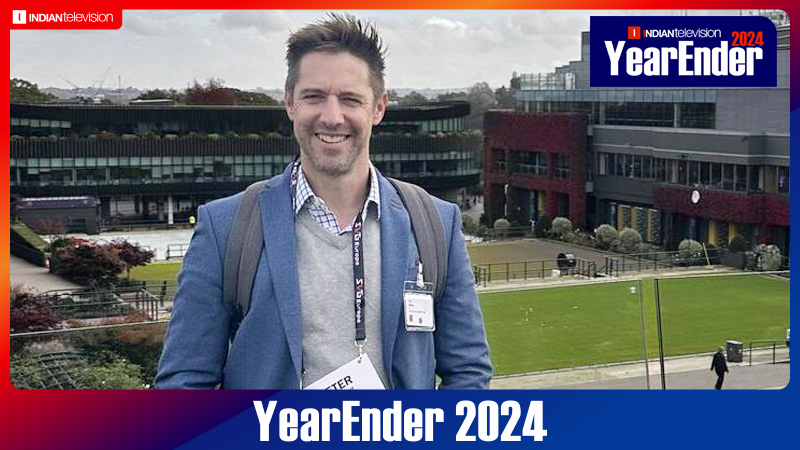
  • 2024 the year that was – Peter Watling & the art of getting your AI right in 2025

    2024 the year that was – Peter Watling & the art of getting your AI right in 2025

    MUMBAI: The buzzword dominating the industry in 2024 is undoubtedly artificial intelligence (AI). Whether or not it’s being fully adopted across the board remains a topic of debate, but one thing is clear: AI’s potential to revolutionise workflows and deliver efficiencies is captivating business leaders everywhere.

    But amidst the excitement, are we overlooking something essential? 

    Sure, AI might one day butter our toast and tie our shoelaces, but before we dive headfirst into complex AI models and cutting-edge algorithms, we should step back and consider whether the core infrastructure of our businesses is ready to support these advancements as we move into 2025. 

    The Distinction Between automation and AI

    Because of the hype around AI and generative AI in 2024 and the bizarre valuations  and market capitalisation that companies are getting just by mentioning  AI in their mission statement, it’s important to clarify  now as we are moving into 2025 what we mean when we talk about AI. 

    Much of what is often labeled AI is really advanced automation—technology that eliminates repetitive, manual tasks and introduces efficiency to workflows. Take, for example, the ability to automatically extract and organise metadata from content files, making them searchable without manual data entry.

    True AI, on the other hand, ventures into areas like object recognition, natural language understanding, and predictive analytics. While these capabilities are impressive, they often require significant investment in training and fine-tuning to produce meaningful results. Even then, they may not deliver the expected benefits if the system is working with incomplete or poorly organised data.
     

    Peter Watlling

    The archive: a neglected core asset; pay heed to it in 2025

    Here’s the crux of the matter: no AI model, no matter how intelligent, can be effective without a solid foundation. That foundation is your archive.

    All too often, businesses rely on outdated or fragmented storage solutions—an array of drives, legacy systems, or LTO tape setups that were never designed to handle the demands of today’s workflows. Even those who’ve embraced cloud solutions may find themselves hindered by unexpected costs, such as prohibitive fees for accessing and retrieving data during AI-driven searches.
    Without an effective archive platform, the very content you want to leverage may be disorganised, inaccessible, or prohibitively expensive to use.

    Investing in the right foundations; 2025 is the year to begin

    To truly harness the potential of AI—or even simpler workflow automation—organisations need to prioritise modernising their storage and archive platforms. This doesn’t mean discarding everything and starting over; rather, it’s about adopting solutions that integrate with existing systems while offering the scalability and efficiency required for future growth.

    A modern archive platform serves as an active repository, enabling seamless access to your media and providing the tools to:
    * Automate workflows.
    * Quickly locate and retrieve content.
    * Share assets effortlessly with partners and clients.

    Such platforms aren’t just about storage—they unlock the potential for monetisation, turning your archive from a static cost center into a dynamic business asset.

    Overcoming challenges to change; back to the drawing board in the new year

    The two greatest obstacles to modernising archives are budget and mindset. While technology providers have become increasingly flexible in their pricing models—offering cost-effective, private-cloud solutions that organisations can host and control—resistance to change often proves harder to overcome.

    Rethinking long-established workflows and processes can be uncomfortable but standing still in a fast-evolving industry risks falling behind. Adopting modern storage solutions isn’t just about saving money; it’s about enabling greater efficiency and creating new revenue opportunities.

    Building for the future; not just for 2025

    In the rush to embrace AI and other advanced technologies, let’s not forget the importance of laying a strong foundation as we move into 2025. An optimised archive platform isn’t just a storage solution—it’s the backbone of your operations, enabling you to take full advantage of innovations like AI when the time is right. That means being ready with your tech stack which is upgradable and scalable in future. 

    So, before we sprint into the AI-driven future, let’s ensure we’ve built the solid infrastructure we need to thrive. After all, there’s no point decorating the house if the foundation isn’t sound. 

    By focusing on the basics—organising, protecting, and making your content accessible—you’ll not only prepare your business for the next wave of innovation but ensure you’re maximising the value of your assets today.

    Peter Watling is  Perifery senior sales director – EMEA    .

  • Sundance awards announced before commencement of festival

    Sundance awards announced before commencement of festival

    NEW DELHI: Sundance Institute has announced the Science-in Film-Prizes that support the development and exhibition of new independent film projects that explore science and technology themes or that depict scientists, engineers and mathematicians in engaging and innovative ways.


    The winning projects and grantees are: The Stanford Prison Experiment by director Kyle Patrick Alvarez, winner of the Alfred P. Sloan Feature Film Prize; Jonathan Minard and Scott Rashap (Archive), winners of the Sundance Institute / Sloan Fellowship; and Jon Noble (Tyfus), Cutter Hodierne and John Hibey (Otzi), winners of the Sundance Institute / Sloan Commissioning Grants, presented through Sundance Institute’s Feature Film Program.


    The Stanford Prison Experiment, directed by Kyle Patrick Alvarez, will receive a $20,000 cash award from the Alfred P. Sloan Foundation. The Prize is selected by a jury of film and science professionals and presented to outstanding feature films focusing on science or technology as a theme, or depicting a scientist, engineer or mathematician as a major character.


    Jonathan Minard and Scott Rashap will receive a $15,000 cash award from the Alfred P. Sloan Foundation at this year’s Sundance Film Festival.


    Through the Sundance Institute Feature Film Programme, the award grants $10,000 to an emerging producer of a film at the Sundance Film Festival. The award recognises bold vision and a commitment to continuing work as a creative producer in the independent space.  Past award recipients include: Elisabeth Holm (Obvious Child), James Johnston & Toby Halbrooks (Ain’t Them Bodies Saints) and Josh Penn & Dan Janvey (Beasts of the Southern Wild). The award was announced at the annual Producers Lunch at the Sundance Film Festival designed to celebrate producers across the Festival.

    This year’s Short Film programme comprises 60 short films selected from 8,061 submissions.


    The Short Film Grand Jury Prize is being awarded to World of Tomorrow / U.S.A. (Director and screenwriter: Don Hertzfeldt) — A little girl is taken on a mind-bending tour of the distant future.

    The Short Film Jury Award: U.S. Fiction is being presented to SMILF / U.S.A. (Director and screenwriter: Frankie Shaw) — A young single mother struggles to balance her old life of freedom with her new one as mom. It all comes to a head during one particular nap-time when Bridgette invites an old friend over for a visit.

    The Short Film Jury Award: International Fiction goes to Oh Lucy! / Japan, Singapore, U.S.A. (Director and screenwriter: Atsuko Hirayanagi) — Setsuko, a 55-year-old single so-called office lady in Tokyo, is given a blonde wig and a new identity, Lucy, by her young unconventional English-language teacher. “Lucy” awakens desires in Setsuko she never knew existed.