Tag: Arasu

  • Tamil Nadu cable ops go on strike; demand increase in analogue cable TV tariff

    Tamil Nadu cable ops go on strike; demand increase in analogue cable TV tariff

    MUMBAI: More than 1.25 crore analogue cable TV homes in Tamil Nadu (except Chennai) will not be able to watch their favourite programmes on 24 January, thanks to the strike by the Tamil Nadu Cable Operators.


    The strike, which began at 9 am on 24 January will end at 9 pm tonight. The reason stated for the move is the low cable TV tariff. Currently the analogue cable TV households in Tamil Nadu pay Rs 70 to the local cable operators, of which Rs 20 goes to the government.


    “The LCOs are bleeding. While the prices of all goods and services have gone up, it is only the cable TV service whose tariff has come down,” said Chennai Metro Cable Operators Association general secretary MR Srinivasan.


    The cable operators are also requesting the government to increase the subscription from Rs 70 to Rs 150 for analogue cable TV services.


    “The government hasn’t done any investment on ground for the setting up cable TV system in the state, they are only paying the broadcasters for the pay channels. And without making any investments they are dictating the LCOs to collect only Rs 70 from consumers,” he added.


    According to Srinivasan, the multi system operators (MSOs) haven’t been given any compensation for the infrastructure, which went free to the government.


    “Even after the Telecom Regulatory Authority of India (TRAI) giving clear guidelines on the tariff on the free to air channels, the government in Tamil Nadu hasn’t adhered to it,” he informed.  


    While the representatives have met government officials, no decision has been taken as yet.

  • Several Chennai-based MSOs get clearance for DAS

    Several Chennai-based MSOs get clearance for DAS

    NEW DELHI: A total of 119 Multi System Operators (MSOs), all over the country, have been granted permanent registration for 10 years to operate the digital addressable system (DAS).


    The MSOs had been given provisional permission earlier.


    Interestingly, many MSOs from Chennai have got permission except for Arasu as the latest recommendation of Telecom Regulatory Authority of India (TRAI) states that state-owned bodies should not be permitted, and also because of the denial of permission to Kal Cables and its subsidiary Sumangali.


    The nine MSOs, which have got permission as per the latest list released on 22 September, are Koduri Satyanarayana, Sri Sai TV Services of Khammam District of Telengana; Abhilash Communications of Adilabad for notified areas of phase  II and phase  III cities in PAN India; JPR Channel of Mumbai for Mumbai (phase I) and phase II areas in Maharashtra and Gujarat; Operator Digital Tamil Nadu for all the cities, towns and villages of phase II,III and IV in Tamil Nadu; VK Digital Network of Chennai for cities/towns/areas occurring against phase I, phase II, phase III, phase-IV; Saga Network Entertainment of Chennai for Tamil Nadu; Talachaer TV Home Cable Network of Talacher in Odisha for Angul District and Dhenkanal District, Odisha ; Voice and Vision Club of Singrauli in Madhya Pradesh for phase III and IV of Madhya Pradesh and Sonebhadra Districts of Uttar Pradesh; and Den Network Satellite of Mumbai for Maharashtra. 


    Digicable Network of Mumbai and Kal Cables of Chennai, which had received provisional licence’s, have been refused permission as it has failed to get the clearance of the Home Ministry.


    According to a list issued in late July, 16 MSOs had been refused permission. It also said that Kolkata based Digicable Communications had been denied permission after the break-up of the joint venture with Digicable Networks of Mumbai, which has received permission for Greater Mumbai, National Capital Territory of Delhi and Greater Kolkata.


    MSO sources, however, said that the approved list was in addition to the 140 whose names had been approved in March last year.

  • Tamil Nadu local cable ops refuse to pay more to Arasu

    Tamil Nadu local cable ops refuse to pay more to Arasu

    MUMBAI: Tamil Nadu chief minister J Jayalalithaa has been constantly requesting the centre to approve the DAS licence for her state owned multi system operator (MSO) Arasu Cable. However, due to TRAI regulations, it is stuck with the Ministry of Information and Broadcasting (MIB).


    Recently, the MSO sent out a letter to its local cable operators (LCOs) demanding more money from them on the premise that LCOs have been under declaring their subscriber base. At a meeting held earlier this week in Chennai, three LCO association bodies met and informed the cable ops to be wary of this demand.


    Speaking to indiantelevision.com, Chennai Metro Cable Operators Association general secretary MR Srinivasan says, “Firstly Arasu doesn’t have a licence and yet it is operating. The MIB needs to decide whether or not it wants to give it a licence. Because of this, we aren’t able to enter into any business agreements with them even though TRAI has said that there should be a valid contract between the MSO and the LCO.”


    Arasu has asked its cable operators to have a fixed subscription fee of Rs 70. While keeping the subscription fee intact, Arasu has asked the LCOs that were so far paying Rs 20 per subscriber to it, to increase it to Rs 30 per subscriber. The extra Rs 10, according to Arasu is for maintenance.


    Srinivasan says that though the LCOs want to enter into formal agreements, the fact that Arasu is devoid of a DAS licence is keeping them at bay.

  • TRAI recommendation on media and ownership including cross-media issues expected next month

    TRAI recommendation on media and ownership including cross-media issues expected next month

    NEW DELHI: More than 15 months after its second consultation paper on media ownership, the Telecom Regulatory Authority of India (TRAI) is expected to come out with its recommendations on media control and ownership including the tricky issue of cross-media ownership next month.


    TRAI chairman Rahul Khullar has said that he hopes the final recommendation will be out in early August but says that at the latest it would be available before the end of the month.


    TRAI had in 2008 and in its consultation paper in February 2013 given its view on the matter in which it ruled out state and government ownership leading to a furore since states like Tamil Nadu and West Bengal have applied for state ownership of either television channels or TV signal distribution. After issuing the paper, TRAI had also organised several Open House meets with stakeholders in different parts of the country. Open Houses were in Ahmadabad, Hyderabad, Delhi, Bhubaneswar and Indore.

    It has gained urgency with Tamil Nadu once again raising the issue of Arasu licensing for Digital Access Systems.

    While bodies like the Delhi Union of Journalists have suggested dismantling of existing monopolies and cross media empires, Times Television Network wants a ban on entry of lobbyists having association with public relations or political parties, religious bodies, urban and local administrative bodies, central government ministries and departments, and central government owned companies undertakings.


    However, the Indian Newspaper Society feels TRAI should stay out of this as this will mean placing restrictions on the print media with which TRAI is not authorised to deal.

     
    Besides media companies, industry bodies including Cable Operators Association of India, CII, CASBAA, FICCI and IAMAI also participated in consultation process.


    In its paper issued in February last year, TRAI had sought comments on devising ownership rules for vertical integration between broadcasting and distribution entities.

     
    The paper was expected to devise rules/restrictions in case of mergers and acquisitions in the media sector, and media ownership rules within and across media segments.


    Methodology to measure ownership or control of an entity over a media outlet, identification of genres to be considered while framing media ownership rules and prescribing norms for mandatory disclosures by media entities are some other issues.

     
    TRAI also discussed in its paper issues relating to identification of media segments wherein media ownership rules are to be prescribed, and identification of relevant markets for evaluating various parameters to be used for devising ownership rules and the methodology for measuring these parameters.

     
    At the outset, TRAI said the paper had been issued at the request of the Information and Broadcasting Ministry earlier last year following a report of the Administrative Staff College of India, in Hyderabad.


    TRAI said that it was felt that reasonable restrictions may need to be put in place on ownership in the media sector, to ensure media pluralism and to counter the ills of monopolies. It pointed out that such restrictions do exist in many international markets.


    In the Open Houses, a majority of the participants in the fifth Open House on Media Ownership in Indore today alleged that the media in the country was in the hands of just a handful of large corporate houses.
  • TRAI awaits call from Madras High Court for Arasu hearing

    TRAI awaits call from Madras High Court for Arasu hearing

    MUMBAI: More than four weeks have passed since the Madras High Court gave the interim order restraining the Telecom Regulatory Authority of India (TRAI) from taking any coercive steps against the Tamil Nadu state government-owned MSO Arasu Cable TV Corp for giving analogue signals in Chennai.


    However, there has been no follow up by the Madras HC on what it intends to do following the stay. 


    Anticipating a date soon, TRAI lawyers are already up on their toes and are compiling their response so that it can be submitted to the court. “We are still waiting for a date of the hearing. We haven’t heard anything from the court,” says a senior TRAI official.


    The case filed against two parties – the Ministry of Information and Broadcasting (MIB) and the TRAI will hopefully be  heard soon where the respondents from both the parties will get a chance to present their individual viewpoints. 


    The entire issue cropped up because Arasu has not been granted a digital addressable system (DAS) licence to run its business in the state even after continuous efforts to secure it. The MSO is still giving out analogue signals, thus keeping Chennai as the only city from Phase I to not go the whole hog on digitisation. 


    In its order which it passed late December 2013, the court states that the Inter-ministerial Committee (IMC) formed to decide the fate of Arasu has to move quickly on it. The order also mentions that Arasu abided by the rules and applied for a licence even after the Cable TV Networks (Regulation) Act, 1995 was amended in 2012.


    “It is not known to this Court as to why the first respondent (MIB) has not taken any decision so far on the application of the petitioner,” states the order. 


    The TRAI view on this is quite clear. Says a senior official at the regulator: “The decision on granting the licence lies with the MIB. In our recommendation we said that state governments should not be given the licence. The IMC is working on it but we haven’t yet got any response from them.” 


    The HC also states that since Arasu had followed the rules for applying for a licence, the MIB is not justified in keeping the matter pending and not arriving at a conclusion. It has also directed the Ministry to come out with a decision at the earliest.


    If MIB follows the TRAI’s cue and bars Arasu from securing a licence, the regulator  can take action against the MSO, according to the official. “If the MIB disqualifies Arasu from getting a licence, it cannot operate and if they do, they will be in violation of the law,” he says.


    As of now, nothing can be done against Arasu due to the interim order given by the Madras HC. But which direction this case moves is extremely crucial as the country is soon entering phase III and IV of digitisation. And it will decide whether the city of Chennai remains an analogue island in a sea of digitised India. 

  • Arasu cable threatens Star Sports to switch off

    Arasu cable threatens Star Sports to switch off

    MUMBAI: Tamil Nadu’s giant multi system operator (MSO) Arasu cable is flexing its muscles again. Last week, it issued a public notice against aggregator MediaPro for breach of letter of acceptance and non conclusion of price negotiation. Now it has gone ahead and issued a notice against Star Sports citing the same reason.


    The notice dated 28 December warns subscribers that after 21 days they won’t be able to view Star Sports channels on their Arasu cable connections but instead will be shown substitute channels.


    Issued under section 4.2 of the Telecom Regulatory Authority of India’s (TRAI) Telecommunications (Broadcasting and Cable Services) Interconnection Regulations 2004, the notice says that Star Sports 1, 2, 3 and 4 might be disconnected.


    A few days ago, the Madras High Court warned the TRAI not to take any coercive action against the MSO that has about six million subscribers in the state. The rumours doing the rounds are that Arasu has been arm twisting pay channels to pay high carriage fees in order to fill in the gap between revenue and payouts to pay channels of about 40 per cent.

  • Tamil Nadu & DAS: Arasu issues notice against MediaPro

    Tamil Nadu & DAS: Arasu issues notice against MediaPro

    BENGALURU:  Even as the Madras High Court has warned the Telecom Regulatory Authority of India (TRAI) not to take any coercive actions against Tamil Nadu Arasu Cable TV Corporation (TACTV), the latter has taken steps to protect its interests in the state. 

    The government owned MSO issued a public notice on 25 December, cautioning subscribers that the channels under MediaPro Enterprises India (MediaPro) would be disconnected 21 days after the issue of the notice.

    Arasu has a presence in 27 districts in Tamil Nadu, having leased the headends of private MSOs there. 

    The public notice states that the MSO has decided to take this action as the aggregator is in breach of letter of acceptance and non-conclusion of price negotiation between the two.  It warns subscribers and LCOs that they may not be able to view the channels on their TV sets 21 days from the date of publication of the notice. However, the MSO informs its subscribers and LCOs that alternate channels will be available for viewing in place of these 59 channels.

    The notice has been issued under section 4.2 of the Telecom Regulatory Authority of India’s (TRAI) Telecommunications (Broadcasting and Cable Services) Interconnection Regulations 2004.

    Unconfirmed reports allege that TNACTV has been arm twisting pay channel broadcasters and distributors to pay carriage fees to make up a for a mismatch of revenue and payouts to pay channels  of about 40 percent. According to TRAI, Arasu Cable, that is still delivering its services on analogue, has about 6 million subscribers under it in Tamil Nadu making up for a huge chunk of the 13 million cable TV homes in the state.

    MediaPro was unavailable for comment at the time of filing this report. There are 59 channels listed including Star Vijay, Zee Tamizh, Asianet, Asianet Plus and several other Hindi, English and regional channels from the Star and Zee stable which MediaPro distributes. 

    Whether the impact of Arasu clipping Mediapro will be heavy or not, nobody is willing to bet. However, prima facie the channels which would be impacted would be the English entertainment and movie channels, Zee Tamizh, Star Vijay, Asianet, and to a certain extent the kids, sports, news and factual entertainment channels which go to form the Mediapro  bouquet  However, the main drivers of the bouquet Zee TV and Star Plus would be impacted marginally, since Hindi is not a preferred viewing option in Tamil Nadu. 

  • Karunanidhi defends denial of licence to Arasu

    Karunanidhi defends denial of licence to Arasu

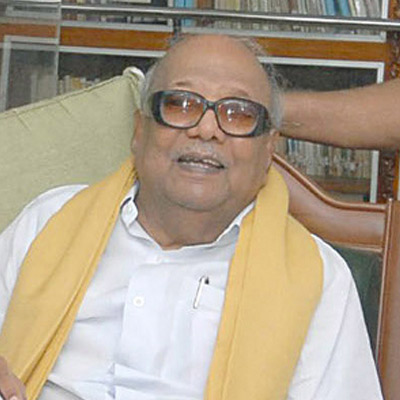
    MUMBAI: DMK chief M Karunanidhi has come out in support of the United Progressive Alliance (UPA) government for not giving Digital Addressable System (DAS) licence to the Tamil Nadu government-owned Arasu Cable TV Corporation.

    Karunanidhi, who had set up Arasu Cable TV Corporation during his reign as chief minister, said the UPA government was going by the Telecom Regulatory Authority of India‘s (Trai) recommendation that prevents government or government-owned entities from entering the television broadcasting or distribution business.

    “The Centre can decide on issuing DAS Licence only based on the recommendations of Trai guidelines. Trai had recommended that Centre and state governments should not involve in cable TV broadcasting,” he said in an interview to party mouthpiece ‘Murasoli‘.

    He also expressed disdain at Jayalalithaa‘s accusation that the government was deliberately not issuing licence to Arasu in order to benefit his family.

    The DMK chief also said it was not proper on her part to make such remarks at the National Development Council meeting.

    Jayalalithaa had at the National Development Council (NDC) meeting recently lambasted the government for deliberately holding licence in order to a ‘political‘ family in a veiled reference to Karunanidhi and his family.

    Arasu is yet to receive a DAS licence to operate in Chennai despite repeated plea by the state government and AIADMK MP‘s, who taken the issue to Prime Minister Manmohan Singh as well. Arasu had applied for a DAS licence in July.

    Karunanidhi and his family hold considerable interest in television and distribution business in Tamil Nadu. While Karunanidhi‘s family owns Kalaignar TV, his grand nephew Kalanithi Maran owns the Sun Group, which has interests in television, print, radio, DTH and cable distribution.

    Pertinently, Trai had on 28 December reiterated its November 2008 recommendation that central and state governments or entities owned by them should not be allowed to be in broadcasting and television channel distribution businesses.

    The regulator had submitted its recommendations to the Information & Broadcasting (I&B) Ministry on “Issues related to entry of government or government entities into the business of broadcasting and/or distribution of TV channels”.

    It also reiterated its view that the government should provide an appropriate exit route to government or government-owned companies which have already been accorded permission to carry on the business of television channel distribution.

    The recommendations are expected to impact Arasu, which had received licence in 2007 to operate in Tamil Nadu.

  • Arasu gets no DAS licence yet as Govt debates over state-owned cable TV outfits

    Arasu gets no DAS licence yet as Govt debates over state-owned cable TV outfits

    NEW DELHI: Arasu Cable TV Corp. Ltd, a state government-owned cable television distribution network, has so far failed to get a licence from the Information and Broadcasting Ministry to run the network.

    Ministry sources told indiantelevision.com that licences have not been issued to any state-owned organisation for running cable TV networks as recommended by the Telecom Regulatory Authority of India (Trai). The broadcast sector regulator had recommended that neither state-owned, local bodies nor religious organisations should be permitted to own TV channels.

    Though no final decision has been taken, the matter will lead to a discussion in the Ministry as West Bengal and other states have also sought permission to run TV channels. Permitting one will mean that the Centre will not be able to refuse the others, the sources said.

    Interestingly, Arasu applied for a DAS (digital addressable system) licence on 5 July 2012.

    The Cable Television Networks (Regulation) Amendment Bill, 2011, that made digitisation mandatory also made it compulsory for all cable companies to get a DAS licence from the government to operate their distribution networks. In the absence of the licence, the operator will not be allowed to operate.

    The government has given 11 DAS licences to multi-system operators (MSOs) in Tamil Nadu until now.

    Arasu started operations in 2011 after All India Anna Dravida Munnetra Kazhagam came to power. It had been founded in October 2007 by the Dravida Munnetra Kazhagam (DMK) headed by M. Karunanidhi at a time when his family was in a dispute with the Marans, his grandnephews who control Sun TV Network Ltd and MSO SCV. However, plans to project Arasu as a rival of SCV were shelved after the Marans made up with Karunanidhi.

    Since its re-launch in September 2011, Arasu has built a network that covers 31 districts in the state (but not Chennai) and reaches 4.9 million households. The number of households serviced by cable companies in the state is estimated at 12 million, according to M.R Srinivasan, general secretary of Chennai Metro Cable TV Operators Association. India has 120 million cable households.