Tag: Arasu Cable TV

  • Arasu Cable TV faces broadcaster backlash over Rs 500 crore unpaid dues

    Arasu Cable TV faces broadcaster backlash over Rs 500 crore unpaid dues

    Mumbai: Broadcasters have voiced their concerns as TN govt-owned firm Arasu Cable TV (TACTV) fails to pay Rs 500-cr dues. Numerous broadcasters including Sony, Zee, Viacom, Disney Star, and Sun TV have raised concerns regarding unpaid dues which according to sources have been outstanding for over a year.

    In response to the prolonged non-payment, the Indian Broadcasting and Digital Foundation (IBDF) addressed a letter in March to Tamil Nadu’s IT and Digital Services minister Palanivel Thiagarajan and TACTV’s managing director, A John Louis, calling for a fair and sustainable business environment.

    “Given the severity of this issue and its adverse impact on the industry, we urgently seek your esteemed intervention to expedite the clearance of TACTV’s subscription dues. Resolving this matter promptly is vital for restoring confidence and stability in Tamil Nadu’s broadcasting ecosystem,” the IBDF stated in the letter dated 13 March.

    Sources indicated that the Tamil Nadu state government has not yet addressed the broadcasters’ requests, citing TACTV’s financial difficulties.

    Thiagarajan was quoted as saying by the Tamil newspaper Dinamalar on 29 June that Arasu Cable owes Rs 525 crore in fees to television broadcasting companies. The Tamil Nadu Government Cable company is in a critical state. It’s up to the contractors to provide the necessary support.

    When asked why broadcasters haven’t cut off TV channel access to TACTV, a leading broadcaster’s executive mentioned fears that the state government might retaliate against their business in the region. Another executive highlighted concerns about potential copyright issues and signal piracy if they disconnected the service.

    Broadcasters have the option to appeal for pending dues through the Telecom Disputes Settlement and Appellate Tribunal (TDSAT).

    TACTV has also not complied with a 2022 Central government advisory directing Union ministries, state governments, and union territory administrations to cease involvement in broadcasting or distribution activities by 31 December 2023. This advisory aimed to prevent the politicization of broadcasting, as content could potentially promote the ruling party and influence voters.

    The Ministry of Information and Broadcasting (MIB) has included similar provisions in the draft broadcasting bill, which will gain legal authority once enacted. MIB officials have discussed the issue with TACTV, but the matter remains sub judice.

  • Dish TV targets double customer base in Tamil Nadu

    Dish TV targets double customer base in Tamil Nadu

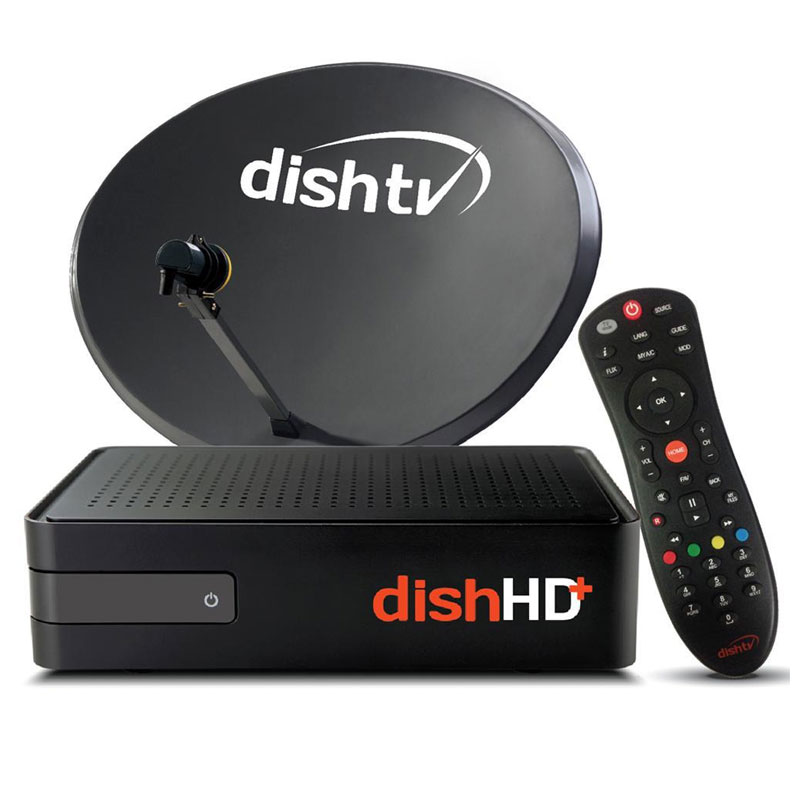
    MUMBAI: The leading direct-to-home (DTH) brand Dish TV wants to strengthen its customer base in Tamil Nadu, the biggest market for the company. With the hope of nearly doubling customer base in the state, the company is already building up stronger presence by launching new packages and an advertising campaign.

    The Hindu Business Line reported that it also expects a 35-40 per cent increase in revenues. The revenue from the state for the merged entity of Videocon d2h and Dish TV in last financial year was Rs 550 crore. As the state is going through digitisation, there are high chances of the company’s growth in Tamil Nadu where it currently has a customer base of nearly 1.5 million.

    As reported by the publication, the company announced to offer 65 popular Tamil channels in the state from Friday. A 360-degree advertisement campaign called ‘Surprise Machi’ is also in the store which will be rolled out soon. It will also offer five new base packs based on the language the customer speaks.

    Dish TV India senior vice president-marketing Sukhpreet Singh thinks there’s no threat from state-run Arasu Cable TV. The state government-owned network is gradually increasing its penetration across the state. Singh thinks there’s enough scope for DTH players to convert 8 million analogue receivers using customers into digital.

    Also Read:

    Dish TV offers SD channels at Rs 8.5 per month

    Dish TV sharpens focus on Tamil Nadu

  • TRAI keeping watch over Arasu, TN MSO extends digital hardware bids deadline

    NEW DELHI: The government and the regulator are keeping a close watch on Tamil Nadu Arasu Cable TV Corporation to see whether it sticks to the deadline of three months to digitise its networks even as the state government-controlled MSO extended the date for submission of bids for acquiring digital headend hardware to 9 June 2017.

    A source at the regulator TRAI told indiantelevision.com that it was “watching” to see how the situation developed in Tamil Nadu, adding that it would step in if the situation demanded it.

    Arasu was given a provisional digital addressable system MSO license earlier this year subject to the condition that it digitises its network within three months so it could phase out analogue TV signals and be at par with the rest of the country. The official sunset date of analogue services in India was 31 December 2016, which was extended to end-March 2017 by the government keeping in view some hiccups in seeding digital boxes in rural and semi-urban areas.

    According to an official announcement by Arasu, which is running a scroll on its website, the last date for a global tender for supply of standard definition (SD), high definition (HD), triple play STBs, etc has been extended to 9 June 2017 from 29 May 2017. Arasu plans to acquire 70 million digital addressable STBs of which 10 million will be HD boxes.

    Though the Telecom Regulatory Authority of India has at least three times in the last decade expressed a view that political parties, politicians and state governments, amongst a host of other category of people, should not be allowed to get into the business of broadcasting or distribution of TV services, successive governments, including the present one, have dithered to take a final call on the regulator’s suggestions.

    While handing out provisional license to Arasu earlier this year, the union minister M Venkaiah Naidu had said the conditional green signal was given with an aim to cover the entire country under DAS and specifically done in “public interest”.

  • Chennai & DAS: Madras High Court puts I&B, TRAI in a tough spot

    Chennai & DAS: Madras High Court puts I&B, TRAI in a tough spot

    MUMBAI: It seems like deja vu. It was around this time last year that Information and Broadcasting (I&B) Minister Manish Tewari was urging the Telecom Regulatory Authority of India (TRAI) to move fast on deciding on the issue whether the Tamil Nadu Arasu Cable TV Corp should be given a digital addressable system (DAS) licence. The TRAI had responded with a paper issued on 28 December 2013 on “Issues related to entry of certain entities into broadcasting and distribution activities.”

    It had recommended that the Central Government, State Governments and their entities should not be permitted to enter into the business of broadcasting and distribution of TV channels. Based on that, a DAS licence was not issued to Arasu, despite continued pressure from the Centre’s allies AIADMK and Tamil Nadu chief minister Jayalalithaa.

    Now the ball has landed back with the I&B Ministry over the weekend, with the Madras High Court reportedly telling it to once again take a stand on the MSO’s DAS licence. The court also directed the TRAI not to take any coercive action against it even if it continues to deliver analogue signals to its six million odd subscribers in the state. And it also said the case was adjourned for four weeks.

    “..it is not known to this court why the Centre has not taken any decision on the application of Arasu. When the authorities of the Union of India and the state instrumentality are not in a position to take any decision on granting or receiving the DAS licence, as the case may be, the ultimate sufferers are the subscribers. Therefore, I am of the considered opinion that the subscribers cannot be put to hardship. As such, there cannot be any disconnection of signals to the subscribers by the authorities,” said Justice V Dhanapalan on Friday.

    The Madras High Court issued these orders based on a petition that Arasu cable had filed with it. Arasu, on its part, had taken a decision to move the courts following TRAI’s announcement, earlier this month, that Chennai’s cable TV operators, broadcasters, and MSOs should take positive steps towards complete DAS in Chennai – one of the initial phase I metros – or face its wrath.

    Clearly, the I&B Ministry is in a catch 22 situation. The TRAI in its recommendations has been clear on disallowing state control in cable TV and DAS.

    With the Madras High Court now telling the Ministry to reconsider its earlier stance on it, could the court’s direction provide it with a parachute? With the current government at the Centre appearing to be on shaky ground following the Congress (I) debacle in four states, it might well use this as a trump card to win some points with the AIADMK in what appears to be building up as a tough battle for it in the 2014 elections. Additionally, the ministry and the TRAI also wants tardy Chennai to move full steam on digitisation and licensing the largest player Arasu – albeit it being state owned – might well help it achieve that objective.

    But should the I&B Ministry continues to hold on to its position that it will not issue the licence, digitisation might not really progress as Arasu will not take things lying down as it is a tour de force in the state and in the city of Chennai. With the court ruling in its favour, Arasu is well within its rights to continue with its analogue feed now, no matter how much the TRAI cracks the whip. And that’s something which will make the government’s digitisation diktat look incomplete, with one major metro abstaining from it, as it has been doing for nearly a year or so now.

    Meanwhile, local cable TV in Chennai continues to be pained by what’s being going on in the state. Some cable TV operators who are not part of Arasu’s network in Chennai went on a hunger strike yesterday to protest against the analogue signals being transmitted by it.

    “First and foremost a call needs to be taken on Arasu’s licence but more importantly TRAI needs to caution broadcasters who are giving these analog signals to them. They should be asked to sign official deals with MSOs for giving digital signals only,” says Chennai Metro Cable TV Operators Association General Secretary M.R. Srinivasan.

    Clearly, it seems as if the I&B ministry and the TRAI are caught between a rock and a hard place. Where will the two go from here now is anyone’s guess!

  • Trai against allowing govt or govt entities in broadcasting and distribution

    Trai against allowing govt or govt entities in broadcasting and distribution

    MUMBAI: The Telecom Regulatory Authority of India (Trai) has stuck to its November 2008 recommendation that central and state governments or entities owned by them should not be allowed to be in broadcasting and television channel distribution businesses.

    Trai on Friday submitted its recommendations to the Information & Broadcasting (I&B) Ministry on "Issues related to entry of government or government entities into the business of broadcasting and/or distribution of TV channels".

    The I&B Ministry had made a reference to the regulator in November to give its views on allowing central government ministries, central/state government departments, central/state government owned companies, central/state government undertakings, joint venture of the central/state governments and the private sector and central/state government funded entities may in the business of broadcasting and/or distribution of TV channels.

    Trai has also reiterated its view that the government should provide an appropriate exit route to government or government-owned companies which have already been accorded permission to carry on the business of television channel distribution.

    The immediate impact of the Trai recommendation is on Arasu Cable TV Corporation, the Tamil Nadu government-owned company engaged in cable TV distribution business.

    Trai has recommended that suitable provisions be incorporated in the proposed new legislation on broadcasting to provide for an appropriate exit route for such entities which have been already granted permission by the government but are likely to be hit by the proposed disqualifications.

    Trai has also said that the government should further strengthen the arm‘s length relationship between the public broadcaster Prasar Bharti and the central government. Trai said measures should ensure functional independence and autonomy of Prasar Bharti.

    Pending enactment of any new legislation on broadcasting, the disqualifications recommended for political bodies to enter into broadcasting and/or distribution activities should be implemented through executive decision by incorporating the disqualifications into Rules, Regulations and Guidelines as necessary, Trai further said in its recommendations.

    These recommendations are in continuation of the earlier recommendations that it had made in November 2008 following an exhaustive consultation process after the I&B Ministry in December 2007 sought Trai‘s recommendations whether state governments and political bodies should be permitted to enter into broadcasting and distribution activities.

    In the consultation process, Trai had comprehensively examined the issue in the broader context of both central as well as state governments and their respective organs.

    Trai based its recommendations on the Sarkaria Commission report which said a political party controls the executive and there could be "a temptation to use the media wrongly in party interest and not necessarily in national interest".

    While the observations in Sarkaria Commission report were made in the context of the Union Executive, the same logic, Trai says, applies to a state government as the spirit of the observation pertains to the exercise of power and control wielded by the government in question.

  • Stay on cable TV digitisation in Chennai no longer applicable

    Stay on cable TV digitisation in Chennai no longer applicable

    MUMBAI: The process of complete switchover to digital delivery of television channels in Chennai is now likely to begin with the Madras High Court stay on government‘s notification on digitisation no longer applicable.

    The two-member bench of Justice Elipe Dharma Rao and Justice Aruna Jagadeesan, while postponing the hearing on a petition against digitisation by four weeks on Thursday, had declined to extend the stay on the government‘s mandate to digitise cable TV.

    "Theoretically, Chennai will have blackout of analogue signals on cable networks. But with the Jayalalithaa state government not in support of complete switchover to digital at this stage, it will be difficult to implement disgitisation. Though broadcasters have switched off analogue signals of several channels, the only way Chennai can get completely digitised now is if Sun TV, the most popular channel in the state, decides to blackout its flagship Tamil general entertainment channel," says an industry executive on condition of anonymity.

    On the suggestion by the bench, the Chennai Metro Cable Operators‘ Association (CMCOA) has filed a revised petition challenging the government‘s notification on digitisation. It had earlier only sought extension of the digitisation deadline. The Tamil Nadu Cable TV Owners Association (TANCUS) too has filed a plea against the digitisation notification.

    The government had set 1 November for switchover to digital delivery of television channels in Mumbai, Delhi, Kolkata and Chennai. Cable TV systems in Mumbai and Delhi have almost entirely switched over to digital but in Kolkata a large section of cable TV households are still receiving analogue signals.

    The Madras High Court had on 31 October stayed digitisation in Chennai till 5 November. It thereafter extended the deadline till 9 November and later till 19 November. The judges hearing the case are now new and on Thursday did not grant extension to the stay on digitisation.

    The government claimed on 1 November that Chennai has over 1 million TV households and 63 per cent of them had installed set-top boxes (STBs) needed for digital reception of television channels.

    The largest multi-system operator (MSO), Tamil Nadu government-owned Arasu Cable TV Corporation, does not have the STBs to install in homes of customers of cable operators. It has said it requires one million STBs but has so far placed an order for 0.2 million STBs from Pune-based Sterlite Technologies.