Tag: AR

  • ITC Mangaldeep Integrates Augmented Reality for Maha Kumbh 2025 Experience

    ITC Mangaldeep Integrates Augmented Reality for Maha Kumbh 2025 Experience

    MUMBAI: It’s taking reality into another fragrant and spiritual dimension. ITC’s incense brand Mangaldeep has introduced 3D augmented reality to coincide with Maha Kumbh 2025. This innovative initiative allows devotees to immerse themselves in sacred rituals such as Shahi Snaan (royal bath), Deep Daan (lamp offering), and Aarti (prayer ceremony) from the comfort of their homes. You too can do so from where you are right now by clicking here.

    As the largest spiritual gathering on earth, occurring once every 12 years, the Maha Kumbh is expected to attract over 400 million devotees in 2025. Recognizing that many may be unable to attend in person, ITC Mangaldeep’s AR technology ensures that the transformative spirit of the event reaches a global audience.

    Through an exclusive AR experience, users can create personalised Maha Kumbh souvenirs and participate in virtual rituals while sharing their spiritual moments with loved ones. In addition, a hybrid Deep Daan ceremony will be held, where virtual offerings made by users will be physically taken to the Ganges each week, fostering a unique connection between the digital and physical realms.

    ITC matches & agarbatti division CEO  Gaurav Tayal stated, “The Maha Kumbh is a profound confluence of faith and tradition. Our AR initiative brings this sacred experience closer to millions, deepening the connection between innovation and spirituality.”

    ITC Mangaldeep’s commitment to integrating modern technology with ancient traditions positions it as a leader in transformative spiritual experiences, making access to the Maha Kumbh more inclusive than ever.

  • Story-living: How digital creativity is immersing audiences in PR campaigns

    Story-living: How digital creativity is immersing audiences in PR campaigns

    Digital creativity impacts the relationship between brands and their audiences. Instead of only telling a story, efforts have expanded to allow people to experience the storyline. The change from reading a book that contains illustrations to the use of pictures, moving images, or animations in public relations refers to the strategy of ‘story-living’ whereby users are transported into a narrative environment. This change has also transformed the campaigns to become more immersive, increasing user interactions with the brand.

    What is story-living?

    To put it simply, story living embraces the thought of experiencing a message rather than just showing it. To be exact, story living allows people to be part of a narrative, within a certain time and possibly in a great amount of detail. Indeed, with all of the tools at their disposal, audiences today expect to be able to witness self-exploration in both real and virtual contexts. Virtual reality, augmented reality, and live online interactions give realistic insights into the journey. With these experiences, audiences are encompassed in the story and made to feel that they are part of the brand’s universe.

    Why story-living is effective in PR

    The main reason for this is that the audience is usually fully engaged and costs less to execute. Emotional experience is the main reason a brand succeeds. If the audience takes part in an event, they will have a greater emotional response to the brand. This emotional response causes them to have a better important than usual recall of the brand and a positive feeling towards the brand, making them tell their story to others.

    Differently from the classic advertisements that can be seen as just noise among other mundane content, an interaction is something that engages the audience and extends their loyalty towards the brand. When audiences get personally involved, they are more likely to mention it on social media networks or endorse it to more people, thus increasing the number of the audience of the given brand organically.

    Tools that bring story-living to life

    Well, with the improvement in technology, PR teams now have a variety of instruments to make story-living events a reality. Here are some of the famous ones:

    1.  Virtual reality (VR): VR places audience members into completely new spaces and enables them to navigate and interact within them in a real life setting this creates remarkable impressions of the brand’s universe for the audience.
    2.  Augmented reality (AR): AR adds a layer of digital interaction to the physical world, allowing users to interact with different elements. AR can be used by brands in a number of creative ways so that people can engage with the brands in a more fun and entertaining manner.

    3.  Live streaming and interactive videos: Live video makes it possible to stream events as they occur and to view additional interactions such as questions and comments direct to the presenters. Engagement in this manner makes people feel much closer to the action and hence the feeling of immediacy.
    4.  Social media polls and quizzes: Involving, engaging, and simple tools such as polls and quizzes require the audiences to become part of the narrative. Such tools assist the audience in taking part in the evolution or strategy of a brand.

    5. Custom-made content: Thanks to modern analytics, brands may now provide a high level of customization and create messages and contents that are suitable for every user. This makes an interaction personal, consequently creating a bond.

    The future of story-living in PR

    In the wake of new technological changes, story-living will undoubtedly be included in the core blocks of PR practices and approaches. Such digital tools enable brands to capture the audience’s attention in diverse significant experiences. This particular trend shows a change in PR practice as the bulk of it will not revolve around storytelling but rather engagement.

    Turning the audience into a key piece of the brand story is what story-living brings into PR and transforms it into something new. It is changing how brands speak as they create deeper and better connection with customers in the process. Story-living is bound to trend as companies diversify it, while at the same time cutting through the noise in today’s digital world and maintaining relevance.

    The article has been authored by The Right PR founder & director Harday Gupta.

  • Radio City and Beatchain launch Muzartdisco

    Radio City and Beatchain launch Muzartdisco

    Mumbai: Indian radio station – Radio City has partnered with Beatchain, the innovative technology company behind a groundbreaking A&R tool, to launch “Muzartdisco.” Set to launch at ‘All About Music,’ India’s only B2B music industry conference, in Mumbai on 6 August 2024, Muzartdisco will be open to the vast and diverse community of Indie artists worldwide, providing access to Beatchain’s range of creator services, tools, and educational content tailored for Indie artists.

    Beatchain’s white-label technology powers digital ‘arenas’ that can be owned and customised by music companies and labels, catering to artists across genres and territories. Muzartdisco will offer a comprehensive suite of tools for distributing, promoting, and marketing music while allowing artists to retain their full rights and gain exclusive data insights into the performance of their music through a personal dashboard. This new platform is set to revolutionise our country’s music scene by empowering independent artists and amplifying their voices globally.

    Artists using Muzartdisco will have the chance to earn career-changing opportunities offered by Radio City, including a nationwide radio breakout campaign with airplay, social media shoutouts across its networks, an artist of the month website feature, and a nomination for a Radio City Freedom Award – a nationally recognised awards ceremony celebrating Indie music. Additionally, it will provide unique studio sessions, mentoring, collaborations with renowned artists, writers, and producers, and photoshoots. The platform will also include a “Fan Builder” feature, enabling artists to build a sustainable fan base and create a thriving music career.

    Radio City CEO Ashit Kukian commented, “Radio City envisions to connect with audiences worldwide, and this partnership will be yet another stepping stone in that direction. Muzartdisco, India’s first one-stop platform for independent artists, will provide 360-degree opportunities to sustain artistic careers as well as avenues to promote and track their growth. We possess the right mix of communication and marketing tools to enhance the presence of artists on this platform which can be leveraged through cross-pollination with our other internal IPs like SMINCO, Happydemic, JioTV+ amongst others. This will ensure that, by using the latest technologies, we establish a strong foundation for a center stage where all Indie artists can showcase their talents and capture hearts globally.”

    Beatchain chief strategy officer Luke Mendoza stated, “Technology has revolutionized the music industry, democratizing access to music for consumers and creating incredible opportunities for artists. But, the sheer volume of music now available is making music discovery and cut-through more difficult. Our platform enables A&R teams and labels to identify real talent – those already demonstrating the qualities needed for a thriving music career – and can connect artists directly with industry tastemakers. By combining our technology with Radio City’s extensive reach and passion for Indian independent music, will offer artists unlimited opportunities to launch and sustain a career in music.”

    Understanding the need of the hour, Radio City is strengthening efforts through “Radigitalisation” to seamlessly transition from radio to digital. By tapping into various digital platforms, they ensure that their content reaches where the end consumer is, maximising reach and visibility for individuals and helping them gain the recognition they deserve.

  • How interactive and immersive technologies are reshaping performance marketing industry

    How interactive and immersive technologies are reshaping performance marketing industry

    Mumbai: Interactive and immersive technologies are quickly changing the landscape of performance marketing in the Indian industry, proposing innovative ways to interact with consumers and drive impactful campaigns. Interactive technologies resembling quizzes, polls, and AR filters are driving things up, while immersive technologies like VR and AR are recommending users new scopes.

    Now, in the era of Performance Marketing, Brands can track their marketing strengths with precision, seek out specific demographics with ease, and measure ROI like never before. As consumers devoted more time online, digital performance marketing turned out to be the golden thumb rule for reaching them where they were most active (on their screens).

    Incorporating Immersive Technologies into Your Marketing Approach

    Virtual Showrooms and Product Demonstrations

    One aspect that can always be injected with more creativity is product demonstrations. Creating virtual showrooms where customers can explore products or services in a 3D environment proves especially beneficial for industries where the purchase process can be solidified for heightened customer satisfaction. For instance, Lenskart’s Try on Glasses on the App.

    Infusing Game Elements into Marketing

    Developing interactive games and experiences featuring your products or brand allows customers to engage with your outreach in diverse ways. Gamification encourages customer interaction and competition, driving user participation, fostering positive brand perception, and cultivating long-term loyalty.

    Interactive Storytelling

    Engaging your audience in a narrative and enabling them to interact with various characters and environments can be a potent tool for brand storytelling. While most interactive experiences are typically designed for a universal purpose and story, customizing characters and environments based on your audience and their demographics further captivates them, establishing a lasting impression and positive brand reception.

    Impact of Interactive Technologies on Consumer Engagement

    Personalization and Customization in Marketing

    Interactive technologies resemble the stakeholders of marketing, considering every consumer’s wish for personalized experiences. In today’s digital setting, personalization and customization have become fundamental elements for engaging consumers. From tailored product recommendations to interactive advertisements that respond to user activities, corporations must line up these strategies to stay competitive. Clients are of the opinion that they are seen, heard, and understood, making them more likely to engage with brands that speak their language.

    Enhancing User Experience through Interactivity

    Who wants an uninteresting, one-way chat when brands can have an active, two-way interaction instead? Interactive technologies are narrowing marketing strategy into a mere conversation, welcoming consumers to take part, share their opinions, and co-create experiences with brands. Whether it’s a gamified ad or an interactive shopping experience, customer commitment levels rise steeply when interactivity is in play.

    Aids in Data Analytics and Understanding

    Immersive technologies gather valuable information about customer behavior and preferences, facilitating more precise and efficient long-term marketing strategies for brand building. Ethically applied, these insights become a potent tool for targeting content towards potential customers, refining content types, target markets, and messaging.

    Leveraging Immersive Technologies for Enhanced Marketing Campaigns

    Virtual Reality (VR) and Augmented Reality (AR) in Marketing

    Step into the time ahead with VR and AR in marketing, where borderlines blur between the real and the digital. Brands in India are using VR to ship consumers to virtual worlds where they can check out before they purchase, while AR is bringing products to life in the palm of their hands. Immersive technologies add a touch of magic to marketing campaigns, leaving behind consumers spellbound and eager for more.

    Conclusion

    Integrating immersive technologies into your marketing plan is a forward-looking decision. From the growing demand for distinct experiences to advantages like increased engagement and advanced product visualization, the potential is evident. In the constantly evolving marketing landscape, these combined strategies offer a way to connect more profoundly with your audience, creating a lasting impression and securing a notable position as a leader in innovation in the digital age. The future of marketing is immersive, and to stay at the forefront, we must fully embrace it.

    This article has been written by  ETML co-founder and COO Amitek Sinha

  • AutoVRse secures $2M funding led by Lumikai for enterprise VR solutions

    AutoVRse secures $2M funding led by Lumikai for enterprise VR solutions

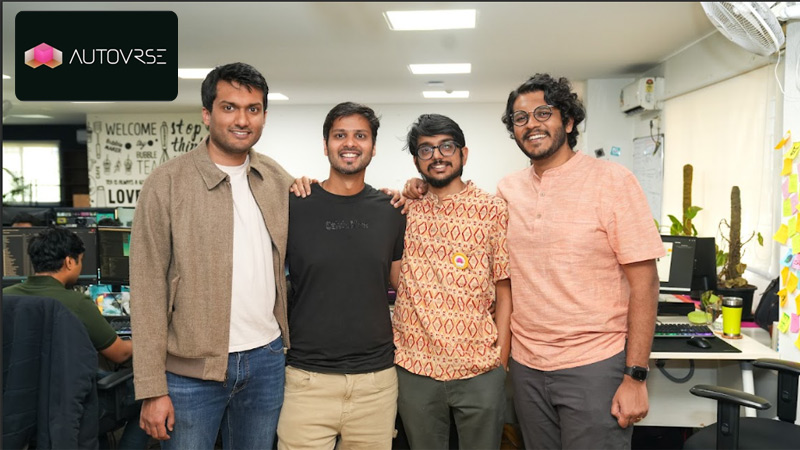
    Mumbai:  AutoVRse, a VR/AR tech startup, today announced the successful closure of a $2 million funding round led by Lumikai. This marks a significant milestone in AutoVRse’s journey, having already delivered cutting-edge VR solutions to multiple Fortune 500 companies and industry leaders including Shell, Godrej, Bosch, Tata Motors, Ultratech Cements, Aditya Birla Group, and many others.

    The funding will primarily be utilized to further enhance AutoVRse’s foundational enterprise product, VRseBuilder, “an end-to-end modular technology stack and SAAS platform to integrate VR into workflows of industries like manufacturing, construction, engineering, oil and gas, automotive, replacing ineffective manual instruction and/or expensive simulation techniques for purposes ranging from safety training to sales and collaborative remote work.”

    270 million accidents occur in heavy industries, costing them $1.25 trillion globally. VrseBuilder is a one-stop, self-serve, modular, SAAS-style platform that empowers large organizations to effortlessly create, deploy, and manage VR training solutions and applications at scale, in real-time, across the world.

    This funding will enable AutoVRse to augment its team with top-tier talent, and spearhead expansion efforts in the United States and expand its product suite. The company also plans to set up a B2B sales team in the US to drive qualified lead generation and facilitate market expansion.

    The company also leverages their state-of-the-art, in-house game studio for cutting-edge research and development while building District M, the Multiverse Dance Festival – a social, multiplayer, rhythm VR game. The game’s demo was launched on the Oculus AppLab two years ago and will soon be launched on Meta and PlayStation. The gaming division works closely with the enterprise division to leverage innovations for enterprise product development.

    AutoVRse co-founders Ashwin Jaishanker, and Adarsh Muthappa, enthusiastically shared their outlook for the company’s future, saying, “Virtual Reality (VR) wields transformative potential across diverse industries. Our enterprise solutions offer a world-class, ready-to-use, modular technology stack with SAAS-enabled deployment for purposes ranging from worker safety training to sales training and remote work design collaborations. An example of the real-world impact of our VR tech was our partnership with UltraTech Cements, where we deployed VR safety training modules across 51 plants in India and trained 50,000+ workers in VR—reducing factory incidents and saving lives. We leverage our in-house game studio to test, iterate, experiment and deliver immersive and cutting-edge innovative experiences for our enterprise clients. This cutting-edge research and cross-pollination of technology has also helped us create an immersive gaming experience with an original IP like District M.  Our vision is to build a foundational VR-OS (VR operating system) for enterprises, alongside world-class, meaningful, social, and fun experiences for consumers.”

    Speaking on the announcement, Lumikai founding general partner Salone Sehgal said, “AutoVRse’s technology and solutions for enterprises, compete with the global best. Their focus on innovation and providing scalable, VR-led solutions for very real problems facing heavy industries, coupled with their innovative, state-of-the-art gaming studio, is a powerful combination—paving their rise to becoming a world leader in the VR space. At Lumikai, we are super excited to be lead investors and partner with Ashwin, Adarsh, and the AutoVRse team to build a world-class, enduring AR/VR company.”

    Pushing the limit of what is possible in the immersive media space and delivering consistently path-breaking deployments in the field of enterprise VR/AR for more than 7 years, AutoVRse, has evolved into a pioneer in the AR/VR landscape transforming various industries with their tech prowess. The company’s flagship product, VRseBuilder’s primary goal is to help organizations adopt VR at scale, easily. It consists of 4 components, namely:

       Readymade VR Content Library: Safety and process training VR modules designed with a modular, VR-centric design philosophy

    •    VR-Native Learning Management System: Schedule sessions, assign modules, access performance reports, and observe evaluation metrics in real-time, offering unparalleled training flexibility
    •    Deployment Platform & Knowledge Repository: A secure web dashboard that helps IT and Security teams manage VR users, devices and content by seamlessly integrating with LMS and SSO systems, allowing users to upload videos and PDFs and manage the organization’s VR knowledge repository
    •    Unity SDK + Infinity Workshop: Rapidly prototype VR apps with a no-code editor and massive library of modular blocks (assets, templates and fully finished VR training modules)

    Also participating in this round was angel investor Yash Kotak, Founder and CEO of Jumper.ai, who said “Jumping into AutoVRSe was a no-brainer. Right from the get-go with the founders and the team, I could feel the energy, the focus, and that unstoppable drive to conquer the VR scene. With its fundamentally strong tech, flawless execution, and sky-high market potential, investing was a total blast from day one.”

    Additional prominent figures in the funding round include Rajat Monga, co-founder of TensorFlow and Inference.io and Viswanathan Krishnamurthi, ex-CIO/VP at Yahoo & Eaton.

    While talking about this the Co-founder of TensorFlow and Inference.io, Rajat Monga, also added “AR/VR is where we are all headed, and with Oculus Quest (and now Apple Vision Pro), people think of consumer apps. I loved how Ashwin and the team understood the space and focused on enabling enterprises to bring their ideas to reality.”

  • Vossle witnessed an average spike of 200% in its sign-ups over the last 6 months: cofounder Prafulla Mathur

    Vossle witnessed an average spike of 200% in its sign-ups over the last 6 months: cofounder Prafulla Mathur

    Mumbai: Augmented reality (AR) isn’t just a fancy term anymore. It has, in fact, become a much sought-after means of accomplishing brand goals. The major factors driving the growth of web AR are the booming gaming industry and the rapid penetration of the internet, which are driving brands across the world to adopt web AR to increase their engagement with customers on their websites.

    Here’s where Vossle, a cloud-based, no-code web AR development SaaS platform, comes into the picture.

    Launched in January 2021, Vossle was co-founded by Prafulla Mathur and Pulkit Mathur. According to the duo, with the platform, businesses can create augmented reality in under a minute. It requires no app downloads to experience world targets, image target-based campaigns, games, or face detection-based try-ons using Vossle’s core AR+AI engine. It reaches millions of users instantly with an app-less AR experience that works on every modern smartphone browser the moment you publish it.

    Prafulla Mathur and Pulkit Mathur are serial tech entrepreneurs, and are also the founders of Queppelin, a global metaverse development company.

    Vossle raised funds from Nimbuzz ex-CEO Vikas Saxena. Nimbuzz was acquired by the UK’s New Call Telecom for $250 million. Vossle grew quickly and now operates in Gurugram and New York.

    In an exclusive confab with Indiantelevision.com, Vossle co-founder Prafulla Mathur discusses the application of Web AR by various brands and across categories, how it is being used in the advertising and marketing space, and so much more.

    For starters, the global augmented reality (AR) and virtual reality (VR) market size was valued at Rs 1,222.7 billion in 2020 and is projected to reach Rs 37,073.65 billion by 2030, registering a CAGR of 40.7 per cent.

    Discussing the expansion plans of Vossle over the next two years, Mathur reveals, “We are expanding Vossle technology teams as we are releasing new product features. Our current teams are in India and New York (USA), and we will add further teams at these offices. We are also adding more customer support teams (both through email, phone, and the Vossle tech forum) to help our customers.

    “Elaborating on Vossle being a no-code platform, Mathur reveals that it democratises AR for everyone by removing the dependence on development/coding teams. “You can think of Vossle as Shopify for web AR. With Shopify, businesses can create websites without writing any code and do not have to bother with hosting them. Similarly, with Vossle, businesses can create various types of AR without any coding knowledge and use them out-of-the-box as the created AR experiences are also automatically hosted on Vossle,” he explains.

    About the subscription model: Apart from a free trial, Vossle offers two subscription plans, namely, commercial and enterprise plans. In the free trial, users can create unlimited AR experiences with 100 free views. The commercial plans are for $99 per month, wherein users can create various types of AR experiences like in-line AR, face filters, try-ons, games, world tracking experiences, image tracking experiences, green screen chroma key videos, and so on. Users can create unlimited experiences and are offered 10,000 views + $0.01 per extra view. In the enterprise plans, along with all the commercial plan benefits, users can avail themselves of the option for white labelling and custom branding.

    Use cases of Vossle’s technology

    One of the most eminent use cases of Vossle’s technology is that of in-line AR being used for improving website search engine optimization (SEO). Any effective SEO strategy aims to keep visitors on the website for longer session durations. Vossle’s inline AR Feature makes it possible by embedding AR experiences inside a website, which has a 90-times higher engagement rate from website visitors.

    Mathur emphasises that AR is also utilised for product packaging. Brands which integrate AR into their packages are able to capture the audience way more than their competitors. This also gives analytics and insights on customer profiles, store level sales, and customer engagement analytics and makes brands better prepared to update inventory at the highest engagement stores.

    Advertising and marketing also constantly utilise AR. “Traditional marketing strategies are no longer sufficient to stay up with the times. The key to creating a digitally transformed company is to build upon new strategies such as integrating AR into business models,” points out Mathur. For instance, Tanishq, a product of the Tata Company, is one such example of excellent AR marketing. The company used Vossle’s virtual try-on feature to make a gorgeous 3D reproduction of their newest jewellery and made it possible for users to virtually put it on.

    Gaming is another instance wherein AR is used extensively. Nothing compares to AR for attracting audiences, engaging their attention for longer sessions, and boosting click-through rates. Web AR games amplify this even further. For example, Pond’s, a major skincare brand from Hindustan Unilever (HUL), needed a smart, potent, and engaging marketing strategy to connect and influence the younger audience and expand their loyal customer base. Thus, the brand created a unique web AR game on Vossle—users have to pop the bubbles with their facial movements. With each bubble they pop, their skin becomes more radiant and glowing. The game also has an end-to-end ecommerce flow with integrated discount coupons.

    Another example is that of a web AR experience of a 3D basketball game that can be played by scanning the code. The player has to shoot baskets through the hoop with their finger. This is just one of the many examples of how any idea can be turned into a web AR game with Vossle.

    AR being heavily applied in e-commerce. Online retail has already started adopting 3D AR product visualisations. Amazon is already offering 3D product visualisations, Lenskart (a prominent eyewear e-commerce player in India) offers eyewear try-ons, and Tanishq has offered Vossle jewellery try-ons. Mathur says, “This not only improves the shopping experience by allowing customers to visualise and virtually try-on a product before buying, it also reduces returns as the customers are making an informed decision.”

    Education is also an additional use case of AR. Players in the education space are now integrating Vossle into their online courses to explain concepts in a unique way by providing a real-life context to the students through AR. This interactive way of learning results in faster understanding and higher knowledge retention.

    Web AR – led promotions and the effect of web AR on sales

    Mathur brings out, “We witnessed an average of a 200 per cent jump in our monthly Vossle sign-ups over the last six months. Many of these signups are from brand marketers or their agencies. Additionally, some of the largest marketing, advertising, and creative agencies have become Vossle’s service partners, clearly indicating the huge investments that the brands are making towards creating web AR campaigns.

    “Talking about the effect of web AR on sales, Mathur elucidates that as the users’ gaze times are very high when viewing AR, they stay for longer durations on brand websites when AR is embedded on the page. This improves the websites’ SEO rank and hence drives traffic, resulting in higher sales.

    Brands selling their products online also give ads on Google, which is called search engine marketing (SEM). Inline AR on its landing page increases the quality score of such ads, reducing the ad rates for the brand and resulting in more targeted users being able to see it within the same budget.

    Additionally, brands that integrate AR into their packages are able to capture the audience way more than their competitors. “One of the recent campaigns we did for an FMCG company received 500K views in a month on their web AR experience through their packaging. This resulted in higher sales for the brand,” says Mathur.

    Brands and categories utilising Vossle’s web AR technology

    Along with many others, some of the few brands that Vossle is already working in tandem with are Pond’s, Tanishq, and Emirates NBD, which is a banking behemoth in the Middle East and uses Vossle web AR to wish their users on every festival like Mother’s Day or Chinese New Year.

    Speaking about the categories implementing AR, Mathur states that it is used for inline AR—website owners from across education, retail, furniture, jewellery, and consumer goods like beauty products, etc. are taking a lead in using inline web AR.

    It is also employed for packaging-based AR implementations. Consumer packaged goods (CPG) are leading the way in offering web AR experiences to engage customers. They have millions of packages on superstore shelves and in consumers’ homes, which is a huge marketing opportunity they can leverage.

    Reach, target group and brand experiences for consumers

    While deliberating over the kind of reach that web AR has, Mathur says that it works in browsers (Chrome, Safari, etc.) on devices like smartphones (Android, iOS) and laptops/desktops. All combined, a total of 5-8 billion devices across the globe are compatible with web AR.

    What is kept in mind while creating web AR brand experiences for consumers? “No-code platforms for web AR like Vossle have eliminated the need to write code, which used to be a big task earlier. Additionally, Vossle offers a fully hosted web AR creation experience. Hence, website owners and brands who want to create a web AR experience only have to focus on creating interesting content. Vossle helps with that too, with its integrated content library and empanelled service partner to create custom content for Vossle users,” deciphers Mathur.

    Needless to say, web AR as technological advancement is more attractive to the youth. Do brands usually use such experiences to target Gen Y, Gen Z and millenials only? Or if such web AR experiences are also created for the higher age groups, how does Vossle bring in traction from such age groups? Mathur concludes, “Every medium such as movies, television, videos or stories has different user groups and demographics preferring different types of content regardless of the medium. Same is with web AR which can create different content types for different interest groups like fun and educational for kids, exciting stuff like face filters and games for 16-30 year olds, and product visualizations and try-ons for 30-60 year olds.”

  • Metaverse is an incredible opportunity infront of marketers currently: Meta India marketing director Avinash Pant

    Metaverse is an incredible opportunity infront of marketers currently: Meta India marketing director Avinash Pant

    Mumbai: Things are moving towards an immersive connection, which is being powered by technology. One can share an incredible amount of information with an incredible frequency. The metaverse will change our conception of the world’s businesses, industries, brands, and creators. Some devices can help you get there, but more technology will come.

    At The Advertising Club’s third edition of D:CODE Meta India, marketing director Avinash Pant enlightened the audience about the evolution of social connections and the exponentially growing metaverse space, empowering meaningful experiences.

    He said, “Metaverse will take what we love about the internet today, which is about connecting with someone not present in the physical space, and take it to another new level. This is an incredible opportunity in front of marketers.”

    A “metaverse,” he added, is a set of interconnected digital experiences that are able to make you feel present. One can do this from any device, with anyone and anywhere. But the myth he burst is that it is a dystopian reality where people are engrossed in headsets and are completely removed from the real world. That is not the case.

    All technologies put together will make things real and present. There will be a virtual home or many homes. There will be many social experiences. One could work with colleagues in the metaverse. The metaverse does not have to be a representation in the virtual world of one’s physical world. It does not have to follow any of those rules of time, space, or physics. He continued, “The ability to create incredible experiences provides a fascinating opportunity in terms of creativity, storytelling, brand narrative, and commerce.”

    He expects avatars to be synonymous with our digital identity. One way to think about today is that the digital identity is the Instagram handle. Ten years ago, it was an email address. The expectation is that, in time, the avatar will become the digital identity. How do you make it lifelike and more representational? How can it help you present yourself in the digital world? These are things to be considered by digital marketers.

    Felt presence, he said, is one of the concepts of the metaverse. One can be with a friend at a concert through things like a hologram or VR. It will provide an incredible personal social feeling, but you can also share that experience. Even in a professional environment, you can do your dream job while sitting anywhere.

    He further noted that Meta has a workroom product. You feel present because you see someone’s body language, get an idea of their expressions, and how they react as well. The potential this has in commerce is huge. When a consumer can fully immerse himself in an experience, it becomes a powerful tool for a brand.

    But it’s not just about showing off a physical product. He explained that if consumers are living in that reality, then brands have to rethink the concept of who they are. What is the business the brand is in? There is much more significant potential. The metaverse is not predicated on 2D screens. A more immersive setup is possible.

    He gave the example of helping students understand concepts like the solar system better. Meta has done work with the CBSE in this regard regarding the curriculum. He feels that Meta has a fantastic foundation in terms of technology and the platforms that it has built. The work being done in communities, creators, and commerce puts it in a great position to leverage the metaverse. The idea of community itself is evolving. On the creator side, Meta is doing a lot of work to build the creator economy. Also, the idea of storytelling is evolving. People want to interact with content, play with it, not just consume it.

    He also gave the examples of Instagram Reels and AR. In terms of commerce, he said that there was a time when if one had to buy something, you would walk over to the market. Then you started searching online. Today, it has moved from search and buy to discover and buy. People discover brands and services on social media. This spells a massive opportunity when you connect the dots to the metaverse. As a brand, you have to think about it to power demand. Digital collectibles are being unlocked on Meta. All this is coming to bear at a super speed. The ecosystem will be revamped.

  • Global entertainment & media revenues surge to $2.3 trillion; OTT growth to moderate: PwC

    Global entertainment & media revenues surge to $2.3 trillion; OTT growth to moderate: PwC

    Mumbai: Last year, the global entertainment and media (E&M) industry grew significantly faster than the world economy as a whole. Following a 2.3 per cent dip in 2020 due to the pandemic, E&M sales increased by a solid 10.4 per cent in 2021, from $2.12 trillion to $2.34 trillion.

    Virtual reality (VR) and gaming are significant growth drivers for the industry as it becomes more digital, mobile, and youth-focused, and digital advertising permeates every aspect of the industry. These conclusions are drawn from PwC’s Global Entertainment & Media Outlook 2022–2026, which represents the 23rd annual research and forecast of E&M spending by consumers and advertisers across 52 countries & territories.

    Findings in this year’s Outlook include:

    – After growing by 35.4 per cent in 2020, OTT (over-the-top) video revenues increased by 22.8 per cent in 2021, to $79.1 billion. The rate of OTT revenue growth is anticipated to slow slightly; it will increase at a 7.6 per cent CAGR (compound annual growth rate) through 2026, pushing revenues to $114.1 billion.

    – Traditional TV still brings in a sizable amount of money, but it is facing intense competition from OTT streaming services. Global sales are expected to shrink at a CAGR of -0.8 per cent, from $231 billion in 2021 to $222.1 billion in 2026.

    – Revenue from video games and esports worldwide was $215.6 billion in 2021, and it is anticipated to increase by 8.5 per cent CAGR to $323.5 billion in 2026. With $109.4 billion, Asia Pacific produced the majority of the world’s revenues in 2021, more than double the second-highest region, North America. Gaming has overtaken video and communications as the third-largest data-consuming E&M content category.

    – Despite starting from a small base, VR continues to be the fastest-growing E&M segment. Following a strong 39 per cent growth in 2020, global VR spending increased by 36 per cent y-o-y to $2.6 billion in 2021. The segment is anticipated to grow at a CAGR of 24 per cent between 2021 and 2026, reaching $7.6 billion. With $1.9 billion in revenue in 2021, gaming content is the main source of VR revenue. By 2026, this should rise to $6.5 billion, or 85 per cent of all VR revenue.

    – Due to its widespread use in the digital sphere, advertising now dominates its own industry sector. After falling by almost seven per cent in 2020, advertising increased by an astonishing 22.6 per cent in 2021, reaching $747.2 billion. Advertising is expected to expand at a 6.6 per cent CAGR through 2026, driven nearly entirely by digital. The revenue from internet advertising is expected to increase even more quickly, increasing at a CAGR of 9.1 per cent. Advertising is anticipated to exceed consumer spending and internet access in 2026 to become a one trillion dollar business and the largest E&M revenue stream.

    – In 2023, global cinema revenue is anticipated to hit a new high of $46.4 billion after experiencing losses due to the pandemic. Box office revenue is anticipated to grow by 18.9 per cent CAGR from $20.8 billion in 2021 to $49.4 billion in 2026. In 2020, China surpassed the US to become the world’s biggest cinema market, and it is predicted that it will continue to hold this position through 2026.

    – In 2024, live music revenue is anticipated to surpass pre-pandemic levels. Recorded music sales are expected to increase from $36.1 billion in 2021 to $45.8 billion in 2026, driven by the development of digital music streaming subscriptions.

    – Massive data consumption is being fueled by the expansion of content. Data consumption was 2.6 million petabytes (PB) in 2021, and it is projected to increase by 26 per cent CAGR to 8.1 million PB by 2026. With a predicted CAGR of 29.6 per cent, gaming will consume data at the quickest rate during the projection period. The fastest-growing device category between 2021 and 2026 will be mobile handsets, growing at a CAGR of 28.8 per cent and predicted to increase mobile data usage from 1.1 PB to 3.8 PB.

    PwC Germany Global Entertainment And Media Industry Leader Werner Ballhaus said, “Industry press tends to focus on the companies that have dominated the E&M industry. But it is the choices that billions of consumers make about where they will invest their time, attention and money that are fueling the industry’s transformation and driving the trends.  We are seeing the emergence of a global E&M consumer base for the coming years that is younger, more digital and more into streaming and gaming than the current consumer population. This is shaping the future of the industry.”

    North America dominates per capita E&M, but faster growth resides elsewhere: Regionally, North America has by far the biggest E&M expenditures per capita at $2,229, nearly double that of Western Europe’s $1,158. In contrast, Asia Pacific, which had E&M sales of $844.7 billion in 2021, had a per-capita expenditure of $224. Of all regions in the world, the Middle East and Africa spend $82 less per capita on E&M.

    While OTT video and gaming account for the majority of revenue growth, esports and the cinema industry are also experiencing rapid expansion. Latin America, the Middle East, Africa, and Asia make up the top ten growth markets by CAGR. The countries with the best prospects for E&M consumer spend growth over the five-year forecast period are Turkey (estimated 14.2 per cent CAGR), Argentina (10.4 per cent), India (9.1 per cent), and Nigeria (8.8 per cent).

    The metaverse awaits: The metaverse may soon develop into a wonderfully realistic environment where people may access immersive virtual experiences using a VR headset or other connecting device. The potential financial and commercial worth of the metaverse extends far beyond VR because it is an evolution that might fundamentally alter how companies and customers engage with goods, services, and one another. Over time, a significant portion of the profits from video games, musical performances, advertisements, and even online shopping may move into the metaverse.

    How big is the E&M opportunity in the metaverse?  

    One place to start is the rapidly expanding VR sector. Although it is now one of the less significant areas studied, the 36 per cent increase in global spending over the previous year gives an indication of its long-term potential. The number of stand-alone and tethered VR headsets installed worldwide is expected to increase from 21.6 million in 2021 to 65.9 million in 2026.

    Ballhaus added, “With the impressive growth and potential of the E&M industry comes tremendous volatility and what we describe as fault lines and fractures opening up between companies, within sectors and across geographies and generations. For businesses, intense competition and continual disruption will remain the order of the day. Our data shows the mix of revenues and spending is changing rapidly. As fault lines proliferate and widen, every business in E&M stands to be disrupted. The challenge and goal must be to understand your consumer and end up on the right side of disruption.”

  • Jio invests $15 million in deep tech startup Two Platforms

    Jio invests $15 million in deep tech startup Two Platforms

    Mumbai: Jio Platforms Ltd on Friday announced an investment of $15 million in Two Platforms Inc, a Silicon Valley-based deep tech startup founded by Pranav Mistry, for a 25 per cent equity stake on a fully diluted basis.

    Two will work collaboratively with Jio to fast-track the adoption of new technologies and build disruptive technologies such as AI, metaverse, and mixed realities, said the statement.

    Two is an artificial reality company with focus on building interactive and immersional AI experiences. After text and voice, it believes the next chapter of AI is visual and interactive. Two’s artificial reality platform enables real-time AI voice and video calls, digital humans, immersive spaces and lifelike gaming. The company plans to bring its interactive AI technologies first to consumer applications, followed by entertainment and gaming, as well as enterprise solutions including retail, services, education, health and wellness.

    The founding team at Two has several years of leadership experience in research, design and operations with leading global technology companies.

    Speaking on the investment, Jio director Akash Ambani said, “We are impressed with the strong experience and capabilities of the founding team at Two in the areas of AI/ ML, AR, metaverse and Web 3.0. We look forward to working together with Two to help expedite development of new products in the areas of interactive AI, immersive gaming and metaverse.”

    “Jio is foundational to India’s digital transformation. We at TWO are excited to partner with it to push the boundaries of AI and introduce applications of artificial reality to consumers and businesses at scale,” added Two CEO Pranav Mistry.

  • Google rolls out AR effect tools for YouTube Stories

    Google rolls out AR effect tools for YouTube Stories

    MUMBAI: With the overwhelming popularity of Stories feature on social media platforms, the companies are leaving no stones unturned to make it more attractive. Now, Google is rolling out support for its advanced Augmented Reality (AR) effect tools for YouTube Stories while its rival Facebook and Instagram already support AR filters for Stories on their platforms.

    The new feature will allow users to add animated masks, glasses, 3D hats and more such objects to their selfies. "To make all this possible, we employ machine learning (ML) to infer approximate 3D surface geometry to enable visual effects and ML pipeline for Selfie AR," Google Artificial Intelligence research engineers Artsiom Ablavatski and Ivan Grishchenko wrote in a blog post on Saturday.

    "That way we can grow our dataset to increasingly challenging cases, such as grimaces, oblique angle and occlusions. Dataset augmentation techniques also expanded the available ground truth data, developing model resilience to artefacts like camera imperfections or extreme lighting conditions," the post added.

    The company has also claimed that it will use improved "anchoring" process with the new AR effects to make them look more real and responsive. According to the post, it uses a unique set of technologies "that can track the highly dynamic surface geometry across every smile, frown or smirk."

    However, YouTube Stories is not available to every user yet as the tech giant launched the feature last year but only to creators with more than 10k subscribers.