Tag: Apurva Purohit

  • Apurva Purohit steps down as the president of the Jagran Group

    Apurva Purohit steps down as the president of the Jagran Group

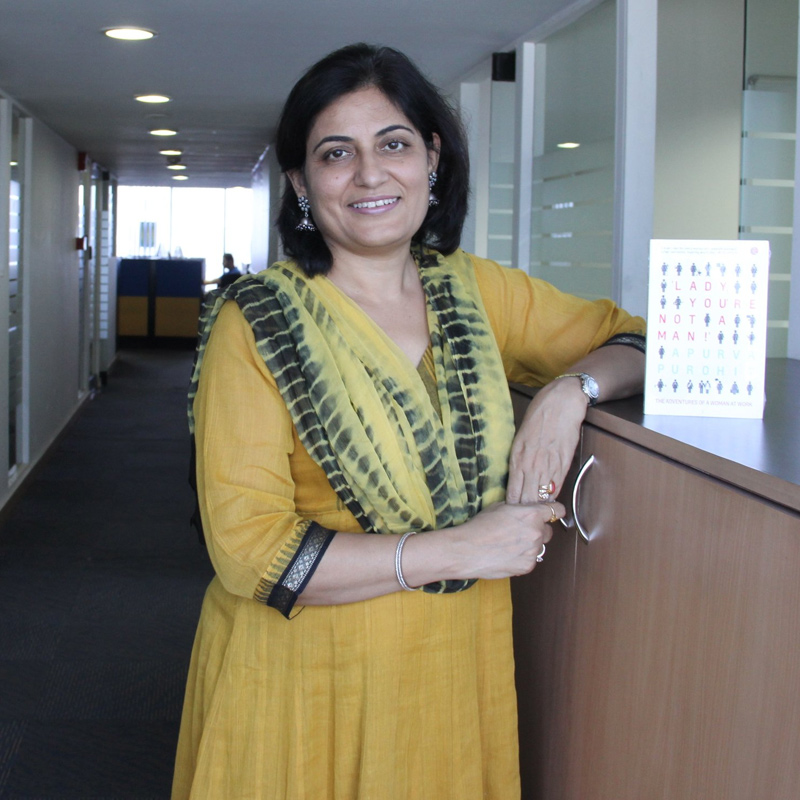
    Mumbai: Apurva Purohit, the president of the Jagran Group has announced her decision to step down, after working for over half a decade with the group and nearly 16 years with MBL (Radio City). She will remain with the organization till 30 June. 

    Purohit played a pivotal role in its transformational growth of Radio City as a leading brand in the FM radio industry. MBL went public in 2016 and is currently among the most valuable FM players in the public market. 

    “Apurva’s key strengths lie in her ability to simplify complex problems, build teams, and implement innovations and strategies in a focused and extremely effective fashion. Her understanding of consumer behavior and what drives change in people, and managing the tough business of media which requires both right and left brain thinking, and her business acumen have been invaluable to Jagran, especially in the last few difficult years. Her exit is a great loss to the Group,” said Jagran Prakashan Limited, group chief financial officer, R K Aggarwal. 

    In a statement released on Thursday, the company said Purohit helped the group to pivot from a deep-rooted reliance on its traditional print businesses to focus on new age emerging businesses. The strategies adopted under her tutelage and her emphasis on excellence in implementation have helped create strong and resilient verticals in radio, print, outdoor and digital with the ability to power through difficult economic scenarios, it added further. 

    Purohit has spent nearly 32 years in media, beginning with Lodestar to working in television, radio, print, and digital. “These three decades have given me incredible opportunities to build and scale up a diverse set of businesses – from fledgling ones like Radio City to new ventures like Times TV and supervising turnarounds in mature organizations like Zee TV. I will continue to use these experiences to mentor and guide CEOs and entrepreneurs to build valuable businesses, a role I have been doing for the past few years at Jagran and the other companies I am associated with,” Purohit said on Thursday. 

    Elaborating on her decision, Purohit added, “I have been reflecting recently, especially in this period of crisis, that it is the job of each one of us who has the ability and the resources to drive change, to worry about the economic situation around us and do everything in our power to create positive impact. This phase of my journey is about creating and funding businesses which work towards generating employment where it is needed, and at scale, a sorely needed initiative given the significant number of people who have been rendered jobless in the past year.”

  • Radio City, NMRC collaborate for customised content to Aqua Line commuters

    Radio City, NMRC collaborate for customised content to Aqua Line commuters

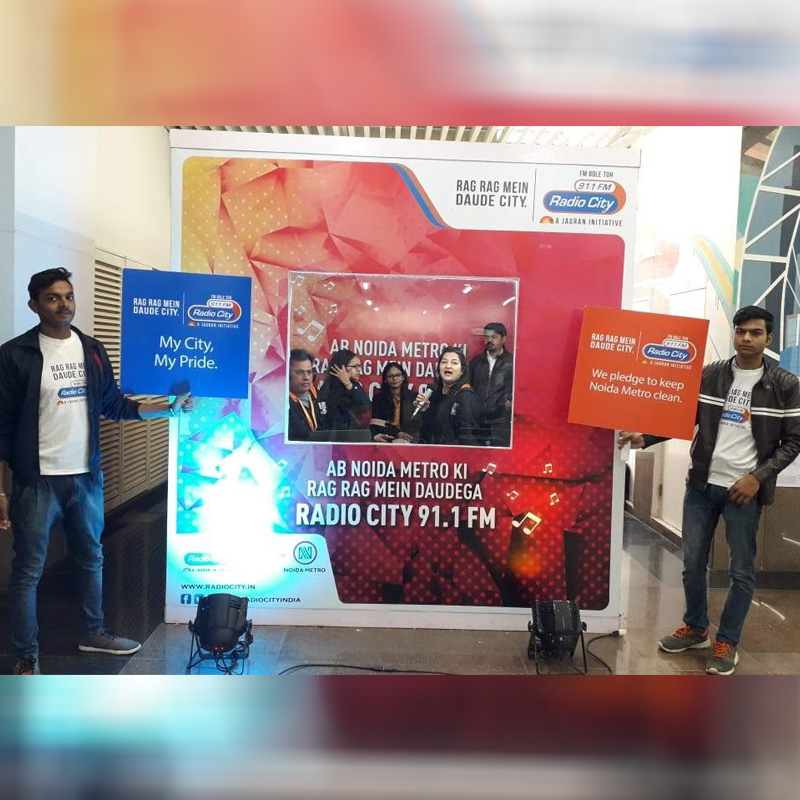
    MUMBAI: Radio City and Noida Metro Rail Corporation (NMRC) have partnered to provide the passengers of the newly-inaugurated Aqua Line with a unique in-transit entertainment experience. “Radio City NMRC – Noida Metro Ka Apna Radio Station” airs latest hyperlocal content consisting of music, entertainment, and trivia, in Hindi, focused around Noida, Greater Noida, and NMRC across all 21 stations of the line.

    After a successful partnership with LMRC (Lucknow Metro Rail Corporation), to offer specialised content across 8 Lucknow Metro Stations, Radio City replicates the feat amongst the listeners and commuters of Noida. The Aqua Line was inaugurated by Uttar Pradesh chief minister Yogi Adityanath on 25 January 2019 and the commercial services for commuters began on 26 January 2019. Radio City network is providing exclusive entertainment on the Aqua Line from the day of commencement of the commercial service.

    Commenting on the partnership with NMRC Jagran Group president Apurva Purohit said, “Radio City has always been a pioneer in creating innovative ways to provide listeners with content that is suited best for their preferences. Partnering with NMRC is a testimony to our expertise on exploring new avenues of entertainment in emerging fields such as the next generation mobility of hyperlocal experiences. Being the first radio network to provide customised in-transit entertainment to metro commuters, we believe this synergy will help us not only reach a larger audience base but also make their transit experience a pleasant one and give them specialised relevant content.”

    Noida Metro Rail Corporation CEO Alok Tandon said, “We are really excited about NMRC’s partnership with Radio City. Radio City is the best radio network when it comes to understanding the essence of the city and what connects best with its audience. Being one of the oldest players in the radio industry, we couldn’t have had anything better, and we look forward to this successful partnership.”

  • Radio City reports higher revenue & profits for first quarter

    BENGALURU: India FM Radio company Music Broadcast Limited (MBL) or Radio City reported higher revenue and improved profits for the quarter ended 30 June 2017 (Q1-18, current quarter) as compared to the corresponding quarter of the previous year (Q1-17). The company reported 17.3 per cent higher total income for Q1-18 at Rs 703.1 million as compared to Rs 628.4 million in Q1-17. Total comprehensive income (TCI) for Q1-18 increased 42.3 per cent to Rs 108.4 million (14.5 per cent of Total Income) from Rs 76.2 million ((11.9 per cent of Total Income) in Q1-17.

    MBL’s operating profit (EBIDTA inclusive of other income) in the current quarter increased 13.7 per cent to Rs 217.7 million (29 per cent of Total Income) from Rs 191.5 million (30 per cent of Total Income) in the corresponding quarter of the previous year. Profit after Tax or PAT in Q1-18 also increased 42.3 per cent to Rs 108.4 million (14.5 per cent of Total Income) from Rs 76.2 million (11.9 per cent of Total Income) in Q1-17.

    Total Expenditure for Q1-18 increased 11.7 per cent to Rs 584 million (77.9 per cent of Total Income) from Rs 522.7 million (81.8 per cent of Total Income) in Q1-17. Other expense in Q1-18 increased 9.9 per cent to Rs 258.2 million (34.4 per cent of Total Income) from Rs 234.9 million (39.8 percent of Total Income) in the corresponding year ago qurter.

    MBL paid 10.9 per cent more towards license fees for Q1-18 at Rs 51.9 million (6.9 per cent of Total Income) as compared to Rs 46.8 million (7 per cent of Total Income) in Q1-17. Finance Costs in the current quarter declined 5.6 per cent to Rs 38.6 million (5.1 percent of Total Income) from Rs 40.9 million (6.4 per cent of Total Income) in Q1-17. Employee Costs in the current quarter increased 10.4 per cent to Rs 171.3 million (22.8 per cent of Total Income) from Rs 155.2 million (24.3 per cent of Total Income) in the previous year.

    The company added eleven new stations acquired during Phase III auctions. All the 11 stations were operational for the entire quarter with utilization levels in new stations of 25 to 35 per cent. MBL says that 5 out of the 11 new stations were running at more than 30 per cent utilisation levels.

    Company speak

    Commenting on the results MBL director Apurva Purohit, said, “We have been able to deliver margins of approximately 32 per cent and show growth of 16 per cent despite additional operating cost of the new stations. This is because of rate hike in the legacy stations as well as better than expected utilization in the new markets. Our strategy of profitable growth and not bidding high costs for acquisition in Phase III along with maintaining lowest cost per million is delivery results. Going ahead in the future I see better utilization in our new stations supported by increased
    utilization and price hike in our legacy stations. We are confident on maintaining our current level of EBITDA margins
    and achieve our long term goal of profitable leadership.”

    ALSO READ :

    Radio City reports higher numbers

    Radio City launches initiative to felicitate regional film fraternity

    Music Broadcast plans IPO; to make buys

  • Vivel unveils inspiring video on #BossWomen

    MUMBAI: Unstoppable ambition and signature styles is what defines these non-conformists who aren’t deterred by gender stereotypes. Meet the #BossWomen who have blazed their own trails to the very top. 

    Vivel unveils an inspiring video series which explores their remarkable journey to shatter the glass ceiling in business. Their fearless pursuit of their dreams and the courage to say Ab Samjhauta Nahin brings to bear the indomitable spirit that continuously strives to encourage women to make their own choices.

    Jagran Group president Apurva Purohit underscores how women need to change. It is the woman who has to make the choice to be the protagonist, the victim or the bystander of her own story! Your Story founder and chief editor Shradha Sharma points that women easily love everyone around them but forget to love themselves and in the process ignore their own dreams and desires and settle for a life of compromises. Shradha’s message to all parents – “Love your girls for being girls.”

    ITC Infotech MD & CEO Sushma Rajagopalan urges parents to ignite a sense of ambition in a girl child right from a very young age. It is important to treat both small and big ambitions alike.

    Shardul Amarchand Mangaldas managing partner Pallavi Shroff stresses that the most important thing for a woman is to believe in herself that she is capable, competent and can do whatever she wants to do.

    Apollo Hospitals executive vice-chairperson Shobana Kamineni believes that a woman will always be faced with a multiplicity of choices but most of the decisions will be based on others. Thinking about yourself sometimes actually is good for everyone.

    The personal and professional journey of these industry stalwarts is a true inspiration. #BossWomen encourages women to stop compromising on their dreams and ambitions and help in raising a generation that lives and breathes Ab Samjhauta Nahin!

    Vivel Ab Samjhauta Nahin is a women’s campaign to crusade against time worn mind sets that tend to stereotype. It seeks to enable self-belief and self-reliance and thereby empower women to live fuller lives. Vivel not only celebrates a woman’s power, but also actively stands for her right to an equal life.

    https://www.facebook.com/ITCVivel/videos/1359403174081397/

  • Abraham Thomas is the new Radio City CEO

    Abraham Thomas is the new Radio City CEO

    MUMBAI: As of Monday, 23 November 2015, Abraham Thomas will join Radio City as CEO, after serving seven months as CEO for Hit FM. Thomas will replace Apurva Purohit, who was recently elevated to President of the Jagran Group after it acquired Radio City earlier in the year.


    Commenting on the new appointment Purohit said, “We couldn’t have got a better person than Abe to run Radio City. He is not only a highly experienced business manager but also extremely passionate about radio’s various facets- content, marketing and new distribution platforms like digital. Over the last decade we have built Radio City into a market leader in the FM industry, as well as a Great Place to Work across industries. Abe brings with him maturity and an outstanding ability to work with high quality teams which will only help take the culture of Radio City to greater heights.”


    To read full report click here

  • Radio City COO Ashit Kukian resigns

    Radio City COO Ashit Kukian resigns

    MUMBAI: After a decade long stint, MBPL COO Ashit Kukian has decided to move on.


    He will, however, continue till mid-November and help in navigating the transition.


    Kukian has been part of the founding team, which grew Radio City from a four city brand to a national presence and been integral in building Radio City to its current stature.


    MBPL CEO Apurva Purohit said, “Ashit has played a key role in the exciting journey of Radio City over the last decade. We will miss him, and I take this opportunity on behalf of the entire team at Radio City to wish him all the very best in his future endeavors.”


    Kukian added, “The last decade has been a fantastic run, and I’ve enjoyed every bit of this journey. We’ve got a terrific team at Radio City, and I know the brand will only grow from strength to strength.”


    Prior to venturing into the radio industry, Kukian had a 13 year stint with Bennett Coleman & Company.

  • Radio City Super Singer returns with Season V

    Radio City Super Singer returns with Season V

    MUMBAI: FM Bole Toh Radio City is back with Season 5 of Radio City Super Singer across India. Taking off from the super success last year, this time Radio City Super Singer assumes a scale larger than ever before.The winner gets felicitated with a prize money of Rs. 1 Lakh and a break with popular music directors across India. The mega talent hunt rolled out carpets on the 8th of September, across India.

    Radio City Super Singer is one of the biggest celebrations of music on an FM radio platform. For the first time, Radio City introduces a WAP site, where participants can upload their audio clips through a simple log-in (http://myradiocity.in) from any mobile phone. Other than this, interested contestants can avail of any of the traditional avenues of auditioning. They can either come and audition at our studios or upload / record voice clips on the Super Singer Tab on our Facebook page. The other options include the on-ground auditions (malls & colleges) & IVRS.

    The auditions are followed by short listing a few contestants who have an edge over the others. Rough edges will be polished off, as the shortlisted few get trained by musical geniuses. The final five across each city will fight it out for the title of ‘Radio City Super Singer’.

    Speaking about Radio City Super Singer, Ms. Apurva Purohit, CEO, Radio City 91.1 FM, says, “Radio City Super Singer started as an experiment & was the first ever talent hunt by a radio station. Through the years it has grown in stature & size to carve a niche & become one of the most awaited engagement activities. Last year we had over 80000 enthusiastic singers across the country registering & auditioning with us. The aim has always been to discover the amazing singing talent from across the country and provide a platform that befits the talent. By the sheer number of touch points we create, we reach out to people like no other property does. Moreover, this is the only singing talent hunt show in India that runs in 5 languages (Hindi, Telugu, Tamil, Kannada & Marathi) at the same time. The overwhelming success of the previous years not only justifies our aim but also makes us want to scale newer heights.”

    Radio City Super Singer has emerged as an incubator of talent through the years, bringing India’s latent talent to the limelight. This year, our winners get a head-start in the music industry, with the opportunity to work with eminent music directors across India. Additionally, they get featured on ‘Freedom Hour’ – an hour dedicated to unplugged music on Radio City. Radio City Super Singer wraps up on the last week of September.

    Radio City Super Singer pits singers of contemporary music across a cross-section of genres, to compete against each other.. Through the years, the talent hunt has carved out a fan-base of its own. This time, it just gets bigger and better.

    Stay tuned to Radio City 91.1 FM to get more updates on Radio city Super Singer, This year the hunt for the best voice takes place across Mumbai, Delhi, Bangalore, Chennai, Lucknow, Hyderabad, Pune, Jaipur, Baroda, Surat, Ahmednagar, Nagpur, Vizag, Coimbatore. Also log on to www.facebook.com/radiocityindia.

  • ‘Future scoping Indian private FM radio’-Apurva Purohit, CEO, Radio City 91.1 FM

    ‘Future scoping Indian private FM radio’-Apurva Purohit, CEO, Radio City 91.1 FM

    For the radio industry, 2007 was a year that started off with several distinct lacunae; with concerns such as differentiation, measurement, talent and regulation top of mind for most broadcasters.

    While we, at Radio City, took the lead to differentiate with ‘Whatte fun’ and a vibrantly melodious station sound, various other national brands realigned their vision and brand stance.

    There’ve also been two developments greatly significant to the industry as a whole. The first would be the advent of Radio Audience Measurement (RAM) – a robust radio measurement system which we, along with TAM and a few other broadcasters took the lead to introduce. Since its presence in the industry, RAM has been an invaluable tool – both for the industry, planners and advertisers alike. It allows media planners to showcase the saliencies of using the medium by demonstrating the cost-benefit analysis. This would embolden planners to recommend radio to advertisers who seeing the merit of this research-backed proposition would in turn, enhance their spends on the medium.

    The second would be the convergence of radio broadcasters across the nation under the aegis of the Association of Radio Operators of India (AROI). With the setting up of a high powered governing council from radio operators across the nation, we believe the AROI will emerge as a very strong entity which will work aggressively towards the progress and strengthening of this medium and industry in the year to come.

    Thus with steps taken in the right direction in 2007, 2008 will see radio further on the rise!

    Advertising

    The numbers are gradually increasing and it is encouraging indeed. Rather than the pace of this growth, it is important that the growth be stable and sustained. Internationally, radio comprises seven-15 per cent of the overall advertising pie. In India, this number varies from three -3.5 per cent (approximately INR 500-550 crore) which clearly shows the potential of business yet to be explored.

    This bodes very well indeed for an industry which is seeing daybreak through growth and a robust measurement system like RAM which justifies the revenues spent, to advertisers.

    The future

    The Indian private FM space is clearly booming. While Phase II is still rolling out, Indians in 91 cities stand to gain access to private FM as an entertainment option. Given the pace of this rollout, one can expect these stations to be ‘FM active’ by mid to late 2008.

    While this happens, Phase III is round the corner with 97 FM radio frequencies on offer. Given that this wave would settle by mid to late 2008, one can expect these Phase III stations to unfurl by 2009-2010.

    These numbers alone make the organic growth spurt of FM radio very obvious. This growth, coupled with robust radio measurement (RAM) and the easing of regulations will see FM radio as a medium of entertainment, become one of reckoning.

    2008 will see Radio Cithy adding to our list of ‘firsts’. As a leading player in the radio space, we remain committed to deliver a sustained, unmatched melodious radio listening experience to our listeners across the nation. Providing originality to the medium through programming and music, based on robust research, is part of our plans for the next few months.

    Frgmentation

    Fragmentation is good – both for the medium and for the audience. While it offers the audience choice entertainment options, it also ensures that the players up the ante in securing their share of the pie.

    We have witnessed the exact same phenomenon a decade or so ago in television. And what did that do to television? While for starters even smaller, niche channels started getting monitored, this added to their revenues by advertisers with niche propositions investing in them. And today, 50 per cent of advertising revenue in television is going on to segmented offerings today.

    Look at the advertiser. By virtue of having segmented product offerings he himself needs segmented media vehicles for him to optimize media spends on his specific target group. Such an approach, contrary to a carpet bombing strategy, allows for higher return on investment (ROI).

    We saw the lack of fragmentation or segmentation in radio as an opportunity. Vis-?-vis a carpet bombing strategy, it is intelligent business to be meaningfully relevant to a select audience. Which is why we took the lead this year and identified our distinct target audience SEC AB 25-44 years and it has worked marvelously for us.

    FM Phase III

    2008 comes with the likelihood of several industry expectations being addressed.

    With Phase III and the further expansion of the coverage of FM radio, it is very likely that the Ministry will revisit pressing issues such as raising the FDI ceiling for radio broadcasting, allowing broadcasting of news and current affairs, allowing broadcasters to operate multiple frequencies in the same city among others.

    The resolution of these issues is likely to open up the market and further enhance penetration of the medium across new and existing markets. This would also make Indian private FM radio more attractive to potential investors, encourage the influx of niche channels and contribute to the overall profitability of the business and the industry as a whole.

    Innovation of formats

    In the year gone by, radio as a medium has emerged from a supportive medium to a preferred medium to reach out to the masses. Radio by itself is a habit forming medium which creates a deep personal connect with listeners with the music and the c the obvious pull factors for the listener.

    Thanks to the boom in Indian private FM by way of newer stations coming up across the country, the listener today is more evolved and highly sensitized to the medium. This makes it very important for any brand to engage him proactively in a manner which he can relate to, through value-added initiatives which are ‘meaningfully relevant’ to him.

    The spectrum of options in addition to vanilla product promotions/ radio spots and contests, now also includes value-added propositions such as content integration, brand mentions woven in the RJ’s script and ground activation directly involving the listener.

    Value added outdoor activation led initiatives create an additional point of interface between the listener and the FM station thereby bringing both meaningfully closer. In doing so, they help make the brand proposition tangible for the listener by creating a unique and memorable brand experience. It is this listener experience which is so invaluable and goes a long way in enhancing listener loyalty and recall.

    Radio advertising – moving beyond the mundane

    Innovations in radio advertising which are beyond the obvious, yet very relevant to the listener, create an excitement among the audience with a superlative impact on the advertiser’s business. Advertisers are certainly open to trying out new, innovative propositions. A value proposition which allows the advertiser enhanced benefits over a vanilla radio spot would always interest him. Our teams are known to excel in this domain by devising customized solutions after an in-depth understanding of the advertiser’s product offering and specific marketing needs.

    2007 has seen its share of innovations in radio advertising. This is on the upswing and as radio branches out beyond the air-waves with on-ground activation, it only goes higher up the value chain of benefits – both to the listener and the advertiser.

    Increasingly, radio is being seen as part of the 360 degree effort to engage the consumer through a mix of radio interactivity, activation and BTL promotions forming a very comprehensive and accountable option to the typical use of mass media.

  • ‘Radio will certainly see consolidation next year’ : Apurva Purohit – Radio City CEO

    ‘Radio will certainly see consolidation next year’ : Apurva Purohit – Radio City CEO

    The radio industry is poised to make its next big leap as radio stations gear up to implement the Phase 2 licenses. The metros have been covered and it is now the turn of the smaller cities to experience FM magic. Radio City has been a pioneer in the FM boom with the first ever FM station in India- Radio City, Bangalore set up in 2001.

    Five years on Radio City CEO Apurva Purohit details the changes in this dynamic industry and all the challenges it’s yet to face in an interview with Sujatha Shreedharan from Indiantelevision.com

    Excerpts:

    The Phase 2 bidding has seen the major networks, including Radio City, expanding their footprints to cover mini metros. What are the unique challenges one would face when it comes to setting base in a small local setting?
    Clearly, when we had decided to go in for the second phase of bidding we had decided to restrict ourselves to metros and mini metros only. Essentially what we were saying is that we will go for the top 15 cities where we have over 70 per cent of the advertising revenue and they are in certain tone and manner and feel similar to the large towns we have been operating in.The only exception is the whole Maharashtra belt which includes Ahmednagar and the smaller stations. And this is a call that we took because networking is allowed only in these cities which means you set up your network in Ahmednagar and run Sangli and Nanded from that station. We took that call because we wanted a network station in our portfolio. Also Maharashtra is a rich state and works from the advertisers perspective. We also believe that our SEC A and B market are not dramatically different in these regions whether it is in terms of sophistication, exposure to media or even exposure to FM. They may be at different life stages but in terms of consumer, percentage of SEC AB population, income level or education or even ethos they are broadly similar. Also you must remember that we have been running the Lucknow FM station for five years. We have the experience of running a FM station in a mini metro and we hope to translate this experience into other smaller cities.

    What about the language and flavor of these upcoming FM stations?
    Radio City does believe in typically adapting itself to the local flavor. At the same time you must remember that we are positioned as a premium, up market SEC AB kind of stations. Therefore our language mix does tend to be different from the typical mix than a mass station is concerned. For instance in Bangalore we do run a lot of English, Hindi and Kannada whereas the other stations are typically Kanada stations. In Chennai, we are very much English and Tamil. In that sense, the kind of RJ talk will be focused on the premium market.

    What about a city like Pune?
    You know Pune is culturally very similar to Mumbai, so that is the kind of mix one is likely to find. Of course it will be adapted to the local culture of Pune which is rich in theatre or Marathi music.

    With the setting up of stations in mini metros, Radio City will now look at dual competition – from existing network players who are also setting up their stations as well as from single city players. How will you tackle that?
    Certainly the local players have taken a single city or selected a particular city because of various reasons like their already established status in say print or publishing. So they are very focused and are able to get into a mass position because they are local. Besides radio while it may have a national brand, does tend to also try to be local. So there is competition. Big, small, single city networks – they are equal competition. The other thing is that I think the position we have taken which has evolved over the last five years is differentiated not only from single city players who are local or mass but also the network player. What I am trying to say is that single city players tend to take the bottom end of the pyramid – local, regional, SEC ABC, while network players have taken the SEC AB kind of position which is mass but on a network level. Direct competition is therefore the network players, while local stations tend to be competition to players like RED FM.

    What about advertising revenue accruing from mini metro stations?
    In fact content is where you could say that differentiation gets greyer. As far as revenue is concerned, that’s a no-brainer since we are trying to get ads from the corporate clients and large national players. In that sense the local players are no competition. The question to ask is – Is the advertiser trying to buy radio because you also have print or is the advertiser trying to buy a good network which is either number one or two. We are very clear that we as a network focus on the right kind of network in 15 of the top cities. In revenues there is no competition. As far as content goes, there will be competion with local players.

    A few years ago, differentiators were perhaps easy to identify within the few radio players. With the numbers growing how does one still hold on to or reinvent that differentiator?
    I think the whole industry is in a state of flux. My opinion is that now, when the newer players come in they will have to recognize that if they want to grow the listenership pie they better come in with different options. The newer guys have to come in with different languages or different formats and personally if you ask me that is not happening right now. All the newer guys have really not lived up to our expectations of trying to build a differentiator and as you are rightly saying therefore today there is a mass of similar feel players. You could also say that there are certain brands which have been there for five years and therefore they have equity and there are others which are just entering the market and they are broadly similar. You must also remember that the investments in brand building have happened only recently. Before this the whole industry was struggling to find its own feet. In that sense the industry is still very nascent in terms of trying to build an image for itself. Given those kind of issues and challenges, we have been trying to portray Radio City as a brand, say, which is different from a Radio Mirchi perceived as a more aggressive and in your face – teeny bop kind of station to our more softer, slightly older 25- 30 years, premium listenership. And that has developed over a period of time and is becoming clearer only over the past year or so. Sure, the differentiation worked in a non competing market. Today, however, you have to take it to the next level and we at Radio City are doing exactly that- pushing this whole process of identifiable branding to the next level.

    Could you explain how you plan to do so?
    It is a little premature to say that, except that the intent is very much there. But if you had to look at international examples certainly there are differentiations that could be built in at the psychographic and demographic segment. Even demographically, what an 18-year-old youngster wants is different from what a 25- year-old youth wants although they may fall under the similar youth category. So if there is a difference in the kind of music they aspire to hear, they must be given that. And the radio that pushes this difference will be the radio station that stands out in the long run. I think where people have failed is that they have tinkered with the branding or marketing story but have done nothing different with the product. At Radio City we are very clear that we will only talk about the differentiation when we can actually demonstrate it in the product. No one has made that differentiation although we have tried various innovations. With Mughal-e- Azam or Babbar Sher or more chat shows. But we believe that we can really fine tune the product far far better.

    Is there a sense that this overdependence on Bollywood by all FM stations is the real cause of similarity in programming?
    I think that there is Bollywood and then there is an equally vibrant music industry although we tend to put them all in the same basket. But if you remove the animal out of the Bollywood cage, then you will realize that there is almost a 100 years worth of beautiful music. It’s just that a lot of it happens to be mostly from Hindi cinema. Ultimately it’s the music of the nation. All of us are using popular music and that is a fact of life. We are ultimately mass stations aren’t we? If we were niche stations we would have jazz. But it’s not fair to say that Indian radio stations are equal to Bollywood and therefore ‘Che!’ They are not different. Internationally also all mass stations do look at popular music. Almost 80 per cent of international stations play popular music except that they are able to differentiate themselves in terms of appealing to a particular target group or by playing only a particular ‘sound’. Unfortunately in India, we are yet to go to that second level. This can be due to various reasons- nascent industry, unsound policies. Besides how old is this industry? About five years old. Out of which four years we spent struggling to stay afloat. It’s very easy to beat up this industry with the ‘Bollywood tag’. But we’ve barely stabilized over the past two years. So there’s no doubt that the differentiation has to come and will come. And it will be led by pioneers like Radio City. If you ask me, even within the context of popular music you can differentiate.

    How long do you think this process of evolution will take place?
    According to me FM started evolving last year when the government announced regulatory corrections and a fresh package. Look at the growth since then. We have grown in stations. The number of players in each city has also increased and even in terms of content – you have an Indigo which plays English music or a Fever FM which experiments with format radio. So one phase of evolution has already happened. The second phase of evolution will start now where players like us really chart out our different positions which will happen in the coming six months. Then there will be an era where there will be more consolidation and regrouping. Some players will fall by the wayside, some players will push ahead. In the next year there will certainly be a lot of consolidation. Then there is the station setup, scaling up. A year ago radio city had about 100 people. We are now looking at having about 300-500 people in the next few months. Isn’t that a spurt? The natural evolution in any other industry would have been ten years; we have done that in three years.

    ‘The natural evolution in any other industry would have been ten years; we have done that in three years’

    Do you believe that there is bound to be a clutter with the number of radio stations coming in?
    I don’t think there will be a clutter, but in the frenzy to launch radio stations I believe that learning will not happen as it should. Learning and qualitative inputs. There is no luxury to actually test market a product or try a pilot launch. Now you say, lets launch first and we’ll figure out in the market if it needs to be changed.

    There is a huge debate over the tools used to measure listenership and advertising on radio. What does Radio City turn to?
    Of course the first thing that this industry needs to do is set up a robust currency to determine advertising and listenership. There is a strong movement towards it and sooner rather than later it will have to evolve. We prefer to use NRS and then we have Synovate which does our brand research for the last three quarters. We are just waiting for the industry to stabilize before we declare these findings publicly. We are looking at listenership understanding, listenership pattern in different cities, psychographic and demographic pattern.

    Is the industry complaining about the FDI regulation in radio which allows for only 20 per cent foreign equity?
    Currently we are happy with whatever the government has allowed considering we spent five years working hard to convince them. We are quite ecstatic about what we got. I think the government itself needs to realize that the industry is in a state of buoyancy and it must give whatever impetus it can – news and current affairs license, networking, multiple frequencies or FDI. Quite honestly, the first three rather than FDI.

    Is Radio City looking at multiple licenses and what kind of stations would you be interested in?
    Yes we would. But for now it would be like blue sky gazing. We would look at news and current affairs, different genres of music, spirituality or even different languages.

    Is there a worry about lack of a sizeable talent pool to choose from?
    Talented and skilled people is something all radio stations are worried about. Where does one get trained people from? You have to do your own training. Fortunately we realized sometime ago and we have invested reasonably in increasing the skill set. Since we’ve been here for five years, we have had a large number of people working for us. Even then it has been a challenge for us.The other problem is of course being attractive enough as an employer for a talent pool to come to us. We try to build ourselves as a brand which is informal or a fun place to work. Very ‘un media’ is how I would describe it.

    What does the re entry of Star mean to Radio City?
    It is purely an investment decision at a shareholder level. At the operational level of the company it has zero impact. And besides we have alliances with most networks as clients or media partners – DNA, Zee, Sony and Star. So there won’t be any special content tie ups with Star. So operationally nothing, it’s purely an investment decision.

    Can you give a comparative understanding of how radio looks – 2006 versus 2007?
    In terms of the ad pie there has been no dramatic change. While there has been a 30 to 40 per cent growth, there will be no big change since the new stations have not been all set up and operational. Between 2005 and 2008 one is looking at doubling the industry. It will grow from 2.5 to a minimum 5 per cent simply due to geographical coverage area. In fact we would have more than doubled if there were far more genres on offer. It won’t go up to a 60 per cent unless people start segmenting and providing different products. If I were a new player, that’s a question I would ask.

    What about the revenue and listenership growth at Radio City in the past year?
    Revenue wise we have clocked a 40 per cent growth last year. As for listenership, if I were to give a Bangalore example it has grown from 1.5 million to about 2.5 million listeners which is almost 60 per cent growth.
    Radio City has also jumped on the bandwagon to have celebrity RJs on air?
    We are very clear that a celebrity won’t work unless it’s what the programme wants or what the brand wants. Using a celebrity just for the heck of it won’t work. Taking a TV star and putting him on radio is just gimmicky. We concentrate on RJs in terms of their music understanding power. Sonu Nigam speaks about Mohammed Rafi, Roop Kumar Rathod talks about ghazal maestros. In so far as the celebrity enhances the music experience on our audience, we’ll entertain the concept. And this is the case for all radio stations, not just Radio City.
    What about the music industry and the high rate of fees it charges radio stations?
    Somewhere we will have to understand that radio will only help drive their CD and DVD sales.The cost of purchasing music must be justified. We as a large network may deal with it but what about smaller stations.
    Radio City recently tied up with Vibgyor Brand Services for on ground activation? What kind of details have been discussed since the launch?
    We are in the process of client briefings with various advertisers. We are already offering one level of on ground activity. But our clients are asking us for more than just sales promotions. They want more exciting ways of integrating our client’s needs.
    What according to you would be the next fillip for radio?
    The next fillip is of course the launch of stations in 91 cities. After that, the sky is the limit. How we use radio with net, outdoors, events, with new age media will also come under sharp focus. Look at radio and mobile. Radio used mobile much better than television. We receive 2-3 million text messages from one city, while television sees that number nationally. As for us, currently we are in the process of setting up our stations in Gujarat – Surat and Ahmedabad – and are in the process of employing people.
  • Star plans radio re-entry, to pick up 20 per cent in  Radio City

    Star plans radio re-entry, to pick up 20 per cent in Radio City

    MUMBAI: Star Group plans to pick up 20 per cent in Music Broadcast Pvt. Ltd. (MBPL), marking a re-entry into the private FM radio business.

    Star is buying the stake from India Value Fund, (earlier GW Capital) a venture capital fund. With this, India Value Fund’s holding will drop from 75 per cent to 55 per cent.

    In early 2005, Star had sold its stake in MBPL, the company which operates its FM radio stations under the Radio City brand, for Rs 300 million. India Value Fund had acquired a controlling stake in MBPL.

    “Star is buying back the 20 per cent it had sold earlier in MBPL. The radio business is set to explode with the government changing its policy and opening up the second phase of private FM expansion,” says a source close to the company. He, however, could not confirm the price Star is paying to acquire the stake.

    MBPL chief executive officer Apurva Purohit was not available for comment. Star officials also could not be reached. The government regulations permit only 20 per cent foreign direct investment (FDI) in the FM radio business.

    In May 2005, Star had discontinued its arrangement of supplying content to MBPL. Later in the year the country’s biggest television network in terms of revenue also ceased doing air time sales for Radio City.

    Since the inception of Radio City, MBPL had contracted Star to provide its expertise in the areas of programming, ad sales and marketing. The operations were handled through DigiWave, a 50:50 joint venture between Star and the PK Mittal-promoted Ispat group.

    Radio City is already operational in seven cities comprising Mumbai, Delhi, Bangalore, Lucknow, Hyderabad, Chennai and Jaipur. The plan is to launch in 13 more cities including Ahmedabad, Surat, Baroda, Sangli, Akola and Nagpur.