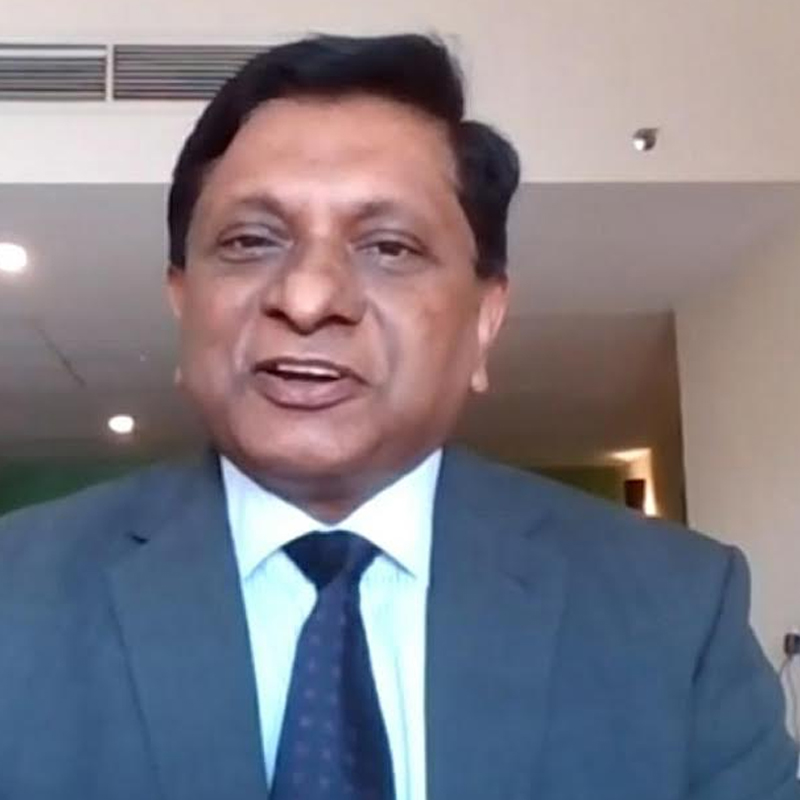
Tag: Apurva Chandra

  • Apurva Chandra talks about credibility of social media, RPD and direct-to-broadcast: CII The Big Picture Summit 2022

    Apurva Chandra talks about credibility of social media, RPD and direct-to-broadcast: CII The Big Picture Summit 2022

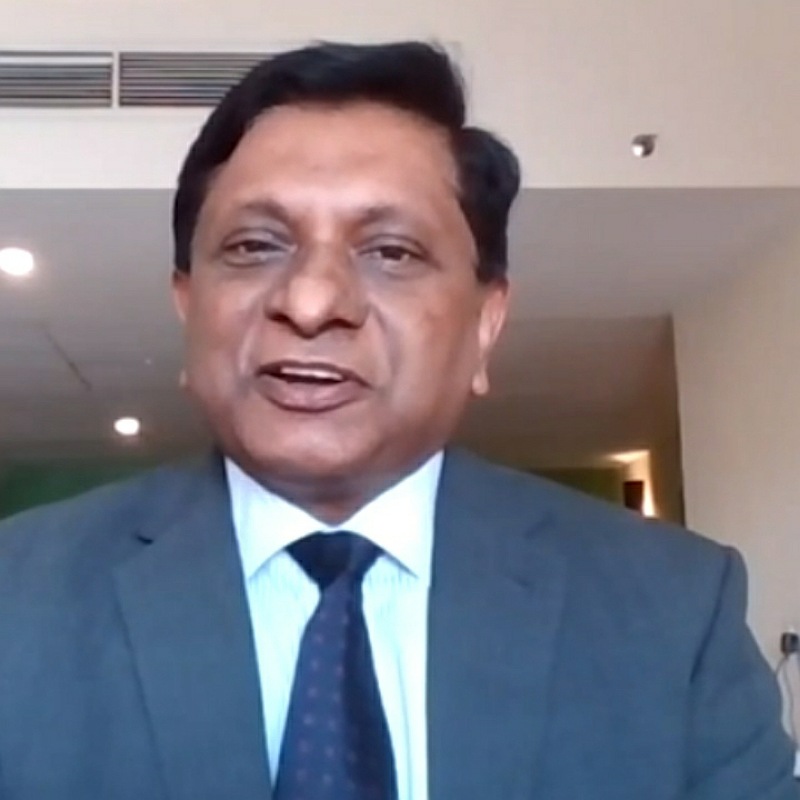
    Mumbai: At the Big Picture Summit organised by the Confederation of Indian Industry (CII) on 16 & 17 November, among the many dignitaries that were in attendance and spoke on various topics, the ministry of information & broadcasting (MIB) secretary Apurva Chandra was also present.

    On his recent visit to the Global Media Congress in Abu Dhabi, he made some observations and spoke about the same. He raised his concern (as well as the concern of many) with regard to the fact that the use of social media is on the rise and traditional media is on the decline.

    “The use of social media is increasing – that is how the consumption of media now takes place. And within that too, there is the short video format, which has become more popular. In fact, I was surprised to learn that youngsters now turn to TikTok for search and not Google anymore – TikTok has now become a more popular search engine as compared to Google because nowadays short videos are available for anything and everything,” he stated.

    Chandra elucidated that now there is an issue of credibility. “For people of our age, the credibility of the media is paramount. Achieving credibility in social media will be the challenge. The media authorities will also have to consider that viewers’ tastes are changing towards shorter and shorter versions.”

    He went on to reveal that the next big thing that MIB is working on is direct-to-mobile broadcast. A pilot study by IIT Kanpur and Sankhya Labs on direct-to-mobile broadcasting that had been undertaken in Bengaluru has been successful; a similar pilot study will be launched soon in Noida or someplace near Delhi.

    He added, “There are 20 crore households, 60 crore smartphone users, and 80 crore broadband users. Once we start direct-to-mobile broadcasting, the reach of the TV media would be much higher.”

    Additionally, Chandra mentioned that they are also working on the issue of TRP ratings.

    “The reverse path data (RPD) pilot has also been successful; the report has been submitted. We will now take it forward on integrating more and more RPD. The major concern was that the number of households involved in Barc ratings is very low and it should be increased. Once RPD is implemented, the TRP will become much larger,” he assured.

  • I&B ministry proposes guidelines for encryption of channels

    I&B ministry proposes guidelines for encryption of channels

    Mumbai: In an organised press briefing on Wednesday, the ministry of information & broadcasting introduced revised uplinking and downlinking guidelines for TV channels in India, as I&B secretary Apurva Chandra informed. The earlier guidelines were issued in 2011.

    As per the new guidelines, the encryption of channels is now mandatory for all bands other than C band.

    The following objectives are set to be achieved by the proposed guidelines:

    1. Ease of compliance for the permission holder:

    The proposed guidelines give importance to ease of compliance for the permission holder.

    a) There is no requirement to obtain prior permission for live event telecasts; only the pre-registration of events would be necessary.

    b) The requirement of prior permission for a change of language or conversion from Standard Definition (SD) to High Definition (HD), or vice versa is also not required.

    2. Ease of doing business

    a. The guidelines proposed a specific timeline for the grant of permission.

    b. Limited liability partnership (LLP) entities can also seek permission.

    c. A news agency can get permission for a period of five years instead of one year.

    d. A channel can be uplinked by using the facilities of more than one teleport/satellite, as opposed to only one teleport/satellite.

    e. The new guidelines have removed certain restrictions on the transfer of a channel from one entity to another.

    f. A teleport operator can uplink a foreign channel for being downlinked outside India, enabling earning of foreign exchange for the operator.

    3. Simplification and Rationalisation

    a. One composite set of guidelines instead of two separate guidelines;

    b. The structure of the guidelines has been systematised to avoid duplication, and common parameters, including financial requirements, etc., have been placed in appendices;

    c. The penalty clauses have been rationalised to separate the nature of penalties that have been proposed for different types of contraventions as opposed to the uniform penalty as at present.

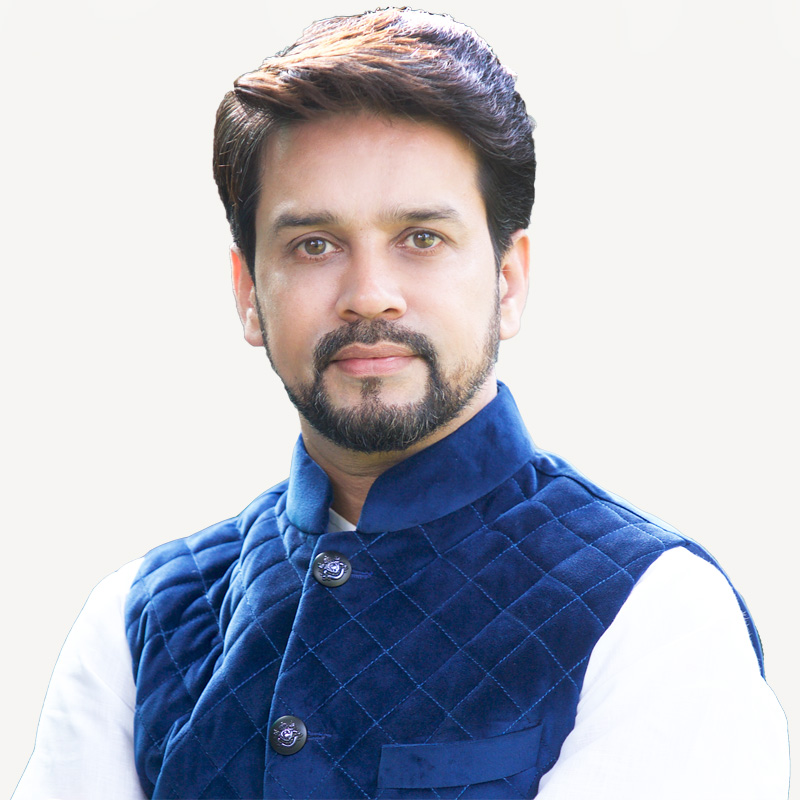
  • The mainstream media channel poses the largest threat to the industry: I&B minister Anurag Thakur

    The mainstream media channel poses the largest threat to the industry: I&B minister Anurag Thakur

    Mumbai: The union minister of information and broadcasting Anurag Thakur stated at the 47th annual gathering and 20th meeting of the Asia-Pacific Institute for Broadcasting Development (AIBD) that the biggest threat to mainstream media is not new age digital platforms, but rather the mainstream media channel itself.

    He went on to say that true journalism was about confronting the facts, telling the truth, and giving all sides a platform to express themselves.

    The minister stated that inviting guests who are divisive, spread false narratives, and shout at the top of their lungs undermines a channel’s credibility.
    “Polarising debates pull down the credibility of the channel. Journalists are duty bound to report the news without fabrication,” he added.
    He further shared, “Your decisions regarding the guest, the tone, and visuals define your credibility in the eyes of the audience. The viewer may stop for a minute to watch your show, but will never trust your anchor, your channel, or brand as a trusted and transparent source of news.”

    Thakur urged the presenters not to let the narrative be defined by soundbites, but to redefine it themselves and set the terms for the guests and the channel.

    He prodded the audience, asking, “Are you going to watch as the younger audience switches and sweeps through the shrill on TV news, or are you going to bring back the neutrality in news and debates to stay ahead of the game?”

    Speaking on the theme of the event, “Building a stronger future for broadcasting in the post-pandemic era,” the minister remarked that, “though broadcast media is and has always been in the mainstream of journalism, the Covid 19 era has shaped its structure in a more strategic way. The Covid pandemic has taught us how the right and timely information can save millions of lives. It is the media which brought the world on one platform during this difficult phase and reinforced the spirit of one global family.”

    Presenting the role of the Indian media during the pandemic as a success story, he said that the media ensured that Covid-19 awareness messages, important government guidelines, and free online consultations with doctors reached everyone in the nook and corner of the country.

    Thakur also prodded the member countries to set up cooperation in the area of good quality content exchange. Program exchanges through such cooperation bring world cultures together. Such media partnerships between the countries help in building strong people-to-people bonds, he commented.

    In conclusion, the minister underlined that the media, in all its forms, has an immense ability to shape public perceptions and perspectives as an effective tool of empowerment. “It is imperative to create an enabling environment for our journalists and broadcasters to make the space of the media more vibrant and rewarding,” he added.

    At the event, the union minister of state for information and broadcasting (I&B) Dr. L Murugan, secretary of MIB Apurva Chandra, Prasar Bharati chief executive officer & AIBD president Mayank Agarwal, and AIBD director Philomena Gnanapragasam were present at the event.

    Agarwal highlighted that with an increase in the use of the internet in broadcasting, the training of journalists in cyber security journalism has become imperative. He added that AIBD is the first set up to take this up as part of its training programs.

    Philomena Gnanapragasam said that content is going to determine the future of media and how the content is shared and monetised will determine the future of broadcasting. She also thanked all the delegates and representatives of various organisations for their presence.

  • MIB secretary Apurva Chandra visits Tata Play’s technology centre

    MIB secretary Apurva Chandra visits Tata Play’s technology centre

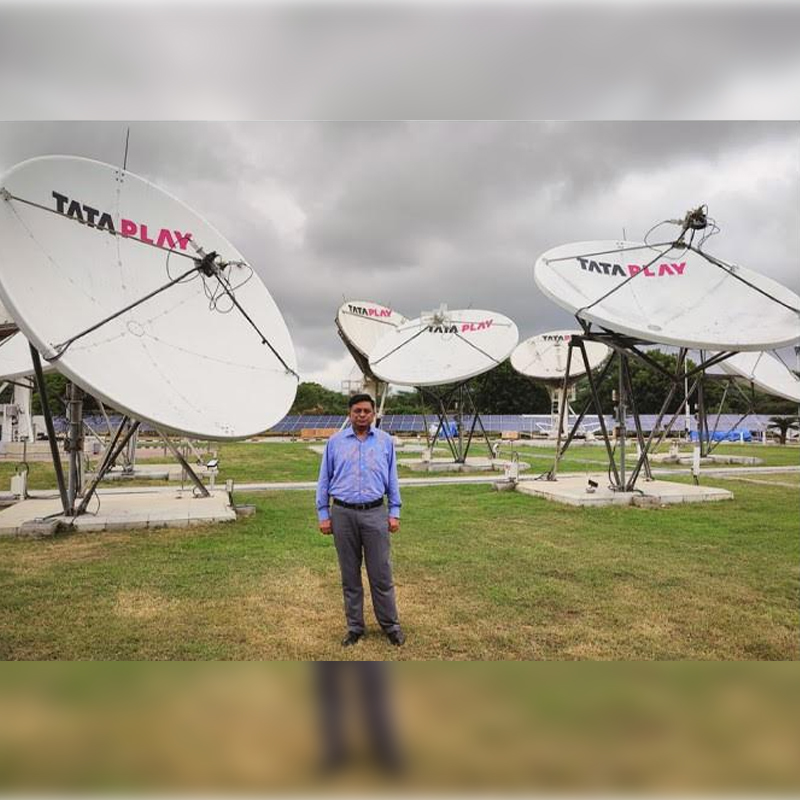
    Mumbai: Ministry Information & Broadcasting (MIB ) secretary Apurva Chandra has visited Tata Play’s technology center in New Delhi to explore how Tata Play is leveraging technology and providing benefits to the end consumers.

    While exploring various ideas about technology that can benefit the customers, Chandra spent a considerable time understanding the complexities of a content distribution platform and steps Tata Play is taking to boost Make in India efforts for manufacturing set-top-boxes.

    During his visit, the Tata Play team demonstrated to Chandra the complete satellite communication and direct-to-home (DTH) delivery workflow and discussed other topics of mutual interest.

    Last year, Tata Play launched the first batch of Make-in-India set-top boxes in association with Technicolor Home and Flextronics. Earlier, Tata Play’s managing director & CEO Harit Nagpal had said that the India made set-top boxes would help generate employment and serve Indian consumers better.

    Tata Play has invested in advanced digital infrastructure and partnered with global leaders to provide superior technology. The company has a pan-India footprint of 23 million connections.

  • MIB to distribute 1.5 lakh Free Dish in remote areas of J&K

    MIB to distribute 1.5 lakh Free Dish in remote areas of J&K

    Mumbai: The government will distribute 1.5 lakh free dish in far-flung areas of Jammu and Kashmir, the ministry of information and broadcasting secretary Apurva Chandra said on Tuesday during a visit to Kangan Sub Division of J&K to assess the outreach of DD Free Dish in the area.

    The free dish services are proposed in the areas where cable services are unavailable, the government said. The government said that the tendering is under process and will be completed soon.

    The union secretary was accompanied by All India Radio principal director general (news) N. V. Reddy; Doordarshan director general Mayank Agarwal; Press Information Bureau Srinagar additional director general Rajinder Chaudhry, News DDK Srinagar deputy director Qazi Salman and the officers of the district administration.

    Chandra highlighted the importance of providing free-of-cost services to the masses. He said that the service is being distributed in remote areas of Kashmir and its ambit will be increased in the times to come. 

    Chandra also commended Doordarshan Kendra Srinagar for “aptly representing the local culture and traditions through its programmes reaching the people with authentic information.”

    The I&B Secretary also interacted with locals using DD Free Dish at Margund Kangan who shared their feedback about the programmes available on various channels, especially DD Kashir.

    “The scheme will help in keeping the people updated about different developmental initiatives and also inform them about the local as well as national events of importance,” stated a local Abdul Rashid Sheikh.

    DD Free Dish is owned and operated by public service broadcaster Prasar Bharati. It was launched in December 2003 and reaches 43 million households across the country.

  • India M&E industry projected to reach $100 billion by 2030: Apurva Chandra

    India M&E industry projected to reach $100 billion by 2030: Apurva Chandra

    Mumbai: The Indian media and entertainment industry is valued at $28 billion and is projected to reach $100 billion by 2030 growing at a cumulative growth rate of 12 per cent, said the ministry of information and broadcasting secretary Apurva Chandra. Chandra was addressing a roundtable organised by the India Pavilion at the Dubai Expo.

    Chandra mentioned that the MIB will set up an AVGC (animation, visual effects, gaming and comics) task force by the end of March 2022 “with the purpose of formulating the AVGC policy to further facilitate the companies in the sector.”

    Chandra was leading a delegation of the ministry comprising actor R Madhavan, Doordarshan director-general Mayank Agarwal, I&B ministry joint secretary Vikram Sahay, Central Board of Film Certification CEO and National Film Development Corp of India managing director Ravinder Bhakar.

    The I&B secretary also met with Channel 2 Group Corp chairman Ajay Sethi on the matter of starting a live radio channel in India dedicated to sports. “The current broadcasting of live cricket in India on radio lacks quality and content and there is a delay of around 11 seconds as well,” said Chandra.  

    Channel 2 Group is ready to invest in infrastructure, marketing, and content and sought the support of the government of India in terms of the channel. The company is in a 60:40 revenue sharing model Prasar Bharati but is not producing content. Channel 2 Group operates FM channels in Dubai, a TV channel in Kenya, Media City, cricket teams in the Caribbean and South Africa among other key activities. The company also owns ICC global cricket radio rights.

    SS Rajamouli’s film “RRR” was launched globally at the Dubai Expo in the presence of the I&B secretary, global media houses, and key delegates from India and UAE. The director and actors Ram Charan and NT Rama Rao Jr were also present at the event.

  • We’re conveying broadcasters’ concerns to the regulator: MIB Secy Apurva Chandra on NTO 2.0

    We’re conveying broadcasters’ concerns to the regulator: MIB Secy Apurva Chandra on NTO 2.0

    Mumbai: Despite the pandemic-induced slowdown, India’s media and entertainment industry can grow at least nine per cent every year to reach $70 billion by 2030, said ministry of information and broadcasting (MIB) secretary Apurva Chandra.

    The top ministry official was discussing the evolution of India’s broadcasting industry at the Apos India Summit that began virtually on Tuesday.

    Highlighting how the $25 billion industry is being recognised as a significant generator of employment, Chandra said the sector’s role in growing the nation’s soft power through dissemination of content worldwide is laudable.  The phenomenon has especially been powered in a big way by the pandemic-induced OTT boom.

    “The massive proliferation and adoption of OTT platforms have led to Indian content being translated into several languages and released internationally, thus making it available anywhere in the world at the same time. As I understand from the likes of Amazon and Netflix, there are a lot of viewers of Indian content abroad, including in countries like Mexico, Brazil and Spain,” said Chandra.

    The burgeoning of online video has however been accompanied by growing piracy concerns. While there exists in India a robust and well-entrenched Copyright Act that is administered by the department for promotion of industry and internal trade, the MIB is in the drafting stages of a ‘Cinematograph Act’. “The new legislation which will have a specific anti-piracy provision has already been introduced in the parliament,” informed Chandra.  

    Additionally the ministry has also agreed to extend in-principle support to CII’s (Confederation of Indian Industry) proposal of formulating an industry body to tackle all forms of copyright violations.

    The MIB secretary also noted the recent developments pertaining to the implementation of the New Tariff Order (NTO) 2.0, and said the ministry is in touch with the broadcasters regarding the issue.

    “The New Tariff Order (NTO) 1.0 guidelines implemented a couple of years ago gave rise to some apprehensions among broadcasters, and these seem to have been further aggravated by NTO 2.0. Prior decision on the matter has been challenged in the Supreme Court. We are also in touch with the broadcasters regularly and are conveying their concerns to the regulator (Trai),” said Chandra, adding that the ministry can act as a bridge between industry stakeholders and regulators, particularly in the context of recent regulatory changes.

    Chandra added that he welcomes the idea of the ministry having a larger role to play in the regulation of the broadcasting industry. “The MIB has received a request for inducting a part-time member from the sector into Trai, and we are open to the suggestions/nominations in this regard,” he added.

    Sharing his perspective on the scope for a unified regulatory policy/body for the M&E industry, he said that given the complexities and diversity of the sector, there needs to be a much larger debate on whether all stakeholders can come under a common policy. “It is bound to have its own challenges and concerns,” he reckoned.

    Among other initiatives, a ‘Broadcaster Seva Portal’ will soon be launched to take all application and approval procedures online. Changes in uplinking and downlinking guidelines can also be expected in the next three-four months, he said.

  • Apurva Chandra appointed as Secretary, I&B ministry

    Apurva Chandra appointed as Secretary, I&B ministry

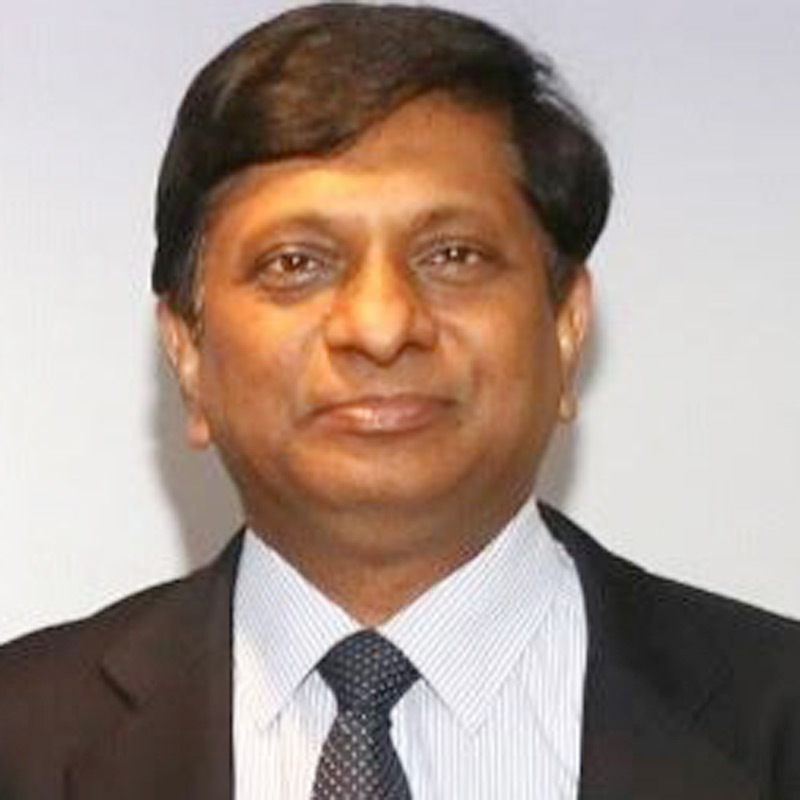
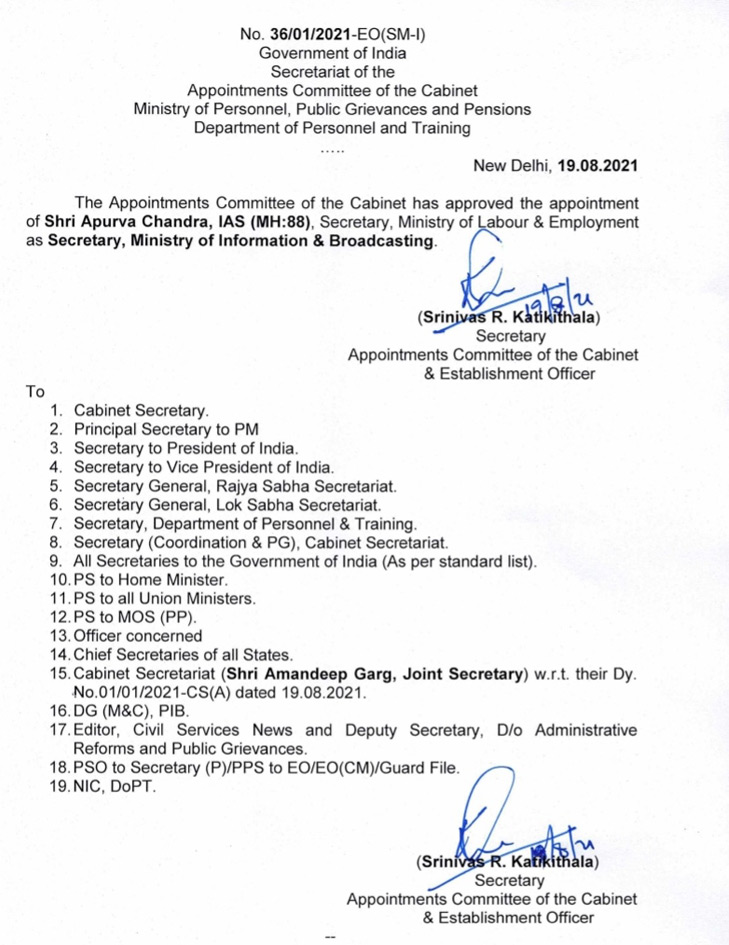
    New Delhi : The Union Cabinet on Thursday appointed Apurva Chandra as secretary, ministry of information and broadcasting (I&B).

    Chandra was previously holding the charge of secretary, ministry of labour & employment. The appointment was cleared by the appointment committee of the Cabinet.

    Chandra belongs to the 1988 batch of the Indian Administrative Service (IAS) of the Maharashtra cadre. He has spent more than seven years in the ministry of petroleum and natural gas and four years as principal secretary ( industries) in the Maharashtra government. In 2017, he joined as the special director general (acquisition) in the ministry of defence with the mandate of strengthening the Indian Armed Forces by expediting the acquisition process.

    Last year in October, he took over the charge of secretary, ministry of labour and employment. He was also elected as the chairperson of the Governing Body of the International Labour Organisation (ILO) for the period October 2020- June 2021, a position of international repute.

  • Maharashtra govt proposes tax exemption for AVGC sector in state

    Maharashtra govt proposes tax exemption for AVGC sector in state

    MUMBAI: The Animation, Visual Effects, Gaming and Comics (AVGC) sector in Maharashtra is in for some treat. The sector, which so far has gone unnoticed in the state, has finally got itself a space in the fourth IT Policy, which will be sent to the Cabinet soon.


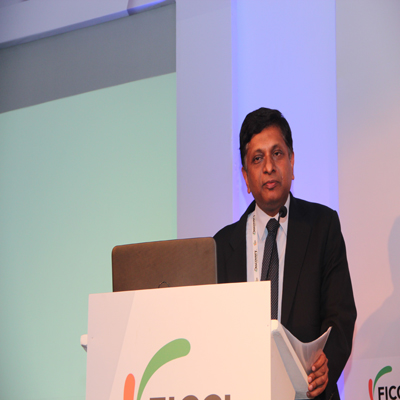
    “I agree that the state has so far not focussed on the Media & Entertainment (M&E) sector,” said Government of Maharashtra principal secretary-industries Apurva Chandra at FICCI Frames 2015.


    According to Chandra, AVGC is a part of the IT sector and hence has been included as a sub-section in the soon to be submitted IT Policy. “The perception is that the state is not friendly to the sector and we aim at shedding that with this policy,” said Chandra.


    Chandra agreed that the AVGC sector, which was once strong in Maharashtra has been overtaken by Bangalore, where the government is taking several initiatives. “We would like to bring more AVGC centres into the state,” he added.


    Maharashtra has the right ecosystem, the creative people and robust IT set up, which can give a boost to the AVGC sector.


    One of the major points, which have been covered in the proposed policy is that of entertainment tax. The policy provides doing away with three kinds of taxes:


    · Entertainment tax exemption for movies 100 per cent made in Maharashtra.

    · Giving 100 per cent exemption from entertainment tax to animated movies, which have been converted from 2D to 3D in the state.

    · 100 per cent tax exemption to live action movies, which minus the opening credits and end credits, has 50 per cent visual effects during the running time of the movie.


    The AVGC policy also contains the provision for AVGC parks. “As part of this, all the incentives given to IT Parks will be made available to AVGC Parks. One such is the integrated IT Township, which will also become an integrated AVGC Township. Under this any land, whether it is private or public, above 10 hectare can be cleared as IT or AVGC Township. In this township, 60 per cent of the land will be for industrial moves like setting up studios and 40 per cent will be open to all. Above all a higher FSI (floor space index) would also be given. This can bring a lot of discipline not only in IT but the AVGC sector as well,” informed Chandra.  


    AVGC centres will also be promoted in cities of Maharashtra through several incentives. “We will be providing financial support and are proposing a corpus fund of Rs 50 crore through the state government. In terms of clearance also, the state government is ready to support,” he added.


    The policy also proposes a certification charge refund from the agencies. “Capital subsidy for larger AVGC centres will also be given,” he informed.  


    The National Centre of Excellence, which was announced by the Finance Minister in Delhi has also been proposed to the Maharashtra government. The Media and Entertainment Council is currently working closely with the Information and Broadcasting Ministry and other state governments to facilitate this for Maharashtra.