Tag: Apple

  • Intel chips in with TSMC for US fab fix amid foundry fatigue

    Intel chips in with TSMC for US fab fix amid foundry fatigue

    MUMBAI: Fab mates in the making? In a twist worthy of Silicon Valley drama, Intel and Taiwan’s TSMC are reportedly close to a blockbuster chip deal with Washington pulling a few strings from the wings.

    According to The Information, via Reuters, the two semiconductor giants have reached a preliminary agreement to form a joint venture that would see TSMC operate a 20 per cent stake in Intel’s U.S.-based fabs. The rest of the ownership remains under wraps, though whispers of potential investor pitches to AMD, Nvidia, Broadcom, and Qualcomm have swirled since early 2024, despite public denials by some of the players involved.

    Behind the scenes, the Biden administration and the U.S. Department of Commerce are said to be stage-directing the high-stakes collaboration. With Intel’s IDM 2.0 strategy stalling and its fabs failing to fire on all cylinders, this venture appears designed to stabilise an American chip titan without handing over control to foreign ownership, something the U.S. government has firmly resisted.

    The stakes are silicon-sharp. Intel has spent tens of billions of dollars on its domestic fabs, but only a select few are equipped for advanced 18A process technologies, the bedrock for Intel’s next-gen processors. The challenge? Many of these fabs are tailored for Intel’s own chips, not contract manufacturing, a space where TSMC reigns supreme.

    TSMC’s planned 20 per cent stake also raises eyebrows given its existing 165 million dollars investment in Arizona’s Fab 21, which already serves top-tier clients like Apple. How the Taiwanese foundry plans to juggle its own fab expansion with the new Intel tie-up remains unclear.

    Chip watchers say this uneasy alliance may be less about synergies and more about survival, with the White House acting as the matchmaker. As part of a broader push to keep chipmaking competitive and domestic, Washington seems determined to bring Intel back into the game, even if it means nudging rivals into bed together.

    Adding to the plot, Intel recently brought in industry veteran Lip-Bu Tan as CEO to guide its comeback after it fumbled the AI-driven semiconductor surge. While Intel and TSMC have stayed silent on the matter so far, industry insiders suggest that this deal, if sealed, could redefine global chip geopolitics.

  • “The future depends on how we will balance AI and ML with ethical considerations:” Emmy sound design winner Cory Choy

    “The future depends on how we will balance AI and ML with ethical considerations:” Emmy sound design winner Cory Choy

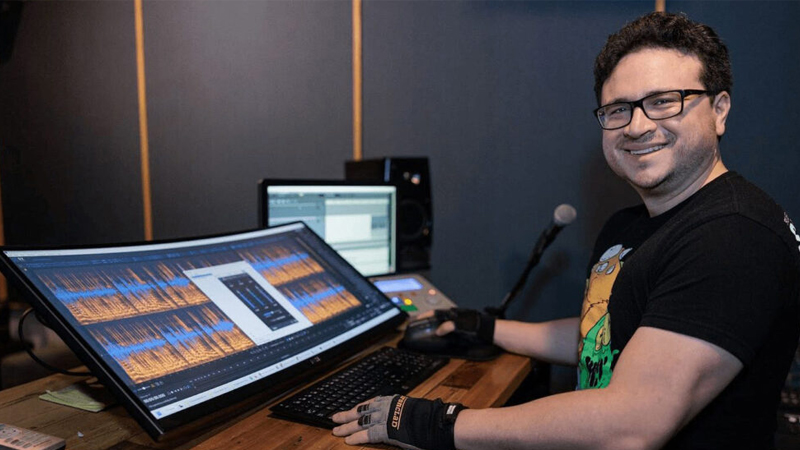
    He is an award-winning sound guy. Sound as in reliable; sound as in to do with audio. Cory Choy and his boutique sound studio Silver Sound Studio, located in the heart of New York City, have made a name for themselves, which is the envy of many others.

    Silver Sound boasts an Emmy award-winning team of on-location sound recordists in New York and Los Angeles. Choy himself picked up the lovely golden lady for his work mixing the sound for a show “Born To Explore.”

    His studio provides recording, design, edit, restoration and mix services and has worked with all sorts of people all over the globe including, but not limited to: ABC, NBC, Vice, Comedy Central, ESPN, Disney, Google, Microsoft, CNN, MTV, FOX, Netflix, Apple, Shudder and Spotify.

    In a wide-ranging interview, the Emmy Award-winning sound artist, engineer and studio owner discusses the evolution of audio technology, creative freedom, and the intersection of art and social responsibility. Here are the key insights from his conversation with Indiantelevision.com group CEO and publisher Mishaal Wanvari.

    On what sparked his interest in sound design.

    It was an inevitability rather than a decision. Both my parents were musicians – my mother wrote plays and operas, while my father combined music with computer programming. One of my earliest memories is watching my mother’s opera being performed at the Kennedy Center. But it was my father who showed me how technology could amplify creativity. He connected a Midi output from the game Monkey Island through a Casio keyboard, making it sound like a full orchestra. He connected a midi through a keyboard with a massive and professional instrument sound bank– which was far superior to the stock soundcard midi instruments. That early demonstration showed me how technology could be used to bring people together… the midi experience taught me that looking for a unique solution and setups can bring great power and creates experiences far beyond what people expect.

    On the evolution of sound editing tech during his career.

    I started at the very end of physical tape editing, where you had to physically cut and splice tape together. There was no undo button – once you made a cut, you had to live with it. The transition to digital audio workstations was revolutionary. Suddenly, all your tape was right in front of you, you could cut anywhere, and if you made a mistake, you could simply undo it.

    The economics were equally transformative. In 2006, a professional Pro Tools system cost around $10,000 – might as well have been a million to me at the time. But then Dell provided affordable, powerful hardware, and I discovered Reaper, which cost just $60. With a $2,500 Dell computer and Reaper, we were competing with studios using much more expensive equipment. Reaper vs. Avid – every single line of code in reaper is very well thought through with a small team, it is very efficient, and the entire program is designed to empower the user not restrict it. There is more freedom and there are more possibilities in Reaper than any other program I have ever used.

    On his Emmy Award win and on his experience thereafter.

    We won it in 2016 for the programme Born to Explore. One of our most impressive achievements was capturing crystal-clear dialogue from a host 200 feet away on a lake, using a highly directional Sanken CS-3E microphone. The water’s surface actually helped carry the sound. What made it special for us was that we won it in a category that is extremely competitive.

    On his Aisha win at the Tribeca film festival.

    It’s a fascinating story that began with an intern application. Fayshyo Aluko, a Nigerian poet with no sound experience, applied for an internship. When I asked why she wanted to work in sound, she simply said she wanted to explore sound design. I gave her a poem I’d written about a Palestinian girl, inspired by my own daughter’s questions about human rights.

    What Fayshyo brought to it was extraordinary – she incorporated traditional Nigerian storytelling techniques, using an oil drum beat as a metaphor for both footsteps and heartbeats. Her first-ever sound design piece won at the Tribeca Festival. It went on to win a Signal Award and an Anthem Award for human rights work.

    On the industry’s relationship with technology.

    The accessibility of technology has been revolutionary. When I started, a gigabyte of storage was massive – Pro Tools required one gigabyte just to install. Compare that to Reaper, which was just two megabytes. The difference? Avid spent their programming efficiency on creating paywalls – $50 here, $100 there, some plugins over $5,000.

    But now, with affordable computers and software, small studios can compete with anyone. Though the challenge isn’t doing the work – it’s finding it. If you’re not in the elite class, convincing someone from that class to work with you is the real challenge.

    On what’s next for sound design and sound mixing.

    We’re at an interesting inflection point with AI and machine learning. The technology is incredibly powerful, but we need to consider the ethical implications. For instance, voice cloning technology could be used for scams or misinformation. The wealth gap in computing power also means some will have access to these tools while others won’t.

    The future of our industry will depend on how we balance these technological capabilities with ethical considerations. It’s not just about what we can do, but what we should do.

    AI is both enabling and potentially corrupting. It’s incredible for tasks like analysing a voice and removing unwanted noise, but it also raises ethical concerns. We can now make someone sound like they’re saying something they never said, with their exact voice. While that’s exciting from a creative standpoint, it’s concerning from an ethical one.

    I have mixed feelings about the cloud-based AI tools emerging in our industry. Tools like Eleven Labs are incredibly powerful, but they raise important questions about access and control. What happens if these services suddenly become restricted based on geography or politics? It’s similar to the wealth gap we’re seeing in computing power – those with access to unlimited energy and graphics cards will have more capabilities than others.

    What’s fascinating is watching how different regions approach these challenges. Chinese engineers, for instance, are often outwitting their American counterparts with fewer resources. It’s not just about having the most powerful tools – it’s about how creatively you use what you have.

    On the way forward for small studios in a competitive market.

    The tools have never been more accessible, but the challenge is standing out in an increasingly crowded space. There are billions of talented people in the world, everyone has something unique to bring to the table, and the competition is fierce while resources are limited.

    However, I believe independent studios have an advantage in being more nimble and able to take creative risks. The key is finding your unique voice and the audience that resonates with it. It won’t be the easiest path, but if you really want to be in this space, you absolutely can make it work.

    And yes, the model has changed completely. At Silver Sound, we’ve evolved from a partnership to a more focused operation. The pandemic really took a chainsaw to the industry in 2020 – many partners and staff left, and we weren’t sure we’d survive. But then I met our current studio manager and latest engineer, both in their 20s, and it gave us new direction.

    Now our mission is to help develop new talent while remaining economically sustainable. We want to create things that make both us and the world better, but in a way that supports everyone financially. It’s about finding that balance between artistic integrity and commercial viability.

    The hardest part isn’t doing the work – it’s finding it. If someone gives me a project and appropriate funding, we can create something extraordinary. The challenge is breaking through that class ceiling where elite-level clients don’t trust smaller studios with significant projects.

    That said, I believe boutique studios have advantages in today’s market. We can be more responsive, take creative risks, and maintain closer relationships with clients. The key is finding clients who value that personal touch and creative freedom over the prestige of a large studio name.

    On his feature film.

    Sound and music are integral to my film Esme, My Love – you really won’t understand the movie without them. We made it for $135,000 total, yet people think we spent £3 million. That was only possible because we had Silver Sound as a home base. It’s now being dubbed into Spanish and Portuguese, with Korean potentially next.

    It’s still an independent gem – not widely known in the United States or globally – but I’m proud that it got distribution. You can find it on Amazon and Tubi. We spent six years working on it, ensuring it didn’t feel like something just slapped together.”

    On his approach keeping in mind the technical versus creative aspects of sound design.

    Technical precision is only a means to an end – creative decision-making is everything. If you don’t have the technical ability to execute your creative vision, then you need to improve technically. The more technical ability you have, the better you understand what’s creatively possible. They feed off each other.

    We offer two modes at Silver Sound: we can either help someone achieve their vision to its highest level possible, or we can work with them to create a vision from scratch. People come to us because they know our technical work is solid, but we provide a creative aspect that many other companies can’t match.

    On how technology vendors have evolved in service.

    I’m particularly grateful to Dell, and this isn’t just corporate speak. In New York City, their ProSupport service has been invaluable. When a computer breaks down in a professional studio, having a skilled repair technician on-site within 24 hours is extraordinary. Finding a reliable repair person independently could take a month.

    However, I’m watching carefully how technology companies position themselves during these challenging times. We need companies that empower creators rather than restrict them. The best technology partners understand they’re enabling creativity, not just selling hardware.

    On what excites him most about the industry’s future.

    The democratisation of technology has opened up incredible possibilities. When I started, the barrier to entry was hundreds of thousands of dollars. Now, with a decent computer and some affordable software, talented creators can produce professional-quality work.

    But what really excites me is seeing how younger generations approach these tools. They’re not bound by traditional workflows or assumptions. They’re combining technologies in ways we never imagined, creating new forms of storytelling. The challenge will be maintaining high creative standards while embracing these new possibilities.

    On advice for aspiring sound designers.

    Do what you love, but understand the economic realities. Unless you join a large company, it’s not an easy path financially. You can live a good life as a sound mixer and designer, but if you’re independent, you need to be a business person as well. If that’s not your strength, find a business partner who can handle that aspect while you focus on the creative work. The competition is fierce and resources are limited, but if you truly want to be in this space, you absolutely can make it work.

    On his belief that media has social responsibility and his willingness to remind it of it.

    Many companies are afraid to take moral stances for fear of alienating potential clients. This year, I’ve made a conscious business decision to openly oppose fascist movements in America. Yes, we might lose some potential clients, but I believe we’ll attract more of the kind of clients we want to work with. You can be moral and ethical, but if you can’t feed your family, it’s no good. However, I don’t want to survive in a way where my soul isn’t surviving.

  • iPhone 16e arrives in India with A18 chip & big offers

    iPhone 16e arrives in India with A18 chip & big offers

    The iPhone 16e has arrived, and Ingram Micro is making sure it’s more accessible than ever. With breakthrough battery life, the blazing-fast A18 chip, and a powerful 48MP 2-in-1 camera system, Apple’s latest innovation is now available at 7,200 plus retail locations across India backed by exciting bank offers, exchange deals, and easy loan options.

    For those looking to snap up the iPhone 16e at a steal, Ingram Micro is rolling out a Rs 4,000 cashback offer on ICICI Bank, Kotak Mahindra Bank, and SBI credit cards (EMI and non-EMI), as well as ICICI debit card EMI transactions. Additionally, the iPhone for Life plan allows ICICI Bank credit card holders to pay 75 per cent of the device cost over 24 months, with the remaining 25 per cent payable at the end of the term.

    Customers opting for loan financing can choose from Bajaj Finance Ltd, HDFC Bank, HDB Financial, ICICI Bank, IDFC FIRST Bank, and TVS Credit, offering flexible EMI plans such as 13 per cent-0-21 (24/3) and 0-0-18 (18/0), along with short-term loan options. Exchange deals sweeten the deal further, with a bonus of up to Rs 6,000 available on transactions made through bank cards, loans, or the iPhone for Life programme.

  • Truecaller finally cracks real-time caller ID for iPhones globally

    Truecaller finally cracks real-time caller ID for iPhones globally

    MUMBAI: Looks like Christmas came early for iOS users this year. What’s the most annoying thing about phone calls? Spam, right?.

    Well worry not because, Truecaller has rolled out its biggest-ever update for iPhone users, bringing real-time caller ID and spam-blocking features to iOS devices running version 18.2 or newer. Finally, iPhone users can enjoy the full power of Truecaller’s spam protection, levelling the playing field with Android.

    Powered by Apple’s Live Caller ID Lookup framework, this update enables iPhones to deliver Truecaller’s hallmark features—real-time caller identification and spam-blocking—using state-of-the-art homomorphic encryption. Truecaller is the first app globally to deploy this technology at scale, ensuring robust privacy while delivering unmatched functionality.

    Truecaller’s CEO Rishit Jhunjhunwala shared his excitement, “We are excited to bring the full power of Truecaller to iPhone. We see tremendous potential and growth in our iPhone user base, and parity with Truecaller’s Android experience has been top of their wishlist. This update does that and more while preserving privacy for all calling activity.”

    Truecaller, a pioneer in filtering unwanted communication for 15 years, has harnessed its latest AI capabilities and a vast global database to identify as many calls as possible. Whether it’s spam or a number you forgot to save, Truecaller now ensures no call goes unidentified—ever.

    But there’s more:

    . Automatic spam blocking: Users can now stop spam calls automatically, a long-requested feature.

    . Search history improvements: Look up previously identified calls, even going back up to 2,000 numbers in the Recents list.

    . Family Premium Plan: Share all Premium benefits with up to four additional people at an affordable monthly or annual price.

    To unlock the magic:

     1.  Ensure your iPhone runs Truecaller version 14.0 or later.

    2.  Open Settings > Apps > Phone > Call Blocking & Identification.

    3. Enable all Truecaller switches, then open the app to start identifying calls instantly.

    Premium subscribers will enjoy all the latest features, while free users will continue to access ad-supported number searches and caller IDs for Verified Businesses. The new auto-blocking and live caller ID features are rolling out globally starting today and will be available to all users within days.

    For years, iPhone users clamoured for Truecaller parity with Android. This update not only meets their expectations but surpasses them with cutting-edge technology, seamless usability, and uncompromising privacy.

    Ready to reclaim your peace from spam calls? Enable Truecaller today and enjoy uninterrupted, hassle-free communication.

  • Brand Finance Global 500 Brands 2025 report: Apple maintains lead as tech giants dominate

    Brand Finance Global 500 Brands 2025 report: Apple maintains lead as tech giants dominate

    MUMBAI: The band of top brands globally continues to be dominated by tech giants. At least that’s what Brand Finance’s top 500 Global Brands report for 2025 has revealed. Apple has retained its position as the world’s most valuable brand, with a brand value of $574.5 billion. The tech giant is followed closely by Microsoft, Google, and Amazon, which occupy the second, third, and fourth spots, respectively.

    The top 10 most valuable brands are dominated by US-based companies, with Walmart, Facebook, and Nvidia also featuring in the list. However, Chinese brands such as TikTok/Douyin, State Grid Corp of China, and China Construction Bank are rapidly gaining ground, with significant increases in their brand values.

    The report highlights the growing influence of Asian brands, with 17 Chinese companies featuring in the top 100, including newcomers such as Moutai and Wuliangye. Japanese brands such as Toyota, Honda, and Mitsubishi Group also make significant appearances in the list.

    European brands, meanwhile, are struggling to keep pace, with only 12 companies from the continent featuring in the top 100. German brands such as Deutsche Telekom, Mercedes-Benz, and SAP are among the notable exceptions.

    The report also notes that the COVID-19 pandemic has had a significant impact on brand values, with many companies experiencing a decline in their brand worth. However, tech giants such as Apple, Microsoft, and Google have been largely immune to the pandemic’s effects, thanks to their diversified revenue streams and strong brand recognition.

    The top 10 most valuable brands in the world are:

    1. Apple (USA) – $574.5 billion
    2. Microsoft (USA) – $461.1 billion
    3. Google (USA) – $412.9 billion
    4. Amazon (USA) – $356.4 billion
    5. Walmart (USA) – $137.2 billion
    6. Samsung Group (South Korea) – $110.6 billion
    7. TikTok/Douyin (China) – $105.8 billion
    8. Facebook (USA) – $91.5 billion
    9. NVIDIA (USA) – $87.9 billion
    10. State Grid Corporation of China (China) – $85.6 billion

    Brand Finance also analysed what brands have grown the most since 2020, plus TikTok – although Brand Finance began valuing the brand in 2022, its 79 per cent growth in four years puts it in the same league as the other high-growth brands. 

    1. TikTok/Douyin: USD105.8 billion, up from USD59.0 billion (in 2022)
    2. DraftKings: USD5.1 billion, up from USD18 million
    3. FanDuel: USD7.0 billion, up from USD56 million
    4. NVIDIA: USD87.9 billion, up from USD4.7 billion
    5. AMD: USD11.0 billion, up from USD1.4 billion
    6. Pinduoduo: USD13.0 billion, up from USD2.5 billion
    7. BYD: USD14.0 billion, up from USD3.1 billion
    8. Apple: USD574.5 billion, up from USD140.5 billion
    9. TSMC: USD34.2 billion, up from US8.6 billion
    10. Microsoft: USD461.1 billion, up from USD117.1 billion
    11. Lilly: USD8.0 billion, up from USD2.1 billion

    To take a dekko at the Top 100 Global Brands 2025 list click on the word free. Basic data for the top 100 is available for free.

  • Hari V Krishnan to step down as CEO of PropertyGuru group

    Hari V Krishnan to step down as CEO of PropertyGuru group

    MUMBAI: In a significant leadership announcement, Hari V. Krishnan has decided to step down as CEO of the Singapore-based PropertyGuru group after nearly a decade of remarkable growth and innovation.

    Reflecting on his tenure, Hari highlighted key milestones such as achieving market leadership across regions, expanding into Vietnam, forming a transformative partnership in Malaysia, and leading the company’s public listing on the NYSE.

    Hari’s leadership also saw the incubation of new businesses and solutions, multiple funding rounds, and the recent strategic partnership with EQT Group wherein the Swedish  alternative investment firm acquired it at a valuation of $1.1 billion and delisted it from the NYSE. He will transition into the role of senior advisor to the board once a new CEO is in place.

    PropertyGuru announced that Lewis Ng will take over as CEO in March. With a robust background at global firms such as Seek, TripAdvisor, and Apple, along with prior experience at PropertyGuru, Lewis is poised to lead the company into its next growth phase. Trevor Mather will join as chairman, bringing extensive experience from AutoTrader and Thoughtworks, alongside new board members Janice Leow and Ed Williams.

    Hari expressed gratitude to stakeholders, reflecting on his journey of empowering communities to thrive and expressing confidence in the company’s future under new leadership.

    Prior to heading the PropertyGuru group,  Hari was a well-known executive in India as  Linkedin vice president & MD, Asia Pacific & Japan before that  country manager for India. He began his career wih Ciso as a product manage/ customer support engineer based in San Jose, moving onto assignments with Yahoo India, travelguru, Myspace, and then Linkedin. He is a mentor and investor in several startops.


  • Apple’s Tim Cook’s handpicked CFO Kevan Parekh takes office

    Apple’s Tim Cook’s handpicked CFO Kevan Parekh takes office

    MUMBAI: Is 12 a lucky number?

    Some may question the logic, saying there’s no such thing as luck. 

    But a dozen years proved extremely good for Kevan Parekh, who was handpicked by Apple CEO Tim Cook to become the CFO of Apple during his twelfth year with the company. Just as the clock hit the 12 midnight mark in New York on 31 December and the ball was beginning to drop in Times Square, Kevan’s term as the CFO commenced.

    Kevan, an Indian origin executive, joined Apple in June 2013 and has played a key role in its financial and business planning, and product development planning since then. Prior to becoming CFO, he served as Apple’s vice president of financial planning and analysis. Before that, he served as Apple’s vice president of worldwide finance, supporting a number of different functions throughout his tenure, including engineering, iTunes, marketing, retail, and sales.

    His pay package is speculated to be  $1 million a year, plus participation in the company’s executive cash incentive plan for fiscal 2025.

    Kevan, succeeds Luca Maestri, who was appointed  CFO in 2014, and he will be reporting directly to Cook. As CFO, Kevan will be overseeing Apple’s accounting, business support, financial planning and analysis, treasury, investor relations, internal audit, and tax functions.

    Maestri on his part continues to be part of Apple overseeing its corporate services teams. His responsibilities will include managing information systems and technology, cybersecurity, and real estate and development.

    Before joining Apple, Kevan worked for eight years with General Motors in New York and then Europe. He returned to New York to join Thomson Reuters and stayed put as vice-president of finance (professional division) and then as corporate treasurer till 2013. 

    Kevan has a solid academic background and holds a bachelor science degree in electrical engineering, and an MBA from the University of Chicago which he  completed in 2000 with a major in finance and strategic management.  

  • Mitul Shah leapfrogs from Apple to Google

    Mitul Shah leapfrogs from Apple to Google

    MUMBAI: Apple’s loss is Google’s gain. The former’s head of consumer sales Mitul Shah has hopped onto Google as managing director – Google devices & services, India. He is leading Pixel’s sales and expansion in the country.

    Shah had worked at Apple for a good nine years, rising up the ranks as  head – assisted sales to head -consumer sales when he decided to move on from the innovative megacorp.

    Prior to that, Shah had also spent five years at Accenture, based in Gurgaon, working in sectors such as consumer goods and life sciences. He also had a stint with Infosys Technologies focusing on the areas of retail, CPG and logistics.

    Says Shah: “It’s an honor to be part of a company that’s at the forefront of innovation, and I’m particularly thrilled to be working on a product that has the potential to put the magic and power of AI in the pockets of millions of people across my beloved country. Pixel is not just another device. It’s an absolute privilege to be part of this story, to bring the best of Google to Indian consumers and build a more connected and empowered society. “

  • Imagine by Ample unveils ‘More with Imagine’ campaign

    Imagine by Ample unveils ‘More with Imagine’ campaign

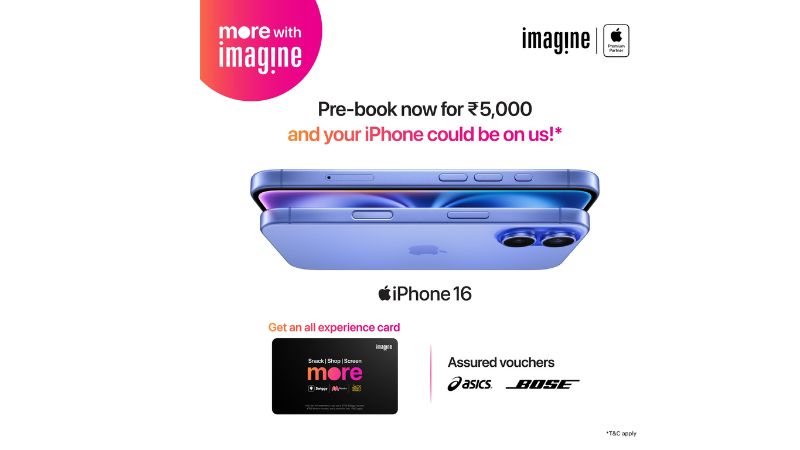
    Mumbai: Apple’s premium partner, Imagine by Ample has announce its exciting new offers for the launch of the highly awaited iPhone 16. Under the ‘More with Imagine’ campaign, customers can pre-book the iPhone 16 from 13 to 19 September for just ₹5,000 and enjoy a range of exciting vouchers and rewards from brands like Asics, Bose, Myntra, and Swiggy.

    As part of this exclusive campaign, Imagine offers iPhone lovers more than just the latest technology. This campaign aims to bring extra value and an enhanced shopping experience to Apple fans across India. Imagine has always been committed to offering more than just technology, it’s about delivering unforgettable experiences. Whether you are a first-time Apple user or a loyal customer, Imagine is the place to discover the iPhone 16 in a whole new way.

    “On the launch of iPhone 16, we are excited about the ‘More with Imagine’ campaign,” said Imagine’s CBO, retail – Partha Sarathi Bhattacharyya. “At Imagine, we are more than just a retail partner. Our goal is to offer the customers an unparalleled experience beyond the product itself. With the launch of the ‘More with Imagine’ campaign, we are not only giving iPhone enthusiasts access to the latest iPhone 16 but also rewarding them with an array of exclusive offers and services. To add an element of surprise and delight, we are thrilled to announce a lucky draw for all customers who pre-book and purchase an iPhone during this period, offering a chance to have the cost of their device fully covered. We believe in creating more value for our customers and making their journey with Imagine exceptional.”

    This promotion reinforces Imagine’s dedication to exceeding expectations and delivering more than just a product, providing a comprehensive experience that is both rewarding and memorable.

    This special offer is available online and offline across all 45 Imagine Apple stores in key cities including Bangalore, Chennai, Hyderabad, Goa, Gwalior and multiple cities across Kerala. Each store is equipped with both sales and service experts to provide you with comprehensive support under one roof.

  • Bharti Airtel to shut down Wynk Music app: Report

    Bharti Airtel to shut down Wynk Music app: Report

    Mumbai: Bharti Airtel has decided to exit the music sector by shutting down its Wynk Music app according to media reports. Shortly after announcing a strategic partnership with Apple, the company will wind down Wynk Music over the next few months and integrate all current employees into other roles within the organisation.

    An Airtel spokesperson confirmed the closure, stating that Wynk Music will be discontinued in the coming months, and employees working on the app will be absorbed within the Airtel ecosystem.

    Since its launch in 2014, Wynk Music has built a significant user base with over 100 million subscribers. This move aligns with Airtel’s new focus on collaborating with Apple to enhance video and music streaming services. As part of this partnership, Airtel customers will have access to Apple Music, and Wynk Premium subscribers will receive special offers. Additionally, Apple TV+ will be accessible through Airtel’s Xstream service, further expanding its content offerings.

    With a diverse portfolio including Airtel Wynk, Airtel Thanks, and Xstream, Airtel serves more than 220 million active users and is aiming for continued growth in the competitive digital market.