Tag: Applause Entertainment

  • Applause Entertainment’s Sameer Nair on digital content creation, self-regulation and creative freedom

    Applause Entertainment’s Sameer Nair on digital content creation, self-regulation and creative freedom

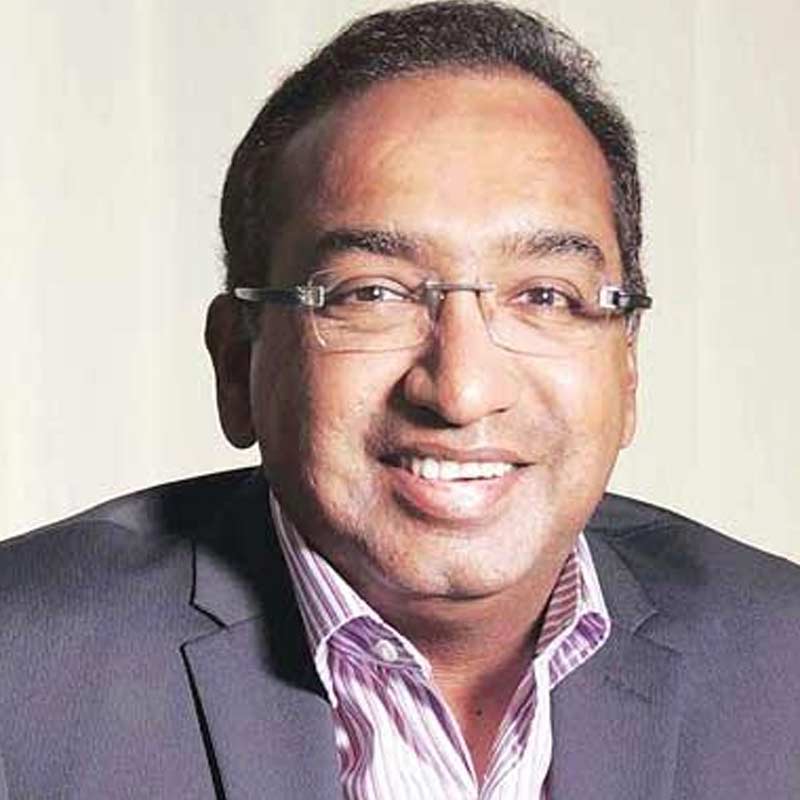
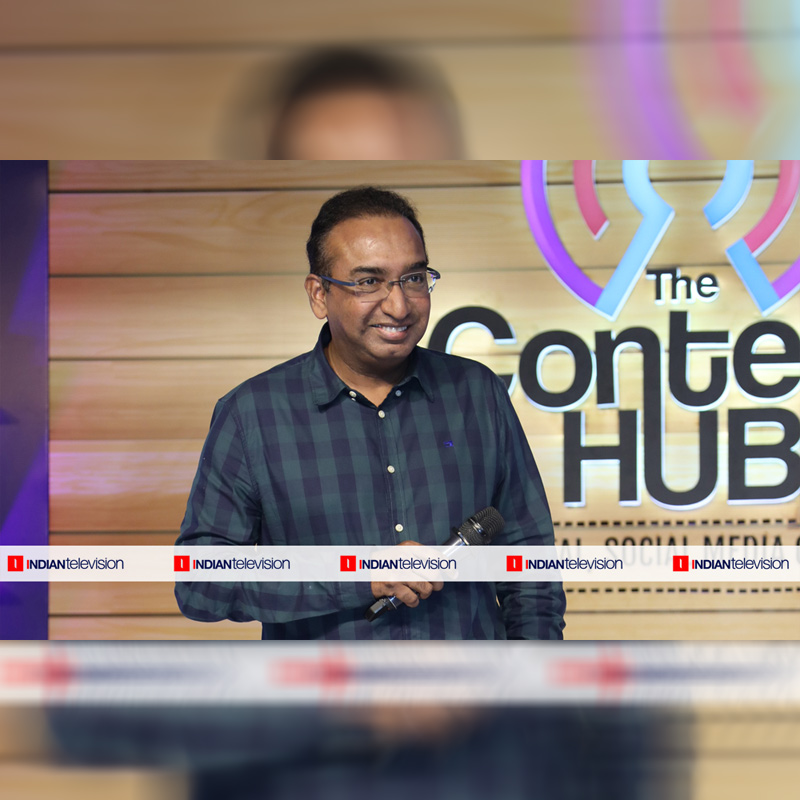
    MUMBAI: Creativity, freedom of expression, self-regulation and content quality are some of the factors that come into play for digital platforms. These topics were addressed in a fireside chat between House of Cheer founder and CEO Raj Nayak and Applause Entertainment CEO Sameer Nair, at Indiantelevision.com’s The Content Hub 2020.

    Nayak started off by stating that even though just 30 per cent of Indians have access to the theatre, films like Thappad and Badhaai Ho are growing in production and acceptance. Does this signal a diamond era for content creators? Nair agreed that the screen density in India is less in comparison to the US or China. However, he feels that television has played a big role in the distribution and dissemination of cinema. Even if just 30 per cent watch movies in the theatre, eventually more people watch it on TV.

    “From a consumption point of view, everyone is seeing. The big challenge is the lack of screens. Of late, there seems to be a push that all content needs to go to digital which, in my opinion, is not the best thing. The US has figured out this window where they first go to theatres and then to TV and DVD. So, there’s more monetisation. It’s a pity when they go directly to digital because you can’t extract revenue out of it when people are willing to go to theatres and buy tickers. Theatre screens need to be an opportunity taken. It’s a good time where different kinds of stories are being told. Smaller movies have also done well. But it’s always been in the history of Indian cinema where we have space for all kinds of things. In the year when Naseeb launched, we also had something like Jaane Bhi Do Yaaron,” he said.

    Nair has delved in various types of content creation from production houses to TV to digital, making him one of the most prominent faces of the industry. With Applause, his aim is on producing content for digital. “The digital medium makes consumers behave in a particular way and that creates a difference in the content,” he said. “TV has always been a one-way talk. You program a channel and give it to the consumer. The consumer can’t control the schedule. OTT and digital have given the consumer the power to choose what they want to see or read – when, where and how they like it.”

    Even though TV is dictatorial and one-way, it has been and is still successful, according to Nair. But the choice that digital provides is creating niches. “That’s why so much of international content is being consumed with subtitles. That wouldn’t have been possible in the pre-OTT era.”

    Nayak questioned Nair on the differentiation between the content found on digital and TV. Nair replied, “We missed a revolutionary step of doing premium subscription television. For digital series, we’re talking of what the US has done successfully for 25 years with shows like The Sopranos. That’s what we are doing now with OTT. All broadcasters have found one more place to show their content.”

    With his experience, Nair highlighted that TV is driven by ratings and that limits the kind of stories that can be told. But on OTT, you can tell those stories that are restricted by TV and this is driving the change in content.

    Nayak brought up the topic of creative freedom in times of growing censorship. Nair said, “If you’re a genuinely creative person, you will look to be subversive in any environment. There’s no such thing as freedom. You have to tell your story and get it out. During the Emergency, the government banned Aandhi which returned after the government changed. But because of the new medium, we can tell stories. TV didn’t allow it, not because there wasn’t any freedom but rather because the medium wasn’t conducive. The medium requires ratings and ratings require the lowest common denominator. Stories on mothers-in-law and daughters-in-law worked very well as a formula for TV.” However, even in this new freedom, Nair said, there are bad shows.

    Even though India is only just warming up to the series format, Nair feels we are already late. With India’s propensity to leapfrog technology, it is likely we may do so in content too. “Will India watch 60-minute episodes on 4G connection? There is a lot of talk about short-form content and other disruptors but right now, we have to look at making money. Going forward, we are looking at series and short-form content.”

    Nayak, who has decades of experience in the TV industry, quizzed Nair on the need for self-regulation. “On TV, since it was family viewing, we had restrictions. But, now with digital, we have great creative freedom. Both international and local are pushing the envelope. So do you think self-regulation is necessary and does it kill creative freedom?” he asked.

    “Self-regulation is a slippery slope. It puts you in a place where you accept that if you don’t regulate in that manner there will be repercussions,” Nair pointed out. “If you want to speak, there will always be someone who will be unhappy. Someone will protest to your freedom of speech. Different countries operate differently. The US is the freest. They are also a 200-year-old democracy and they have been at freedom longer. But people are pushing boundaries and finding new ways of expression and getting away with things. Most often the establishment finds it hard to figure out what you’re saying. That’s the sort of thing to do.”

    It’s a fact that known faces work well in promoting films and shows but a show like Jamtara performed well on Netflix with new faces too. “It always starts with the story and writing. We’ve done shows with stars and without. I don’t think you can knock down faces. They are faces for a reason, for marketing and have value. There are audiences out there who like them and want to see their work. The series format does allow us to take different stars and these tend to be an ensemble cast and not focussed on a single hero. So, the script is the hero,” explained Nair.

    The area to be cautious is that since the power lies with the viewer, they can choose to skip or stop watching. That’s where the story must be interesting. “Faces will get an audience but not keep them there,” he said.

    Applause Entertainment is in the process of creating the Indian adaptation of the popular Israeli series Fauda. Giving insights into its creation, Nair said, “From an adaptation point of view, it operates at two levels. One level is the socio-political issue of the place being set in Israel and Palestine. The other one is the thriller. We’ve separated the two. With what’s going on in India, we’re using that as fodder for dialogue and context. This environment lends itself to that.”

    Comparing filmmaking and writing in the US with India, Nair mentioned, “The US takes greater care to mitigate failure. They are more disciplined in their writing and production process. They tick a lot more boxes and we have also been doing that, even if not at the same level. Even in the series business, we are looking at international businesses and learning.”

    On his prediction for content creators in 2020, Nair said that there can’t be anything truer than stories being well-written. “Everyone feels not everyone gets an opportunity. But there’s a lot of work happening out there. It’s the nature of the business that not everything gets made and even great ideas get left behind. It’s nothing to be despondent about. You’ve got to keep at it and keep trying to tell your story,” he concluded.

  • Sameer Nair on Applause Entertainment’s shows, content creation and trends [Part 2]

    Sameer Nair on Applause Entertainment’s shows, content creation and trends [Part 2]

    MUMBAI: This is the second part of Indiantelevision.com’s conversation with Applause Entertainment CEO Sameer Nair. You can read the first part here.

    So within your company, is a format kind of a lab being developed going forward? Because I see opportunity in format, paper formats too while you’re creating content and you’re going to start licencing it in stage two I presume. That will be next year after the first wave is sold out.

    We hope the first of our shows streams at the end of March, so let’s see.

    So when will your agreements allow you to sell those globally?

    It depends. Some will be after a year.

    In the meanwhile are you looking at setting up a format lab? Like Zee has set up a format lab which is working on creating formats, Star is working on formats in house.

    No, I don’t think we are doing that. Currently, we are focusing on drama and fiction, not so much on the non-fiction part of business. And within that, if we find something that we really like, we proceed to make it. We are not really making a paper pilot or a pilot.

    We are not really making globally relevant content whereas the Turks make it, the Koreans are more advanced as a culture so their shows travel, but Indian shows are not really travelling, we’re getting $200, $250, maybe a Porus might get $3000 or $2000 per hour but not all shows are getting the money that they should.

    Actually, apart from US content which is the English content and which is what makes it a globally dominant soft power, I don’t think any other content is genuinely travelling.

    Today Turkish content is going at $150,000 an episode in west Asia.

    What I’m saying is that we’ve got a very large market, we’re a billion Indians. In any case, you’ve got to decide who you’re making this content for. There’s something known as primary audience and secondary audience. Narcos was not made for us, it was made for Latin American and North American audiences. We happened to like it, it went on to become a global hit and well, good luck. Like that, I’m sure a 100 other shows are made which we haven’t heard of. So what I’m saying is that as far as we are concerned, we are focused on telling great stories and we are catering to an extremely large Indian audience.

    Some shows do travel but you can’t set out to make something thinking it will straddle a global audience, even the Americans didn’t do that. When the Americans made Seinfeld, they didn’t make it to make Indians or Koreans or Japanese laugh, they made it to make Americans laugh. That the rest of the world laughs with The Big Bang Theory or FRIENDS or House of Cards or whatever is a happy outcome. So I think from a content creation point of view, we’ve got to focus on how we can tell great stories, how we can monetise those great stories and how can we make this business profitable.

    So you’re investing in production value, you’re investing in writing and I see that you’re investing in the cast.

    You’re investing in good actors, you’re investing in good writing, you’re investing in production values, good directors, you’re making these like essentially extended films, it’s all produced at one go, it’s post-produced at one go, so we are doing that and we should invest.

    Will all of these travel or will some of these travel?

    Some of these will travel, all may not. For example, The Office comes from abroad and I believe that a show like that should be made in every country because every country would have this dull sleepy office with the horrible boss from hell and the other terrible people we work with. But some will travel, I think something like City of Dreams will travel, that’s a nice political story. I find too many of my colleagues in this business stand on the shore and look towards the sea. I think we are a large enough country to stand on the shore and look inwards.

    That’s why Hollywood is a soft power.

    Hollywood is a soft power not for what they’re doing, it’s because it’s driven by the language.

    Roma is a Mexican film that went on to win so many Oscars.

    You know what, it is a cool fashionable thing to say that we should be all making stuff that the world applauds.

    But if you put sub-titles, everybody watches.

    I’m not disputing it, I’m saying that you’ve got to run a business, it is called showbiz. There’s show and there’s biz and they go together. So when you’re running a business you must be clear as to why you’re doing it. It cannot be for an amorphous global audience. If it’s a good story, the world will watch.

    There’s a science to get the world to watch, getting recommended, the social bars, etc.

    That comes after you’ve made a good story.

    Do you have a strategy to build this globally? Would you be investing as much to push these globally?

    It’s a process. You don’t plan for all these things, you’ve got to make it, you’ve got to put it out there, it gets some traction, it builds an audience, the word of mouth spreads, when things are going well you keep adding to it, it’s a process. I don’t think Ramesh Sippy set out to make Sholay, he set out to make a movie that proceeded to become Sholay. That’s how it goes. Everything happens like that.

    I believe that you’re more evolved than Ramesh Sippy in terms of understanding the ecosystem.

    No, not like that. I’m saying that even when you take a movie like Dangal, it went on to become a big success in China. In hindsight, we can all be geniuses and have 100 million reasons why that happened. But in the process of making it, it was not being made for that audience, it was being made for an Indian audience is what I’m saying.

    So around IP sharing, you’ve always told me that put your skin in the game then I’ll give you a piece of the action. The industry has started putting money where their mouth is. Producers like Siddharth Tewary, Abhimanyu Singh, Asit Modi have been putting their skin in the game and they’ve been retaining IP. How’s that going for you now that you’re on the other side?

    I remain exactly where I was. I think there should be a share of the spoils definitely because there’s a certain degree of a creative investment, there’s a certain degree of financial investment. I think it’s fair enough for people to want to have a share of it. So we are continuing with a similar model, we’re happy to do that. When I talk about putting skin in the game, I mean that. Not everyone has money, but there are different ways to do that. But again there’s so much debate that keeps happening about IP, that where are the shares of IP? I think the first important thing is to create IP. If you create intellectual property then you can derive value from them.

    I find too many people talking about IP without ever having created IP. So I think that focus is important. Beyond that, different models will emerge, we are already doing that. A lot of the international shows that we buy are represented by format owners who then proceed to give a share of what we have sold it for back to the original creator. It’s a process, internationally it’s been done forever. So I think it will happen in India as well. If the content community is not careful at this point in time, then it will just be a replica of TV.

    Do you fear that it could end up being a replica of what happened in TV?

    Currently, it seems to be approaching it in that manner, as in you get commissioned and that’s it, you have nothing left. If you indeed want to have a play beyond that, you must be willing to give up something, you must be willing to put something and you have to figure a way around it.

    So what are the different models that are available? Do you give the story rights, dubbing rights, sub-titling rights, Indian language rights, film rights or animation rights?

    No, this is an evolving market. Currently, the position is that we give nothing or we get nothing. But I think as it gets along it will sort of play out.

    Which of these will play along in the market or be more relevant to India?

    There are at least 10-15 streaming platforms. These are the early days, everyone is well funded, obviously serious competitors, nobody’s going away in a hurry, so I think the next 2-3 years will help define that as to who pulls ahead, who falls back, what kind of content works, how India responds to it and all of that. Currently, the default position of all the broadcast players is, well we want everything, even if it never goes on TV.

    So in terms of exports, we haven’t really grown.

    Again, now what will happen is you’ve created this great show, and it’s going to go onto a global platform, but now the platform itself wants to dub it into all international languages.

    If they give you a piece of it?

    So you’ve got to work all that out, it’s got to be figured out but the thing is that everyone is pushing in that direction. So your dream of having an Indian show that the whole world watches is around the corner now.

    Do we need legislation in place?

    I think that ship has sailed. Legislation and the opportunity of making a law out of this is long gone. This happened in the US in the 60s. Now I think if we indeed want to resolve this problem, we’ve got to be more creative about this. They’re not going to get a law passed.

    Javed Akhtar did that for the music industry.

    It’s a royalty thing. And the control of monetisation still rest with the music companies, it’s not with the composer.

    So at least, could we move in that direction?

    No, so the way to do that is for all the content creators to sort of galvanise and unite and work together and try and attract more money to the content creation business and have people believe in the process, believe in the thing that you can create content and that content can then be sold. Currently, the thing is that it sounds very risky, you’ve got to get commissioned from someone. If somebody is going to give you the money then I’ll move and make something. As long as it exists in that manner, it’s always going to be a hard sell and especially for something as large as a content business. A piece of music, a song, these are smaller pieces of content

    So you don’t see a solution?

    Not legislation, not at all.    

  • Sameer Nair on Applause Entertainment’s shows, content creation and trends [Part 1]

    Sameer Nair on Applause Entertainment’s shows, content creation and trends [Part 1]

    MUMBAI: Sameer Nair isn’t a man in a hurry. The seasoned media and entertainment industry executive describes the content creation business as a real get rich slow scheme and not a get rich quick scheme. He’s in it for the long haul and he’s here to stay. The Applause Entertainment CEO, who has been witness to many seismic shifts in showbiz, is among the most important and influential figures in the OTT ecosystem as India and the word scrambles to deliver consistent and credible content to consumers. During the third edition of Indiantelevision.com’s The Content Hub 2019, Nair gave the audience a tour d’horizon of the Indian and global content landscape. In conversation with founder, CEO and editor-in-chief of the Indiantelevision.com Group Anil Wanvari, the 53-year-old offered key insights into his company’s plans, creating content in today's age and making shows that grip the audience.

    You're collaborating with a diverse range of producers, there’s Deepak [Dhar], you’ve got BBC and you’ve got Nagesh [Kukunoor], so how did you go about selecting these guys to produce for your studio model?

    Actually, I’ve been working with all of them for all these years so we’ve done a lot of work before. When we set up Applause, the thought was to invest in content. I didn’t want to set up a company and be a production house because that’s not what we are, what we are is a studio which is investing in the production of content and we’re working with the best talent, best production houses, best writers, international formats, books, all sorts of things and we are investing money in content and then once its ready then we show it to platforms and hopefully they like it.

    So the thing was that you knew these guys and you knew that they could deliver, what if there’s someone absolutely new but has great ideas?

    No, actually it’s a mix. For example, Rasbhari is made with a producer called Tanveer Bookwala of Ding. I’ve known him from Balaji, but his is a relatively new company. Rasbhari has been selected for the Series Mania Festival in France as the only show from India, so it’s a big deal. It’s not necessarily about the big names, it’s really about storytelling and there’s a lot of creative talent out there and I think this premium drama series opens a whole new world because there is daily soap television for the fiction space and then there are the movies and that's a totally different beast. This is opening up a whole new world for writers, for directors, for creators and for actors. It’s not star-dependent, we work on great stories.

    So how far down are you on the road that you want to take? You’ve got about six series on board?

    Now we’ve produced 10, we’ve also done something in Tamil, we’ve also done a show in Bhojpuri, and we’ve of course done Hindi. We’ve got another 10 in production, we’ve got another 15-20 in development, so it’s actually quite a lot.

    Are you getting a good price on these or are they licensing deals?

    It’s both, it can be licencing, it can be outright, as in it depends and different platforms have different strategies and not necessarily every show works for everyone. Different people have different ways of doing it, but either way, I am here to help the platforms and work with them. They’ve got the harder job because they are the B2C business, they are the ones who’ve got to acquire customers, they’ve got to retain customers, and they’ve got to spend millions of dollars in doing all of that. What the biggest driving factor in customer retention is the quality of the content and the price you’re giving it at. 

    Are you getting the prices you want or is there a gap? My understanding is there is a gap.

    There’s no such thing as prices you want. We are not in any sort of 'get rich quick scheme'. This is a real 'get rich slow scheme'. I’m in no hurry. We’d like these shows to be liked by the audience, which should then allow us to do multiple seasons. That would be the thing. The platform should be happy and it should get a lot of traction.

    So that’s going to be the first outlet of sale. What happens after that? Do you go out globally with this or do you retain it for a while?

    It depends. On some shows our platforms are international platforms, they tend to be everywhere. In some cases, we have domestic platforms so there’s something left on the table for us to continue to sell. We are talking about language dubs, both domestic and international. We are talking about making the same show in another language when we get a chance. It’s brand new, we are a year and a half old, now we are doing our first round of deals, the shows will come out, and we’ll do a lot more.

    I think this is a great time, so we are investing in content and I think this is the time for all content creators to genuinely put their money where their mouth is because you keep hearing this debate about IP and ownership and is there anything left for us and all of that. This is the moment in time where it is possible for all the creators to get out there.

    Let’s talk about creativity in India. I’m seeing a bit of unfurling of creativity, a lot of creativity is being unleashed. Do you think that it has or there still needs to be a lot more unleashing of creativity?

    I don’t agree with this that we are somehow unleashing creativity now. If you take Indian cinema as an example, every year, and you can pick any year at random, has always produced a mainstream blockbuster that has gone out to become a hit, it’s also produced a big mainstream blockbuster that has bombed. In the same year, there have been sleeper hits and there have been art house movies.

    But now what appeared to be art house movies are becoming big hits.

    No, I’m saying even if you take the year for example when the movie Naseeb released, it was the big AB (Amitabh Bachchan) movie of the time. That was also the year Jaane Bhi Do Yaaro came. It was not an art house, but it went on to become a very successful movie. So this has been happening always, so what happens this year, happened last year, happens every year. I don’t think we have a problem with creativity. India is a very creative country. We are creative with accounting, we are creative with politics, and we are a creative country.

    But that being said, I think what is happening now is that the market has grown so we are spending more money on it. But the focus should be on content because that is the soul of the business. Finally, the consumers don’t know what’s behind the screen, they only know what’s on the screen and in this new digital world they just push play and if it captivates them and it holds them, they’re watching or they go away. So while all the tech is important and everything else is important, finally the consumer interface is the content.

    Haven’t you got stories being told that could not be told before?

    Of course.

    So in that sense, it’s unleashing the writing.

    It’s a good thing. Actually when you think about it, before satellite TV came Doordarshan used to do this. Doordarshan has done Tamas and Khandaan. Doordarshan has done a partition story. So there has been great work that has already happened on Doordarshan. Then satellite TV came along and it took the market in a direction and then the daily soap operas came along and took the market in an even more skewed direction. But that doesn’t mean India has not done that. So this is a good opportunity.

    But the filmmakers are looking at this as an opportunity too..

    This actually happened in the US in the late 90s. In the late 90s, TV had got to a point and Hollywood had become really big and that’s when premium drama broke out in the US, starting with HBO and Sopranos and then Showtime and everything else. In fact, a lot of Hollywood, all the film guys moved to TV. That was the golden age of American television and radio and it continues today. This, I hope, is going to be for India.

    Have we developed a Chuck Lorre in India? Will you do that?

    We will do that. It will happen. It’s just started. We are trying to work on an animated series, we are doing a lot of development on all sorts of new genres, all sorts of crazy shows. Rasbhari is that kind of show. We are doing a show called Salt City. It’s just about relationships, there’s nothing else to it. So there are so many things that are happening.

    I want you to commit that you’ll get a Chuck Lorre kind of a guy who can do the shows that he does in America in India.

    It depends. Chuck Lorre does a lot of shows, so it’s not just one type. So in that sense, many of these shows have been made and they have been made in India, some have worked very well, some have not. I don’t think Asit Modi is anywhere lesser than being Chuck Lorre. He is our version of it. We shouldn’t be bedazzled by that, but on the other hand, of course, there’s so much to learn, there’s so much creativity and so much stuff that they’ve done which we can adapt, which we can learn from. I don’t like to rip off anything, so I prefer to adapt.

    (Part 2 of this interview will be released tomorrow) 

  • Applause Entertainment’s ‘Rasbhari’ becomes the first Indian series to be officially selected for the Series Mania International Festival

    Applause Entertainment’s ‘Rasbhari’ becomes the first Indian series to be officially selected for the Series Mania International Festival

    MUMBAI: Applause Entertainment’s delightful coming-of-age series ‘Rasbhari’ is all set to create a new benchmark for Indian content, as it becomes the first ever Indian series to be selected for the Short Forms Competition at the prestigious Series Mania International Festival, in France.

    Series Mania International Festival, at Lille in France, brings together the most renowned names of the global series universe together on one common platform.

    Rasbhari has been selected alongside the best in the world for the Short Forms Competition, namely – Break Up (France), Drive (Singapore), Fourchette (Canada), Germain s'éteint (Canada), Hell Is Other People (Denmark), M (Argentina), People Talking (Spain), State of the Union (United Kingdom) and ZéroStérone (France). The global audience at Series Mania will also get to see the world premiere of two episodes of Rasbhari.

    Produced and co-created for Applause by Tanveer Bookwala, written by Shantanu Shrivastava and directed by Nikhil Nagesh Bhatt, ‘Rasbhari’ is a coming of age love story, set in the Hindi heartland of small-town Meerut. Shantanu’s sparkling writing with his delectable turn of phrase, delightful local dialect and wicked sense of humour, coupled with Nikhil’s deft direction makes every character in this delightful dramedy love story comes alive. Headlining a terrific cast of actors, the critically acclaimed actor, Swara Bhasker plays the stern English Teacher – Shanu madam, who is the object of attraction for not only our young hero Nand (Ayushmaan Saxena), but also the entire male population of Meerut. The show also features Rashmi Agdekar, Pradyuman Singh, Neelu Kohli and Chitranjan Tripathi in pivotal roles, and the title music has been composed by Chirantan Bhatt.

    “'We are delighted to represent India at the esteemed Series Mania International Festival, France. Good content has a global resonance, and our selection into the much sought after Series Mania Competition is a strong validation of this belief. Working in close collaboration with Team Applause, Tanveer, Shantanu and Nikhil have created a sparkling gem of storytelling, which is now finding an audience across borders and continents. We are excited to showcase this labour of love at the festival and are looking forward to stream it soon for viewers all over the world,” says Sameer Nair, CEO Applause Entertainment.

    Tanveer Bookwala, Founder – Creative Director of Ding Entertainment added, “Rasbhari (literally translated to ‘juicy’) is many parts sexy and all part social satire. We have created a delightfully quirky and heart-warming tale, set in the landscape of exotic small town India that we hope will appeal to prudes and poets alike.”

    Swara Bhasker adds, “The artiste in me was thrilled to be a part of a unique narrative like ‘Rasbhari’ and I’m now beyond thrilled to know that our series has been selected for the prestigious Series Mania International Festival! Thank you Tanveer and Ding for pulling this together, Shantanu for the writing, Nikhil for bringing it to life, my wonderful co-stars, especially Ayushmaan Saxena (Nand) and Applause Entertainment for their bold belief in us.”

    Rasbhari will be streaming soon on a digital platform near you.

  • Applause Entertainment announces new comedy drama ‘Mannphodganj’

    Applause Entertainment announces new comedy drama ‘Mannphodganj’

    MUMBAI: Applause Entertainment has announced a new comedy drama titled Mannphodganj. The series is an adaptation of the book, Band Baaja Boys by Rachna Singh and is directed by Vikas Chandra, who has been a part of films like Ghajini and Detective Byomkesh Bakshy.

    The story revolves around a 22-year old girl Binny Bajpai who challenges the customs and traditions in Mannphodganj, a small town near Allahabad (now called Prayagraj).

    Amitosh Nagpal’s screenplay paints a picture of real life families in small town India, who stand hesitantly, but promisingly, at the cusp of modernity.

     Applause Entertainment CEO Sameer Nair said, “Light hearted, comedic family dramas allow us to push the boundaries of storytelling, to get closer to the real issues that face modern India in its small traditional towns. Mannphodhanj brings together the perfect combination of a well-written script, a fantastic team of show runners Tony, Deeya Singh and director Vikas Chandra, and a wonderfully talented cast of actors.”

    Director Vikas Chandra said, “Mannphodganj is a very light hearted comedy show. I always wanted to direct a show which the audience can relate to and I am grateful to Sameer Nair, Applause Entertainment and DJ’s for trusting my vision. I am thrilled to work with such outstanding/gifted cast and can’t wait to have audiences consume it.”

  • Content is not a commodity you can win with price war: Sameer Nair

    Content is not a commodity you can win with price war: Sameer Nair

    MUMBAI:  He’s been in the television space during its golden age, worked with leading broadcaster Star India and production house Balaji Telefilms and witnessed the changing landscape in the Indian media and entertainment industry. Media veteran Sameer Nair is now looking at new age content for streaming platforms as Applause Entertainment CEO.

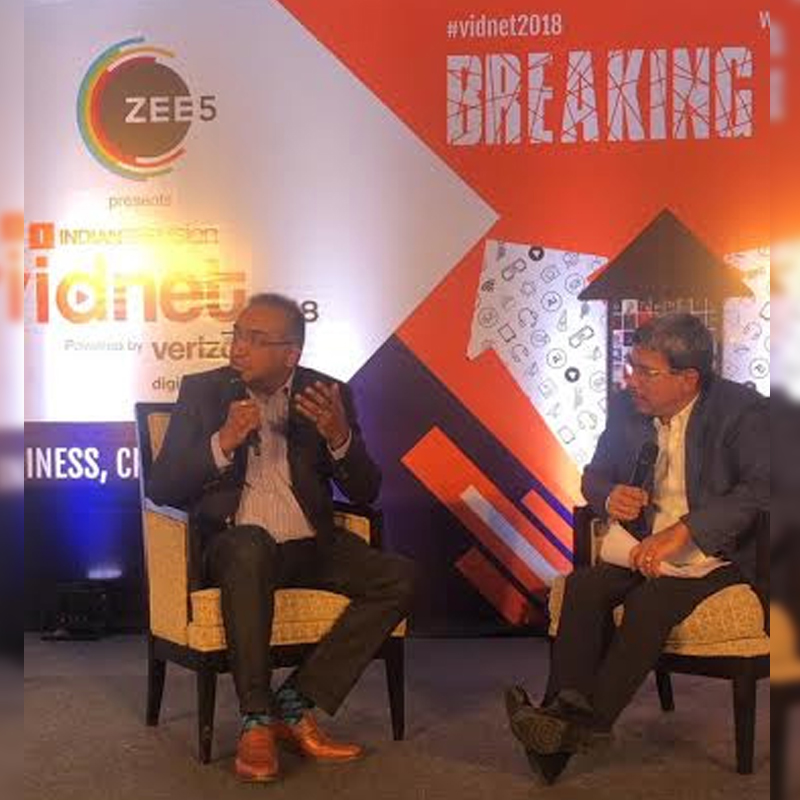
    At the stage of Vidnet 2018, the Aditya Birla Group chairman Kumar Mangalam Birla’s content studio CEO spoke on the state of the industry, Applause Entertainment’s plans in a fireside chat with Indiantelevision.com founder, CEO and editor-in-chief Anil Wanvari.

    187 million cable homes have made TV very powerful and matured, according to him. In addition to that, now the country has got around 500 million mobile phones leading to a flood of screens everywhere. As people are glued to these screens more than ever using in some way with a massive change in consumption habit, this creates an opportunity for everyone to be in the space.

    “I come from a time where we used to have people watching 4-5 hours of television a day. It’s probably down to an hour. But in the meantime, people are finding more time on screens to consume all sorts of content. So, I think the number of hours spent, time spent, is bound to grow. If you are able to do different things, it’s a good time to be in this space,” he commented.

    He saw the industry at a time when TRP was the benchmark to measure the success of a show. Now those days are gone when 10,000 boxes spread across India tried to tell what 600 million people were doing. The emergence of data gives much more accurate consumer feedback which Nair thinks is also “scarier”.

    Though there is no foolproof formula for success in this business, Nair thinks one should start making content with a reasonable understanding of market and audience. Moreover, working with focus groups of few people who want to watch ‘X’ or ‘Y’ to create content would be tricky. However, after creating content, data and audience reactions play a bigger role.

    Nair is vocal on the importance of finding a need gap by looking at things that are missing in the market. While drama series content on TV is dominated by daily soap opera, he thinks what India lacks is high-quality drama series. Though all the K-shows made huge money, according to him, in a diverse market like India, there should definitely be something more than just tele-novella.

    “Now the opportunity is to do more stories. I mean it’s just not drama, there are short forms, animation, and there are kids, all sorts of things happening. We are currently focused on doing dramas. But when you look at the market, when you see the opportunities that are there, I think it’s a good time to be a creator, no matter what you create,” he added.

    To grab more eyeballs in the burgeoning OTT space, there has been an upsurge of investment in content. Platforms with deep pockets are burning cash to make good content. Nair thinks it’s good for the industry to take up the value of content. According to him, it’s not only about monetisation but about the ability to build a business, a consumer habit. However, he also added that spending Rs 5 crore per episode cannot make that alone.

    “Content is not a commodity you can win with a price war. You have to win that with a great story, you have to reach out to consumers, you have to connect with them and then you could spend Rs 300 crore making it or Rs 10 crore. In recent time you have seen the examples in Bollywood too where small budget films have done well. The focus is got to be on that,” he said.

    Talking about Applause Entertainment’s near-term plan, he said it is working actively with the creative community, buying rights for international shows to adapt them into Indian context. It is also acquiring books to adapt them into series as well as original writing. They are also having conversations with platforms about who can carry these.

    It bought rights of two BBC productions The Office andThe Night Of to adapt. For the former, it has already made 28 episodes. It also bought the right of Debashis Basu and Sucheta Dalal’s The Scam. It is also working with Goldy Bahel and Abhimanyu Singh.

    “The way I see it is there are so many platforms, so many consumers, such a huge need gap for content, that I don’t regard myself a competitor. I am part of that mix. You are putting out ten shows, maybe you take one from me, you are putting out 100 shows, and maybe you take ten from me, that kind of thing. And we are essentially focused on helping build this industry,” he said.

    He said as broadcasters have been doing the same kind of shows for last 18 long years, the whole format is sort of fixed as producers also know what they are doing. But for new age content, writing 10-12 episodes and creating season after season is new.

    Nair thinks TV will be not dead in a hurry. While TV is making a lot of money, it’s not like that OTT does not have any room to grow. Moreover, even different models are emerging other than SVoD and AVoD in the OTT ecosystem. Hence, he reaffirms OTT and TV will exist together, at least in the next ten years.

  • Applause Entertainment, Contiloe Pictures team up to narrate Mughal Empire story

    Applause Entertainment, Contiloe Pictures team up to narrate Mughal Empire story

    MUMBAI: Applause Entertainment has partnered with Contiloe Pictures to produce Taj – A Monument of Blood, a period drama series on the rise and fall of one of the most iconic dynasties of all time – the Mughal Empire.  

    The series will be told over five seasons of 12 episodes each. Using the birth and death of Shahjahan as bookends, the series delves deep into the Mongol origins, bloodlines mixing with Persian and Rajput royalty, the court and palace intrigues, the repeated and horrific purging of aspirants to the throne, the regional kings and satraps who paid tribute to Mughal suzerainty and amidst all this, the arrival of the British and Portuguese. It is an incredible tale, a vicarious mix of blood, betrayal, power, beauty, deceit and heartbreak. 

    Applause Entertainment CEO Sameer Nair said, “I am a big fan of revisionist narratives of history. Our history books have been written by victors and often paint very two-dimensional pictures about past empires. When Abhimanyu and I first discussed this idea, we immediately moved away from a typical historical to a darker and edgier version of the Mughal Empire, a version in which symbolically the Taj is more a monument of blood than a monument of love”.

    The Mughal Empire (1521 – 1857) ruled India for just over three centuries and it was the greatest empire in the world at the time. The empire reached its zenith during the reign of its four greatest emperors – Akbar, Jehangir, Shahjahan and Aurangzeb – with geographic boundaries that extended from Bengal in the East to modern-day Afghanistan in the North-West and from Kashmir in the North to modern-day Andhra in the South. The story of the Mughals is fascinating. The pomp and pageantry, the extravagance and excess are all well documented; what remains is untold reality behind the glittering façade – the dark side of Camelot if you will – and it is this story that will be told.

    Contiloe CEO Abhimanyu Singh said, “Sameer Nair’s industry experience and deep-seated understanding of the content space has always shown through in every endeavour he has undertaken. We are thrilled to have associated with Applause Entertainment for this show. It will take viewers on a historic journey showing them an unseen perspective of this illustrious dynasty which lead to their rise as the greatest empire in medieval times and the quest for power, within it, that finally lead to its downfall.”

    Writing is currently underway and the first of five seasons will start filming soon.

  • Applause Entertainment and Sudhir Mishra hold Ronit Roy, Tisca Chopra and Parvin Dabas, ‘Hostage’

    Applause Entertainment and Sudhir Mishra hold Ronit Roy, Tisca Chopra and Parvin Dabas, ‘Hostage’

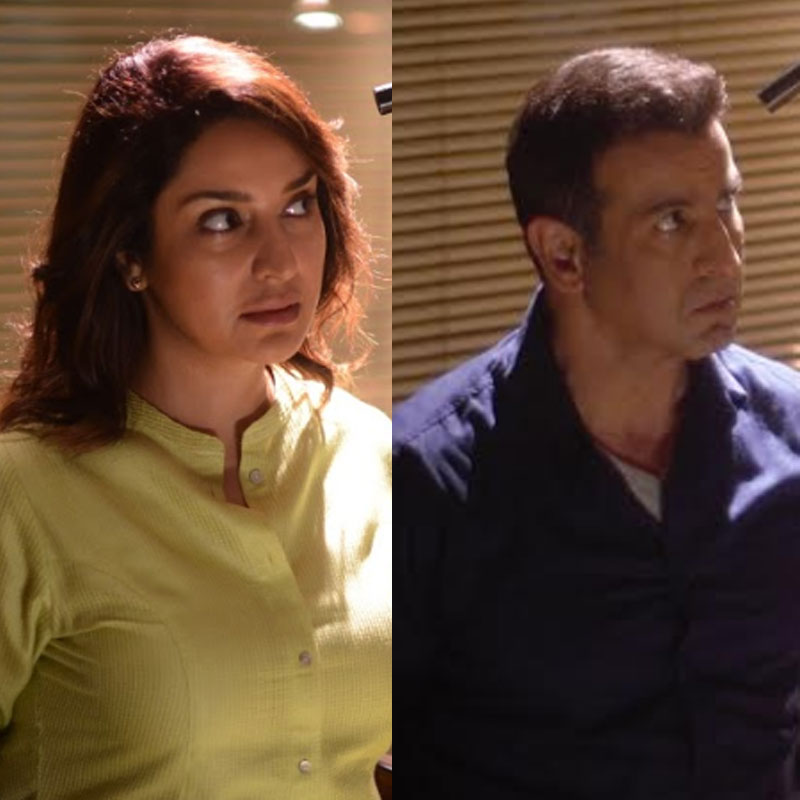
    MUMBAI: Applause Entertainment, the content studio from the Aditya Birla Group brings its audiences a premium drama series that will be a bolt from the blue. ‘Hostages’ is a potent conspiracy thriller fueled by several twists, strong performances and sharp direction.  ‘Hostages’ brings together a stellar star cast of Ronit Roy, Tisca Chopra, Parvin Dabas and Dalip Tahil playing key roles. Acclaimed widely by audiences around the world, the Indian remake of this Israeli high stakes thriller from Armoza Formats, will be produced by Banijay Asia.

    Internationally, ‘Hostages’ generated a great deal of buzz before it even came out and the nail biting series has been hugely appreciated by the audiences. Ronit Roy, a renowned personality of the big and the small screens, who has impressed audiences with his outstanding performances in ‘Udaan’, ‘2 States’, ‘Kaabil’, ‘Adaalat’ and many others is now all set to rule the digital space with his performance in ‘Hostages’.  Tisca Chopra who is best known for her work in ‘Taare Zameen Par’, ‘Rahasya’, ‘Ghayal Once Again’ among many films will be seen essaying a crucial role in the show. The ‘Khosla ka Ghosla’, ‘Ghanchakkar’ and ‘Indu Sarkar’ actor Parvin Dabas, who has charmed the audiences with his unique performances is also one of the key members of the cast. Dalip Tahil one of India’s renowned actors, known for his work in ‘Bhaag Milkha Bhaag’, ‘Salaam Mumbai’ and the BBC soap opera ‘EastEnders’ will also be seen playing an important role.  And for Sudhir Mishra, the creator of classic films like ‘Hazaaron Khwaishein Aisi’, ‘Chameli’, ‘Khoya Khoya Chand’ and the very recent ‘Daas Dev’, this will be his first web series as a director. 

    Sameer Nair, CEO Applause Entertainment commented, “’Hostages’ is an enthralling and captivating concept, which will hook viewers. There is a clear demand for a show like this in the digital space and with a brilliant director like Sudhir Mishra, an exceptional producer like Deepak Dhar and a host of talented actors like Ronit, Tisca, Parvin and Dalip, this show will definitely take the premium conspiracy series bar a notch higher.’’

    Deepak Dhar, Founder and CEO Banijay Asia said, “I am grateful for the support and belief that Sameer has shown in me and my endeavor. We at Banijay Asia are glad to be associated with Applause Entertainment for a prestigious and an acclaimed international thriller like ‘Hostages’. With Sameer Nair and Banijay Group coming together we aim to produce some groundbreaking content across genres for the audience.”                                                                           

    Sudhir Mishra, director, ‘Hostages’ added, “I treat each and every film/show of mine as the first one, which helps me think of the plot in a new and fresh way. ‘Hostages’ is one such example. For me, every element and every person who is involved in the project forms an integral part, including the actors, producers, writer, cameraman and the whole team. On ‘Hostages’, having a mind like Sameer Nair and a house full of extraordinary actors and writers, I’m enjoying directing this’’.

    Ronit Roy said – “‘Hostages’ is a show which had me arrested in front of the screen when I watched it. It has been hugely appreciated all over the globe and my character in the series is very intriguing. I constantly strive to keep my audiences engaged and entertained with each of my performances. I’m delighted to work with an excellent director like Sudhir Mishra for this series”.

    Tisca Chopra added – “My character in the series is very demanding and it will be challenging to live up to the high hopes set by the original show. But I’m sure that having a director like Sudhir Mishra and a cast full of brilliant actors, this journey will be an interesting one. A show like this has never been made before and ‘Hostages’ will give a fresh turn to the Indian digital space.”

    Parvin Dabas commented – “I like taking risks when it comes to playing characters and my role in ‘Hostages’ challenges me as an actor. The script of ‘Hostages’ is spell binding and I’m very thrilled that I’m getting directed by Sudhir Mishra and collaborating with actors like Ronit Roy and Tisca Chopra for this wonderful project”.

    The shoot of ‘Hostages’ is currently going on in Mumbai and the other actors in this digital series are Malhaar Rathod, Sharad Joshi, Aashim Gulati, Surya Sharma and Anangsha Biswas. The show is expected to stream later this year.

    Applause Entertainment has recently announced an exciting line up of shows that includes ‘The Scam’ with Hansal Mehta, ‘Criminal Justice’ & ‘The Office’ with BBC, ‘City of Dreams’ with Nagesh Kukunoor, and has another 20 premium shows lined up for the year. With this ‘Hostages’ announcement, Applause Entertainment has given its audience one more show to look forward to in the coming year and we can’t wait for it to release!

  • Applause Entertainment bags rights for three Armoza series

    Applause Entertainment bags rights for three Armoza series

    MUMBAI: Content and IP creation studio Applause Entertainment has now taken the local rights to three of Armoza Formats’ scripted series: the highly acclaimed crime-thriller Hostages and hilarious comedies La Famiglia and Honey Badgers.

    Produced by Yetzira Ivrit, Hostages is an intense psychological crime-thriller that follows a renowned surgeon about to perform a routine operation on the president. But there is nothing routine about it when her family is taken hostage and she is ordered to sabotage the procedure and kill the President–or her family will die. As viewers follow the battle to save both her family and the president, they are taken on a journey where all are fighting for their survival.

    Applause Entertainment CEO Sameer Nair said, “We are most excited to be adapting these Armoza shows for India. I have been a big fan of Israeli content as our countries have a close cultural affinity and I believe stories like ‘Hostages’, ‘La Famiglia’ and ‘Honey Badgers’ are incredibly universal. Writing, casting and production on all three shows is already underway and filming should commence soon.”

    Produced by United Studios of Israel, La Famiglia follows the lives of a perfectly normal suburban family living in the divorce capital of the country. With many reasons to be happy, they have even more reasons to go to therapy–their sex life, his best friend, her complaints, and his mother. Their therapy sessions provide the entertaining basis for the series, through which we flashback to the comical, stand-alone scenes from their daily life. Each episode is a new therapy session in which they bring up the most embarrassing, bizarre, awkward and insane moments that are a part of every family’s life.

    Applause Entertainment is a content and IP creation studio with a focus on films, digital series, television, animation, music and live events. Whereas, Armoza formats is established in 2005, is the key player in the international content market and an independent creators and distributors of global content.

    Armoza Formats CEO Avi Armoza, “As we continue to expand our scripted and ready-made series catalogues, we are thrilled that Applause Entertainment, a highly acclaimed creative house, has chosen to take three of our top scripted series to be adapted in one of the most important content arenas in the world.”

    Honey Badgers, produced by Naor Zion and originally aired on Reshet’s Channel 2, follows the lives of four small-town friends who change their identities to get jobs at one of the world’s top financial firms. They will fake it all to appear more sophisticated and achieve their fantasy of opening up their own investment company.

    Also Read:

    Applause Entertainment to produce series on 2016 surgical strikes

    BBC Worldwide India announces partnership with Applause Entertainment

  • Applause Entertainment to make web series on 1992 Securities Scam based on the book ‘The Scam’

    Applause Entertainment to make web series on 1992 Securities Scam based on the book ‘The Scam’

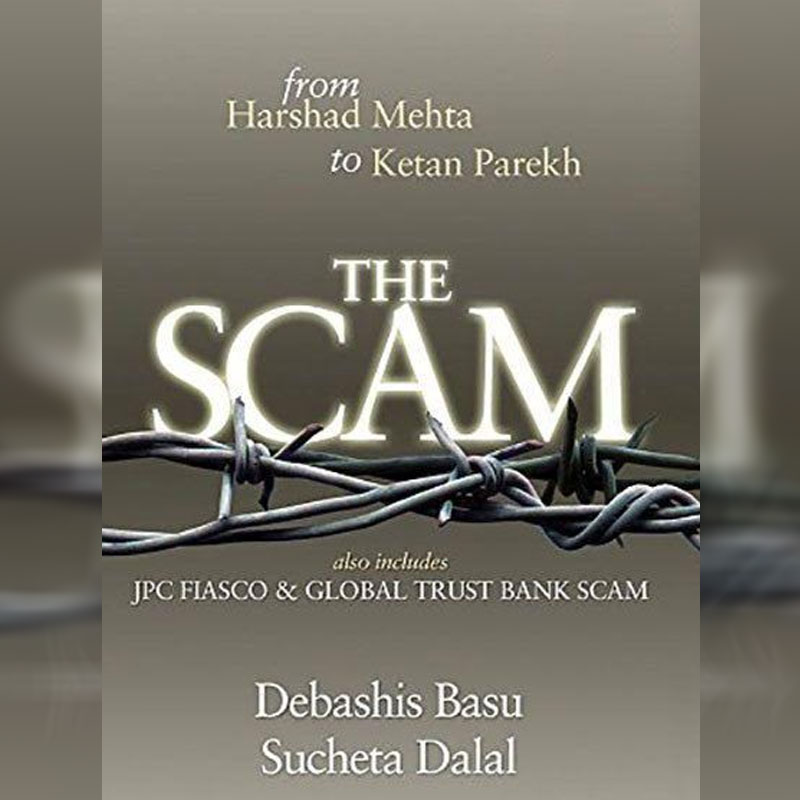
    MUMBAI: For the first time ever, the true story behind one of the most notorious scams of the Indian Stock Market shall be brought on screen by Applause Entertainment in a 10 part series. SuchetaDalal and DebashisBasu’s ‘The Scam’ is one of the most thrilling non-fiction books ever written in India. Helmed by entertainment veteran Sameer Nair, Applause Entertainment will be showcasingthiswhite-collar crime story which took the country by storm.

    An ambitious man discovers a loophole in the system and achieves overnight success in thestock market. A woman gets on his tail and India’s biggest securities scam is exposed. This story of greed makes for a thrilling series of ambition and investigative journalism. An immediate bestseller after being published in April 1993, the book highlights the pervasive greed and misconduct of the financial world unearthed by Padma Shri award-winning journalist SuchetaDalal. Converting this exposéinto a visual format is going to make for a spellbinding story.

    Applause Entertainment CEO Sameer Nair said,”The Scam had me hooked from the start. We are thrilled to work with Sucheta&Debashis on adapting this book into a riveting drama series. With their active collaboration on the screenplay, it promises to be an edge of the seat D-Street drama. These are indeed exciting times for digital content.”

    “It is uncanny how the banking system continues to be exploited through systemic loopholes. It was Harshad Mehta using fake BR in 1992. Now it is Nirav Modi using fake LoU. As if nothing has changed.

    We are very excited to collaborate with Applause Entertainment, and see the drama and excitement of 26 years ago, from an era when there were no cellphones or internet, being recreated for the digital age.”, says Sucheta Dalal.

    In addition to ‘The Scam’, Applause Entertainment has also partnered with international powerhouse BBC Worldwide to produce the Indian version of two of their popular shows–‘The Office’ and ‘Criminal Justice’, has acquired the rights of the 1st chapter of the bestselling book ‘India’s Most Fearless’ and is also in process of making a political drama series called ‘City of Dreams’with NageshKukunoor.