Tag: APOS Summit

  • Local language content drives higher audience engagement: Netflix’ Patrick Fleming

    Local language content drives higher audience engagement: Netflix’ Patrick Fleming

    Mumbai: Southeast Asia users consume two times more Netflix content than the global average, and India leads the charts, said Netflix, director of product innovation, Patrick Fleming at the ongoing virtual APOS summit on media, telecoms, and entertainment.

    The streaming giant currently has over 209 million paid subscribers globally out of which 27 million subscribers are from APAC markets. While that is a fraction of the total user base, it should be noted that two-third of its paid subscriber growth was driven by the APAC market in 2020. “We know that a substantial part of future subscriber growth is going to come from outside of the US,” said Fleming.

    Talking about the mobile-only plan, Fleming said, it has not been a success in all markets. The plan was first launched in India followed by Malaysia, Indonesia, Philippines, and Thailand, followed by markets across Asia and Africa. “We introduced the mobile plan in markets only after experimenting with the right entry price and discerning the demand for video content on mobile,” he added.

    Fleming said, “It is important for Netflix to speak more languages to cater to the APAC market. We now offer our content along with subs and dubs across 30 languages, so that a great show may travel anywhere in the world. For example, Thailand prefers dubbed content while South Korea prefers subs.”

    While a show like “Money Heist”, “Bridgerton” and “Emily in Paris” has done well in markets like India and Southeast Asia, local language content consistently outperforms in terms of audience engagement, he observed. In India, that means local language films and, in South Korea and Japan that means K-dramas and anime. Launching more payment modes has also increased adoption. Netflix recently enabled autopay via unified payments interface (UPI) in India and GoPay in Indonesia.

    The streaming giant has introduced a slew of nifty features that individually may seem like marginal improvements but are incredibly important to a mobile customer. The ideas first came in India and were then tested globally, noted Fleming.

    These features include a native brightness, playback speed and lock screen functionality. Currently, the OTT giant is experimenting with a function that plays a short vertical video clip when the user hovers above a title. “The idea is to capture the shorter moments of consumption on mobile devices. The user may not sample the content immediately but may put it in his watch list for later consumption,” said Fleming.

    Not just mobile, Netflix can be streamed across 1700 devices and Android and iOS operating systems (OS). Coding efficiency is vital when it comes to mobile customer experience. It was important that the Netflix mobile app was always in a ‘ready to watch’ mode, emphasised Fleming. Features like ‘smart downloads’ and ‘downloads for you’ were introduced to minimize memory usage and ensure that customers transitioned to the next piece of content seamlessly.

    Netflix has also partnered with over thousand local internet service providers (ISPs) to join their open connect network so that it may deliver a high-quality video viewing experience. It has purpose-built boxes called open connect appliances that have been deployed at interconnection locations to localise substantial amounts of traffic by ISPs.

    “Technology has come a long way in ten years,” said Fleming. “A decade ago you could transmit 1.5 hours of content with 1 Gb of data, in 2015 you could transmit 2.5 hours of content or an entire movie in 1 Gb, today you can transmit 6.5 hours of content or the entire first season of “Stranger Things” in the same amount. The same quality, fewer bits.”

    In terms of product innovation, Fleming is bullish about interactivity and branching narratives. “Audiences have loved our interactive content like “Puss in Book” and “Black Mirror: Bandersnatch”. We’re working on an interactive mindfulness series with Headspace and there is the expansion into gaming” noted Fleming.

    Netflix has launched two mobile games based on the “Stranger Things” franchise in Poland.

    “Mobile audiences are wonderfully impatient,” remarked Fleming when speaking about the need to deliver top notch customer experience on mobile. “We’re not just competing with other long form content platforms but any platform that offers a unique mobile experience.”

  • Disney’s APAC head Luke Kang bats for regional content to push growth

    Disney’s APAC head Luke Kang bats for regional content to push growth

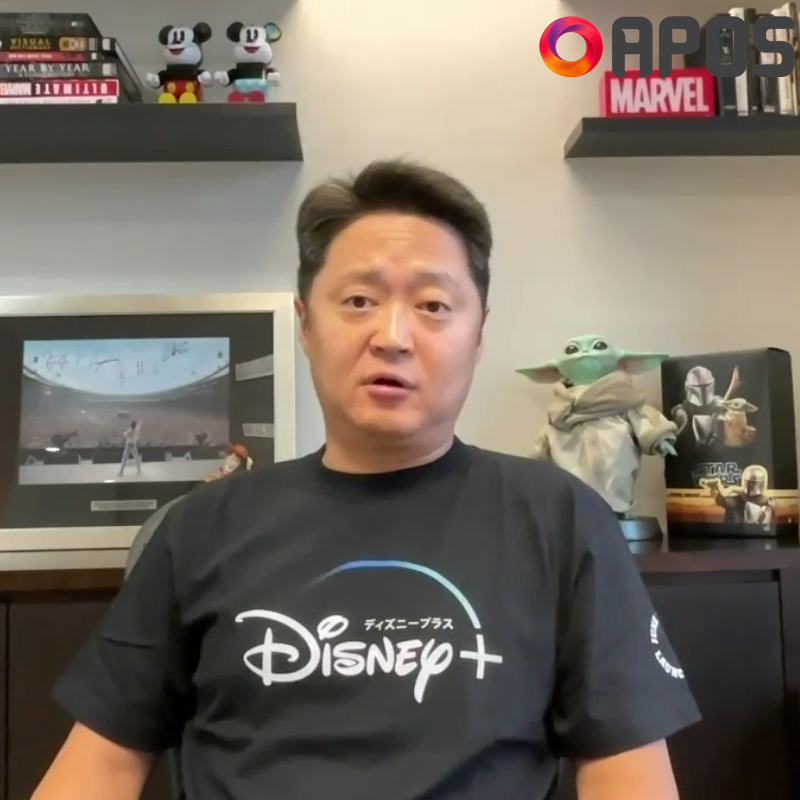
    Mumbai: The focus areas of the company in the APAC market have not changed much in the last one year, said Luke Kang, who was appointed as The Walt Disney Company, president – APAC, excluding India in 2020. Under his leadership, the APAC business has undergone restructuring with the appointment of a D2C head, spun off a division in Indonesia to grow the market and maximise the regional scale and in-market expertise in markets like Japan and China.

    Kang virtually addressed the APOS summit on media, telecoms, and entertainment industry in APAC organised by Media Partners Asia on Tuesday.

    The APAC market is critical to grow Disney+ 116 million SVOD subscribers globally, said Kang. The streaming platform has had a soft launch in Japan and will soon launch in South Korea, Taiwan, and Hong Kong. “The APAC market will contribute a sizeable share to the global subscriber base” he added.

    Even though most of their content is produced in the US, the audiences in the APAC market including Indonesia, Thailand, Malaysia and Singapore have embraced Disney+, noted Kang. “These markets have a strong affinity for global and regional content”, he said.

    “We’re not going to dabble in local content, but be a major player”, he emphasised when talking about the importance of producing content in local markets and supporting the creative economy in these markets. Kang said that first it would be important to understand the nuances about the customers in these markets. For example, he observed that consumers in Indonesia prefer to consume Korean or Japanese content. Those kinds of insights would enable Disney+ to make relevant investments to grow their subscriber share in local markets.

    “We are thinking differently, than we used to pre-D2C. We get a lot more data in real-time. We are learning that we need to be very broad,” said Kang, “We will be doing a lot of local and regional content across multiple markets, to make our service better, more exciting, more localised.”

    Speaking about the importance of SVOD business, he said, “SVOD is what you would call the ultimate scalable business. It is the one business in our portfolio where scale really matters. This technology allows us to bring the benefits of our global scale to consumers, especially, to consumers in APAC. Earlier, in the media industry, the content scale was global but it was difficult to scale distribution globally because you had a lot of walled garden ecosystems.”

    Earlier this year, Disney has decided to shut 18 TV channels in Southeast Asia and Hong Kong effective from 1 October. The reports indicated that the channels were closed as part of the media company’s focus on increasing its focus on the D2C business.

    Speaking about the move, Kang stated, “There’s a role for all media in the lives of consumers, although it changes over time. We’ve had to make tough decisions across the region when it comes to television. We’re making these decisions based on consumer demand, based on where the consumers are going. Consumers are telling us they want to engage with us on digital.”