Tag: APOS 2015

  • Biggest threat to Indonesia’s DTH & Pay TV market is piracy: Tanoesoedibjo

    Biggest threat to Indonesia’s DTH & Pay TV market is piracy: Tanoesoedibjo

    MUMBAI: While there may have been disruptive pricing and piracy issues that haunt the Indonesian pay TV market, the potential in the country is enormous.


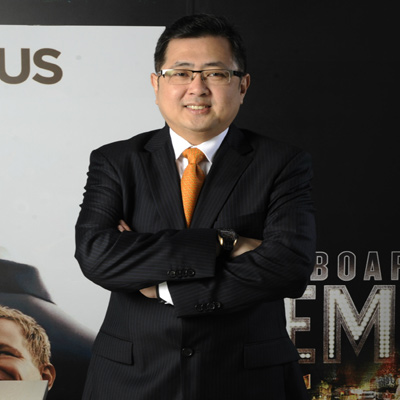
    According to Indonesian satellite Pay TV company MNC Sky Vision’s president and director Rudy Tanoesoedibjo, the industry faces three key hurdles, which are stagnating growth. Outlining the three key points he says that piracy has been the biggest threat to the pay TV and Direct to Home (DTH) market.


    “We work very hard to fight piracy and we get very good support from the channels to stop piracy,” Tanoesoedibjo says. He was speaking at the recently held Asia Pacific Operators Summit (APOS) 2015 in Bali.


    Tanoesoedibjo further adds that the other two reasons are inter related to the content of the channels in Indonesia. “We are experiencing what India was experiencing in the past. In India, it was called call rotational subscribers while we call it recycle subscribers. The same set of new subscribers come in once again every three to four months, as new subscribers like a rotational churn thanks to an ‘unhealthy’ free offering for new subscribers. A single subscriber jumps from one operator to another,” he says.


    The third reason behind the stagnant growth, according to Tanoesoedibjo, is severe because of a new practice adopted by some operators in the country. “Operators do not shut off non-paying subscribers. We have had instances where people only pay one time and continue with the service. This threatens the growth,” he laments before adding, “this is a structural problem and we can only solve it with the participation of the channels.”


    To battle the menace of piracy, MNC Sky Vision is currently fighting approximately 36 cases in court. The company has three brands namely Indovision, Top TV and Oke Vision under its umbrella. The good news here is that MNC Sky Vision has managed to crack one the biggest player, which had 75,000 subscribers.


    Talking about the scale of opportunity for DTH players in Indonesia, Tanoesoedibjo opines that the opportunity is large enough with a market size of 40-50 million subscribers and the pipe can grow further. “Currently the pipe is stagnant,” he informs.


    Going forward, MNC Sky Vision is planning to offer more High Definition (HD) channels in the country and will also be moving soon to MPEG-5.


    “It doesn’t matter if the Set Top Box (STB) is MPEG2, MPEG 3, MPEG 5, HD or even Standard Definition (SD), as the price difference is only one or two dollars. We will be move to MPEG 5 by the end of the year,” he says.


    Throwing light on the dilemma of whether Over the Top (OTT) and DTH players can co-exist peacefully, Tanoesoedibjo says that DTH operators need to evolve in order to survive. “DTH operators think with a traditional mindset that they just provide access to content via their technology for customers. We should not forget that at the end of the day, we do not have control of content. We are only a pipe,” he informs.


    Calling new technology that can deliver content faster, efficiently and cheaper than a DTH operator, a threat, Tanoesoedibjo says that in that scenario operators will have to expand, introduce better technology and new means of delivery such as OTT platforms.


    “We have already launched our alternate OTT, and are also preparing our stand alone OTT services next. But maybe in the next five months there will bea new means of delivery,” he mulls.


    On a concluding note Tanoesoedibjo says that operators need to pay attention in creating their own content. “We now have our own content for 20 channels. At the end of the day we deliver content. But if someone else finds an easier way to deliver it, then DTH needs to watch and be more effective,” he cautions. 
  • “Disorganisation of analogue cable in Phase III & IV will help DTH”: Harit Nagpal

    “Disorganisation of analogue cable in Phase III & IV will help DTH”: Harit Nagpal

    MUMBAI: While India has witnessed Phase I and Phase II of digitisation, the remaining two phases (i.e Phase III and IV) will go a long way in aiding more transparency. Direct to Home (DTH) platforms too are an enthused lot, hoping it will help them gain additional subscribers. 


    Speaking about the expected development Tata Sky CEO Harit Nagpal said, “As digitisation rolls out, we are hopeful that a large number of consumers will move to DTH because analogue cable is little less organised in Phase III and IV of digitisation.”


    Nagpal said that the first two phases impacted approximately 15 per cent of the TV population. According to him, when it came to the process of conversion from analogue cable to digital, about 40 per cent of the analogue subscribers picked up DTH.  Nagpal was speaking at the Asia Pacific Operators Summit (APOS) held in Balli recently.


    Speaking about net additions, he said that the pace had not slowed down. “Even when we were acquiring close to 10 million subscribers as gross, we were getting three to four net additions. Today, the industry picks six to seven million gross, it still makes three to four million net.” Nagpal further added that this would be facilitated by digitisation in places where the first two phases were complete.


    Nagpal believes that the top four DTH players will become cash positive very soon. “It’s on the horizon now. We have already been covering our operational costs. The investment that is really going into the business is going to fund the growth,” he said.


    According to Nagpal, an investor wouldn’t mind finding the growth because on a 10-12 per cent churn, the life of a customer is seven to eight years. As such if the pay back is three years, then an operator has about six to seven years cash life with the customer.


    “Thus an investor is happy to invest and add the gross adds faster and does not mind paying for the investment,” he added.


    While on the one hand, Videocon d2h CEO Anil Khera expressed his displeasure over premium content being distributed for free by Over The Top (OTT) platforms, Nagpal explained his point of view. “I treat myself, i.e. a content access provider, as a grocer. We buy soaps and cereals in bulk and sell them in small packets. If three generations in a single family want to consume bread, rice and pasta we have it stocked. Secondly, if these three generations ordered the food respectively via in shop, over the phone or placed an order online, I have to cater to that and make it convenient for customers.” 


    He further said that he would not go about cursing people as to why content is being given out for free. “I have to make it convenient for the customer to find everything at one place,” he stressed.


    On the added service of video on demand (VOD), Nagpal said that four years ago when Tata Sky launched VOD, it had seen an investment of close to $10 million. Currently the operator was just breaking even on operating costs. “But we know it’s a long term play. It’s not necessarily a play of premium content. In fact, on our first VOD we made available Hindi movies and not English. The reason being English movies’ rights holders were sceptical and insisted on minimum guarantees.”


    On the issue of broadband bandwidth, Nagpal stated that going by the current world wide web phenomenon it was obvious that  video cannot be carried by over the air as the last mile has to be connected by at least some form of wire. He hoped a new entity would cater to this business very soon. 


    “Currently there are a lot of entrepreneurs who provide broadband very well in some areas. They have just been constrained by expansion. We are hoping that in a year’s time the landscape will change. Some funding will come in and then they will expand,” he concluded.

  • James Murdoch bets big on Star India; expects $1 billion EBIDTA  by 2020

    James Murdoch bets big on Star India; expects $1 billion EBIDTA by 2020

    MUMBAI: The country’s leading broadcaster – Star India is betting big on the future. Star India, which has made a mark in the general entertainment as well as the sports broadcasting space, is looking at turning the company into a billion dollar entity by the turn of the decade, said 21st Century Fox co-chief operating officer James Rupert Murdoch.


     “We love the India business. It has now evolved enormously from Hindi entertainment to regional language broadcasting and now we are a national platform. The sports business for us is a new pillar and we are looking at the business in a long-term time frame. And if we keep innovating and investing in putting more creative and innovative content on screen, Star India will become a billion dollar EBIDTA by the turn of the decade,” said Murdoch at the just concluded Asia Pacific Pay-TV Operators Summit 2015 held in Bali.


    Addressing the gathering at APOS, Star India CEO Uday Shankar said, “Media content has a huge role in shaping the sensibilities of the society and this role should not be underestimated.”


    Stressing on the role of sports, Shankar added, “I am prejudiced towards aspirational content and cynical about cynical content. This is something we have always kept in mind while creating all of our content and it is the same philosophy that we are bringing to sports as well. Sports has a huge role to play in empowerment, especially in a country like India, where we need to make the society believe that even an uneducated person can aspire to something greater if he is talented in a sport. This is what has worked with Kabaddi in a big way.”


    Star has applied the same entertainment business philosophy into sports. “We are creating content with deep local affinity using the audience aggregation power that cricket gave you. Sports broadcasting has been plagued by laziness and lack of innovation, treated merely as a distribution agent of acquired rights, which is what we have tried to change with multiple local leagues. If it is your team that’s playing, even if it is not the best team, you would be deeply passionate about it. Creating a hierarchy of leagues across the country can be huge empowering phenomenon,” opined Shankar.


    Speaking about content creation and regionalization, he said, “India is a giant country with varied cultures and tastes. We used Asianet as a beach head for the south and elevated the quality of content dramatically with sharper storytelling, involving the best of the creative fraternity and breaking the caste divide between film and TV. For logistic reasons outsourcing production might make sense, but unless you internalize the core creative skill, you will not be able to sustain success, which is why we have build a robust internal creative team to ensure this.”


    Star India’s recently launched video on demand (VOD) platform Hotstar has become a talking point of sorts. “Our objective behind Hotstar was quite simple actually – a lot of audiences were consuming our content on other screens, but we were unhappy with the inability to control their viewing experience. We realised we own all of this IP and so came Hotstar. I do not think that this is a ‘free model.’ We need to keep the consumer at the center while thinking about this and in a market like India, where data costs are still pretty high, the consumer is still paying a lot for the data – so it’s not particularly consumer friendly to have them pay twice, especially at such a nascent stage.”


    Shankar is also buoyed by the over-the-top (OTT) services space as it allows for democratisation of creativity. “However this is not the same as saying that anyone can create content,” he said.


    He also stressed on the use of big data and analytics by the network. “At Star, we use a lot of data and we value it deeply. However, let’s not become data monkeys. Data helps understands patterns but to understand these patterns and take a leap to what should be created next, will still require creativity. No matter how much data we have, I don’t believe we will be able to automate the definition of the next blockbuster,” concluded Shankar.