Tag: APAC

  • Social media platforms, online video to consolidate advertising dominance in 2020

    Social media platforms, online video to consolidate advertising dominance in 2020

    MUMBAI: A considerate portion of marketers in Asia Pacific (29 per cent)don’t have the right balance and synergies between digital and offline media, while the majority (84 per cent) still struggle with cross-channel measurement. That’s according to the latest annual state of marketing study, Getting Media Right: Marketing in Motion, released today by Kantar.

    2020 is set to see a significant rise in digital ad spend, as marketers in the region look to optimise their media mix. 80 per cent of marketers plan to increase their investment in online video advertising over the next 12 months, while 68 per cent plan to increase spend on social media networks and 57 per cent plan to increase spend on podcasts. This is in sharp contrast to print media, where72 per cent of marketers say they will decrease spend in magazines, while 60 per cent will reduce their investment in newspaper advertising.

    Despite the projected growth in online advertising, digital measurement remains a challenge for marketers, with blind spots such as ‘walled gardens’ impacting the ability to understand cross-channel performance. This leaves many advertisers in the dark about the performance of their brand across channels.

    Now in its sixth year, Getting Media Right examines the current state of marketing in a fast-moving connected world, and is based on in-depth survey feedback from nearly 500 senior marketers globally spanning advertiser brands, media publishers and agencies globally. It reveals an industry that continues to diversify its usage of different media contexts, yet requires better understanding of how ideas, content and media channels work together to achieve their goals of driving short-term sales and long-term brand growth.

    Key findings from the study include:

    The short-term vs. long-term dilemma comes to a head. Almost all marketers in the region (89 per cent)now recognise the importance of balancing short-term sales with long-term brand building. However, still only 61 per cent of marketers are using both short and long-term measurement; 32 per cent still rely solely on short-term sales results.

    Marketers globally still struggle with integrated campaigns, but APAC marketers are having more success. 88 per cent of marketers say they have integrated their marketing organisations, compared to 75 per cent of global marketers.

    Programmatic targeting continues to grow. Four in five marketers in APAC (78 per cent) currently use programmatic targeting for their campaigns – and that is expected to reach 87 per cent in 2020. But still one in five marketers(21 per cent) aren’t confident they’re successfully targeting the right audiences.

    Cookieless advertising could leave marketers in the dark. More than a third of marketers (36 per cent) haven’t begun preparations for a cookieless world, leaving many concerned about how such change will impact the industry.

    Nearly two-thirds of marketers (61 per cent) agree that developing custom content is imperative, but when it comes to understanding how context impacts creative executions, there’s still a gap. More insight is required into how specific content needs to be tailored to specific contexts to improve message receptivity.

    “While the rapid growth in digital ad spend comes as no surprise, this new research indicates that marketers still have a long way to go to when it comes to cross-channel measurement and proving ROI,” said Jane Ostler, Global Head of Media Effectiveness, Kantar. “The next 12 months will see huge changes for the industry, with the rise of newer channels, such as podcasts and advanced TV, and the move away from cookies set to transform the way advertisers target and measure campaigns. Marketers should aim for the best of both worlds: they need to create a framework to monitor impact on business and brand metrics. That means harmonising measurement tools, building an infrastructure that enables measurement across the diverse marketing mix, and creating meaningful insights to improve performance across all channels.”

    Pablo Gomez, Chief Digital Officer for the region, said: “The results go to show just how dynamic and complex APAC is as a region. Marketers here are faced with the challenge of rapidly increasing their digital investment, whilst at the same time, ensuring there is integration with offline media.

    He continues: “Measurement also remains one of the biggest issues for the region, especially online-offline cross measurement which is critical in a region dominated by TV and mobile. It’s clear that marketers need more focused data, with insights that give them the direction they need to better integrate and optimize their campaigns. This will also allow them to customise content better and improve the entire experience for their audiences.”

    Kantar executive director, South Asia, insights division Sandeep Ranade said, “This research indicates that many marketers today focus on short-term measurement though they recognise the importance of balancing short-term sales vs long-term brand building. Integrated campaigns are the way forward, however, there is still a lot that needs to be done here. Marketers need to be more cognizant of specific contexts while developing content. This will help them future proof their digital measurement approaches in the rapidly growing and changing digital scenario”  

  • ZEE5 MAU touches 76.4 mn in Q1 of FY 20

    ZEE5 MAU touches 76.4 mn in Q1 of FY 20

    MUMBAI: Media conglomerate Zee Entertainment Enterprises Ltd’s (ZEEL) digital arm ZEE5 continues its growth in user base reaching 76.4 million monthly active users (MAU). ZEEL in its first quarter financial result of FY 20 revealed the MAU of the streaming platform as of June 2019 while it had 61.5 million MAUs in the quarter ended March 2019.

    The streaming service had a global daily active user base of 6.6 million in June. It has also witnessed a hike in user engagement as users spent an average of 33 minutes per day on the platform in contrast to 31 minutes per day in the last quarter.

    During the quarter, ZEE5 launched 18 Original shows and movies including seven in regional languages. The company said that many of the shows helped ZEE5 to grow its paid subscriber base. The streaming service also entered into new partnerships with Hathway and ACT Fibernet in the quarter to offer bundled package to consumers. Moreover, ZEE5 also tied up with players in the online ecosystem like Myntra, Qwikcilver, Netmeds and Gaana.com.

    “ZEE5 continues its strong run and is working towards achieving its aim of becoming India's # 1 digital entertainment platform. In the international markets, it has seen an encouraging response in the initial phase. I am confident that with its strong content line-up and partnerships with leading players in the digital eco-system, value proposition of the platform and engagement with the consumers will continue to improve," ZEEL MD and CEO Punit Goenka commented in the earnings release.

    Along with the expansion in the domestic market, ZEEL is looking at an international expansion of its digital business as well. Following the launch in priority APAC markets, ZEE5 commenced marketing activities in the neighbouring countries to leverage its language and content affinity. To tap into the existing demand for Indian content in several markets, it also soft-launched dubbed content in five international languages. Moreover, the roll-out in APAC will be followed by MENA, Europe, Canada and Caribbean markets.

  • Sudhanshu Vats unveils Voot’s audacious plans in Viacom18 show of strength

    Sudhanshu Vats unveils Voot’s audacious plans in Viacom18 show of strength

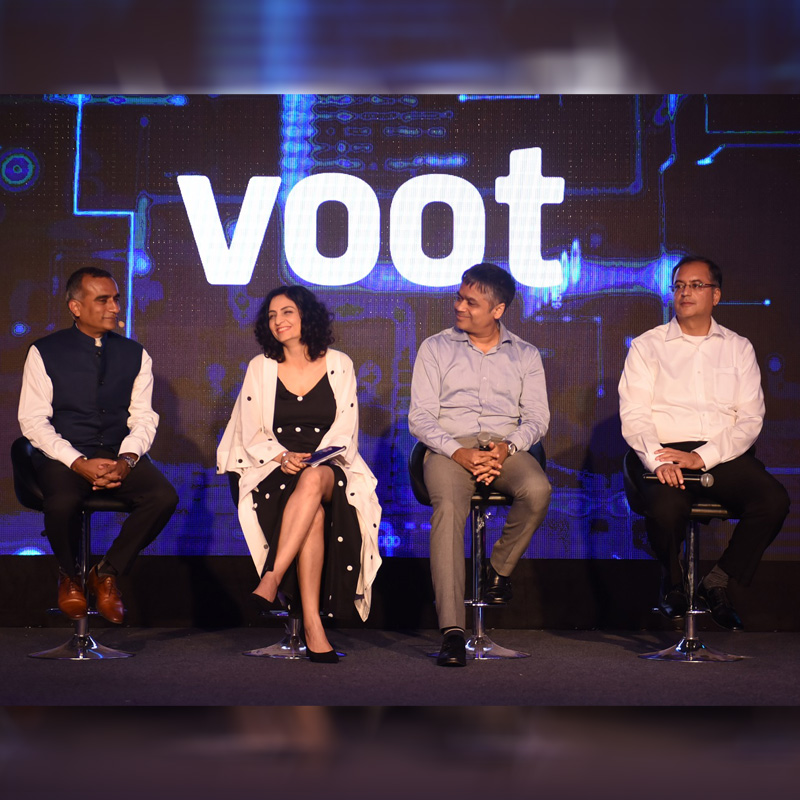
    Viacom18 put on quite a show as it offered a peak into what’s in store for its OTT platform Voot at a five-star hotel in Mumbai on Thursday. Leading the charge was managing director Sudhanshu Vats with key colleagues Monika Shergill, Ajit Andhare, Ravish Kumar and Akash Banerji in tow. The company made a series of box-office announcements, throwing down the gauntlet to competition. Voot showcased the first bundle of its upcoming Voot Originals – 18 multi-lingual premium web series cutting across genres. Viacom18 Motion Pictures, the network’s movie studio, will now be producing web series for VOOT under the banner of Tipping Point Films. 

    In a bid to tap into the country’s regional markets, the regional broadcast entertainment cluster of company will produce multi-lingual Voot Originals. The streaming service will add news (16 live channels across 13 languages) to its diverse portfolio in partnership with Network18. Sprucing up its content and product play, Voot is set to go international, beginning with the United Kingdom in November this year.

    Driving synergies within the network, Vats’ vision is to build a future-ready Viacom18 that is screen, platform and pipe agnostic. In a bid take rapid strides, Viacom18 is bound to throw the might of all its media and entertainment properties behind Voot. Case in point, utilising Reliance Jio as a platform to showcase content and a carrier of the app’s services.

    To ramp up its engagement and user interactivity experience, Voot will be adding to the user search experience and facilitating easy discoverability will be the adoption of Google Watch Action, an industry first in APAC for premium OTT players. The introduction of dolby surround sound for all Voot Originals is a first amongst Indian OTT brands.

    Viacom18’s show of strength not only signals intent but also suggests that the company is building up ammunition in order to go the distance in the OTT warfare. Vats’ ambitious roadmap for Voot is likely to get the early entrants and leaders Hotstar, SonyLIV and Zee5 to sit up and take note.

    Vats, who was promoted last month, has seen the company transition from a joint venture with Viacom to one that is now majority-owned by Mukesh Ambani’s Reliance Industries. After he and his team made the big-ticket Voot announcements, the big boss of Viacom18 sat down to express his views on a range of subjects.

    International distribution

    If you look at the model, particularly the behind paywall model, there are two very important components, which we have to be careful about. One is the acquisition cost, and the other is the marketing. So, at this juncture in our journey as we try and test the waters in the international market, our thinking is that going with a telco partner will be a good thing to do. And the choice of the market is because we wanted to go to a diaspora market, which has got a reasonably good representation of India. It has also got a good mix of traditional Indian families and now the younger audience. It is also a market where we could also test out some of the appeal of the Indian content with youth, population outside of our own diaspora. So from all of those, it was a good mix. UK has got two million south Asian diaspora. Our brand has been there for some time. UK is a market where we have Colors, Rishtey, Colors HD, MTV Beats, and we have a movie channel as well now.

    Partnership with Jio

    We are going to build a deeper relationship with Jio as we go forward. Some of the stuff is already happening. We want to build a lot of interactivity as well. Jio is our both parent and partner. So it makes perfect sense for us to be together. Instead of worrying about other telcos, we focus on what VOOT can do for Jio, and vice-versa. We are strengthening and deepening this partnership. We have a very dedicated partner. Jio has revolutionised the market, they are a leader in any case in data. 

    Revenue model

    You saw few of them (originals). Especially the last one Feet Up With The Stars coming on the AVOD platform. So I think it will be a mix, some of them will be ahead the paywall, some of them may come behind the paywall. It will depend on the timing of our launch, on our strategy. What our product offering will be, it’s premature to talk about this. We are doubling down on original content. As we will go along we will decide what comes where. But as far as AVOD is concerned these originals will also come on AVOD after windowing even these go behind the paywall.

    Marketing mix

    It will be a classic marketing mix. They (Voot) will get right network support that is always there. In case of certain originals, you’ll see 360 degree marketing. Otherwise, network and digital support will be there for all of our shows and that works very well for us. We’ll bring 360 for some others depending on which one and when it is being released. It depends on program to program.

    TRAI’s tariff order

    Let me answer it in three ways. We are working on our response on the tariff order. It is premature for me to comment so I won’t comment on anything specifically. In terms of the order, it’s still sub-judice in some ways because there is a further hearing in Supreme Court on 5 September, and there’s also a Delhi high court case which is on the merits of the order, so those two things are happening in parallel. You will see our response as well and I think like the other players in the industry we’ll respond early September depending on how the Supreme Court case is closed. And I have always said about this tariff order, that at the conceptual level I think it’s a good thing to do but we have to find the right ways to operationalise it. Because in principal, giving more choice to the consumer, it’s the right thing to do especially when digital is also coming in. Having said that TV has had a different phenomenon of bundling and there is some merit in bundling and giving in a bundle. So, we need to find a right balance.

    Voot Kids and the freemium model

    As we go forward we’ll build a portfolio play which is basically what you see currently is an AVOD play. We are going to look at Voot international, which we have announced today already, we are going to look at Voot premium, which we are working on. We’ll also look at a dedicated Voot Kids service and you will hear very shortly about that. That’s a very interesting service, so that’s something we are working on in a very different space. 

    No sports offering

    We’ll continue to evaluate as I have said always about sports, we’ll continue to evaluate the opportunities which will come our way. Some of the big-ticket events are gone for sometime. So, they are locked out for another four-five years. Most of the cricketing properties  like IPL are out. Even the different series of Boards are also out, but we’ll continue to evaluate and we’ll continue to build this.

    Future of OTT industry

    Two or three things that will happen I can say. One is that there is a small section that will get into smartphones, that will be consuming content more digitally even on a television, for example how Netflix is consumed in the US. I think there is a lot of work happening on infrastructure and transportation if you look at it so I see a lot of commute consumption and that will be interesting. The good news is all of it will be incremental consumption. India will  have national scale OTTs, segmented OTTs and in both you may have some national players and some international players. India is a pretty large country for it to have eight to ten very robust OTT models. Among these, four may come from content players like ourselves, there could be one or two very dedicated international players like Netflix and Amazon, there could be also two to three telco players and also some of the telco models. I think India will go the China way, it’ll be a hybrid market, there will be a large AVOD play but there will be also substantial SVOD or premium model.

  • India to be APAC’s fourth largest online video subscription opportunity by 2023: MPA

    India to be APAC’s fourth largest online video subscription opportunity by 2023: MPA

    MUMBAI: The latest report by Media Partners Asia (MPA) predicts that by 2023, India will be Asia Pacific’s fourth-largest online video subscription opportunity after China, Australia and Japan.

    The Asia Pacific Online Video & Broadband Distribution report goes on to say that Asia Pacific’s online video revenue, comprising net ad spend and subscription fees, is expected to grow at 18 per cent CAGR, up from $21 billion in 2018 to $48 billion by 2023.

    The growth of online video subscription has been impressive in China, with fees rising from less than $850 million in 2015 to a projected $5 billion in 2018. The growth of online video subscription fees has also been strong and increasingly scalable in Australia and Japan, while meaningful opportunities are opening up in India, driven by the growth of payment infrastructure as well as investment in sports rights, local movies and series. Online video sub fees in Southeast Asia (including Hong Kong) are relatively low, at a projected $267 million in 2018. This could grow to $724 mil by 2023, driven by greater momentum in Hong Kong, Indonesia and the Philippines.

    China will account for the lion’s share of industry value, with more than 60 per cent of Asia Pacific online video revenue and more than 75 per cent of direct-to-consumer SVOD subs by 2023. After China, the largest markets by revenue in 2023 will be Japan, Australia, India, Korea and Taiwan. 

    MPA executive director Vivek Couto said,“Online video monetisation is starting to scale, supported by rising investment in premium entertainment and sports as well as the growth of broadband and digital payments. Strong digital ecosystems are emerging, especially in China while telcos are also becoming important aggregators of video services in markets such as Australia, India and Southeast Asia. Advertising is a major revenue stream for online video across the region, while subscription is also key, especially in Australia, China and Japan, and growing from a low base in India, Southeast Asia, Korea and Taiwan. Different payment models are emerging across China, India and Southeast Asia incorporating, including TVOD and shorter time commitments, freemium tiers, bundles and loyalty programs tied to a broader mix of digital services.”

    Net online video ad spend in Asia Pacific will grow from $13 billion in 2018 to $30 billion by 2023. Ex-China, this opportunity equates to more than $11 billion by 2023, versus $5 billion in 2018. YouTube and to some extent Facebook will remain dominant, with 73 per cent of online video ad spend ex-China by 2023, versus 78 per cent in 2018. The biggest online video ad markets after China by 2023 will be Japan, Australia, India and Korea. Local players will gain share with India leading the way, although Southeast Asia will lag behind.

    Online video content costs across Asia Pacific grew by 27 per cent in 2017 to reach $13 billion, with China contributing 85 per cent. Asia Pacific online video content costs will grow from $16.6 billion in 2018 to $31.5 billion by 2023, a 14 per cent CAGR, according to MPA. Ex-China, OTT video content costs will grow from $2.7 billion to $5.9 billion over 2018-23, a 16.5 per cent CAGR, with Australia, India and Japan driving momentum, followed by Korea.

    Advances in broadband will provide a significant boost to online video consumption, reach and monetisation. Mobile broadband will continue to grow, including the first flowering of 5G in North Asia and Australia post-2020, alongside a slow but steady transition to next-generation fixed broadband. Mobile broadband penetration in Asia Pacific ex-China will reach 80 per cent per capita by 2023 versus 57 per cent in 2018, with some of the biggest growth coming from India, Indonesia and Thailand. With China included, average mobile broadband penetration in Asia Pacific will grow from 74 per cent to 94 per cent per capita over the 2018-23 period. Average fixed broadband penetration in Asia Pacific will grow steadily from 50 per cent to 54 per cent of households over 2018-23, with the focus increasingly on upgrading networks using fibre and next-generation cable technologies.

    High level of online piracy leads the list of barriers to the growth. Apart from China, many local players are also struggling to scale in fragmented marketplaces. The top three SVOD players in a market typically have 50 per cent or more of online video subscription revenues, according to MPA analysis, leaving scope for future consolidation.

    Couto added: “We are in the early innings of an industry evolution which will require high levels of investment and strong balance sheets. For standalone players, there is no clear path to significant free cash generation in any market over the medium term, while integrated digital giants and large-scale TV players are subsidising losses for their online video services, although operational breakeven is likely in the near-to-medium term for local platforms in Australia, China, India and Japan.”

  • Lenovo India promotes Bhaskar Choudhuri to APAC CMO

    Lenovo India promotes Bhaskar Choudhuri to APAC CMO

    MUMBAI: Lenovo India has announced Bhaskar Choudhuri as its new CMO, promoting him from the role of head of marketing in India. Choudhuri succeeds former chief marketing officer Nick Reynolds , who has been appointed as the company’s global head of marketing  for digital, web and social media.

    Choudhuri who is based in Bangalore, will be responsible for expanding Lenovo brand footprint in the region of driving sales of  PC’s tablets and smart device in his new role. Choudhuri will report APAC president Ken Wong, who is based out of Hong Kong .

    Choudhuri brings with him more than 13 years of experience in marketing and sales. Before joining Lenovo, he worked with Cadbury India .

    As per the latest BrandZ ranking, Lenovo fell significantly in this year Asia’s top 1000 brands research, dropping from 80th to 154th and allowing Xiaomi to emerge as the highest ranking Chinese brand.  

  • Joyee Biswas joins Facebook as APAC head of sports partnerships

    Joyee Biswas joins Facebook as APAC head of sports partnerships

    MUMBAI: Despite losing the Indian Premier League’s internet and mobile rights to Star India last year, despite a bid of Rs 3900 crore, the company is upping the ante for sports in the APAC region. It has roped in Joyee Biswas as head of sports partnerships APAC. With over 15 years of experience in the media industry, he will lead the team that manages partnerships with APAC-based leagues, teams, athletes and media.

    He will start his new professional journey from late May. Prior to this position, he served as ESPN’s head of Southeast Asia, APAC. He also worked as the managing director for Eleven Sports Network in Asia. At his new position, Biswas will report to Facebook head of global sports partnerships Dan Reed.

    “His background in broadcasting, in particular, will be invaluable as we continue to partner with broadcasters to help them reach new audiences, experiment with new forms of production and monetise their content,” the company said in a release.

    Recently, the company elevated India media partnerships head Saurabh Doshi to look after entertainment partnerships for APAC. Doshi’s core focus is to manage strategic relationships with some of the biggest media organisations and public celebrities in the region along with working closely with studios, TV networks and creators in the entertainment space, leveraging the Facebook platform to maximise specific objectives and increasing engagement on the platform.

    Also Read :

    RoW, APAC revenue grows fastest for Facebook in 2017

    Facebook’s Q1 ad spend on 4C grows by 62%

  • Facebook’s Saurabh Doshi takes over as head of entertainment partnership – APAC

    Facebook’s Saurabh Doshi takes over as head of entertainment partnership – APAC

    MUMBAI: The Mark Zuckerberg-headed company has recently reportedly elevated its India media partnerships head, Saurabh Doshi, to a wider APAC role. Based out of Singapore, he will have oversee entertainment partnerships for all of Asia Pacific, including South East Asia, Japan, Korea, China and ANZ.

    Even as no external announcement has been made, Doshi has been seen more out of India than in India recently. We reached out to the company but received no comments; however, some of his clients indeed confirmed the promotion to Indiantelevision.com. From India to Asian responsibilities is a jump that Martin Sorrell’s WPP and Unilever have often given to their executives in the past and this could be an interesting trend in the digital world going forward.

    Sources reveal that Doshi’s core focus will be to manage strategic relationships with some of the biggest media organisations and public celebrities in the region along with working closely with studios, TV networks and creators in the entertainment space, leveraging the Facebook platform to maximise specific objectives and increasing engagement on the platform. Given all the success YouTube has had with creators, this will be an important space

    The appointment comes as an important step for the social media platform since APAC today is the fastest growing and the most happening market for most digital companies and is super critical for growth and the future.

    Doshi joined Facebook in 2014 as the head of media partnership driving growth in videos and time spent on content on the platform and has been credited with various achievements since then. Some of them have been in unique product offerings in India, especially focused on video and instant articles, which a client mentioned have been two products on the forefront for India given the growth in the ecosystem here.

    A source mentioned focus is on the media side, especially solving language content problems given its importance and the mega $600 million bid for IPL by Facebook. Recently, there has been news of a deep partnership with the launch of Vice in India.

    Facebook globally has been partnering deeply with news publishers and the same has been the case in India looking at media case studies published on its website which Doshi has been leading along with his team.

    Apparently, the company hasn’t decided who will step into Doshi’s shoes but the careers site shows hiring of a VP for India to head its India operations.

    Facebook has a worldwide presence, except in China. A source close to the development mentioned that FB has been focusing a lot on videos specially with its video platform WATCH, for premium shows and content in the US and it is expected this team will roll it out in APAC as well.

  • MPA forecasts India to lead APAC in ad spend growth

    MPA forecasts India to lead APAC in ad spend growth

    MUMBAI: Ad growth in India–a contender for Asia’s most dynamic market–was weighed down in 2017 by the lingering effects of demonetisation as well as a new goods and services tax, which disrupted advertiser supply chains, inhibiting marketing activity in the process, according to a Media Partners Asia (MPA) report. Net ad spend consequently grew by 6.9 per cent in 2017 to total $9.0 billion, ending three successive years of double-digit growth. Nonetheless, India should re-emerge as APAC’s fastest-growing ad market over the next five years. MPA analysts forecast a 10.9 per cent CAGR in net ad spend in India from 2017 to total $15 billion by 2022.

    Advertising revenue across Asia Pacific insreased by 6.1 per cent in 2017 to hit $173 billion and is on course to grow by a further 6.2 per cent in 2018 to move close to $184 billion this year, the report stated.

    Published today, Asia Pacific Advertising Trends 2018 forecasts net ad spend after commissions and discounts across 14 major markets in the region. The region’s advertising outlook remains positive with MPA analysts forecasting ad gains in almost all markets in 2018 and ad growth across the board over 2017-22. The MPA expects net ad spend in APAC to total $226 billion by 2022, having grown by a 5.5 per cent CAGR from 2017.

     “Market momentum for Asia Pacific as a whole should hold steady over 2018 and 2019, but we expect a slight deceleration from 2020 as online advertising, increasingly the main engine of growth across the region, settles into a gentler trajectory in some large ad markets,” remarked Vivek Couto, executive director, Media Partners Asia. “Much of digital’s growth will be driven by China, which should retain more than 60 per cent of online advertising in Asia Pacific over our forecast period.”

    Couto added: “Traditional TV advertising is now in or on the verge of decline in most countries, having peaked at $54 billion across the region in 2017. That said, India, Indonesia, the Philippines and Thailand are notable exceptions, underscoring the ongoing importance of mass-market broadcast as a platform for reach and awareness in these growth economies. Overall, TV advertising should contract very slightly from 2017 to 2022, at a -0.1 per cent CAGR. Print advertising, however, is on the retreat almost everywhere, although both newspaper and magazine advertising will continue to grow at a modest single-digit pace in India. Out-of-home, meanwhile, remains on an upward trajectory in most markets, benefiting from ongoing urbanisation as well as digital upgrades.”

    While the overall rate of advertising growth for APAC is slowing, a mixed picture emerges on the ground. Ad spending over 2017-22 should pick up speed compared with 2012-17 in Australia, Hong Kong, Malaysia, the Philippines, Singapore and Thailand. At the same time, cornerstone markets such as India, Indonesia and Japan should be able to sustain the pace they have set over the past five years.

    The pattern of ad growth across Asia Pacific is becoming increasingly determined by online media, which will soak up the vast majority of new ad dollars in the region for the foreseeable future. MPA estimates that internet advertising in APAC grew by 18.1 per cent in 2017 to nudge past $76 billion, with a projected 14.4 per cent growth in 2018 taking the total to $87 billion this year.

    Online video advertising meanwhile is entering into a red-hot growth phase, powered by the rising prominence of high-speed broadband. The MPA forecasts that by 2022, online video platforms will contribute at least 10 per cent of all advertising in nine markets: Australia, China, Hong Kong, Indonesia, Malaysia, New Zealand, Singapore, Taiwan and Vietnam, compared with just one market (Taiwan) in 2017.

     Also read:

    Ad spend on connected TV globally slated to grow in 2018

    Digital ad spend pegged at Rs 13000 crore in 2018

    MPA: India & China power APAC ad rev, ads in largest medium TV still robus


  • Turner APAC appoints Vikram Sharma as VP of CNE

    Turner APAC appoints Vikram Sharma as VP of CNE

    MUMBAI: Turner Asia Pacific has appointed Vikram Sharma vice president of Cartoon Network Enterprises (CNE), its regional licensing and merchandising division.

    Sharma is tasked with driving sales across the whole region for its branded toys, apparel, home entertainment, publishing and lifestyle products, as well as live events and themed entertainment. He will join the network in March.

    His remit also includes the management of Tuzki, the digital IP and emoticon of choice in China and beyond. In South Asia, Turner acts as a representative for Warner Bros. Consumer Products.

    Major franchises and IP under CNE’s management from the Cartoon Network portfolio of shows including Ben 10, We Bare Bears, Adventure Time, The Amazing World of Gumball and The Powerpuff Girls, as well as Adult Swim’s Rick and Morty.

    EMEA President Giorgio Stock, who also spearheads Cartoon Network Enterprises for Turner internationally, will work closely with the CNE team in the Asia Pacific to maintain consistency and strategic direction for the business outside of the US.

    Before joining Turner, Sharma held various key positions in Disney across Asia including Singapore and India. He’s a proven commercial leader with successful stints in overall P&L management and in different aspects of sales and distribution, with a special focus on retail and franchise monetization. Most recently he led Disney’s consumer products business in Thailand, a key location for Turner’s CNE business.

    Also read:  Zee, Turner to work independently for subscription revenue

    Turner appoints IndiaCast as exclusive distribution agent

  • Essence creates COO APAC role, ropes in new VP for client partner

    Essence creates COO APAC role, ropes in new VP for client partner

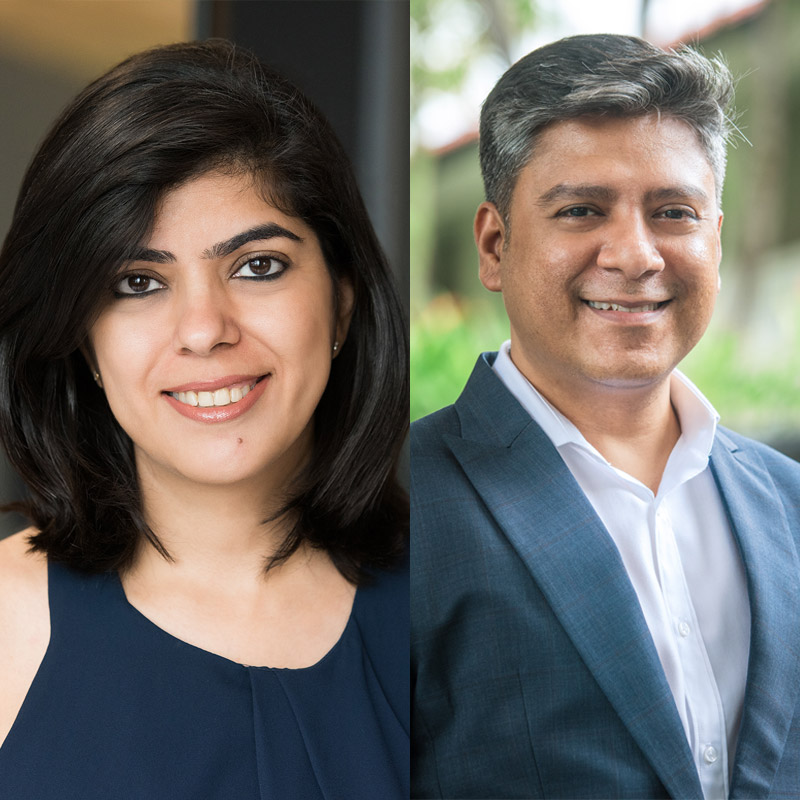
    MUMBAI: Essence, a global data and measurement-driven agency and part of GroupM, today announced the appointments of Kingshuk Mitra and Monica Bhatia to bolster its APAC leadership team. Earlier this year, Essence announced it had nearly doubled its APAC office count after opening operations in Bengaluru, Jakarta, Melbourne and Mumbai. The company is working towards an explosive regional growth.

    Mitra, former managing director of Maxus Philippines, has been named COO APAC, a newly created position. He has recently transitioned into his new role as Essence’s first COO of APAC, and will help APAC CEO Kyoko Matsushita, and wider regional leadership, to define and achieve the agency’s strategic priorities. He will also partner with client services and wider agency disciplines to ensure the delivery of consistent work quality to Essence clients, and to drive day-to-day operational effectiveness. Mitra will be based out of Essence’s Singapore office and will report to global COO Rich Mooney.

    “Essence has built its success on the back of operational excellence across verticals, which is an integral part of the agency’s DNA,” said Mitra. “The role in itself is very exciting to me, as it involves creating the backbone of the operational structure across various projects. This is pivotal as it brings the various disciplines under one umbrella. I look forward to joining the visionary team at Essence and being part of its ambitious growth plans in APAC.”

    Bhatia has joined as vice president, client partner to lead the Google business in APAC. In her new role, Bhatia will oversee the account across six APAC markets, including its Singapore-based hub. Specifically, she will be accountable for building and nurturing strong, collaborative client relationships across the region and driving account strategy. Bhatia will report into president and global client director Dave Marsey. Bhatia previously served as head of digital at Maxus, where she was charged with building the agency’s digital product proposition across 14 markets in APAC. Additionally, she led regional digital duties for key clients such as L’Oreal, Jetstar and Unicharm. Bhatia will be based out of Singapore and brings a wealth of experience in providing integrated media solutions to companies across FMCG, airlines, banking and food and beverage categories.

    “The media industry is changing so rapidly and in such a dynamic way,” said Bhatia. “It’s exciting to see how we can apply Essence’s data-led solutions to help clients achieve their marketing objectives. I’m excited to work with the best media practitioners in the industry who are committed to making advertising more valuable to the world.”

    “I’m thrilled to have Monica and Kingshuk join Essence. Their extensive leadership experience will further shape our operational excellence and data-driven solutions, both of which have a critical impact on our clients and their consumers,” said Essence global CEO Christian Juhl. “We are grateful for GroupM’s continued support, and appreciate the opportunity to leverage their talent mobility offerings from a cross-agency and geographic standpoint.”

    “Monica and Kingshuk are seasoned marketing leaders with extensive client and operations expertise, deep knowledge of the region as well as strong integrated media experience,” said Matsushita. “With their track record of success as digital leaders, they will be a tremendous asset as we continue to expand our footprint in APAC.”