Tag: APAC

  • OTT streaming services are most popular entertainment than traditional TV: Magnite Asia MD Gavin Buxton

    OTT streaming services are most popular entertainment than traditional TV: Magnite Asia MD Gavin Buxton

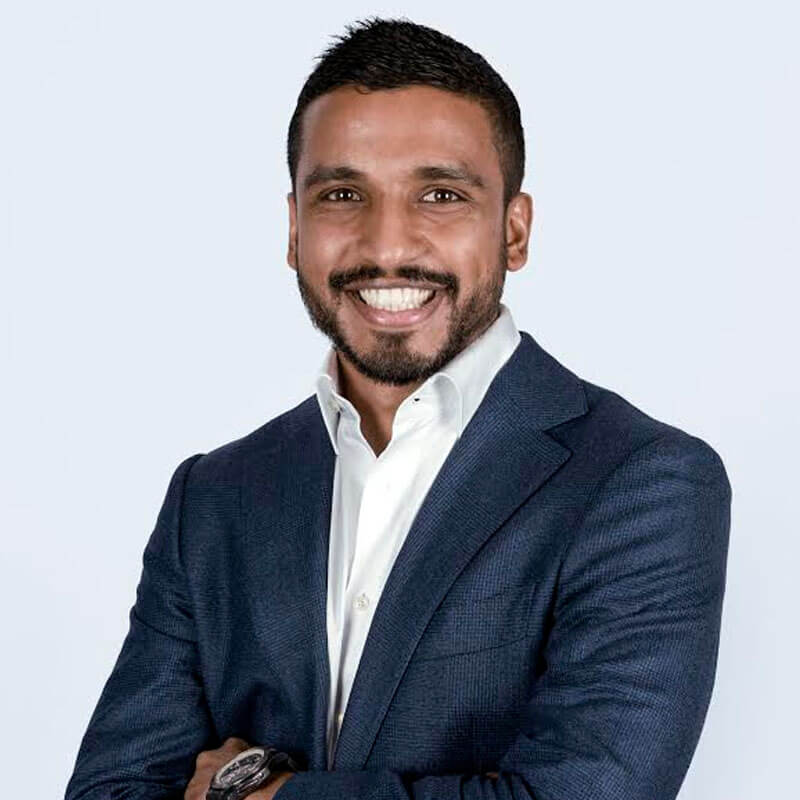
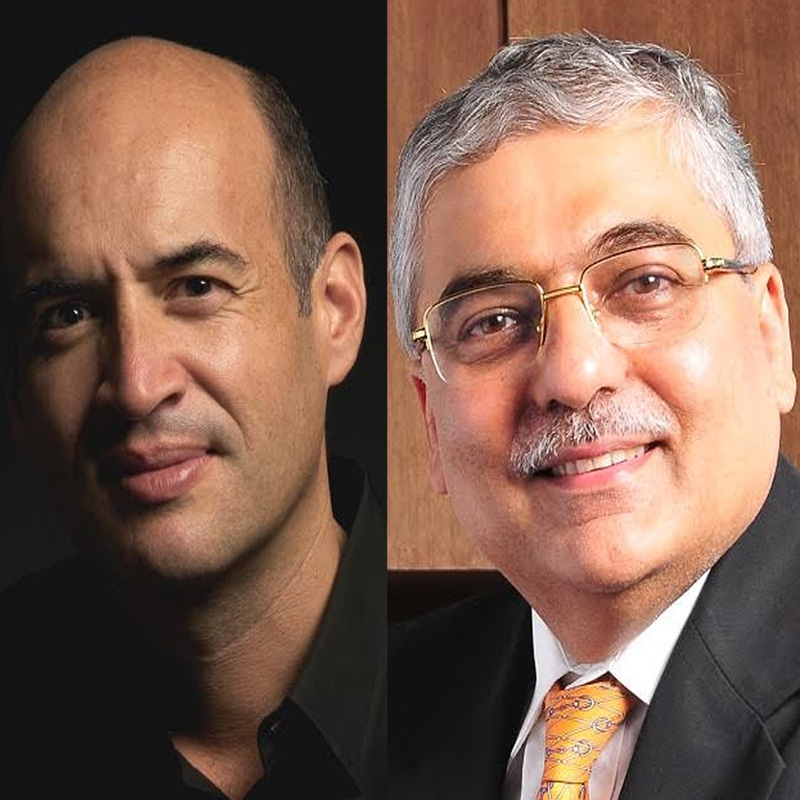
    Mumbai: Creating a great ad experience and monetising all ad formats is the biggest challenge for media owners and brands today. Major global streaming platforms like Netflix and Disney+ are planning to roll out exclusive advertising solutions in 2023. With this, in-the-right-place-at-the-right-time, Magnite Asia MD Gavin Buxton stepped in to provide his input on strengthening such ad solutions for media owners and brands.

    By joining Magnite Asia in August 2021, Gavin and his firm are working with over 60 OTT clients looking to activate AVOD (advertising-based video-on-demand).

    Named as ‘one of the top people to look out for’ by the Digerati Asia Pacific in 2018, Gavin currently leads the growth of Magnite in the APAC region. His working knowledge stretches across television, digital, search, programmatic, mobile, content marketing, and social media.

    Gavin brings with him over 20 years of global experience in digital advertising. Previously, he held leadership positions at tech and publishing companies such as Microsoft, Turner Broadcasting System, and LinkedIn, spending the last ten years in Asia building businesses.

    He is an active participant within the advertising industry with multiple thought leadership publications, speaker slots, and contributions to industry bodies, including past board member of The Interactive Advertising Bureau of Southeast Asia and India (IAB SG), and participation in several committees.

    Magnite, an independent omnichannel sell-side advertising platform is helping publishers use their technology to monetise their content across all screens and formats—including desktop, mobile, audio, and connected TV (CTV).

    This is a one-of-its-kind platform that is built specifically to handle the complexities of over-the-top (OTT) video supply with real-time reporting and performance insights, automated ad pod functionality to manage frequency capping, competitive separation, and audio level detection to enhance the viewer experience.

    In an interaction with Indiantelevision.com, Gavin shared all things from monetisation, the CTV platform, the APAC market, and programmatic advertising to programmatic guaranteed deals. 

    Edited Excerpts:

    On his journey with SpotX- Magnite 

    Gavin: I have had work experience in the APAC region for 11 years now, five of which have been focused on the OTT digital advertising sector, originally with SpotX and onwards into Magnite.

    It has been a challenging, exciting, and rewarding experience to collaborate with some of the first OTT AVOD publishers in the region and assist them in being best positioned and embracing programmatic activations and collectively grow the ecosystem together.

    Today, Magnite is the leading OTT supply-side platform (SSP) in APAC. Brands are now embracing such AVOD activations due to their ability to reach and engage with scaled audiences in premium viewing environments.

    On collaboration with Samsung Ads

    Gavin: Our relationship with Samsung Ads is not exclusive. However, we work with them across major markets, including the US, EMEA, LATAM, South Korea, Australia, and India. Our technology helped them to monetise their inventory on their ad-supported streaming service, Samsung TV Plus, and deliver a better advertising experience for the end user.

    As Samsung scales up its Samsung TV Plus inventory, working with us has accelerated its expansion plans by making it programmatically available to brands and agencies in India.

    In India specifically, we have been excited to see how Samsung’s team, audience, and offers have grown. It is also exciting to watch their continued growth in advertising activation.

    On emerging CTV markets in APAC and the level of adoption 

    Gavin: Apart from India, APAC’s major CTV markets include Australia and New Zealand, Indonesia, the Philippines, Singapore, Thailand, and Vietnam.

    The OTT market in India is the fourth largest globally and one of the most competitively growing markets. Advertisers have unprecedented opportunities to reach audiences increasingly shifting to OTT streaming.

    According to Magnite research in Southeast Asia, OTT is now watched more regularly than traditional TV among audiences aged 16–34 who prefer ad-supported over ad-free content. While mobiles continue to be the dominant device for accessing streaming content, CTV is on the rise, especially among affluent OTT audiences, 20 per cent of whom watch CTV.

    In addition, GroupM’s “This Year Next Year” research found that OTT investment in APAC will grow from $4.3 billion in 2020 to $7.2 billion in 2026, increasing by around 67 per cent in six years.

    On adoption of programmatic

    Gavin: For several reasons, the adoption of programmatic has been slower in some markets in APAC. Magnite provides education and information about the opportunities and benefits that are on offer for buyers and sellers. There has been a marked increase in activation.

    While programmatic trading simplifies the supply chain, continued education and case study examples will assist in educating clients on the benefits and value it can bring to publishers and brands.

    On the OTT/CTV front, unless there’s transparency and an understanding of the different roles linear TV and OTT play, clients won’t just buy based on the availability of existing tech, but on their understanding of the benefits of such technology.

    For programmatic to develop further, it needs to be pushed forward from both the buy and sell side. For publishers, programmatic enables them to maximise revenue through technology and provides greater efficiencies.

    On major players’ rollout of advertising solutions 

    Gavin: The upcoming ad solutions provided by major streaming players are clear evidence that the publishers are now ready to embrace the AVOD model.

    This shift will increase available CTV inventory in the market and its demand by pushing more supply out of walled gardens and into the open programmatic ecosystem.

    Magnite, thus, expects the continued expansion of biddable inventory as a progressive step toward true utilisation of premium streaming services. Since publishers are now realising the actual potential of programmatic demand activations competing with direct deals, they’ll continue leaning into this real-time biddable inventory to take advantage of the increased yield opportunities it generates as the value of premium addressable video from brands grows.

    On duplication of audiences in an omnichannel environment 

    Gavin: Identity fragmentation across the ecosystem is limiting the brand’s ability to effectively communicate parameters, such as ad frequency. The sell-side is uniquely positioned to help brands curb ad quality issues such as repetition and improvisation in delivery. In today’s identity space, the publisher increasingly controls the interaction with content viewers and has access to personal information about them.

    By leveraging frequency capping in the SSP, buyers can lower ad frequency even across publishers’ wishes to protect their user data from being used outside their chosen sell-side platforms.

    The SSP’s close relationship with the publishers has resulted in the most accurate user identifiers in every bid request. Because they are only one or two “hops” away from the publisher, SSPs can reach audiences more effectively than traditional publishers. To gain insight into user IDs and campaign reach, sell-side technology evaluates all bid requests, including those that demand-side platforms (DSPs) reject due to queries per second (QPS) limits and other restrictions.

    With more users ingesting media across platforms, addressing fragmentation to improve ad experiences has never been more critical. To help improve the performance of campaigns, buyers can be proactive by talking to their SSP about frequency capping and other identity-related ad delivery criteria. By reaching audiences across touchpoints in a controlled, planned way, brands can drive efficient impact and ROI.

    On the major areas of investment

    Gavin: CTV is the fastest-growing digital medium, and advertising in this space is poised to be largely traded programmatically in the future. 42 per cent of Magnite’s business is now CTV. However, the company is now focused on continuing its investment in a diverse omnichannel strategy to build upon and scale CTV capabilities to better serve new and existing clients.

    The acquisitions of SpotX and SpringServe by Magnite in 2021 created the largest independent CTV and video advertising platforms, and thus advanced Magnite’s programmatic OTT and CTV innovations. In early 2022, the company acquired Carbon and Nth Party to strengthen its audience and identity capabilities. This collaboration helped Magnite accelerate the integration of audience and identity solutions across its omni-channel offerings. Magnite strived to give retailers all the tools necessary to maximise their audiences across all channels.

    On the programmatic guaranteed (PG) deals preference

    Gavin: With programmatic guaranteed, the publisher commits to their video inventory in exchange for a “guarantee” of a certain rate and impression goal. While a buyer bids 90-100 per cent of the time on PG, they bid as the market demands and the audience layers they apply on a private marketplace (PMP). PG is essentially a high-fill PMP.

    Depending on campaign goals, PG may effectively suit a marketer’s KPIs. However, by solely “checking the box” of PG instead of bidding on inventory across PMPs, brands may be missing opportunities for cross-publisher and omnichannel flexibility.

    If publishers restrict their inventory to just PG activations (even for a guaranteed fill rate), they risk making less money than they might in a higher bid-density auction. For sellers, the upside of PG is that it enables them to forecast their inventory fill with a set volume and price, as committed upfront to the buyer. However, this doesn’t necessarily guarantee a greater yield.

    An area that created concern for publishers in activating PMP is the lower fill rates achieved per campaign, which could result in ad server timeouts and slow decisioning where the publisher is using a suboptimal waterfall ad server. However, with a modern ad server built with programmatic in mind or header bidding tools, activating PMP results in higher fills and less timeout, leading to potentially higher yields and better viewing experiences. This is a growing area of interest and education in India and across the APAC region.

    On key trends in the programmatic advertising space in APAC

    Gavin: Firstly, OTT/CTV will continue to be one of the largest growth areas in programmatic activation in the region and secondly, advertisers will further see the value of an omnichannel open internet approach to deliver scale, addressability, performance, and return on investment (ROI).

    Furthermore, header bidding/holistic ad decisioning adoption across all digital formats will prove to be the best direction for the supply and demand side in enabling scaled audience activation, programmatic and direct campaign synergy, improved yield management, more opportunities for inventory monetization, and collective ROI.

  • India’s OTT video market to reach $3 bn in 2022; estimated to double by 2027: Report

    India’s OTT video market to reach $3 bn in 2022; estimated to double by 2027: Report

    Mumbai: India’s OTT video market will reach total revenues of $3 billion in 2022 and is expected to more than double to $7 billion by 2027, according to Media Partners Asia (MPA).

    In the recent analysis, MPA looks at the online video and broadband distribution trends in the Asia Pacific (APAC) market.

    The online video market in APAC is expected to grow 16 per cent year-on-year to reach $49.2 billion by the end of 2022. MPA forecasts that the industry will continue to grow by 8 per cent YoY to reach $72.7 billion by 2027.

    Subscription video-on-demand (SVOD) is expected to contribute 50 per cent to overall revenues, followed by user-generated-content (UGC) advertising video-on-demand (AVOD) platforms which will contribute 37 per cent and premium AVOD that will contribute the remaining 13 per cent.

    “APAC’s largest markets including India, Indonesia, Japan, Korea and Thailand will be increasingly important to global platforms,” observed MPA executive director Vivek Couto. “Each of these markets require local content and distribution strategies with long-term investment.”

    The APAC region remains the largest contributor to global online video customers and its users are emerging as a significant contributor to revenue growth. In its recent quarterly results, streaming giant Netflix reported a loss in subscribers in every market (United States-Canada, Europe Middle East and Africa, Latin America) except APAC where it reported paid net additions of one million.

    Also Read: Netflix to launch cheaper ad-supported plan for early 2023

    Indian Scenario

    As per the analysis, India’s OTT video market is in the second phase of its growth as competitive intensity is set to grow between global giants and newly capitalised local players. Telco reach remains critical in the market along with AOVD business models and low-average revenue per user (ARPU), high volume SVOD services.

    In terms of SVOD business, Netflix, Disney and Amazon lead, with the three players having 56 per cent aggregate of the APAC market excluding China in 2022. Netflix will have 33 per cent share followed by Amazon Prime Video at 12 per cent and Disney+ including Disney+ Hotstar at 11 per cent.

    Netflix’ s share of online video subscription revenues has declined from 35 per cent in 2021 while Disney+ and Disney+ Hotstar services are building scale, local content investment and monetisation in markets such as Australia, India, Indonesia and Thailand while also expanding in high ARPU, strong local markets such as Japan. A third of Disney+ revenues come from India, however, where it has recently lost digital rights to the highly successful Indian Premier League (IPL) cricket franchise to Viacom18.

    Prime Video leads the Japan SVOD category while also growing rapidly in India and is now set to expand in key Southeast Asia markets in the fourth quarter 2022.

    In India, new local players with deep pockets are gearing up to grab market share, led by a newly recapitalized Viacom18, backed by strategics Reliance, Bodhi Tree and Paramount while domestic incumbents Zee and Sony are merging to create a strong TV/online video business.

    Going forward, Viacom18’s new streaming platform, leveraging IPL cricket and local entertainment, will emerge as an important player in the AVOD space in particular, grabbing material share over time as it leverages massive reach via Jio mobile and connected TV.

    Ad-supported SVOD models will launch across Asia Pacific in 2023-24, led by Netflix and Disney+.

    Broadband distribution landscape

    The total addressable market (TAM) for high-speed broadband continues to expand rapidly in Asia Pacific with greater 4G, 5G and fiber-enabled connectivity.

    Excluding China, the combined 4G and 5G users will reach 78 per cent of the population across APAC in 2022 while fiber-driven fixed broadband penetration will reach 31 per cent.

    Teclos, connected TV (CTV) operators and pay TV operators remain important aggregators of SVOD, freemium and AVOD services, contributing between 20 to 80 per cent to OTT video platform reach, depending on the market.

    The rising CTV penetration and big screen consumption of online video content is helping fuel advertising growth across YouTube and premium SVOD platforms, led by broadcast video-on-demand (BVOD) players in particular, while also bolstering demand and monetisation at SVOD platforms.

    “Investors are increasingly focused on enhanced scale, improved monetization and real profitability across global, local and regional online video platforms. In this context, the role of Asia Pacific continues to have a critical role in the future of the global online video industry,” said Couto.

  • “India is the strongest media market in APAC”: Intelsat’s Bill O’Hara & Terry Bleakley

    “India is the strongest media market in APAC”: Intelsat’s Bill O’Hara & Terry Bleakley

    Bill O’Hara and Terry Bleakley make for an odd couple – they are as different as chalk and cheese. O’Hara is a true blood American, while Bleakley is from that distant land called New Zealand, and is a Kiwi. But they have one thing in common between them: the company they work for – global satellite major Intelsat. 

    As general manager of media, O’Hara leads global sales/revenue, marketing and product management. He has also been charged with increasing its $700 million a year top line while keeping a sharp eye on the bottomline. An industry veteran with nearly six years at his current firm, O’Hara has taken a stab at turning into an entrepreneur when for three years from 2013 onwards he ran a direct-to-consumer streaming service called KlowdTV. 

    Bleakley , on the other hand, has been a bird man for almost all of his working career, with organisations such as Panmsat, Intelsat, and then Measat., following which he came back to Intelsat to grow its Asian business. 

    The organisation is well positioned to grow, even more robustly, not just in Asia, but globally. With a fleet of more than 50 satellites in the sky, teleport gateways, terrestrial networking infrastructure and robust managed services, Intelsat claims that it offers the world’s most extensive and secure communications network. Its focus now is on building the future of global communications with the world’s first hybrid, multi-orbit, software-defined 5G network designed for simple, seamless, and secure coverage precisely when and where customers most need it. 

    Indiantelevision.com founder & editor-in-chief Anil Wanvari caught up with Bill and Terry during last month’s BroadcastAsia conference in Singapore to get insights on how Intelsat is gearing for the requirements of a data and IP-driven media industry going forward. 

    Edited Excerpts:

    On how the company is structured today.

    Terry: We went through financial restructuring and came out of it about two or three months ago. We shed about $8 billion of debt. We took our debt from $16 billion to about $7billion. We are receiving $4.8 billion for the clearing spectrum for the US government. We have received $1 billion of that payment already. And we are also owed $1 billion for the cost of clearing that spectrum. And those payments come by the timeline that has been set which is by end-2023. That takes our balance sheet down about $2 billion in debt, way down from when we hit $16 billion of debt. We bring in about $2 billion in revenue. That’s a really low debt structure for an organisation. You normally want a ratio of 3 to 4:1. So our balance sheet has been as strong as it has been since 2002. As we emerged from our financial restructuring from a public company to a private company, the creditors whose debt was shared got new equity. So it is now a private company from being a public company.  

    On how Intelsat evolved in response to move toward IP delivery for video customers.

    Bill: I think that while there are a lot of changes in this industry, the satellite is still central to distribution, regardless of whether the content originates as IP or is delivered as IP to the end consumer. We recognise this and our strategy is very much to be IP native, to plug ourselves into different parts of the ecosystem, where our customers are going. We are a very customer-focused company – always trying to move with our customers as they move along. For example, as our customers have moved to the cloud with greater velocity, we too have been forging cloud partnerships so that we can source content directly from the cloud, directly from folks like AWS. With it, we have a public partnership so that we can bring content either to the cloud or take it away from the cloud and distribute it to our customer base. 

    Our value position as a media business, however, is connecting an audience with content. And we do that today with cable TV distribution and direct-to-home. But tomorrow, especially with the acquisition and integration of our commercial aviation business, we can connect new viewers with other types of content, perhaps on board planes. So streaming partnerships with many of our content owners today, and our customers could be the way we distribute OTT content tomorrow to a new audience we have not capitalised on serving in the past. 

    Terry: Further let me give you some numbers on this. Go-Go Commercial Aviation, which we acquired around 18 months ago, has around 1700 connected commercially around the world. They have 1300 on the backlog, and they are getting an antenna put on top of them as Covid goes away. That represented, in 2019, precovid, 200 million passengers a year. That’s an audience that was not tapped into with the media. If you look at 2019, how many people travelled on airlines globally, it is 4.5 billion people a year. So if we can stream content, whether it is some of our broadcast partners who are going direct to consumers, and start reaching this audience for them, we think there’s a lot of value in that. 

    And there’s another play with telcos. We are also building a 5G core for our network going forward, and we are going open standards. We call it a unified network. And as we develop this 5G core satellite network that can run with other networks like Jio and Airtel and others, then the idea is that the experience of a person with a mobile phone, when they get on a plan, then it’s like roaming to another country. It’s a 5G native infrastructure that we have got there, they don’t have to put an SSID number, they connect and they don’t realise they are paying for a service to their provider, a roaming charge. So you get past the issue of payment to an aircraft which is expensive. They feel like they are getting it for free because they are roaming on to our service which is our roaming 5G core that is sitting on the aircraft. And a whole new audience comes in from there too. 

    Bill: So fundamentally when you put these ideas together: the content owner who is going direct to consumer, like any one of them have done – Paramount+, Discovery+, Disney+, any of these major players. Or it is with an MNO. By controlling the ecosystem that is on board the plane – both for connectivity and the end user experience – that is an audience that is highly desirable and hard to capture. That we have the exclusive ability to deliver through satellite. 

    On how the airlines’ in-house entertainment system will be impacted.

    Bill: I think this will be determined on an airline to airline basis. It’s a three-way partnership: the MNO, the content owner, us, and the airline. And different airlines have different strategies. 

    Terry: They pay a lot for those entertainment systems to get the content. So technically, if people can access their content when they get on board then they can reduce the cost of an airline to get content. We already are seeing hybrid systems in play in airlines wherein you have inflight entertainment, you have live TV as an option. So you can watch sports live. And this is being made thanks to advancements in connectivity to aircraft through satellites. In a high throughput satellite, the antenna can take a lot more megabits. It’s a lot more efficient in delivering real-time internet to an aircraft that you can now do these services. We think there’s a play where we can do streaming services. 

    On the strategic plan going forward.

    Bill: Our five-year strategic plan is to be an aggregator of networks. Somebody has to sit in the middle of all this. And with a universal terminal – with multi-orbit, multi-band capabilities to integrate low earth orbit (Leos), medium orbit (Meos) and geostationary earth orbit satellites (GEOs) – that is operating via standards – open standards – integrated into a 5G core, 3GPP compliant. All of these things add up to a scalable system that develops the right kind of connectivity at the right time for the right application with one terminal, one modem, and one integration into the broader telecom infrastructure. I believe that’s a very powerful place to be. And I think it takes a very specific entity to do it. I think we are in the best position to do so with our infrastructure and our geo play. 

    Terry: As far as open standards are concerned, you have to remember satellites in the past, and I am talking telecom, not broadcast…and now the two are converging again…and it’s happening greater today than it ever was thanks to the internet and video…Satellites have tended to be heterogeneous. Satellites have tended to be on the side of a network, with their standards, its proprietary hardware. And it’s not homogenous like the telecom industry. We have been pushing a standard to adopt within 3GPP to have satellites included in that so that we are no longer a pimple on the landscape. 

    And release 17 of 3Gpp which comes out in the next few weeks, they have got a thing called NTN which is non-terrestrial networks. That allows satellites to be a part of the 5G core going forward. So that’s massive because the benefits of that as we start getting economies of scale of mass silicon production for 5G chipsets. So a Snapdragon chipset for a mobile phone is $30 today. We pay $300 for the same silicon in satellite modems because they don’t have the same scale that a mobile phone has. Once we get 5G in there we can reduce our silicon costs by ten-fold. That makes us more relevant there and we stream into the network a lot more efficiently. 

    But two other standards are more relevant: Meth (metro ethernet). We are the first satellite operator to be accredited with Meth. The other part is a thing called Digital IF. Today, our IF is all analogue and there’s no open standard around how we can take it from an analogue play to a digital one. We chaired the forum and Digital IF has created its first standard and Microsoft has come on board, SES has come along. All of the antenna manufacturers have joined up. And we are an open standard that takes analogue IF (intermediate frequency) and converts it into digital. 

    We are a homogenous network and what can this translate into: today the annual spends on telecoms and pay TV is $1.6 trillion annually. We only have one per cent of that. As a satellite operator we represent a whole selling capacity of $1 billion a year. So with our unified network and what we are developing around that if we can go from a one per cent share to two per cent…it’s huge and it’s not that hard to do. And we believe that that’s what is about to come with the adoption of the 5G core that we are developing which will be able to interface with MNOs, which are these giants we want to be part of.

    On how the geo play will pan out.

    Terry: We are at 52 geostationary satellites. Six of these are high throughput. We are all around the globe. We have 30 in the Asia Pacific. Our satellites are in the spectrum of one year old to 15 year old. We have also been putting some into inclination. And for two others we performed scientific feats like using missing extension vehicles to extend their life. Part of our $2 billion build out to our unified network is a virtualisation of the network, software defined satellites. So we have ordered four software defined satellites – two with Airbus, two with Thales. They are being built at the moment. Two will sit over Asia, Indian Ocean. Two over the American region. And they will be online 2025. We also have eight satellites in the factory which are going to be used as part of our clearance for spectrum for 5G in North America. We have 12 satellites in the factory.  

    On their view about India. 

    Terry: We have three very large neighbourhoods in India. So IS-17 and IS-20 are two of the satellites that are covering India. We have high MSO penetration to cable TV headends, which is still a very strong business. We saw a shift of some channels to Insat, but the tier one channels resisted that. Our business in India is stable. However, we did see a growth in movement from SD to HD from 2018 to 2021. We still see potential there. So then we got NXT Digital from Thaicom. And they are kind of loving it because we can do so much more throughout per transponder. We have got HITs, SunTV, and Viacom18. Thanks to Covid some other channels could not sustain themselves because of the lack of advertising revenue and the content crunch. Overall channel count decreased. Some of them were forced to look at distribution options. 

    I believe we have seen a great big rebound. India, we believe it is the strongest media market in the Asia Pacific. 

  • Global advertising spend to grow over 15 per cent in 2023-2024, forecasts Dentsu

    Global advertising spend to grow over 15 per cent in 2023-2024, forecasts Dentsu

    Mumbai: Dentsu global ad spend forecasts indicated that advertising spending would increase globally by 8.7 per cent in 2022. Ad spending in Asia Pacific is anticipated to reach $250 billion.

    The advertising spending growth rate is predicted to be 16 per cent this year and is expected to increase 15.2 per cent in 2023 and 15.7 per cent in 2024.

    The reforecast of media investment is released in the context of escalating media price inflation, geopolitical tension, upcoming key elections, and one of the most anticipated global sports events of the year, the FIFA World Cup. Due to continued uncertainty, the current and historical comparison data has also been adjusted to remove Russian investment from the forecast, to better reflect the rest of the international ad spend trends and predictions.

    According to the forecast, spending on advertising in China is expected to rise by 4.0 per cent in 2023 and 5.4 per cent the following year.

    Speaking in this context, Dentsu international CEO media APAC Prerna Mehrotra said, “The latest Dentsu Ad Spend July 2022 points to a continued recovery despite another year of economic uncertainty, with APAC 2022 ad spend of $250 billion, based on a growth forecast at 5.1 per cent. However, continued lockdowns in key markets, geo-political tension and ongoing supply logistics issues could add pressure on businesses with a cascading impact on marketing spends.”

    Looking ahead, Dentsu expects the 2023 global advertising market to increase by 5.4 per cent to reach $778.6 billion followed by a further 5.1 per cent increase in 2024.

    Mehrotra added, “This year, India (+16.0 per cent), Malaysia (+11.0 per cent) and Hong Kong (+10.1 per cent) have all achieved double-digit growth. Digital continues to drive growth accounting for 60.7 per cent of all spending in the Asia Pacific with social, video and search predicted to lead to digital growth. Advertisers increase focus and resources into e-commerce, display, and search budgets to respond to the new consumption habits. Marketers need to better understand their audiences and meet their needs with relevant messaging as online behaviour surges in Asia. Use of first-party data to identify the most profitable customers, combined with third-party data to target the prospects in the most efficient channels will help drive efficiency and manage costs.”

    Dentsu International CEO- media and global clients Peter Huijboom said, “Even with everything which has happened in recent months, not least the protracted war in Ukraine and its international repercussions, the advertising recovery remains strong on a global scale. And, despite factors such as inflation putting pressure on household budgets, combined with 2021 being a tough comparative year, we have only marginally revised our 2022 global growth forecast by just 0.4 percentage points.

    “Despite global economic uncertainty, brands are continuing to prioritise their spend in channels which will give them both the digital flexibility and return they seek. It is through our clear and robust insight and understanding of the market we can work with clients to navigate what’s next and partner with them on their future investment,” he added.

    Overall ad spends growth in Asia Pacific is boosted by key sporting events such as Indian Premier League, FIFA World Cup, Beijing 2022 Winter Olympics and Paralympics, and country elections in Australia and India. Digital continues to be the powerhouse driving APAC ad spend, as the fastest growing medium at 11.5 per cent to reach $151.7 billion, a 60.7 per cent share of total ad spend. Fuelling this is the double-digit growth of programmatic (32.3 per cent), paid social (27.4 per cent), and digital display (13.3 per cent) in 2022. In Southeast Asia (SEA), TV spend is still significant, with the largest share (57.2 per cent) of total SEA spend (Indonesia, Singapore, Malaysia, Philippines, Thailand and Vietnam), and a growth rate of 4.6 per cent.

    Globally, out-of-home (OOH) and cinema will both see encouraging double-digit growth in 2022 (respectively 11.5 per cent and 19.6 per cent). Radio is also forecast to grow, much faster than initially considered with a new reforecast of 5.0 per cent for the year, up from 2.0 per cent in the January predictions – which is mainly due to faster return to office working. As with previous predictions, ad spend in newspapers and magazines will continue to decline.

    In 2022, America will be the top ad spend region at $329.6 billion and the most dynamic with spending increasing by 13.1 per cent. India at 16 per cent growth will stay ahead of the US at 12.8 per cent and Brazil at 9 per cent as the fastest growing market.

    Globally, industry-wise, the greatest growth is forecast for the technology sector (+11.3 per cent), which has benefited from people’s greater reliance on digital devices. Retail is one of the key sectors of spend growth at a rate of 11 per cent in 2022. The sector is driven by several factors including the significant growth of e-commerce, the entry of new players, and the introduction of emerging retail platforms. In Asia Pacific, technology, automotive and cosmetics and personal care are among the fastest growing sectors.

    This dentsu Global Ad Spend Forecast not only looks at the data from 58 markets, but also examines some of the key factors impacting ad spend shift, such as inflation increases, sustainability regulation, acceleration of gaming as an ad medium, doubling down on addressable media and also the importance of buying attention as core metric

  • RD&X Network onboards Ashish Bhasin as co-founder & chairman

    RD&X Network onboards Ashish Bhasin as co-founder & chairman

    MUMBAI: Global advertising & marketing transformation startup RD&X Network has appointed  Ashish Bhasin as co-founder & chairman. The former CEO APAC of Dentsu, Bhasin is an advertising and media veteran with over 34 years of industry experience which includes 24 successful agency acquisitions, management of 10,000+ people, and over $4 billion of ad spends in the APAC region.

    Founded by Rajiv Dingra, former CEO of WATConsult, RD&X Network is headquartered in Dubai and has technology teams based in Bangalore & Mumbai catering to a global market with special focus on USA, Middle East, and APAC regions.

    Speaking on this occasion, Bhasin said, “MadTech, a combination of MarTech and AdTech, is clearly the future of our industry as digital spends cross 60 per cent globally, reaching over a trillion dollars by 2027. Rajiv and the RD&X Network team have developed a unique AI-based platform that will enable direct clients, clients wanting to in-house, as well as digital, and advertising agencies. With one of the finest technology teams, a committed founder with experience and drive like Rajiv, RD&X Network has the potential to become the first India-Out, platform based global advertising and marketing startup. The opportunity to mentor and guide this process attracted me to join the RD&X Network. It is also my first entrepreneurial venture as a co-founder and I am delighted to partner with Rajiv.”

    Praising Bhasin’s accolades and experience, RD&X Network CEO founder Rajiv Dingra said, “Ashish is an advertising and media legend, who brings with him the unique experience and wisdom of scaling the digital advertising business, both organically and inorganically, across several markets, regions, and with diverse entrepreneurs. We have worked together in the past when WATConsult joined Dentsu, and I have witnessed his amazing zeal and drive first-hand as a leader always seeking to build the future of advertising by inspiring his team. We are extremely excited to have him onboard as our co-founder & chairman. Together, we intend to create the platform-driven future of the advertising industry as we take this step.”

    RD&X Network recently launched the world’s first Unified Marketing & Advertising Automation Platform, ReBid which uses AI-based algorithms to provide end-to-end unified workflow, data harmonisation and real-time reporting, all in one platform, said the company in its statement.

    It covers over 98 per cent of the relevant global digital ad spends, helping marketers regain control and prepare for a cookieless world, according to the company.

  • Himanshu Shekhar named as cluster CEO of GroupM Thailand, Indonesia & Vietnam

    Himanshu Shekhar named as cluster CEO of GroupM Thailand, Indonesia & Vietnam

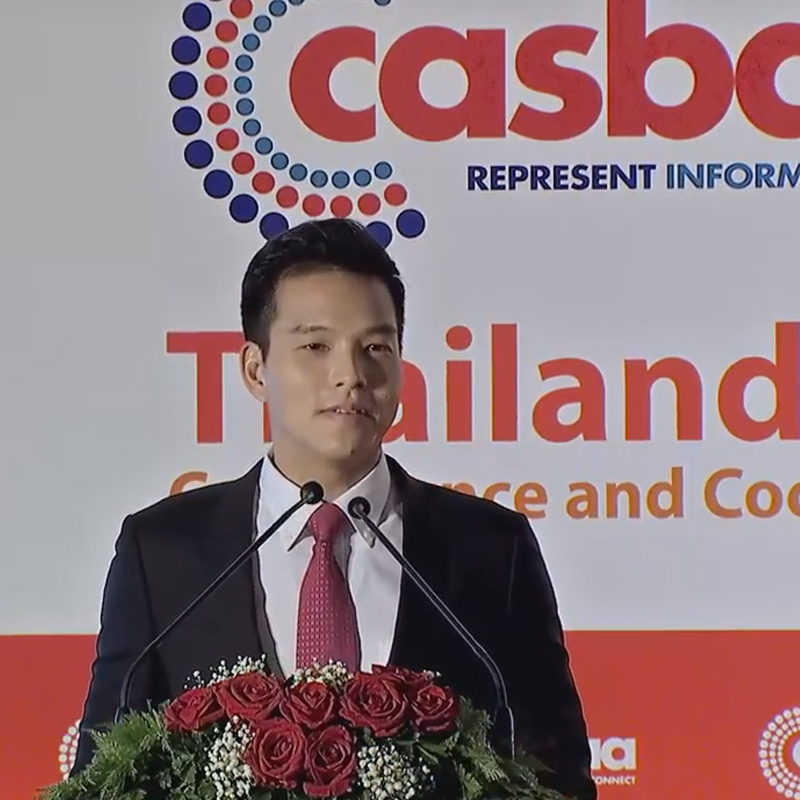
    Mumbai: Media investment company GroupM has promoted Himanshu Shekhar to the role of cluster CEO of GroupM Thailand, Indonesia and Vietnam. Shekhar became CEO of GroupM Indonesia in 2019, and in October last year, he took on the additional mantle as CEO of GroupM Vietnam. His remit as CEO of GroupM Indonesia and Vietnam has been expanded to include the burgeoning Thailand market.

    Additionally, the company has appointed Pathamawan Sathaporn as the CEO of GroupM Thailand. She moves on from Mindshare Thailand’s CEO position where she held various leadership roles for over one and a half decades. Pathamawan assumes the portfolio held by Niklas Stalberg who will be leaving the network after a decade of long-standing service. In this role, she will report to cluster CEO Himanshu Shekhar.

    “Both the appointments are with effect from 1 May,” the company said in a statement.

    Having spent two decades within the GroupM network, Shekhar rose through the ranks in Mindshare managing the business in volume-heavy India and Indonesia. He was appointed CEO of Mindshare Southeast Asia from 2014 to 2018. During Shekhar’s tenure at Mindshare, the agency in Indonesia bagged gold at ‘Campaign Asia’s Agency of the Year’ for five years running, while Mindshare Southeast Asia also snagged gold for three consecutive years.

    “The group’s strategy to cluster Thailand, Indonesia and Vietnam under one unified leadership will strengthen market capabilities and network agility,” said Himanshu Shekhar. “Given the breadth and depth of resources across these three important markets, we will be able to further scale our capabilities and solutions to deliver enhanced value for all our clients and partners. I look forward to building pathways for our talents to flourish in their careers and do great work for our clients. Our chief goal is to make advertising work better for people across Southeast Asia.”

    “I am thrilled to partner with an illustrious leader like Pathamawan whose depth of field experience in Thailand will undoubtedly propel us into an even more glorious future,” he further said.

    As CEO of GroupM Thailand, Indonesia & Vietnam, Himanshu will report to GroupM Asia Pacific CEO Ashutosh Srivastava, the company stated.

    GroupM Thailand CEO Pathamawan Sathaporn commented, “I am honoured to embark on a journey that is both familiar and new – the purple blood running through my veins has now taken on a shade of blue. Growing alongside Mindshare for the past 16 years, I feel privileged to have witnessed the dramatic evolution of the media landscape which sets us up for new adventures daily.”

  • Twitter elevates Preetha Athrey as director of Global Business Marketing, APAC

    Twitter elevates Preetha Athrey as director of Global Business Marketing, APAC

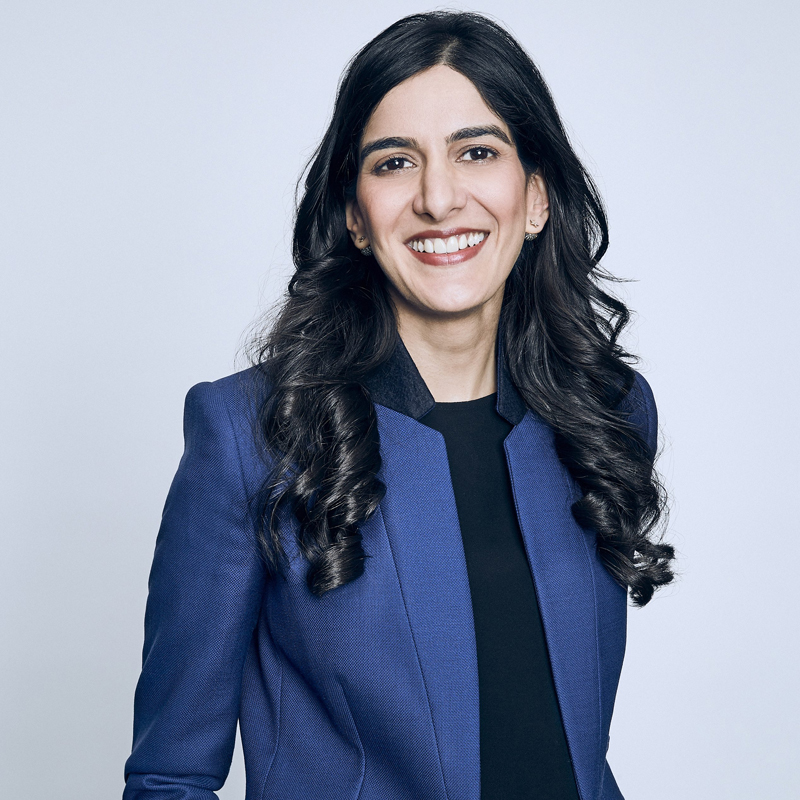
    MUMBAI: Microblogging and social networking giant Twitter has elevated Preetha Athrey as director of global business marketing, APAC. Previously, she was heading marketing at Twitter India. Athrey replaces Disha Goenka, who is now taking on a global role leading regional business marketing teams overseeing marketing strategies across Asia, Latin America, Europe, and North America.

    Both Athrey and Goenka took to the microblogging site to share the development.

    Athrey wrote, “I am truly honoured to lead the amazingly creative and enthusiastic Global Business Marketing team across APAC – full of energy, zest and who make work fun every day! We will continue to amplify the best of Twitter to activate our customers through inspiration and education.”

    Goenka posted: My journey @Twitter takes me to an exciting global role as Head of Regional Business Marketing teams across Asia, Latin America, Europe and North America. I’m honoured to lead this all-star team and excited for all the work we’ll be doing to serve our customers.

  • Outbrain sets date for 2022 annual advertiser conference ‘Unveil’

    Outbrain sets date for 2022 annual advertiser conference ‘Unveil’

    Mumbai: Outbrain Inc has announced the date of its 2022 annual advertising innovation conference ‘Unveil,’ which is set to take place in March.

    Unveil 2022 is a digital innovation roadshow that will run for a single day across three time zones – on 15 March for the Americas, 16 March for EMEA and 17 March for APAC. The event is now open for early registration.

    “Unveil is a key event for advertisers” said Outbrain chief revenue officer Eytan Galai. “It’s Outbrain’s chance to share our most exciting innovations and new platform capabilities as an opportunity for advertisers to learn about new tools and platform features designed to help them stay ahead of the game.”

    “We are wrapping up one of the most exciting years in Outbrain’s history,” said Outbrain vice president of product Lior Charka. “We have invested a lot in product innovation and have been working on powerful new ways for advertisers to engage and acquire customers in the open web using Outbrain.”

    Unveil 2022 will be a fully virtual event featuring Outbrain’s creativity, performance and simplicity solutions.

  • India fastest-growing market globally at 14.6%: dentsu Global Ad Spend Forecast report

    India fastest-growing market globally at 14.6%: dentsu Global Ad Spend Forecast report

    Mumbai: Advertising expenditure in the Asia Pacific is expected to grow by 5.9 per cent, with India being the fastest-growing market globally at 14.6 per cent, followed by the US, Russia and Canada, according to dentsu’s Global Ad Spend Forecast report. Digital forecast is expected to increase 9.6 per cent to a share of 61.1 per cent of total APAC advertising spend, even as advertising investment overall is forecast to grow by 9.2 per cent globally in 2022, as per the report.

    In APAC, overall ad spend growth is boosted by key sporting events such as the Indian Premier League, FIFA World Cup, Winter Olympics, and country elections in Australia and India.

    Moving towards a second consecutive year of growth following the five per cent market dip in 2020, 2022 is projected to build on a stronger than expected recovery in 2021 which itself saw a record-high 14.4 per cent growth in APAC, totalling $241 billion. The twice-yearly report which combines data from over 50 markets globally, anticipates $745 billion will be spent globally. 

    Digital and television continue to be the two powerhouses driving global and APAC ad spend, yet with opposite dynamics. Following a 24.8 per cent increase in 2021 (vs 29.1 per cent globally), dentsu forecast digital investment to grow by 9.6 per cent (vs 14.8 per cent globally) in 2022, fuelled by Social and Programmatic in APAC. This will result in the digital share of spend increasing to 61.1 per cent ($150 billion) of the total ad spend in APAC, over twice as big as the television share of spend (24.5 per cent) in 2022.

    Linear TV ad spend increased by 5.1 per cent in 2021, the highest rate since 2013. In 2022, dentsu forecast linear TV ad spend to grow by 1.4 per cent to reach $60 billion in APAC. Unlike digital and despite staying in high demand, dentsu is seeing linear TV share of spend on the decline – both globally and in the region – as connected TV and video on demand (VOD) grow.

    Out-of-home (OOH) and cinema will both see encouraging growth in 2022, respectively 12.8 per cent and 23.4 per cent globally (vs 2.8 per cent and 30.0 per cent in APAC). Radio too is forecast to grow, yet at a slower pace of 1.5 per cent in APAC (vs 2.0 per cent globally). As with previous predictions, ad spend in newspapers and magazines will continue to decline globally and in APAC. 

    Globally, the industries that will see growth in ad spend this year will include the beleaguered travel industry which is forecast to see a 10.3 per cent rise. There is also confidence the automotive advertising spend will grow by 7.6 per cent in 2022. Growth follows an 11.5 per cent increase in 2021 and steep declines in 2020 of -15.9 per cent. With pent-up demand and a trend towards personal vehicles in how people want to travel post-pandemic, there is confidence in the recovery of the automotive industry.

    Looking further ahead, APAC ad spend is predicted to grow by 5.6 per cent (vs 4.6 per cent globally) in 2023 and 4.9 per cent (vs 5.8 per cent globally) in 2024 – exceeding growth before the pandemic (4.1 per cent in 2019). Digital is forecast to increase its share of spend domination to 64.6 per cent in APAC (vs 59.4 per cent globally) in 2024. Of course, many factors contributing to the uncertain economic outlook could influence the predictions, from the evolution of the pandemic to supply chain issues, and dentsu recommends the industry keep a close eye on key economic indicators.

    “APAC region is expected to post robust growth in ad spend in 2022. India, Hong Kong and Vietnam will drive double-digit growth with the rest of the region showing strong growth,” said dentsu International CEO Media APAC Prerna Mehrotra. ” The share of digital spends in APAC is set to increase to 61.1 per cent up from 50.1 per cent in 2019 (pre-covid), driven by Greater China and ANZ. TV as a platform will continue to play a key role especially in Southeast Asia and South Asia.”

    “Marketers will need to be nimble, leaning on technology and maximizing opportunities in video, social, connected TV and e-commerce. The use of data to drive business outcomes without compromising privacy or security will continue and we expect data collaboration to be a big focus for 2022. In light of the ongoing global turbulence and recovery, we will continue to work with brands to accelerate efforts to engage consumers and drive attentive reach,” she further added.

    When compared to previous global financial and advertising crises, notably the financial crash of 2008, this rebound is almost three times greater, said the report. In 2022 the growth forecast at 9.2 per cent is nearly three times the 3.4 per cent growth in 2011 – the second-year post-global financial crisis. In 2022 the global ad market exceeded the 2019 pre-pandemic level of spend by 18.7 per cent, whereas in 2011 the global ad market continued to be one per cent lower than in 2008.

    “The bounce back from the early pandemic impact continues to be strong, especially in digital,” remarked dentsu International Global CEO media and global clients Peter Huijboom. “As we spend more time consuming digital media, brands have the opportunity to tap into the increased flexibility in which consumers engage through multiple touchpoints. Businesses who truly understand these developed human behaviours have the best opportunity to build lasting relationships with them.”

    “It also comes as no surprise of the increased popularity in gaming. Dentsu launched its global gaming proposition in 2021. Along with the burgeoning Metaverse, there has never been a more exciting time for brands to experiment, innovate and engage with their customers – as all forms of media are increasingly more central to daily life and routine,” he further said. 

  • Netflix adds 2.2 million subs from APAC in Q3 2021

    Netflix adds 2.2 million subs from APAC in Q3 2021

    Mumbai: OTT Giant Netflix announced its results for Q3 2021. The company grew its revenues by 16 per cent to $7.5 billion year-on-year and added as many as 4.4 million paid subscribers globally bringing its total subscriber base to 214 million subscribers.

    For the second consecutive quarter, the Asia-Pacific (APAC) region was the largest contributor to Netflix’s subscriber growth with 2.2 million subscribers coming from this region alone. The streaming giant added 1.8 million subscribers from the Europe, Middle East, and Africa (EMEA) market.

    The company forecasted 8.5 million subscriber additions for Q4 2021.

    Netflix also reported that ‘Money Heist- Season five’ and ‘Sex Education- season three’ were two of its biggest returning shows of the quarter reaching 69 million and 55 million households, respectively. Korean drama ‘Squid Game’ became its “biggest TV show ever” by reaching 142-million-member households in its first four weeks of launch. The show has ranked #1 in Netflix’s top ten shows across 94 countries including the US.

    The streaming giant said it will shift its metrics to ‘hours viewed’ for its titles rather than the ‘number of accounts that choose to watch them’ later this year.

    “There is some difference in rankings but we think engagement, as measured by hours viewed, is a slightly better indicator of the overall success of our titles and member satisfaction,” it said on Wednesday. “We will start to release title metrics more regularly outside of our earnings report so our members and the industry can better measure success in the streaming world.”

    Barring unforeseen events that result in large-scale production shutdowns the company anticipates a more normalised production slate for 2022 with even more originals releasing than 2021.

    During Q3, Netflix announced its agreement to acquire the Roald Dahl Story Company pending regulatory approval and acquired video game developer Night School Studio.

    Netflix also reported that when Facebook experienced a global outage for several hours on 4 October, the streaming platform saw a 14 per cent increase in engagement during that time period.