Tag: Anurag Thakur

  • No decline in DD viewership in recent years: I&B ministry

    No decline in DD viewership in recent years: I&B ministry

    Mumbai: There has been no decline in viewership of Doordarshan in recent years, the union information and broadcasting minister Anurag Thakur told Rajya Sabha on Thursday. Viewership of DD has been unaffected in spite of the increase of private TV channels in the broadcasting space during the past years and fragmentation of audience due to many private TV channels relaying Doordarshan’s live content, he noted. 

    The Rajya Sabha queried the I&B minister whether DD viewership has been declining sharply in recent years. It also asked for the trend of revenue generation at DD through advertisements during the last three years.

    Anurag Thakur supplied Broadcast Audience Research Council (Barc) data for 22 subscribed standard definition DD channels, out of a total of 36, for the period between 2016 to 2021.  

    The minister also shared the commercial revenue earned by Doordarshan during the last three years from government and non-government advertising.

    The minister stated that public broadcaster Prasar Bharati had taken a number of steps to further increase the viewership of DD channels. This included launching dedicated sports, entertainment and news channels including DD Sports, DD Retro, DD India and DD News. Prasar Bharati also aired the iconic shows “Ramayan” and “Mahabharat” during the 2020 lockdown that led to a record high in TV viewership.

    Apart from its TV network, DD has ensured that major live events are also live-streamed on its digital platforms. Recently during Republic Day 2022, it garnered 2.6 crore views on its YouTube platform in comparison to 2.3 crore views on its TV network. “It is evident that the Doordarshan’s viewership on YouTube platform alone was greater than its TV viewership as reported by Barc,” noted Anurag Thakur.  

    DD visuals were also aired by more than 180 channels across the country from 9:30 a.m to 12 p.m. This further amplified the TV viewership of Republic Day 2022 and led to more than 3.2 billion TV viewing minutes of consumption as per Barc data.

  • 6154 complaints against misleading ads in last three years: Anurag Thakur

    6154 complaints against misleading ads in last three years: Anurag Thakur

    Mumbai: Over 6,000 complaints related to misleading advertisements were registered online by consumers on the government portal GAMA (Grievance Against Misleading Advertisements) in the past three years, said the union minister of I&B Anurag Thakur, responding to a question in the Lok Sabha on Tuesday.

    The portal launched by the Department of Consumer Affairs accepted 6,154 complaints between 2019 and 2021, said Thakur. Last year saw 948 grievances being registered, while in 2020 there were 1,790 grievances and 3,416 in 2019.

    All advertisements telecast on private satellite TV channels are regulated in accordance with the Advertising Code prescribed under the Cable Television Networks Rules, 1994. The ministry of information and broadcasting issues advisories from time to time to broadcasters for ensuring compliance to the Advertising Code, Thakur said in a written response.

    The Department of Consumer Affairs had launched the GAMA portal in 2015 where consumers can lodge complaints relating to misleading advertisements. A Central Consumer Protection Authority (CCPA) was established under Consumer Protection Act, 2019, on 24 July 2020, which inter-alia looks into misleading advertisements either suo-motu or on complaints from the central government, according to the I&B minister.

  • Barc reaching out broadcasters to inform about new reporting standards: I&B minister

    Barc reaching out broadcasters to inform about new reporting standards: I&B minister

    Mumbai: The minister of information and broadcasting Anurag Thakur told the Lok Sabha that the Broadcast Audience Research Council (Barc) India is reaching out to all constituents to sufficiently inform and educate them about new augmented data reporting standards and would require eight weeks’ time to resume the reporting of individual news channels.

    In October 2020, Barc announced that it would cease publishing weekly individual ratings of news and niche genres for an initial period of 8-12 weeks. The I&B ministry directed Barc to maintain the status quo in February 2021 in view of alleged reports of manipulation of rating data and review the whole ecosystem of publishing of ratings.

    A committee was instituted under the chairmanship of Prasar Bharati CEO Shashi Shekhar Vempati which made recommendations on strengthening corporate governance and bolstering technical oversight of the existing rating agency.

    “In the spirit of the recommendations of the above-said TRP Committee and Trai, various steps on corporate governance and on streamlining of processes and their transparency have been taken by Barc,” said Anurag Thakur. “The management involvement in the rating generation process has been institutionally removed. The Oversight and Technical Committees within Barc have been strengthened for data validation and methodology. The access protocols for data have also been revamped and tightened. Notwithstanding the existing processes put in place by Barc, reforms are a continuous process and policy prescriptions as may be required are made by the government from time to time.”

    “After review of the steps taken by Barc on corporate governance and on streamlining of processes and their transparency etc. Barc had been asked on 12 January to resume the release of the news ratings,” he added.

  • Barc taken steps to improve corporate governance & streamline processes: Anurag Thakur

    Barc taken steps to improve corporate governance & streamline processes: Anurag Thakur

    Mumbai: The minister of information and broadcasting Anurag Thakur informed the Lok Sabha on matters concerning Broadcast Audience Research Council (Barc) India ratings and new tariff order (NTO) 2.0 during a session on Thursday.

    The minister was queried whether Barc ratings were marred in serious charges of manipulation and what actions it proposed to ensure robust data.

    The minister told the Lok Sabha that Barc has taken various steps on corporate governance and on streamlining of processes and their transparency. “The management involved in the ratings generation process has been institutionally removed. The oversight and technical committees within Barc have been strengthened for data validation and methodology. The access protocols for data have been revamped and tightened,” he said.  

    Ever since news reports published in October 2020 expressed concerns related to TV ratings, “Barc has responded by actively pursuing action against those involved in tampering the samples and had filed 11 FIRs through its vendors across many states,” stated Thakur.

    The I&B ministry has also instituted a committee led by Prasar Bharati CEO Shashi Shekhar Vempati to study the concerns related to television rating points (TRPs) and address them in light of fresh recommendations by Trai and technological advancements.

    The I&B minister was also asked whether it has come to the notice of the government that some broadcasters are tweaking NTO 2.0 and keeping their popular channels out of the bouquet. Subsequently, whether this has led to viewers paying 50 per cent more in tariffs and in turn if the government has also fixed a maximum price for channels outside of a bouquet.

    On the matter of NTO 2.0, the minister said that broadcasters have declared the maximum retail price of their popular channels above Rs 12 and are offering such channels on an a-la-carte basis.

    “As per the implementation plan of new regulatory framework 2020 issued by the Telecom Regulatory Authority of India (Trai) the distribution platform operators (DPOs) are required to declare rates of channels and bouquets offered to consumers by 31 January and thereafter offering to the consumer will be made available from 1 April. Therefore, final prices for the consumers can be ascertained after 31 March when the choice of channels are exercised by consumers,” he explained.

  • Budget 2022: I&B ministry allocation slashed to Rs 3980.77 crore in FY23

    Budget 2022: I&B ministry allocation slashed to Rs 3980.77 crore in FY23

    Mumbai: The Union Budget 2022 has earmarked a total sum of Rs 3980.77 crore for the ministry of information and broadcasting in the fiscal year 2022-23. This amounts to a decrease of Rs 90 crore from last year.

    With the exception of the Press Council of India that saw an increase of Rs 7 crore, up from Rs 20 crore in FY22 to Rs 27 crore for FY 23, the budgets for all other autonomous bodies under the MIB were slashed.

    Allocation for Prasar Bharati’s declined to Rs 2,555.29 crore from Rs 2,640.11 crore in the last financial year. The same was the case with The Films and Television Institute of India (from Rs 58.48 crore last year to Rs 55.39 crore this year), the Indian Institute of Mass Communication (from Rs 65 crore to Rs 52 crore), Children’s Film Society of India and the Satyajit Ray Film and Television Institute.

    Allocation for broadcasting under the social services head has also gone down from Rs 2,921.11 crore to Rs 2,839.29 crore. There was also a reduction in the budget for ‘information and publicity’ from Rs 971.26 crore to Rs 942.04 crore.

    ‘Information and publicity’ covers establishment expenditure of media units in the country such as the Bureau of Outreach and Communication, Press Information Bureau, Publications Division, New Media Wing, Registrar of Newspapers for India (RNI), Films Division, National Film Archive of India, Electronic Media Monitoring Centre and others.

    Hailing the budget as “beneficial”, information and broadcasting minister Anurag Thakur said that it is a blueprint to fulfil the hopes and aspirations of a new India in the 100th year of its independence.

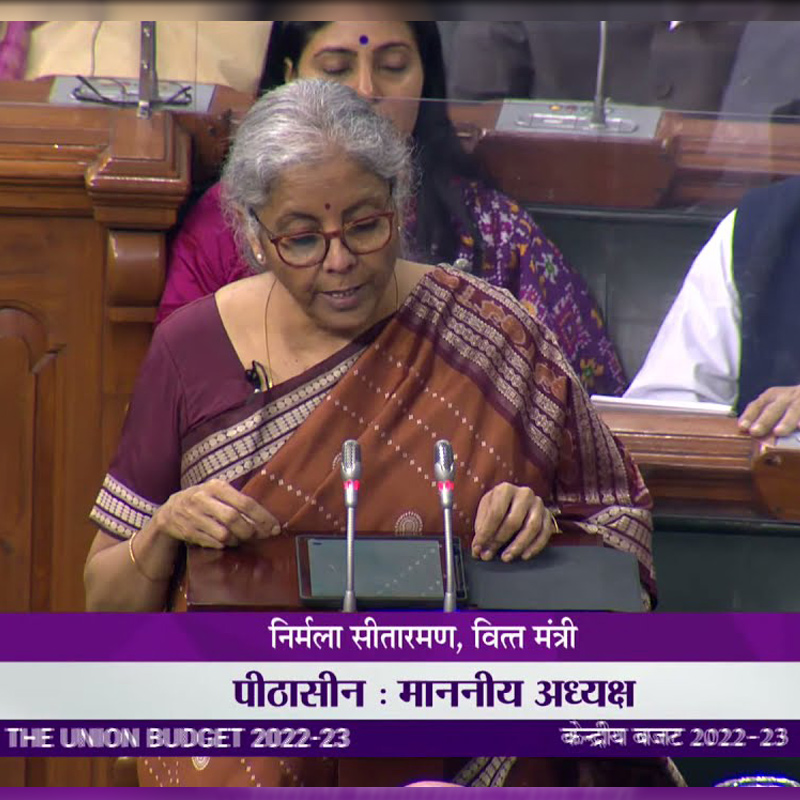
    The annual budget for 2022-23 was presented by finance minister Nirmala Sitharaman in Parliament on Tuesday.

  • Prasar Bharati not closing any Akashvani radio station in India: Anurag Thakur

    Prasar Bharati not closing any Akashvani radio station in India: Anurag Thakur

    Mumbai: Prasar Bharati is not closing any Akashvani radio station in India, the minister of information and broadcasting Anurag Thakur told the Parliament on Tuesday. Thakur was responding to concerns regarding the closure of radio stations across different parts of the country that have been in the news for the last couple of years.

    Prasar Bharati has issued a clarification on false reporting and fake news claiming closure of AIR stations on several occasions earlier. Speaking in the Parliament, Thakur once again elaborated that “obsolete analog transmitters are phased out from time to time with the availability of alternate transmission technologies such as FM, satellite radio through DTH and internet streaming.”

    “Further, content reforms are undertaken from time to time to ensure that the national, regional and local services of Akashvani serve diversity of content, while optimally leveraging the scarce resources, giving opportunity to local talent and improving quality without duplication of content. The operational expenditure of these services is being met through the Internal and Extra Budgetary Resources (IEBR) of Prasar Bharati,” he stated.

    Thakur also told the Parliament that the government has approved schemes for setting up of Frequency Modulation (FM) transmitters in Sashastra Seema Bal (SSB) premises at seven locations along the Indo-Nepal Border including SSB premises at Narkatiaganj in West Champaran District in the State of Bihar.

    On FM stations and community radio stations, Thakur further said that Prasar Bharati has 523 FM transmitters located at 483 All India Radio (AIR) stations across the country. Under the policy guidelines on the expansion of FM radio broadcasting service through private agencies (phase-III), MIB grants FM radio license to private companies registered in India under the Companies Act, 2013.

    The private FM radio phase-III policy being city-centric provides for setting up of FM radio stations in all cities having a population above one lakh unless it is getting covered from an adjacent city. Further 11 cities in border areas of UT of Jammu & Kashmir, UT of Ladakh and the North East states having a population less than one lakh have also been approved for setting up FM radio stations.

    Under FM phase-III, the government has approved to the auction of 683 channels in 236 cities.

  • MIB took action against 139 cases of obscene/violent TV content since 2018: Anurag Thakur

    MIB took action against 139 cases of obscene/violent TV content since 2018: Anurag Thakur

    Mumbai: Since 2018, the ministry of information and broadcasting (MIB) has taken action against 139 cases on content related to obscenity and violence on TV, I&B minister Anurag Thakur told the Parliament on Tuesday during the winter session.

    “For Television, all TV Channels are required to adhere to the Programme Code under the Cable Television Networks (Regulation) Act, 1995, including that programmes should not contain anything obscene, defamatory, deliberate, false and suggestive innuendos and half-truths,” said the minister, adding that, “the government takes action in appropriate cases where violation of the codes are found. It also issues advisory from time to time to the media to adhere to the laid down codes.”

    For digital news publishers, the government had notified the Information Technology (Intermediary Guidelines and Digital Media Ethics Code) Rules, 2021 under the IT Act, 2000 on 25 February which inter alia provides for a Code of Ethics for adherence by digital news publishers.

  • MIB to implement TRP committee recommendations and bring back news ratings soon: Anurag Thakur

    MIB to implement TRP committee recommendations and bring back news ratings soon: Anurag Thakur

    Mumbai: The union minister of information and broadcasting Anurag Thakur has said that the I&B ministry will ensure that the recommendations in the TRP committee’s report are implemented swiftly and news channels ratings are brought back to give relief to news broadcasters.

    The minister was addressing the News18 India Chaupal summit held on 1-2 December. In conversation with News18 Hindi managing editor Amish Devgan, he said that broadcasters’ associations have shared their comments on the report within the given deadline.

    The I&B ministry had reached out to broadcasters in November seeking their comments on the report by 30 November. The 39-page report highlights 20 recommendations to restore faith in the integrity of the TV rating system in India. The TRP committee was formed in response to the TRP scam that broke out in October last year where three TV channels were named by Mumbai Police for allegedly tampering with rating data.

    The recommendations were aimed towards strengthening corporate governance at Broadcast Audience Research Council (Barc) India which is the premier TV audience measurement company in the country. There were also recommendations pertaining to the technical, technological, and regulatory aspects of the TV measurement system like the use of return path data (RPD), instituting a regulatory mechanism for media rating agencies, adopting an open data ecosystem, and moving towards a hybrid audience measurement.

    The four-member committee included IIT Kanpur professor of the statistics department of mathematics and statistics Dr Shalabh, C-DOT executive director Dr Rajkumar Upadhyay and Decision Sciences Centre for Public Policy professor Pulak Ghosh and led by chairperson and Prasar Bharati chief executive officer Shashi Shekhar Vempati.

  • Prasar Bharati developing next generation broadcast solution

    Prasar Bharati developing next generation broadcast solution

    Mumbai: Prasar Bharati has entered into an MoU with IIT Kanpur to develop next generation broadcast solution/roadmap for digital terrestrial broadcasting consistent with emerging standards such as 5G broadcast.

    “The sanction for the Proof of Concept (PoC) of next generation broadcasting has also been conveyed to IIT Kanpur,” the minister of information and broadcasting Anurag Thakur told the Lok Sabha on Tuesday. “The selection of an appropriate next generation broadcast technology and Digital Terrestrial Transmission (DTT) roadmap of Doordarshan depends upon evaluation of this PoC.”

    Speaking at the CII Big Summit last month Prasar Bharti CEO Shashi Shekhar Vempati had also stressed upon the need for convergence across infrastructure and content creation.

    He said that if the collaboration with IIT Kanpur is successful it will be possible to directly receive broadcast signals on smartphones in future. “In the event of a high-viewership event like the Indian Premier League (IPL), there is no reason why millions of users need to receive that content on a unicast mode through the internet. If this works, all of the content can be delivered directly on broadcast frequencies to people on their smartphones or smart TVs,” he said.

    The public broadcaster is already working on bringing convergence across TV and radio so that a lot of exclusive radio content can be made visually rich and available for TV audiences. PM’s ‘Mann Ki Baat’ was the first such example. Prasar Bharati is following the same format where a camera is put up in the studio all-day long for another show ‘Rangoli’.

  • We want to make India a powerhouse of content creation: I&B minister Anurag Thakur

    We want to make India a powerhouse of content creation: I&B minister Anurag Thakur

    Mumbai: Terming India as the world’s largest filmmaker, union minister of information and broadcasting Anurag Thakur said a lot needs to be done to make India a powerhouse of content creation in the world.

    Addressing the closing ceremony of the 52nd edition of the International Film Festival of India on Sunday, the union minister said there was also a need to scale up regional festivals. “We want to make India the post-production hub of the world by leveraging immense tech talent of youth. We want to make India the destination for films and festivals, we want to make India the hub of world cinema, and the most favoured place for storytellers.”

    Thakur said the government is committed to strengthening the National Film Development Council (NFDC). “Through this, you will get the opportunity to make even such films which are doubtful of giving a financial return, we will work together to showcase India’s culture and tradition across the world.”

    The minister also invited the global community to come and shoot films in India. “Please come and shoot films in India. The Film Facilitation Office will facilitate you with all help you need, from one state to another.” Speaking about the upcoming film city in Uttar Pradesh, the minister said that the state is coming up with a 1000-acre film city. “They are just waiting for the right people to come and invest in.”

    Keeping up with the winds of change, the latest edition of IFFI also saw the historic participation of all major OTT platforms such as Netflix, and Amazon Prime through exclusive Masterclasses, content launches and previews, curated film package screenings, and various other on-ground and virtual events. The participation of OTT platforms is set to become a regular feature in future.

    “More than 50 films were screened simultaneously on OTT platforms. 10 Master classes and In-Conversation sessions were organised in collaboration with OTT platforms,” said Thakur. “IFFI has embraced new technologies, platform choices of audiences and has kept pace with changing times. We have also showcased the best films from BRICS nations and we hope that this partnership blossoms further.”

    The 52nd IFFI presented a diverse catalogue of more than 148 foreign films drawn from 73 countries, and witnessed 12 world premieres, seven international premieres, 24 Asia premiers and 74 India premieres. 75 Indian films were screened, 17 of them specially selected under India @75 Section. As many as 10,000 delegates from across the world, including filmmakers, students and cine enthusiasts participated in a hybrid format. There were 234 screenings in which nearly 450 hours of movies were screened. Total hours watched online comes to a whopping 30,000 plus hours.

    Hungarian filmmaker Istevan Szabo and Hollywood filmmaker Martin Scorsese received the coveted Satyajit Ray Lifetime Achievement Award. Noted lyricist Prasoon Joshi and actor Hema Malini were awarded with Indian Film Personality of the Year Award.

    “The next edition of IFFI will be held next year at the same time and place as that of this edition, i.e., during November 20 – 28, 2022 in Goa,” said the union minister.