Tag: Anurag Kashyap

  • Alternative distribution plans for indie films

    Alternative distribution plans for indie films

    MUMBAI: There are nearly 1,000 movies that are made in India every year, but only about 35-40 per cent actually mange to get a proper release across the nation. This is one of the major obstacles for small time independent filmmakers who work on a shoe-string budget on their dream projects.


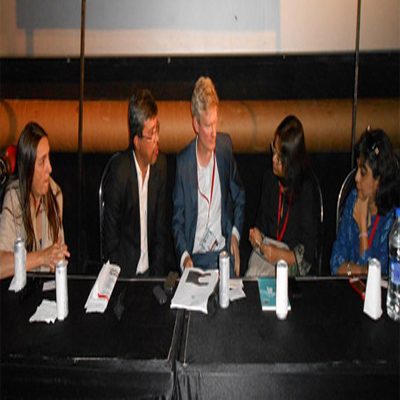
    The Mumbai Film Festival in its fifteenth edition is trying to plug that hole. In what could have been termed as an intellectually and thought provoking discussion, a panel of dignitaries from the media and film space came together on one stage to show the way to independent filmmakers.


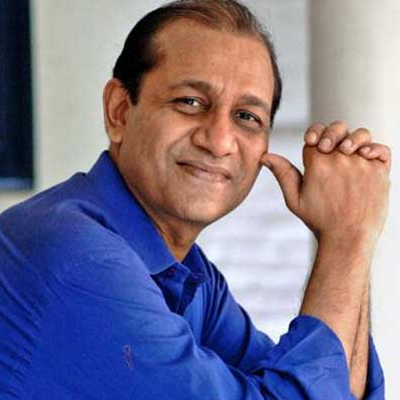
    The session held at Metro Cinema, was moderated by AV Pictures MD Chris Hainsworth and discussed the various alternative distribution avenues for independent films and filmmakers. The panel consisted of Guneet Monga, a film producer and CEO with Anurag Kashyap Films since 2009; Isabelle Dubar, head of distribution at Hapiness Distribution based in France; Anil Wanvari, Founder, CEO & Editor-in-Chief at indiantelevision.com; Nandini, a film producer and finally Shubhra Gupta, a film critic with Indian Express over the past two decades.


    The discussion kicked off with Guneet Monga who briefly started out by talking about her journey so far. “I started producing movies nearly six years ago, but started taking movies to festivals only with That Girl in Yellow Boots. I had no clue how to go about looking for buyers for the movie. But gradually, I realised that the deliverables that we have here in India is nowhere close to the scale at which films are marketed in the international film circuits, and I have learnt things the hard way.”


    On being quizzed on what would be the right place to look for buyers in the overseas market, Monga quips, “Why go anywhere when we have two very good home grown festivals – The MAMI (Mumbai Academy of Moving Image) and the Film Bazaar held in Goa every year – but yes, the scope for buyers is in plenty overseas as well. It’s just about delivering the right mix of content that is of universal appeal. And it is also important that those in the business get to know you and take you seriously because you are meeting them again and again.”


    Isabelle Dubar steps in while speaking about distribution of films. She was the one to take Gangs of Wasseypur (Part I & II) to the French market. “The French market is very outhouse in nature, with approximately 600 films from all over the world coming to the market every year,” says Dubar.


    She further clarifies that the French market is still not that open to Bollywood films and it never really caught on it in a big way, but after observing the response for Gangs of Wasseypur (GOW) at various festivals world over and the appreciation it got at Cannes, she was egged on to give it a shot.


    “We didn’t want to risk releasing both the parts together as a six hour long single feature film and thus adapted to how it was released in India. So, the first part was released around July and we promoted and marketed it like a contemporary Indian take on The Godfather,” Dubar remarks. The results were very pleasing. Though the expectations were high they still managed to get people to watch the movie.


    Dubar says, “We expected nearly 30,000 admissions, but we got 15,000 which is still a sizable number. The second part that we released during Christmas the same year didn’t get much favourable response with only 5,000 attendees. But Anurag Kashyap’s work has been appreciated and the market is open to more Indian films now, so that’s a positive sign.”


    Dubar further threw light on the fact that Kashyap’s Ugly will also be distributed by Hapiness Distribution in and around the French market. “We are also releasing The Lunchbox – a co-production with a French producer – on 11 December in France,” adds Dubar.


    Dubar finally went on to say that be it any language or genre what matters at the end is that the story and the characters should be able to have an universal connect and nothing can stop the film from being accepted and doing well globally.


    The point in question now is how will a film get the right platform to get buyers? “There are bigger markets than just festivals to be tapped into by independent filmmakers. There is Mipcom, Mip Doc and Mip TV, where nearly 11,000 people spend 1,300 Euros a piece to look for buyers or sellers of content, It’s the biggest content trade market in the world,” says Anil Wanvari.


    He further urges the independent filmmakers’ community to unite and pitch for more funding from the government in their distribution efforts. He gave the example of the UK where 50 per cent of all costs to market films and TV shows internationally at markets are paid back to the filmmakers to encourage them to find alternate streams of revenue while pushing the British  perspective and culture. “Even the Andhra Pradesh and Karnataka government offer incentives to producers of animation and gaming to attend markets worldwide to find new customers for their offerings,” he said and added, “Other state governments should be urged to do the same.”


    “Earlier, Prasar Bharti used to screen movies on Sundays from independent filmmakers, maybe that is one thing that needs to be started again. But the need of the hour is for the filmmakers’ community to get together and help raise awareness for these films. Use of social media to bring the importance of independent cinema to the government’s notice and also to transform it into a movement is very essential. More importantly, filmmakers and producers should be aware of the rights they should retain with themselves whether it is SVOD or PPV or NVOD or online or airline or shipping or DTH or whatever right. Never give away all the rights for the movies at once just because a distributor demands them and because you are a first time filmmaker struggling to get your film on the screen. You need to learn to monetise and keep monetising from the product you have created,” Wanvari expounds.


    Film producer and founder of Idyabooster.com Nandini Masinghka too thinks that the need of the hour is to get more clarity as a filmmaker whether the film he is making is for artistic pleasure or for monetising it. “Be clear about your audience; be clear how you will market, how will you distribute. Don’t just put all your money into creation and production,” she highlighted. “If you don’t have the expertise to manage this, then bring in someone who does. Thus, the industry needs more independent producers, who don’t just finance the project but are also responsible for monetising it rightly,” Nandini explains.


    After patiently listening to the conversation, film critic Shubhra Gupta says, “I am surprised that we are discussing the business of cinema without considering the art of it. If the movie is not made artistically, you anyway won’t get buyers for it.”


    Gupta also points out that after the emergence of multiplexes not many films from the independent space get their due at the box-office. “I am forced to see a Besharam on a Friday, when the movie I so wanted to see has been removed. So how will these movies get their due,” Gupta quizzes. She refers to the situation in Chennai where individuals backed and pushed the cause of independent cinema such as Pizza and made it successful.


    Monga highlighted one case in point during her early days as a film maker. “My first film was on cricket and the prints were in the theatres when news emerged that India has been eliminated from the World Cup in 2007. Immediately, the exhibitors sent me back my prints. So I took up the cause of distributing the film myself in Delhi and encouraging schoolchildren to watch it in their schools. I also sold the tickets to universities myself. I then moved this concept similarly to Punjab and made money there. I even made money on the DVD which a home video company had given up on by selling them in the foyers of the theatres where I screened the film. I never gave up on my dream and pursued monetisation from every angle.”

  • Shahid: This one is for the critics

    Shahid: This one is for the critics

    MUMBAI: Shahid is a bio-pic of a Mumbai lawyer, Shahid Azmi, whose story itself is a readymade film plot with so many twists and turns and an untimely death as he was shot down in his office at the young age of 32.

    Shahid and his three brothers, along with their mother, occupy a mezzanine one-room house in a congested Muslim locality of Mumbai. Shahid is keen to study and for this purpose argues with his family to keep the lights on at night even though it disturbs them. One such night, Shahid hears some commotion in the area and steps out to check the cause. There he sees bodies burning or slain with swords. Wanting to return home, he keeps knocking but the family is not sure it is him. The incident makes an instant impact on Shahid who, on an impulse, leaves home to head to Pakistan-occupied Kashmir to train as a terrorist. He soon realizes that he was in the wrong place and runs away to head back home.

    But here he is arrested for plotting against the state and charged under TADA to serve seven years in Tihar jail, Delhi. Like Shahid, there are also others behind bars even though they are innocent. The jail also has an inmate belonging to a terrorist group who tries to brainwash Shahid and other Muslim inmates to join the group. But Shahid is lucky to meet a character played by Kay Kay Menon, and a professor, both framed under false charges. Menon warns him to keep away from bad elements and advises that if he wanted to change the system, he needed to join it. Shahid decides to study further from within the jail and the professor helps him. Soon he is acquitted.

    Producer: Ronnie Screwvala, Siddhartha Roy Kapoor, Anurag Kashyap, Sunil Bohra.
    Director: Hansal Mehta.
    Cast: Rajkumar, Kay Kay Menon, Mohammed Zeeshan Ayub, Tigmnshu Dhulia, Vipin Sharma, Prabhleen Sandhu, Yusuf Hussain.

    After being freed, Shahid goes on to finish his masters in law and joins a renowned law firm where he lasts only few months before going on to work independently. He fights for the Muslim youth charged under another stringent law, POTA, but who Shahid thinks are innocent. Shahid fights these cases pro bono on requests from NGOs, winning 17 acquittals in his seven-year career before being shot dead defending a 26/11 accused who too was later acquitted by the Supreme Court.

    The film’sportrayal of the Muslim pockets of the city looks authentic. While it would have been tempting for the director to linger a bit longer on riots and the Kashmir training parts, he wisely avoids it, keeping only as much footage as needed to make the point. The jail portion is made to look too easy and the inmates look like they are on a picnic. Though a lot of the film is shot in court rooms, the court rooms look shoddy. However, the court duels between Shahid and opposing lawyers are interesting. Rajkumar playing Shahid is excellent throughout the film, whether in his interactions with family or clients; his portrayal of a concerned lawyer is lifelike. Kay Kay Menon, in a brief role, is pleasant. Mohammed Zeeshan Ayub, Prabal Punjabi, Tigmanshu Dhulia, Vipin Sharma, Prabhleen Sandhu and Baljinder Kaur (as Ammi) are all very good.

  • Lunch Box: A beautiful food for thought

    Lunch Box: A beautiful food for thought

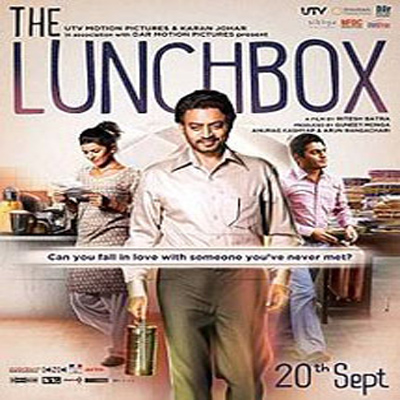
    The famous ‘Dabbawalas’ of Mumbai were accorded Six Sigma performance rating by the prestigious American business publication Forbes Global. That means that only one in a 16 million deliveries goes wrong. There have been films made on romance due to a wrong number called, following blank calls, on chats and emails. Lunch Box derives its story from that one-in-16-million mistake that a ‘Dabbawala’ makes: a mistaken delivery of a tiffin.

    Producer: Guneet Monga, Anurag Kashyap, Arun Rungachari.
    Director: Ritesh Batra.
    Cast: Irrfan Khan, Nimrat Kaur, Nawazuddin Siddiqui, Bharati Achrekar.


    Irrfan Khan is a widowed Catholic man living in a Mumbai suburb. He leads the morose life of a government servant commuting on the crowded local trains to the office and back home with cigarettes being his only companions. He has been working for 35 years with a perfect record and has decided to take premature retirement and settle down in the city of Nasik. He is serving his notice period and has been asked to train a new recruit, Nawazuddin Siddiqui, before he leaves. That is when a ‘dabbawala’ delivers to him a ‘dabba’ which does not only look richer than his in packaging but also contains tasty, aromatic homemade food which is a feast, compared to the insipid food provided by his caterer every day. Irrfan makes it a point to meet his caterer on the way home to thank him and tell him to keep up this quality of cooking.

    Nimrat Kaur is a housewife and a mother of small girl. She loves to add to her expertise in cooking with a little help from an aunty a floor above her, Bharati Achrekar, who loves to share her ideas. It has been a few years since her marriage and she tries to live up the adage, ‘the way to a man’s heart is through his stomach’. She cooks a new menu everyday expecting praise from her husband every evening. This time, her tiffin has reached Irrfan. He sends a chit saying that the food was very good but there was too much salt, to which she replies the next day by putting too much chilli.


    The exchange of notes becomes a regular feature. Irrfan’s life becomes a little more exciting as he looks forward to lunch everyday, as much for a note from her as for the food. As for Nimrat, she has just realised her husband is having an affair and is hardly ever at home and this distraction helps buffer the shock. Irrfan, who is a loner who never interacts with anybody either in office or where he lives, has come to life. He even starts entertaining Nawazuddin, tries to teach him the work and, eventually, also lets him join for and share his lunch. In fact, Nawazuddin, who is an orphan, becomes his only confidante while he becomes his guardian at his Nikah.


    Irrfan and Nimrat’s notes grow from one-liners to full pages and soon two pages. Soon they think there has been enough of ‘letterbaazi’ and decide to meet instead.


    Lunch Box is built on small budget and thin theme but it is the sidetracks that fill it out. Not only does it depict a middleclass Mumbai lifestyle and its lifeline, the local trains, but also the disorganised government offices and their lifeless, robotic staff. But most of all it brings to life on screen the much celebrated 5,000-strong ‘dabbawalas’ workforce which one notices only when foreign guests like Prince Charles or Richard Branson visit them or when foreign TV channels cover them. The journey of the ‘dabba’ from collection in the morning until return in the evening becomes a part of the story. Until the justified culmination is to be reached, the film is a light watch with a subtle but unmissable humour, which is all the more effective because of Irrfan’s pokerfaced mouthing of the lines. Nawazuddin is a perfect foil to Irrfan and he is even developing a bit of suave personality with success. Nimrat is natural. The ‘dabbawalas’, the celebrities that they have become are never conscious of the camera. Bharati Achrekar only lands her voice as aunty without showing her persona but is effective.


    Phata Poster Nikhla Hero: A comedy of errors

     
    Producers: Ramesh Taurani.
    Director: Rajkumar Santoshi.
    Cast: Shahid Kapoor, Ileana DCruz, Padmini Kolhapure, Saurabh Shukla, Darshan Jariwala, Zakir Hussain, Sanjay Mishra, Rana Jung Bahadur, Salman Khan (Cemeo), Nargis Fakhri (Item number).


    New filmmakers with no big stars or budgets at their disposal are coming up with novel themes and many are succeeding. Yet makers with established names and bigger budgets don’t take such risks: their insecurity and lack of creative confidence doesn’t allow them to try something off the beaten path. Hence Rajkumar Santoshi decides to look to the past to find a ‘fresh’ entertainer. Unfortunately, he picks a mundane B-grade story and tries to give it a Manmohan Desai approach by adding a mother’s emotions, a runaway father and a villain’s den full of fools and so on to come up with a not so entertaining farce.


    Shahid Kapur is being brought up to be an honest policeman by his mother, Padmini Kolhapure. But Shahid has different plans for himself: he aspires to be a film hero and, like the Khans, wants to establish his own brand, the Vishwas Rao label which is his screen name. Every time Padmini sends him for police academy tests, he makes sure he fails. This time, he goes for a test to Mumbai and ends up at a strugglers’ hotel (many of which existed in Mumbai suburbs in 1960s and ’70s) where many others like him are lodged. The veteran is Sanjay Mishra, who did not amount to anything himself. He takes Shahid to film director, Tinu Anand, who is looking to cast a negative character. Shahid impresses him by putting on an act, the kind seen in just about all films of wannabe actors. He is cast immediately and is required to wear a police inspector’s dress.


    Every time Shahid is in police dress, Ileana D’Cruz happens to need police help and manages to bump into him. She is a journalist and a self-styled social worker who runs to the police station with so many complaints that the cops have named her Complaint Kajal. By the second such escapade, romance blossoms. Somehow, word reaches Padmini that her son has become a policeman and she decides to visit him in Mumbai to see her son in uniform. Now the only way for Shahid is to keep wearing the uniform till Padmini is with him.


    The villain, Saurabh Shukla, operates from a night club which gives Shahid scope to show his already famous dancing prowess. Somehow or the other, Shahid is present in uniform wherever there is trouble taking place and saves the situation. Neither the ACP, Darshan Jariwala, nor the corrupt cop, Zakir Hussain, in cahoots with Saurabh, has any clue who this inspector is, who is solving crimes singlehandedly!


    It is time for mother’s sentiment to come in play; Padmini comes to know her son is not a real policeman and just a bit actor. Obviously, she is devastated as she had a reason behind her ambition of making him into a cop, an honest one at that. She faints and is taken to hospital from where she lands straight into villain’s hands. Not yet, but finally the film ends.


    The film does not follow a taut script but rather pieces together gags and incidents and hence lacks flow. The director gives the film a bit of Manmohan Desai and a bit of Kundan Shah (Jaane Bhi Do Yaaro), both with ordinary results. The film has some good tunes and Shahid adds to the USP of those dancing kinds. Photography is fair. Editing is not up to mark. Action is well composed. The film is a Shahid vehicle all the way. Ilena is pretty and does a good job. Jariwala along with Saurabh, Mishra and Hussain raise laughs. Padmini makes an apt mother to Shahid.


    Phata Poster Nikhla Hero has not been received well and lacks on entertainment too.

  • Raveena to play Jazz singer in Bombay Velvet

    Raveena to play Jazz singer in Bombay Velvet

    Raveena Tandon is all set to appear in the big screen again with Bombay Velvet. The actress who was last seen in the Amitabh Bachchan film Bbuddah… Hoga Terra Baap, will be seen playing the role of a Jazz singer in the film.


    However more details of the film and her role are currently unavailable.

    Bombay Velvet is directed and co-produced by Anurag Kashyap. The film is said to be based on historian Gyan Prakash’s Mumbai Fables and it is the story of how the city became a metropolis against the backdrop of love, greed, violence and jazz music. The film features Ranbir Kapoor and Anushka Sharma in lead roles.

  • Siddhartha Basu in Bombay Velvet

    Siddhartha Basu in Bombay Velvet

    MUMBAI: Siddhartha Basu who is well-known for producing shows like Kaun Banega Crorepati and Dus Ka Dum, seems to have developed a liking for Bollywood. After making a debut with Shoojit Sircar’s Madras Cafe, he will now also be seen in Bolbay Velvet.


    Directed by Anurag Kashyap, the movie is set in the 50s era. Starring Ranbir Kapoor and Anushka Sharma in the lead roles, Anurag Kashyap will be directing the movie.


    While the details of his character have been kept under wraps, Basu who is excited to be a part of this period film describes it to be intriguing and passionate.

  • IIFA travels to the States in 2014

    IIFA travels to the States in 2014

    MUMBAI: The International Indian Film Academy (IIFA) Awards has announced the event will travel to the US for the first time next year (2014), settling in Tampa, Florida in June. The move is one that‘s likely to up the contour of Indian cinema Stateside where Bollywood isn‘t typically top of mind among moviegoers.

    But Indian cinema and talent is definitely growing with movies like Yeh Jawaani Hai Dawaani, and actors like Ranbir Kapoor and multi-hyphenates like Anurag Kashyap making waves. A question remains, however, on how closely the biggies of Hollywood and Bollywood can ever meet.

    India celebrated the 100th centenary of Hindi cinema in Cannes in May, turning a spotlight on the industry. Last month the romcom Yeh Jawaani Hai Deewani (YJHD) broke into the US top ten upon release. The film‘s success at home and abroad was partly because of the mushy romance seen in the movie. Ranbir Kapoor is one of Bollywood‘s hottest actors at this point of time, also a key factor inYeh Jawaani‘s success.

    Fanning the flames, Kapoor just won the best actor prize for 2012?s Barfi! At IIFA which was held this weekend in Macau. The romantic comedy was India‘s 2012 Oscar entry. It also won several prizes at January‘s Filmfare Awards including top picture and actor; Kapoor played a deaf-mute man involved with two women.

    Kapoor‘s YJHD co-star Deepika Padukone is next up in Chennai Express. Padukone is an established actress who broke out in 2007?s Om Shanti OmChennai Express has the distinction of going out on August 8, the eve of India‘s Eid al Fitr holiday. Beginning in 2008, films toplined by Indian superstar Salman Khan staked a claim on the Eid holiday which celebrates the end of Ramadan. With Khan‘s next big production, Mental, not releasing until the January Republic Day weekend, the Eid spot is ripe for another comer with big box office potential.

    Conventional wisdom says it will be Chennai Express. The love story cum road movie is directed by Rohit Shetty (the Golmaal franchise, Bol Bachchan) and, with Padukone, stars the iconic Bollywood superstar Shah Rukh Khan, making it one to watch. If Chennai followsYeh Jawaani‘s path, Khan should be happy. He has said that his dedication is to getting Indian films seen by the world rather than having his own career in Hollywood.

  • DAR Motion Pictures to have Yash Raj Films distribute “D-Day” overseas

    DAR Motion Pictures to have Yash Raj Films distribute “D-Day” overseas

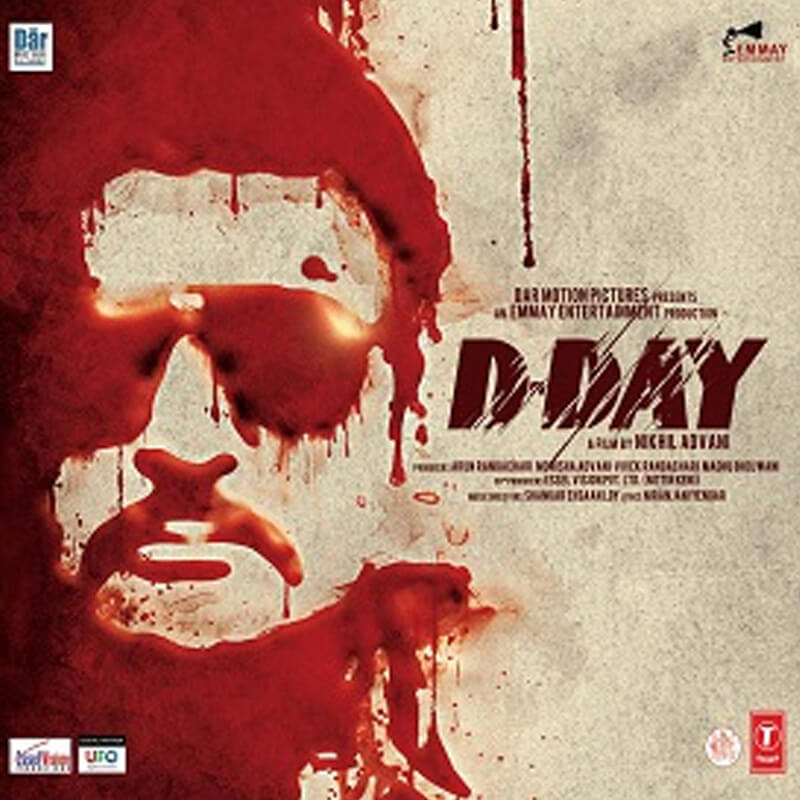
    MUMBAI: DAR Motion Pictures has announced that their upcoming film “D-Day” would be distributed internationally by Yash Raj Films.

    DAR Motion Pictures has long-term creative and business partnerships with Anurag Kashyap Films and phantom. Having previously made India‘s first stereoscopic film Haunted 3D, we have progressed to be a proud part of the cannes film festival‘s award winning film ‘The Lunchbox‘ directed by Ritesh Batra , as well as ‘Ugly‘ directed by Kashyap. Having teamed up with some of the best in the business and distributing some landmark films like ‘The Dark Knight Rises‘ and ‘Fast and Furious 6‘ through its distribution network, DAR continues to strive towards content driven cinema. This time they have chosen to team up with Yash Raj Films to distribute their latest and much awaited production D-Day overseas.

    D-Day releases in theatres worldwide on 19 July 2013. It is directed by Nikhil Advani.

    Operation Goldman Begins… the skilled team of four is getting ready to take on India‘s most wanted!

    Commenting on the collaboration DAR Media director Vivek Rangachari says, “We are extremely excited about the collaboration between DAR and Yash Raj for this film. D-Day is probably one of the most daring films made recently in Indian cinema. We hope that the additional efforts from Yash Raj overseas will only augment the success of the film.”

    DAR head of distribution Murli Chattwani, at says, “D-Day is a film worth a collaborative effort between DAR and Yash Raj Films. It is a film that every Indian must watch and we hope to receive a tremendous response from the audiences worldwide for this film.”

    YRF international operations VP Avtar Panesar says, “We at YRF have tremendous respect for DAR Media and their endeavours to produce content that truly stands out and we feel that D-Day is yet another step in that direction. We are delighted to be entrusted with this project and are confident of its appeal to all sections of the audiences.”

  • Anurag Kashyap in recreating Mumbai of 1960

    Anurag Kashyap in recreating Mumbai of 1960

    MUMBAI: Anurag Kashyap, the filmmaker who is known to create and recreate cinema every time through his innovate concepts and ideas, is slated to come up with a new venture ‘Bombay Velvet‘. The movie has been made on historical lines of Mumbai, where he has recreated Mumbai of 1960s and filmed the story of how the city became a metropolis. The movie starring Ranbir Kapoor and Anushka Sharma has been shot on the various locations in Sri Lanka.

    According to him, "It is set in the 60s and I needed a consistent heritage look and a skyline to loyally depict the era. But, Bombay‘s skyline has transformed dramatically, most of the heritage buildings have been replaced by high-rises. So it did not fit the period we are looking to recreate. That‘s why we are shooting in Sri Lanka, starting next month," Kashyap told PTI.

    He further informed, "Unfortunately, India does not have a culture of preservation, whether it is films, monuments or buildings. Cities like Bombay have not been able to preserve their architectural heritage in the race for urban growth, and hence period films will face serious challenges in India, both in terms of shooting and authentically recreating the era."

    The writer-director whose movies, in the last few years, proven catalysis and brought into revolutionary changes in the Hindi cinema, including Dev D and Gang of Wasseypur, shared his challenges that he came across while researching for the film during the pre production process.

    The real challenge is unavailability of evidences or blueprints as most of the heritage buildings in Indian cities have either "disappeared or have been modified beyond recognition".

    As he elaborated on various challenges which he faced while researching on the topic, "Not only the buildings were missing, we did not know how an area, or the city in general looked during that period. So, we took help of not only available archival images but also approached families in Mumbai to share their old albums to help us in reimagining Bombay 50 years ago, a Bombay now largely missing in a vertically-growing Mumbai," he said.

    Some parts of the film are also likely to be shot in studios in Mumbai.

    The film is based on historian Gyan Prakash‘s book ‘Mumbai Fables‘. "I met Gyan before the book was published. And, when he told me about the story, I was fascinated. I never thought Bombay (Mumbai) had such a history. And, so Gyan wrote the book while simultaneously penning the script for the parallel adaptation," Kashyap told PTI.

  • Standing ovation for ‘Bombay Talkies’ at Melbourne

    Standing ovation for ‘Bombay Talkies’ at Melbourne

    NEW DELHI: ‘Bombay Talkies‘, the closing film of the Indian Film Festival of Melbourne (IIFM) received a rare honour by receiving a standing ovation by a 600 member strong audience.

    "We could not have wished for a better closing night movie than Bombay Talkies, making its Australian debut only three days after receiving a gala screening in Cannes. The response to the screening has been beyond expectation" said IFFM festival director Mitu Bhowmick Lange.

    An anthology of four short films by four of India‘s most exciting directors – Anurag Kashyap, Dibakar Banerjee, Zoya Akhtar and Karan Johar – Bombay Talkies was the icing on the cake for the festival‘s own celebrations of 100 years of Indian cinema, and the packed audience loved it.

    "That was incredible. We saw aspects of India we rarely see, and could identify with every story," said one fan. "It was a real eye-opener about India, and Indian cinema. The gay kiss was refreshing to see too! And the film extremely confronting, especially coming from a mainstream film maker like Karan Johar", said Leima Popal who is an avid Bollywood fan.

    Following a long standing ovation, Aussies could be heard singing the Bombay Talkies song on their way out.

  • French honour for Anurag Kashyap

    French honour for Anurag Kashyap

    MUMBAI: Indian film director and screenwriter Anurag Kashyap will be conferred with the French Governments Knight of the Order of Arts and Letters for his successful contribution in Indian cinema at the Cannes Film Festival on 20 May.

    India is the guest country at the 66th French culture minister Aurelie Filippetti will honour Kashyap with the Chevalier dans l‘ordre des Arts et Lettres‘ (Knight of the Order of Arts and Letters) during Cannes film festival.

    The French government‘s honour is awarded to the person who has gained recognition by themselves in their creativity field of art and their contribution to the influence of arts in France and throughout the world.
     
    Four of Kashyap‘s works, including production projects ‘Monsoon Shootout’ and ‘Lunchbox’, as well as directorials ‘Ugly‘ and ‘Bombay Talkies’, are to be screened at the fiesta.

    Some past Indian recipients of the honour include Lata Mangeshkar, Shah Rukh Khan, Aishwarya Rai Bachchan and Raghu Rai.