
Tag: Anupama Sajeet

  • Valvoline has adopted a digital-first marketing strategy: MD Sandeep Kalia

    Valvoline has adopted a digital-first marketing strategy: MD Sandeep Kalia

    Founded in 1866 by Dr John Ellis when he discovered the lubricating properties of distilled crude oil, Valvoline oil – the world’s first petroleum-based lubricant was officially trademarked in 1873.  With such a historic legacy backing it up, Valvoline has been a key part of the global landscape ever since and this role is at the centre of its latest ‘Original Motor Oil’ campaign.

    Valvoline Cummins Pvt Ltd (VCPL) has recently launched its TVC, ‘Baccho Jaisa Junoon’, conceptualised by Leo Burnett, to celebrate its child-like passion to stay original, innovate and stay ahead of the curve while maintaining its 150-year old legacy.

    IndianTelevision’s Anupama Sajeet had an extensive conversation with Valvoline Cummins Pvt Ltd managing director Sandeep Kalia who steered the company right from its onset days in India in the 1990’s. Kalia talked about how the engine oil company’s marketing strategy and media mix has undergone a nearly 360-degree reversal during the pandemic and turned to digital-first. From not being known as a “consumer-first category,” the brand is now reaching out extensively to its customers through digital marketing and social media channels, in a bid to connect directly with them.

    Edited excerpts:

    On Valvoline India’s aggressive marketing strategy during the pandemic

    Valvoline Cummins has always concentrated more on its long-term vision. Over the last one year, all efforts of our teams and channels have been directed on how to reach out to our customers during such a difficult time. It was not only to do business but about understanding their needs, and their wellbeing. We launched several small, digital campaigns on staying safe, and also how to maintain their vehicles during lockdowns, because vehicles have typically been standing for months. We gave tips to our consumers, who were running CV vehicles, or trucks, tractors, cars or bikes, on ensuring their proper maintenance. We connected with them with much greater rigour via video calls, vocal interactions checking on their well-being, while also educating them- all of this was to ensure that the connect with our customers is long term.

    Hence, when the markets opened up around October 2020, we saw a lot of rewarding customers come to us. And that’s when we thought it will be a good time to launch a new campaign. That’s how the two campaigns came about. For this latest one, we wanted to start absolutely afresh, so we started with the global campaign on ‘the Original engine oil- stay original’ and went ahead and launched the ‘Baccho Jaisa Junoon’ campaign.

    On dealing with the multiple Covid waves

    During both the waves, the industry has been badly hit by recession- not just ours, but every other industry. We saw profits falling as vehicles were not running, nearly all across the lubricant industry. Looking back, the recovery was pretty strong after the first Covid wave, around last October which continued till March this year, although there were revenue losses. But the second wave hit closer home- our channel partners, our employees and our customers, all were affected and cash management was tighter because people wanted to retain cash with them. This was the main difference between wave one and two. Now, even though markets are opening up- especially in the regions where restrictions have eased- they are still not up to the levels where it was pre-pandemic. However, one can say about 80- 85 per cent recovery has happened.

    -On the latest campaign ‘Baccho Jaisa Junoon

    The brief given to Leo Burnett was simple- how do we best convey the brand’s 150 year plus legacy, while also stressing on our passion to continuously innovate. So the ‘Baccho Jaisa Junoon’ concept went very well with the theme that we were talking about- that Valvoline does not shy away from dirtying our hands, being innovative and full of curiosity. That this is a company which has been standing tall for the last fifteen decades, and our backbone for success has been this passion or junoon for continuous innovation in each and every employee we have at Valvoline.

    – On the brand’s marketing strategy & media mix

    If you look at our industry, this is not a consumer category- we have a lot of retailers which sell spare-parts shops and mechanics who are the big influencers in the industry. And finally, are the consumers. Our research found that TV news channels and GECs are very much part of the viewing habits of retailers and mechanics, so we’ll definitely continue with it. Print has not been much in the mix earlier as well, as there wasn’t much returns on it.

    But, now as we want to reach out to more consumers and talk to them about our heritage and vision, we have to go the digital way. In the next coming weeks, we will go big on digital platforms in tune with our larger emphasis on the light-duty vehicle category, such as motorcycles and cars as compared to the heavy-weight category comprising trucks and tractors.

    -On the impact of the pandemic on the brand’s media plan

    Primarily, the difference in pre and post pandemic strategy is that now we are trying to use more and more platforms to go digital- Moving from the traditional TV channels to catching up with the many new OTT platforms that have come up- how do we engage with them, how do we ensure good content which is meaningful for the brand as well as consumers see value in them. Till last year, our ad-spend was 60 per cent on TV and 30-40 per cent on digital. This year, with our focus on digital, it looks like it will be vice-versa.

    Valvoline has adopted a digital-first strategy both in terms of content creation and media mix from a continuous engagement point of view. Today, our consumers across the chain are connected on various digital platforms via smartphones, hence it becomes imperative for us to have a robust digital approach. Our digital media contribution in the overall media pie is 1.5x-2x that of our competitors.

    However, from an overall media mix perspective, TV plus Digital, and retail visibility remain our pivots. The pandemic sure skewed our digital investments a bit more, and our efforts our social and search platforms have gone up vis-à-vis pre-pandemic times. For new campaigns of course, TV continues to be the largest reach builder.
  • Garnier survey showed 90% Indians want to be more sustainable: Zeenia Bastani

    Garnier survey showed 90% Indians want to be more sustainable: Zeenia Bastani

    MUMBAI: With the world waking up to new realities amid the onslaught of the pandemic, the year gone by seems to have accelerated the agenda for a greener and cleaner Earth. Sustainable living and environment-friendly actions are top of the agenda for brands and consumers alike across the globe. A Garnier commissioned international survey found that a substantial proportion of global consumers expect brands to facilitate this.

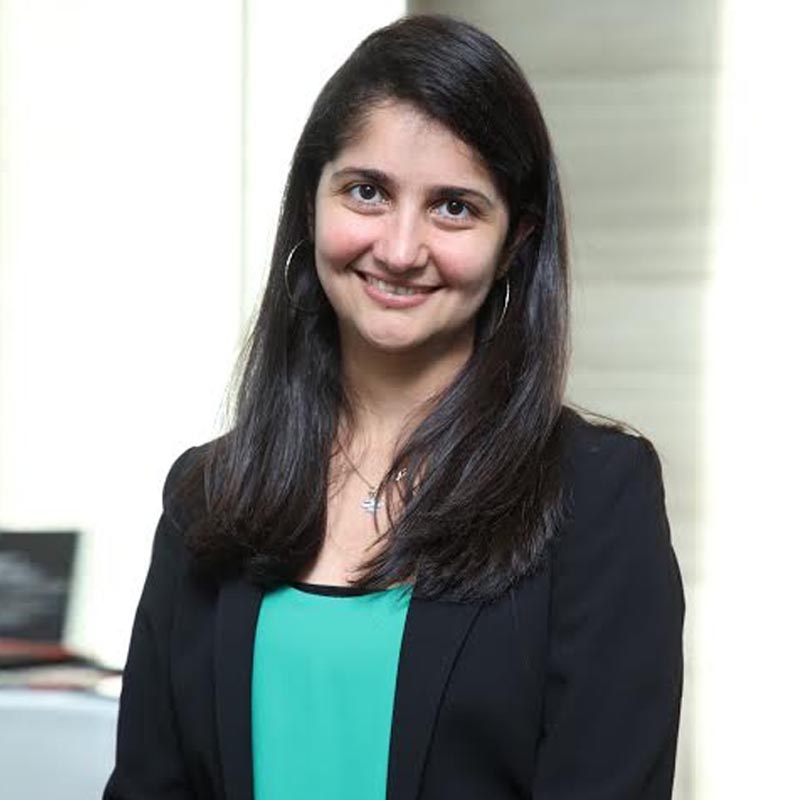
    Recently, the global beauty brand launched its transformative Green Beauty initiative set to radically reduce its carbon footprints and global environmental impact, while also declaring that all its products are now officially cruelty free. In the wake of the announcement, Garnier India General Manager Zeenia Bastani spoke to IndianTelevision.com’s Anupama Sajeet, where she revealed what inspired the brand to go all-out green, the company’s growing investment in the digital space and takeaways from the past year that it would like to build on in the future.

    Edited excerpts:

    On what the brand hopes to achieve through the Green Beauty initiative.

    Covid2019 has accelerated interest in sustainability conversations and urged consumers for a sustainable transition. While Garnier as a brand has been committed to sustainability for years; producing more natural formulas, using sustainable and fair-trade ingredients, even being the first to bring certified organic products to the mass skincare market, with the launch of its sustainability program Garnier Green Beauty, we want to go further, to shift the way the beauty industry operates and lead the change for all of us.

    The Green Beauty initiative is a complete end-to-end approach to sustainability and through it we aim to achieve the following goals:

    ·         Plastic & Packaging:

    –       By 2025, Garnier will aim to use Zero Virgin Plastic in packaging, saving 37,000 tonnes of plastic every year. 

    –       By 2025 all packaging will also be either reusable, recyclable or compostable.

    ·         Product & Formula:

    –       By 2022, all plant-based and renewable ingredients will be sustainably sourced.

    –       By 2025, 100 per cent of Garnier’s new products will have an improved environmental profile.

    ·         Factories & Manufacturing:

    –       100 per cent carbon neutral industrial sites by 2025, using renewable energy.

    –       The CO2 emissions of industrial sites have already been reduced by 72 per cent.

    ·         Solidarity Sourcing:

    –          By 2025 Garnier will have empowered 800 communities worldwide as part of our solidarity sourcing programme.

    We are also delighted to receive the stamp of approval from the Cruelty Free International Leaping Bunny programme, the leading organisation working to end animal testing and the cruelty free gold standard.

    On the findings of the Garnier commissioned international survey on global consumers.

    Garnier’s One Green Step Report showed how much consumer mindset is progressing when it comes to sustainability. The findings indicated that 2020 was a significant wakeup call for many for the need to take further green steps to protect our planet. While the research looks at eight countries, across four continents, referring to the India statistics – we saw over 90 per cent of those surveyed want to be more sustainable in 2021 whereas 77 per cent cited a reduction in their use of plastic products as their number one green priority in 2021. In addition to this, over 53 per cent feel differently about their actions and behaviours because of this year's pandemic and 51 per cent of those surveyed in India said that Covid2019 had made them re-evaluate their priorities.

    On Garnier’s marketing strategy during and post-Covid.

    Our strategy has always been consumer focused, and that is what we continued to do during the pandemic; paying attention to what the consumer needed and wanted.

    For example, the pandemic has resulted in increased washing of hands, leading to dryness issues, which is why we responded with a hand cream. During the lockdown, since salons were closed, people needed their self-care solutions at home, which is where we emphasized DIY hair colour solutions and sheet masks for a facial like glow in the safety of their homes. With increased screen time and video calls, we understood the need for more attention to eye care and launched our eye masks.

    On the key learnings from the past year.

    However challenging 2020 was, it also taught us a lot. The interlinked trends we see that will continue to deeply influence business in the future are –

    – Digitisation and e-commerce: As we have all witnessed, the need for a low touch economy saw the boom of digitisation and ecommerce. This digital and e-commerce revolution is bringing with it an awareness of global beauty brands and trends. Today, a young India has access to global brands, bypassing the hurdles of traditional distribution.  Online purchasing habits are evolving, presenting new opportunities for brands. 18 per cent of people bought personal care or beauty products online for the first time during this crisis.  

    -BeautyTech: With the fast adoption of digital and tech, came the awareness and development of BeautyTech – beauty augmented by technology. As a beauty tech company committed to digital transformation, we have been focused on deploying new technologies to enhance our products and customer experiences. For example, Garnier ColorMatch is a virtual try-on tool that allows our consumers to virtually try on different hair colour shades to enable her to choose her hair colour.

    -Consumer behaviour/awareness: The last year saw an acceleration in consumer awareness and behaviour, be it for a better brand experience via BeautyTech, more socially and environmentally responsible products, brands with a real purpose or more representation of what beauty stands for.

    Young Indian consumers have made a significant shift to digital media in the last few years. Digital has always been an integral part of our media plans even pre-Covid and will continue to be so.

  • Depiction of women in ads matters, but their absence also tells a story: ASCI’s Manisha Kapoor

    Depiction of women in ads matters, but their absence also tells a story: ASCI’s Manisha Kapoor

    MUMBAI: The Advertising Standards Council of India (ASCI) and Futurebrands have announced the launch of their first-ever deep, immersive dive into gender depiction in Indian advertising. The study titled ‘GenderNext’ aims to provide actionable insights that can positively shape the gender narratives in advertising. It is the first of several initiatives that ASCI will undertake this year. The full report is expected to be out by September.

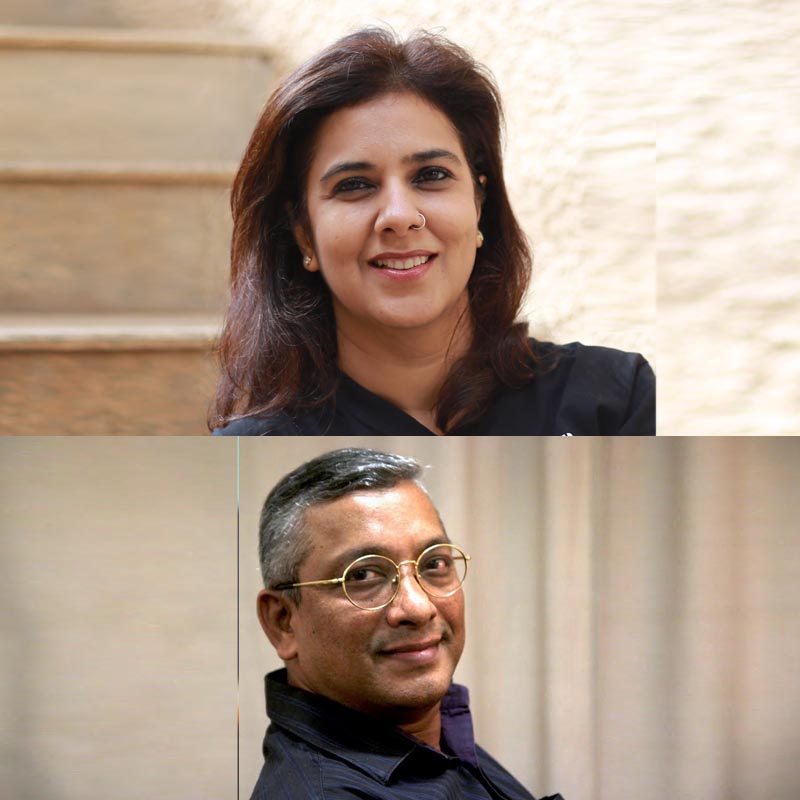
    In a free-wheeling discussion with indiantelevision.com’s Anupama Sajeet, ASCI secretary-general Manisha Kapoor talked about the skewed portrayal of women, gender roles in Indian advertising and the idea behind the initiative.

    Edited excerpts:

    On the objective of the study.

    We wanted to examine the portrayal and the narratives around women in advertisements and their roles, the vocabulary that is used – whether they are shown to be with family, friends, or alone, at home or at work. Then, use this information to bring about a much more positive depiction of the narrative. We felt that advertisers need to be given a different starting point to explore gender narratives in advertising, in a more relatable way that’s also inspirational and progressive. It is not just for advertisers, but policymakers, for academia, the government, and civil society. The study is not an audit. We are not trying to audit advertising, we are trying to learn through observations of what could be a better way of saying things and open up newer ways this conversation could be taken ahead.

    On whether the ad industry is losing connect with consumers with changing times.

    Advertisers and brands do realise that consumers have changed. However, the change is complex, it is not simple to understand. To illustrate my point, why is it that every time we need to show something traditional we resort to showing a homemaker – a homemaker today may not necessarily see herself as traditional. This points to an indirect manner in which advertising has thought of women. Some brands have tried to break the mould and succeeded.  There is a larger shift that’s happening globally and the idea is to bring that larger shift into focus. Society and ads- both influence each other. Ads will show the truths that they pick up from societal changes and vice-versa. So, there is a need to be more responsible as well as progressive. 

    On plans to deal with the continued objectification of women in ads.

    ASCII already has guidelines that say that ads cannot be derogatory or demeaning to women. So in cases where it is quite evident, we process complaints against these ads. Depending on what has been said or depicted we could uphold the complaint against such an advertisement. Now the challenge lies in what is permissible and what’s not outright derogatory.  So within that, what are the positive narratives that we can pick up?; it's not just about correcting a wrong, we are trying to move the needle in terms of more aspirational, relatable, positive depiction. We want advertisers to make better ads.

    On tackling ingrained, stereotypical gender roles in Indian ads.

    There are five enquiry frameworks that we are using in the study. First, we will culturally decode advertisements. We will look at ads from different regions and different categories over some time and try to understand what is the gender dynamics that are being depicted in the ad. This involves decoding advertisements that are already out there in the public domain. Second, we will talk to consumers about how they perceive certain ads. We’ll do in-depth qualitative research across 10 centres with groups of consumers to this effect. Next, we’ll talk to the creators of the ads- to the brands, advertisers, leading creative voices in the industry, to understand their perspective. The fourth part will be to talk to the policymakers, social activists and those who have worked in the gender space.

    Finally, we will look at what our partner in this initiative – Futurebrands – brings to the table. Futurebrands has an ongoing primary study for 11 years now, which has covered more than 200 small and large towns in India. It’s called Bharat Darshan and it maps the changes in Indian society. This will provide the foundation on which we will review some of the information which we assimilate now.

    On guidelines for the ad industry post the study.

    We may draft certain guidelines in future which could be helpful to advertisers to navigate this space. Our code already provides for the fact that advertising should not be derogatory to women, but we may offer more by way of explanation, examples and illustrations and certain more specifics. We are looking at a broad spectrum of categories, it includes categories that have traditionally spoken to women, as well as, those which have not. Thus, even the absence of women in certain categories of ads is something to be noted. While the presence of women and their depiction matters, the absence also tells a story. Hence with GenderNext, we hope to provide an insight that will help advertisers navigate these conventional tropes.

    On ASCI’s plan to focus on gender initiatives.

    Gender is the big focus and our flagship initiative this year. To further this agenda, we are looking at the formation of more alliances and collaborative efforts with other organisations, like the kind we have done with Futurebrands, which will be revealed in time. This is only a beginning. We will have much more coming up as the year goes by. Companies have stepped forward to fund the study. Nobel Hygiene is one of our principal sponsors. GenderNext is a first-of-its-kind study and expected to be of significant value to advertisers and creative agencies, as well as academia, policymakers and advocacy bodies.