Tag: Anuj Poddar

  • ETV aims to create a market with Gujaratis’ desire for comedy content

    ETV aims to create a market with Gujaratis’ desire for comedy content

    MUMBAI: Comedy is intrinsic to a Gujarati household. What they have till now been eating from the Hindi general entertainment channels (GECs) will now be served to them with a new revamped ETV Gujarati with six new shows, starting 3 November.


    With the tagline ‘Dilthi Gujarati’, the regional channel is now rising from the ashes. Tapping into the Gujarati euphoria that is surrounding the new Gujarati Prime Minister Narendra Modi, the family focused, female driven channel is gearing up to be Gujarati’s ‘real entertainment channel’ in a market which doesn’t have another entertainment channel.

    Viacom18 EVP and business head- ETV Gujarati and ETV Marathi Anuj Poddar says that the channel had been weakly positioned till now. “Our research showed us that the people there are not interested in high drama but about fun and comedy.” The channel has put in nearly six months of hard work to come up with the brand slate of programmes.

    The new shows include Pati thayo Pati Gayo (We Workshop Entertainment), 1760 Sasumaa (Meena Gheewala Telefilms), Aa Family Comedy Che (Sango Telefilms), Kanho Banyo Common Man (Entity Productions), Hirjini Marji (Click Digital Studios India and Vrajesh Hirjee) and Daily Bonus (a game show by Interscope Communications) from 7 pm to 10 pm. Popular names such as Ketaki Dave, Vrajesh Hirjee, Krishna Gokani and Sanjay Goradia will be seen on ETV Gujarati.

    Talking about this fresh line-up, ETV Gujarati programming head Sanjay Upadhyay says, “We have partnered with industry heavyweights to showcase a lineup that is contemporary, fresh and appeal to all who are ‘dilthi Gujarati’.”

    The fiction team in Mumbai and non- fiction team in Ahmedabad has conceptualised the new look. The two cookery shows have been retained, one in the afternoon and one early primetime due to their popularity. Although Poddar is sure that the high production quality of the shows will bring in audiences. He is aware that it isn’t easy to break their attachment to Hindi GECs anytime soon. “People will sample it at various times. It isn’t about us being one more player in the market but about creating the market itself,” he says.

    From an advertiser perspective, he says that the channel can be positioned relatively well because of its 8-10 per cent contribution to the Hindi speaking market (HSM). Currently the market size of Gujarati television is about Rs 40 crore to Rs 50 crore with 1 per cent viewership of the regional market which itself is about 16 per cent of entire TV market in the country. But Poddar puts the entire advertising market across platforms in Gujarat at over Rs 1000 crore, which he is eying.

    “In terms of opportunity size, the market is big; though a lot of it goes to Hindi GECs. Today advertising there happens mainly through print, radio and national TV but now they will have a platform to talk to the audience. Once we get the channel running, we will approach advertisers to reallocate to our channel,” he says confidently. Currently, the channel has Aimil Amyron as its strategic sponsor for several months.

    The channel has also hiked up ad rates by 100 per cent and is now selling primetime slot at Rs 3500. Advertisers currently prefer a Hindi GEC over a Gujarati channel, but he expects that to change in time. The national to regional advertiser skew is about 80:20.

    A huge marketing plan began since Navarati with sources pegging the expenditure at about Rs 3 crore, which for a Gujarati market is heavy. An in-house team along with agency The CO, has come up with the creative. The first leg of the campaign began in Navrati when the channel launched its anthem by getting the stars at various on ground events in Rajkot, Surat and Baroda. This was followed by the outdoor campaign executed by Milestone Brandcom consisting of hoardings and rickshaws followed by movie theaters along with the launch of Happy New Year and branding partnership with fast food joints across the state. The launch day will see full page newspaper ads in Gujarat Samachar, Sandesh and Divya Bhaskar and will be followed by radio activity on station My FM.

    A canter activity will commence from next week as well and is being executed by Marketmen Activations. Show promos are being shown on Gujarati channels TV9, VTV, GSTV, Sandesh News and its own ETV News Gujarati and CNBC Bajar along with UTV Movies and UTV Stars, the national channels. Digital advertising will include YouTube pre rolls and Facebook targeted spots for all Gujarati content. The entire campaign will go on for three weeks post launch.

    Media planning has been executed by both the in-house ad sales team as well as Vizeum. A special promo has been created just for the channel with big personalities endorsing the channel such as Yusuf Pathan, Irrfan Pathan, Murari Bapu etc. The channel promo packaging has been done by Supra Films by Rajul Mishra.

    A 30 member office is situated in Ahmedabad while the heads are in Mumbai. Poddar says that the production cost of the shows are close to what is spent in Marathi shows. However, the channel hasn’t launched any big ticket show for now to keep the costs low without compromising on quality. “We want to create a space that is different and unique from advertiser value proposition with targeted environment. So we aren’t taking a high burn strategy,” he says adding that he looks for a breakeven to happen by two years.

    While the shows will run from Monday to Saturday, Sunday will see Gujarati movies as well as Hindi movies from the Viacom18 library. “Though Hindi movies will spike up our ratings, but the aim is to strengthen the Gujarati primetime band,” states Poddar.

    Currently the channel is present on all DTH and digital platforms in the state while its analogue penetration is about 90-92 per cent. GTPL, Den, InCable, Dewshree,Tata  Sky, Airtel, Dish TV, Videocon d2h, Reliance Digital, Sun Direct are its list of distribution platforms. “The legacy that we have inherited from the old owner is its excellent distribution,” informs Poddar .
     

  • ETV Marathi ups the ante with ‘Zhunj Marathmoli’

    ETV Marathi ups the ante with ‘Zhunj Marathmoli’

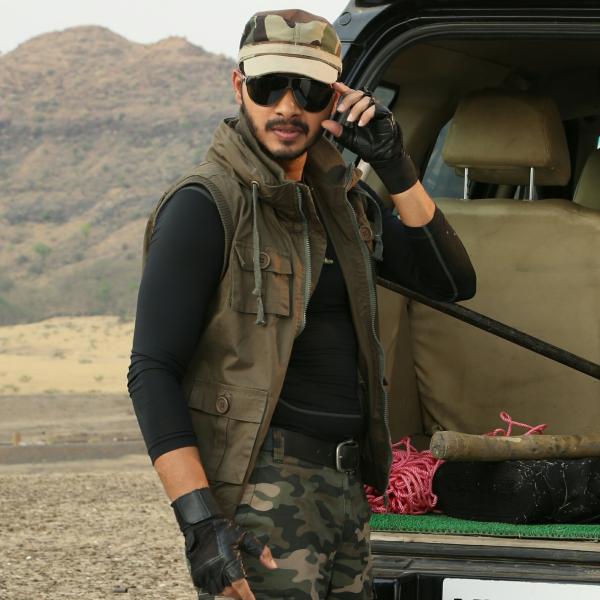
    MUMBAI: ETV Marathi is all set to take viewers on a road trip during which 14 celebrities will be assigned cultural tasks to prove their Maharashtrian-ness. Starting 26 May at 9:00 pm, the channel hits the highway with Zhunj Marathmoli that will travel to 12 cities in the state with Shreyas Talpade as host.

    A co-production of Ramesh Deo Productions (RDP) and Logical Thinkers, the 26-episode show has already canned around 14 episodes in seven weeks. Tracking districts across Vidarbha, Konkan, Marathwada, Amravati and Khandesh, Zhunj Marathmoli will see two cultural tasks being executed by the contestants per episode. One participant will be eliminated every week and there will be two or three wild-card entries as well.

    Zhunj took more than six months of ideation while every one-hour episode takes two to three days of shooting and nearly a week of post production. 78 people from RDP are travelling with the participants and Talpade along with four Scarlett Red cameras and six GoPro cams.

    Says RDP producer Abhinay Deo, “In a very simple format, we are trying to show the stories of the 14 participants and Talpade as well as the region where we are shooting through each episode.”

    Comparisons with other shows have already begun but Deo says that once people see the first episode, they will know for themselves. The locations either depict specific cultures or are task or production-friendly. “In season one, we just about cover a third of the state and it will take three seasons for almost full coverage,” says Deo.

    Promotions for the show are taking place in stages. After the first teaser look, the show song was launched on the digital platform. A live Facebook video chat with Talpade has been arranged for next week. The show being youthful, disproportionately higher focus is on digital. Outdoor marketing has for now been fixed in Mumbai while the rest of Maharashtra is on the cards. The creative for the campaign is done in-house and planning executed by Vizeum.

    Budgets for the show, sources say, are approximately Rs 25 lakh to Rs 30 lakh per episode, putting the worth of the whole project at a whopping Rs 6 crore to Rs 8 crore. Ten-second ad slots are being sold for Rs 50,000, which is 30 per cent higher than ETV Marathi’s other flagship programme, Kon Hoeel Marathi Crorepati (KHMC) went for. Lunar footwear has come on board as associate sponsor while the hunt for a title sponsor is on.

    “The Marathi TV space is hugely undervalued. So we are investing in shows to get that up. A show like this couldn’t have been done by us last year but after successfully doing KHMC, we have proved ourselves,” says Viacom18 EVP and ETV Marathi business head Anuj Poddar.

    Talpade has the task of coming up with instant dialogues while the shooting is on. “This show is unlike a studio recorded show. Here, you have to know what exactly your contestants are feeling. For me, that’s my zhunj (fight). Only if someone is getting distracted and we have to get them back on track do I get a pointer or else, it is totally unscripted,” he says.

    For the celebrities Pandaharinath Kamble, Megha Sampat, Swapnil Bhutkar, Arti Solanki, Vikram Gaikwad, Hemlata Bane, Satish Dede, Parag Kanhere, Tyagraj Khandilkar, Deepti Devi, Megha Dhade, Ruchi Savaran, Manisha Kelka and Abhijit Thakur, it boils down to ‘aata mateech tharvel kas’ or ‘the land will decide our worth’.

  • ETV Marathi brings you the First Ever Online Music Video Premiere in Marathi TV History

    ETV Marathi brings you the First Ever Online Music Video Premiere in Marathi TV History

    April 30th, 2014: Marathi television comes of age. Along with launching Marathi television’s first ever action road-trip, ETV Marathi’s Zhunj Marathmoli is all set to create yet another breakthrough with the first ever Online Premiere of its Music Video “Zhunj De”. Upping the entertainment quotient for its viewers, the music video will see celebrated actor and host Shreyas Talpade debut as singer and jam with singing sensation Jasraj Joshi.  Bringing alive the show’s promise of connecting with the youth, the music video “Zhunj De” will be premiering on May 1st 2014, Maharashtra Day at 1.00pm on ETV Marathi’s Facebook page.  


    Talking about the latest benchmark Anuj Poddar, EVP Viacom18 & Business Head, ETV Marathi said “Zhunj Marathmoli is a show that is focused on striking a balance between contemporary thought and traditional values.  The music video “Zhunj De” aptly captures the spirit and spunk of the show while celebrating the true Maharashtrian spirit. With the digital launch of the music video, our endeavor has been to amplify the reach of the video and capture the mind space of our viewers by engaging with them across multiple screens”


    The Music Video “Zhunj De” salutes the motherland (Maharashtra) and captures the thought of fighting for respect as a true Maharashtian.  With the On-Air tune-in Astons on the home channel, high decibel campaign on the channel’s Facebook page  and Page post link ads to New & existing Fans of ETV Marathi, the channel has left  no stone unturned to  increase the reach of the music video.


    Zhunj Marathmoli promises to provide a heady concoction of action and drama while showcasing Maharashtra’s cultural extravagance. Truly bringing alive the vast scenic expanse of Maharashtra, this new show with Shreyas in the driver’s seat promises to  get 14 celebrity contestants to battle it out  as they embark on this road-trip through their motherland.   

  • ETV Marathi to replace ‘KHMC’ with new non-fiction show ‘Zhunj Marathmoli’

    ETV Marathi to replace ‘KHMC’ with new non-fiction show ‘Zhunj Marathmoli’

    MUMBAI: Sticking to its word of providing entertaining content to all kinds of audiences and focus on the youth, Viacom 18’s regional GEC ETV Marathi is all set to thrill the viewers with a new action road trip show called Zhunj Marathmoli.


    The title that is derived from an expression used for a cock fight in the interiors of Maharashtra means ‘fight for respect as a true Maharashtrian’ that will be proved through tasks to test the contestants’ grit and determination.


    The show will also be aired at the 9:00 pm slot post the end of Kon Hoeel Marathi Crorepati (KHMC) season two once the IPL fever settles down in May or June. Currently KHMC is aired on Mondays and Tuesdays. However, the days for airing the new show being hosted by well known Bollywood actor Shreyas Talpade has not yet been finalised.


    14 Marathi celebrity contestants will contest in the tasks that are rooted in the Marathi culture across 12 cities including Nashik, Latur, Vidharba etc. Well known production house Ramesh Deo Productions (RDP) is behind this show, the production for which will begin only next month. The ETV team had been working on the concept since the last four to five months. This will be the first show being produced by RDP for ETV after its acquisition by Viacom 18. Prior to the acquisition also it has done shows for the channel.


    Viacom 18 EVP and business head of ETV Marathi and ETV Gujarati Anuj Poddar says that the series has all the scale to draw the attention of the younger audiences along with maintaining the conventional regional GEC audiences as well. “With Zhunj Marathmoli we have continued with our intent of launching shows that break new grounds of innovation in the regional space, striking a balance between contemporary thought and traditional values. Shreyas has the attitude and the youthful appeal. He is a well known Marathi personality who is rooted in his culture and has also gone out and achieved things,” he says.


    Speaking on his debut role as host Shreyas Talpade said “Coming back to Marathi Television with a show like Zhunj Marathamoli that will take me closer to my roots is like coming back home. Apart from allowing me to exploit my adventurous streak & connect with the youth of Maharashtra, this show gives me a sense of immense pride. I have travelled across the length and breadth of Maharashtra before. This show has allowed me to understand and connect with my motherland”.

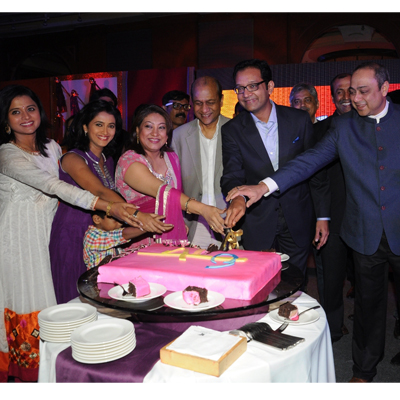
  • ETV Marathi celebrates channel success and Gudi Padwa

    ETV Marathi celebrates channel success and Gudi Padwa

    MUMBAI: ETV Marathi, a channel that mirrors the cultural ethos and spirit of Maharashtra has always prided itself in providing a range of differentiated content that redefines the family viewing experience.  The channel has always held an important place in the heart of every Maharashtrian and over the last year we have further strengthened this bond.

    ETV Marathi over the last year has had a glorious run. The journey towards success has been achieved on the back of powerful programming that has redefined Marathi television history.  The transformation that started on the back of the mega blockbuster Kon Hoeel Marathi Crorepati establishing new standards of scale and grandeur in Marathi Television history, continued with other engaging and revolutionising content. Shows like 1760 Saasubbai, Majhe Mann Tujhe Jhale, Sundar Majhe Ghar have created new benchmarks in reach and social messaging and taken the channel towards the next echelon of growth.   

    Speaking at the occasion of the Gudi Padwa celebrations held by ETV Marathi, Anuj Poddar, EVP Viacom18 & Business Head ETV Marathi said “ETV Marathi’s journey towards success has just started and the best phase is still ahead of us. Our story of the past year is akin to the common man. We resonated with the masses and elevated this common man to a pedestal. We are confident that with the support of the masses, we will continue to keep pace with the growth we have witnessed so far and emerge as the leading entertainment destination for all our viewers.”

    Numbers speak volumes and if numbers are to go by, ETV Marathi is emerging as the preferred destination of Marathi entertainment amongst its viewers. The below data clearly highlights the consistently increasing power of the platform.    

    Pioneers of the Marathi General Entertainment Genre, ETV Marathi, which was launched on 9th July 2000 has many firsts to its credit. The channel was the first to experiment with new homegrown non-fiction formats like Gaurav Maharashtracha, Dholkicha Taalavar, Superfast Comedy Express and Crime Diary that has revolutionised the Marathi Television space. On the fiction front too ETV Marathi has had a glorious run with landmark shows like Char Divas Sasuche that was a raging success.

    Today the channel continues to be powerhouse of content with the best in fiction and non-fiction bringing alive a heady concoction of traditional and contemporary content for its viewers. Resonating the channels primary agenda of being a mass entertainer with a soul, the channel boasts of a rich, diverse and engaging content palate across genres and continues to entertain and engage its viewers across the length and breadth of Maharashtra


  • Regional audiences are not second class

    Regional audiences are not second class

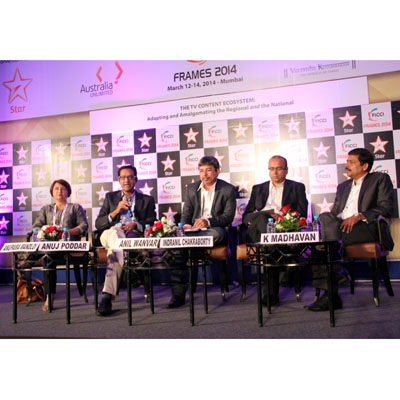
    MUMBAI: Two big regional broadcasters and two big production houses got together to discuss ‘TV content ecosystem: Adapting and amalgamating the regional and the national’ at FICCI Frames 2014. The session started with a keynote by Asianet Managing director K Madhavan and was followed by a discussion among panelists that included Viacom18 regional channels EVP Anuj Poddar, Fremantle India MD Anupama Mandloi and BIG Synergy COO Indranil Chakraborty on the opportunities in the regional entertainment space. The discussion was anchored by indiantelevision.com Founder, CEO and editor-in-chief Anil Wanvari.


    Madhavan started off by predicting that in three years, the ad revenue coming from regional channels will be equal to that of the national channels. He also highlighted that the biggest problem for regional broadcasters is carriage fees.


    “The regional market is about Rs 5,000 crore in terms of advertising revenue and we are the second largest in ad revenue as well as viewership after the Hindi GEC genre,” said Poddar. He also stated that there is a misconception that regional means language while it actually is a reflection of the culture. “Even Hindi television has its stories based on regions – for instance Ballika Vadhu was based in Rajasthan but adapted for national Hindi television.”


    Chakraborty said BIG Synergy entered the regional space five years ago and found that the regional audience was considered as second class as against the Hindi GEC audience. But that mindset is changing. “The word ‘adaptation’ is wrong. You need to redefine content to make it relevant to that audience,” he said. 


    He said he was happy that regional viewership that TV channels generate is getting its due in terms of ad rupees. “Earlier, regional TV channels had higher share of the overall  national viewership but the advertising expenditure on them was much less than that share. In 2013, ad expenditure on regional has gone up and and share of viewership is matching with share of advertising if you check out the latest Ficci report.”


    Added Poddar:  “This change clearly shows that advertisers and media agencies have understood the value of regional television and are willing to pay more for air time as they get targeted viewers. Even the coming elections are seeing a large amount of political advertising expenditure being shifted towards regional TV.”


    Regional channels seem to have taken the 12 minute ad cap very happily. “Sun raised its ad rates by 60 per cent and we (Asianet) raised it by about 20 per cent,” said Madhavan. He revealed that while earlier the ad rates of regional channels were one tenth of a national (read Hindi GEC) player, today they are up to about  25 per cent.


    The good part about regional television is that budgets for shows are rising, explained Chakraborty. An example of this is the regional adaptation of Kaun Banega Crorepati, which saw its budget going up 10 times as compared to what was being invested in other regional non-fiction shows.  This happened at a time when the Hindi version was being subject to budget cuts.


    As far as regional contributing to national and vice-versa in terms of show concepts, formats and storylines is concerned, Wanvari cited several instances where this has taken place in the Indian context.


    Said he: “Dance India Dance that super franchise from the Zee Entertainment stable began from Dance Bangla Dance produced for Bengali audiences. Today it has spawned several sub-franchises – Dance India Dance Lil Champs, Dance India Dance Super Moms, Dance Maharashtra Dance. Similarly with Big Boss which began on Colors and has since then been produced on its sister ETV channels in  Bengali and Kannda. KBC gave birth to editions on Tamil, Telugu, Malayalam on the Star network even as it aired in Hindi on Sony Entertainment TV and in Marathi on ETV Marathi. Ballika Vadhu was remade by the Network 18 group in Tamil, Telugu and Kannada, even as Uttaran has been remade in Marathi.”


    Wanvari pointed out that the reverse has also happened with shows from regional television being adapted to Hindi TV. “The Telugu soap Shravanti came on air as Dil Se Di Dua Saubhagayvati Bhava; Tami serial Kolangal was remade as Maayke Se Bandhi Dor; Tamil soap Thirumathi Selvam gave birth to the long running Pavitra Rishta; Idhayam turned into Dil Se Diya Vachan; Telugu show Ratha Samptamai  resurfaced as Rakht Sambandh; Bengali series Khela as Badalte Rishtey Ki Dastaan and then of course  the Ravi Ojha produced super successful show Sasural Genda Phool which emerged from the Bengali series Ogo Bodho Sundari,” highlighted Wanvari.


    He went on to further state that Star India has been working on reaching out its Hindi productions  to regional audiences, by dubbing shows such as Satyamev Jayate, Mahabharat and Mahadev in other languages such as Tamil, Telugu, Bengali, Marathi, and Malayalam and airing them on its regional language channels under the Asianet group and Star Pravah.


    “Taking a national product to regional is called revenue optimisation,” said Chakraborty talking about dubbing of national shows to regional languages.”For an adapted  show to work it needs to be locally adapted to suit the culture. “


    Poddar emphasised that it is not enough to dub regional shows, regional adaptations of Hindi national shows requires a lot of research and localisation to suit  cultural tastes and emotions. “When we had to remake Ballika Vadhu which is about a child bride for our Kannada channel, we looked around for a district in Karnataka where child marriage is prevalent and based our story there as the rest of the state does not have it as a practice as it is in Rajasthan. Also the pacing of the storyline in the Kannada version was faster.  Similarly, for the Marathi adaptation of KBC we went for a couple participant concept in the show and had Sachin Khedakar host it. “


    Chakraborty highlighted that there are benefits which accrue from Hindi show adaptations to regional languages and the other way around too. “Initially, we had to instill best practices and skillsets we had picked up while producing the Hindi version when we decided to go regional. Now the best practices and skillsets we got while producing the regional shows are being brought to Mumbai and  instilled in our crew while producing the Hindi version.”


    Fremantle Media India MD Anupama Mandloi confessed that her production house – which produces the successful formats Indian Idol and India’s Got Talent – has not yet taken the plunge into regional television but it is something which would be of great interest to her. “We have the experience of producing an international format and localising it in several countries, languages, cultures,” she said. “And we have done it successfully. We would like to  make some further inroads in regional television soon.”


    Madhavan added that Star Plus’ show Satyamev Jayate had realised the potential of regional which is why it was dubbed in so many languages and regional stars were roped in to promote it. He pointed out that Mahabharat dubbed in different languages has not proved as popular as Mahadev. But he revealed that even then the show has been a profit generator for his network. 


    “Simulcast is driven by commercial imperatives as a business model,” said Poddar.


    When prompted by Wanvari as to why don’t regional channels add subtitles to their shows, he said it is an option he is willing to consider.

  • ETV Marathi’s Crorepati eyes double bonanza in Season II

    MUMBAI: Viacom 18 took its first bold step in the regional space after acquiring a clutch of ETV channels by introducing one of India’s biggest and boldest non-fiction shows on its Marathi channel. Thus, Kaun Banega Crorepati became Kon Hoeel Marathi Crorepati on ETV Marathi. Now back for a second run, just four months after the last season ended, the channel is looking at increasing its cash inflow as well as eyeballs from the flagship show.


    The second season will see Sachin Khedekar back as host but facing not one, but two contestants as the theme this year is about couples or jodis. The prize money has also been doubled to Rs 2 crore. “The dynamic of two people changes a lot of things. These two people may be anyone in a family,” says BIG Synergy MD Siddhartha Basu.


    A huge marketing campaign had rolled out on TV and radio about four weeks ago emphasising on the number ‘two’ that is the theme. 


    The print campaign will strike on 13 January, the day the show launches. A digital app is expected to roll out soon after the launch of the show that will try to engage the younger audiences through social media. With the response it received from season 1, this time the channel has gone overboard on its marketing, spending nearly about Rs 4 to Rs 5 crore.


    Airing on Monday and Tuesday from 9:00 pm to 10:30 pm, it will replace two shows on these two days, which will now air four times a week. The current season is expected to run for three months with 36 episodes in all. According to sources, the cost of production is approximately Rs 8-10 crore for season two.


    The studio set up was created in Film City in December and six episodes have been shot so far with average shoot hours daily totting up to 12 hours.


    Last season, KHMC garnered about 3 TRPs and this time the channel is looking at starting off at that and doubling it amongst Marathi speaking audiences.  “It is worthy to say that nonfiction shows don’t really get such high ratings in languages,” says Viacom 18 EVP and business head Anuj Poddar. Last year KHMC doubled the channel’s overall ratings.


    Conversations are on with a slew of advertisers and sponsors, with Lever brand Clinic plus already coming on board as the presenting sponsor and the target is to reach about five to six advertisers, this time. The average per 10 second rate for commercials has been pegged at Rs 70,000 that is about 60 to 70 per cent higher than last year.


    Although only Marathi speaking people are allowed to participate in the show, it has seen a 50 per cent increase in the participants claims the channel.


    “The show is a very generous one. Our average pay out per episode is about Rs 6.5 lakh,” says Basu. “With growing viewership not just broadcasters but also advertisers and sponsors are also putting their money into such formats. A broadcaster takes it as a game changer and it is a huge investment for him as well.”


    The targets it has set for itself are high but will the channel be able to live up to its own as well as the people’s expectations? We will soon find out as it launches this Monday.

  • Its a full plate for IndiaCast/Viacom18

    Its a full plate for IndiaCast/Viacom18

    CANNES: It’s been a fruitful first day at Mipcom for IndiaCast/Viacom 18 (booth number 10.3, level 1), which met up with nearly 43 buyers from markets including France, Indonesia, Russia, Switzerland, Australia, Brazil and Jordon to name a few.

    The group expects to meet at least 120 companies from across the globe over the next three days of Mipcom.

    IndiaCast group COO Gaurav Gandhi says: “We have 15,000 hours of content in our library across the group and we add more than 2,000 hours of fresh programming each year.”

    The biggest draw according to Gandhi is: “Scripts of our famous drama series like Uttaran and Madhubala. That apart, formats like Roadies, Splitsvilla and Crunch aired on MTV are also in demand.”

    IndiaCast/Viacom18 has on offer about 40 shows including Na Ana Iss Des Lado, Ballika Vadhu and Comedy Nights with Kapil as also regional channel content and around 40 Bollywood films.

    “Mipcom is a good place for connecting with potential buyers from many smaller markets that we don’t have offices in or otherwise would never be able to reach out to. The discussions & negotiations begin here. It needs to be naturally followed up for things to materialise,” says Gandhi.

    The group is looking to monetise all its intellectual properties to the hilt. “For example Japan has a huge market for clips and looks for buying clips of many of our shows. East Europe wants drama series dubbed in their language. Africa wants script rights…” informs Gandhi.

    And yes, Colors’ recently launched series 24 is another property the group is betting on. “As regards 24, we are in the final stages of closing the deal with Pakistan,” reveals Gandhi.

    Apart from selling content, the group is also looking at acquiring content for its various channels. “We need to be sensitive towards what we choose. It should connect with our audiences. We are looking at acquiring family drama content and also non-fiction shows,” rounds off Viacom18 executive VP strategy and business development Anuj Poddar.  

  • Marathi TV: The BTL surge

    Marathi TV: The BTL surge

    MUMBAI: While shows such as Bigg Boss and Dance India Dance are capable of drawing eyeballs on their own steam, they owe their popularity, at least in part, to extensive marketing and promotion undertaken by the Hindi GECs in question.

    Contrastingly, the Marathi GEC space is not too well known for going aggro on advertising, however, there’s one element of the marketing mix which even these channels resort to frequently in order to connect with its audiences.

    Viacom 18 EVP and ETV Marathi business head Anuj Poddar says, “On-ground activities integrate elements of emotion, logic, and general thought processes to connect with the consumer. The goal is to establish the connection in such a way that the consumer responds to the show offering at both an emotional and rational response level.”

    Poddar gives the example of Kon Hoyil Marathi Crorepati(KHMC), ETV Marathi’s flagship programme, which garnered high views. He says a KHMC van with a ‘hot seat’ travelled to 90 markets in the state, with people getting an opportunity to experience the thrill of being in the coveted seat answering questions.

    On the other hand, Zee Marathi, which leads the genre, has on-ground activities weaved into its shows such as Home Minister, which is entering its tenth year and involves meeting women in their homes on a regular basis; Aamhi Saare Khavaiyye and Madhali Sutti to name a few. During rainy season events are conducted indoors while during other times they are outdoor.

    Zee Marathi claims to have touched all of Maharashtra’s prime markets, whereas ETV is looking to expand its on-ground activities, mainly in towns and villages. Both the channels undertake these activities on its own. Zee Marathi says the local part is taken care of by local agencies such as booking places.

    Most of the times, the cast also accompanies in such activities for which they are also paid. “The casts of the shows are a major crowd puller and play an important role in driving audience for any on-ground activity,” says Poddar.

    “Our audiences don’t sit in Mumbai and Pune and so, our on-ground activities are targeted at other towns,” points out Poddar, adding that the channel is currently into on-ground operations for its upcoming dance show, Mhanjech Assal Dancer (MAD).

    “On-ground activities, especially experiential marketing, will play a pivotal role in all marketing campaigns as we move from mere product attribute communication to focusing on delivering experiences that develop relationships and bonds that enable brands to grow over time,” he adds.

    It turns out ETV devotes 10 per cent of its entire marketing budget to on-ground.  Zee Marathi refused to comment on how much it spends on below the line activation. Sources however peg total on-ground expenditure at around Rs 3-5 crore per annum. Again, the expenditure may vary depending on the scale of the show.

    Zee Marathi business head Deepak Rajadhyaksha is of the opinion that the impact of on-ground activities is almost always visible. “We get to understand what people like and don’t like as well as the impact of the channel. Viewers give us a clear picture.” All marketing activation of the channel is done under the brand name Utsav Natyancha, involving games, acts and prizes along with discussions. Utsav Natyancha’has travelled to more than 11 towns across the state, claims Rajadhyaksha. He discloses that the channel resorts to close to 15-20 BTL initiatives each year. ETV Marathi says that it selects locations on the basis of viewership contribution as well as market classification.
    People participating in the KHMC activity, organized by ETV Marathi

    Madison COO Karthik Lakshminarayan says that more than the Marathi channels Hindi TV channels normally go into a greater overdrive on this front and hence get a lot more visibility amongst lay consumers.  “Such activities create a lot of buzz for the TV channel and show,” is Poddar’s stated view.

    So what happens once an event is done? “We conduct a survey by distributing forms to people asking them about the show,” says Rajadhyaksha. During the course of the event, games are conducted in which contestants are asked questions pertaining to the channel’s shows after which winners get prizes. All contact details of the people is piled into a database and they are informed and invited the next time Zee Marathi does an event.

    Same goes for ETV Marathi. Feedback from an event is used in the next event they undertake. Regular mailers, SMS updates, Facebook uploads and Twitter tags are used to build curiosity among the viewers.
    “What such kind of marketing does for the channel is that it gives it an opportunity to tailor messages in a personal manner. It also gives marketers valuable insights into their ROIs,” says Poddar.  So while print, TV and radio form the main chunk, channels seem to be waking up to the possibilities offered by on-ground as a critical component of reaching out to consumers. Marathi TV appears to be on the road to getting the fourth ‘P’ of its marketing mix right.

  • ETV Marathi: Changing the rules of the game : Anuj Poddar EVP Viacom18 and Business Head, Marathi

    ETV Marathi: Changing the rules of the game : Anuj Poddar EVP Viacom18 and Business Head, Marathi

    ETV Marathi has been one of the pioneers in regional entertainment and to our credit, we’ve been visionaries.

    The way I see it there have been three phases of content. The first was the evolution of content. ETV Marathi, when it started out, was not on par with national TV channels but it was locally unique and culturally closer. The next phase was when Star Pravah came into being, and the quality and nature of programming took a leap. The third phase is what ETV Marathi has done since Viacom 18 came into the picture. We’ve taken the current entertainment to its next phase.

    KHMC gets a lot more visibility and helps signify that change at multiple levels such as scale of programming, quality, production values or benchmark impacts the kind of audiences we draw.

    Kon Hoyil Marathi Crorepati (KHMC) was one of the first steps to signify that. The kind of shows we were doing before and after KHMC signify the extent of change in the genre.

    KHMC gets a lot more visibility and helps signify that change at multiple levels such as scale of programming, quality, production values or benchmark impacts the kind of audiences we draw.

    The kind of programming that we have lined up is going to bring in more audiences from outside the genre. These are audiences that were not watching much of our Marathi programming but because of the quality and diversity, they would be looking at it. These are the younger audiences or more contemporary and educated in English or Hindi medium schools and therefore, are not watching regional Marathi entertainment. So it has to be the language and content that has to appeal to them. The content more than the emotional attachment to their language should pull them in.

    ETV Marathi’s legacy is very strong but we were stuck in the past where it pulled in a certain kind of audience. We are now bringing in content that is far more vibrant, younger, contemporary and fresh in order to pull in a whole new segment of audiences to Marathi GEC.

    We had to change our FPC (Fixed Point Chart) but we didn’t have the luxury to create content and wait because it was a running channel. We started replacing shows in a certain priority. We started by replacing some fiction shows. We brought contemporary drama on the channel. We created a completely original show called Vivah Bandhan while another was a remake of the popular show Uttaran called Asawa Sundar Swapnache Bandhan. We thought of taking something that worked nationally and serving it in a regional language with a setting that’s closer home.

    Post that, we worked on the fiction vs. nonfiction mix. Previously, E TV Marathi had nonfiction during a late night time band post 9:30 pm or 10:00 pm, which we pulled to the 9:00 pm to 10:00 pm band. We launched three shows; one was Natya Rang, another was Comedy Expressthat we reworked on and third was another popular ETV Marathi show called Crime Diary that we brought back in a new avatar.

    E TV’s legacy is very strong but we were stuck in the past where it pulled in a certain kind of audience. 

    Traditionally, ETV Marathi was not known for marketing. Now we have changed that and there is cross-channel marketing; outdoor, print, ground activities-pretty much 360 degree. We used KHMC to amplify our marketing because in a GEC space, a channel is never marketed, the show is. We did many on-ground activities for KHMC. We had vans going from city to town and organising a game play on the ‘hot seat’. So people in a small town would gather and get an opportunity to answer five questions and get the feel of it. So we did a lot of these things that may not ultimately give an ROI on a specific show but will help to create a lot of buzz for the channel. KHMC did manage to shake people up as it came as a disrupter.

    Incidentally, KHMC is just about 20 per cent of our ratings while the rest comes from our other shows.

    We’ve not only started doing a lot of marketing but we started just letting people know that ETV Marathi was undergoing a change.

    The consumer would take time to realise a change was happening. After carrying out some changes till March, we launched KHMC in May as our flagship program. That brought us a lot more visibility. What we have noticed is that every new show’s launch has beaten the record of the previous show’s launch. We brought on board better quality and differentiated nonfiction programs this year. The channel now has something for everybody.

    As a channel, for us, it is important to know what is happening in every age group. We track that by age or by SEC. Every single age group is showing growth in reach and time spent on ETV Marathi . We want to make sure that a lot of our old and loyal audiences have reason to stay on the channel as well as the younger audiences come back to the channel because our audiences don’t sit in Mumbai and Pune. So we target the rest of Maharashtra in both ground activities and print.