Tag: Anuj Gandhi

  • IDOS 2014: Industry solutions to distribution dynamics gain momentum

    IDOS 2014: Industry solutions to distribution dynamics gain momentum

    GOA: The India Digital Operators Summit (IDOS) 2014, the largest TV distribution summit in India ended with significant progress and a level of stakeholder unity on the way forward for digitisation in India, embracing voluntary and mandatory DAS, ground level pricing, interconnect and revenue sharing between LCOs, LMOs and MSOs and broadcaster support for standard, uniform pricing based on addressable deployment. Key stakeholders also agreed that it’s critical to further improve hygiene in Phase I and II of DAS while various ecosystem entities, including DTH pay-TV operators, domestic STB manufacturers, alternative TV distribution  platforms (HITS, Free Dish) along with the cable fraternity agreed that ahead of the delayed DAS mandate, voluntary DAS has legs in Phase III and Phase IV.


    IDOS 2014 had a full attendance of the who’s who of the industry with more than 300 professionals from the digital TV landscape making their way to the beautiful picturesque resort of Hotel Leela in south Goa.


    The summit which kickstarted with the biggest opening night party organised by HBO on 25 September, saw some eye opener facts presented by Media Partners Asia executive director Vivek Couto on the current status of Indian cable TV industry. He said, “Out of the 262 million households in the country only 162 million houses have a TV. Of this, 27 million is taken up by the free to air service providers such as Freedish via satellite and 7 million by terrestrial DD, while the rest comes under cable and satellite.”


    He also informed the gathering that over Rs 32000 crore has been invested in digitisation since 2005 with a bulk of the investment coming from the DTH operators followed by the MSOs and LCOs since 2011. Out of this, over Rs 11000 crore in the last 24 to 30 months has been invested by MSOs and LCOs.


    He pointed out that while the cost of all the pay channels on a wholesale basis is Rs 922 to digital platforms, the highest pack price is Rs 550 which is an anomaly and needs correction. “Wholesale channel rates should be reflective of retail  prices,” he highlighted. “The sector needs to move towards retail pricing to foster trust between broadcasters, cable TV operators, and LCOs. Retail pricing will make rates transparent. Competition amongst six DTH, two HITS, five national MSOs and several regional ones and the local cable ops will keep retail rates in check.”


    Another important point that came out during the session was that carriage fees which were declining before the digitisation mandate have now reversed their path following completion of phase of phase I and phase II .  “The carriage fee has gone up by 14 per cent on Q1 of FY15 over the previous corresponding quarter,” he informed.


    Indian Television Dot Com founder CEO Anil Wanvari suggested the way forward for the cable TV fraternity. He said, “The first thing is to look at digitisation and pay TV with a changed mindset that it will be beneficial to all. The government could look at setting up a digitisation transition fund that will help educate, train, provide seed capital to go digital – this is specially relevant in phase III and phase IV areas. The fund could be discontinued once the transition is completed successfully, say in the next four to five years. A mechanism needs to be put in place to reward people who follow the rules and ensure strict penalties for those who don’t.”


    Apart from this, Wanvari also suggested that Subscriber Management System (SMS) should be set up with correct KYC  details and bills be issued to consumers. The government or regulator could also look at laying down standards and tech specifications for set top boxes (STBs) which were in keeping in making the customer technology-future-proofed for at least three to four years and to ensure quality control. That’s if the mandate of made in India set top boxes is to become a reality. “The first wave of digitisation has seen low end zapper boxes being shipped in from China – of maybe not the best quality – and being dumped on to the Indian customer to meet the so-called deadlines in phase I and phase II,” he said. “Which is not fair on the lay customer who may have to go in for a new one in the not to distant future.”


    “On the pricing front, industry could be allowed to price their content based on market demand,” Wanvari added. “The prepaid model as followed by DTH with recharges being made available from your kiranawala (neighbourhood store) or paanwala will allow for more transparent collection from the ground for MSOs and the cable sector. The base pack price could rise; and content costs on cable could be brought on a parity with DTH.  On the other hand, different packages could be made available to the consumer.”


    One key take away from the three day summit was the fact that right from the broadcaster, to the MSOs, DTH operators and also a few local cable operators, no one is happy with the delayed digitisation. The captains of the industry expressed similar opinion  to what the Telecom Regulatory Authority of India chairman Rahul Khullar has been airing on several occasions, that ‘delayed digitisation sends out a wrong message to the world and helps no one.’


    Many also felt that the Average Revenue Per User (ARPU) needs to go up from the current Rs 150 to Rs 250-Rs 300. “ARPUs can see an upward trend only if there is trust amongst the various stakeholders,” said IndiaCast CEO Anuj Gandhi.


    Star India president and general counsel Deepak Jacob during a session suggested putting together a commercial model which is uniform. While Siti Cable CEO VD Wadhwa opined to opt for voluntary digitisation, if the broadcasters and LCOs support the MSOs.


    “IDOS is a great platform for the industry to express their point of view, which for this year was delayed digitisation. I am very pleased with the discussions and the quality turnout at IDOS,” said Wadhwa.


    “As a first timer, I got to learn a lot through all the sessions that were conducted. Given a chance, I will keep coming back,” said Scripps Networks Asia Pacific managing director Derek Chang.


    “The session on STB was very informative and there is no other platform where all the stakeholders can meet and discuss the issues related to the cable TV industry,” said Times Television Network MD and CEO MK Anand.


    The highlight of IDOS 2014 was the closed door interaction with TRAI chairman Dr Khullar via videoconference with the various industry stakeholders.
  • IDOS 2014: Trust amongst stakeholders holds the key to increasing ARPUs

    IDOS 2014: Trust amongst stakeholders holds the key to increasing ARPUs

    GOA: The broadcasters, multi system operators (MSOs) and the local cable operators (LCOs) need to trust each other to solve most of the issues that affect the cable TV industry. While the dialogue between the trio has begun, there is still lack of trust and this has to change, is what the industry stalwarts expressed at the ongoing India Digital Operators Summit (IDOS) 2014, organised by Indian Television Dot Com and Media Partners Asia.


    “The current reality is that the players within the chain have at least started talking to each other, which was missing earlier. So with digitisation, this is one of the most positive moves that has happened,” says IndiaCast CEO Anuj Gandhi. He also emphasises on the need for the MSOs to resolve the jigsaw puzzle with the LCOs to ensure better Average Revenue Per User (ARPU). “The MSOs need to get the LCOs on table and understand their issues,” he says while adding that the last mile needs to be seen as partners in the cycle.


    Agreeing with him was Hathway Cable and Datacom MD and CEO Jagdish Kumar, who feels that the last mile needs to get returns on the services he provides. “But that will need collective work. We need to grow the ARPUs from the current Rs 180 to Rs 250-Rs 300,” he says.


    For Siti Cable CEO VD Wadhwa, the reason for lack of trust lies in the history of cable television ecosystem. “Historically, the understanding has been that the last mile retains a large part of revenue. Now with digitisation, underdeclaration is not possible and so the LCO is suffering from fear psychosis that he will lose his subscribers,” he says.


    The Siti Cable CEO also feels that there is a need for MSOs to give the LCOs access to the SMS so that they can feel a certain ownership towards their customers. “There is a need for a policy which is well documented, transparent and honoured,” he adds.  


    From the time government announced digitisation of cable TV homes, it is the regulations and the courts that have been driving the business. “Let’s not get the regulator involved in areas where we can resolve the issues. We need to put together a commercial document which is uniform across,” opines Star India president and general counsel Deepak Jacob.


    One of the biggest concerns for the stakeholders is increasing the currently low ARPU. “The DTH industry has done well on this front. While we started with Rs 150 in 2008, we have gone up to Rs 200-Rs 220 in phase III and phase IV markets, where the cable industry still has a ARPU of Rs 150,” informs Videocon d2h CEO Anil Khera. He also feels that the cable industry cannot have different rates for different markets.


    The DTH industry faces a huge threat from Freedish, which is becoming a great proposition in phase III and phase IV. “I see more threat from Freedish, if the platform gets the general entertainment channels onboard. According to me, all these channels should be made ‘pay’ on Freedish as well,” opines Khera.


    While talking of the threats the industry currently faces, Jacob also highlights the threat that comes from state governments playing a role in the content and distribution market. “The Tamil Nadu and Punjab markets are pretty much locked because of the monopoly of the state government in the region. The disease is growing, with more states looking at the same. We should ask the government to implement recommendations to curb this,” he says.


    Another point discussed during the session on ‘Unity and the way forward for the next five years’ was if the DTH operators have an opportunity in phase III and phase IV markets with the extension of digitisation dates.  Says Dish TV CEO RC Venkateish, “DTH in phase I and II continued doing what it did when it had started. But phase III and IV is a different kettle of fish and so we at Dish launched Zing. The delay means loss in momentum.”


    Hathway is looking beyond cable in the phase III and IV markets. “We are looking at broadband as the margins from here are far higher than cable,” informs Kumar who says that while broadband currently is at 20 per cent, it will increase significantly in the future.


    As for increasing ARPUs, Gandhi suggests that there is need to look at the basic packs. “We need to work on making the basic pack light, so that consumers see value in the higher packs,” he says. According to him, the MSOs like the DTH operators should start getting into a multi-year or five year deals with broadcasters, rather than the one year deal that they have currently. “This will help him sort his content cost and also give them more confidence, which they can then pass on to the LCOs,” opines Gandhi.


    The MSOs have taken a lot of debt for digitising phase I and phase II. “Now when we approach the investors, we will need to have a roadmap for them to invest,” informs Kumar.

    Can phase III and phase IV be underestimated, answers Jacob, “We shouldn’t underestimate these two phases. The households in phase III spend close to Rs 300-Rs 350 on telecom and VAS services, while phase IV spends some Rs 250 on it. And these households are trying to watch all the content on their phone. So this is the matrix the cable TV industry should follow.”

  • BECIL to conduct audit of status of IndiaCast channels on Dish TV

    BECIL to conduct audit of status of IndiaCast channels on Dish TV

    NEW DELHI: The Telecom Disputes Settlement and Appellate Tribunal (TDSAT) today directed an independent audit by BECIL of the package of IndiaCast UTV Media Distribution, being carried by Dish TV to ascertain the number of channels being offered to consumers who opted for them.


    Meanwhile, chairman justice Aftab Alam and member Kuldeep Singh directed Dish TV to furnish a bank guarantee of Rs 15 crore to be submitted within 10 days. The case will now be heard on 15 July.


    The petitions by both sides came up today in the context of the earlier order of 19 December 2013, wherein Dish TV had committed that from January 2014, “it shall take all the 22 channels of the petitioner (with regard to which the fixed deal agreement comes to an end on 31.12.2013) out of its packages and put them on a-la-carte basis on its platform. In respect of the remaining 16 channels likewise, the respondent shall put them on a-la-carte basis on its platform, with effect from 1 April 2014 on expiry of the fixed deal agreement on 31 March 2014. No legal objection can be taken to the arrangement proposed to be made by the respondent.”


    Dish TV had then stated that “a scroll running on the TV screens will only say that after 31 December 2013 the 22 channels of the petitioner shall be available only on a-la-carte basis and invite anyone who want to subscribe to any of those channels on a-la-carte basis, to communicate on the SMS number mentioned in that scroll.”


    The dispute before the Tribunal related the number of people who had opted according to the scroll run by Dish TV and whether payment was made in that regard.

  • Television…. will remain eternal

    Television…. will remain eternal

    MUMBAI: Television will continue to be a dominant medium notwithstanding the emergence of new means of consuming content. New mediums of content delivery are likely to change viewing habits, but more importantly are likely to increase the time spent on watching the stories that are delivered and also provide more opportunities to content creators.


    Rather than fragment television viewership, new mediums of content delivery would open up new opportunities for content creators as well as platform providers.


    To drive home this message, India’s largest broadcaster Star India COO Sanjay Gupta pointed out that 10 years ago the topic of discussion was that newspapers are dead. The fact is that in the last 10 years the size of the newspaper industry has doubled.


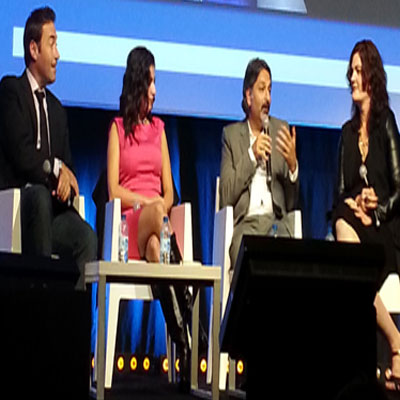
    The topic now is ‘Television is Dead’ but like the newspaper industry television will continue to grow, said Gupta, participating in a panel discussion on “Television is Dead – Long Live Television” on the second day of FICCI Frames 2014.


    Fundamentally, new mediums provide new avenues to carry content and to tell stories, Gupta said underlining that there will be greater opportunities with the digital medium opening up.


    IndiaCast Media Distribution Group CEO Anuj Gandhi said, “Fundamentally, we as a nation are a daily soap market. In India daily soaps sell.”


    IndiaCast distributes a multitude of content but in the global markets it has found demand for its serial 24, based on an American thriller series in a real-time format, and not for the Indian staple daily soaps. IndiaCast is mandated to drive domestic and international channel distribution, placement services and content syndication for TV18 Broadcast, Viacom18 and A+E Networks I TV18.


    Celestial Tiger Entertainment CEO Todd Miller echoed the prevalent view. He said, “It is still the living room that is the bulk of our business.” Celestial Tiger is a Hong Kong-based diversified media company that focuses on Asian consumers.


    TELEVISION TO TRANSFORM


    Television as a medium is expected to undergo a transformation from being a linear gadget to a multi-functional smart device. The reinvention of television will allow it to not only survive but blossom despite the onslaught of new mediums of content delivery.


    Effective use of the mobile as a means of content delivery is still a distant given the bandwidth constraints. “For me the biggest challenge is bandwidth. 3G and 4G will change consuming patterns. It will still be sports and news that will be largely consumed on mobiles,” said IndiaCast’s Gandhi.


    There have been so far no serious efforts at making differentiated content. With 3G and 4G, there would be real efforts at making meaningful content.


    Star India’s Gupta said Star Sports’ tie-up with Vodafone has shown there is deep desire among consumers to view content on mobile, even though not at huge costs but by spending smaller amounts.


     “Millions are coming in to check content on Vodafone. They may not want to spend in small amounts,” Gupta said.


    Consumers will seek more and more stories, different stories with the rise of the digital medium of content delivery.  The broadcasters as they now exist and the new means of content delivery and the new content creators would be collaborating rather than working at cross-purposes.


    IndiCast’s Gandhi reiterated that TV Everywhere in the digital era will still remain largely confined to shorter duration content.


    CHANGING DYNAMICS


    Almost 50 per cent of Olympics was watched on mobile. This suggests there is great opportunity to deliver what the consumer wants.


    “We can’t wish it away. Dynamics are changing fast. The distinction between the content creators and platforms is blurring,” said Gupta.


    Industry players expect disruptions to happen but are wary as history shows an outsider has most of the time been the disruptive force.


    New mediums will provide new platforms for content. The broadcasters may go downstream to business to consumer model and the distributors may move up the chain to be the content producers.


    In the US, the average time spent watching television is six hours. In India the average time spent is three hours and the new mediums are seeing an increase in the time spent watching television content.


    Celestial Tiger’s Miller said, “Most of the innovation that comes is from Telcos and DTH.”


    Media Partners Asia executive director Vivek Couto, anchoring the panel discussion, said, “Precedents have already been set for digital deals in the US.”


    Gupta, however, said the cap on prices of television content is hindering creation of quality content. “People are willing to spend. We have 2.5 million HD customers, which is likely to rise to 8 million by the end of this year,” he said.


    The whole ecosystem of story-telling is set for a transformation aided by improved delivery platforms and more creative content creation, and a dominant part of the viewership would still be on television.

  • IndiaCast vs DishTV: The final TDSAT order says it all

    IndiaCast vs DishTV: The final TDSAT order says it all

    MUMBAI: Last week, there was a lot of brouhaha about the IndiaCast vs DishTV round of fisticuffs on the DTH operator’s “on request channel service” and the former’s flurry of ads in newspapers and on TV. Both sides claimed victory, saying the Telecom Disputes Settlement Appellate Tribunal (TDSAT) had ruled in their favour. But there was no order in sight.


    Today the TDSAT posted it on its web site, with he verdict pronounced by its chairman Aftab Alam. And here are the highlights: 


    * The tribunal says that a legal objection cannot be taken to Dish TV’s arrangement of ‘on request channels’ which its counsel said would imply that from1 January 2014, 22 IndiaCast channels will be available only as a-la-carte out of its package. The deal with the other 16 channels shall come to an end on 31 March and from 1 April, they would also be treated similarly.


    * The Dish TV counsel also clarified that the scroll running on IndiaCast channels shall from now on only say that those channels will be available on a-la-carte basis and people shall be asked to communicate through the SMS number mentioned on it in case they want to subscribe to any of them.


    * IndiaCast counsel was requested to give an undertaking to the court that the ads published by its client against Dish TV shall stop. 


    And with these statements, the TDSAT disposed off both the petitions. 


    Who really won? It looks like each got its way, in some way, and the tribunal told them to cease firing.  But is it the last that we have seen of them bashing each other? Will they come together on the table and negotiate a deal? 


    After all, the seven million subs of Dish TV are not to be sniffed away. And the absence of channels such as Colors on Dish TV pack can lead to customer attrition. History has shown that very few Indian customers go for a-la-carte channels. This will continue to be the case unless customers miraculously have a change in their consumption habits. Both IndiaCast and Dish TV might hold out for a while but we at indiantelevision.com  are betting on the duo reaching a settlement – sooner, than later. 


    Click here for the full order

  • Content distribution revisited

    Content distribution revisited

    CANNES:  “In India, we produce so much content and it is up on the web in the next three and a half minutes,” began IndiaCast Group CEO Anuj Gandhi. He was speaking at a panel on ‘Access is the new ownership: A new look at content distribution’, on day two of MIPCOM.

    Moderated by Superhuman founder Louisa Heinrich, the session focussed on changing audience expectations and how consumers ought to get what they want to watch, where they want to watch, instead of what content distributors want to show. 

    “We need to ensure that quality content is produced and is also made available cross country,” Gandhi reinforced.

    Describing India’s internet story as ‘spinning faster than the globe’ Gandhi substantiated his statement with statistics. “India has 150 million internet users and ranks number three worldwide. 75 per cent of the population using internet is below the age of 15. Almost 86 per cent of Indian web users visit a social networking site, of which 80 million are on Facebook.”

    “That apart, there are 220 million mobile devices sold every year. There are 700 million mobile phone users and 40 million are 3G subscribers. India boasts of seven million tablets and 0.5 million are sold per month. Also, there are 50 million smart phones and three million sold every month,” he said.

    India is the second most important market for internet giants, Gandhi said, adding: “Consumption of video has shot up in India, with more and more people hooking on to YouTube to watch videos.”

    Gandhi further informed the audience that the rollout of the national telecom policy would target 175 million broadband users by 2017, up from the current 15 million. “100 hours of content is being uploaded to YouTube every minute. Also, the good news is that the data access charges will come down by 70 per cent.”

    Coming to IndiaCast, he said it is looking at ways to handle traditional media. “We are getting shackled by the traditional platform. We are losing out on opportunities. The traditional platforms have ring-fenced content rights. There are longer contracts and limited flexibility.

    So while the traditional platform is growing, it is also getting expensive and has capacity constraint. Content needs to travel. We need to exploit our rights to ensure that the content is made available everywhere,” said he.

    Gandhi foresees a five-fold increase in data consumption in the switch from 2G to 3G and another five times with that to 4G. “There will be a three times growth in the YouTube revenue in the next two years and two million paying mobile TV subscribers in the next two years. The number of people watching YouTube has already crossed 50 million and the channel is now looking at ways to monetize it,” he said.

    Asked about the role of the broadcaster in social media, Gandhi said: “Well, the key issue is to have a 360 degree marketing campaign and social media is one such platform. As a content distribution company, we need to analyse what people are saying about available content. We need to be innovative, be aware of what is happening in the markets, and also keep experimenting with windowing and stop playing safe.” 

  • Hiremath resigns from IndiaCast Media Distribution

    Hiremath resigns from IndiaCast Media Distribution

    MUMBAI: Distribution veteran Sanjev Hiremath has announced his resignation from his position as IndiaCast Media Distribution executive vice president. Indiacast media distribution, a strategic joint venture created by TV18 and Viacom18 was formed in May, last year, to create India‘s first multi-platform content asset monetization entity.

    Prior to Indiacast, Hiremath had started digital and new media business for Viacom18, TV18 and ETV channels. He also had a role to play in setting up one of the early cable TV initiatives.

    The veteran has been closely associated with the cable & satellite industry. He joined MTV networks as head ofnetwork development for India & South Asia, when it was launched in India in 1996. He was also instrumental in successful launch and distribution of several channels like Nickelodeon and VH1. Post the joint venture between Viacom and Network18 he oversaw the launch of Colors, Comedy Central and Sonic.

    Announcing Sanjev‘s departure, IndiaCast Group CEO Anuj Gandhi said, “Sanjev has admirably led our new media and digital business over last one year or so and has put us on a path of high growth trajectory. He is an old friend and colleague and we will miss his expertise and knowledge in the cable and satellite industry. As he now ventures out, I wish him all the success in all his future endeavors.”

    Hiremath, who resigned from his position in April, has not decided his further career plan. “I have not decided to join anywhere as yet. This industry has taught me a lot and so I have decided to continue with this industry itself. I want to work in both traditional and new media space,” said Hiremath while speaking to indiantelevision.com.


    His last day in office is 30 June. Where will he go next? Well, we will have to wait and watch.

  • IndiaCast signs multi-year agreement with Spuul

    IndiaCast signs multi-year agreement with Spuul

    MUMBAI: Over 60 percent current and upcoming Hindi and regional movies from the library of Viacom18 Motion Pictures, Colors and Eenadu Television will now be available for worldwide streaming on one of the most popular online streaming service for Indian movies and TV shows- Spuul; IndiaCast media distribution Pvt Ltd, the joint venture between TV18 and Viacom18 has signed a multi-year worldwide agreement with the online service.

    Starting this week, movie buffs can enjoy latest and evergreen blockbusters such as Inkaar, Oh My God and Jab We Met along with several regional hits such as Samanyudu, on their computers and mobile devices, with Spuul. Upcoming new releases in 2013 will also be available for worldwide streaming on Spuul as they are released in the market.

    Spuul CEO India Prakash Ramchandani says: "Spuul is proud to offer Viacom18‘s successful and award-winning films to our fast growing user base", commenting further, he says, "We are constantly working to expand our range of great Indian movies, in different languages, so that users always find something appealing to watch."

    Spuul was founded by seasoned entrepreneurs including Sudesh Iyer, founder of Sony Entertainment TV, and S. Mohan, founder of Palo Alto-based Accellion, buUuk and a number of other technology and venture companies and offers Specials that are pay-per-view movies and a Premium monthly subscription option.

    Online video is seeing a dramatic growth, with 3.7 million videos consumed every month in India according to comScore Inc. With such an attractive online viewership, Spuul offers the producers the required global reach creating new avenues for not just small budget movies but also new blockbusters.

    Speaking on the tie up with Spuul,IndiaCast group CEO Anuj Gandhi says: "The association between IndiaCast and Spuul acts as a value addition for both the parties. Watching movies online lets the viewer‘s exercise this option at their own convenience. Spuul has a huge base of film and TV enthusiasts who now with this association will be able to choose from IndiaCast‘s plethora of commercial and regional movies, enriching the viewer experience."

    Other IndiaCast movies on Spuul include Blood Money, Bitoo Boss, Golmaal Returns & Aiyya, regional titles dubbed in Hindi such as Vishwa – The He Man, Ek Sirfarosh – The Brave Heart and select Telegu films such as Simhadri and Me Sreyobhilashi – now available to stream immediately on all pcs, iOS and Android mobile devices.

  • IndiaCast assigns digital content management duties to Tangerine Digital

    IndiaCast assigns digital content management duties to Tangerine Digital

    MUMBAI: IndiaCast Media Distribution, the JV of TV18 and Viacom18 has appointed digital content management agency Tangerine Digital to manage the digital content of their flagship channels on digital platforms.

    IndiaCast is mandated to drive domestic and international channel distribution, placement services and content syndication for TV18, Viacom18, A&E Networks, TV18 and the Eenadu group. Tangerine will be responsible for curating and packaging all Video on Demand (VOD) content in order to aid discovery for IndiaCast while at the same time, ensuring stringent turnaround time for publishing of episodic videos.

    To take the relationship forward, Tangerine will bring its experience in content management and metadata services for the broadcast industry. They will not only assist IndiaCast in its endeavour to increase operational efficiencies to consolidate their distribution functions of both media houses but also support the distribution venture reach newer markets. Tangerine will capture, curate and publish episodic videos of six channels (including Colors TV) within 45 minutes of its premier on-air telecast in India. Italso will create individual episodic videos of shows like ‘Balika Vadhu‘ and ‘Uttaran‘ etc of Colors in addition to regional content from five of ETV‘s bouquet of channels.

    IndiaCast Group CEO Anuj Gandhi said, “Tangerine has been a very strong partner in growing our digital footprint. The team has


    always delivered successfully to our tight and aggressive schedules and has a rapid and effective response mechanism to meet dynamics of the digital environment. We are pleased to work with Tangerine and look forward to a long term fruitful association.


    Tangerine Digital CEO Kesavan Kanchi Kandadai said, “The media distribution industry is currently witnessing a phenomenal revolution in the way media content is circulated and consumed. Increased bandwidth and easy access of Internet through tablets and smartphones is fueling exponential growth of online video consumption, in turn unlocking new channels in the way content is created, distributed and monetised. We at Tangerine are entirely focused on this evolving digital environment and will continue to pioneer new and creative ways to engage, entertain and inform audiences. We believe we have the capabilities and the focused strategic approach and expertise to add value to the brand IndiaCast.”

    Tangerine Digital offers integrated services across content creation and management including sports content, repurposing videos for VoD platforms and creating theme based text and video content across e-commerce, web, mobile and social media platforms. Additionally, Tangerine also creates metadata for video and images and moderates user generated content to protect and de-risk the brands on the digital platforms and manages the YouTube channel of the client.
  • IndiaCast collaborates with iStream to carry its content online

    IndiaCast collaborates with iStream to carry its content online

    MUMBAI: IndiaCast, the joint venture between TV18 and Viacom18, has entered into a multi-year licensing deal with online TV service provider iStream.com.

    The deal will give iStream.com access to IndiaCast’s library of content from a bouquet of the network’s 20 channels for its streaming and video on demand services online and Internet-enabled devices including smart phones and tablets.

    It will also allow IndiaCast to broaden its audience base by distributing its content on the fast growing digital platform.

    iStream.com audience will now have access to content from Viacom 18’s leading entertainment channels like Colors and MTV, TV18’s leading news channels like CNN IBN, CNBC TV18, CNBC Awaaz, IBN 7 and IBN Lokmat, History 18 from A&E 18 and the entire bouquet of regional channels from the ETV channels.

    “This is one of the most important deals we have signed so far. IndiaCast brings to the table, some of the most-watched TV networks in the country, giving us access to one of the largest libraries of news, entertainment and regional content," said iStream.com founder & CEO Radhakrishnan Ramachandran.

    IndiaCast Group CEO Anuj Gandhi Added, “With the digital space becoming more main stream and evolving with the speed of every second, it is imperative for us to take our content from television to online and give access to our viewers across all platforms. We are excited to collaborate with iStream as we see a team that has the expertise and capabilities to ensure that our content reaches out to the right audiences in the right format, broadening our audience base.”

    iStream.com will have dedicated landing pages for each of these channels and will showcase some of the reality shows like Bigg Boss and India’s Got Talent, fiction shows like Balika Vadhu & Uttaran, popular youth shows like MTV Roadies and Splitsvilla.

    Besides, with ETV’s bouquet of channels, regional audiences can have their own share of fiction and reality shows, like the hugely popular Abhiskekam and the Rasoi show.

    iStream.com adds hundreds of new videos every day to its library of over 200,000 clips of news, shows and movies in five Indian languages from over 80 channels. It also streams 26 news channels live in English, Hindi, Tamil, Kannada, Telugu and Malayalam.