Tag: Anuj Gandhi

  • Broadcasters see positive future for TV in India

    Broadcasters see positive future for TV in India

    MUMBAI: The threat of OTT and integrated platform ecosystems like Android TV is at the peak. Its increasing penetration across all age groups may be a threat to the broadcasters in the coming time. But, it isn’t the case yet in India with 64 per cent TV home penetration and much room for growth. Data also shows that 86 per cent of Indian homes still watch TV on CRT sets and only 3 per cent are multi-TV homes. TV viewing in India has grown from 3 hr 14 min (2015) to 3 hr 36 min (2017) but it is still lower than US, which boasts of an ATS of 3 hr 54 min. This gives a clear indication that there is immense scope for TV and it will further rise.

    The FICCI Frames 2018 saw a session on ‘The future of TV in India’ with panellists Novi Digital CEO Ajit Mohan, Viacom18 COO Raj Nayak, Times Network MD & CEO MK Anand, Indiacast CEO Anuj Gandhi, EY Partner Ashish Pherwani, BARC CEO Partho Dasgupta and industry veteran Amit Khanna. The panel was moderated by Provocateur Advisory principal Paritosh Joshi.

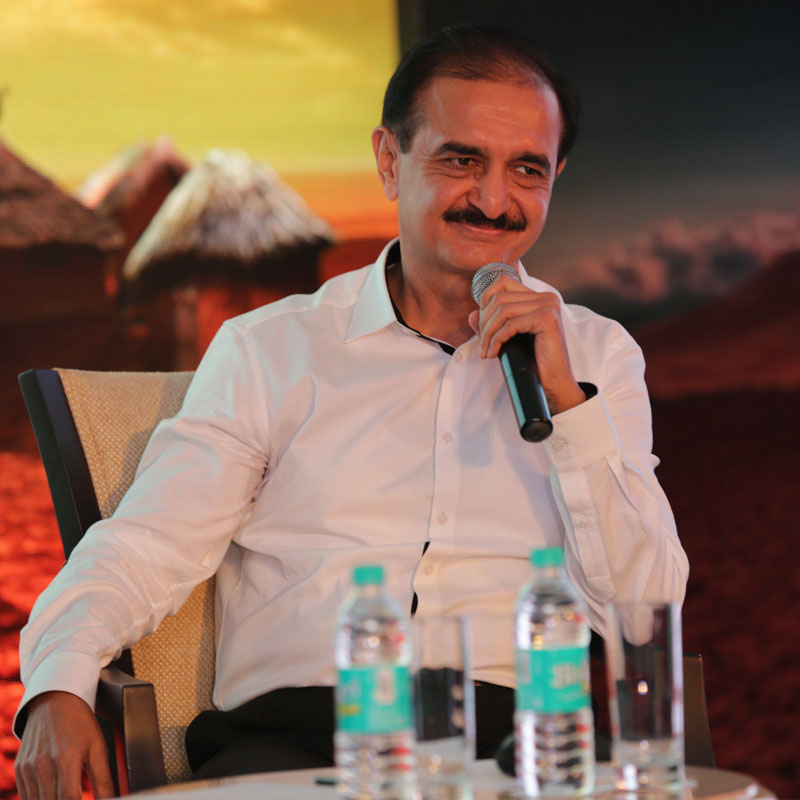
    Gandhi highlighted that we have the pulse of what audience wants which today is reality. Whether it’s a long form or short form content, people watch it, regardless of screen size or type. He said that people will consume TV content anywhere they can.

    Nayak believes that the future of TV is bright. He said that if distribution is king, content is queen. “The myth has been broken that the youth don’t watch TV and people watch short formats. Even in the US, people above 90 years of age watch TV content,” he said. He further added that linear watching on Jio TV is exploding with 3 crore viewers per month.

    According to Khanna, the average time spent on digital has grown with an hour and twenty minutes on phone especially in urban cities. When it comes to television, more that 70 per cent of viewership comes from movies and general entertainment. Pherwani said that 40 per cent of the time spent is on the mobile phone.

    Anand said that better technology, bandwidth and campaigning had eased the worry of broadcasters. He added that it was much easier to start a video stream but monetisation had not been easy.

    Broadcasters seem optimistic about the future of television, despite the onslaught posed by digital media. At least in India, the television will reign houses and minds of people for some time to come.

    Also Read:

    Ficci Frames 2018: Smriti Irani for highlighting M&E’s economic importance

    New initiatives at FICCI Frames 2018

  • Viacom18 ditches FTA in UK, now entirely pay

    Viacom18 ditches FTA in UK, now entirely pay

    MUMBAI: With the launch of its two channels, MTV Beats and Colors Rishtey, on Virgin Media Viacom18 has transitioned from free-to-air (FTA) to entirely paid platform. Viacom18’s channels will now only be available with a subscription on Sky and Virgin Media.

    Talking about leaving the Freeview platform, IndiaCast Media Distribution group CEO Anuj Gandhi says, “We are currently steering our business in a new direction in Europe and have decided to go pay and as a result, current channels will no longer be available on any free to air mode but will continue to be available on paid platforms.”

    The company gained significant viewership via Freeview, which reaches 11 million homes untapped by pay TV. Freeview contributed to 10 percent of its eyeballs in the UK. Rishtey and Colors at times received as high as 41 percent viewership contribution from it.

    Viacom18 channels on Virgin Media are in the mix pack which reaches to over 2.7 million subscribers. The growth is expected to be in line with Virgin’s growth forecasts.

    Viacom18 has a mix content strategy for its UK consumers. Curated programmes from India make up the bulk of its content while a tiny part is local programming. “Viacom18 is exploring further investments in local programming which will happen in the next fiscal, ” he reveals.

    On the advertising front, 90 percent comes from UK based companies. It has three sets of distinct advertisers. First – the local ethnic home-grown businesses, second – the mainstream multinationals and third is Indian companies that export to NRI audiences.

    Advertisers are clamoring to get airtime especially during Big Boss. “As a matter of fact, all our channels currently are utilising 100 percent of the available inventory and we are not even in our peak season, he adds.

    The buzz-creating idea of Viacom18 is to make sense to three categories of people living in UK – the first generation, their children/youth who have less exposure of content being produced in India as they have a variety of options to choose from and last one being people who have moved here in last few years as an intra company transfer or project based.

    While keeping the three categories in mind, Gandhi says that sometimes even small trade or local event associations give a higher ROI as compared to a high profile above-the-line campaign.

    Selecting the right marketing mix is crucial when you are in a niche market. That said, even the language used for communication will ensure success or failure.

    Viacom 18 partnered with Virgin Media in April 2011 to launch its General Entertainment Channel, Colors, on the cable platform. Colors has been available on Sky since January 2010. When launched, Colors was included in Virgin Media’s new Asian Mela bundle which comprised 11 TV channels, including ARY Digital, B4U Movies, B4U Music, SET Asia, MAX, Star Plus, Star News, Zee Cinema, Zee Punjabi, Zee TV and Colors TV, along with popular Asian radio station Sunrise Radio and priced at £11 a month.

  • Indiacast rejigs top management to streamline expansion plans

    Indiacast rejigs top management to streamline expansion plans

    MUMBAI: IndiaCast, the domestic distribution, international and digital business arm of Viacom18 and TV18, has restructured its international team with a sharper focus on bolstering business. The move aims at consolidating operational efficiency and bringing in synergies.

    The restructuring exercise is aimed at making the organisation future-ready as it enters its next growth phase. With this move, IndiaCast has emphasised its focus on alternative revenue sources such as digital and live events in its international business.

    The role of Govind Shahi has been expanded as the business head for Europe, Americas, APAC and Outbound Sales. The functional heads of the above-mentioned regions will now report to him directly.

    Sachin Gokhale will now assume the role of heading the corporate strategy, operations for international business, and will continue to oversee the Middle East and Africa region.

    Debkumar Dasgupta continues to head the syndication, new media / digital licensing businesses. In addition to the same, he will also oversee the south Asia linear business.

    All the international business heads will report into IndiaCast Group CEO Anuj Gandhi.

    Gandhi said, “We are at the cusp of a big change in our industry with alternate sources of growth emerging in terms of the technology and business models globally. Keeping in mind the ever-changing landscape, it is important for us to have a structure which is agile, empowers business heads to challenge the given and capitalise on opportunities.”

  • DAS: MSOs, LCOs give low figure of STB seeding, official sources admit it’s under 80%

    DAS: MSOs, LCOs give low figure of STB seeding, official sources admit it’s under 80%

    NEW DELHI / MUMBAI: Even as the nation has stepped into an era of full cable television digitisation, there are mixed reports coming in from around the country about the situation on the ground.

    While the government had issued a warning to all broadcasters, multi-system and local cable operators about action if they fail to switch off analogue, there are reports from almost every region that Phase IV covering rural India has still a long way to go before full implementation of digital addressable system happens.

    The Government had, in mid-January, told the Task Force that while the seeding of set-top boxes in Phase III was almost complete, the figure for Phase IV was 32 per cent. Minister of state for information and broadcasting Rajyavardhan Rathore told the Parliament in mid-March that around 67 per cent seeding of set-top boxes had been achieved in Phase III and IV while it was total in the first two phases, minus Tamil Nadu.

    A ministry source told indiantelevision.com that the figure had already crossed around 75 per cent in the final two phases. Not wanting to be named, the source ruled out any more grace period, and said that several MSOs and LCOs act only after a final warning, and therefore the chances were that the figure may be higher than those given by him.

    However, since there is no plan to help the poor acquire STBs, it is unlikely that the figure would be much higher.

    In Tamil Nadu, where there is a court stay in operation since Phase I, the state government run Arasu Cable TV Corporation (TACTV) warned MSOs and LCOs against switching off analogue signals anywhere in the state after 31 March 2017.

    Pointing out that the centre had refused to grant DAS licence to TACTV because recommendations of the Telecom Regulatory Authority of India do not permit state-owned TV or distribution networks, an MSO told indiantelevision.com that the case had been gong on for so many years primarily because the Central Government was not clearabout its stand and keeps taking adjournments.

    Meanwhile, in neighbouring Telangana and Andhra Pradesh, MSOs and LCOs said that around 40 per cent of Phase III had still to be fully seeded and the figure was bound to be higher in Phase IV areas. One MSO not wanting to be named said that there was an area in Hyderabad dominated by a particular community where even law had limited reach where analogue signals continued unchecked. “Whatever had been fixed a long time ago, remains,” the MSO said.

    Interestingly, a consumer body Citizens Welfare Society had moved the High Court for the twin states saying that, while the government had made it mandatory that DAS signals should be implemented, there was nothing in law to say that analogue has to be switched off and pleading that the two should be allowed to co-exist till people take to DAS voluntarily. Though the case was not admitted, the bench of the Court heard the viewpoints of several MSOs, LCOs, and consumer bodies over twenty hours for the few days and reserved its orders on 20 February 2017. This order is still awaited keenly by consumers as well as MSOs and LCOs.

    Siti Network Limited (Essel Group) executive director & CEO V D Wadhwa said that analogue signals had been switched off in the East Zone. Network 18/Viacom18 Group distributor Indiacast Media Group CEO (and Jio Media head – content acquisition/ alliances) Anuj Gandhi also said that analogue had been switched off in compliance with the deadline set by the Government. However, sources said that completely shutting off analogue signals in other zones may be a challenge.

    Meanwhile, an MSO in Assam said that while digitisation was complete in Guwahati, it had not even covered fifty per cent of rural Assam. In Madhya Pradesh and Chhatisgarh, MSOs and LCOs interviewed said around 40 per cent seeding had taken place in Phase IV but pointed out that the confusion because of the tariff orders had resulted in direct-go-home players targeting consumers.

    Reports from Uttar Pradesh and Uttarakhand said that while the broadcasters had switched off digital signals in most areas of Phase IV, tthis may trigger some protests over the next few days from consumers as the figure of seeding of set top boxes was very low. The DTH players were also active in these areas.

    Maharashtra Cable Operators Federation sources told www.indiantelevision.com that the broadcasters had switched off analogue signals, but rural Maharashtra which faced extreme poverty was still largely uncovered by DAS STBs. However, he said he would have a more tangible report over the next two days.

    Cable Operators Association of Gujarat president Pramod Pandya said that 80-90 per cent of the state had gone digital, but some broadcasters were still supplying analogue signals in certain areas. Meanwhile, it is learnt that Reliance Jio is planning to bring in cheaper STBs soon, though these may not have many fancy features.

    Phase I covering the Metro cities of Delhi, Mumbai, Kolkata and Chennai was originally slated for 30 June 2012 and modified to 31 October 2012. The second phase covering 38 cities (with population more than one million) was slated for 31 March 2013.

    The third Phase was to cover all other urban areas (Municipal Corporations/ Municipalities) and was originally slated for 30 September 2014 and modified to 31 December 2015 which was extended to 31 January 2017 and the final phase to 31 March 2017.

  • Free Colors HD on Sky in UK from 14 Feb

    MUMBAI: IndiaCast, a joint venture of Viacom18 and TV18, announced the launch of the high-definition (HD) feed for Colors UK on leading DTH platform, Sky. Available on the same EPG number as the SD feed (No. 786), Colors UK HD will adapt to the HD set top box and will be available to viewers starting 14 February 2017.

    Launched in the UK in January 2010, Colors UK SD feed offers variety content from the Colors bouquet of offerings. Its HD feed, to be available to Sky subscribers across Europe, will feature shows including Devanshi, Dil Se Dil Tak, Ek Shringaar…Swabhimaan, Shakti…Astitva Ke Ehsaas Kii, Udann, Karmphal Data Shani, and many more. The channel will also feature well-appreciated weekend content including Naagin 2, Rising Star, upcoming proposition Chhote Miyan, and blockbuster films.

    Commenting on launch, Viacom18 Group CEO Sudhanshu Vats said, “We started out by increasing the footprint of our content offering, across general entertainment and Indian movies, through our channels in the UK. We now want to dial up the experience for our discerning viewers and the launch of Colors HD is a step in that direction.”

    Speaking about this development, Viacom18 CEO – Hindi entertainment Raj Nayak said, “Colors has been the leading entertainment provider to the audience not only in India, but also in international markets. We continue to push the envelope as far as our offering to the South Asian diaspora is concerned. The announcement of the launch of the HD feed for Colors UK will go a long way in enhancing the viewing experience, bringing the audience a slice of home, with better visual clarity, in the comforts of their living rooms.”

    Commenting on the launch, IndiaCast Group CEO Anuj Gandhi said, “Colors UK has been an unprecedented audience entertainer which has provided diverse options for the South Asian audience for over seven years. We are committed towards showcasing top-notch content on our channels and are glad to join hands with Sky to bring HD quality content to viewers in the region, thereby making Colors UK HD the preferred entertainment destination for the audience. We are also in talks with other service providers and distributors in Europe to launch our HD service.”

    Adding further, IndiaCast SVP & business head – UK Govind Shahi said, “As one of the top entertainment brand for the South Asian diaspora, Colors is constantly innovating and this free offering of Colors HD on Sky works on the smart swap technology which enables the HD feed to be available on the same EPG as before. To ensure that no viewer is left out, we continue to provide the SD feed as well. This launch of Colors in HD coincides with the launch of all-new exciting shows as well as the new 9-10pm slot.

    To promote the Colors UK HD feed, IndiaCast has devised a high-intensity marketing campaign with “We are coming closer to you” as its core messaging. The campaign will be delivered via cross-network promotions on Rishtey Cineplex and Rishtey Europe as well as spots across radio stations. In terms of off-air promotions, Colors UK HD communique will be highlighted through innovative print and outdoor mediums.

  • ‘Broadcasters could consider different pricing for rural-urban subscribers’

    ‘Broadcasters could consider different pricing for rural-urban subscribers’

    When DEN Networks promoter Sameer Manchanda set up the national MSO in 2007, one of the key professionals on his team, which was led by CEO Anuj Gandhi, was the cable TV veteran S.N. Sharma. The trio quickly ramped up the company and took it to national level status.  Gandhi then moved on in 2010 to join Network18. And, Sharma who was the president (operations), was promoted as the CEO a year or so later.

    He continued with the company, expanding it nationally, and seeing it through the first two phases of digitization before departing in 2015 to get on board India’s biggest and most funded  startup  — the Mukesh Ambani-backed Reliance Jio.  A former McKinsey professional Pradeep Parameswaran was roped in to lead the company in his place.

    Sharma, meanwhile, at Jio, worked on planning and building the team for company’s foray into cable TV along with another cable TV veteran K. Jayaraman.

    Then, in July 2016, Sharma made a sudden about-turn and decided to return to DEN Networks, a move that raised the eyebrows of many but cheered many in the trade. For he is known for his relationships and his deep understanding of how cable TV should be run in the Indian context.

    Sharma was one of the key notes at indiantelevision.com’s Eleventh India Digital Operators Summit 2016 which concluded over the weekend at the Leela Hotel in south Goa. He had a one-on-one conversation with Indiantelevision.com Founder, CEO  & Editor in chief Anil Wanvari. Read on to get some insights into what is going on at DEN and with Sharma. Excerpts from the conversation:

    Why did you leave DEN in the first case, join Reliance and then why did you choose to come back?

    Having been into the cable industry for over 20 plus years, I thought, let me do something else. And, that’s why I moved to Reliance. Basically, I wanted to roll out fibre to the home (FTTH) over there. It would have been a great experience and learning (I thought). And it was, indeed. I learnt a lot in the short span of one and a half year. It was a wonderful learning that I brought in to my personality.

    But then, there was a call from my previous employer DEN, my friend Sameer.  I am one of the co-founders of DEN Network. And, I requested my employers at Reliance if I could leave. And they were kind enough to let me go back. It was more of an emotional decision than a professional one. All my learnings that I have had  at Reliance, I am
    sure, will help me learn to drive DEN in a better manner,in a positive direction in time to come.

    What are the challenges you are facing?

    The challenge as we all know is primarily monetization.  We started seeding boxes in 2010, now it is 2016. DAS came in 2012. And “hote hote” (by and by) it became 2013. Phase I and II happened quickly.

    There is a lag in monetization. Of course, we all can understand and you will appreciate that an industry which evolved since 1990, almost 30 year old industry, it  takes time for things to change. And, we took tiny, baby steps to monetize it.  But now, the time has come the boxes seeded in 2010 have almost lived their life and new technology is coming in. So my prime task is to see to it that we augment the process of monetization.

    The other challenge that I face immediately which I am working very aggressively on is to reduce the cost. We all know that Phase III digitization got into  a confused state, with boxes having got seeded, and the courts intervening.  Analogue signal has also been taken away from many of us. The MIB says 93 per cent  of digitization has happened. So the monetization process also has to start. But, in the bargain, we have already incurred some expenditure.  And unless I start recovering my revenue, the journey will be difficult.

    This time, in a short span of one and a half month, I addressed my cable TV partners, my business partners and my associates in a very transparent manner. We had a discussion – a whole day discussion wherein I shared with them my experiences with the telco. I shared with them the upcoming technology. I told them there is a change. The technology is not going to spare them.  We all used to think that last mile …last mile. But, my subscriber is not bound by last mile. My biggest threat today is the handset that I carry. The viewing habits are changing. Technology is bringing other alternatives. For the same viewer  who used to be watching their services. It is high time they realized it and accepted this change. And, they all agreed. I was surprised. It was a very open, frank and to-the-point discussion. I told them if we are willing to change, if we are willing to adopt, life will be there for us, otherwise the journey is going to be difficult. Everybody is cooperating. We hope to see a very good upside as far as collections are concerned.

    Third is making the LCOs, our partners realize the pains we are going through.  And, make them see the technology.

    And fourth is we have started conducting sessions with cable TV operator to sensitise them with the consumers. Like the regulator also said: Don’t force things on the consumer. He is in no mood. So the approach has to be friendlier than earlier. We have to change the face of our representative visiting the home of the subscriber. The
    presentation of our package has got lost.  We brought in a digital set-top box, we invested in that. But, we forgot in the process that we had not changed our face to the consumer. The cable TV operators accepted that we need to bring in a lot of ethics and discipline in that part.  You will see our representatives wearing uniforms. Uniform could be ours or the LCO’s.  It has to be in a presentable form. Today, if you are visited by a courier boy, the way he  is approaching is different.

    I am sure the cable TV operators will comply.

    Where are you reducing costs?

    Our priority early on was to penetrate the market, you increase your reach and when you penetrate certain areas, those can be reached through fibre or through links from telcos. After some time, you realize that you have spent an X amount in reaching an area and you have seeded 50 boxes. It does not make sense to you. So, you need to make a quick decision. You retract, you save money on that. Or you go to another MSO who is reaching the same area  and he has done it using a different pipe. And, he has 50,000 subscribers. So, I would tell him, why don’t we share the pipe. That process (of sharing)  has already started.  Then, we have started sharing the infrastructure also in another manner, in terms of content. If a competitor has a pipe serving more subscribers in the same area than I have less or vice-versa, I am open to sharing the pipe with the competitor. This is helping reduce costs. We have started sharing local content with cable operators. The cable operator has local content with him. So, instead of spending separately on the same content, we have started sharing that content too. Then, there are usual steps — reduction of manpower, to hire on a temporary basis, and cutting down the day-to-day expenses.

    Where are you getting your maximum margins?

    You see we have largely been a phase III player.  We have seeded 5.5 million in phase III, and 3-4 million are to go in phase IV. Of the 13 million subscribers, we have seeded 9-9.5 million. My upside will come from revenues of phase III boxes, which were yielding Rs 10-20. We have already crossed a milestone of Rs 40- 45 revenues, By December-end, it will touch  Rs 75 plus — that is a 45 per cent growth. Phase I is likely to give us 15-20 per cent.

    Who is going to get you this money – LCOs or the customer?

    You see the mood is set.  In the exercise, baby steps were taken to augment phase I revenues. It took us four years.  Phase III customer is also aware.  All studies and research show us is that the  buyingcapacity is there,  paying capacity is there too. HD is another example.  Around 70 per cent of TVs are HDTVs going into to Phase III
    areas. As it is for me to perform and deliver, I need my costs to be under control.  On the whole, we have also become very cost-conscious. We want our pie of the revenue.

    The cable sector has been bashed red and blue and cable TV bottomlines are stained with red ink? When will it turn around?

    You will see by Q3 end there should be an upside.

    You are very strong up north. Are you strengthening that or are you expanding into newer territories?

    As of now, my focus is to strengthen where we are. I have 13 million subscribers, I am happy to be limited where we are. As we start seeding boxes, it might go to 15 million as we deliver. I want to have a positive bottomline. I want a fair share of revenue. I want to move towards an era where sharing of revenues has be settled. As of now, there is always a dilemma, am I to stand by the TRAI that cable operators should get 35 per cent of revenue. The fact of the matter is that today we are receiving 35 per cent, and he is getting 65 per cent.

    I am very much focused that let’s first  set it right. It will take time and over few months. But, I see that over the next 12 months, this will move towards 50:50. And then, as we move forward, and add more values in the system, I am sure the operator will also get to earn  more through us if he wants to stay with us and be part of the journey.  If he says, he does not want to do broadband with, that’s his choice. If that arises, then we might go direct or we have leave that with him. I am very focused that instead of spreading thinly, focus where you, monetize it well. Settle a good business model. A good business case.  Business will follow.

    LCOs’ insecurity is less than earlier. Your comments.

    You can’t help it. Even MSOs. Nobody is secure. Times are changing. We have to adapt. You can’t ignore the technolgy. If I don’t change, just because my fellow LCO has not, and even I don’t, that’s a folly. Today, in  a matter of time, we started broadband. We have tested a broadband formula. We have close to 125,00 subscribers. We did this with a focused mind in Delhi and Kanpur. To test how the technology behaved, how the arithmetic works here. Now we find that, with 15-17 per cent of penetration, the project is breaking even. Now, anything added into it, is your upside.  The LCOs who are willing to work with us are very happy as they march around with us. And also, there is a learnin that the normal consumer is consuming 40 GB of internet at a speed of 10 mbps at a price of Rs 800. Broadband consumption is rising fast, 5 GB has gone to 10, and 20 GB has gone to 40 GB. Putting in everything into perspective, the cost is Rs 10 per GB.  Next year, I am sure it will be 100GB. And the speed will touch 50 MBPs. In such a scenario, if  I don’t move, somebody else will move.

    You must be happy Goldman Sachs invested but it was a discount to its earlier price, actually a deep discount What’s the way forward on the investment?

    It’s a subjective analysis . But, you should say that this proves that there is strength in the business model of DEN.

    On broadband there will be an increased investment going in. And besides broadband, we are incorporating OTT and value added services.

    So what’s the way forward on the pay TV market, with 31 December coming up?

    We are looking at it wholly. The boxes are going at a good speed. We are not really pushing. My focus is on getting Phase I, II III right. Once that business model is set in place, everything will also.  It is a matter of time, the  pull should come from the consumer, from the LCO. If he is willing to work with me. In the earlier case, in Phase I and II, we were subsiding the boxes. Today, it is a pure business case. This my product. You want to do business with me, please do.

    How can broadcasters assist the process of digitization till the tariff order comes out?

    There was a time when broadcasters used to have dual pricing policy. For rural, it was lower, and for urban, higher.  Now, that we have invested and are investing, all of a sudden  they have foregone  that policy of theirs, which they were following in analogue, and still they are following in some places even today. The moment we seed STBs in phase III, they start charging digital rates. I would urge broadcasters too relook at this.
  • ‘Broadcasters could consider different pricing for rural-urban subscribers’

    ‘Broadcasters could consider different pricing for rural-urban subscribers’

    When DEN Networks promoter Sameer Manchanda set up the national MSO in 2007, one of the key professionals on his team, which was led by CEO Anuj Gandhi, was the cable TV veteran S.N. Sharma. The trio quickly ramped up the company and took it to national level status.  Gandhi then moved on in 2010 to join Network18. And, Sharma who was the president (operations), was promoted as the CEO a year or so later.

    He continued with the company, expanding it nationally, and seeing it through the first two phases of digitization before departing in 2015 to get on board India’s biggest and most funded  startup  — the Mukesh Ambani-backed Reliance Jio.  A former McKinsey professional Pradeep Parameswaran was roped in to lead the company in his place.

    Sharma, meanwhile, at Jio, worked on planning and building the team for company’s foray into cable TV along with another cable TV veteran K. Jayaraman.

    Then, in July 2016, Sharma made a sudden about-turn and decided to return to DEN Networks, a move that raised the eyebrows of many but cheered many in the trade. For he is known for his relationships and his deep understanding of how cable TV should be run in the Indian context.

    Sharma was one of the key notes at indiantelevision.com’s Eleventh India Digital Operators Summit 2016 which concluded over the weekend at the Leela Hotel in south Goa. He had a one-on-one conversation with Indiantelevision.com Founder, CEO  & Editor in chief Anil Wanvari. Read on to get some insights into what is going on at DEN and with Sharma. Excerpts from the conversation:

    Why did you leave DEN in the first case, join Reliance and then why did you choose to come back?

    Having been into the cable industry for over 20 plus years, I thought, let me do something else. And, that’s why I moved to Reliance. Basically, I wanted to roll out fibre to the home (FTTH) over there. It would have been a great experience and learning (I thought). And it was, indeed. I learnt a lot in the short span of one and a half year. It was a wonderful learning that I brought in to my personality.

    But then, there was a call from my previous employer DEN, my friend Sameer.  I am one of the co-founders of DEN Network. And, I requested my employers at Reliance if I could leave. And they were kind enough to let me go back. It was more of an emotional decision than a professional one. All my learnings that I have had  at Reliance, I am
    sure, will help me learn to drive DEN in a better manner,in a positive direction in time to come.

    What are the challenges you are facing?

    The challenge as we all know is primarily monetization.  We started seeding boxes in 2010, now it is 2016. DAS came in 2012. And “hote hote” (by and by) it became 2013. Phase I and II happened quickly.

    There is a lag in monetization. Of course, we all can understand and you will appreciate that an industry which evolved since 1990, almost 30 year old industry, it  takes time for things to change. And, we took tiny, baby steps to monetize it.  But now, the time has come the boxes seeded in 2010 have almost lived their life and new technology is coming in. So my prime task is to see to it that we augment the process of monetization.

    The other challenge that I face immediately which I am working very aggressively on is to reduce the cost. We all know that Phase III digitization got into  a confused state, with boxes having got seeded, and the courts intervening.  Analogue signal has also been taken away from many of us. The MIB says 93 per cent  of digitization has happened. So the monetization process also has to start. But, in the bargain, we have already incurred some expenditure.  And unless I start recovering my revenue, the journey will be difficult.

    This time, in a short span of one and a half month, I addressed my cable TV partners, my business partners and my associates in a very transparent manner. We had a discussion – a whole day discussion wherein I shared with them my experiences with the telco. I shared with them the upcoming technology. I told them there is a change. The technology is not going to spare them.  We all used to think that last mile …last mile. But, my subscriber is not bound by last mile. My biggest threat today is the handset that I carry. The viewing habits are changing. Technology is bringing other alternatives. For the same viewer  who used to be watching their services. It is high time they realized it and accepted this change. And, they all agreed. I was surprised. It was a very open, frank and to-the-point discussion. I told them if we are willing to change, if we are willing to adopt, life will be there for us, otherwise the journey is going to be difficult. Everybody is cooperating. We hope to see a very good upside as far as collections are concerned.

    Third is making the LCOs, our partners realize the pains we are going through.  And, make them see the technology.

    And fourth is we have started conducting sessions with cable TV operator to sensitise them with the consumers. Like the regulator also said: Don’t force things on the consumer. He is in no mood. So the approach has to be friendlier than earlier. We have to change the face of our representative visiting the home of the subscriber. The
    presentation of our package has got lost.  We brought in a digital set-top box, we invested in that. But, we forgot in the process that we had not changed our face to the consumer. The cable TV operators accepted that we need to bring in a lot of ethics and discipline in that part.  You will see our representatives wearing uniforms. Uniform could be ours or the LCO’s.  It has to be in a presentable form. Today, if you are visited by a courier boy, the way he  is approaching is different.

    I am sure the cable TV operators will comply.

    Where are you reducing costs?

    Our priority early on was to penetrate the market, you increase your reach and when you penetrate certain areas, those can be reached through fibre or through links from telcos. After some time, you realize that you have spent an X amount in reaching an area and you have seeded 50 boxes. It does not make sense to you. So, you need to make a quick decision. You retract, you save money on that. Or you go to another MSO who is reaching the same area  and he has done it using a different pipe. And, he has 50,000 subscribers. So, I would tell him, why don’t we share the pipe. That process (of sharing)  has already started.  Then, we have started sharing the infrastructure also in another manner, in terms of content. If a competitor has a pipe serving more subscribers in the same area than I have less or vice-versa, I am open to sharing the pipe with the competitor. This is helping reduce costs. We have started sharing local content with cable operators. The cable operator has local content with him. So, instead of spending separately on the same content, we have started sharing that content too. Then, there are usual steps — reduction of manpower, to hire on a temporary basis, and cutting down the day-to-day expenses.

    Where are you getting your maximum margins?

    You see we have largely been a phase III player.  We have seeded 5.5 million in phase III, and 3-4 million are to go in phase IV. Of the 13 million subscribers, we have seeded 9-9.5 million. My upside will come from revenues of phase III boxes, which were yielding Rs 10-20. We have already crossed a milestone of Rs 40- 45 revenues, By December-end, it will touch  Rs 75 plus — that is a 45 per cent growth. Phase I is likely to give us 15-20 per cent.

    Who is going to get you this money – LCOs or the customer?

    You see the mood is set.  In the exercise, baby steps were taken to augment phase I revenues. It took us four years.  Phase III customer is also aware.  All studies and research show us is that the  buyingcapacity is there,  paying capacity is there too. HD is another example.  Around 70 per cent of TVs are HDTVs going into to Phase III
    areas. As it is for me to perform and deliver, I need my costs to be under control.  On the whole, we have also become very cost-conscious. We want our pie of the revenue.

    The cable sector has been bashed red and blue and cable TV bottomlines are stained with red ink? When will it turn around?

    You will see by Q3 end there should be an upside.

    You are very strong up north. Are you strengthening that or are you expanding into newer territories?

    As of now, my focus is to strengthen where we are. I have 13 million subscribers, I am happy to be limited where we are. As we start seeding boxes, it might go to 15 million as we deliver. I want to have a positive bottomline. I want a fair share of revenue. I want to move towards an era where sharing of revenues has be settled. As of now, there is always a dilemma, am I to stand by the TRAI that cable operators should get 35 per cent of revenue. The fact of the matter is that today we are receiving 35 per cent, and he is getting 65 per cent.

    I am very much focused that let’s first  set it right. It will take time and over few months. But, I see that over the next 12 months, this will move towards 50:50. And then, as we move forward, and add more values in the system, I am sure the operator will also get to earn  more through us if he wants to stay with us and be part of the journey.  If he says, he does not want to do broadband with, that’s his choice. If that arises, then we might go direct or we have leave that with him. I am very focused that instead of spreading thinly, focus where you, monetize it well. Settle a good business model. A good business case.  Business will follow.

    LCOs’ insecurity is less than earlier. Your comments.

    You can’t help it. Even MSOs. Nobody is secure. Times are changing. We have to adapt. You can’t ignore the technolgy. If I don’t change, just because my fellow LCO has not, and even I don’t, that’s a folly. Today, in  a matter of time, we started broadband. We have tested a broadband formula. We have close to 125,00 subscribers. We did this with a focused mind in Delhi and Kanpur. To test how the technology behaved, how the arithmetic works here. Now we find that, with 15-17 per cent of penetration, the project is breaking even. Now, anything added into it, is your upside.  The LCOs who are willing to work with us are very happy as they march around with us. And also, there is a learnin that the normal consumer is consuming 40 GB of internet at a speed of 10 mbps at a price of Rs 800. Broadband consumption is rising fast, 5 GB has gone to 10, and 20 GB has gone to 40 GB. Putting in everything into perspective, the cost is Rs 10 per GB.  Next year, I am sure it will be 100GB. And the speed will touch 50 MBPs. In such a scenario, if  I don’t move, somebody else will move.

    You must be happy Goldman Sachs invested but it was a discount to its earlier price, actually a deep discount What’s the way forward on the investment?

    It’s a subjective analysis . But, you should say that this proves that there is strength in the business model of DEN.

    On broadband there will be an increased investment going in. And besides broadband, we are incorporating OTT and value added services.

    So what’s the way forward on the pay TV market, with 31 December coming up?

    We are looking at it wholly. The boxes are going at a good speed. We are not really pushing. My focus is on getting Phase I, II III right. Once that business model is set in place, everything will also.  It is a matter of time, the  pull should come from the consumer, from the LCO. If he is willing to work with me. In the earlier case, in Phase I and II, we were subsiding the boxes. Today, it is a pure business case. This my product. You want to do business with me, please do.

    How can broadcasters assist the process of digitization till the tariff order comes out?

    There was a time when broadcasters used to have dual pricing policy. For rural, it was lower, and for urban, higher.  Now, that we have invested and are investing, all of a sudden  they have foregone  that policy of theirs, which they were following in analogue, and still they are following in some places even today. The moment we seed STBs in phase III, they start charging digital rates. I would urge broadcasters too relook at this.
  • Viacom18’s Rishtey Cineplex now in Europe, N America

    Viacom18’s Rishtey Cineplex now in Europe, N America

    MUMBAI: Viacom18 has announced its plans to launch its Hindi movie channel, Rishtey Cineplex’ in the international markets.

    Kicking off with high-impact launches in Europe and North America (US and Canada), the channel is an extension of the well-established Rishtey brand, and will be targeted at global film enthusiasts.

    To be launched in Europe on 29 September and in North America in October, Rishtey Cineplex will appeal to the sensibilities of global film enthusiasts with its blockbuster content.

    The channel will showcase the best from Viacom18’s wide library of films as well as newly acquired movies from across genres. The channel will air audience favourites like, Bajirao Mastani, Airlift, Pyaar Ka Punchnama 2, Kapoor and Sons, Ki & Ka and upcoming films like, Force 2, Ae Dil Hai Mushkil amongst others.

    Viacom18 group CEO Sudhanshu Vats said, “The Indian film industry has grown in terms of both reach and revenue and is now the largest producer of movies in the world. Our cinema, led by Bollywood movies, continues to increase its pull with the overseas Indian diaspora. Rishtey Cineplex, Viacom18’s first premium Hindi movie channel, has curated an impressive repertoire of Indian titles. It is our endeavour, to take Indian cinema, as a holistic entertainment package, to our loyal viewers in Europe and North America; allowing us to further strengthen our presence in these regions.”

    Viacom18 Hindi mass entertainment, CEO Raj Nayak said, “Rishtey Cineplex has every ingredient that a movie buff would want to be engaged with. Global audiences today celebrate Indian films, and with the channel’s launch in Europe and North America, we are bringing this celebration to their living rooms. Indian films now have a universal appeal, as a result of which they taste tremendous success in International markets. The trend in consumption has been extremely encouraging and we are certain that the viewers will lap-up our content offering with great zeal.”

    Along with films, the channel will showcase many interesting concepts including vignettes from various Film Festivals, behind-the-scenes trivia and coverage of exclusive Red Carpet extravaganzas amongst others.

    IndiaCast gorup CEO Anuj Gandhi said, “After Colors and Rishtey, we now introduce our brand new offering, Rishtey Cineplex for the viewers in Europe and North America. The Indian and the South Asian expatriate population is growing across the world, and so is their love for Indian films. Our offerings have always resonated with such audiences catering to their intrinsic viewing needs. With Rishtey Cineplex we are looking forward to strengthening our relationship with our partners along with our audiences.”

    Viacom18 has planned an extensive marketing blitzkrieg with a high-decibel launch for Rishtey Cineplex in these markets. A focused 360-degree marketing plan is being orchestrated tapping mediums such as print, radio, outdoor, cinema, digital, cross-channel promotions,and on-ground activations in select locations.

  • Viacom18’s Rishtey Cineplex now in Europe, N America

    Viacom18’s Rishtey Cineplex now in Europe, N America

    MUMBAI: Viacom18 has announced its plans to launch its Hindi movie channel, Rishtey Cineplex’ in the international markets.

    Kicking off with high-impact launches in Europe and North America (US and Canada), the channel is an extension of the well-established Rishtey brand, and will be targeted at global film enthusiasts.

    To be launched in Europe on 29 September and in North America in October, Rishtey Cineplex will appeal to the sensibilities of global film enthusiasts with its blockbuster content.

    The channel will showcase the best from Viacom18’s wide library of films as well as newly acquired movies from across genres. The channel will air audience favourites like, Bajirao Mastani, Airlift, Pyaar Ka Punchnama 2, Kapoor and Sons, Ki & Ka and upcoming films like, Force 2, Ae Dil Hai Mushkil amongst others.

    Viacom18 group CEO Sudhanshu Vats said, “The Indian film industry has grown in terms of both reach and revenue and is now the largest producer of movies in the world. Our cinema, led by Bollywood movies, continues to increase its pull with the overseas Indian diaspora. Rishtey Cineplex, Viacom18’s first premium Hindi movie channel, has curated an impressive repertoire of Indian titles. It is our endeavour, to take Indian cinema, as a holistic entertainment package, to our loyal viewers in Europe and North America; allowing us to further strengthen our presence in these regions.”

    Viacom18 Hindi mass entertainment, CEO Raj Nayak said, “Rishtey Cineplex has every ingredient that a movie buff would want to be engaged with. Global audiences today celebrate Indian films, and with the channel’s launch in Europe and North America, we are bringing this celebration to their living rooms. Indian films now have a universal appeal, as a result of which they taste tremendous success in International markets. The trend in consumption has been extremely encouraging and we are certain that the viewers will lap-up our content offering with great zeal.”

    Along with films, the channel will showcase many interesting concepts including vignettes from various Film Festivals, behind-the-scenes trivia and coverage of exclusive Red Carpet extravaganzas amongst others.

    IndiaCast gorup CEO Anuj Gandhi said, “After Colors and Rishtey, we now introduce our brand new offering, Rishtey Cineplex for the viewers in Europe and North America. The Indian and the South Asian expatriate population is growing across the world, and so is their love for Indian films. Our offerings have always resonated with such audiences catering to their intrinsic viewing needs. With Rishtey Cineplex we are looking forward to strengthening our relationship with our partners along with our audiences.”

    Viacom18 has planned an extensive marketing blitzkrieg with a high-decibel launch for Rishtey Cineplex in these markets. A focused 360-degree marketing plan is being orchestrated tapping mediums such as print, radio, outdoor, cinema, digital, cross-channel promotions,and on-ground activations in select locations.

  • IndiaCast appoints Sanjay Jain as head of International Business; restructures Organisation

    IndiaCast appoints Sanjay Jain as head of International Business; restructures Organisation

    MUMBAI: IndiaCast, the domestic and international distribution arm of Viacom18 and TV18, has announced an organizational realignment within its top management, where in  Chief financial officer Sanjay Jain has been additionally appointed as head of international business and will continue reporting to IndiaCast Group CEO Anuj Gandhi. All the International Business heads along with Outbound Sales and International Operations teams will report into Jain. IndiaCast also announced a series of leadership changes by establishing empowered business responsibilities across regions. 

    After successfully managing the business in UK, Govind Shahi  has now been elevated to manage the US region along with his existing remit as business head UK & USA, followed by Sachin Gokhale,  who will also oversee the companies’ activities in APAC, in addition to his current role as the business head of the MEA. Debkumar Dasgupta is now the business head of Syndication, New Media & South Asia. 

    Commenting on the organizational restructuring, IndiaCast Group CEO  Anuj Gandhi said, “Over the last several years our top management has demonstrated innovative approaches in content monetization and marketing across the globe. Sanjay brings to the table nearly two and half decades of financial and general management experience. I am confident that Sanjay’s proficiency and experience coupled with our bold growth agenda will help us excel in our business ambitions.”