Tag: Anuj Gandhi

  • Streaming strikes gold as India’s entertainment industry hits new highs

    Streaming strikes gold as India’s entertainment industry hits new highs

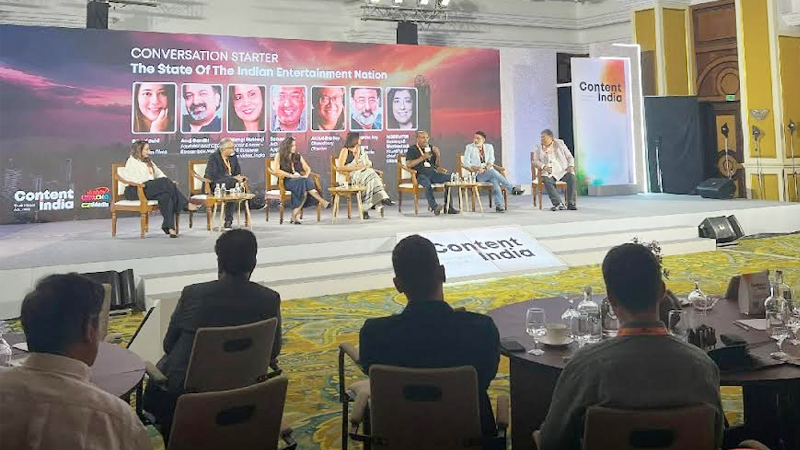
    MUMBAI: If content is king, India’s entertainment industry is the kingdom where multiple rulers are emerging. At Content India 2025, industry stalwarts dissected the evolving media landscape in The State of the Indian Entertainment Nation panel discussion. From the meteoric rise of streaming to the power of regional narratives, the session brought to light the shifting dynamics of how Indians consume entertainment today.

    India’s over-the-top (OTT) landscape is on an unstoppable growth trajectory, with over 500 million digital viewers making it one of the largest streaming markets globally. The paid subscription ecosystem grew 10 per cent in 2023, bringing in Rs 9,900 crore (1.2 billion dollars) in revenue, while the advertising-based video-on-demand (AVOD) model jumped 40 per cent to Rs 6,800 crore (850 million dollars).

    Prime Video India director & head of SVOD business Shilangi Mukherji captured the moment by saying, “Streaming has democratised content. It’s no longer about big cities versus small towns. Today, the same audience that enjoys an international thriller can also binge-watch a hyperlocal drama from a remote region. The lines have blurred.”

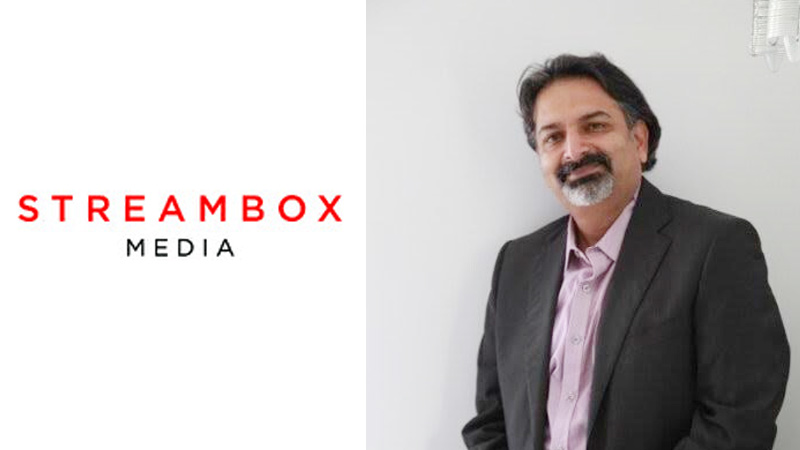
    Streambox Media founder and CEO Anuj Gandhi agreed, noting that AI-driven hyper-personalisation is further shaping the streaming experience. “The biggest challenge for any OTT platform is making sure that users find what they want before they get frustrated. AI is now solving that problem, ensuring people spend less time searching and more time watching.”

    Despite streaming’s dominance, the theatrical experience refuses to fade into the background. While the OTT boom has led to a dip in mid-budget theatrical releases, big-ticket films continue to dominate. “Theatres aren’t dying, they’re just evolving,” said Applause Entertainment MD Sameer Nair. “The magic of a collective viewing experience is irreplaceable. Streaming has changed consumption habits, but cinema will always be a cultural event in India.”

    The merger of PVR and INOX has strengthened multiplex chains, making them more resilient against digital competition. However, the industry has become more cautious with high-budget originals. Many OTT platforms are now focusing on regional acquisitions and dubbing successful content instead of creating big-budget originals from scratch.

     If there’s one undeniable trend, it’s the explosion of regional content. Data shows that 48 per cent of all content produced in India in 2024 was in regional languages. Streaming platforms are doubling down on dubbed and subtitled content to bridge linguistic barriers and tap into non-Hindi-speaking markets. The industry is no longer bound by language, hyperlocal content is travelling far beyond its native state.  

    Hungama Digital Media CEO Siddhartha Roy noted, “We are witnessing a content explosion beyond Hindi. Regional is the new national. A Telugu film dubbed in Hindi or a Malayalam film finding audiences in Tamil Nadu, this cross-pollination of audiences is proof that language is no longer a barrier.”

    Phantom Films CEOSrishti Behl added, “The best content is not necessarily being created in Mumbai. It’s coming from smaller production hubs in Chennai, Hyderabad, and even remote pockets of India. The industry is decentralising, and that’s exciting.”

    Artificial intelligence (AI) is emerging as a game-changer for both content creation and consumption. AI-driven personalisation ensures that platforms serve users exactly what they want, while interactive content formats are gaining traction from AI-powered interactive storytelling to immersive live-streaming experiences.

    Aniruddha Roy Chowdhury, an acclaimed director, shared his perspective on AI’s role in the creative process. “AI is not here to replace filmmakers, but to assist them. Whether it’s de-aging actors, enhancing visual effects, or even predicting audience preferences, AI is making storytelling smarter.”

    The future of Indian entertainment is a melting pot of theatrical spectacles, streaming supremacy, regional dominance, and AI-driven innovations. As India’s internet penetration deepens and smartphone usage skyrockets, the next chapter in the industry’s evolution is being written in real-time.

    “We’re in the business of storytelling,” said Shilangi Mukherji. “And in India, stories never run out. They only get better.”

  • Streambox Media unveils Dor India’s first subscription-based TV service

    Streambox Media unveils Dor India’s first subscription-based TV service

    MUMBAI: Gone are the days of debating over iOS and Android or boasting about who owned the fastest gadget. The era of squabbles about which TV brand—LG, Xiaomi, or Samsung—rules the market is fading into nostalgia. Buying a television back then felt like assembling a puzzle: first, the TV itself, then a dish connection for channels, followed by an OTT device to smarten it up. And even then, you were stuck playing detective—Googling endlessly to figure out which platform hosted your favorite show, live match, or breaking news.

    But now, the tide has turned. The clutter and confusion of old-school television are making way for an extraordinary transformation. As the sun sets on fragmented entertainment, a bold new dawn emerges in the Indian living room. Welcome Dor—the future of home entertainment that combines everything you need into one seamless subscription experience. It’s not just a TV; it’s a revolution. Or so claims the company behind it. 

    Streambox Media, a leading media-tech venture founded by cable TV industry and distribution vetera Anuj Gandhi and backed by Micromax Informatics, Zerodha’s Nikhil Kamath, and Stride Ventures, has launched Dor—India’s first subscription-based television service. Designed to revolutionise home entertainment as claimed by the company, Dor integrates a high-performance 4K QLED TV with over 24 premium OTT platforms, 300+ live channels, gaming, news, and more into a single, affordable subscription model.

    Dor is set to debut in India via Flipkart on 1 December 2024, with plans for expansion to other platforms and offline distribution channels. This innovative TV-as-a-service model eliminates fragmented content navigation across devices, offering users a seamless, unified experience powered by India’s indigenously developed Dor TV OS.

    Micromax Informatics co-founder, Rahul Sharma emphasised the shift in consumer preferences, “The home entertainment landscape is witnessing a tectonic shift with the rise of subscription and leasing models. Younger audiences prioritise flexibility and value over ownership. With Dor, we are introducing a market disruptor that addresses these evolving preferences while showcasing India’s capabilities in developing future-ready technology.”

    Streambox Media, COO, Romil Ramgarhia added, “Dor democratises premium entertainment by making advanced technology accessible to Indian households. Our innovative approach significantly reduces costs by 50-60 per cent, consolidating the expense of smart TVs and content services.”

    Indiantelevision.com Sreeyom Sil got into an exclusive conversation with Anuj Gandhi  on the sidelines of a press conference in Mumbai to announce Dor and Streambox’s launch. He shed light on how Dor is setting new benchmarks for connected TVs in India. Excerpts from the interview: 

    * What differentiates Streambox’s Dor service from others in the market?
    The key difference is simplicity: everything should be plug and play. Why should I worry about subscriptions, when my payments are due? It should be as convenient as possible in one single shop. And that’s what we have endeavored to do here. 

    Then, fragmented services and high upfront costs deter many households from adopting connected TVs. Dor’s subscription model integrates cutting-edge AI, content platforms, and hyper-personalised recommendations to deliver an unmatched value proposition  with an immersive experience. With its integrated Dor OS, users can enjoy a seamless interface consolidating OTT platforms, live channels, and on-demand content. 

    Dor’s subscription model offers unparalleled flexibility and cost-efficiency. Consumers can own a 43-inch 4K QLED TV with Dolby Audio and solar-powered remote for an upfront activation fee of Rs 10,799, including the first month’s subscription. Post the initial month, the subscription costs Rs 799 per month for 12 months, after which customers can customise their packages. 

    The subscription includes access to platforms like Prime Video, Disney+ Hotstar, Jio Cinema, Sony Liv, and many more, with a single sign-on and AI-driven personalised recommendations simplifying the entertainment experience. Larger 55-inch and 65-inch TV variants are set to launch in early 2025, expanding options for Indian households.

    With its integrated Dor OS, users can enjoy a seamless interface consolidating OTT platforms, live channels, and on-demand content. A four-year warranty and regular software upgrades every quarter are on offer with which Dor aims to make a real difference in how India consumes entertainment.

    * What specific challenges in content discovery does Dor address, and how does it enhance the user experience compared to existing software?
    Dor takes content discovery beyond the siloed limitations of individual apps. Our intuitive AI and large language models power a seamless search experience across multiple platforms. Dor personalises recommendations based on user preferences, ensuring a richer and more tailored viewing journey.

    Anuj Gandhi quote

    *  How does Dor use advanced machine learning for personalised recommendations and ensure diversity in content?
    Personalisation is at the core of Dor. We analyse individual preferences—language, genre, or favorite actors—and adapt recommendations in real-time. For example, if you select action movies but increasingly watch romantic films, our system dynamically adjusts your homepage to prioritise romantic content.

    * How does Dor aggregate content from OTT platforms and live channels, and what partnerships have been instrumental?
    We’ve secured partnerships with over 24 OTT platforms and various linear television providers, especially in the free-to-air (FTA) category. These long-term deals ensure a comprehensive content catalog, enabling us to deliver unmatched variety to users.

    * With a growing emphasis on data privacy, how does Dor ensure user data is protected?
    Data security is paramount. We comply with all data protection laws in India and employ robust security measures to prevent breaches. Sensitive user information, such as installation addresses and phone numbers, is safeguarded through strict privacy policies and best practices.

    *  How is Streamworks Media capitalising on India’s growing connected TV market, and what role does Dor play?
    We aim to democratise connected TV with competitive pricing and an intuitive OS like Dor. By addressing the needs of a growing audience, we plan to secure a dominant market share in this burgeoning ecosystem.

    *  What inspired you to venture into the media-tech space, and where do you see Streambox Media and Dor in five years?
    Simplicity and accessibility inspired me. Our goal is to make content discovery and consumption effortless. Within five years, we envision Dor holding a double-digit global market share, solidifying its place as a leader in the entertainment OS market.

    With Dor, Streambox Media and Micromax Informatics have not just launched a product—they’ve unveiled a statement of technological prowess and national pride. Proudly ‘Made in India’, the launch resonates deeply with the Indian spirit of innovation and ambition. It’s not just a device; it’s a symbol of India’s leap into the global tech arena. The moment leaves one awestruck, tingling with pride, and breathlessly waiting for what’s next in this revolutionary saga.

  • VBS 2024: The OTT Aggregation game

    VBS 2024: The OTT Aggregation game

    Mumbai: India is in the grips of seisnic changes regarding video and broadband consumption. Pay TV cord-cutting is rampant even as free TV subscriptions are on the rise and OTT buy-ins are churning with the signs up for certain platforms stagnating even as others are seeing rapid increases and some are seeing cataclysmic drops. 

    Aggregators of OTTs are popping up on the horizon promising cheap bundles along with value-added services for cable TV and DTH. There’s a rush to set up free advertising-supported TV channels by TV set manufacturers and smart TV device makers. There’s the Jio factor where it seeks to convert most pay TV customers to free streaming of video content by offering free access to consumers at no cost. The consumer continues to demand bandwidth higher than ever imagined even as prices drop. Margins are under pressure as every player goes one-up on each other to acquire and retain customers.

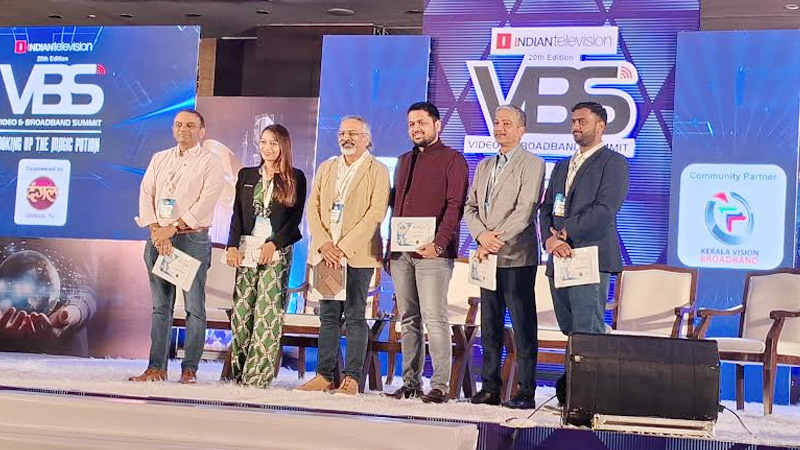
    The video and broadband distribution landscape has not been as vibrant as it is now.. How long will this pot-boiling continue? What will the magic potion of video and broadband look and taste like? And what’s the end game? Indiantelevision.com has held the 20th edition of Video and Broadband Summit better known as VBS at Sahara Star Hotel, Mumbai.

    The session chair for this panel was media consultant Anuj Gandhi along with the panelists: Arha Media & Broadcasting CEO Ravikant Sabnavis, GTPL Hathway Ltd senior VP Yatin Gupta, Dangal Play head Akshat Singhal, Playbox TV founder & CEO Aamir Mulani and OTT-Chana Jor, VHunt Digital Media COO Archita Jasani

    To light up the atmosphere, Gandhi asked the audience how many hours on average people spend on their mobile phones. He also dropped another question while spending time looking at phones, how much time is spent on watching SVOD OTT? The response was quite positive as an overwhelming number of people in the audience watched content on their mobile phones for a longer duration.

    As there was a considerable amount of audience who watched other lots of content besides OTT, Gandhi asked a broader question to all the panelists, “There is a belief and everybody says that aggregation is what went above consecutive recession, people said people subscribed to two and a half entities, but individual OTS there is a belief that beyond the point from D to C perspective or direct to consumer, you cannot cross the customer acquisition costs. There is another cost that is there.

    Sabnavis said, “If I look at it from the consumer perspective, Most perspective, there’s a lot of entertainment. Right? Be it a YouTube video, or simply chatting with somebody on the phone. I’m probably oversimplifying to make the point. There are limits to my time when whether it be five hours or three hours and in that time, I’m trying to watch OTTs as well, besides doing whatever I am for entertainment. So therefore you’re possibly right that there comes a time when growth when you look at it from our perspective around the consumer’s approach slows down. They’re gonna find it increasingly difficult to a) reach out to consumers and b) convince them to subscribe to a platform.”

    Jasani said, “There is a stagnation which is happening especially in metro cities. When we see that people, there is a capacity on how many hours can be on the mobile phones. Beyond that, I feel a lot of growth that can happen in tier-two and tier-three cities. Because these are the consumers who are town-tasting in the OTT  and entertainment segments. So here we see that there is a glass ceiling, probably happening towards the metros, but there is a use of potentiality in tier two and tier three cities. So hence the aggregation makes sense in a way that there is a d2c and b2c as well, which helps us to get the hang of the consumers.

    Amir Mulani commented that 90% of the time, consumers know what they want to watch, they will come to search, click the movie, and just start watching it. So I think my responsibility as a platform or as an aggregator, is beyond me to give him something that he wants to, and trying to keep it so easy, that it’s not confusing for them to decide.”

    Singhal said, “Earlier, people used to go to OTT platforms and search for content because the OTT platforms were very messy. Now, with so many OTT platforms, we need to go to the users, and see what they have. So that’s why like it’s important.”

    Gupta opined, “ We already have a cable product, which is an aggregation of channels. We have broadband as a service to augment this along with OTT. Looking at the consumer and saying that from this household. He’s already got cable, he’s already got broadband, and we may be able to give him OTT services as an aggregation.

    Whether it makes economic sense or not, of course, is a big question mark, because the OTT players are expecting a certain amount of guarantees, which may or may not. So we’ve been looking at all of that while deciding whether to go ahead with it and what to do.”

  • After edtech & fintech, now is time for media-tech: Anuj Gandhi at VBS 2022

    After edtech & fintech, now is time for media-tech: Anuj Gandhi at VBS 2022

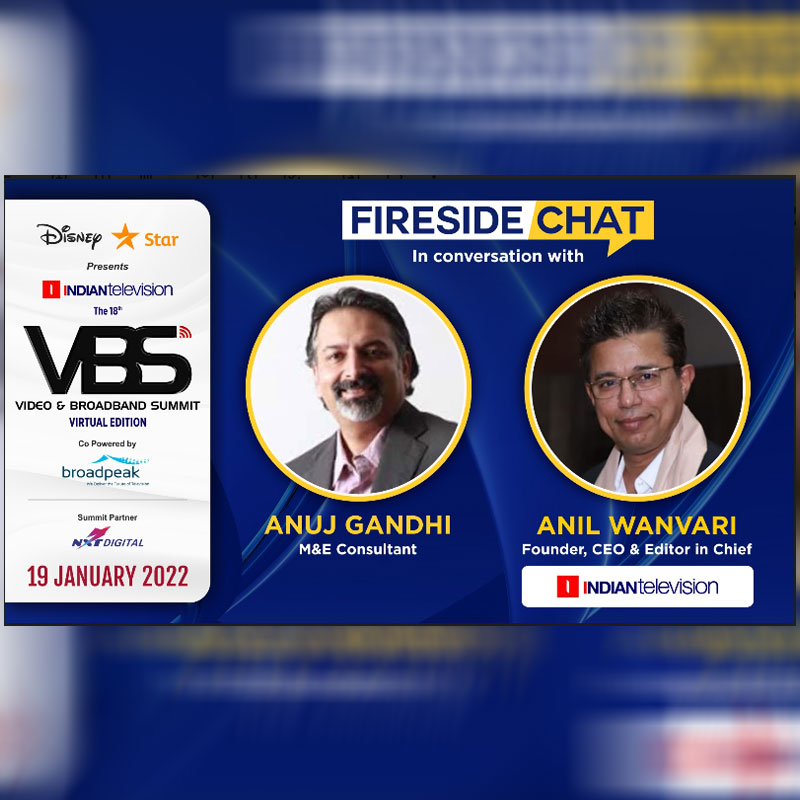
    Mumbai: After the edtech and fintech, it’s time for India to now witness the rise of media-tech, said M&E consultant and industry veteran Anuj Gandhi while decoding the post-pandemic future of the industry at the 18th edition of the Video & Broadband Summit 2022 (VBS) organised by Indiantelevision.com on Wednesday.

    The day-long virtual summit was co-powered by broadpeak, with Disney Star as the presenting partner, and NxtDigital as the summit partner.

    In a fireside chat with Indiantelevision.com founder CEO and editor-in-chief Anil Wanvari, the media distribution veteran discussed the six major trends which, according to him, will determine the course of the media and entertainment industry over the next couple of years.

    Video Trends: Unlike the days of DD and bundled offerings, the modern consumer wants more freedom to choose. With the burgeoning delivery platforms, it’s no longer that case where everyone has to be on PayTV. Moreover, in the present scenario where people are spending hours on social media, even Instagram Reels are ‘content’. Clearly, going forward, the definition of video, as well as trends in the space, will depend on the demand-supply equation. The rise of Free Dish and OTTs during the pandemic is a classic example, and even as their growth accelerates, PayTV will also continue to exist in some form or the other.

    Broadband Growth: Broadband has evolved into becoming a utility today; it is no longer limited to video. Considering the amount of consumption that’s happening over work-from-home, education, and other services, video is just a small fraction of it. The Trai’s figure for wired broadband that was stagnant at around 10-12 mn for many years, suddenly shot up to 25 mn, and this does not even include the huge undeclared market run by cable companies. The hybrid ecosystem fostered by the pandemic will continue to push this number further in the coming days.

    The fate of linear TV: It is a cause for worry and excitement at the same time. Both in India and globally there’s no denying the trend of people consuming less pay/linear TV as a result of the availability of alternatives as well as the failure of linear TV to innovate in terms of content. The Free Dish market has largely been insulated so far, but it will also experience disruption in the near future as broadband penetration in the hinterland grows.

    B2C focus and consolidation: The changes that were effected and necessitated by the growth in digital, especially in the last decade or so, have shifted the focus of the entire M&E industry from B2B to B2C. As the ecosystem opens up more and more to consumers directly, the need for consolidation will also increase, whether it is to meet the entertainment demands of viewers or to simplify content discovery for them.

    Rise of FAST: The popularity of Free Ad-Supported TV (FAST) services in the US and Europe, clearly shows that the west is moving towards AVOD. In the case of Asian markets including India, even though SVOD is picking up, the growth of Free Dish, YouTube, and OTT players like MX, is a strong indication of the potential for FAST.

    Crumbling walls: Changes in windowing norms that existed thus far will have a far-reaching impact on pricing, quality, and consumption of content as well as the actual segmentation of consumers in a multi-screen environment.

    The former group CEO of IndiaCast Media Distribution, who was also instrumental in setting up IndiaCast in March 2012 said he is hopeful about a future where all forms of video delivery – Free Dish, PayTV, VOD -will coexist. However, considering the current regulatory environment, competition, and the pace at which viewers are evolving, he recommended that the industry players must adopt an approach that gives more freedom and power to consumers rather than trying to resist the inevitable change in order to survive in the long run.

  • Debkumar Dasgupta moves on from IndiaCast

    Debkumar Dasgupta moves on from IndiaCast

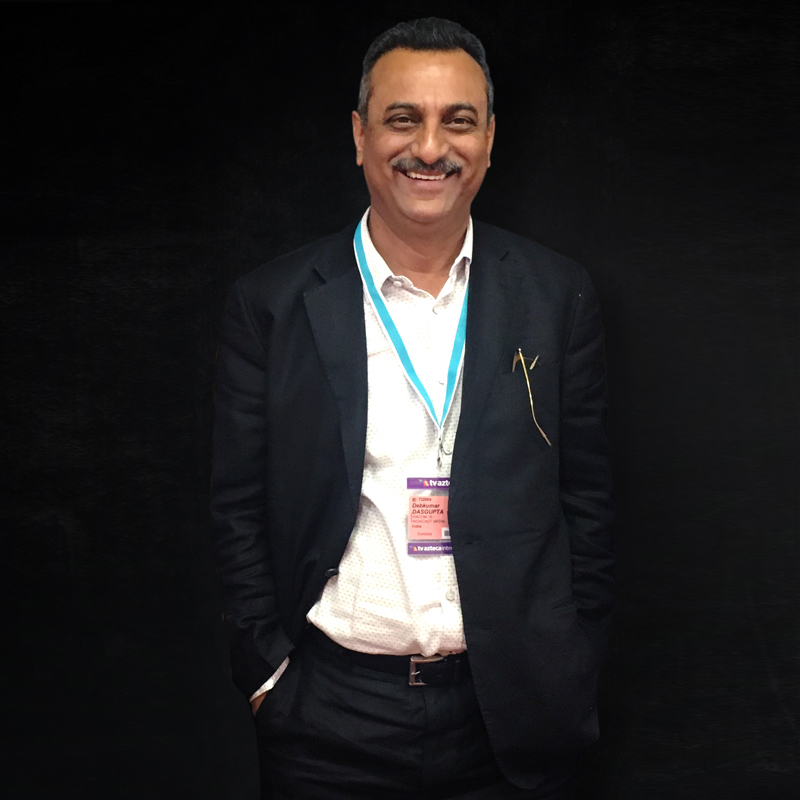
    Mumbai: IndiaCast Media Syndication head (Middle East-Africa) Debkumar Dasgupta has moved on from the group after a long stint of over two decades. He will be in the company till 31 December.

    Dasgupta was currently posted in Dubai as senior VP and business head- syndication, Middle East and Africa of IndiaCast- the international and digital distribution arm of Viacom18 and TV18.

    He joined the group 24 years ago, and initially managed the domestic distribution of the channel. But his role expanded post the launch of Colors, when he was appointed to manage the Asia Pacific channel distribution and global content sales and syndication. The syndication business recorded significant growth during the subsequent decade. Later on, he was elevated to manage the channel business including subscription, ad sales, syndication in the Middle East-Africa.

  • Telcos are great partners for OTT discoverability and monetisation

    Telcos are great partners for OTT discoverability and monetisation

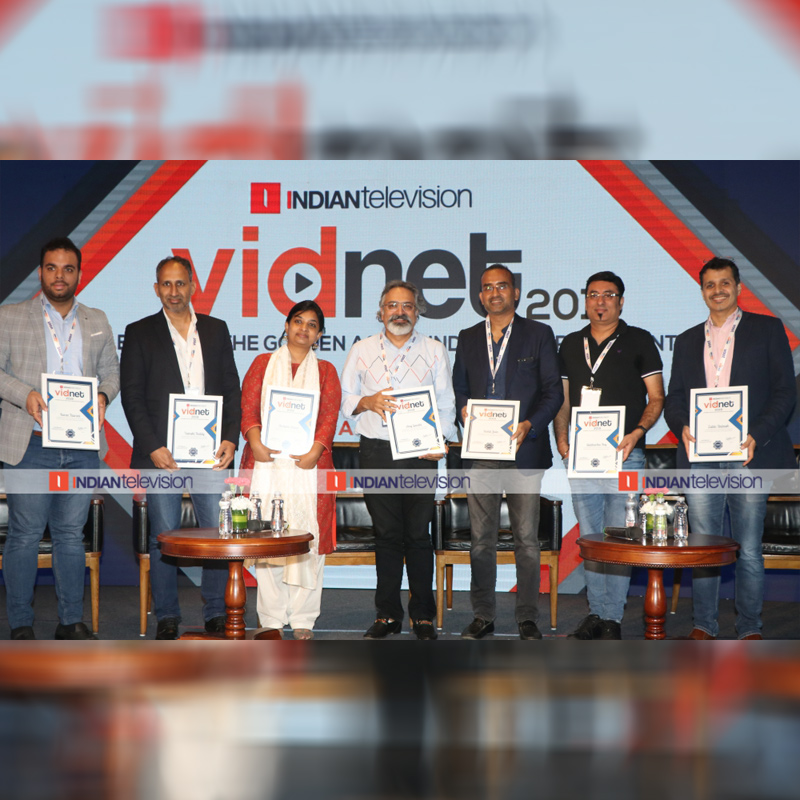
    MUMBAI: With an explosion in the smartphone market and rise in the number of OTT channels operating in India, telco-OTT partnerships are well-strategised and the most beneficial for content platforms to gain eyeballs and drive monetisation asserted a panel speaking on the topic of “Captive Audiences of the Telecom Trace” at the recently concluded Business and Tech Track of Indiantelevision.com Vidnet 2019 summit.

    Sitting on the panel, moderated by Elara Capital VP – research analyst (Media) Karan Taurani, were ZEE5 Global chief business officer Archana Anand, IndiaCast Media Distribution group CEO Anuj Gandhi, Apalya Technologies founder & CEO Vamshi Reddy, Lionsgate South Asia MD Rohit Jain, Shemaroo Entertainment COO digital Zubin Dubash, and Hungama Digital COO Siddhartha Roy.

    Roy mentioned that as aggregators, telecom companies are greatly positioned as single payment option for most of the OTT channels and Zubin Dubash vouched for the ability of telco partners to get greater traction on content sites and drive up numbers.

    Taking the example of Ditto TV, the VOD service from ZEE, Archana Anand shared that partnerships with telecom companies have always been fruitful for the ZEE network’s OTT offerings, for both consumer acquisition and marketing.

    She said, “I think, back then, we were the first ones to go across and do partnerships with the telcos and we created quite a stir in the market because of the lovely sachet pricing we were offering. The telecom partners ensured that they are paying on behalf of the consumers and it gave us brilliant traction. I believe, we managed to get the highest subscriber base in those days.”

    Anand added that there can’t be a better distribution network than telcos as it also translates into a ‘fantastic payment mechanism’. “With all the hesitancy around credit card payment, etc., the direct carrier billing is something that the consumer can be confident about and adapt easily.”

    Vamshi Reddy seconded her thoughts as he quipped that telcos can become the easiest ways for the industry to build a monetisation model around the whole content consumption. He noted that with fragmentation happening in the OTT space, the telecom partners can provide a universal experience to users in a seamless manner.

    Gandhi, however, highlighted that in the long run, the issue of ownership of the consumer can arise. “This challenge will take some time to settle, but from a pure bundling perspective, the discoverability on TV is extremely easy, and that is something that the OTT platforms are struggling with. Telcos can help in solving that.”

    To this, Anand noted that today there is a great symbiotic relationship between the OTT platforms and the telcos as the former wants to own the content and the latter, the consumer. But the platforms need to be mindful of the fact that it gets constant data from its partners and also keeps on communicating with the consumers through in-app notifications to ensure scalability of the partnerships in the long run.

    Jain added another dimension to the conversation as he noted that while telecoms are great in helping the OTT content reach the smaller screen, there is a wide array of opportunities lying in the big-screen space, which the OEMs can latch on to.

    He said, “In some ways, this is life coming to a full circle as all of these (telcos, OEMs, etc.) are actually (equivalent to) DTH and cable companies. All we need now is an ecosystem to emerge and thrive and whoever does a good job of aggregating content will eventually become the winner.”

  • IndiaCast partners JKN Media to bring Indian content to Thailand

    IndiaCast partners JKN Media to bring Indian content to Thailand

    MUMBAI: In a bid to strengthen its international foothold and provide unparalleled entertainment to the transnational viewers, IndiaCast Media Distribution – the domestic and international distribution arm of Viacom18 and TV18, has partnered JKN Media, Thailand to bring content from the network’s Indian repository through an exclusive soon-to-be-launched digital channel on JKN’s OTT Platform titled 'Bflix' for Thai viewers in 2019. The channel will showcase exclusive content from the vast Viacom18 library, dubbed in Thai, that will be available in Thailand and key South East Asia markets. The deal was signed-off at the recently held Asia Television Forum (ATF) in Singapore.

    IndiaCast and JKN Media together have successfully syndicated shows from COLORS for over five years in Thailand. This customized and exclusively packaged digital channel will bring specially curated content from the youngest and fastest growing media and entertainment company in India to the digital savvy viewers in Thailand.

    Speaking about the association, Viacom18 Group CEO and MD Sudhanshu Vats said, “With an increasing number of viewers graduating towards the digital mode of entertainment worldwide, we are continually evaluating our play in the international digital distribution space. This symbiotic partnership with JKN Media will further strengthen our equation with the country’s viewers who have enjoyed and appreciated our shows from COLORS over the years. There are many cultural similarities between India and Thailand, and hence the strong resonance with our offerings. This endeavor is another step towards providing seamless and individualized Indian-origin entertainment to Thai viewers.”

    On this strategic alliance IndiaCast Group CEO Anuj Gandhi said “We want to reach to audiences who want to experience contemporary, imaginative and high-quality relevant entertainment. It gives us immense pleasure to partner with JKN, to now take Viacom18 content to Thai viewers in their local language. We are confident that this will be a whole new exciting experience for the audiences. We would also like to thank JKN Media for their continuous partnership in scaling new heights in Thai market.”

    Adding to further, JKN CEO Anne Jakrajutatip said, “At JKN, we constantly strive to partner with brands that share our sensibilities towards great storytelling and the emotions that high-quality content can evoke. Over the past five years, we have formed a strong association with IndiaCast, which has seen us exclusively acquiring almost all the drama series from ‘COLORS’ for Thailand. Shows like Madhubala, Balika Vadhu, Chakravarti Ashoka Samrat, Chandrakanta, Udann, Naagin, Shakti, Shani, Mahakali, Ishq Mein Marjawan, Bepannah and many more have been hugely loved by all audiences in Thailand. I am glad that we have now extended our association with IndiaCast through this digital channel which will enable us to distribute all their content on our OTT platform in Thailand and across distribution platforms in Thailand, Taiwan and Hong Kong.”

  • IndiaCast rejigs revenue top brass in bid to grow across markets, platforms

    IndiaCast rejigs revenue top brass in bid to grow across markets, platforms

    MUMBAI: In a move aimed at synergizing processes and business opportunities to scale up revenues, IndiaCast, the domestic, international and digital distribution arm of Viacom18 and TV18, today, announced an organizational rejig of its revenue management structure.

    Amit Arora, who has exceptionally steered the domestic business for IndiaCast to greater heights over the years, has been elevated as president, India affiliate business.  Additionally, Arora will also drive the South Asia business along with linear distribution with telcos.

    Govind Shahi, a seasoned veteran, known for his sharp & strategic mindset, will now take over the mandate of heading the International business for IndiaCast. As the International business head, Shahi will oversee and drive business and revenues across functions and regions. All regional and vertical heads would report to him.

    Commenting on the organizational restructuring, IndiaCast group CEO, Anuj Gandhi commented, “As technology opens up newer viewing platforms and content evolves in both duration and variation, the business of distribution and syndication of content is evolving rapidly – in terms of new markets and new avenues of showcase, thereby ensuring that monetization opportunities are scaling up beyond traditional markets and platforms. This organizational rejig allows us to leverage the existing capabilities and strengths of our leaders and their teams in growing revenues and to explore new opportunities across various technologies and markets globally”.

    Sachin Gokhale, previously responsible for nurturing and successfully developing and rapidly growing the Middle East and Africa region and has managed our Asia Pacific & Business operations verticals, will now assume the new role of heading the Americas’ Business. Gokhale would be responsible for expansion and growth of business to new markets in the Americas and dialing up various digital initiatives in the region. 

    Debkumar Dasgupta, who continues to impressively grow the global syndication business, will take on the added responsibility of heading the Middle East and Africa region.

    Both Amit Arora and Govind Shahi will continue to report into Anuj Gandhi.

  • Viacom18 launches Colors Tamil HD in Singapore on Star Hub

    Viacom18 launches Colors Tamil HD in Singapore on Star Hub

    MUMBAI: After entering the Tamil GEC market, Viacom18, one of India’s largest entertainment conglomerates, has launched Colors Tamil HD on Star Hub, (channel no. 132) in Singapore.

    The channel went live on 3 July 2018, on Star Hub with five original fiction series. On 14 July, Tamil superstar Arya will visit Singapore to celebrate the channel launch and engage in a fan meet and greet whilst in the city.

    “Regional content is growing exponentially and Singapore with nearly half a million Tamil speaking households is a significant regional entertainment broadcasting market. Colors Tamil HD is one of our path breaking channels that promise to deliver new and never seen before content to Singaporean Tamils. Thanks to our successful partnership with Star Hub, we are now happy to be part of the Tamil speaking homes in Singapore directly” said Viacom18 head, regional entertainment Ravish Kumar.

    With this entry, IndiaCast Media Distribution Pvt. Ltd. – a TV18 and Viacom18 joint venture will further strengthen its network presence, after having successfully popularised COLORS and MTV in the region. The company’s mandate includes domestic distribution, placement services, international channel distribution, marketing and advertising sales, new media (digital) distribution and content syndication for all the group companies -TV18, Viacom18, ETV network and Turner International India.

    Adding to this, IndiaCast group CEO Anuj Gandhi said “We are delighted to associate with Star Hub in yet another momentous launch occasion. After having successfully positioned Colors & Rishtey globally, it gives us immense pleasure to now take Colors Tamil HD to the Tamil diaspora across the globe starting with Singapore. We are confident that this will be a whole new experience for the Tamil speaking audience and offer them new, refreshing entertainment.”

    Launched in the month of February, 2018, Colors Tamil HD is the youngest family entertainment channel from Viacom18 that thrives to entertain Tamil speaking viewers, around the globe, through distinctive and most powerful stories that empathise, inspire and celebrate a woman and her family.

    Colors Tamil HD primarily focuses on storytelling and matches the heritage of the traditionally rich Tamil Nadu culture with qualitative and innovative programming. Some of their flagship programmes are Velunatchi, Perazhagi, Sivagami, Arya’s Enge Veetu Maapilai and Colors Super Kids.

  • Turner appoints IndiaCast as exclusive distribution agent

    Turner appoints IndiaCast as exclusive distribution agent

    MUMBAI: Turner International India Pvt Ltd (Turner) has appointed IndiaCast Media Distribution Pvt Ltd as its exclusive distribution agent from 1 April 2018 for distribution of Turner channels—CNN International, Pogo, Cartoon Network, WB, HBO and HBO HD-to consumers in India, Nepal and Bhutan.

    A TV 18 and Viacom18 venture, IndiaCast is known to bring quality content to viewers spanning genres such as general entertainment, kids, news, music, infotainment and movies.

    Turner South Asia managing director Siddharth Jain said, “I am delighted to announce the appointment of IndiaCast as our exclusive distribution agent for India, Nepal and Bhutan. I am very confident they will enable us to further enhance our footprint and bring the choicest content to our fans in the Indian subcontinent. We look forward to a long term strategic relationship with IndiaCast.” 

    Added IndiaCast group CEO Anuj Gandhi, “At IndiaCast, it is our constant endeavour to curate the best possible exposure for our content creator partners. Turner has a fantastic bouquet of channels catering to a bespoke audience. As we ramp up the distribution network for its channels, I look forward to a long-term association that is founded on mutually beneficial economics.”

    After nearly two decades of collaboration, Zee Entertainment Enterprises (ZEE) and Turner mutually decided to work independently in order to drive up subscription revenue, release issued yesterday stated. ZEE and Turner joined hands back in 2002 to manage distribution and trade marketing for a bouquet of channels in India.

    Also read:

    Zee, Turner to work independently for subscription revenue

    We place a very high premium on fan experience: Turner’s Rohit Bhandari