Tag: Antrix Corporation

  • Independent TV to resume DTH service any day after 21 August

    Independent TV to resume DTH service any day after 21 August

    MUMBAI: DTH operator Independent TV has extended the resumption of its service further. The operator has stated on its website that they expect to go live any day after August 21, next week. The network was supposed to resume its service from August 15 in its new ITV 2.0 avatar .

    Explaining the reason to its customers the company said, “Our technical teams are working to re-establish our satellite network for resumption of our DTH services. Heavy rains at Mumbai have damaged our Network at Mumbai and also the link between Mumbai head-end and Bangalore uplink location, we are working on repairing the same overtime.”

    “We expect to go live any day after 21st August, next week. As per our resumption services, customers will be required to do re-validation of their connection through our mobile application, details of which will be made available on the landing page. Additionally, due credit will be given to customers for the period of disconnection in their wallet. We regret the inconvenience being caused till then,” said Independent TV.

    Last week, TDSAT had directed, Independent TV to pay up to Rs 12 crore in order to get signals reconnected by Antrix Corporation. The operator was also directed to pay Rs 5.83 crore along with a bank guarantee of Rs 6 crore or furnish a bank guarantee of Rs 12 crore valid for at least two months for the restoration of transponder service.

    The operator had faced disconnection of its signals post a tussle with its service provider, Antrix Corporation over non-payment of dues.

  • ISRO to launch 83 satellites on single rocket, create world record

    ISRO to launch 83 satellites on single rocket, create world record

    MUMBAI: The Indian space agency ISRO, in a move to set a world record, is planning to put into orbit 83 satellites — two Indian and 81 foreign — on a single rocket in early 2017, said a top official of Antrix Corporation, the commercial arm of Indian Space Research Organisation (ISRO).

    The official said the company’s order book stands at Rs 500 crore while negotiations are on for launch order for another Rs 500 crore.

    Antrix Corporation chairman-cum-managing director Rakesh Sasibhushan told IANS that, during the first quarter of 2017, ISRO planned plan to launch a single rocket carrying 83 satellites. Most foreign satellites were nano satellites, he said.

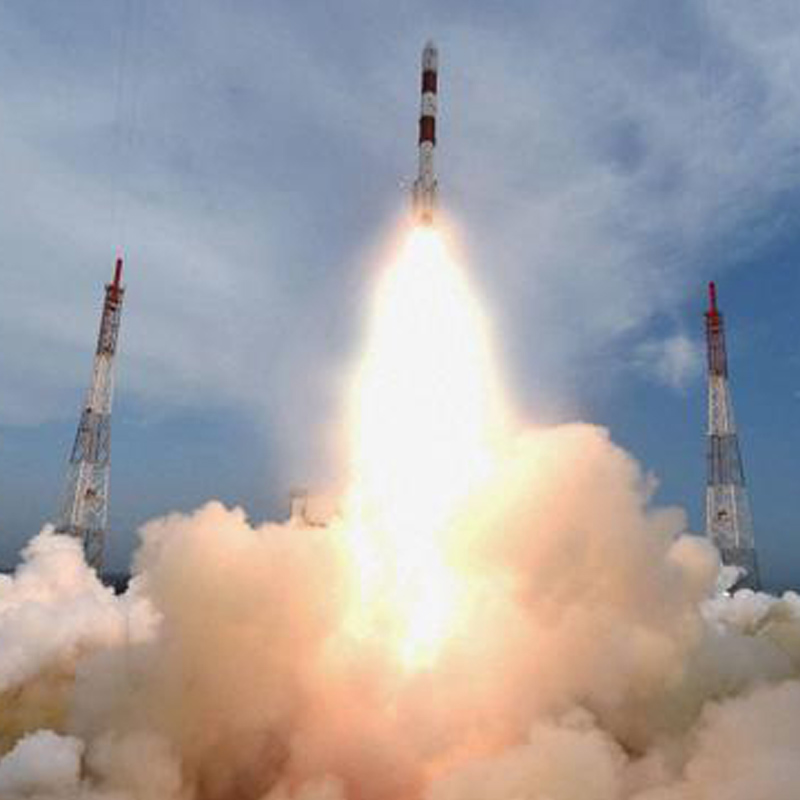
    He said all the 83 satellites will be put in a single orbit and hence there will not be any switching off and on of the rocket. The major challenge for the proposed mission is to hold the rocket in the same orbit till all the satellites are ejected. He said ISRO will use its Polar Satellite Launch Vehicle XL (PSLV-XL) rocket variant for the record launch.

    For ISRO, launch of multiple satellites at one go is not a new thing as it has done it several times in the past. According to Sasibhushan, the total payload/weight carried off into space by the PSLV-XL rocket will be around 1,600 kg.

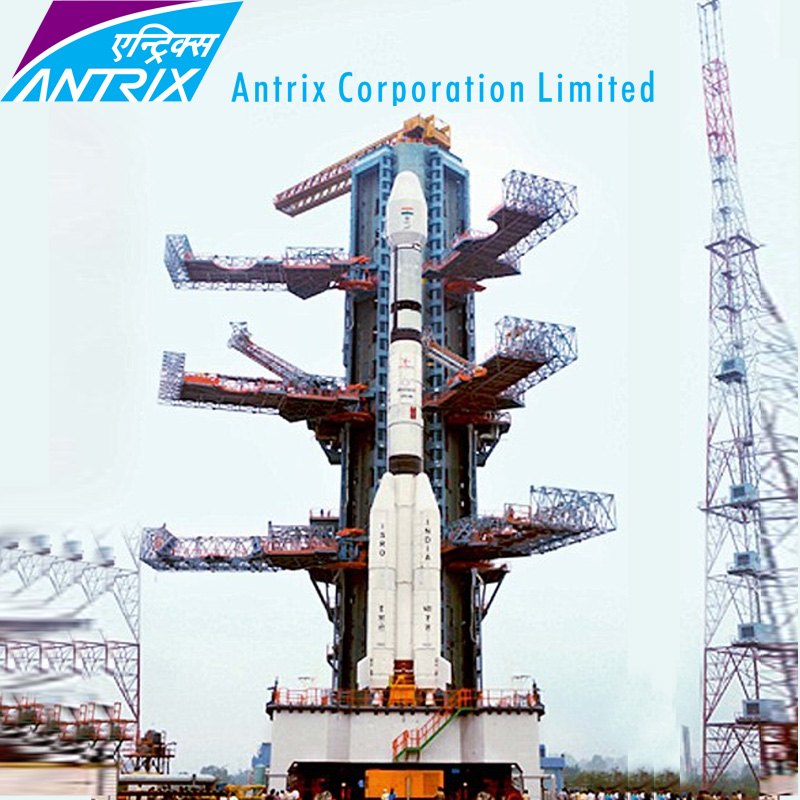
    Meanwhile, ISRO is conducting high-altitude tests with its own cryogenic engine that is expected to power the heavier rocket Geosynchronous Satellite Launch Vehicle-Mk III (GSLV Mk III). The GSLV Mk III has a capacity to carry around four tonnes of load. The rocket is scheduled to be flown in January 2017.

    The GSLV Mk III rocket is expected to save precious foreign exchange for India as it pays to launch heavier satellites through foreign space agencies.

    ISRO chairman A.S. Kiran Kumar said the agency is looking forward to develop four-tonne communication satellites that will give the same output as a six-tonner.

  • ISRO to launch 83 satellites on single rocket, create world record

    ISRO to launch 83 satellites on single rocket, create world record

    MUMBAI: The Indian space agency ISRO, in a move to set a world record, is planning to put into orbit 83 satellites — two Indian and 81 foreign — on a single rocket in early 2017, said a top official of Antrix Corporation, the commercial arm of Indian Space Research Organisation (ISRO).

    The official said the company’s order book stands at Rs 500 crore while negotiations are on for launch order for another Rs 500 crore.

    Antrix Corporation chairman-cum-managing director Rakesh Sasibhushan told IANS that, during the first quarter of 2017, ISRO planned plan to launch a single rocket carrying 83 satellites. Most foreign satellites were nano satellites, he said.

    He said all the 83 satellites will be put in a single orbit and hence there will not be any switching off and on of the rocket. The major challenge for the proposed mission is to hold the rocket in the same orbit till all the satellites are ejected. He said ISRO will use its Polar Satellite Launch Vehicle XL (PSLV-XL) rocket variant for the record launch.

    For ISRO, launch of multiple satellites at one go is not a new thing as it has done it several times in the past. According to Sasibhushan, the total payload/weight carried off into space by the PSLV-XL rocket will be around 1,600 kg.

    Meanwhile, ISRO is conducting high-altitude tests with its own cryogenic engine that is expected to power the heavier rocket Geosynchronous Satellite Launch Vehicle-Mk III (GSLV Mk III). The GSLV Mk III has a capacity to carry around four tonnes of load. The rocket is scheduled to be flown in January 2017.

    The GSLV Mk III rocket is expected to save precious foreign exchange for India as it pays to launch heavier satellites through foreign space agencies.

    ISRO chairman A.S. Kiran Kumar said the agency is looking forward to develop four-tonne communication satellites that will give the same output as a six-tonner.

  • Govt claims it invoked security considerations, says it is studying PCA order against Antrix in Davos case

    Govt claims it invoked security considerations, says it is studying PCA order against Antrix in Davos case

    NEW DELHI: The Permanent Court of Arbitration (PCA) in The Hague has said that the annulment of the agreement between Devas and Indian Space Research Organization’s commercial arm Antrix in 2011 which resulted in denying Devas commercial use of S-band spectrum constituted an expropriation.

    PCA administers cases under the arbitration rules of the United Nations Commission on International Trade Law (UNCITRAL).

    In a reaction, the Government of India reiterated that it had invoked the essential security interests through a well reasoned, valid and proper CCS decision. The award of the Tribunal is being examined and legal recourse, as deemed fit, will be taken.” We also remain committed to pursue our larger national interests including sovereign strategic security interests in this matter”, it said.

    This ongoing case with Mauritius-based Devas Corporation over sharing of spectrum on satellites may result in huge payments as compensation to Devas.

    The order said by this action, the Indian Government expropriated the investments of Devas’s foreign shareholders and also acted unfairly and inequitably, thus making it liable to pay financial compensation.

    (In a statement, the Government of India said The Tribunal had said it’s essential security interest provisions of the Treaty do apply in this case to an extent. The limited liability of compensation shall be limited to 40% of the value of the investment. The precise quantum has not been determined as yet. The Tribunal has dismissed the Claims as regards violation of other provisions of the Treaty viz., (i) unreasonable or discriminatory measures; as also (ii) Most Favoured Nation treatment, it said.

    In 2005 Antrix and Devas entered into an agreement for the long-term lease of two ISRO satellites operating in the S-band. The deal was for 70 MHz of S-Band frequency used to provide multimedia services by leasing most of the transponders on the GSAT-6 and GSAT-6A satellites for 12 years. Devas was to pay $300 million over the said period.

    However, the government annulled the contract after reports of unilateral process and presumptive loss to exchequer due to the deal. Following this the US investors in Devas moved a case against Antrix.

    In 2015 the International Chamber of Commerce (ICC) tribunal ruled that the Antrix’s annulation was unlawful and awarded Devas damages and pre-award interest of approximately $672 million, plus post-award annual interest accruing at 18 per cent until the award is paid in full.

    Devas Multimedia, based in Bangalore, was set up by former ISRO scientists and some U.S. investors. According to Devas website investors included Deutsche Telekom AG, Columbia Capital LLC, and Telcom Ventures LLC.

    Meanwhile, the Enforcement Directorate, has issued a show cause notice to Devas for violation of Foreign Exchange Management Act 1999 and are further investigating the case under Prevention of Money Laundering Act 2002. The Directorate has issued show cause notice to Devas for contravention to the provisions of FEMA 1999.

    The CBI has filed an FIR against, inter-alia, M/s Devas Multimedia Pvt. Ltd, Bangalore; and other unknown public servants of M/s Antrix/ISRO/DOS. This case is presently under investigation.

  • Govt claims it invoked security considerations, says it is studying PCA order against Antrix in Davos case

    Govt claims it invoked security considerations, says it is studying PCA order against Antrix in Davos case

    NEW DELHI: The Permanent Court of Arbitration (PCA) in The Hague has said that the annulment of the agreement between Devas and Indian Space Research Organization’s commercial arm Antrix in 2011 which resulted in denying Devas commercial use of S-band spectrum constituted an expropriation.

    PCA administers cases under the arbitration rules of the United Nations Commission on International Trade Law (UNCITRAL).

    In a reaction, the Government of India reiterated that it had invoked the essential security interests through a well reasoned, valid and proper CCS decision. The award of the Tribunal is being examined and legal recourse, as deemed fit, will be taken.” We also remain committed to pursue our larger national interests including sovereign strategic security interests in this matter”, it said.

    This ongoing case with Mauritius-based Devas Corporation over sharing of spectrum on satellites may result in huge payments as compensation to Devas.

    The order said by this action, the Indian Government expropriated the investments of Devas’s foreign shareholders and also acted unfairly and inequitably, thus making it liable to pay financial compensation.

    (In a statement, the Government of India said The Tribunal had said it’s essential security interest provisions of the Treaty do apply in this case to an extent. The limited liability of compensation shall be limited to 40% of the value of the investment. The precise quantum has not been determined as yet. The Tribunal has dismissed the Claims as regards violation of other provisions of the Treaty viz., (i) unreasonable or discriminatory measures; as also (ii) Most Favoured Nation treatment, it said.

    In 2005 Antrix and Devas entered into an agreement for the long-term lease of two ISRO satellites operating in the S-band. The deal was for 70 MHz of S-Band frequency used to provide multimedia services by leasing most of the transponders on the GSAT-6 and GSAT-6A satellites for 12 years. Devas was to pay $300 million over the said period.

    However, the government annulled the contract after reports of unilateral process and presumptive loss to exchequer due to the deal. Following this the US investors in Devas moved a case against Antrix.

    In 2015 the International Chamber of Commerce (ICC) tribunal ruled that the Antrix’s annulation was unlawful and awarded Devas damages and pre-award interest of approximately $672 million, plus post-award annual interest accruing at 18 per cent until the award is paid in full.

    Devas Multimedia, based in Bangalore, was set up by former ISRO scientists and some U.S. investors. According to Devas website investors included Deutsche Telekom AG, Columbia Capital LLC, and Telcom Ventures LLC.

    Meanwhile, the Enforcement Directorate, has issued a show cause notice to Devas for violation of Foreign Exchange Management Act 1999 and are further investigating the case under Prevention of Money Laundering Act 2002. The Directorate has issued show cause notice to Devas for contravention to the provisions of FEMA 1999.

    The CBI has filed an FIR against, inter-alia, M/s Devas Multimedia Pvt. Ltd, Bangalore; and other unknown public servants of M/s Antrix/ISRO/DOS. This case is presently under investigation.

  • Antrix earned Rs 230 crore during 2015-16 through commercial launch services

    Antrix earned Rs 230 crore during 2015-16 through commercial launch services

    NEW DELHI: Antrix, the commercial arm of the Indian Space Research Organisation (ISRO), earned revenue of approximately Rs 230 crore during 2015-16 through commercial launch services, which is about 0.6% of the global launch services market.

    The average annual revenue over the last three years according to the published reports available in the public domain on the international satellite market is approximately $200 billion (Rs 13 lakh crore), which includes the launch services market (Rs 0.37 lakh crore), satellite manufacturing (Rs 1.07 lakh crore), ground equipment (Rs.3.85 lakh crore) and satellite services (Rs. 8.17 lakh crore).

    Department of Space Minister Jitendra Singh told Parliament recently that ISRO is providing the launch capacity, when available, for launching satellites on a commercial basis through Antrix Corporation Limited.

    In order to meet the enhanced national requirements for launching satellites for earth observation, communication & navigation, ISRO is taking steps to increase the launch capacity. ISRO will continue to provide the launch capacity, when available, for commercial launch services. Towards stepping up the launch capacity, ISRO is in the process of exploring the possibility of enhanced involvement of Indian industry. Besides meeting the national demand, the industry can explore the opportunities for commercial launch services.

    India joining Missile Technology Control Regime (MTCR) would benefit India’s space development programme in strengthening international cooperation activities in high technology areas with other space faring nations, he said in reply to another question in Parliament.

    This will ease the procurements and supplies of export controlled high/ advanced technology items, components, materials, and equipment from other countries, especially MTCR partner states; and enhance commercial ventures in terms of export of sub-systems, satellites and commercial launch services etc.

    India as a major space faring nation and as a partner state in MTCR could play critical roles in various international fora such as UNCOPUOS, UN Conference on Disarmament (CD) and other space related international fora in major policy decisions relating to space applications, space security topics. India, as a Partner State of MTCR, can take part in the decision making process in ensuring non-proliferation of sensitive space technology related items, which are controlled through a list (called Technical Annex) and reviewed & revised annually through Technical Experts Meetings.

  • Antrix earned Rs 230 crore during 2015-16 through commercial launch services

    Antrix earned Rs 230 crore during 2015-16 through commercial launch services

    NEW DELHI: Antrix, the commercial arm of the Indian Space Research Organisation (ISRO), earned revenue of approximately Rs 230 crore during 2015-16 through commercial launch services, which is about 0.6% of the global launch services market.

    The average annual revenue over the last three years according to the published reports available in the public domain on the international satellite market is approximately $200 billion (Rs 13 lakh crore), which includes the launch services market (Rs 0.37 lakh crore), satellite manufacturing (Rs 1.07 lakh crore), ground equipment (Rs.3.85 lakh crore) and satellite services (Rs. 8.17 lakh crore).

    Department of Space Minister Jitendra Singh told Parliament recently that ISRO is providing the launch capacity, when available, for launching satellites on a commercial basis through Antrix Corporation Limited.

    In order to meet the enhanced national requirements for launching satellites for earth observation, communication & navigation, ISRO is taking steps to increase the launch capacity. ISRO will continue to provide the launch capacity, when available, for commercial launch services. Towards stepping up the launch capacity, ISRO is in the process of exploring the possibility of enhanced involvement of Indian industry. Besides meeting the national demand, the industry can explore the opportunities for commercial launch services.

    India joining Missile Technology Control Regime (MTCR) would benefit India’s space development programme in strengthening international cooperation activities in high technology areas with other space faring nations, he said in reply to another question in Parliament.

    This will ease the procurements and supplies of export controlled high/ advanced technology items, components, materials, and equipment from other countries, especially MTCR partner states; and enhance commercial ventures in terms of export of sub-systems, satellites and commercial launch services etc.

    India as a major space faring nation and as a partner state in MTCR could play critical roles in various international fora such as UNCOPUOS, UN Conference on Disarmament (CD) and other space related international fora in major policy decisions relating to space applications, space security topics. India, as a Partner State of MTCR, can take part in the decision making process in ensuring non-proliferation of sensitive space technology related items, which are controlled through a list (called Technical Annex) and reviewed & revised annually through Technical Experts Meetings.

  • India earns Rs 650+ crore by launching 45 foreign satellites

    India earns Rs 650+ crore by launching 45 foreign satellites

    NEW DELHI: The country has earned a sum of approximately Rs 662 crore ($17 million and 78.5 million Euros) by launching 45 satellites from 19 countries using Indian Space Research Organisation’s (ISRO) Polar Satellite Launch Vehicle (PSLV).


    The commercial wing of the ISRO, Antrix Corporation Limited, has been generating income with commercial arrangements through launching of satellites of foreign countries on-board ISRO’s launch vehicle. 


    Space Department sources said the launch missions conducted by ISRO for launching Indian satellites are intended for National development. 

    Antrix has signed agreements for launching 28 more foreign satellites from six countries:  Algeria – three, Canada – four, Germany – four, Indonesia – two, Singapore – six and the United States – nine.


    The launches of these foreign satellites are envisaged during the 2015-2017 time period. Discussions with foreign agencies and companies are going on for providing launch services to their satellites on-board ISRO’s PSLV and Geo-synchronous Satellite Launch Vehicle (GSLV). 

    Furthermore, the images received from the Indian Remote Sensing (IRS) satellites (RESOURCESAT-2, RISAT-1 and CARTOSAT-1) are marketed globally by Antrix through International Ground Stations established outside India. The IRS images of regions outside India received and processed at ISRO’s Ground Station are also marketed to global customers through Antrix.

  • Sun Direct to add 9 transponders by June

    Sun Direct to add 9 transponders by June

    MUMBAI: Direct to home (DTH) operator Sun Direct is looking at increasing its high definition (HD) and standard definition (SD) channel offering. The DTH operator that currently has four transponders will soon add nine more transponders to its kitty, thanks to the deal signed between Sun Direct and MEASAT Satellite Systems.

    The announcement comes after Sun Direct got a nod from Antrix Corporation for additional capacity. The platform currently has 11 HD and 210 SD channels. “We had applied to Antrix and have got its approval. With this, we will be shifting to MEASAT 3b and hence, will get nine transponders by first week of June. Our HD offering is currently low, but with the extra capacity we aim to take it to 30, while we expect the number of SD channels to go up to 350,” informs Sun Direct MD Mahesh Kumar.

    With this, the total number of transponders will go up to 13. “While we are currently focused on the south market, we can think of targeting other regions after this boost. We will first fill the gaps in our south offering and the HD channel offering,” he adds.

    The increase in the capacity is not the only change the DTH platform is looking at. It was in October 2013 that Sun Direct had announced that it would be launching 500 ‘Sunshine’ centers across south India to improve its customer’s service needs. “Of the 500 ‘Sunshine’ centers, we have already launched 200 centers in eight months,” says Kumar.

    The core aim of these ‘Sunshine’ stores will be to provide customer service, while new connections, demo and recharges will also be available. The stores that have been set up in every district are based on franchisee model. “While the cost for setting up of these stores is being borne by the franchisee, we will be investing for the backend support,” informs Kumar.

    The DTH operator has also introduced a tri-partite conference call service. This 24X7 service hotline number: 076010-12345 which will be manned round the clock will ensure that customer grievances are addressed within 48 hours. “We have started a conference call facility between the company, engineer and the customer. Post the grievance is registered and dealt with, a customer satisfaction survey will also be conducted,” he says.

    Sun Direct is spending approximately Rs 25 crore ($4 million) on the backend support.  According to Kumar, currently the ‘Sunshine’ centre witnesses 50 customers per day per store. The revenue model for the business will depend on the business each store generates.

    The ‘Sunshine’ centers that have been designed by JWT, have a standard format, with store dimensions ranging between 150 and 300 sq ft, depending upon the requirements of the specific town. “The stores have standard colour code which is in line with Sun Direct,” informs Kumar.

    Will we see such centers in other parts of the country as well? Says Kumar, “Currently we are looking at strengthening our service in south, once we get the extra transponders and hence more channels, we can think of other region as well.”

  • If transponder space unavailable on Insat-4B, Sun might opt for Measat3

    If transponder space unavailable on Insat-4B, Sun might opt for Measat3

    MUMBAI: A day after the unfortunate failure of the GSLV-F02 launch rocket carrying the Insat-4C communication satellite, it is not just India’s space establishment that has been forced to relook its plans.

    For Kalanithi Maran’s southern broadcast network Sun Group, the mishap could well mean that the launch of its direct-to-home (DTH) service sees a change of satellite operator. Sun TV had booked seven high-power Ku-band transponders, six for DTH and one for DSNG (digital satellite news gathering), of the total 12 carried by the Indian Space Research Organisation’s Insat-4C.

    The big question now is this: If Isro is not able to provide Ku-band transponder space for his DTH venture Sun Direct, will Maran opt for an alternative satellite like Malaysia’s soon-to-be-launched Measat-3?

    Maran already has a running relationship with Measat’s parent company Astro, having stitched a deal last year for a $25 million joint venture to originate, aggregate and distribute television programming and channels for a global audience. Measat Broadcast Network Systems is a subsidiary of Astro company which has a 20-year exclusive licence for DTH transmission in Malaysia.

    Measat has scheduled a September launch for the Measat-3 satellite. The satellite will be shot into space atop a Proton rocket from the Baikonur Cosmodrome in Kazakhstan. Measat-3 will have 24 Ku-band transponders and has been designed to provide capability for data services and DTH applications in Malaysia, Indonesia, India and China.

    Maran, however, says he has got intimation from Isro that he will be provided with Ku-band transponders at the earliest. “Isro has assured us of providing alternate transponders to meet our DTH requirements. We have not made any request to Isro for taking space on Measat-3. We were, in any case, looking at a time frame between October-November,” the Sun Group promoter tells Indiantelevision.com.

    Has Maran been told which satellite will provide him the Ku-band transponders? “We will know from Isro in three to four days,” he says.

    For DTH providers who want to operate from foreign satellites, Isro will have to provide the approval and lease it out for them. Dish TV, for instance, is on NSS-6 with Isro’s backing as required by regulatory norms.

    For Isro’s commercial arm Antrix Corporation, hiring of foreign transponder space for a short time could be a possibility. There is a precedence of this having happened in the past.

    According to a report in Hindu Businessline, when Insat-2D failed, Isro bought transponder space on an Arabsat satellite. Isro has also provided temporary leases on Thaicom, GE-Americom, and even now on NSS, Businessline reported.

    At the moment though, Isro has not received any fresh proposal from Maran’s DTH company, Sun Direct TV, to lease out a satellite for them. Says Isro contract management and legal services director SB Iyer, “Sun has not asked us for a foreign satellite yet. The failure of Insat-4C is a brief setback which has put us behind 4-6 months. But we are recasting our programme by which we can accelerate the Ku-band capacity growth. We may be putting up larger satellites to boost the capacity.”

    So will Sun get space on Insat-4B, which is meant for Doordarshan’s DTH service like DD Direct Plus? “We haven’t taken any decision yet. DD, which is on NSS-6, has a low requirement,” says Iyer. Sun has asked up to eight transponders for its DTH service.

    Even if Sun gets Insat-4B, the launch of the satellite is expected to take place early next year. The commercial operations can, thus, commence only by the first quarter of next fiscal. “We have the flexibility to accommodate Sun. It is too early to comment on the steps we are going to take,” says Iyer.