Tag: Antrix

  • In-Space extends authorisation deadline for foreign satellites

    In-Space extends authorisation deadline for foreign satellites

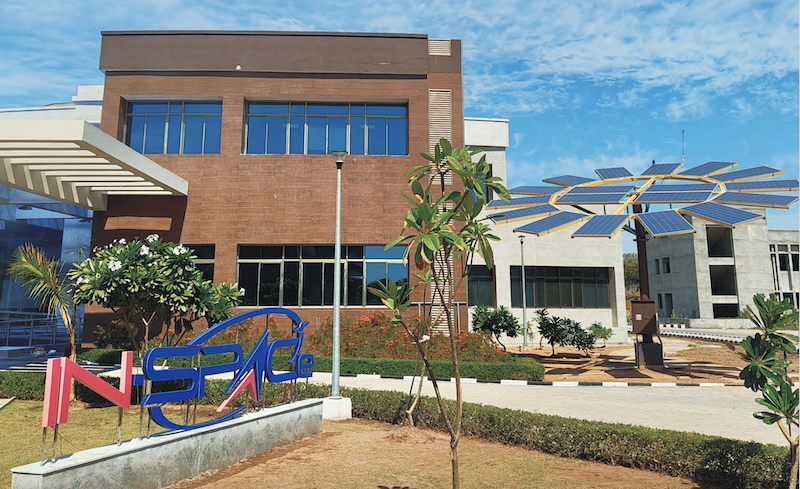
    MUMBAI:  India’s space regulator, The Indian National Space Promotion & Authorisation Centre (In-Space),  has granted a six-month extension for foreign satellites to continue providing communication and broadcasting services in India without formal authorisation.

    In-Space announced on Monday that foreign satellite operators now have until 30 September to obtain regulatory approval, extending the previous 31 March deadline.

    The decision follows concerns that popular television channels including Star, Zee and Sony could face service disruptions from 1 April if the authorisation process remained unchanged.

    “The cut-off date for continuation of the provisioning of existing non-Indian satellites capacity and the associated lease contracts has been extended to 30 September 2025,” In-Space stated in its announcement.

    Existing lease agreements set to expire during this period may be extended until the new deadline using current processes. However, the regulator emphasised that any new foreign satellites or additional capacity from existing satellites will require immediate In-Space authorisation.

    From 1 October, only foreign satellites with proper authorisation will be permitted to provide capacity in India across all frequency bands.

    The extension primarily benefits existing satellite arrangements, including those operating through lease agreements with New Space India Ltd (NSIL)/Antrix or through direct C-Band capacity leases from non-Indian operators.

  • Independent TV’s service remains unavailable due to failure of payment to Antrix

    Independent TV’s service remains unavailable due to failure of payment to Antrix

    MUMBAI: The service of troubled DTH operator Independent TV still remains unavailable as it has neither made the required payment nor furnished the bank guarantee to Antrix Corporation for reconnection of signals.

    The DTH operator’s signals were disconnected by Antrix on 12 June due to non-payment of outstanding dues. While Independent TV had filed an application before the tribunal to direct Antrix to resume supply of signals, TDSAT had directed Independent TV to pay up to Rs 12 crore in order to get signals reconnected by Antrix Corporation.

    The DTH operator was directed by TDSAT to pay Rs 5.83 crore along with a bank guarantee of Rs 6 crore or furnish a bank guarantee of Rs 12 crore valid for at least two months for the restoration of transponder service.

    “Since the petitioner has not been able to make the required payments or furnishing the bank guarantee, as indicated in the last order passed on 2.7.2019, the resumption of supply of signals has not happened. Petitioner should make the payments at the earliest,” TDSAT said in its order on Thursday.

    Moreover, the interim renewal of DTH licence to the operator has been suspended by the Ministry of Information and Broadcasting for the present and would be reconsidered only on the basis of retransmission of channels.

  • MIB suspends interim renewal of licence of Independent TV

    MIB suspends interim renewal of licence of Independent TV

    MUMBAI: The Ministry of Information and Broadcasting (MIB) has temporarily suspended the interim renewal of license of DTH operator Independent TV until it resumes transmission. Indiantelevision.com has learnt from sources close to the development that the renewal would be reconsidered only on the basis of retransmission of channels.

    MIB has also directed the troubled DTH operator in a communication to take immediate steps to settle the grievances faced by consumers within a tight time frame and an external audit as well. It has also restricted the soliciting of new customers until retransmission of channels.

    Independent TV abruptly shut its services more than a month ago creating confusion among consumers. As a result of failure of payment to Antrix Corporation directed by Telecom Disputes Settlement and Appellate Tribunal (TDSAT), the  DTH operator’s service is still unavailable. 

    The DTH operator’s signals were disconnected by Antrix on 12 June due to non-payment of outstanding dues. While Independent TV had filed an application before the tribunal to direct Antrix to resume supply of signals, TDSAT had directed Independent TV to pay up to Rs 12 crore in order to get signals reconnected.

  • TDSAT gives Kamyab TV 2 weeks to submit payment schedule to govt

    TDSAT gives Kamyab TV 2 weeks to submit payment schedule to govt

    MUMBAI: The Telecom Disputes Settlement and Appellate Tribunal (TDSAT) has granted further two weeks’ time to Kamyab Television Pvt Ltd for submitting a time schedule for payment of the admitted dues to Union of India and Antrix TV.

    Kamyab TV had asked for an extension of time to clear the dues in the last hearing as well, which was duly granted by the tribunal. However, TDSAT in its latest order has cleared that any further time in the matter will be allotted on appropriate costs.

    The next hearing of the case is now scheduled on 9 August.

    Kamyab TV had moved TDSAT earlier this year against Union of India, as the space allotted to it on INSAT-4A was de-activated in February 2017 i.e. about two years back for dues of approximately Rs 5 crore as alleged by the Union of India. The former quoted the due amount to be Rs 3.89 crore and expressed its desire to pay the dues in installments.

    Following that, Kamyab TV also filed another application in TDSAT asking Antrix to issue a NOC so that it may be able to avail the Space Segment Service Agreement from the authorised service provider, which was denied by the latter on the grounds of non-payment of entire admitted dues.

    Kamyab Television had submitted that only Rs 1 crore could be arranged and paid immediately to Antrix for urgent issue of NOC and on when it will resume the business, the rest dues will be cleared off from its earnings.

    TDSAT had noted that Kamyab Television Pvt Ltd’s offer of an upfront payment of Rs. 1  crore for NOC is not good enough unless it provides a specific time schedule for the payment of the entire admitted dues of Rs. 3.98 crores approximately only.  

    Kamyab TV had asked for a short adjournment for instructions and, if possible, to submit a reasonable time schedule for payment of the admitted dues, which was granted. In the last hearing, Kamyab TV asked for additional time to set the schedule, which was also granted.

  • TDSAT directs Independent TV to provide Rs 12 cr as bank guarantee to restore signals from Antrix

    TDSAT directs Independent TV to provide Rs 12 cr as bank guarantee to restore signals from Antrix

    MUMBAI: In a further development to the Independent TV v/s Antrix Corporation Ltd case, the former has been asked by the Telecom Disputes Settlement and Appellate Tribunal (TDSAT) to either pay Rs 5.83 crore along with a bank guarantee of Rs 6 crore or furnish a bank guarantee of Rs 12 crore to the latter to get its connection restored. The case has been set for further hearing on 7 August.

    Antrix had disconnected the signals of the DTH service-provider on 12 June due to its inability to meet financial conditions and had encashed the Rs 15 crore bank guarantee given by Independent TV post the last hearing in the case.

    Independent TV had filed an MA requesting the tribunal to direct Antrix to reconnect the signals as well as to enter into a long-term lease agreement with the petitioner since it has now received the required licence by the Ministry of Information and Broadcasting on certain conditions and the licence is valid till 31 December 2019.

    TDSAT noted that negotiations for a long-term lease agreement will take some time and some financial conditions must be established so as to secure the payment of the latest invoice raised by Antrix towards arrears which are Rs 5.83 crore.

    As contested by Antrix, the dues for a month of consumption would create a further liability of around Rs 5 crore and therefore, Independent TV should either pay the arrears forthwith or furnish bank guarantees for not less than the amounts indicated above i.e. around Rs 11 crore.  According to the submissions, the best case would be to direct the petitioner to furnish bank guarantee so as to cover the three months of space segment charges.

    “Considering that the petitioner (Independent TV) has been facing financial difficulties which led to disconnection as already noted, we are of the view that resumption of facilities in favour of the petitioner should be made available only on petitioner either paying the amount of Rs 5.83 crore along with a bank guarantee of Rs 6 crore or on furnishing a bank guarantee of Rs 12 crore valid for at least two months.  As soon as the petitioner complies with this part and furnishes the bank guarantee or makes the payment, respondent no. 1 (Antrix) shall reconnect the signals,” said TDSAT in its order.

    It further added, “Since the main prayer of the petitioner is a direction to Antrix to enter into a long term lease agreement, we direct both the parties to enter into negotiations so that a final decision in this regard may be taken at an early date, preferably within four weeks from the date of resumption of supply of signals. It goes without saying that if a long-term lease agreement is executed, the respondents will be protected by the financial conditions for the same.  In case a long-term lease agreement is not executed within the said period, the respondent no. 1 should disclose the reasons through an affidavit to be filed by the next date.  Necessary interim orders for payments etc. may be reconsidered on the next date.”

  • Independent TV’s suspended DTH service to resume after 3 July

    Independent TV’s suspended DTH service to resume after 3 July

    MUMBAI: While DTH provider Independent TV Network abruptly shut its services recently, the service is expected to resume only after 3 July as per an update on the website.  Earlier, the DTH operator said it was expected to resume after 22 June.

    “Dear customers, the decision on resumption of our satellite services is pending in the TDSAT court. We shall update on further developments, post the outcome of the court hearing already scheduled for 2nd July 2019. We appreciate your patience,” a message on website read.

    Recently, the Telecom Disputes Settlement Appellate Tribunal (TDSAT) had ordered it to clear its dues to Antrix Corporation by 12 June or else face a disconnection. It had to pay Rs 9 crore to Antrix or Rs 15 crore in the form of a bank guarantee.

    It is likely that the DTH operator was unable to pay as per the court order and hence Antrix disconnected its signal. The matter will further come up for hearing on 2 July.

    The DTH provider is a property of Garvit Innovative Promoters Ltd. If reports are to be believed, the distributors are now contemplating to approach TRAI and Ministry of Corporate Affairs against the company and its directors including Sachin Bhati.

    The company was launched in 2018 and was active in the state of Uttar Pradesh and had 26 distributors in just Meerut and Saharanpur division. It had more than 90 thousand subscribers in the division.

  • ISRO to launch 3 satellites for high-speed bandwidth connectivity

    ISRO to launch 3 satellites for high-speed bandwidth connectivity

    MUMBAI: To provide high-speed bandwidth connectivity to rural areas, the Indian Space Research Organisation (ISRO) will launch three more satellites as a part of the government’s digital India programme, according to a report by the Press Trust of India.

    After the successful launch of two UK satellites by Indian rocket Polar Satellite Launch Vehicle (PSLV) on Sunday, ISRO Chairman K Sivan said, “The ISRO will launch three more satellites, which together will provide international level bandwidth speed.”

    According to Sivan, the satellites are AGSAT 20 (to be launched next year), GSAT 11, and GSAT 29. GSAT 19 has already been launched.

    Sivan informed that the space agency had planned a series of launches over the next six months. There will be a rocket launch mission every second week.

    Sivan also said earth observation satellites will also be launched in addition to the communication satellites. The much-awaited moon mission will happen next January.

    “The launch window for Chandrayaan-2 mission is planned between 3 January and 16 February 2019. We are aiming for 3 January. We do not expect any delay in the Chandrayaan-2 mission,” Sivan said.

    Sivan said that ISRO will be the certifying agency for the rocket carrying Indian astronauts.

    According to Antrix Corporation, chairman-cum-managing director S Rakesh, the revenue from the launch of two UK satellites is over Rs 220 crore. Sivan said that the ISRO would like to get the expertise of other countries in this regard.

    India on Sunday night successfully put into orbit British earth observation satellites NovaSAR and S1-4 in copybook style.

    The two satellites belonged to Surrey Satellite Technologies Ltd (SSTL), UK.

    Queried about the next commercial launch, Sivan said, “The next PSLV rocket will carry 30 small satellites from third parties apart from carrying an Indian satellite.”

  • Parliamentary IT report cites high charge by Antrix as hurdle to satellite connectivity

    Parliamentary IT report cites high charge by Antrix as hurdle to satellite connectivity

    MUMBAI: Despite the Department of Telecommunications (DoT) citing high cost of satellite-delivered bandwidth to reach remote areas for providing broadband services, parliament’s committee on IT has observed that prohibitive cost should not come in the way of availing of the services as adequate funds are available, including those from Universal Service Obligation Fund (USOF).

    Earlier also DoT special secretary N Sivasailam blamed the turf war between the ministry and Indian Space and Research Organisation (ISRO) for delays in taking connectivity to far-flung areas.

    While in phase I of BharatNet project, satellite connectivity was taken up only in one gram panchayat (GP), but in phase II, more than 6407 GPs are planned to be connected. 4938 GPs are in North Eastern Region, 885 GPs in Jammu & Kashmir and 584 GPs are in the rest of the country. 1407 GPs were supposed to be provided with broadband connectivity through satellite by June 2018 by BSNL and the rest were to be completed by December 2018 through a bidding process. BSNL was expected to have completed connectivity to 1407 GPs by now.

    Shortage of satellite bandwidth and huge operational cost charged by “Antrix” are cited as the impediments associated with connectivity through satellite. The high operational cost is due to ISRO’s monopoly and the DoT has informed the committee that with the availability of more bandwidth in two to three years, sufficient capacity shall be available.

    “The capital cost of satellite is very little. But the recurring cost is prohibitive. We provide satellite connectivity on a very small bandwidth to Andaman and Nicobar and it costs us something like Rs 300 crore for that small population to be able to pay for bandwidth. It is typically because of the monopoly of ISRO. In India, satellite communication is 300 times more expensive than in the US. So, satellite is prohibitive. We are going for it only in areas where it is not technically feasible to do any other thing,” DoT secretary stated.

    Areas like Jammu and Kashmir, Uttarakhand, Himachal Pradesh and the North Eastern states have had basic challenges halting the project’s timely implementation. “The committee recommends that sincere efforts be made to achieve the target of providing connectivity through satellite to all the identified 6407 GPs covering above states,” the recommendation adds.

    When the committee questioned the DoT on the issue of availability of sufficient bandwidth, the representative of the department stated, “We want higher bandwidth for which the USOF and the Bharatnet can make the payment. But the bandwidth is not available. They are going to put two satellites in the orbit this year. With that more bandwidth would be available. But right now, there is a crunch of bandwidth with ISRO in these difficult areas, particularly in Jammu and Kashmir and North-East. So, the issue with the ISRO is availability of bandwidth and the cost is very high. It is higher if we compare it with the international rates.”

    Since heavy investment is involved, the committee even questioned if providing connectivity through satellite will be sustainable in the long run. To this the department stated that with the availability of more bandwidth in two to three years of time especially through High Throughput satellites in Ka-Ku band and Ka-ka band from DOS/ISRO sufficient capacity shall be available. ISRO is planning to launch series of satellites in near future to make available the enhanced satellite bandwidth.

    BharatNet project can enhance the lives of thousands giving them access to information available online and enhanced communication with the privileged part of the country. The ISRO and DoT issue needs to be resolved on priority basis to put an end to the delayed implementation.

  • ISRO stresses on indigenization; TRAI for Open Sky policy

    ISRO stresses on indigenization; TRAI for Open Sky policy

    NEW DELHI: Even as he advocated an Open Sky Policy for satellites usage, Telecom Regulatory Authority of India (TRAI) chairman R S Sharma said an early formulation of a satellite communication (satcom) policy was desirable if the goals of Digital India have to be achieved.

    On the other hand, Indian Space & Research Organisation (ISRO) agreed satellite services were crucial to the success of Prime Minister Narendra Modi’s dream of Digital India, but laid stress on indigenisation to become “self-reliant” over the next few years.

    Speaking at the ‘2nd International Summit ‘India Satcom – 2016’ on the theme of Broadband for all using NextGen Satellite Technologies, TRAI’s Sharma said connectivity was vital for a digital India and satellite can help in increase this connectivity.

    That was why, he said, TRAI is in favour of an Open Sky policy and had earlier too recommended on these lines in a report to the government.

    Sharma admitted that the internet connectivity in India was barely 15 per cent, though wireless connectivity was growing at a fast pace through smart-phones. There were only 20 million phones in the country but almost the entire country was connected through mobile phones, he said.

    Suggesting use of cable and digital television systems to enable delivery of broadband, the TRAI chairman admitted that certain “policy constraints have to be crossed.”

    He said if this is not done soon, then Digital India will not move forward much.

    Referring to Ka Band on satellites, Sharma said TRAI had issued a paper in this connection in April last year.  

    While Sharma pushed for a more liberalised satcom policy to realise the dream of Digital India faster, ISRO stressed on indigenisation for self-reliance without directly dwelling on an Open Sky policy.

    In a message read out in absentia, ISRO chairman and secretary in the Department of Space A S Kiran Kumar said there was need to hold full-fledged discussions on satellite services’ contribution to Digital India and also on formulation of a satcom policy.

    He stressed that ISRO was committed to an indigenous satellite system and added more (Indian) satellites were expected to be launched over the next few years to make the country self-dependent.

    ISRO has been criticised in the past on stifling the growth of Indian users of satellite services (like DTH and VSAT operators to name a few) owing to its inability to meet the demand with supply on INSAT, while mandating time-consuming processes for Indian customers to lease capacity on foreign satellites.

    Hong Kong-based Asian industry organisation CASBAA in a recent report had highlighted how stifling satellite policies were hampering a faster rollout of a digital India.

    Titled Capacity crunch continues: Assessment of satellite transponders’ capacity for the Indian broadcast and broadband market and released in March 2016, the CASBAA-PwC report had questioned the role of ISRO and Antrix (ISRO’s commercial arm) as a satellite operator, a research institute and an independent commercial entity.

    “The roles of a policymaker and enforcer should be assigned to independent entities,” The CASBAA-PwC report stated, indicating ISRO/Antrix present roles lead to conflict of interests.

  • ISRO stresses on indigenization; TRAI for Open Sky policy

    ISRO stresses on indigenization; TRAI for Open Sky policy

    NEW DELHI: Even as he advocated an Open Sky Policy for satellites usage, Telecom Regulatory Authority of India (TRAI) chairman R S Sharma said an early formulation of a satellite communication (satcom) policy was desirable if the goals of Digital India have to be achieved.

    On the other hand, Indian Space & Research Organisation (ISRO) agreed satellite services were crucial to the success of Prime Minister Narendra Modi’s dream of Digital India, but laid stress on indigenisation to become “self-reliant” over the next few years.

    Speaking at the ‘2nd International Summit ‘India Satcom – 2016’ on the theme of Broadband for all using NextGen Satellite Technologies, TRAI’s Sharma said connectivity was vital for a digital India and satellite can help in increase this connectivity.

    That was why, he said, TRAI is in favour of an Open Sky policy and had earlier too recommended on these lines in a report to the government.

    Sharma admitted that the internet connectivity in India was barely 15 per cent, though wireless connectivity was growing at a fast pace through smart-phones. There were only 20 million phones in the country but almost the entire country was connected through mobile phones, he said.

    Suggesting use of cable and digital television systems to enable delivery of broadband, the TRAI chairman admitted that certain “policy constraints have to be crossed.”

    He said if this is not done soon, then Digital India will not move forward much.

    Referring to Ka Band on satellites, Sharma said TRAI had issued a paper in this connection in April last year.  

    While Sharma pushed for a more liberalised satcom policy to realise the dream of Digital India faster, ISRO stressed on indigenisation for self-reliance without directly dwelling on an Open Sky policy.

    In a message read out in absentia, ISRO chairman and secretary in the Department of Space A S Kiran Kumar said there was need to hold full-fledged discussions on satellite services’ contribution to Digital India and also on formulation of a satcom policy.

    He stressed that ISRO was committed to an indigenous satellite system and added more (Indian) satellites were expected to be launched over the next few years to make the country self-dependent.

    ISRO has been criticised in the past on stifling the growth of Indian users of satellite services (like DTH and VSAT operators to name a few) owing to its inability to meet the demand with supply on INSAT, while mandating time-consuming processes for Indian customers to lease capacity on foreign satellites.

    Hong Kong-based Asian industry organisation CASBAA in a recent report had highlighted how stifling satellite policies were hampering a faster rollout of a digital India.

    Titled Capacity crunch continues: Assessment of satellite transponders’ capacity for the Indian broadcast and broadband market and released in March 2016, the CASBAA-PwC report had questioned the role of ISRO and Antrix (ISRO’s commercial arm) as a satellite operator, a research institute and an independent commercial entity.

    “The roles of a policymaker and enforcer should be assigned to independent entities,” The CASBAA-PwC report stated, indicating ISRO/Antrix present roles lead to conflict of interests.