Tag: antenna

  • Cable operators meet to counter DTH threat

    Cable operators meet to counter DTH threat

    MUMBAI: Feeling the threat that direct-to-home (DTH) would offer, cable operators met in Mumbai today to discuss how they could beat the competition.

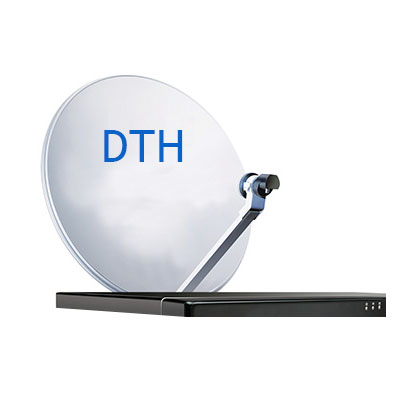
    They were particularly concerned about the way a DTH service provider was approaching housing societies in Mumbai with the proposal of offering residents a central dish antenna through which it would connect individual installations. This would, thus, do away with the usual practice of each flat owner having to buy a dish.

    The meeting was called by Cable Operators and Distributors Association (CODA) and multi system operators (MSOs) were invited to offer their views. No decision has been taken yet on what course of action the cable operators would take.

    “By setting up a common dish antenna, the DTH operator can grab away the entire society. This amounts to redistribution of signals and is unfair,” says a last mile operator who attended the meeting.

    Tata Sky Ltd, the joint venture between the Tatas and Star, has approached societies of several high-rise buildings in Mumbai with such proposals because individual dish antennas, though not expensive, would be a difficult proposition in homes. Besides, marketing it to societies would be less tedious and cumbersome a process than approaching individual homes.

    Defending the strategy, Tata Sky CEO Vikram Kaushik says this is only one of the many proposals that the company is making to rope in DTH subscribers. “Whenever any restructuring happens in any business, there will be forces which will have to adjust to the new reality,” he elaborates.

    Tata Sky is planning to start its DTH service anytime between March and June 2006. It is awaiting the launch of ISRO’s Insat 4A satellite on 16 December.

    In the meeting, representatives from MSOs suggested cable operators to push for digital cable TV. By being able to seed set-top boxes (STBs), they will be more effective in retaining their subscribers. “Antagonising any broadcaster by blacking out channels is not the solution, at least not immediately. Other ways have to be tried out. Ultimately we have to compete in the market with technologies like the DTH,” an executive from a leading MSO said.

    CODA will meet again next week to decide on what action cable operators would take. “There are many issues that the cable industry faces. We were discussing some of them,” CODA president Anil Parab said, refusing to specify any single topic that dominated the meeting.

    Siticable CEO Jagjit Kohli, Incablenet president Manoj Motwani and senior executives from Hathway Cable & Datacom attended the meeting.

  • Isro’s 34 meter diameter antenna for moon mission

    BANGALORE: Electronics Corporation of Indian Limited (ECIL) will develop a 34 meter diameter deep space antenna for deep space.

    An MOU had been signed with ISRO to this effect, work has commenced and land acquisition efforts are in progress as per Dr. M Y S Prasad, director of ISRO’s master control facility, Hassan while speaking at the press conference. Prasad announced the launch of the Bangalore based ATREE’s first Eco-Informatics Center, the web-site being www.ecoinfoindia.org. This antenna would be ready for the same by 2008.
     

    As reported earlier, ISRO (The Indian Space Research Organisation) planned to launch 4 satellites this year – the Cartosat-1 -a remote sensing mapping satellite, Insat 4A, the Carrostat-2 and the Insat 4C.

    Cartosat-1 with Hamsat-1 riding piggyback were successfully launched with the Polar Satellite Launch Vehicle (PSLV) at the Satish Dhawan Space Center at Sriharkota earlier this month.


    Clearances are awaited from the Europe Launch Agency – Arianespace for launch of the other satellites.

  • Insat-3A’s deployment operations completed

    Insat-3A’s deployment operations completed

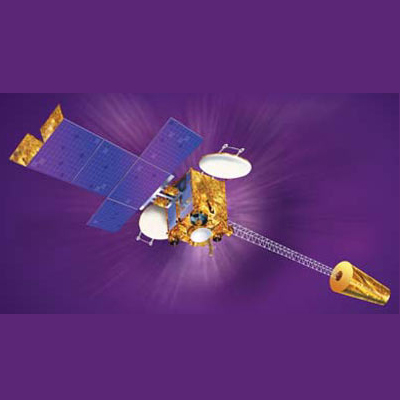
    MUMBAI: The Indian Space Research Organisation’s (Isro) Insat-3A satellite’s solar array and the two Antennas have been deployed. This follows the succesful placement of the next generation multi-purpose satellite in its geostationary orbit on Monday.
     

    In the first operation, managed from Isro’s Master Control Facility in Hassan, Karnataka, the solar array on the south side of the satellite was deployed in two stages. The main solar panels were deployed yesterday 10:40 am (IST), followed by the deployment of two side panels. Then, the antenna reflector on the west side of the satellite was deployed at 11:30 am and finally the antenna reflector on the east side was deployed at 12:15 pm.

    The Sun-tracking solar array of Insat-3A has a total area of 26.6 sq m and it is designed to generate 3.1 kW of power in orbit. The satellite has two deployable antennas and one fixed antenna to carry out various transmit and receive functions.

    Earlier in the day (6 am), the three-axis stabilization of Insat-3A was carried out. In this configuration, the spacecraft will be locked to Earth continuously through the optical sensors, and will maintain the correct attitude to look at the Earth in a stable manner. The Momentum Wheels onboard the satellite were switched ON and stabilized to the nominal speed of 4500 revolutions per minute to provide gyroscopic stiffness and facilitate 3-axis stabilization.

    The deployment of the Solar Sail/Boom on the north side of the satellite was carried out shortly after the 3-axis stabilization of the satellite.

    With this, all the deployment operations have been completed.

    The health of INSAT-3A is normal. The satellite is now located at 87.4 deg East longitude and is moving towards its designated orbital slot of 93.5 deg East longitude.