Tag: Annual report

  • Asci releases ‘sector report card 2021-22’: Ad violations by top six sectors

    Asci releases ‘sector report card 2021-22’: Ad violations by top six sectors

    Mumbai: The Advertising Standards Council of India (Asci) has recently released its annual complaints report for the financial year 21-22. The report provided information on the complaints examined and advertisements handled by the self-regulatory organisation. The report processed 4,184 advertisements across mediums including print, digital media and television.  

    The significance of the digital ecosystem was reflected in the fact that 48 per cent of the ads that Asci processed were published digitally, 29 per cent of the complaints that were filed concerned influencers, and the top six violative categories showed the emergence of sectors like gaming and cryptocurrency.

    The report also delves into the specifics of the advertisements examined, the types of complaints, the results of the ads processed, and the involvement of influencers and celebrities in each sector. Education, with 23 per cent increase in comparison to last year, remains the single largest violative industry, followed by gaming (472 per cent increase) and personal care (261 per cent increase).

    Education

    ASCI discovered 23 per cent more violations in this category during fiscal years 2020–21. The edtech category accounted for six per cent of the 1,728 ads checked. In total, 90 per cent of these advertisements were in print. 1.2 per cent were broadcast on television, 8.8 per cent were digital, and 0.1 per cent were distributed through other mediums.

    Nine ads featuring celebrities were found to be misleading, and 12 more were added with influencer disclosure violations.

    Only one per cent of the ads were rejected, while the other 99 per cent required modification. Under the procedural outcomes of cases requiring modification – 17 per cent had informal resolution, 83 per cent were upheld.

    The report stated, “Most of the violative claims against the education industry were pertaining to leadership, awards and rankings, and job guarantee claims. Comparative superlative claims like highest success, lowest fees, etc, and performance outcome claims like best results, success assured were also common. In addition to these, there were a significant number of money back guarantee claims, usually clubbed with result-oriented or outcome-related claims.”

    Gaming

    The gaming industry grew by 472 per cent in fiscal years 2021-22 compared to the previous year. Asci, in total, looked into 383 cases in this category. Where four per cent of the records were not valid, three per cent were dismissed, and 94 per cent required some modification. 11 per cent of ads were upheld while 89 per cent of them had an informal resolution: not contested.

    In total, one per cent of these advertisements were in print. One per cent was broadcast on television, 99 per cent on digital, and none were distributed via other means.

    Eight ads featuring celebrities were found to be misleading, and 22 added with influencer disclosure violations.

    “Most violative claims in the gaming industry were pertaining to leadership, guaranteed winnings, prize money assurance and safety, security & privacy claims. Other claims like consumer trust – trusted by three billion users etc., and comparative claims like win better, Xtimes more winnings were also seen,” said the report.

    Personal Care

    Surprisingly, Asci’s total number of ads checked increased by 261 per cent in the previous fiscal year, to 531. As per the report, four per cent of these were nullified, five per cent dismissed, and 91 per cent required modifications.

    While 69 per cent had an informal resolution—not contested, 31 per cent were upheld. Four per cent of these ads appeared in print, six per cent on television, 88 per cent in digital, and two per cent in other mediums. Four ads featuring celebrities were found to be misleading, and 371 ads were found to be violating the influencer disclosure code.

    In the report, Asci stated, “There were various claims made in the advertisements looked into under this category. Most of the violative claims were pertaining to product performance. Owing to the ongoing pandemic, we saw a number of protection and prevention claims, particularly those claiming protection from germs like viruses and bacteria. Besides these, there were comparative claims, ingredient performance-led claims, natural and organic product claims, leadership claims, consumer trust and recommendation by experts claims.”

    Healthcare

    The previous year saw a surge in Covid cure/protection claims that settled as the pandemic progressed, resulting in a 20 per cent decrease in ads seen by Asci on a fiscal year basis, from 967 to 775 in FY’22.

    The procedural outcomes of cases are: while 19 per cent had an informal resolution—not contested, 62 per cent were upheld, and 19 per cent were in DMR/Covid violations. Adding to that, 0.3 per cent of complaints were not valid, 1.7 per cent were dismissed, and 98 per cent required modification.

    Five ads featuring celebrities were found to be misleading, and 15 more were found to be violating the influencer disclosure code.

    The medium split of the platforms where these ads are published is: 75 per cent of these ads are in print, three per cent on television, 21 per cent in digital, and one per cent in other media.

    According to the report, the majority of the most egregious claims in the healthcare industry concerned leadership, awards and rankings, and comparative claims, particularly in clinics and hospitals. Treatment assurance claims were also fairly common. For drugs and medicinal products, claims of cure, prevention, and protection were the most common. Health condition reversal and product performance claims were among the other violative claims noted. There has been a rise in the occurrence of natural ingredient or procedure-led treatment or cure claims.

    Food & Beverages

    ASCI found a 31 per cent increase in violations in this category during fiscal years 2020–21. Asci, in total, looked into 373 cases. As mentioned in the report, 16 per cent of these advertisements were in print. Seven per cent were broadcast on television, 73 per cent were digital, and four per cent were distributed through other means.

    The procedural outcomes of cases requiring modification recorded 53 per cent informal resolution: not contested and 47 per cent upheld. Adding to that, two per cent of complaints were not valid, 14 per cent were dismissed, and 84 per cent (two cases are currently sub-judice) required modification.

    The number of ads featuring celebrities found to be misleading and violating the influencer disclosure code is two and 131, respectively.

    The report said, “Almost every product sub-category under F&B had immunity boosting claims along with ingredient benefit and product performance claims. Comparative claims, leadership claims, and health and disease risk reduction claims were also common. Like many other categories, there was an increase in claims pertaining to protection from and prevention of various diseases caused by viruses and bacteria. Other claims included awards and rankings, natural source/organic foods, consumer trust, and quality claims.”

    Virtual Digital Assets (VDA)

    The Asci report highlighted that advertising in this category had not been so prominent in the previous years. Therefore, the recorded number this year included only 394 ads in the process, of which four per cent were invalid, one per cent were rejected, and 95 per cent required modification.

    Additionally, while 53 per cent were informal resolution: not contested, 47 per cent were upheld.

    None of the ads featuring celebrities were found to be misleading this year. The number of violations in influencer disclosure stood at 385.

    The medium split of the platforms where these ads are published is: one per cent of these ads are in print, one per cent on television and 98 per cent in digital media.

    The report added, “Most of the advertisements looked into under this industry were influencer disclosure cases, where influencers were talking about how to navigate the VDA platforms or sharing information about the category and how the platform is easy to operate. From some of the ads that made misleading claims, leadership and consumer trust claims were most common. Guaranteed earnings and performance comparisons with other modes of investment like gold and stock investment are followed. The other commonly found claims revolved around promoting the category through referral programme claims like ‘refer a friend and win’.”

  • FY 2022-23 will be a transformational year for the company: Hathway Cable & Datacom MD Rajan Gupta

    FY 2022-23 will be a transformational year for the company: Hathway Cable & Datacom MD Rajan Gupta

    Mumbai: On building a profitable business, Hathway Cable and Datacom managing director Rajan Gupta stated that he believes FY 2022–23 will be a transformational year for the company.

    The provider of Cable and Internet services in its annual report mentioned the annual gross revenue up by 4 per cent to Rs 1,793 crore in FY 2022 as compared to FY 2021. After this, Gupta seems confident in increasing the company’s market share.

    Gupta said that with the worst of the pandemic effect seemingly behind us, and sports & other live entertainment events fully back in action, the environment looks favourable for the revival of the cable TV business currently.

    The company is confident that the efforts being made to prepare the platform for making deeper inroads into the market will significantly yield benefits in the increasing market share in the cable TV segment, going forward. It is focussed, committed and motivated to play a pivotal role in helping India’s media and entertainment industry bounce back, stronger than ever.

    Simultaneously, he also mentioned that the company acknowledged the current business environment has changed dramatically in the post-Covid world. In this difficult year, the company invested in building organisational competencies to align them with the evolving market and consumer demands & aspirations. “We have focussed on developing our capabilities in crisis management, enterprise agility, cost management, workforce resilience and innovation, which we believe to be the pillars of our growth-centric business model. Initiatives are also underway to leverage digital platforms to enhance the competencies of our partners in the cable TV business, as more than 90 per cent of our consumers in this segment are being serviced through our local cable operators,” Gupta added.

    He further noted that with the pandemic catalysing a new surge in demand, the FTTH (fiber to the home) segment of the business saw a healthy 20 per cent growth in revenue earning customers in these challenging times. “However, our cable TV business health was challenged due to a multitude of extraneous consumer and environmental factors. Limited original content, financial stress experienced by consumers in the Covid world, and multiple lockdowns led to many of them moving from metros to their home towns in this period. This, in turn, caused the bottom of the pyramid consumers to shift to value offerings, thereby limiting our ability to monetise this business,” Gupta said.

    Armed with in-depth industry knowledge and consumer understanding, Hathway responded to the situations with a powerful thrust on cable TV network expansion and transformation. Coupled with digital innovation, customer delight and workforce agility, the company is able to navigate successfully these unprecedented times.

    In line with this strategy, the company rolled out more than 140 new towns and added more than 3,000 kms of fibre network during the year under the community antenna television (CATV) business. With innovative next-generation high-definition (HD), high-efficiency video coding (HEVC) and over the top media service (OTT) set-top boxes delighting customers, Hathway scaled its consumer proposition for millions of new TV consumers. “These boxes host many new exciting industry-first features, such as time-shift – enabling users to watch a programme on one channel while recording a programme on another, radio channels, among others. We have also initiated a cable TV network transformation project, aimed at ensuring that our network is benchmarked to telco standards in terms of uptime, redundancies, resiliency and proactive monitoring,” he said.

    In the annual report, the company said that at the heart of its strategic thrust on continuous innovation lies a strong ambition to empower customers. “We invest in modern technologies, including artificial intelligence (AI) and machine learning (ML) applications and tools, to stay connected with our customers at all times. This helps us foster meaningful interactions with our customers,” he quoted.

    Taking its local cable operators (LCO) partnerships to the next level, the company also noted that amid the challenges of the year, Hathway’s marketing team pushed its efforts to improve communication with its LCO partners and assist them in growing the business. As part of these efforts, it identified the pain points of its LCOs, devised exciting ideas to pique their interest, and launched initiatives to raise awareness of its products and services.

    As part of these efforts, it identified the pain points of its LCOs, innovated exciting ideas to grab their attention, and took initiatives that helped create awareness about its products and services. According to the report, this triggered a new level of LCO activation and re-energisation of the stalled engagement.

    On the content front, the company plans to launch Kflicks, a dedicated channel for Korean content with dubbing in Kannada and Telugu languages for Karnataka, Andhra Pradesh, and Telangana markets. There will be English subtitles for the rest of the markets.

    The move is aimed at catering to the high demand from the new generation and the millennials. It also plans to launch an app, LCO LightHouse, to raise awareness about the LCO portal’s underutilised features, provide the necessary information, promote new or existing schemes & increase engagement.

  • Improving corporate reputation through enhanced reporting

    Improving corporate reputation through enhanced reporting

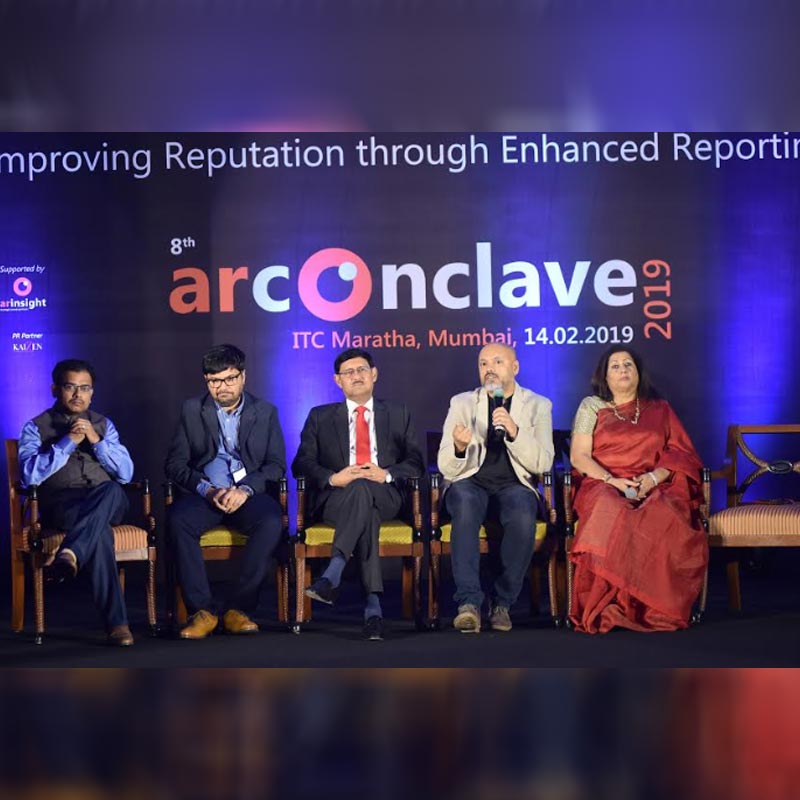
    MUMBAI: The 8th edition of the AR (Annual Report) Conclave, a signature event by AR Insight & ReportInsights took place at India’s commercial capital – Mumbai on 14th February 2019. The conclave witnessed the convergence of 200+ corporate reporting authorities and enthusiasts at a day-long event, that concluded with the launch of the world’s first ever coffee table book on annual reports, #trendsetters. The event was split into two parts, day-deliberation and evening-celebration.

    Day-deliberation: The first part of the conclave witnessed a battery of 22 proven authorities deliver 4 keynote addresses and 3 panel discussions. The speaker galaxy included Mr. Nilesh Shah, Prof. R Narayanaswamy, Mr. Shriram Subramaniam, Mr. Sandeep Parekh, Mr. Nagesh Pinge, Mr. Prasanna Sankhe, Dr. Aditi Haldar, Ms. Beroz Gazdar, Mr. Kaushal Sampat, Mr. Makarand Lele, Mr. Naresh Patil, Mr. Nikhel Kochhar, Mr. Pramod Joshi, Mr. Prathmesh Raichura, Mr. R. Kannan, Ms. Roma Balwani, Sairam Prabhu Vedam, Mr. Shankar Jaganathan, Mr. Sudip Bandyopadhyay, Mr. Suhas Tuljapurkar, Dr. Y.K Saxena and Mr. Pravin K. Ujjain who spoke on three critical aspects; corporate governance, annual reports and sustainability.

    Delivering the opening remarks, Chief Guest – Nilesh Shah, Managing Director of Kotak Mahindra AMC (Asset Management Company) said, “As a community we need to come together, the accountants, the auditors, the rating agents, the investors and the regulators where we have appropriate standards, appropriate governing mechanisms and appropriate punishments. I look forward to this conclave spreading awareness on truthful corporate reporting and we could usher in an era where all the accounting balance sheets can be trusted at their face value.”

    Two highlights of the daylong conference were ‘Crystal Gazing Annual Report 2024’, where the panelist emphasized the role of storytelling, innovation and digital content curation to make future annual reports more engaging, crisp and objective; and ‘Business Case of Sustainability Reporting’, the session that emphasized the need for integrating environmental and social performance of a company along with its financial performance.

    Evening-celebration: The second part of the conclave started on a much fashionable note with the launch of world’s first ever Coffee Table Book on Annual Reports, #trendsetters. The Coffee Table Book celebrates the trendiest annual reports released by Indian companies between a five-year period of 2014 and 2018. A visual treat that has been curated from a seemingly as mundane and uninspiring corporate document called annual report presents creative masterstrokes that Indian annual report designers and writers have delivered against all odds. #trendsetters acknowledges top-100 Indian companies for trendiness of their annual reports. Mid-cap and small-cap companies outsmart their large-cap counterparts in this unique list, highlighting their extra efforts in weaving extra stickiness and engagement value in their annual reports.

    Unveiling the coffee table book, #trendsetters, Indian Annual Reports: 2014 -2018, evening session Chief Guest- Dr. Mukund Rajan said, “It is a new concept and I am delighted to be a part of such an innovation. AR Conclave has managed to revolutionize itself and the reporting world each passing year.”

    Elaborating on the vast subject of the conclave Mr. Rajan also shared his views on ESG (Environment, Social and Governance), “Looking at the ESG what we noted was the need and opportunity for higher ESG standard in India is enormous. We constitute around 18% of the world’s population and are one of the most important geographies for the fulfillment of United Nations Sustainable Goals. We need new focus on ESG to offer a new and much needed mantra for sustainable investing and better returns for our investors. We have taken around 20 trillion dollars of funds that are backing an ESG approach. It is one of the fastest growing equity and there is strong and growing research that demonstrates strong correlation between ESG investment and good returns for investors.”

    Expressing his gratitude on successful staging of 8th AR Conclave, CEO – AR Insight cum Managing Editor – ReportInsights, Mr. Pravin K Ujjain said, “What is heartening to note is that AR Insight has created an aspirational industry benchmark by instituting the AR Conclave. We are delighted and humbled to have put together the 8th edition of the AR Conclave for the entire corporate fraternity and are thankful to everyone who has joined us at the conclave. The Indian annual reports have made the sharpest improvement vis.a.vis. their western counterparts in the last 8 years and AR Conclave and our various research and rating publications have made their own contribution in catalyzing this change.”

    He added, “After a successful conclave this year, we will be back with a new set of eclectic speakers and promise to deliver one of the most insightful and interactive conference next year. “

    The AR conclave was a starry affair which brought together the crème de la crème of the corporate world. The event ended on a cheerful note with happy faces all around and a plenty of key takeaways for India Inc. to further improve their annual reports.

  • James Murdoch set to take over as Sky chairman again

    James Murdoch set to take over as Sky chairman again

    MUMBAI: Four years after he resigned as chairman of BSkyB, which is now known as Sky Plc, Fox CEO James Murdoch is all set to take over as chairman of the company yet again.


    European broadcaster Sky Plc, which is backed by Rupert Murdoch, has named James to the post after Nicholas Ferguson resigned as chairman of Sky.


    James had quit BSkyB after News Corp failed to push through a takeover of the broadcaster.


    Fox now owns 39 per cent of Sky, which was formerly held by News Corp.


    Ferguson decided to step down as chairman and as a director of the company at the end of April after 12 years on the Board. After joining the Board as a non-executive director in 2004, he was appointed as chairman in 2012 and has led the Board during a period of strong growth for the company, including the transaction to bring together the Sky businesses across Europe.


    On the other hand, James has been a director of the company since February 2003 and previously served as CEO from November 2003 to 2007 and as chairman from 2007 to 2012.


    Martin Gilbert has been appointed as deputy chairman, with Andrew Sukawaty taking over his former role as Sky’s senior independent director.


    Ferguson said, “It’s difficult to find the right time to step down from chairing a great company and working with an outstanding Board and management team. I joined the Board 12 years ago, in 2004, meaning that I have been with Sky for nearly half its life. When I became chairman in 2012, I wrote in the Annual Report that I would stay on long enough to ensure continuity. The then virtually new Board is now seasoned and bedded in. We have completed major international acquisitions in Germany and Italy; they are running to plan and we have first-class management in place. Sky continues to grow impressively, to innovate with wonderful products and to serve its customers to the highest standard. So now is the right time for me to step back. I am sure that the company will continue to prosper under the leadership of Jeremy supported by James and the Board.”


    Murdoch said, “I would like to thank Nick for his outstanding contribution to the Board over the last decade and more. I am proud to have been asked by the Board to serve as Chairman of Sky, one of the world’s leading pay TV companies. Jeremy and the team at Sky have done an outstanding job in building a dynamic and successful company. As Chairman, I look forward to working with the Board and management as they continue to deliver a great service for Sky’s customers and create value for all shareholders over the years to come.”


    Gilbert added, “I would like to give the warmest thanks to Nick for the major contribution he has made to Sky. He has provided valuable leadership as chairman and played a significant part in the company’s progress over many years. I am very pleased that James has agreed to succeed Nick. Having seen first-hand James’s contribution to and passion for Sky, the Board feels he is uniquely qualified to become chairman. I am also pleased that Andrew Sukawaty, with his meaningful experience in public companies and in our industry, has agreed to serve as Sky’s senior independent director.”

  • James Murdoch set to take over as Sky chairman again

    James Murdoch set to take over as Sky chairman again

    MUMBAI: Four years after he resigned as chairman of BSkyB, which is now known as Sky Plc, Fox CEO James Murdoch is all set to take over as chairman of the company yet again.


    European broadcaster Sky Plc, which is backed by Rupert Murdoch, has named James to the post after Nicholas Ferguson resigned as chairman of Sky.


    James had quit BSkyB after News Corp failed to push through a takeover of the broadcaster.


    Fox now owns 39 per cent of Sky, which was formerly held by News Corp.


    Ferguson decided to step down as chairman and as a director of the company at the end of April after 12 years on the Board. After joining the Board as a non-executive director in 2004, he was appointed as chairman in 2012 and has led the Board during a period of strong growth for the company, including the transaction to bring together the Sky businesses across Europe.


    On the other hand, James has been a director of the company since February 2003 and previously served as CEO from November 2003 to 2007 and as chairman from 2007 to 2012.


    Martin Gilbert has been appointed as deputy chairman, with Andrew Sukawaty taking over his former role as Sky’s senior independent director.


    Ferguson said, “It’s difficult to find the right time to step down from chairing a great company and working with an outstanding Board and management team. I joined the Board 12 years ago, in 2004, meaning that I have been with Sky for nearly half its life. When I became chairman in 2012, I wrote in the Annual Report that I would stay on long enough to ensure continuity. The then virtually new Board is now seasoned and bedded in. We have completed major international acquisitions in Germany and Italy; they are running to plan and we have first-class management in place. Sky continues to grow impressively, to innovate with wonderful products and to serve its customers to the highest standard. So now is the right time for me to step back. I am sure that the company will continue to prosper under the leadership of Jeremy supported by James and the Board.”


    Murdoch said, “I would like to thank Nick for his outstanding contribution to the Board over the last decade and more. I am proud to have been asked by the Board to serve as Chairman of Sky, one of the world’s leading pay TV companies. Jeremy and the team at Sky have done an outstanding job in building a dynamic and successful company. As Chairman, I look forward to working with the Board and management as they continue to deliver a great service for Sky’s customers and create value for all shareholders over the years to come.”


    Gilbert added, “I would like to give the warmest thanks to Nick for the major contribution he has made to Sky. He has provided valuable leadership as chairman and played a significant part in the company’s progress over many years. I am very pleased that James has agreed to succeed Nick. Having seen first-hand James’s contribution to and passion for Sky, the Board feels he is uniquely qualified to become chairman. I am also pleased that Andrew Sukawaty, with his meaningful experience in public companies and in our industry, has agreed to serve as Sky’s senior independent director.”

  • Subscription is biggest contributor to TV industry revenues: TRAI

    Subscription is biggest contributor to TV industry revenues: TRAI

    MUMBAI: India is one of the most profitable and growing markets when it comes to the television ecosystem. In terms of the broadcasting sector consisting of television and radio, India has the world’s third largest TV market after China and USA.


    The annual report of Telecom Regulatory Authority of India (TRAI) for the year 2013-14 has detailed out activities of the Authority, which was presented in the Lok Sabha and the Rajya Sabha in March this year.


    According to the annual report, as on March 2014, of the 270 million households, around 169 million have been projected to have television sets catered to by cable TV systems, DTH services, IPTV services and the terrestrial TV network of Doordarshan, put together.


    While DTH has 64.5 million registered subscribers (37.2 million active subscribers), IPTV caters to around half a million subscribers. On the other hand, cable TV is estimated to have around 99 million subscribers, whereas the terrestrial TV network of Doordarshan covers about 92 per cent of population of the country through a vast network of terrestrial transmitters. The broadcasting and cable television services sector consists of 55 pay broadcasters, an estimated 60,000 cable operators, 6000 multi system operators (MSOs) (including 144 MSOs registered in DAS), six pay DTH operators, apart from pubcaster – Doordarshan, having free-to-air DTH service.


    There were 793 TV channels registered with the Ministry of Information and Broadcasting at the end of financial year 2013-14 out of which 187 were SD pay TV channels and 34 HD Pay TV channels. India’s TV industry grew from Rs 37,010 crore in the year 2012 to Rs 41,720 crore in the year 2013, thereby registering a growth of around 12.7 per cent.


    “The subscription revenue accounts for the major share of the overall revenue of the TV industry. The subscription revenue grew from Rs 24,500 crore in the year 2012 to Rs 28,100 crore in the year 2013. The advertisement revenue in the TV sector in India grew up from Rs 12,500 crore in the year 2012 to Rs 13,600 crore in the year 2013,” states the report.


    The last decade has significantly changed the dynamics of the Cable and Satellite (C&S) TV market. One of the most significant developments has been the digitisation of the cable TV sector in India. The process of digitisation is underway, in a phased manner. By the March 2014, more than 22 million Set Top Boxes were deployed. While implementation of digitization with addressability is going to be a game changer and would drive the growth of the broadcasting and cable TV services in the country, the DTH sector is registering a growth of around one million subscribers per month. This clearly indicates the growing popularity and acceptability of digital addressable platforms, which have a lot more to offer to all the stakeholders.


    Stakeholders in cable and satellite TV service sector


    As of March 2014, the total number of TV channels registered with the Ministry of Information and Broadcasting was 793, which include 187 SD pay channels, 34 HD pay channels and four advertisement free pay channels. These channels are owned by around 350 broadcasters (content owners), out of which 55 are the pay TV broadcasters.


    Satellite TV channels


    The number of satellite channels permitted by MIB has grown from 449 in 2009 to 793 in 2014. The number of pay SD channels has grown from 130 in 2009 to 187 in 2014. The report states that there are total 33 operational HD channels in India till 2013.


    DTH Services


    Since its inception in 2003, DTH operators have been adding new subscribers at a rate of around one million per month, attaining a registered subscriber base of around 64.82 million subscribers of pay DTH services catered by the six DTH operators by March 2014. This is besides the viewership of the free DTH services of Doordarshan. In March 2009, there were a total of 13.09 million DTH subscribers. This number grew to 21.30 million, 35.56 million, 46.25 million, 56.48 million to 64.82 million subscribers for the years 2010, 2011, 2012, 2013 and 2014 respectively.


    Cable TV Services


    Cable TV service is the largest television service sector with an estimated subscriber base of around 99 million subscribers. From 52 million subscribers in March 2004 it has risen by 58 million, 66 million, 72.5 million, 80 million, 84 million, 88 million, 92 million, 94 million and 99 million cable TV subscribers from 2005 – 2013 respectively.


    Digital addressable Cable TV systems


    As per data provided by various MSOs, there were around 85 lakh STBs deployed in the first phase areas of DAS implementation covering four metros namely Delhi, Mumbai, Kolkata and Chennai. In the second phase of DAS implementation, covering 38 cities, approximately 142 lakhs STBs were deployed as on March 2014.


    Trends in the tariff in the Broadcasting sector


    In order to provide cost effective broadcasting services to the consumer, TRAI has laid down regulatory framework, from time to time, in the form of tariff orders. The tariffs for areas served through non-addressable systems, notified DAS areas, and that for the addressable systems such as DTH, HITS and IPTV etc are governed by respective tariff orders issued by TRAI.


    Further, the wholesale pricing has been prescribed with a certain cap, linked to non-addressable platforms tariff ceilings. With these provisions at the wholesale and retail levels, a trend is likely to emerge where the subscription pattern is consumer specific rather than defined by the service providers.

  • BCCI reports lower gross media rights income in 2013-14

    BCCI reports lower gross media rights income in 2013-14

    MUMBAI: The annual report of the Board of Control for Cricket in India (BCCI) for the financial year 2013 – 14 shows a decline in gross media rights income as it dipped from Rs 774.24 crore  to Rs 419.38 crore. The honourary treasurer of the board Anirudh Chaudhry blamed lack of international action in India for the dip in media rights income. During the year of consideration, the annual gross receipts from international tours was Rs 193.52 crore as against the Rs 216.02 crore in the previous year.   


    BCCI’s million dollar baby Indian Premier League (IPL) did not disappoint the treasurer. Gross receipts from IPL 2013 were Rs 1194 crore as against Rs 892 crore of previous year. 


    The treasurer said, “This is because the receipts from IPL media rights income have gone up from Rs 556 crore to Rs 844 crore and the franchisee consideration has gone up marginally from Rs 460 crore to Rs 502 crore.”


    The rights income from Champions League has also gone up, as a substantial hike from Rs 278.88 crore to Rs 327.50 crore was registered. 


    Receipt from ICC share of distribution remained at Rs 32.26 crore. There is a reasonable increase in interest income from Rs 85 crore last year to Rs 120 crore for the year of consideration. “This is mainly because of better treasury operations in getting better-negotiated interest rates for the short term deposits and efficiency of operations,” said Chaudhry.


    In the year under consideration, the expenses on cricketing operations went down marginally from Rs 551.17 crore to Rs 516.83 crore. The provision for gross revenue share payable to the players has gone down from Rs 48.57 crore to Rs 11.02 crore. “This is because of the lesser media rights income. From 2013-14, the Board decided that all the common expenses, which are not allocable to any specific tournament would be apportioned on the basis of revenue generated by IPL, CLT20 and BCCI’s international tours. This will reflect more accurately the income generated from these activities of Board,” said Chaudhry. 


    In the year under consideration, the surplus of income over expenditure was Rs 526 crore as against Rs 319 crore in 2012-13, before any appropriation. In the current financial year 2014-15 the budgeted surplus is estimated at Rs 391 crore. 


    During the year four finance committee meetings were held. The following decisions were taken during the year: 


    · The Board awarded the Team Sponsorship contract for the period from 1 January 2014 till 31 March 2017 to Star India. 


    · Star India was awarded the title sponsorship for the limited period from October 2013 to December 2013 in which two series i.e., India versus Australia and India versus West Indies were played. 


    · The back office of the honorary treasurer was set up in Chennai from 1 April, 2014 and the coordinating office of honorary treasurer was established in New Delhi. 


    · The allowances and fees payable to support staff accompanying the senior team, A team, under 19 team, junior team and women’s team were revised.


    · Under the scheme of One Time Benefit to former players, an amount aggregating to Rs 1.55 crore was paid during the year under consideration. 


    · Under the infrastructure subsidy scheme, the member units have claimed Rs 764.03 crore till 31 March, 2014, including subsidy for ground equipment. 


    · During the year, Board invoked the Bank Guarantee given by Sahara Adventure Sports (Pune Franchisee) to recover the balance franchisee consideration of Rs 133 crore. 


    · During the year, as per the order of Supreme Court of India, the three bankers of Nimbus, who had provided the Bank Guarantees of Rs 1600 crore together and who had not honored the invocation of the Bank Guarantees by the Board and had challenged the invocation, paid Rs 400 crore to the Board against an undertaking from the Board that in case the decision goes against BCCI the said amount will be returned along with the applicable fixed deposit interest.


    · During the year the team won the ICC Champions Trophy and the Board awarded prize money of Rs 1 crore to every playing member of the team and Rs 30 lakh to every member of support staff. 


    · In the last Annual General Meeting, a new Finance Committee was appointed under the chairmanship of Dr. Ganga Raju. The Finance Committee and the Treasurer’s office benefited from the rich experience of Dr. Raju.

  • Digitisation has enhanced industry’s transparency levels: Zeel annual report

    Digitisation has enhanced industry’s transparency levels: Zeel annual report

    MUMBAI: In June 2013, Zee Entertainment Enterprises (Zeel) unveiled its new corporate identity ‘Vasudhaiva Kutumbakam’.


    It was inspired by ‘The World is my Family’ philosophy with an all-new positioning which creatively integrated and crafted with the brand logo. The annual report of the media and entertainment conglomerate for 2013-14 incorporates its ‘One Zee, One Anthem’ philosophy.


    The vibrant and stakeholder-friendly annual report gives an insight into the media house highlighting how its reach and viewership share has grown from strength to strength.


    Zee’s evolution as a global media brand is vindicated by its 730+ million viewers across 169 countries. This apart, it also added one more channel, Zindagi, to its list taking the toll to 33 for its domestic channels. Zindagi, launched on 23 June, showcases content from Pakistan and has the tagline ‘Jodey Dilon Ko’. It also launched another brand ‘&’.


    With the strategy to offer specific content to relevant markets, the powerhouse also added two more international channels to its kitty – Zee Bioskop in Indonesia and Zee Nung in Thailand. It is pushing boundaries forward to realise its vision of being a leading global media powerhouse by the year 2020.


    Apart from this, the company also launched Zee Music Company entering into the country’s Rs 960 crore music market.


    The three key value drivers for brand Zee are pioneering, prudent and predictability. And these have helped it contribute 26 per cent of the corporate brand to the enterprise value as of 31 March 2014.


    In the last five years, Zee’s revenues grew at 15.30 per cent CAGR. The consolidated revenue during FY 2014 grew by 20 per cent y-o-y to Rs 46,024 million.


    In a message to shareholders, Zeel chairman Dr Subhash Chandra highlights that even though there is a question mark on India’s domestic growth and there persists a general climate of pessimism, the company’s experience and expertise has helped it grow and overcome roadblocks to unleash their creativity.


    “Digitisation has been instrumental in enhancing the industry’s transparency levels. The phase I and II roll out restructured the industry’s standards. With consumers ready to pay for quality content, complete digitisation will entail multiple benefits, such as industry growth, transparency and increased ARPUs for industry players,” he said in the annual report.


    54 per cent of revenue is generated through advertisements while 63 per cent of the total distribution expense comes from operational cost.


    Zeel MD and CEO Punit Goenka spoke about the future of India’s M&E industry. “Currently valued at Rs 417 billion, it poised to reach Rs 885 billion by 2018 as per the latest KPMG report. Zee will continue to raise the bar in terms of content innovation, operational excellence and global footprint to sustain its industry leadership.”


    With the total strength of more than 2200 people at the company, the annual report shares views of other management teams as well as outsiders like Shahrukh Khan, Sam Balsara, Rishi Jaitly among many others.


    The 32nd annual general meeting of the company will be held on 18 July at 11 am in Nehru Auditorium in Mumbai.


    Annual reports are not just numbers; they are a piece of handiwork through which a company can promote itself, its prospects to its various stakeholders.  AICL Communications is in-charge of making Zeel’s report more interactive rather than just plain vanilla.