Tag: Anjan Mitra

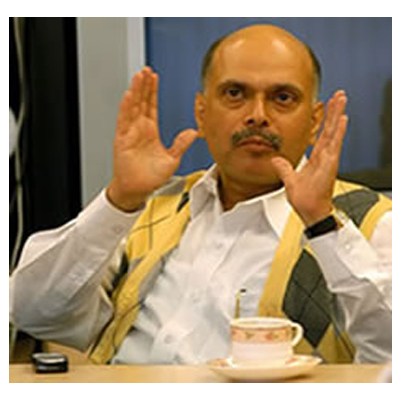
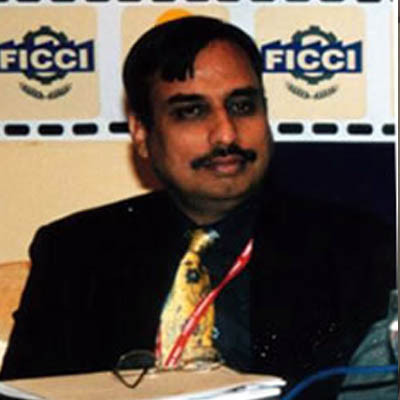
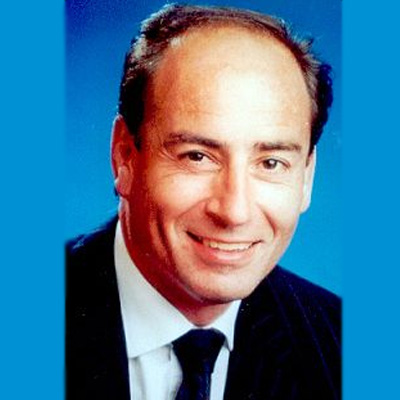
  • ‘In some areas, we have done better than One Alliance, while in some areas we have done as well as Star. But no denying that at a national level Star bouquet is way ahead of others’ : Arun Poddar – Zee-Turner CEO

    ‘In some areas, we have done better than One Alliance, while in some areas we have done as well as Star. But no denying that at a national level Star bouquet is way ahead of others’ : Arun Poddar – Zee-Turner CEO

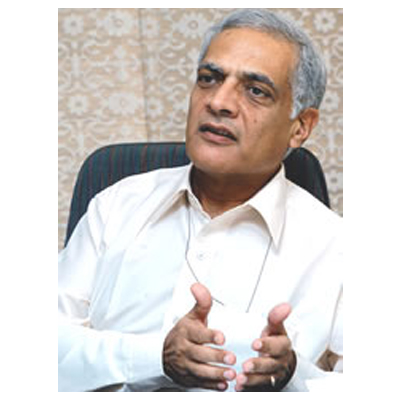
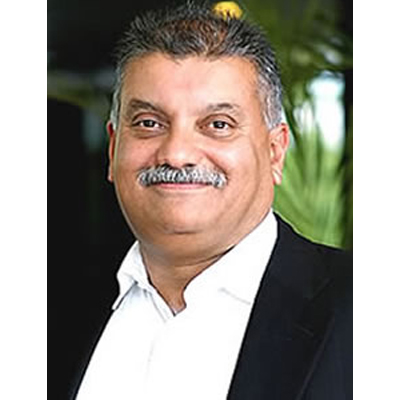
    Arun Poddar is an industry veteran with an enriched experience and excellent track record of over 23 years in sales and distribution. He brings with him vast experience in media and broadcasting industry and proven ability in the FMCG sector. A business management graduate, Poddar started his career with Maxwell Industry. During his tenure of seven years with Maxwell, he successfully established a robust distribution network in the eastern region of the country.
    One of the many important tasks that Poddar undertook during a stint at ESPN was seamless transition of ESPN from Modi Entertainment Network, which used to be responsible for ESPN’s distribution. After working with ESPN Star Sports for seven years, Poddar joined Ten Sports as vice-president, distribution and marketing. Utilizing his expertise in sales and distribution, garnered over 21 years, he successfully structured and developed an in-house distribution team. At Ten Sports, he also established a working and monitoring format to create a direct relation between company and trade.
    After spending two years at Ten Sports, Poddar joined Zee Turner as its chief executive. A person who loves to read, paint and listen to music, Poddar in this interview with
    Indiantelevision.com Anjan Mitra holds forth on various aspects of the broadcast industry.

    Excerpts:

    What is your overview of the present scenario of the broadcast industry?
    If you really see the broadcast industry in the last 10 years, then it has evolved a lot from being totally fragmented to a situation where big corporate bodies have come in and are trying to evolve a corporate structure. The distribution segment too has seen this happening with big MSOs coming in and trying to bring a semblance of order in the business.

    At one point when big corporate entities started coming into the industry’s various segments it was felt that the industry as a whole would shape up faster having well defined corporate identities and professionally managed businesses as in other sectors. Unfortunately, that did not happen.

    From a broadcaster’s point of view under-declaration of the subscriber base had always been an issue, which slowly became an accepted norm. The whole flip-flop on CAS since 2003 has added to the confusion in the market. However, CAS in its second inning now seems to be more of a reality than just talking about bringing in new technologies.

    With the arrival of DTH and CAS, the choice of a consumer gets widened. It gives broadcasters a competitive edge as good content and a strong channel would be a winner. From cable operators’ point of view, new technologies not only bring in transparency in the whole system, but also some orderliness.

    Don’t you think that intra-industry differences and constant appealing to the umpire (the government or the regulator) has impeded industry’s growth?
    Fundamentally, everybody had their own agenda. There has always this issue of declaration or under-declaration between the cable fraternity and broadcasters. Most industry disputes emerged from this basic issue of want of more declaration of the subscriber base or a resistance to it.

    Now this basic issue gave rise to subsidiary areas of dispute. I’d say that want of more subscriber base, price hike and introduction of new channels on limited bandwidth are at the core of ills afflicting the industry. These always created an environment that was not very conducive for business on either side.

    The regulator’s efforts to address industry issues cannot be negated. At the end of the day, any industry difference would affect the subscriber. It’s always beneficial to have a neutral agency to oversee an industry as it helps the industry too to go to such a body and bounce off ideas.
    Over the last 18 months or so every issue, major or otherwise, seems to be going to disputes tribunal, which results in loss of time and inconvenience to subscribers. What do you have to say about this trend?
    This was bound to happen. When (industry) grievances are kept captive for long one glimmer of hope in a tribunal makes stakeholders run to it. Had there been a regulator or a disputes tribunal from the start or even earlier, the rush of cases in TDSAT would not have been there. It’s like giving vent to accumulated fury.

    As part of the broadcast industry, are you, unlike some others, in favour of a regulator?
    I am definitely in favour of a regulatory body.

    Even if the regulatory body may end up over-regulating the industry?
    A regulation is a regulation. At least in India you have the freedom to stand up and ask the reasons for a particular regulation and what led to its formulation. Ideally, a regulatory body should take care of the interest of all stakeholders, including consumers. It’s foolish to think that broadcasters should grow and the MSOs shouldn’t. If a particular segment is not growing, then the whole industry suffers.

    It’s easy to put the blame for all industry ills on one particular segment, but that’s not the case and a regulator should see it turns out to be a win-win situation for all.

    What do you think of the revenue share formula that the Telecom Regulatory Authority of India (Trai) has mandated?
    At this point of time, I feel there is scope to better it (from a broadcaster’s point of view). Also, at this juncture we could put across our views to the regulatory body, which would be done in all probability.

    If you ask me, what should have been the broadcasters’ share of revenue accruing from pay channels, I’d say 50 per cent, instead of 45 per cent. The remaining could have been divided in the ratio of 20:30 between the MSOs and local cable operators.

    I am giving the LCOs more share as they are the retailers, while MSOs are whole sellers. In marketing practices, retailers always have the bigger margin.

    Why do you think broadcasters’ share of the revenue gravy should be more?
    Simply because broadcasters are making investments in programming. If cable TV subscribers and viewers in general want high quality programming, then broadcasters need to invest in such shows. Quality production can only come through higher investments and costs cannot be limited or capped.

    How would broadcasters bring quality stuff if their margins are clipped? Every business runs on the formula that the return on investment is balanced. Low investments could also mean low quality production values. Would Indian viewers settle for shoddy programmes and production values?

    What’s your opinion on Trai’s move to legitimize carriage fee charged by MSOs, a reality that was never discussed openly or accepted?
    I don’t think carriage or a fee paid for carriage on cable networks’ prime band would be an issue in a digital era towards which everybody is working. A digital system will take care of not only quality of broadcasting, but also the shortage of space that’s plaguing cable networks.

    Do you feel that ratings of various TV channels will get affected during initial phase of CAS, scheduled to be rolled out from 1 January 2007?
    Any change will have its rub-off effect on all stakeholders, including customers. A transition phase always throws up some doubts, which would get ironed out over a period of time.

    'Ideally, a regulator should take care of the interest of all stakeholders.
    It’s foolish to think that b'casters should grow & MSOs shouldn’t'

    Is there a chance of some pay TV channels going free in CAS areas to safeguard their reach, which is important vis-?-vis advertising revenue?
    I really don’t think so. If the content is powerful, consumers will pay for a channel. It can happen that broadcasters introduce new free to air channels. I don’t foresee a scenario where existing pay channels turn free to air.

    Do you foresee a scenario where a consumer picks and chooses channels in a CAS regime depending on events for a short period of time?
    It is a possibility and will revolve around marketing initiatives. For example, a pay channel can be made available to a consumer for a year at X price. Now if that consumer wants the channel for just six months, then the cost would X plus a certain percentage. Shorter the period, higher would be the premium.

    This trend could be a big concern for sports broadcasters as actual pay-per-view comes into vogue. These are advanced technologies, which will follow when digitalization, DTH and CAS set in properly.

    Will CAS turn out to be beneficial from a distribution point of view?
    Certainly. Apart from bringing about some transparency in the whole system, CAS would make the environment competitive, while giving more choice to a consumer. Distribution will have a bigger role to play in such a scenario.

    With the introduction of CAS and expansion of DTH services, the focus of distribution will be more on consumer rather than just a broadcaster’s client, which is the MSO. As a distribution person, I’ll also have to keep in mind the interest of my client’s clients (consumers). Therefore, there would be a lot of play while servicing clients.

    To facilitate a loyal customer base for a cable operator, it will be very important for me to also go and directly talk to the consumer about a broadcasting product.

    What will Zee Turner do to dial the customer directly?
    The primary objective should be the content and then creating awareness about it. As a company we would try to create a communication channel with the consumer/viewer to keep him in the loop about my product in its entirety.

    The approach would have to be 360 degree in the sense that we get feedback from consumers, hitherto not permitted by cable operators to approach directly, and then create products or upgrade existing channels depending on the feedback.

    In a small way, Zee Turner has started hooking up with the consumer. But it’ll take more time for this exercise to bloom fully as some doubts still persist. Those uncertainties have to be removed before a full-fledged consumer relationship exercise can be rolled out.

    What are the future plans for Zee Turner?
    With consumer becoming the king as options for him open up, thanks to new technologies, I need to be more close to him. Most company activities will be revolving around this theme of getting up close to the consumer, apart from satisfying my direct customers, the MSOs.

    For this to happen, activities like events have to be organized either via TV channels or on the ground. As a bouquet, Zee Turner has the largest number of channels (32) across most possible genres of programming. The task before us is to pick up our positives and pass it on to the consumer in a way that is understood by him.

    'In some areas, we have done better than One Alliance, while in some areas we have done as well as Star. But no denying that at a national level Star bouquet is way ahead of others'
    Do you think the regulator is doing a fair job on the pricing front? (The question was asked before Trai mandated all pay channels will be priced at Rs 5.)
    I think the regulator is trying to do a fair job.

    Has a deal with Tata Sky been concluded?
    We are talking to each other. We had suggested a price for Zee Turner bouquet of channels based on the formula mandated by a disputes tribunal in case of Dish TV and Star India. Tata Sky is not comfortable with the suggested price.

    What are the issues bogging down an agreement to be concluded?
    Tata Sky wants to be selective in terms of channels (from the Zee Turner bouquet), which we are not agreeable to; especially when such a criteria has not been adopted for other bouquets.

    Has Tata Sky given any reason for being selective with Zee Turner channels?
    The reason is quite obvious: lack of transponder space to accommodate all channels. But we also feel this reason is not true. We are keen on giving our channels to Tata Sky, but one cannot have different set of conditions for different broadcasters. Moreover, we are guided by an order from TDSAT.

    What are the revenue targets for Zee Turner this financial year?
    Zee Turner with a subscriber base of 4 million for bouquet 1 and 3.7 million for bouquet 2 is targeting a turnover of Rs 4000 million by the end of this financial year in March 2007. This should translate into 30-35 per cent growth in revenue compared to last year. I am not taking into account bouquet 3 as the subscriber base and revenue is negligible at this point of time.

    I can say with pride that we have been improving our performance. In some areas, we have done better than One Alliance (Discovery-Sony distribution joint venture), while in some areas we have done as well as Star. But there is no denying that at a national level, the Star bouquet is way ahead of others.

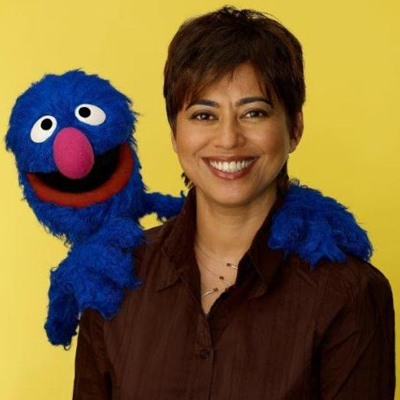
  • ‘Culturally, linguistically diverse India is a test case for us’ : Sesame Workshop India ED Sashwati Banerjee

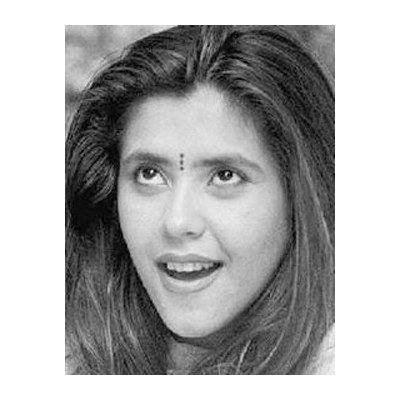
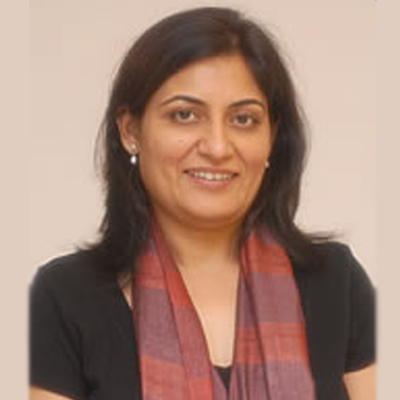
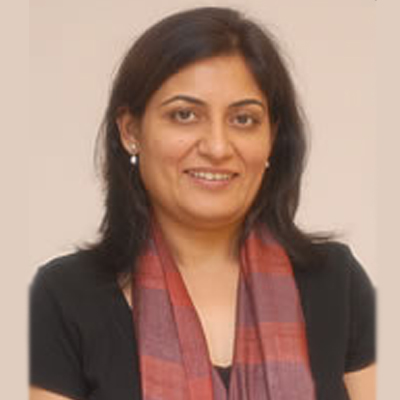
    ‘Culturally, linguistically diverse India is a test case for us’ : Sesame Workshop India ED Sashwati Banerjee

     For both Sesame Workshop and its newly-appointed executive director for Indian operations, Sashwati Banerjee, India is a big challenge. The US-based Sesame Workshop might have revolutionized pre-school education through various initiatives, including the path-breaking TV show Sesame Street, but replicating a global model here will be a tough task.

    Rather, if communications expert Banerjee is to be believed, Sesame Workshop is adopting an entirely new game plan for India, apart from innovating on some aspects that incorporate what it has done in other parts of the globe. She agrees that India may become the incubator for a model that could be replicated elsewhere too.

    Founded in 1968, Sesame Workshop changed television forever with the legendary Sesame Street. Today, the Workshop continues to innovate on behalf of children in 120 countries, using its proprietary research methodology to ensure its programmes and products are engaging and enriching.

    For Banerjee, who’s dabbled in various assignments from India to Hong Kong to the US, the changeover to children’s education from healthcare communications is a step that was not taken easily. But after initial doubts were cleared by Sesame Workshop CEO Gary Knell, it has been hectic work for the lady who grew up and studied in Delhi, but spent quite a few years in Hong Kong doing “this and that”, as she would modestly say.

    In this conversation with Indiantelevision.com’s Anjan Mitra, Banerjee spells out her priorities and gives a glimpse into Workshop’s plans for India. She also cribs a bit on procedural delays and lack of readily available comprehensive data/research on government-aided education initiatives and child behaviour.

    Excerpts:

    What’s the aim of setting up Sesame Workshop India?
    Sesame Workshop India would primarily be the outreach arm to promote early childhood initiative and the educational curriculum of Galli Galli Sim Sim (the Indian version of Sesame Street) through a multi media platform, especially to children who are most in need or underserved. The educational curriculum of Galli Galli… has been designed by Indian educators, researchers and writers keeping in mind India’s cultural and social diversity and needs.

    How will that be done?
    What Sesame Workshop really brings to the table is technical knowledge and expertise in early childhood education and development. These are the two broad areas we are working with. How will it go about doing it? One arm of the education initiative is the television show Galli Galli… which is going to be broadcast on Cartoon Network, Pogo and (terrestrial broadcaster) Doordarshan. The other aspect of the initiative is to see how we can extend and reinforce that learning through a variety of other activities with the help of technology to bridge the digital divide.

    The target audience is children aged between two to six years and their caregivers, which include parents and teachers using educational materials that are fun and make learning engaging “because all children deserve a chance to dream and discover, to understand the world and their place in it, to reach their highest potential…”

    We would be working with other organizations that are already active in this field and our mandate is to help them develop programmes that will take such initiatives forward.

    Seed Funding has been provided by Turner India

    How would Sesame Workshop leverage Galli Galli…?
    Television is just one of the ways in which the educational curriculum will be delivered is television. Sesame Workshop India will help to deliver Galli Galli… across other mediums – from print, training, interpersonal communication to high technology initiatives like the internet. While the television series is expected to reach audiences across India, there is still a large population who have limited or no access to television. It is through Sesame Workshop India’s outreach efforts that this population will be reached.

    Moreover, research has shown that children who watch Sesame Street or its various local versions in countries round the globe are better prepared for school in terms of cognitive learning and the show has helped prevent children from dropping out of school.

    When is Galli Galli Sim Sim likely to make its debut on Cartoon Network and Pogo?
    Galli Galli Sim Sim will premiere on Cartoon Network in mid-August after which it will be aired on Pogo. But for those broadcasting details, Turner is best placed to provide more information.

    How is Sesame Workshop funding its initiatives in India?
    Seed Funding has been provided by Turner India (a Time Warner company). Sesame Workshop India, like any other not-for-profit organization, will raise funds to support its activities in India.

    When Indiantelevision.com spoke to Sesame CEO Gary Knell, he had said corporate houses too would be roped in for funding activities. Has any development taken place in this regard?
    Those things would take place after we set up shop formally and get our basic act in place. Presently, we are in the process of getting our clearances from various government agencies.

    However, we’d like to tap big corporate houses for funds as part of a corporate’s social responsibilities. There are quite a few business houses that are involved in educational initiatives and we’ll look at partnering with them in various ways.

    What role would the Indian government play in Sesame’s scheme of things? What are those few things that Sesame must consider as it goes forward?
    In order to understand the critical priorities of the Indian government – where Sesame Workshop can collaborate, and highlight areas of concern – Sesame Workshop had organized a workshop that brought together a cross-section of relevant stakeholders in New Delhi in early December 2005.

    Briefly, the discussions were participative and each government department and agency, professional educational bodies, and the voluntary sector brought their own set of issues to the fore providing for comprehensive inputs towards future planning and strategy. In fact, there was a consensus around the fact that the media can help overcome constraints posed by the existing administrative structures across the country, which are highly segmented.

    We are hoping to work with diverse partners, develop and create innovative materials and build capacity at all levels. Our vision is to reach as many children as possible in India by partnering with government’s Sarva Shiksha Abhiyaan or Universal Education programme with material that will make learning joyful and help the government in reaching its educational objectives.

    Considering Turner International India had provided the money for a corpus, what would be its role?
    Turner is the TV series’ co-producer and distributor of Galli Galli Sim Sim. Together, Sesame Workshop and Turner are committed to making Galli Galli Sim Sim a break-through educational programme and brand. Sesame and Turner are working closely to ensure that India’s children will have access to this new show and its educational messages, and are actively pursuing promoting the show on multiple platforms across India.

    Is the telecast deal with Turner exclusive or can it be done with other broadcasters in other Indian languages too?
    As far as the agreement with Turner is concerned, all I can say is that it’s for at least five years or five seasons of Galli, Galli… I cannot hand out any financial details or presently comment on the fact whether we can work with other broadcasters or not.

    Generally, Sesame Workshop works with the public service broadcaster of the country concerned, but there had been some initial problems with Doordarshan, which, I am told, have been sorted out now by Turner India.

    India is a vast country and getting educational initiatives in all the local languages would not be possible. But we would certainly be exploring at least one South Indian language, if not two, apart from Hindi. The details haven’t yet been worked out and would be done in consultation with Turner.

    Will the Indian ops undertake merchandising activities too?
    We are focusing on the launch of the show and have nothing to announce at the moment.

    How are such merchandising activities done elsewhere in the world?
    Sesame Workshop operates in 120 different countries. The modus operandi varies from country to country and partner to partner.

    How is the revenue generated from such activities used and what will be the game plan for India?
    Like I said, Sesame Workshop is a not-for-profit organization. Any revenue generated through merchandising or licensing go towards providing quality early childhood education and development around the world – to those who are most in need.

    How important is India as a market for Sesame?
    Of the 103 million children aged 2-6 years, over 35 per cent in rural areas and 48 per cent in urban areas can’t access Early Childhood Care and Education. Roughly 100 million live in urban slums alone, which have no access to Integrated Child Development Scheme (ICDS) that is the primary vehicle for Early Childhood Care and Education in India.

    While Early Childhood Care and Education is definitely a felt need and lot of efforts have been put in by the government and private institutions, other issues like malnutrition and child heath take precedence for ICDS. Demand has never been an issue in education. Supply is what we need to focus on.

    Does Sesame Workshop feel that the Indian regulatory environment requires too many procedural clearances impeding quick start of operations?
    Actually, the Indian regulatory environment has been extremely supportive for us. We have had representation from the government and other public education bodies right from conceptualization to production of Galli Galli Sim Sim, which is being produced for Turner by Miditech. We work closely with Indian educators to arrive at the educational curriculum that looks at ‘whole child’ approach and is very much in line with the education policy of this country.

    However, India is a test case for Sesame Workshop as it is uniquely ahead of most developing countries in terms of market and economy and the size of population. More importantly, India is not a donor funded country as sizeable infrastructure is being built by Indians. Then in India, we are not working primarily with the terrestrial broadcaster, unlike in other countries. We do hope that the time block on DD will continue airing Galli Galli… for a long time to come.

    I don’t see Galli Galli… broadcasting in 22 Indian languages. What we can do is to take the essence of educational initiatives and roll it out in outreach that can happen in multiple languages.

    In those terms, India is a learning experience for Sesame to see what kind of partnerships work best and how sustainable models can be built up for impact in a country that is culturally and linguistically diverse.