Tag: Anita Nayyar

  • TV festive ad spend to reach Rs 8000 cr; experts divided

    TV festive ad spend to reach Rs 8000 cr; experts divided

    MUMBAI: The festive months of October and November are welcome months not just for you and your family, but for most Indian brands as well. After all, they eagerly wait for this early window when consumers loosen up their purse strings and put their Diwali bonuses to good use, aka, shopping.

    Thus, it is almost a tradition in the marketing world to budget separately for the third financial quarter, and sometimes allot a majority share of their marcom budget to campaigns during this period. New trends emerge each year from consumer behaviour, which, in turn, decide how brands invest their advertising budgets. Unlike last few years, media experts have mixed opinions on what this year’s festive season means for the advertising industry as a whole.

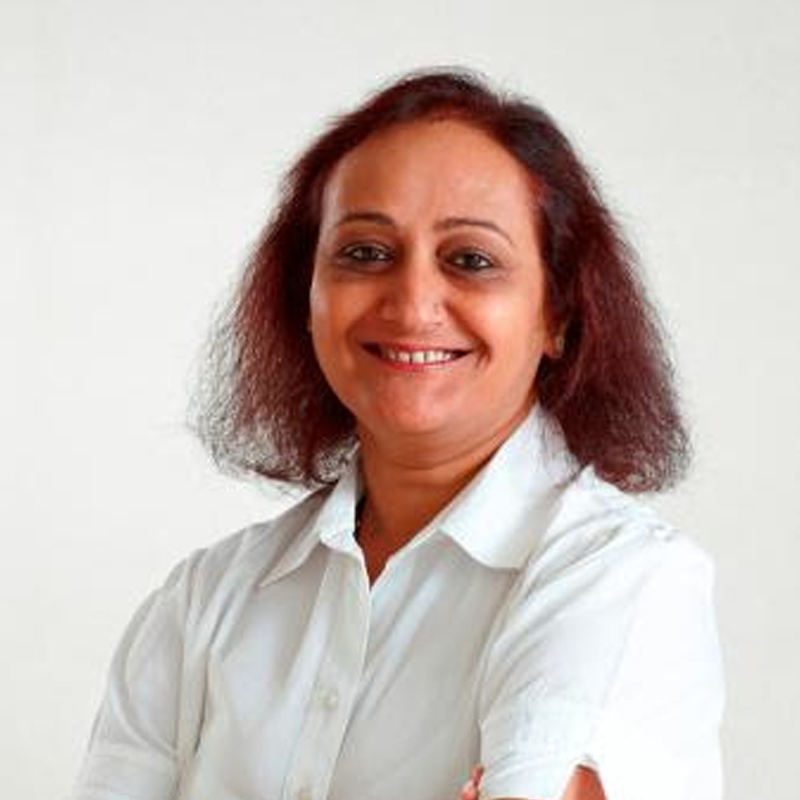
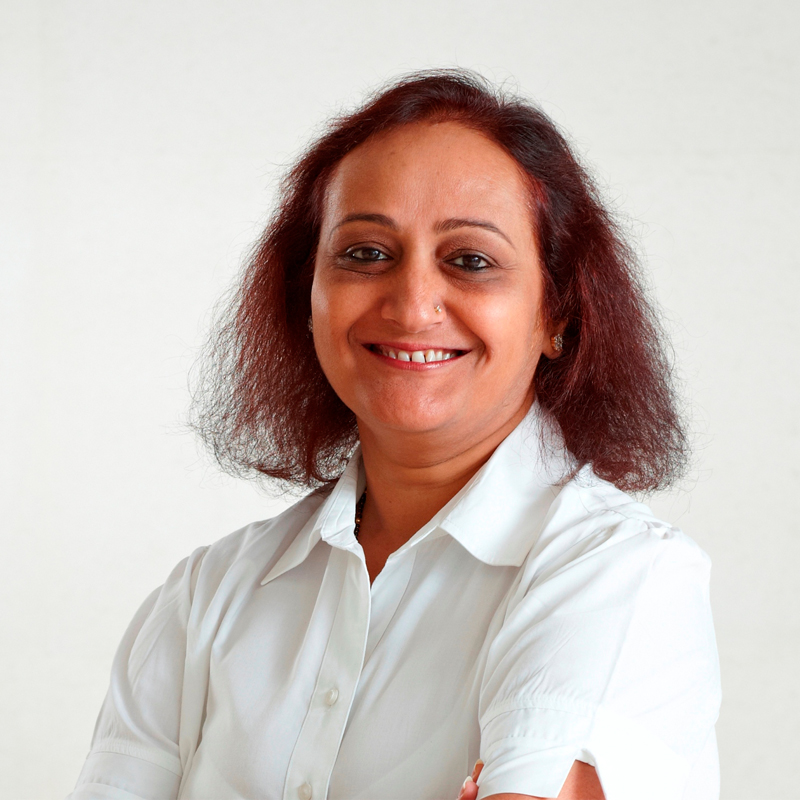
    Many within the industry believe this Diwali isn’t lighting up as bright as they had wished. Brands aren’t spending ad dollars as enthusiastically as they had in the last few years. “The festive season itself has shortened this year. Instead of stretching out to November, this year Diwali is wrapping up by October, leaving a 15 to 20-day period for Diwali campaigns. Barring the bigger e-commerce players, we did not see many brands advertise before the 2nd week of October. Even when it comes to print, which usually commands the lion’s share of festive ad spends, there were very few jacket ads that were spotted,” pointed out Havas Media Group India CEO Anita Nayyar.

    This year’s most noticeable trend would be polarised points of view on how the e-commerce players are spending. According to several media reports, e-commerce players have cut down their media spends on television this year and are concentrating on print instead.

    “Compared to their spends last year, the spend on print has pretty much remained the same. They (the e-commerce players) have also had multiple sales promotions instead of just one major sale day and the print has dominated the promotion budget of these sales. When it comes to their spends on digital, most of them are performance related than pure innovation or advertising. It is directly tied to purchase,” observed a media planner requesting anonymity.

    The expert also correlated the category’s marketing spends strategy to the consolidation that has happened in the sector in the last one year, including major developments like Jabong being bought over by Flipkart’s Myntra.

    “In general, it wasn’t as great a year for e-commerce players as last year. The accountability is much higher on performance than it was in the previous few years. Most of their current spends are to make sure they have enough sales,” the planner adds.

    Nayyar too believes that e-commerce players have become very cautious of how they spend this year. “Not just in TV, but over all even throughout the year, e-commerce brands have toned down. Most of these companies are in their 5th and 6th year, and that is when returns have to show up.”

    What does that mean for the television industry? Have the ad revenues dropped because of this? “Not at all,” reassured another senior executive. According to him, “E-commerce spending on television has actually increased in the range of 60-65 per cent,” He acknowledges that ‘print pie is always the highest considering the tactical nature of festival communication with its local and regional role that it plays.”

    It could be because, “while the total number of players in the e-commerce have relatively reduced or opted out of spending increasingly on TV this year, the big players such as Amazon, Snapdeal, and Flipkart continue to spend a lot on TV,” shared Dentsu Aegis Network chairman Ashish Bhasin.

    With the festive season just around the corner, Droom, India’s pioneering online automobile transactional marketplace, is taking the celebrations up a few notches by allocating INR 10 crore to its marketing budget.

    Snapdeal earlier announced that it would spend Rs.200 crore on a 360-degree campaign spanning over 60 days in the run-up to the Diwali festival. eBay India marketing director Shivani Suri too recognises this period as the ‘most important time of the year, where they expect to do the most sales.” Online automobile marketplace Droom too had promised Rs 10 crore of its marketing budget to the season.

    According to Bhasin, the total festive season ad ex of the market across media is estimated to hit a whopping Rs 20,000 crore this year, which is a 10–12 per cent hike from last year. “Of this, Rs 8000 crore can come from television, is the estimate,” Bhasin shared.

    Another analyst who did not want to be named pegged this year’s TV ad-ex at Rs 3000 crore.

    When it came to analysing festive season advertising by categories, FMCG and automobile once again stole the show, especially when it comes to being the biggest spenders on the medium of television.

    “Automobile Category continues to spend the highest in festive season, followed by real estate. Then comes e-commerce. With similar contribution levels across categories, 30-50% increase in spends if you compare similar period of last year vs. vis-à-vis this year,” a planner shared.

    It should be noted that sales at the leading passenger vehicle makers, including Maruti Suzuki, Hyundai, Mahindra and Hero MotoCorp, had risen by 15 per cent this year to 253,007 units from 216,352 a year ago, as per an early September report.

    “Telecom is another important sector which has made its presence felt this festive season. With Jio’s launch acting as a catalyst for other competitors in the sectors to also up their marketing ante,” Bhasin added.

    Apart from the conventional players, categories such as electronic devices (read smartphones), home decor and accessories have also garnered could traction. As reported earlier in several leading dailies, Oppo and Vivo are spending close to Rs 80 to Rs 100 each on marketing this year, almost doubling their budget from last year. Other electronic segments aren’t far behind. As recently reported, Japanese electronics manufacturer Panasonic has raised its festive marketing budget in India to Rs 85 crore.

    Thus, while this year’s festive season may be short-lived for both, brands as well as consumers, celebration in India is definitely neither conservative nor curtailed.
  • TV festive ad spend to reach Rs 8000 cr; experts divided

    TV festive ad spend to reach Rs 8000 cr; experts divided

    MUMBAI: The festive months of October and November are welcome months not just for you and your family, but for most Indian brands as well. After all, they eagerly wait for this early window when consumers loosen up their purse strings and put their Diwali bonuses to good use, aka, shopping.

    Thus, it is almost a tradition in the marketing world to budget separately for the third financial quarter, and sometimes allot a majority share of their marcom budget to campaigns during this period. New trends emerge each year from consumer behaviour, which, in turn, decide how brands invest their advertising budgets. Unlike last few years, media experts have mixed opinions on what this year’s festive season means for the advertising industry as a whole.

    Many within the industry believe this Diwali isn’t lighting up as bright as they had wished. Brands aren’t spending ad dollars as enthusiastically as they had in the last few years. “The festive season itself has shortened this year. Instead of stretching out to November, this year Diwali is wrapping up by October, leaving a 15 to 20-day period for Diwali campaigns. Barring the bigger e-commerce players, we did not see many brands advertise before the 2nd week of October. Even when it comes to print, which usually commands the lion’s share of festive ad spends, there were very few jacket ads that were spotted,” pointed out Havas Media Group India CEO Anita Nayyar.

    This year’s most noticeable trend would be polarised points of view on how the e-commerce players are spending. According to several media reports, e-commerce players have cut down their media spends on television this year and are concentrating on print instead.

    “Compared to their spends last year, the spend on print has pretty much remained the same. They (the e-commerce players) have also had multiple sales promotions instead of just one major sale day and the print has dominated the promotion budget of these sales. When it comes to their spends on digital, most of them are performance related than pure innovation or advertising. It is directly tied to purchase,” observed a media planner requesting anonymity.

    The expert also correlated the category’s marketing spends strategy to the consolidation that has happened in the sector in the last one year, including major developments like Jabong being bought over by Flipkart’s Myntra.

    “In general, it wasn’t as great a year for e-commerce players as last year. The accountability is much higher on performance than it was in the previous few years. Most of their current spends are to make sure they have enough sales,” the planner adds.

    Nayyar too believes that e-commerce players have become very cautious of how they spend this year. “Not just in TV, but over all even throughout the year, e-commerce brands have toned down. Most of these companies are in their 5th and 6th year, and that is when returns have to show up.”

    What does that mean for the television industry? Have the ad revenues dropped because of this? “Not at all,” reassured another senior executive. According to him, “E-commerce spending on television has actually increased in the range of 60-65 per cent,” He acknowledges that ‘print pie is always the highest considering the tactical nature of festival communication with its local and regional role that it plays.”

    It could be because, “while the total number of players in the e-commerce have relatively reduced or opted out of spending increasingly on TV this year, the big players such as Amazon, Snapdeal, and Flipkart continue to spend a lot on TV,” shared Dentsu Aegis Network chairman Ashish Bhasin.

    With the festive season just around the corner, Droom, India’s pioneering online automobile transactional marketplace, is taking the celebrations up a few notches by allocating INR 10 crore to its marketing budget.

    Snapdeal earlier announced that it would spend Rs.200 crore on a 360-degree campaign spanning over 60 days in the run-up to the Diwali festival. eBay India marketing director Shivani Suri too recognises this period as the ‘most important time of the year, where they expect to do the most sales.” Online automobile marketplace Droom too had promised Rs 10 crore of its marketing budget to the season.

    According to Bhasin, the total festive season ad ex of the market across media is estimated to hit a whopping Rs 20,000 crore this year, which is a 10–12 per cent hike from last year. “Of this, Rs 8000 crore can come from television, is the estimate,” Bhasin shared.

    Another analyst who did not want to be named pegged this year’s TV ad-ex at Rs 3000 crore.

    When it came to analysing festive season advertising by categories, FMCG and automobile once again stole the show, especially when it comes to being the biggest spenders on the medium of television.

    “Automobile Category continues to spend the highest in festive season, followed by real estate. Then comes e-commerce. With similar contribution levels across categories, 30-50% increase in spends if you compare similar period of last year vs. vis-à-vis this year,” a planner shared.

    It should be noted that sales at the leading passenger vehicle makers, including Maruti Suzuki, Hyundai, Mahindra and Hero MotoCorp, had risen by 15 per cent this year to 253,007 units from 216,352 a year ago, as per an early September report.

    “Telecom is another important sector which has made its presence felt this festive season. With Jio’s launch acting as a catalyst for other competitors in the sectors to also up their marketing ante,” Bhasin added.

    Apart from the conventional players, categories such as electronic devices (read smartphones), home decor and accessories have also garnered could traction. As reported earlier in several leading dailies, Oppo and Vivo are spending close to Rs 80 to Rs 100 each on marketing this year, almost doubling their budget from last year. Other electronic segments aren’t far behind. As recently reported, Japanese electronics manufacturer Panasonic has raised its festive marketing budget in India to Rs 85 crore.

    Thus, while this year’s festive season may be short-lived for both, brands as well as consumers, celebration in India is definitely neither conservative nor curtailed.
  • What Hotstar’s high score on IPL-9 means for television

    What Hotstar’s high score on IPL-9 means for television

    MUMBAI: It is a generally accepted fact that cricket is a religion in India. This country of 1.2 billion (120 crore) people that is further divided between different communities, states, and languages has one of the few things very much in common – cricket consumption. A case in point for this has been the repeated successful seasons of the Indian Premiere League or IPL. While different cities and its people swear loyalty for different teams, the love for the sport outshines all. Given its mass appeal it’s only natural that television is the most preferred medium to consume the sport. Advertisers and sponsors too bank on this and pour thousands of crores of rupees in sponsorship deals into the league to make the most of the promised eyeballs.

    While this was true even for the league’s 8th leg that aired in parallel on Star India’s over-the-top digital video arm Hotstar for the first time in 2015, there has been a sea change in the digital consumption of the sport in season 9 that just concluded. In a recent statement, Star India has shared some jaw dropping numbers on the overall consumption of the sport on Hotstar.

    According to data aggregated by Star India, “overall followership of IPL crossed the 100 million (10 crore) mark on Hotstar, and its associated properties, over the months of April and May. This was a dramatic increase from the 41 million (4.1 crore) users who watched IPL on Hotstar in 2015.” What’s more, the report shared by Star also cites over 4.5 billion (450 crore) interactions with fans or viewers IPL through Hotstar.

    According to several media reports, earlier in 2015, Star India bid Rs.302.2 crore to win the global Internet and mobile rights for IPL for a three-year period, beating Times Internet and Multi Screen Media (now Sony Pictures Networks). Though not profitable by itself even after doubling its viewership reach, to say that the digital rights to the tournament have been useful to Hotstar is an understatement.

    When asked to comment on these statistics, Hotstar CEO Ajit Mohan shared, “These numbers indicate a big shift in consumer behaviour. Cricket fans have firmly moved beyond just following scores and text commentary on the web to watching video on the mobile and deeply engaging with video services.”

    The dramatic growth in viewership could be attributed to a surge in cricket fans from the top metros and cities where access to mobile broadband on WiFi, 3G and 4G has seen a rapid growth over the last 2 years.

    It is but natural for the industry to wonder if digital is gaining ground and possibly on its way to establishing an upper hand over television as a preferred medium to watch sports. Currently limited to affluent metro youth – cricket fans over the age of 15 in the SEC A, B segments who live in the largest 6 cities in the country – digital , currently led by Hostar, has emerged as a primary screen with more viewers watching the tournament on the OTT platform than on television. “The first 59 matches saw 49 million (4.9 crore) fans on Hotstar while the television reach for the same period and audience was 29 million (2.9 crore),” the statement issued by Hotstar further read. While cord cutting isn’t a new thing in the more mature digital markets of North America and Europe, digital exceeding television reach is an entirely new phenomenon in India, even though for now, it is limited to the more affluent cricket fans.

    When asked if television as a medium has any reason to fear losing its loyal cricket loving viewers to digital platforms, Havas Media Group, India and South Asia CEO and veteran media planner Anita Nayyar reassured that there was a long way to go before one even needs to be concerned. “The statistics show that the significance of digital has gone up, that doesn’t mean the relevance of television as medium will go down. Television’s significance as a medium in our country will stay the way it is during many more years to come for the simple reason that is its reach. Digital as a medium by itself is growing and as we see from the stats that Hotstar is growing in popularity, but that won’t affect television.”

    Nayyar also pointed out that it is important to consider a medium’s reach throughout the country before making assumptions from these numbers. “India is a large country. When we speak of how well digital is doing as opposed to television, we forget that 50 percent of the viewership still is rural, which is not infrastructurally ready for Hotstar or other similar services. Once the entire country is taped up with a proper internet connection, maybe after Reliance Jio comes into the picture, we can think about whether digital will have any impact on television’s pie.”

    “Today, in fact, if anything, online video is complimenting television consumption,” Nayyar added.

    As far as advertisers are concerned, the growing traction for digital consumption of sports is a bit of welcome news, given the targeting of consumers that the medium allows. In fact, Hotstar had a total of seven sponsors – Flipkart, Raymond, Axe Deo, Airtel, Nestle, Amity University and Volini for the season that just went by.

    Commenting on how his company views digital as a destination for advertising Sun Pharma – Consumer Healthcare VP and global head Subodh Marwah said, “With millennial’s accounting for 65 percent of India’s population, digital as a medium is fast growing and the alternate screen penetration is far greater than TV sets. Hence, a digital led strategy was an obvious choice for Volini spray to reach its ‘sports enthusiast’ target audiences. Volini associated with Vivo IPL 2016 as the official pain relief partner on Hotstar. To our advantage Hotstar became the primary screen for this season and crossed 100 million. We are happy with our association with Hotstar for Vivo IPL 2016.”

    But not all advertisers are quick to jump the gun as yet. Some have a long term strategy. As Nayyar puts it, it is important for current advertisers to think screen agnostic. Acknowledging that the figures shared by Star India definitely are humongous enough for advertisers to turn and take notice, as a planner Nayyar pointed out that the entire audio visual picture of the landscape needs to be taken into account. “Planning can’t be done in silo for individual media, one has to do a plan for a communication on television plus digital. Because after a point when wanting to get additional reach on television becomes very expensive, that’s when the presence of online videos gives you that incremental reach at a far efficient cost. Therefore being screen agnostic and planning for both is the way forward,” Nayyar shared.

    Albeit it is too early for digital to go head to head against television, when looking at the broader picture, Hotstar’s growing popularity amongst sports fans would definitely boost prospects for the sporting fraternity in general and place far more significance to the digital rights of each of the tournaments. With several new OTT platforms mushrooming, some specifically eyeing the sports genre, the business around sports in India is to become far more interesting, given the fact that there are new leagues awaiting to be launched within this financial year.

  • What Hotstar’s high score on IPL-9 means for television

    What Hotstar’s high score on IPL-9 means for television

    MUMBAI: It is a generally accepted fact that cricket is a religion in India. This country of 1.2 billion (120 crore) people that is further divided between different communities, states, and languages has one of the few things very much in common – cricket consumption. A case in point for this has been the repeated successful seasons of the Indian Premiere League or IPL. While different cities and its people swear loyalty for different teams, the love for the sport outshines all. Given its mass appeal it’s only natural that television is the most preferred medium to consume the sport. Advertisers and sponsors too bank on this and pour thousands of crores of rupees in sponsorship deals into the league to make the most of the promised eyeballs.

    While this was true even for the league’s 8th leg that aired in parallel on Star India’s over-the-top digital video arm Hotstar for the first time in 2015, there has been a sea change in the digital consumption of the sport in season 9 that just concluded. In a recent statement, Star India has shared some jaw dropping numbers on the overall consumption of the sport on Hotstar.

    According to data aggregated by Star India, “overall followership of IPL crossed the 100 million (10 crore) mark on Hotstar, and its associated properties, over the months of April and May. This was a dramatic increase from the 41 million (4.1 crore) users who watched IPL on Hotstar in 2015.” What’s more, the report shared by Star also cites over 4.5 billion (450 crore) interactions with fans or viewers IPL through Hotstar.

    According to several media reports, earlier in 2015, Star India bid Rs.302.2 crore to win the global Internet and mobile rights for IPL for a three-year period, beating Times Internet and Multi Screen Media (now Sony Pictures Networks). Though not profitable by itself even after doubling its viewership reach, to say that the digital rights to the tournament have been useful to Hotstar is an understatement.

    When asked to comment on these statistics, Hotstar CEO Ajit Mohan shared, “These numbers indicate a big shift in consumer behaviour. Cricket fans have firmly moved beyond just following scores and text commentary on the web to watching video on the mobile and deeply engaging with video services.”

    The dramatic growth in viewership could be attributed to a surge in cricket fans from the top metros and cities where access to mobile broadband on WiFi, 3G and 4G has seen a rapid growth over the last 2 years.

    It is but natural for the industry to wonder if digital is gaining ground and possibly on its way to establishing an upper hand over television as a preferred medium to watch sports. Currently limited to affluent metro youth – cricket fans over the age of 15 in the SEC A, B segments who live in the largest 6 cities in the country – digital , currently led by Hostar, has emerged as a primary screen with more viewers watching the tournament on the OTT platform than on television. “The first 59 matches saw 49 million (4.9 crore) fans on Hotstar while the television reach for the same period and audience was 29 million (2.9 crore),” the statement issued by Hotstar further read. While cord cutting isn’t a new thing in the more mature digital markets of North America and Europe, digital exceeding television reach is an entirely new phenomenon in India, even though for now, it is limited to the more affluent cricket fans.

    When asked if television as a medium has any reason to fear losing its loyal cricket loving viewers to digital platforms, Havas Media Group, India and South Asia CEO and veteran media planner Anita Nayyar reassured that there was a long way to go before one even needs to be concerned. “The statistics show that the significance of digital has gone up, that doesn’t mean the relevance of television as medium will go down. Television’s significance as a medium in our country will stay the way it is during many more years to come for the simple reason that is its reach. Digital as a medium by itself is growing and as we see from the stats that Hotstar is growing in popularity, but that won’t affect television.”

    Nayyar also pointed out that it is important to consider a medium’s reach throughout the country before making assumptions from these numbers. “India is a large country. When we speak of how well digital is doing as opposed to television, we forget that 50 percent of the viewership still is rural, which is not infrastructurally ready for Hotstar or other similar services. Once the entire country is taped up with a proper internet connection, maybe after Reliance Jio comes into the picture, we can think about whether digital will have any impact on television’s pie.”

    “Today, in fact, if anything, online video is complimenting television consumption,” Nayyar added.

    As far as advertisers are concerned, the growing traction for digital consumption of sports is a bit of welcome news, given the targeting of consumers that the medium allows. In fact, Hotstar had a total of seven sponsors – Flipkart, Raymond, Axe Deo, Airtel, Nestle, Amity University and Volini for the season that just went by.

    Commenting on how his company views digital as a destination for advertising Sun Pharma – Consumer Healthcare VP and global head Subodh Marwah said, “With millennial’s accounting for 65 percent of India’s population, digital as a medium is fast growing and the alternate screen penetration is far greater than TV sets. Hence, a digital led strategy was an obvious choice for Volini spray to reach its ‘sports enthusiast’ target audiences. Volini associated with Vivo IPL 2016 as the official pain relief partner on Hotstar. To our advantage Hotstar became the primary screen for this season and crossed 100 million. We are happy with our association with Hotstar for Vivo IPL 2016.”

    But not all advertisers are quick to jump the gun as yet. Some have a long term strategy. As Nayyar puts it, it is important for current advertisers to think screen agnostic. Acknowledging that the figures shared by Star India definitely are humongous enough for advertisers to turn and take notice, as a planner Nayyar pointed out that the entire audio visual picture of the landscape needs to be taken into account. “Planning can’t be done in silo for individual media, one has to do a plan for a communication on television plus digital. Because after a point when wanting to get additional reach on television becomes very expensive, that’s when the presence of online videos gives you that incremental reach at a far efficient cost. Therefore being screen agnostic and planning for both is the way forward,” Nayyar shared.

    Albeit it is too early for digital to go head to head against television, when looking at the broader picture, Hotstar’s growing popularity amongst sports fans would definitely boost prospects for the sporting fraternity in general and place far more significance to the digital rights of each of the tournaments. With several new OTT platforms mushrooming, some specifically eyeing the sports genre, the business around sports in India is to become far more interesting, given the fact that there are new leagues awaiting to be launched within this financial year.

  • Havas Media Group awarded the Integrated Media Mandate of MoneyView.in

    Havas Media Group awarded the Integrated Media Mandate of MoneyView.in

    MUMBAI: Havas Media Group India has been awarded the integrated media mandate of MoneyView.in. The account will be handled from the Havas Media’s Bengaluru office.

    Money View is a money management app, trusted by over 3 million users claims the company. With an objective to drive financial fitness for all, Money View claims that it helps users stay within budget by enabling them to track their expenses automatically while categorising their spending pattern, so that users Spend wisely and Save more

    MoneyView.in co-founder PuneetAgarwal, “We have a unique product that has already seen tremendous traction in the market. We recently launched our Investment product feature that will take Money View to the next level, where users can Manage, Save and Grow their Money – all from within the App. And with the kind of exponential growth we are aiming at, we wanted to partner with an agency that helps us achieve this vision. Havas Media had a keen understanding of our business and displayed tremendous passion for it. I am sure that it will help craft compelling communication strategies for MoneyView.”

    Havas Media Group, India and South Asia CEO Anita Nayyar said, “This win further consolidates our position as the destination agency for the New Age Entrepreneurial clients. We look forward to their explosive growth.”

    Havas Media Group-India managing director Mohit Joshi,  “This is a brilliant win and further consolidates our position in the Bangalore market. Our commitment towards developing a specialist offering for the new age entrepreneurial clients has been the key reason for our tremendous success in this space. We are pretty sure that 2016 will be a spectacular year for Havason the back of an absolutely fantastic 2015!”

    Earlier this month, Havas Media had bagged the account for financial services platform for affordable housing Brick Eagle account and the integrated media mandate of Spice Mobiles after a multi-agency pitch. The former is being handled by the group’s Mumbai office, while the latter from its Gurgoan office. In 2015, Havas Media won more than Rs 300 crore of new business.


  • Havas Media Group awarded the Integrated Media Mandate of MoneyView.in

    Havas Media Group awarded the Integrated Media Mandate of MoneyView.in

    MUMBAI: Havas Media Group India has been awarded the integrated media mandate of MoneyView.in. The account will be handled from the Havas Media’s Bengaluru office.

    Money View is a money management app, trusted by over 3 million users claims the company. With an objective to drive financial fitness for all, Money View claims that it helps users stay within budget by enabling them to track their expenses automatically while categorising their spending pattern, so that users Spend wisely and Save more

    MoneyView.in co-founder PuneetAgarwal, “We have a unique product that has already seen tremendous traction in the market. We recently launched our Investment product feature that will take Money View to the next level, where users can Manage, Save and Grow their Money – all from within the App. And with the kind of exponential growth we are aiming at, we wanted to partner with an agency that helps us achieve this vision. Havas Media had a keen understanding of our business and displayed tremendous passion for it. I am sure that it will help craft compelling communication strategies for MoneyView.”

    Havas Media Group, India and South Asia CEO Anita Nayyar said, “This win further consolidates our position as the destination agency for the New Age Entrepreneurial clients. We look forward to their explosive growth.”

    Havas Media Group-India managing director Mohit Joshi,  “This is a brilliant win and further consolidates our position in the Bangalore market. Our commitment towards developing a specialist offering for the new age entrepreneurial clients has been the key reason for our tremendous success in this space. We are pretty sure that 2016 will be a spectacular year for Havason the back of an absolutely fantastic 2015!”

    Earlier this month, Havas Media had bagged the account for financial services platform for affordable housing Brick Eagle account and the integrated media mandate of Spice Mobiles after a multi-agency pitch. The former is being handled by the group’s Mumbai office, while the latter from its Gurgoan office. In 2015, Havas Media won more than Rs 300 crore of new business.