Tag: Anita Nayyar

  • A blessing in disguise for broadcasters

    A blessing in disguise for broadcasters

    MUMBAI: The Coronavirus pandemic and the consequent decision to suspend shoots from 19-31 March have proved to be a blessing in disguise for broadcasters. With major shut down of malls, theatres, schools, colleges etc., people are restricting themselves within the narrow confines of their homes, spending more time watching television or exploring OTT platforms. In such a situation, advertisers looking for building brand salience would definitely like to explore the opportunity with better SOV. And broadcasters, needless to say, should have their smart programming strategies in place for the next two to three weeks.

    Omnicom Media Group India Investment & Enterprise national head Yatin Balyan says: “We need to analyse this from a shorter-time frame perspective. Logistics have got hit, travel is restricted, people are not venturing out and I believe the scenario would continue for a week/two or more based on the situation. This will eventually have an adverse impact on business. Yes, certain categories will have more impact than others. Advertisers in specific categories may consider postponing media activities. But I see business getting impacted for a couple of months and once normalcy in attained business will recover very quickly.”

    Joel Multimedia founder and CEO Varghese Thomas says, “Well when I look at the coming quarters, there will be a slow phase across the board. It’s not only for the film, serial or content industry but it’s affecting all industries.  So, there is a slow down we are seeing across.  This would have a direct impact on the performance of these production houses in terms of making new contents and their bottom lines if the date gets extended beyond 31st March. This will also have an impact on the lives of people who work on these production sets.”

    He informs, “As far as broadcasters are concerned, they are dependent on their production team to deliver fresh content every day or on a weekly basis for telecast.   This cycle may get disturbed due to the embargo and it can create a shortage of fresh content.  The programming team may have to re-work their FPCs to fix the short coming and to find solutions to feed the audience with interesting content from their libraries.  This is applicable for all the platforms whether it’s a movie theatre, tv channels or an OTT platform.  There would be a drop in viewership in case these channels are not able to telecast new episodes of their fictions or reality shows.  They could fill the slots with repeat telecasts of their old popular shows and movies.  Movies particularly have decent ratings even for repeat telecasts hence that could be an option for many tv channels if the issue persists.”

    Balyan adds: “From a broadcasters’ perspective, they will have enough content bank to be able to sustain 2-3 weeks without disrupting the on-air programming. With smart programme scheduling they can easily sustain for 3-4 weeks. Also, one perspective to be observed is that the audience will consume more content leading to better viewership. Hence advertisers looking to build brand salience would like to explore this phase with better SOV.”

    He expects advertisers in certain categories to push out or delay media activity. He says, “Also at the same time, certain categories like e-com may continue to invest as people are not looking for offline purchases. For a shorter time period channels may have to manage inventory. Also, I see some rationalisation of media mix to navigate the current challenges.”

    “Planners and agencies are looking to evaluate impact on client’s business and would provide recommendations accordingly. As I said recommendation would be very category-specific,” he opines.

    “As for advertisers and media planners, it would be advisable to evaluate if there is any drop in numbers in terms of viewership and work out their media plans accordingly,” says Thomas.

    Havas Media Group CEO India and South East Asia Anita Nayyar says: “This will certainly affect everyone, be it companies, broadcasters, advertisers, ad agencies as it almost is a lockdown situation. Many organisations have announced work-from-home as well. The situation is scary and worrisome, for, if the consumer is contained everything related to him gets contained. Many have postponed important decisions on purchases which will lead to drop in sales leading to drop in advertising, which in turn will cause drop in spends and business for ad agencies, and hence for publishers and broadcasters.”

    “Media planners need to look at more efficient and effective ways—digital and OTT being one of them. This will also lead to an increase in viewership at home given home is the new work destination,” said Nayyar.

    On 15 March, in a joint meeting of Indian Motion Pictures Producers' Association (IMPPA)- Western India Film Producers' Association (WIPFA)- Indian Film and Television Producers Council (IFTPC)-Indian Film & Television Directors' Association (IFTDA)- Federation of Western India Cine Employees (FWICE) have taken a decision to stop shooting various Indian association bodies of television, directors and producers of films, TV serials and web series from 19 March 2020 till 31 March 2020.

    Appreciating the move by the associations Thomas says, “I personally feel that it’s a great move by these associations and governing bodies to take a break from shootings where a lot of people’s lives could be at risk due to the widely spreading epidemic.  As we all know our lives are more important than anything else right?  So, it’s a fantastic initiative and a great endeavor to break-the-chain.”

    Keeping in mind the health and safety of all concerned, ZEE will stop all shoots in the timelines stipulated in the directive. “In times where social distancing is the need of the hour to curb the outbreak of COVID-19 and people are spending more time indoors, the idea is to provide audiences with the most engaging entertainment for the entire family. Talks are still on to arrive at a strategy that ensures viewers have the best content to look forward to in the said period,” informed the broadcaster.

  • Covid19’s impact on the advertising & marketing world

    Covid19’s impact on the advertising & marketing world

    MUMBAI: The deadly Covid19 has put every country in an alarming situation with the economic impact of the pandemic disease being immediate for certain industries.

    To understand the effect of this global health crisis on the advertising, marketing, and consumer durables indiantelevision.com spoke to industry experts. They think that this crisis will have large-scale disruption in the coming months. They are of the opinion that the ad industry will be tremendously impacted as the two most important factors for advertising, product availability and consumer sentiment, are both headed south.

    “Large-scale disruption is coming and the real impact is to be seen in the coming months. For one, on a global scale, events are being cancelled as a precautionary measure and this will impact the B2B marketing space. The impact of events and conferences is big on the marketing services industry and not so much the mainstream advertising or social media advertising industry. However, from the mainstream perspective, it's an opportunity to magnify reach and brands will jump to use this to spread public service messages veiled with their brand connections,” says Socxo CMO and program head Ajit Narayan.

    According to Narayan, there will be supply shortage as many of the Asian suppliers and more Chinese suppliers have already started pulling back on raw material and other equipment needed to complete the product. Without products to supply, what will be advertised?

    Additionally, there will be buying postponement by consumers and a recession like behaviour which nobody anticipated will come so fast.  The sentiments are already echoing in the stock markets.

    Sharing the same views Godrej Appliances business head and executive vice president and CEAMA president Kamal Nandi said: “The coronavirus attack had a negative impact on consumer durables sector due to its dependency on imports from China – be it for finished goods or components. A price increase of up to 3 per cent for consumer durables, such as televisions sets, air conditioners, refrigerators, and microwaves is anticipated from March 2020 onwards. It mainly contributed to the short supply of components and finished goods due to Coronavirus outbreak, apart from the duty increase on certain components like compressors and motors and in some cases on finished goods.”

    The ad business may take a hit in the near future as any health-related problem always lowers the market sentiment. “The Coronavirus is a big one given the huge impact it has on China and its spread across many countries. It adversely impacts business given China has millions of dollars of exports and this affects the world markets The stock market dip has a negative impact on the market and businesses. The first thing that gets affected is brand advertising, still seen as an expenditure. In a low sentiment market mostly the essentials get purchased and indulgence has to wait for better times,” echoes Havas Media chief executive officer Anita Nayyar.

    With more than 4000 deaths, borderlines being shut and life at a halt there’s still so much we don’t know. In this scenario, media plays a pivotal role in providing correct information without blowing it out of proportion. This is the hype of panic which needs to be controlled.

    Meanwhile there are necessary steps brands can take to manage Coronavirus crisis. Narayan says, “Brands will get recognition for active steps they take as precautions and not the typical advertising at this juncture. The trend of remote work which was very slow is gaining momentum now. This could trigger a pivot in the real estate industry as the towers of offices could get impacted without physical office presence needed. This is especially true for the tech industry where it's already finding fast adoption.”

    He further adds, “If the businesses find their productive rhythms through remote work, the question that might arise would be one of reducing office space. Which is already a buzzing topic in global markets. Additionally, business owners need to proactively take steps to engage with mature information and fact dissemination among employees. Take action against false information and help employees get through this tough time.”

  • Are jingles still relevant in advertising?

    Are jingles still relevant in advertising?

    MUMBAI: Chances are high that one might not remember their partner’s phone number but have a by-heart recall of every single word of their favourite ad jingle. Music is an integral part of everyone’s life. It invokes both emotions and nostalgia. Probably that’s the reason that brands, since ever, have been leveraging music and background scores to make their adverts more appealing.

    They have given us some iconic jingles as well, filling a big part of our childhood memories.

    After all, who doesn’t remember the iconic Vicco ads, Airtel’s ‘Har Ek Friend Zaroori Hota Hai, or Pepsi’s ‘Yeh Dil Maange More’ anthem.

    “Music is the lubricant that allows hard-sell messaging to slip smoothly into public consciousness. It persuades, coaxes, cajoles and slips into you what it would otherwise have to say up front,” says Dentsu Aegis Network India creative chairperson and Taproot Dentsu co-founder Agnello Dias.

    Havas Media Group CEO India South East Asia Anita Nayyar adds, “Love for music is an age-old phenomenon especially given our Bollywood roots. Music had always played a big role whether it is in advertising, in films or in any other genre. India has a rich heritage of music gharanas. You will always find shows like Indian Idol or Sa Re Ga Ma or music concerts doing well. There is a soulful connection always and a lot of expressions. Music had always connected people across boundaries. Hence its presence adds to commercial success.”

    However, as time is progressing the relevance of jingles seems to be taking an exit from ads.

    The use of jingles and music in the ads is considerably declining, though there are few good ads that are recognizable through their music like Dream 11’s signature tune or Tinder’s ‘Jaan Pehchaan Ho’ commercial. But if one notices, the frequency of such ads is less.

    According to Logicserve Digital founder and CEO Prasad Shejale, “At least on digital mediums, brands are trying their best to quickly sell their proposition to the new-age audience whose attention spans are shrinking. Also, it’s a Herculean task to create a great jingle, which has an apt message and is hummable. Further, you must be aware that not every jingle can make the cut with the audience.”

    Speaking further on the issue Nayyar said, “The advertising environment and ecosystem is constantly evolving. There are different requirements by brands and advertising caters to those needs. However, music, if catchy, becomes a differentiator, be it as jingles or be it the Britannia -ting ting tring. These days, brands are doing a song and dance sequences e.g., Pepsi with Salman Khan. Brands are trying to keep themselves relevant to the environment and the audiences.”

    As per Jingles India co-founder CEO and chief of production and execution Amit Vishnoi, “Whenever a customer is going to an agency, they go for TVC, where they already have a theme. While radio stations are not outsourcing the work. So, when the radio stations are not outsourcing they have an in-house team. More importance is given to the money rather than giving value to the money. Radio stations are not capable of creating a jingle like Humara Bajaj. Jingles are expensive and radio ads are comparatively cheaper. Big brands generally go for jingles as it adds more value to the advert. I think people who are driving the advertisement world are not putting jingles forward.”

    Additionally, if online ads can be muted  how will it benefit the brand.

    According to Nayyar, audiences are evolving and it is no longer a one-way communication. Attention spans are reducing. Interruptions are not welcome. If one finds an ad intruding and there is an option to skip, one will do so. That’s why today the challenge for advertising is to deliver the brand message in three to five seconds especially online.

    “It’s definitely a challenge. Most of the time these days, the audience watch things putting in on mute wherein they are sneakingly smacking the content. With the mute mode, I believe, you lose the essence of the whole story. There are just a few things you can do by playing with subtitles, etc. It is important to shake the users from the slumber and make them unmute the videos in creative and engaging ways,”added Shejale.

    Relevant or not, brands are still trying their hand at creating jingles that resonate well with their brand identity. Here are some of the most catchy ones:

    Dream 11

    A cricket-based digital sports gaming platform Dream 11 is known for its quirky music.

    Tinder

    Tinder’s advert Jaan Pehchan Ho featuring a young girl will make you groove instantly. The ad created by advertising agency BBH India features actor Kavya Trehan. 

    Coke: Tum Jo Mil Gaye Ho

    This version of the Mohammad Rafi’s song was perfectly curated for Generation X. The campaign starring Bollywood actors Alia Bhatt and Siddharth Malhotra made it more impactful.

    Kingfisher

    In the year 1996, Kingfisher’s partnership with West Indies cricket team gave birth to the iconic jingle ‘Oo la lala le o’. Since then the tune is synonymous with the King of Good Times. 

    Idea Cellular

    Paving its way into the cluttered television advertisements, Idea Cellular’s “Hum Nahi Banege Ullu Aaj Se…” instantly became a singing anthem. The ad conceptualised by Lowe Lintas depicted how users can evade unfair situations and people in life. So, ‘Idea Internet lagoing, India ka no ullu banoing’.

    Seagram Imperial blue

    Imperial blue’s ‘slice of life’ advertising strikes a chord with everybody. The ‘Men will be men’ tagline is the brainchild of advertising biggie Ogilvy & Mather

    It is successfully winning our hearts for more than two decades. Adding to the charm is late Jagjit Singh’s beautiful rendition “Pyaar ki raah mein chalna seekh…” that echoes in the background.

    Airtel Har Ek Friend Zaroori Hota Hain’

    Airtel’s ‘Har Ek Friend Zaroori Hota Hain’ campaign released in 2011 was created by the advertising agency Taproot Dentsu.

    Humara Bajaj

    Bajaj’s ad campaign called “Hamara Bajaj” released in 1989 had set a new benchmark for the Indian advertising world.

    The ad made it clear that consumers can be a hero too. The lyrics ‘Buland Bharat ki Buland Tasveer’ shows how the brand highlighted the pre-liberalization state of India. The ad is conceptualized by Lowe Lintas.

    Nerolac’s Jab Ghar Ki Raunak Badhani Ho

    Shah Rukh Khan’s energy in this campaign is so infectious that you cannot resist singing along with him. The campaign is created by creative agency FCB Ulka.

    Lifebuoy’s Tandurusti

    While  Lifebuoy has significantly moved from its tagline tandurusti to kitaanu, the jingle still makes us nostalgic.

    “Imagine the popular ads like Cadbury’s “Kuch khaas hai zindagi” or Old Spice’s “The man your man could smell like” whistle or Amaron battery’s “Last long, really long” ad without music. Music is definitely the soul of ad films. When consumers hear it, they immediately bond with the brand message. Hence, next time when they see that brand’s product, there is a very high probability that they will buy it, giving you a higher chance of conversions,”concludes Shejale.

  • Sony TV rides on ‘brandwagon’

    Sony TV rides on ‘brandwagon’

    MUMBAI: Normally, viewership plays an important role for broadcasters because that is what tells them whether viewers liked them or not. But, viewership may not be the sole determining factor in creating a brand perception among people, if the recent announcement of the ‘most desired brands 2020’ by Trust Research Advisory (TRA) is an indication. The weekly data of BARC India ratings put Sony Entertainment Television (SET) at the fourth or fifth position. However, the channel has entered the TRA’s top 20 India’s most desired brand 2020 at fourth position.

    TRA’s ‘most desired brands’ is a measure of the consumer’s perception of their expressed desire about brands they love. It lists those brands which have striven hard to woo their customers with a long-term relationship in their minds and hearts.

    The TRA’s report says: “At fourth rank is Sony TV with a small 7 per cent DI (Desire Index) difference from its predecessor. Sony TV, a Hindi GEC, makes a dramatic entry with massive jump of 594 ranks over the previous report. One of the country’s earliest Hindi TV channels, Sony TV has stayed relevant to the audience by evoking with their entertainment offering and a differentiated palette to maintain freshness.”

    TRA research director Sachin Bhosle said: "It is the first time that we have included 50 per cent housewives and 50 per cent working women in our women's sample. And we saw a great change in top brands. You have Sony TV entering the top 10, which was never the case earlier.”

    Bhosle explained that the TRPs are made of tangible things that are measured. Brand trust or desirability is based on intangible sides of the brand. “It is how it communicates with the audience, the way it creates aspirational value, the way it has a rationale behind it, and what is the aspirational value it is trying to create. That's all what is probably more important."

    Sony Entertainment Television Business Planning and Communication head Amit Raisinghani says: “We are pleased to see Sony Entertainment Television placed at fourth position amongst the Top brands in the recently released list of TRA’s most desired brands 2020. Perhaps, the clarity that we have with respect to the purpose of the brand and for whom the brand is meant for has helped us drive relevance, engagement and desire amongst our viewers. Our brand is a manifestation of our people, culture, relentless consumer focus and the premium that we put on creative talent. We hope to continue our relentless pursuit to delight our viewers with compelling content.”

    “There is a brand perception in the market that comes from what is its brand value. In case of Sony, when the channel aired KBC and Indian Idol, they did well in the BARC data. Brand perception and viewership is different; one is the brand love and trust and the second is the viewership, i.e. from the rating perspective which is as per the kind of content the channel is playing. There is a lot that Sony as channel does from the audience’s responsibility perspective which also plays a big role in brand perception. Sony as a channel cares and connects itself to social responsibility and that itself plays from the brand perception’s perspective,” opines Havas Media Group CEO India and South East Asia Anita Nayyar.

    Carat India executive VP Mayank Bhatnagar says: “Congratulations to Team Sony! It is great to see a TV channel brand scores the fourth position and gets featured in top 50. Viewers’ behaviour, habit and preference have evolved and this has resulted in a major shift in the way people consume content. Consumers today want to consume relatable and relevant content. Sony TV has got the mix right and it has helped them build a strong connect with urban viewers.”

    Bhatnagar, however, believes that this will not help the channel in attracting more advertisements as the media planners will continue to evaluate channel performance on the basis of viewership data.

    He says: “The Sony TV viewer profile is more skewed towards higher NCCS and urban. If we see the trends for the past few weeks, their viewership and ranking at All India and Urban market level has stayed consistent. The channel has built an unwavering trust through varied content. It's important to be consistent and innovative. This will help them further strengthen the brand and go from strength to strength.”

    Joel Multimedia founder-CEO Varghese Thomas comments: “Sony TV is the favourite choice of many advertisers and agencies irrespective of the numbers being delivered by the channel. In a media plan, the channel really helps to build reach in a big way. It's dominance in the male-oriented programmes is also commendable.  So, it really does not matter whether the channel has featured in the top ranking or not. Also, beyond numbers, the channel's intend to continuously invest in new shows tells us that they are serious about what has been offered to the television viewers across all genres. This announcement about the channel being featured on the fourth rank of TRA's most desired brands is a great achievement as far as the brand is concerned and will have a chance to attract more business.”

  • Anita Nayyar departs from Havas Group

    Anita Nayyar departs from Havas Group

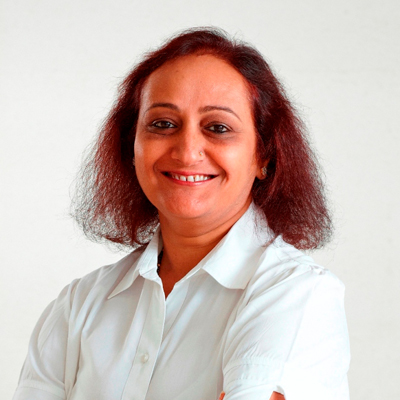
    MUMBAI: After 13 years with the network, Anita Nayyar CEO of Havas Media India and Southeast (SEA) Asia, is moving on from the agency to pursue other interests. Anita who will leave the group at the beginning of May 2020, will transition the India leadership role into Mohit Joshi, Group MD reporting into Rana Barua, CEO, Havas Group India.

    Nayyar joined Havas in 2007 as CEO of Havas Media India. Under her leadership Havas Media in India grew exponentially and expanded its offerings as an integrated communications group. In 2018, Nayyar was promoted to CEO of Havas Media Southeast (SEA) Asia on the back of an accelerated growth strategy in the region, in addition to her role as CEO of Havas Media India.

    Havas Group India &  Southeast Asia chairman & CEO Vishnu Mohan  said, “Anita has played a pivotal role in Havas Media India’s success and growth over the years. A future forward-thinking leader with a deep understanding of people, brand and media, Anita has also been an inspiration to many young professionals. We are grateful for her significant and lasting contribution to Havas Media India and wish her the very best for her next chapter.”

    On her departure, Anita Nayyar said, “It has been an extremely fulfilling and meaningful journey at Havas India over the last 13 years. I am grateful for the opportunities given by the network including the broader remit of SEA in 2018. As Havas Group India continues to reinforce its integrated model of operations, I am confident the Group will continue to chart its success story and I wish the team at Havas Group well with its future development.”

    Havas Group India CEO Rana Barua, “Anita is credited with growing Havas Media India’s footprint and elevating it’s presence. Her dedication and passion are exemplary that has led to her becoming a strong voice in the industry. On behalf of the network, I would like to thank Anita for all that she has done and wish her all the best going ahead.”

    “Working with Anita for over a decade has been an immensely rewarding and learning experience. She has been an integral part of Havas Media and valued by both clients and colleagues alike. As I welcome the new challenge, I would like to thank the network for the opportunity and Anita for her mentorship and guidance,” added Mohit Joshi.

  • The psychology behind the making of TV ads vs digital

    The psychology behind the making of TV ads vs digital

    MUMBAI: There was a time not so long ago when TV was the main medium to consume content. All that one had to do was create a TV commercial and voila! It was watched by millions. But recently, more and more youth and millenials are gravitating toward platforms like from Facebook to YouTube to Twitter to Whatsapp to Tiktok to Instagram to OTT, to consume video. How are brands engaging with them? What format of video ads are they creating to communicate their brand message?  And have TV commercials evolved in their journey from TV to OTT and digital?

    However, according to some industry experts, there is just a shift in the trend and format of advertising. In earlier days TVCs were the only content that was created but today it is much beyond that. Today it is more about creating ads for different platforms and of different durations rather than creating one single commercial.  Experts also believe that the slump in the economy has resulted in the decline of creating long format advertisements.

    Says Jigsaw Pictures founder and creative producer Rajnish Lall:  “I think there is a bit of similarity in creating both a TV and digital commercial. The difference is not about reach. Both are catering to a product or a brand and are done keeping in mind the brand proposition. People usually make a brand film which is 59 seconds so that it could also be put on Instagram. Content that we make is usually three and five minutes, depending upon client requirements.  Television costs a lot more. And to run on Facebook, WhatsApp or Instagram or any other digital platform it’s much more reasonable and people go for the longer version of it. Having said that, both the platforms are representing a brand and have more seriousness about it. When it comes to making a TVC the client is more precise about the output. The production quality cannot be down it has to be good, very good or great. However, in digital, people could make content in all sorts of budgets.”

    According to Havas Media Group CEO India and South East Asia Anita Nayyar, TVCs shot for television are normally for 30 seconds to 60 seconds and when they want to make an edit to run on television 60 sec is pretty long. Generally, ads are shot for 60 seconds so that it could run on cinema. When they run the campaign for other platforms they have the adaptation of 30 seconds to 20 seconds to 10 seconds depending upon the storyline.

    She adds: “There are two ways of putting a commercial on YouTube where you can do a long edit of a commercial that runs for one or half a minute but whereas when you look at advertising on digital media the ads are pretty short because according to reports the average attention span is three to five seconds. The creativity and the thinking in digital are done on that basis.”

    "Unlike a TVC which is based on a traditional story arc – beginning middle and end; the making of digital ads involves adapting to the media platform format and context,” points out Madison Media Sigma CEO Vanita Keswani. “The digital video creatives span from five to six seconds short format videos as well as long format 60-120 seconds storytelling ones. Tech innovative creatives on digital have a two-way communication with consumers" She adds.

    The advertising costs related to producing content for TV is expensive as compared to digital format. In fact, as per the reports of Magna, the research arm of  IPG Mediabrands, digital ad spending in 2017 reached $209 billion worldwide that is  41 per cent of the overall market. While television brought in $178 billion which tots up to 35 percent of the total market.

    If one were to estimate about 9 per cent of that going towards buying space and inventory on the different media platforms, that leaves us with digital ad production totting up to around $20 billion worldwide, whereas TV commercials production spend would be around $17 billion. The figures would be much lower for India, though as spends on creative and TV are much lower here compared to more developed markets in Europe, the US and Latin America.

    Says an ad industry veteran:  “A large part of the production budget is kept aside for paying celebrities as endorsers (even as high as 25 per cent sometimes) as lazy creative’s from advertising agencies and not savvy enough marketing executives look for short cuts to create their communication. My estimate is that almost 30 per cent of TVCs are relying on celebrity endorsements. What this means is that the quantum of TVCs being made by a brand is falling each year or if they want to produce the same number, they have to slash the production side of the budget,” says an industry expert. And this is being felt even more in these tough economic times where brands have slashed their spending. There is a huge squeeze on TV commercial makers.”

    Lall echoes this. “Before the digital era, they used to make two to three films in that budget. Now what is happening, the budget hasn’t gone up because economically we are a little down as a country so things are not taking off. The client has limited money, his expectation is not to make two or three films but to make eight films. So, the money you invested in making a television ad has gone low.”

    He also points out to another problem. According to him, advertisers are anyway even today more inclined towards putting aside higher budgets for making TV and cinema spots as compared to digital, though he would like this to change.“Normally you will not see a good quality digital film because of the lower budgets. Digital spots can be shot on any kind of camera, it could be on their phones as well. So basically it can be done at a very basic budget. So the output is not great. However, very established brands don’t mess around it because they are conscious and particular about every piece of communication they are providing to the brand. It should match the brand's personality, image and aura in the market and in the mind of the consumer also which the upcoming brands are not paying much attention to.”

    Says Nayyar:  “If you have a long format TVC they are normally done on a high budget which is done for Rs 1 crore to Rs 3 crore and Rs 5 crore. Whereas, in digital ad creation they usually don’t look for a long life piece of communication. While for television you produce one commercial for a longer period of time and for a digital you make multiple commercials. I don’t think so for digital money spend is as much as spent on creating TV or cinema commercials they are long format. TV spots also get adapted to suit digital. In digital you have to look at short duration, collaborations, what will grab the attention of audiences within the span three to five seconds as they have been provided with the option of skipping ads.”

    Keswani’s view is that brands and agency creatives should reduce their dependence on celebrities in TVCs. Says she: “Celebrity mass advertising is not as authentic, relevant and relatable today. The authenticity is being questioned. What works better is turning the spotlight on consumers in TVCs. Ad agency creative’s and brand managers could consider having real and relatable faces in TVCs, which will help the masses connect with the brand and its messaging.”

    “What it will also do is free up budgets towards creating a greater number of TVCs or putting in more VFX, animation, or a greater number of locations or better sets or bringing in better directors and videographers so that more impactful ads can be created for both digital and TV,” says the anonymous executive quoted earlier.

  • Tamil Nadu viewers glued to TV; digital catching up fast

    Tamil Nadu viewers glued to TV; digital catching up fast

    MUMBAI: The advertising and marketing industry at the first edition of Tele-Wise Tamil urged the industry to look at TV and digital as two wheels rotating around one axis. They emphasised that the growth of television in any market can’t be calculated without considering that though being invented as isolated units, TV and digital have merged into one big medium now, because of technological advancements.

    Lowe Lintas regional creative officer Kapil Mishra said, “Whenever you ask someone to imagine a television, they either think of a box or a flat-screen on a TV unit. But TV is not just the hardware; it is also its software. Technology has separated these two and has liberated the software. Now, television is everywhere; on your phones, laptops, and your tablets.”

    He continued by saying that this segregation of TV software and hardware has greatly impacted the TV-viewing culture in every market. He insisted that now marketers and advertisers have more opportunities to harness this medium to reach their audience.

    Havas Media Group CEO India & Southeast Asia Anita Nayyar shared similar thoughts as she mentioned that one can’t neglect the role of digital in driving the growth of television medium. “When we think of TV, we should think audio-visual. The content is becoming screen-agnostic now.”

    Elaborating more on the potential that the Tamil Nadu market has for digital and TV media, Nayyar noted, “Tamil happens to be the third-largest content language being consumed online. 42 per cent of the population in Tamil Nadu has internet and mobiles. 42 Tamil channels have crossed more than 1 million followers on YouTube. Sun NXT today is talking about 1 crore installs of its app. In fact, Tamil originals are working great on other OTT platforms like Netflix, Amazon Prime, and Hotstar as well. Mobile definitely is the next most important device in one’s hand for content consumption.”

    Nayyar, however, also insisted that growth of alternate screens won’t perish the TV in its original form in Tamil Nadu or India.

    She highlighted that while the TV viewership in the country grew by 13 per cent in the last year, in Tamil Nadu this number was 14 per cent. She added that in South India, Tamil Nadu noted the second-highest time spent on television at 215 minutes a day vis-a-vis 245 minutes of Andhra Pradesh.

    Shedding some more light on the TV-viewing patterns in the state, Nayyar said, “Tamil Nadu is completely hooked to television. They prefer entertainment over any other genre. At prime time, 73 per cent of viewership is for GECs, which actually falls to an all-day average of 65 per cent. Tamil GEC is at 55.5 per cent in terms of genre preference, and the top shows are recording up to 23.4 TVRs, which are unheard in today’s time. People also prefer to watch movie channels during prime time. News and music viewership is quite low in the night time but they are most preferred in the morning.

    Tele-Wise Tamil was the inaugural edition of Indiantelevision.com’s Tele-Wise series that aims to look into the opportunities that regional markets have for broadcasters, advertisers, marketers, and other related shareholders. The event was concluded in Tamil Nadu recently with a number of industry veterans and experts in presence.

  • [Podcast] Media Minds: Havas Media Group’s Anita Nayyar talks about the evolving ad industry

    [Podcast] Media Minds: Havas Media Group’s Anita Nayyar talks about the evolving ad industry

    MUMBAI: Havas Media Group is one of the most successful agencies in India right now. Having worked with a diverse bouquet of brands like OYO, Kohler, YepMe, Philips Lighting, DLF, and Reckitt Benckiser over the years, the agency owns a stronghold on the media and marketing industry.

    For the second episode of its podcast ‘Media Minds’, Indiantelevision.com met Havas Media Group CEO India and South East Asia Anita Nayyar and discussed with her the ever-changing dynamics of the advertising industry and the trends that are going to be the making and breaking points for it in the coming years.

    Speaking about the evolution that the advertising industry has seen, Nayyar shared, “We have come a long way as far as the advertising and marketing industry is concerned. If we look at today, we are instilling pride in indigenous content and really have the consumer as the focal point. Much more than just selling the products, we are promoting national integration.”

    She added, “This shift has also happened because there has been a change in the audience that we are talking to. Specifically, the millennials who have adapted to the internet really very fast.”

    Answering our question of whether brands should follow an integrated approach of advertising or keep their traditional and digital agencies separate, Nayyar mentioned that it is not the consumer who is looking at various media as different propositions but the brands. She emphasised that for the campaigns to be successful and interact in a holistic manner, integration is the right approach to follow.

    She also highlighted the key trends, including AR, VR, video, voice, etc., and how the brands can effectively leverage them for their campaigns.

    Listen to the complete interaction on the second episode of ‘Media Minds’ here:

  • Havas Media India appoints R Venkatasubramanian as national head of investments

    Havas Media India appoints R Venkatasubramanian as national head of investments

    MUMBAI: Havas Media India has announced the appointment of R Venkatasubramanian as national head of investments. Venkat joins the agency from Initiative Media where he was serving as senior vice president.

    A former Havas employee, Venkat has over 22 years of experience in advertising specialising in media buying. He has worked with clients across sectors such as Maruti, Suzuki Motor cycle, DishTV, RB, MG Motor, Usha International and InfoEdge.

    In his new role, Venkat will be based out of Gurgaon and will be responsible for driving media investments, partnerships, and strategic thinking for all Havas Media clients across markets.

    Commenting on his appointment, Havas Media Group CEO – India and Southeast Asia Anita Nayyar said, “Venkat is an accomplished, seasoned professional, with his rich experience of over two decades, Venkat will ensure that the complex media environment is well navigated and negotiated for Havas Media clients. Collaboration is the cornerstone of our unified operating model, allowing us to deliver 100 per cent accountability and ideas that flourish without boundaries. Havas Media has the team, capabilities and is well positioned to be a data-cum-content driven media partner to brands across sectors driving their overall marketing and goal strategy. We wish Venkat a happy homecoming!”

    “We are delighted to have Venkat back with us once again. Havas Media has been growing at a phenomenal rate over the years. We have always been keen to get great professionals who have made a mark in the industry. Venkat is one such person who has contributed phenomenally in building brands through the creation of innovative media associations. We are looking forward to using his experience and commitment to develop our brand partnerships further,” added Havas Media Group MD – India Mohit Joshi.

    Venkat said, “I am motivated to come back to Havas Media as the company is open to innovative and creative ideas. My focus will be to drive new and dynamic properties across media with an added focus in the sports arena to ensure that our brands get the best ROI under the guidance of Havas’ senior management.”

  • Anita Nayyar elevated as CEO of Havas Media Southeast Asia

    Anita Nayyar elevated as CEO of Havas Media Southeast Asia

    MUMBAI: Havas Group has promoted Anita Nayyar as CEO of Havas Media Southeast Asia on the back of an accelerated growth strategy in the region.

    This is in addition to her role as CEO of Havas Media India.

    In this newly created role, Nayyar’s expertise will enable brands in India to expand their footprint to SEA and facilitate cross fertilisation of clients.

    She will work closely with regional and local leadership in SEA to drive new business and local client strategy with a sharpened focus on driving growth leveraging Havas Group’s integrated abilities.

    Nayyar will report to Vishnu Mohan, Chairman & CEO of Havas Group, India  and Southeast Asia. The appointment is effective immediately.

    Nayyar joined Havas in 2007 as CEO of Havas Media India. Under her leadership, Havas Media in India has grown exponentially and expanded its offerings as an integrated communications group encompassing traditional, digital, mobile, performance marketing and out-of-home, among others. Her 30+years in the industry has seen her passionately manage a mega portfolio of brands across sectors.

    Speaking on her appointment, Mohan says, “The Southeast Asia region has enjoyed remarkable economic progress in recent years, especially the ASEAN countries capitalising on urbanisation, and technology. There is a tremendous opportunity for brands in India to tap into the region’s growth story and Anita’s experience is an asset that will help us move ahead in that direction. Anita’s determination and passion is a testament to Havas Group India’s success and growth over the years and I am confident that her elevation will enhance the value-proposition of our established SEA media operations.”

    Commenting on her promotion, Nayyar mentions, “The ASEAN markets and the overall SEA region is a pivotal market of the future for brands across a range of verticals and the possibilities for growth are endless. As Havas Group continues to build on its integrated model and new organisational structure, I’m excited to take on the new challenge and reinforce our commitment to creative excellence and smart media accountability to create new opportunities to boost Havas Media SEA’s growth and momentum.”