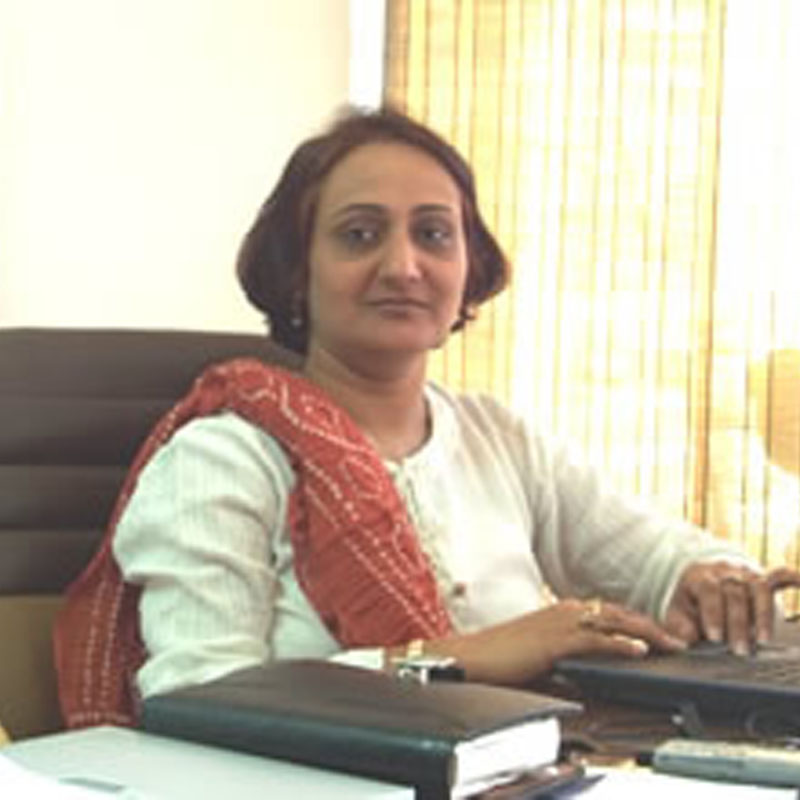
Tag: Anita Nayyar

  • Brands need to build sustainable power: Anita Nayyar

    Brands need to build sustainable power: Anita Nayyar

    MUMBAI: The biggest brand message in today‘s tough marketplace is to focus on sustainability as consumers, crowded with choice, tend to be punitive.

    Brands not nursed well have perished. The only way to stay in the race is to build an endurance capability and invest in the brand power.

    “Sustainability is the capacity to endure. The question we should constantly ask ourselves is whether our brands can sustain in the long run,” said Havas Media CEO India & South Asia Anita Nayyar.

    Drawing example from the Xerox brand, Nayyar pointed out that its strong sustainable power is evident from the fact that people never ask for a photocopy but the xerox copy. “The Xerox brand has become powerful over the years and is one of the best examples of sustainable brands.”

    Speaking at the World Brand Congress here today, Nair said only one-third of brands are considered meaningful to consumers. While sustainability is a key issue for consumers worldwide, few brands live up to increasing expectations.

    Nayyar discussed about Havas Media‘s second annual Brand Sustainable Futures Analysis survey that was conducted via online to 30,000 consumers in nine countries: Brazil, China, France, Germany, India, Mexico, Spain, UK and the US.

    The study of 150 brands across 10 different industries revealed that there is a strong corelation between a brand‘s ‘‘meaningfulness‘‘ and its perceived sustainable performance. The outcome also suggested that the more sustainable a brand is perceived to be, the more meaningful it becomes to consumers.

    The vast majority of mainstream consumers wouldn‘t care if two thirds of today‘s global brands disappeared in the future, according to the report. “Only 29 per cent of respondents believe that brands are working hard to resolve sustainability issues while 68 per cent think companies only act responsibly in order to improve their image,” Nayyar said.

    Organisations need to listen to their customers and act responsibly to make their brands more sustainable. “Consumers punish brands that do not embrace sustainability,” Nayyar warned.

  • ‘Ad sector will see a double digit growth this year’ : Havas Media India & South Asia CEO Anita Nayyar

    ‘Ad sector will see a double digit growth this year’ : Havas Media India & South Asia CEO Anita Nayyar

    As the advertising industry prepares to come out of the slowdown clutter, Havas Media has found proper representation in India‘s two high-growth sectors: telecom and automobiles.


    While Maxx Mobiles came into the fold in 2009, the big catch this year has been Hyundai.


    Havas has almost 50 per cent of its revenues coming from the top five clients – Reckitt Benckiser, Jockey, Bank of Baroda, Max Mobiles and MTS. With Hyundai falling into the net, the top six are in a position to power the media agency‘s growth story in India.


    Havas will stay Delhi and Mumbai focussed while posting slow growth from its three southern offices – Bangalore, Chennai and Hyderabad.


    The big push will come from its integrated funtions – sports, digital and out-of-home.


    In an interview with Indiantelevision.com‘s Anindita Sarkar, Havas Media India & South Asia CEO Anita Nayyar speaks about her company‘s growth plans at large.


    Excerpts:


    How has the first half of the year fared for MPG India?

    We are on track as far as revenues and billings are concerned. On a percentage basis, we have met out targets quite in line with last year and the growth has come from both existing and new businesses. While our existing clients have fared better for us this year, the new businesses have also helped in pumping up the growth.

     
    But are you implying that 2010 has been similar to 2009 in terms of growth?

    Yes. We won MTS and Maxx Mobiles last year and Hyundai this year, all large and prestigious clients. And both telecom/handsets and automobiles are considered as categories doing well with minimal recessionary impact. We also won Dixcy, News X and M3M this year.

     
    As far as revenues are concerned, which clients and categories are the largest contributors?

    We have a client list that is upwards of 50 and across categories which include FMCG, telecom, automobiles, banking, mobile hand sets, beauty and wellness, media and real estate. About 40-50 per cent of our revenues come from our top five clients – Reckitt Benckiser, Jockey, Bank of Baroda, Maxx Mobiles and MTS.

     
    What are your expectations for 2010?

    We foresee a decent growth in 2010, given that 2009 was a recessionary year. Percentage growth in our integrated functions – sports, digital, and out-of-home – will be better as margins in offline business is pretty low.
     
     
    But has not out-of-home taken a hit this year?

    I don‘t think so. In fact, out-of-home has been doing very well for our clients and though it has not increased dramatically, it has surely not taken a dip.

     
    ‘About 40-50 per cent of our revenues come from our top five clients – Reckitt Benckiser, Jockey, Bank of Baroda, Maxx Mobiles and MTS‘

     
    Which are the geographical areas that show potential in terms of advertising?

    As far as we are concerned, we have five offices across India – Delhi, Mumbai, Bangalore, Hyderabad and Chennai and we expect our growth to come in primarily from Delhi and Mumbai. Growth from the southern market is slow for us.

    Overall, from the consumer‘s point of view, the potential surely lies in the semi-urban and rural areas.

     
    How are the other divisions faring – Havas Sports & Ent, Media Contacts and MPG active?

    All three are doing well and on an upswing. Havas Sports took up interesting projects during IPL like the strategic sponsorship deal and the Dhoni endorsement with Max. We are in the process of finalising some more deals. Digital is seeing an interesting growth and Media Contacts is encashing on the situation. MPG Active has been in the news for executing interesting campaigns including the one on INQ Mobiles where they executed the country‘s tallest billboard.

     
    How do you predict the 2010 advertising scenario to be like?

    We should hit double digit growth in 2010. It should be somewhere in the region of 10-12 per cent, though the pace is a bit slow.

     
    According to Tam, the first half of the year has seen a 36 per cent rise in TV ad volumes. Revenue, however, is not growing at the same speed. Why?

    There is too much of a fragmentation today and this is making it difficult to attract the consumer. There are multiple touch points today to capture consumer attention and you never know when and where the consumer will spot the advertisement. And though the ad volumes are increasing, we are not seeing much increase in ad rates.

     
    How much of a change has recession brought into the functioning methods of an advertising strategy?

    When recession‘s not around, we tend to work more liberally. However, recession always teaches businesses to get more from less and our business is no exception. This time around, it taught us to keep a tight watch on our purse string. It told us that we can do with lesser inputs, work, people and resources. Also, while there was a bit of retrenchment as far as our industry is concerned, it was more about not giving increments during the period.

     
    Which advertising platform is expected to show the maximum growth?

    Digital for sure. This is because the medium is progressing towards accountability and efficiency. The platform is seeing about 40 per cent growth year-on-year as advertisers are increasingly getting into the digital and media space.

  • ‘The Hindi GEC market can only grow between 10-15 per cent’ : Anita Nayyar- Havas Media CEO

    ‘The Hindi GEC market can only grow between 10-15 per cent’ : Anita Nayyar- Havas Media CEO

    The Indian advertising and television industry has started to feel the heat of the global economic slowdown. With advertisers trimming their ad budgets and postponing launches of products and services, the entire sector is beginning to feel the pinch.


    In an interview with Indiantelevision.com’s Anushree Bhattacharyya, Havas Media CEO Anita Nayyar speaks about how the Indian television and advertising industry is trying to cope with this financial crisis.


    Excerpts:

    How much has the global financial crisis affected the Indian advertising industry?
    The Indian advertising industry, pegged at Rs 160 billion, has been clearly affected by the global economic meltdown. The television segment, which accounts for Rs 72 billion, was growing at 18-20 per cent. Given the current situation, growth will slow down.


    Lots of big launches of products or services have been postponed. Advertisers are waiting till the first quarter of next year to see how the market is going to evolve. It is too early at this stage, thus, to quantify the pace at which the ad industry will grow.

    Looking at the current economic crisis, how deeply hurt will be the TV sector? Are the Hindi general entertainment channels (GECs) headed for further trouble due to the on-going dispute between the TV producers and workers?
    Out of the Rs 72 billion television ad industry, almost 50 per cent (Rs 36 billion) comes from the Hindi GECs. Looking at the current strike and the global financial crisis, the Hindi GEC market can only grow between 10–12 per cent. The strike between producers and Federation of Western India Cine Employees (FWICE) is, however, a temporary phase and would not continue for long. So the GEC market would pick up pace once again, after the strike in Mumbai gets over.


    FMCG is the category that advertises mostly on GECs. And presently it is one of the least impacted category. Hence advertising will gain momentum once the strike gets over.

    Will the TV news channels feel the pinch?
    It is true that the five to six categories that include banking, insurance, automobile, aviation and real estate are the worst hit by the global financial crisis. And so news channels would be affected. The news television market could see a 5-7 per cent growth. Interestingly, I think now is the time for the banking sector to advertise to regain the confidence of its clients. But it seems like banks are restraining from further advertising spends in a major way.

    What about the growth of sports and movie channels?
    Sports and movie channels are based on events and film titles. Channels like these will not get affected to a large extent and will grow between 5-10 per cent, each time they show events or big titles. Thus for sports channels, the more the sports events they have, the more they will get a chance to grow. In sports, cricket will keep bringing the advertisers in. However since the TV rights acquisition cost for live cricket is very high, it will be difficult for broadcasters to break even.

    Do you feel you have been able to bring Havas out of Euro RSG’s basket?
    I don’t think that we have ever tried to project that Havas Media works under the limelight of Euro RSCG; in fact we are trying to bring Havas Media out of the shadow of Euro RSCG. Today we have Havas Media as the umbrella brand which has various other brands like Euro RSCG, Havas Sports, Havas Entertainment, MPG, Media Contacts etc. Thus wherever there is an opportunity, we try to bring the Havas brand in front.


    Havas Media has clients like Reckitt Benckiser, which is our biggest client. It also has Voltas, Bank of Baroda, Air France, ibibo.com and Hindustan Motors as its clients.

    News channels will feel the heat as banking, insurance, automobile, aviation and real estate are the worst hit by the global financial crisis

    Interestingly, when you moved out of Starcom you were blamed for taking away both people and accounts?
    I don’t know how to answer these allegations. There were people who had shifted from Starcom even before I had joined Havas Media. Nevertheless for people who joined Havas after me, all I can say is that they were all intelligent people and no one has brainwashed them. So they were aware of their decision.


    As for the businesses that I got from Starcom, those moved based on pitches. But this also proves another point – that I share a very good relationship with the clients.

    Havas Group introduced Havas Sports in India. How has sports marketing picked up in India, especially after IPL?
    Sports marketing always existed in India. However thanks to the Indian Premiere League (IPL), it gained recognition. Sports marketing companies like Total Sports Asia and Globosports have been investing in sports like Golf tournament, Tennis matches, marathon etc. After the success of IPL, companies have openly accepted sports as an event to endorse their products or services. Cricket, however, continues to hog the limelight.


    We at Havas Sports have clients like Good Earth products, A1GP, etc. Havas Sports is also involved in celebrity endorsement.

    How are your clients reacting to this financial crunch?
    Fortunately for Havas Media, clients have not yet decreased their advertising budget or postponed launch of their products. So far, we have not seen our clients reducing their budgets.

    How is Havas Media tackling the situation, because sooner or later your clients will also reduce their ad budgets?
    We are looking at various cost efficient alternatives like internet, multiplex, radio and below the line activities.

  • Starcom Worldwide North India & Pakistan MD Anita Nayyar

    Starcom Worldwide North India & Pakistan MD Anita Nayyar

    From a media executive at Interpublicity Pvt Ltd in 1983 to the managing director North India and Pakistan of Starcom Worldwide, Anita Nayyar has come a long way in her career spanning 23 years.

    Based in Delhi, Anita has also had stints with organizations like Sista’s (now Saatchi & Saatchi), Frank Simoes Advertising (now F S Advertising), O&M (now Ogilvy/Group M), Initiative Media, MediaCom and Optimum Media Solutions.

    With an academic background in medicine, she plunged into the media business in 1983 and since then there has been no looking back. “It is always interesting to take on new challenges. I have in effect done that in all of 22 years of my media career. Moving earlier in life from a medical background in academics to advertising and marketing was a huge challenge in itself and I think I’ve taken it on rather well,” says the serene lady.

    If one were to list out the brands that she has handled in her career, it would surely take up most part of this page. From durables, automobiles, engine oils, mobile phones, cosmetics, fast food to digestives, baby food, beverages, credit cards and political parties, there is not one sector that has been untouched by her.

    Anita played a small but significant role on the changing the government at the center by focused targeting both at the consumer and regions/constituency level for the “Aam Aadmi” campaign for the Congress Party. That it is the Congress’ ‘Aam Aadmi’ the Centre and not the BJP’s ‘India Shining’ (managed by Grey Worldwide) says it all. “The aim was to maximize the media impact of each rupee for Congress campaign in May 2004 and we succeeded in giving the “India Shining Campaign” of the then ruling BJP a run for its money, and that too with one fourth of its spends,” says she.

    She has also been responsible for setting up the outdoor (now Landscapes) and electronic cell – at Ogilvy & Mather Delhi during her 5 year stint with the agency in the early nineties. Known for striking the best deals in the market place and also as an ROI (return on investment) sensitive professional, Anita was also at the helm of structuring and systemizing media services at Initiative Media, MediaCom, Mudra and Starcom.

    Under her leadership the Starcom Worldwide Delhi operations have grown by 147 per cent in year one and 50 per cent in year two.

    So what’s on her agenda now? “Working for Starcom it’s but obvious that the agency agenda will be top priority. Growth is a given however, at Starcom, our holistic approach to media is key. The people internally have also been trained accordingly to look at clients issues and find the best possible solution to it rather than taking a mainstream media approach and push TV/print plans down their throats,” Anita says.

    Challenges is what makes this lady tick and one of the things on her priority list was to develop the Pakistan market for Starcom, where the agency’s launch is slated shortly. “Right now, we are in the final stages for setting up the Starcom brand in Karachi, Pakistan. The exercise entailed sourcing, interacting and negotiating with various media services agencies in Pakistan,” she offers.

    For the clients she has worked for in various sectors, Anita is known for introducing the advantages of the concept of media consolidation to GPI, Maruti, LG, Sony and Yamaha.

    Anita is of the opinion that the television industry, which is growing at a slow pace now unlike the boom years, will pick up “because of its attributes being the medium it is.”

    “While media consolidation is key to our business and the clients are the chief beneficiaries, it’s also important to ensure brand accountability. Like in case of full service clients, it is important for both media and creative to be brand custodians so that there is accountability on a brand and everything is being done in the interest of the brand/marketer,” says she.

    This straight forward, no-nonsense woman firmly believes in working on her weaknesses to convert them into strengths. Her family is her biggest support today. Her two daughters and an extremely loving, supportive and understanding husband are what keeps her going in this overtly competitive industry.

    And if you thought that it was just media planning and buying that she was involved in, think again. Anita is a guest faculty at various management institutes like MICA, Amity School of Communication, College of Media and Communication at Rai Foundation and also the Delhi School of Communication.

    On being queried as to which of her qualities helped her being in the position she is today, she says, “I have always put in my best efforts and have had a very focused approach. From being in implementation when I started in 1983 and when media planning was just about seeing the light, to have learned and moved on from there, I think one has come a long way. I could have just been restricted to implementation but have taken up all the challenges in life and given it my best.”