Tag: Anindita Sarkar

  • Dentsu promotes Anindita Sarkar to VP, brand & communications, South Asia

    Dentsu promotes Anindita Sarkar to VP, brand & communications, South Asia

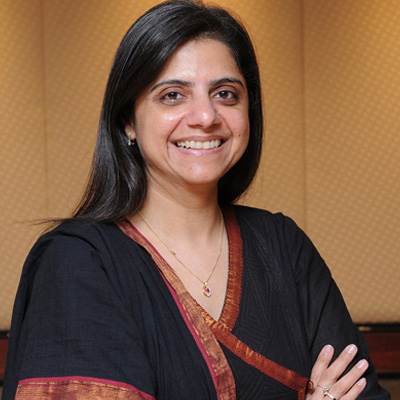
    Mumbai: Anindita Sarkar has been promoted to vice president of brand & communications, South Asia, at Dentsu. She shared the news of her new role on LinkedIn.

    In this expanded position, she will focus on developing and implementing strategies to enhance the agency’s brand presence across the South Asian market.

    Sarkar has been with Dentsu International for over nine years, previously serving as senior director of corporate communications. Before transitioning into communications, she worked as an editor at several publication firms, bringing a wealth of experience to her role.

  • ‘2009 was our defining year’ : OMD India managing director Jasmin Sohrabji

    ‘2009 was our defining year’ : OMD India managing director Jasmin Sohrabji

    It was in 2007, when global marketing communications holding company, Omnicom, entered India with its media planning and buying network OMD.


    Jasmin Sohrabji, a double post-graduate in Economics and Business Management who had spent 16 years with MediaCom, was taken on board as managing director and the agency went on to make a fortunate start with clients like Ambuja, Parle Agro and J&J in its kitty.


    2009 was almost a defining year for OMD as it took up quite a few biggies under its banner, expanded footprints to Delhi and Chennai and set up new offerings in analytics and digital.


    And now it’s kicked off 2010 on a high note too. It has bagged businesses like Sony Network, Ferrero and Reliance.


    In an interview with Indiantelevision.com’s Anindita Sarkar, OMD India managing director Jasmin Sohrabji speaks about her company’s growth plans at large.

    Excerpts:

    In comparison to the other agencies, OMD is still a new player in the Indian market. Has it been a tough journey so far?


    OMD launched in India in early 2007, and the experience has been exciting, challenging and gratifying ever since! We kicked off with a very sound base (Ambuja, Parle Agro and J&J) and have built consistently and successfully since. 2009 was OMD India’s defining year where we established ourselves as a strong, top player at a national level.

    Being a new entrant, was facing up with the slowdown heat in the Indian market more challenging to gain clients?


    We were very fortunate to have our best year in 2009. We had a record number of wins (HP, Henkel, VISA, Danone, Nissan, etc); we set up two new offices (Delhi, Chennai); we launched our Analytics and Digital offer and we closed the year with global awards and recognition.

    Can you revisit the time when you started off in the Indian market and the transitions that you witnessed through time?


    Gosh, I have spent two decades in this industry and witnessed too many changes and transitions! One of the most striking of all has been in the area of availability of research and access to data; technology…both in the medium itself as well as in accessing and interacting with media and consumers; the other noteworthy change has been the shift in the role and definition of what media agencies provided as a service…we moved from a very simple ‘planners and ops executives’ managing client budgets to a much evolved, technologically sophisticated and consumer-centric thinking and creative solutions.

    What has remained consistent through the decades is ‘never having enough talent’!

    How has the first half of the year fared for the OMD in terms of revenues and clientele?


    Very well. We kicked off 2010 with the Sony Network win, and followed up with Unilever’s digital biz. More recently we won Ferrero and Reliance, among others. We hope to maintain the growth momentum we have been experiencing through the remainder of 2010.

    Has it been better than last year?


    Given the operation is just over three years old, the growth over last year has been extremely high.

    How is dealing with the Indian clients different from the others globally?


    Clients differ depending on their needs and experiences with agencies; they differ in the level of interaction and involvement with their agency partners, and on many such and other parameters. However, I really do not have a strong point of view of difference between Indian and global clients. Among our global clients, we have some who operate largely within the local environment and strategic needs; and there are those who are very much aligned to global strategies and/or processes. In fact, we recently won an award (The Internationalist, UK) for best local execution of an international campaign…so it really does not matter how different the client style is, what’s important is whether the teams at OMD India have a keen appreciation for individual working styles and are able to deliver standout strategies and solutions to the briefs we are given.

    We moved from a very simple ‘planners and ops executives’ managing client budgets to a much evolved, technologically sophisticated and consumer-centric thinking and creative solutions. What has remained consistent through the decades is never having enough talent!

    How are your other divisions of OMD faring?


    Our most successful offer outside traditional is digital. In addition to existing full service clients, we added digital only clients (Unilever, ICICI, HCL, etc). Additionally, we set up Analytics, which has now started gaining momentum. We have two new offerings starting up later this year.

    CPRP is often the final clincher for a pitch and the sole aim for all to target and deliver. Do you see any new change in this methodology?


    Not sure why we are focusing on a change in methodology…we should be looking at value adding to the metric with more engaging qualifiers. If the job of the metric is to compare cost to cost, CPRP does its job. If we are looking to add new dimensions of effectiveness to the cost of contact, then let us evaluate other metric options, not just methodology.

    While above 50 per cent of investments for brand building is made towards above-the-line activities, advertisers are also making investments in below-the-line activities. How do you perceive this medium?


    Below the line activities have always been a relevant part of the recommended mix. The issues around these activities were largely to do with measurement and scalability. What began as ad-hoc and experimental, has now become a critical piece in the communication mix. One is, and will continue to see a lot more action in this space. The biggest advantage of BTL activation is it allows for flexibility and does not have to be templated. The scale, the message, the execution can be customised to the budget, the market and the core TG!

    Which advertising platform is expected to show the maximum growth?


    While digital and radio have the potential to scale up on their currently smaller bases, TV itself will offer newer platforms of addressability and technology through DTH, etc. Radio has never really seen its potential in this market, while digital has already made small dents in traditional media budgets! TV continues to hold out in its traditional avatar…and keeps re-inventing its offer – through content, scale and technology/addressability.

  • ‘We will fight competition with innovative content’ : Anupam Vasudev- Star India EVP marketing and communications

    ‘We will fight competition with innovative content’ : Anupam Vasudev- Star India EVP marketing and communications

    It’s rearguard action time at Star Plus. Edged out after a nine-year life at the top, Star Plus is making moves to shed off the “saas-bahu” image that stuck on to the channel.


    What followed is a flurry of differentiated content. While Kiran Bedi played judge on social issues in Aap Ki Kachehri, matrimonial show Star Vivah gave a platform to many prospective brides and grooms.


    Star Plus also experimented with shows like Paanchvi Paas that made no major impact on its ratings.


    The big show now is Sach Ka Saamna, an adaptation of the bold and sensational The Moment Of Truth.


    In an interview with Indiantelevision.com’s Anindita Sarkar, Star India EVP marketing and communications Anupam Vasudev talks about Star Plus’ road ahead as the channel takes up the challenge to regain its leadership position and widen the gap with its rivals.


    Excerpts:

    The first half of the year has really been interesting with the GEC space witnessing the rise of three strong players at the top. Does this mean the absolute end to the Star monopoly?
    The game is not yet over. We had nine years of undisputed leadership and it’s been a great run for us. Look, in all categories and businesses, competition does catch up at some point of time – and they have caught up with us. In the last couple of months there have been ups and downs in the top three category, but we were never out of the game. In fact there were weeks when we did come back to the number one spot. So these things will keep happening in terms of the top three players for a while until one of them breaks away to rein the top slot singularly. We are ensuring that Star Plus is the one that breaks away from the lot to establish its leadership one more time.

    So how do you plan to break away from the top three league?
    As you can see, there is a whole new programming that is being brought in to Star Plus. We have just launched Sach Ka Saamna in the non-fiction category. We will be launching a new fiction show, Sajan Ghar Jaana Hai, very soon. We are also firming up our fiction category further with a couple of new shows, lined up for the next two to three months.


    We will also continue to strengthen our existing offerings and products that have the potential to grow like iconic shows Yeh Rishta… and Bidaai and recent launches such as Mitwa and Laadli.


    So we are bringing across a lot of innovative content to fight competition and ensure that we retain our leadership with consistency – and with enough gap from everyone else.

    Though you have a loyal base of 200 plus GRPs coming in from fiction and non-fiction show, content like events and films are also impacting a further 30 GRPs. Does this mean that you are also banking a lot of such content to push up your GRP grades?
    For a GEC channel, events and films have always been an inherent part of the programming mix, especially movies that contribute about 15 per cent to our total revenue and also help to drive in family viewership. However, the real changes that have happened in the movie sphere in the recent past is that the time gap between a movie coming to the theatre and being aired has shortened. So the effect is more. Also, movies have started getting syndicated instead of being exclusively owned. These are the two significant changes that have come into the movie business on television. But from a programming or a brand perspective, offering movies to viewers has consistently been part of our network strategy wherein our channels run movies. This includes our regional channels. So movies have always been a core element of our programming strategy.

    From the time you first began ruling the number one slot to now, what kind of shift in audience taste have you witnessed?
    Today, the larger group of the Indian audience has got younger. Audiences have moved away from demanding regressive content to content that evokes an open belief system. Meanwhile, the market has also expanded significantly from being metro-focused to being small town focused. Market has moved up both in terms of measurement and penetration. So there are more people and players coming into the category than there were in the past. There has been an enormous growth in the regional sphere as well. All this taken together has led to a significant upgradation in the quality of content, viewership and competition, bringing in a fundamental change in the minds of the consumers.

    Was that the primary reason to do away with Balaji’s saas-bahu sagas?
    It’s nothing to do away with. We thought that we needed fresher and younger shows coming in because a show that has run for nine years obviously needs to be refreshed. I don’t think in any part of the world a show can continue for so long. The K-series had a good run and did brilliantly for the channel, but then changes were prevalent and we responded to them.


    Star Plus, anyway, still continues to source a few shows like Tujh Sang… and Kis Des Mein Hai Mera Dil from Balaji and they are still a part of the producers list who work with us.

    It seems whenever audience starts responding to a certain kind of show format, the other players follow suit. So is there any differentiated content actually existing?
    Of course there is! Everything has to be differentiated if you want to drive in viewers.
    In Star Plus’ revenue mix, the afternoon band contributes 15-20 per cent. We plan to build up on our existing bouquet of shows

    Are social issue-based formats driving the current GEC programming?
    Issue-based topics have always been played upon on television as it reflects society and further helps establish connect with the audience with relevant societal discussion points. So, it really does not mean copying content. We are not here to talk about social issues in a fashionable way, but yes everything has to have a concept that connects with the society emotionally and entertains them as well. For example, Bidaaii which is a tale of the dark skinned versus the fair skinned sisters or for that matter Laadli which reflects love for a girl child. It reflects society but is surely weaved into a concept that is contemporary to the society today.

    So what kind of changes have you brought in to your programming strategy?
    Our shows have always been about hope, optimism and family values with a further support from a high level of romanticism. So there has not as such been any drift in our strategy. Thus, Star Plus will continue to target the women-oriented mass India audience between the age group of 18-35. Family will, of course, remain our secondary audience that will be driven in by reality shows and movies.

    What are you doing to beef up your afternoon band?
    We are already running three shows in our afternoon band -Tujh Sang Preet Lagayi Sajna, Hamari Devrani and Star Vivah. All of them are performing quite well for the channel, driving in a lot of women audience in the afternoon band. This contributes 15-20 per cent to our total revenue. So, right now we plan to build up on our existing bouquet of shows.

    Can you elaborate on your marketing strategy?
    Apart from the usual print, radio and television, we are getting aggressive on the digital space. Activating ideas cleverly is another very important segment that we are working upon to create hype and excitement for our various properties. On-ground activation has also become an important part of our marketing mix to create an interactive interaction with consumers that will help in attracting newer eyeballs.

  • ‘The kids market remains hugely under indexed’ : Nina Elavia Jaipuria – Nick India VP and GM

    ‘The kids market remains hugely under indexed’ : Nina Elavia Jaipuria – Nick India VP and GM

    It has been a phenomenal journey for Nick in India. From being a channel that was residing at the bottom of the heap, the nine-year-old player has finally emerged as the leader on top in the Hindi speaking market, edging out long-standing market leader Cartoon Network.


    And now, having captured the HSM space, the channel is readying to spread its wings across the southern-language market by 2009-end. The next in step is to challenge Cartoon Network which rules the all-India market.


    Nick has also made its foray into local content for the Indian market with Little Krishna, acquiring the show’s TV rights for two years for the South Asian territory.


    In an interview with Indiantelevision.com’s Anindita Sarkar, Nick India SVP and GM Nina Elavia Jaipuria reveals the strategies that have worked for the channel and how she plans to grow in a fiercely competitive marketplace.


    Excerpts:

    Nick has emerged as the number one kids channel in the Hindi speaking market. What contributed most towards this growth?
    There are a couple of differentiators and unique activities that the channel has done very consistently over a period of time. The biggest differentiator for the channel has been Nicktoons – characters that have helped Nick establish space and engagement with the kids leading to an increase in the stickiness of the channel.


    Secondly, we have managed to take Nick beyond television, thus making it more tangible. And I think we did that very successfully with our experimental 360 degree marketing philosophy – we wanted to be in every place where children are. So we were there promoting ourselves right from schools, cinema houses, malls, cable television to comic books, van activation and general entertainment channels.


    We also increased our consumer products activities – be it in the form of storyboards, storybooks, activity books, toys with Mattel, clothes with Weekender, linen with Portico, etc. And now that schools are opening, we will be soon coming out with stationary and back-to-school items.


    We also intensified our engagement and connection with children through constant promotions, polls, votes, contests and festivals including father’s day, mother’s day, Raksha Bandhan, Holi and so on. We celebrated every festival that was important to kids.

    Why did you choose GECs as a promotional platform?
    In a one-television household, it is but natural that kids are watching Hindi GECs along with their families. So, we know that today’s kids watch a Balika Vadhu or a Star Plus or Zee TV for that matter. So we decided on this medium as we would be able to capture the entire gambit of captive audience.

    But don’t you think that GECs today have actually emerged as contenders to the kids channels?
    If you see, even with the emergence of so many GECs, the kids’ category remained almost unaffected. This is because eventually kids come back to watch what is tailormade for them. And, no matter how hard a GEC tries, it cannot attract any child’s absolute attention. He/she at most will continue to remain only a passive viewer. GECs cater to the family as a whole and their content is not custom-made for kids unlike a kid’s category which targets only the kids.

    With Little Krishna you finally forayed into local animation. What took you so long to take this decision?
    Well, we had been looking for something that was built on a very strong narrative so that it carried not one single hint of boredom. This is because a kid’s attention span is very limited and you have to engage them within the first ten seconds. So, our hunt went real long. And then, finally we came up with Little Krishna, in both English and Hindi, which not only has a very compelling narrative, but is also supported by seven years of extensive authentic research (without any distortion) conducted by Iscon. The show has captured Krishna in various facets and every episode is a standalone. So, you don’t have to know what has happened before or after. Also, the script is extremely strong and tight and with the quality of animation that it has, the show is sure to make it to the overseas market.

    What was the need for localisation?
    Well, there was not really a need for localisation because as a broadcaster I want content that entertains children and also gets rid of two things – boredom and stress. Yes, I do agree that some amount of local character would surely add some local flavour. But in content, that is not at all a necessity to have. Its more about the localisation of the channel which comes with how you dub, the language you speak, and the promos that the channel lines up.

    Even though the kids segment contributes 7 per cent to the total television viewership, our revenue share is less than 2 per cent

    How has the co-viewing pattern helped the channel to grow?
    Today as a channel, we have the gatekeeper’s (parents) trust. We do not carry any form of content that could be harmful to the kids. We are responsible broadcasters and because of this parents allow their kids to watch our channel. In order to spend time with their kids, they also end up spending a lot of time on the channel. Also, animation as a category is today appealing to adults. Thus, a lot of co-viewing is taking place.

    Are advertisers taking advantage of this trend?
    Definitely! In fact, in the last one year, we have more than quadrupled our sales revenue as advertisers have found value in what Nick has to offer. We have done a lot of value addition and brand integration with all the categories that have come on board through sampling and on-ground activations. As a result, from 17 brands that we began with, we have now extended to over 75-80.

    Are brands confined to the kids’ category alone or is the base expanding?
    Absolutely! Two years ago, our reach was 13 per cent and today it is 32 per cent. With a lot of co-viewing happening, advertisers today understand that kids’ channels are also an effective medium to reach out to their target buyers. Also, the mere pressure of pester power that kids have on their parents decisions have pulled a lot of FMCG, insurance and telecom brands on board.

    With recession hitting hard, what kind of impact did it have on your advertising revenues?
    Look, television is the cheapest medium to reach out to the masses. For every other medium, there is an extra amount to be paid. Manufacturers understand this and they have also recognised our growth. And, thus, even during recession we have doubled our rates. Nick has performed all through and I did not want to succumb to this economic slowdown. Yes, instead of annual deals a lot of quarter deals were being cracked, but this could always be reviewed. As a broadcaster Nick did well and we surely deserved the revenues we generated.

    How has the backing from Viacom and Network18 helped in Nick’s growth in India?
    The network has been an absolute might. If you go through our tent pole projects in the last quarter, you will see that a lot of awareness and sampling has been created through Colors, IBN7, CNBC Awaaz and MTV amongst family and children outside of the kids’ category. All of them are passive viewers and, therefore, the network has only helped us promote ourselves.

    How well are you distributed across the country?
    We have got approximately 70-75 per cent all band connectivity wherein we are available in almost 26 million households. We are very well distributed all over the country in various town sizes. While 30 per cent of our ratings come in from metros, 35-40 per cent of the contribution comes in from the 1 million-plus cities and the remaining balance is attracted from the 1-10 million.

    So what are your plans going ahead?
    Well, until now our focus was to get a foothold in the Hindi speaking market. And now that we have done it, our first plan is surely to continue our growth and sustain our leadership position in this space. Our next plan now is to look South, which is certain to happen by the end of this year. We will head for all the southern markets – Tamil Nadu, Kerala, Karnataka and Andhra Pradesh. We will cater to them with the same content. We will initially begin with English and then move on to the regional languages with dubbed content as we get a foothold.


    However, the major challenge there is going to be distribution because unlike the HSM market, we are not distributed there at all.

    Is there any change in the ratio between advertising and subscription revenues?
    Advertising still remains the predominant one, contributing over 60 per cent to our revenues. Distribution, meanwhile, is a constant revenue stream that you get year after year, but it’s the biggest payout as well. We have also taken baby steps in consumer products. When we started off with 2-3 products in the consumer product business, it was only a marketing tool. But now I think its time that it will start paying off. We are already available across 17 categories and will soon be launching in stationary, plush and home DVD with Excel. This year, therefore, we will see revenues flowing in from this stream as well.

    Why do you think that even after witnessing a growth in viewership, the kids category has not grown in terms of revenue share?
    The kids market remains hugely under indexed. Even though the kids segment contributes 7 per cent to the total television viewership, our revenue share is less than 2 per cent. This is because of the baggage that the space has been carrying over the years where advertisers are used to paying to the GECs.


    But with a lot of co-viewing happening now along with integrated value addition to brands and the pester power of kids, I think we are ready to shed that baggage.

    How has the interactive media contributed towards Nick’s growth?
    Our website has about 10 per cent penetration with kids today – and this is growing. But I have to say that at the end of the day, everything feeds into one another. Therefore, it’s very essential for us to go multiplatform.
  • ‘We will build on our global franchises and get other local content to create an environment for ratings’ : Antoine Villeneuve- Walt Disney TV International (India) SVP & MD

    ‘We will build on our global franchises and get other local content to create an environment for ratings’ : Antoine Villeneuve- Walt Disney TV International (India) SVP & MD

    The Walt Disney Company acquired Hungama TV in 2006 for $30.5 million, a sign that two of its global channels needed a local muscle to fight the might of Turner International in the kids TV turf in India.


    The Cartoon Network-Pogo duo still lead the space as the mouse house is busy finding the right content mix for its three channels. Disney Channel is positioned as a kids-driven family channel while Hungama TV is eyeing kids in the 4-14 years age group. Jetix is for the 6-10-year-old boys.


    The challenge for Disney is not just to gain more audiences but also to drive up revenues in a genre that is seeing slow growth.


    In an interview with Indiantelevision.com’s Anindita Sarkar, Walt Disney Television International (India) senior vice president and managing director Antoine Villeneuve talks about the need to build on Disney’s global franchises while filling in the other pieces of content without disturbing the brand values.


    Excerpts:

    Disney Channel has failed to make a mark in India, as is evident from the ratings. What are the corrective steps you are taking?
    Our task is to build on our global franchises and get other local content to create an environment for ratings. But all this has to fit into the ‘Disney’ brand values.


    Being a kids-driven family channel, we have had to add other pieces of content. For the first time ever, we have moved ahead to acquire Bollywood content to draw in more eyeballs. We have bought two Aamir Khan movies, Hum Hai Rahi Pyaar Ke and Jo Jeeta Wohi Sikander, which will be showcased on 12 April and 3 May.

    The core focus of the channel, however, is the tween segment (8-12 age group) and to increase penetration we have made the channel available in Hindi as well. We are building all the necessary bricks, but staying within the essence of the brand and the positioning of the channel.

    Which are the franchises you are maximising your investments on?
    Hanna Montana is appearing as a marketing phenomenon in India. She is on the path of a big success and we are taking her to the next level. We are increasing the ‘touch points’ with her so that kids can get more engaged. She appears in season 3 on 10 April and we are organising the ‘Big Pop Star’ event in India wherein the winning star will get a chance to meet Hanna. We also have a few more on ground marketing plans for Hanna to bring the character closer to the Indian kids.


    The Hanna Montana movie releases in May which is sure to have a great impact on building the brand value of this franchise in India.


    The other big property we are building is High School Musical. We are giving it a bigger dimension as season 4 kicks off soon.

    Why are ratings coming only from the locally acquired live action content?
    There has been an effect on ratings, but when it comes to a brand connect with the kids it is with our franchise properties. The best example of this is Hanna Montana. Our endeavour is to build a localised experience through Hanna Montana and our other properties. We have succeeded in this.

    How have you positioned Hungama TV after acquiring it from UTV?
    The three channels that we have are positioned separately and do not cannibalise audiences from each other. Hungama TV is transmitted only in Hindi and is positioned as a mad-comedy and fun channel devoted to the 4-14-year-olds. Also, its content is mainly driven by Japanese animation.

    The channel has slipped from its top position. How do you plan to revamp it?
    We are creating three new bands from 13 April. We have acquired two live action shows, Hatim from Star and Dharam Veer from NDTV Imagine. We will be introducing them under the action band, Dum Powder.


    The Trouble Soda band will feature shows such as Doraemon and Ninjaboy Rantaro while Fun Gas will showcase Shinchan and Asari Chan.


    Hungama TV will have all new shows this summer and the three bands will play on the theme ‘Mad fun with Adventure.’ We will also launch the mega summer contest – the Indian Pyjama League – on the channel, starting 11 May.


    On the movie front, we will be showing titles such as Andaz Apna Apna and Fantiastic 4 this summer.

    kids GRPs are undervalued in other markets as well. More marketing solutions have to be offered and advertisers have to realise the real worth of the kids segment

    Jetix has been more successful in the south. What are you doing to elevate its status in the north?
    Of the two global channels, Jetix is a more defined channel as it has only action adventure content and is targeted at only boys between the age-group of 6-10. We have made it available in four languages – English, Hindi, Tamil and Telugu. We are happy that it is faring well in the south and have no plans to make special efforts to push it in the north as we have our other two channels to address the Hindi speaking markets.

    How do you plan to beef up your summer lineup this year?
    Apart from showing Bolywood films, we will be exploiting our own classics from the Disney library. The channel will feature titles such as Return to Neverland, Atlantis: Milo’s return, Mulan, 101 Dalmations 2 and Secret of the Magic Gourd. All these will be featured on the Disney channel. Pirates of the Caribbean: Dead Man’s chest will premiere for the first time in Hindi on 5 April.


    We will also be launching brand new shows on Disney such as Wizards of Waverly Place, Sony with a chance, Imagination Movers and Aaron Stone. Aaron Stone will launch on 15 May and will be the story of Aaron, a master in video gaming. Summers will also see the second season of Mickey Mouse Club House (MMCH).


    For Jetix, we are launching the ‘Spectacular Superhero Summer Operation’. Under this brand, we will have all new superhero shows ( Zoran/ World of Quest/Ratman/ Power Rangers RPM).


    We will also carry new episodes of Hero, Detective Conan and Inspector Gadgets. Furthermore, we will show various martial arts and action adventure movies such as George of the Jungle 2, Hulk and X men.

    Why is the revenue from kids TV not proportionate to its audience share?
    The kids GRPs are undervalued in other markets as well. More marketing solutions have to be offered and advertisers have to realise the real worth of the kids segment. In India this is evolving and we are already seeing new categories such as financial services, FMCG and digital stepping in as advertisers.

  • ‘Scaling up through film acquisitions is a risky model’ : Mahesh Ramanathan- Big Pictures COO

    ‘Scaling up through film acquisitions is a risky model’ : Mahesh Ramanathan- Big Pictures COO

    Rock On! was only the beginning. After going on to create a new set of cult audience with their first co-production, Reliance ADAG's Big Pictures is bullish on its 18-movie slate for 2009.

    On the distribution front, Big Pictures rode on the success of Ghajini at the fag end of 2008 to get a slice of the overseas business with Rs 390 million. The challenge this year is to step up the film production and distribution business.

    In an interview with Indiantelevision.com's Anindita Sarkar & Gaurav Laghate, Big Pictures COO Mahesh Ramanathan talks about the company’s production plans and the revenue scope that the film business offers as different studios scale up.

    Excerpts:

    Big Pictures had made a grandiose announcement of producing 18 movies in 2009. But with the economy slowing down, is there a revised plan?
    With the Indian film industry growing at a CAGR of 17 per cent, which is almost double the GDP growth rate, box office definitely remains unaffected. Though there is a slowdown in the economy, that definitely does not lead to any de-growth in demand. If the content remains right, there can't be any downturn in consumer sentiments when it comes to movies.

    Having the financial muscle of Reliance ADAG, why has Big Pictures gone in for six Bollywood co-productions out of this roster of 18?
    Co-production deals for us actually bring in a perfect marriage between creativity and commercial acumen. While we bring in certain virtues like financing, marketing, promotion and distribution of content through our various platforms (online, home video, mobile, DTH), the director still calls the shots. However, he has to align his creativity with us to bring in the viability for the product for commercial exploitation.

    You will also be producing seven regional films this year. What kind of potential do you see in the regional film space?
    The regional film space currently accounts for 50 per cent of the Indian film market and is growing. While there is a huge appetite for Bengali films, the Southern region is definitely a huge market to tap. Marathi film industry is also revamping. So the potential to commercially exploit these markets remains huge.

    Any plans of entering the Bhojpuri market?
    We don't plan to step into the Bhojpuri market as of now as there are huge distribution challenges.

    Recently, we have seen a lot of small and mid budget films raking in good numbers at the box office which also includes your first Hindi production Rock On. Do you plan to create more small budget movies?
    Our business model is not based on budgets. While we do have a few low budget films like Sikander and Chaloo lined up for 2009, we will begin the year with our big budget Luck By Chance. Budget is purely a derived figure based on the demands of the script. Our approach is more towards building a portfolio across a variety of genres that include small, medium and mid-budget movies.

    'Our business model is not based on budgets. Our approach is more towards building a portfolio across a variety of genres that include small, medium and mid-budget movies'
     

    Year 2008 was a year of film acquisitions for some major studios. Why did you decide to stay away from it?
    Scaling up through film acquisitions remains a very risky model. When you are acquiring a film, there is a lot of producer profit that is built in which jacks up the price. Our business model focuses on creating original content. Not only can you keep your costs low but also ensure that the viability of the film remains secured.

    If you are into acquiring of films, you are entitled to exploit the product only for a stipulated time period. This is not the same case with content creation. Original content helps you build your own catalogue and once the catalogue is built you can use it to create more revenue streams.

    What role does marketing and promotion play in increasing a film's occupancy in theatres and multiplexes?
    Huge! Take Ghajini for example. The pre-release marketing and promotional activities for the film induced extreme interests amongst audiences and as a result Ghajini witnessed almost 100 per cent occupancy in its first week at theatres. The marketing activities that we did across 40 territories overseas also helped us generate a lot of eyeballs. So marketing is definitely very important to tap the right audiences.

    How difficult is it to tap the right set of audiences?
    Because of media fragmentation, it is becoming very difficult to reach the right set of audiences and engage them. Today, you cannot pin your hopes onto only the press and television. You have to have a 360 degree approach and mass customise your communication to audiences – and this is where we score. We have a presence across almost all media and entertainment platforms – be it radio, home video, online, mobile, social network etc. Thus, synergising all these platforms helps market and promote our films in a much focused way. It is also very cost effective.

    How do you strategise your film marketing activities in the international space?
    Unlike India, it is more of micro-marketing in the overseas market where you target the diaspora. Hence, the choice of media vehicles is more local there. You have to be aware of the local newspapers and have to have a local expertise and channelise them smartly.

    Though in terms of value the Indian film industry is only 2 per cent of the entire global box office, it is generating interests across international studios. Why?
    When it comes to the number of films produced in a year, we are definitely the largest in the world. India produces over 1000 films a year. We are also the largest box office in the world with 3.5 billion admissions a year. While Hindi films account for approximately Rs 50 billion, a similar amount is generated from regional movies. So it's definitely an attractive market for international studios that have long term plans in this country.

    When it comes to value, our box office stands at only 2 per cent of the global box office. But that is because our collections are still dependent a lot on single screens where ticket rates are really low. However, with the establishment of 3700-3800 multiplex screens in the next five years, we will see a lot of value being added to the box office.

    How much of the revenue generation potential of a film is inflicted by piracy?
    Between theatrical, home video and cable, it is estimated that the overall piracy eats away almost 80 per cent of the film's entire revenue potential.

  • ‘Going global is a key part of our TV content scale up plan’ : Ajit Thakur – UTV Television COO

    ‘Going global is a key part of our TV content scale up plan’ : Ajit Thakur – UTV Television COO

    With industry pundits expecting the television content industry to explode from Rs 14 billion to Rs 30 billion over the next two years, UTV Software Communications is laying the foundation to ride on this boom.

    Having slipped in the television content production business over the years, UTV’s revival strategy includes holding IPR rights for some of the content that it creates, working out a genre-specific approach, and striking partnerships with other production houses.

    The Ronnie Screwvala promoted company, which has set the pace for the Bollywood industry, is readying to develop formats and content that can travel across the globe.

    In an interview with Indiantelevision.com’s Sibabrata Das & Anindita Sarkar, UTV Television COO Ajit Thakur explains how the company plans to scale up its content business.

    Excerpts:

    Why is it that UTV’s television content production business slipped over the years?
    A few years back, production houses started emerging as specialist content providers. While Hats Off Productions mastered comedies, Fire Works started working on thrillers and Synergy specialised in format shows.

    UTV did not take steps in this direction. We didn’t have a genre-specific approach, but continued to do a number of things. Also, good talent was lacking in the industry.

    Is UTV going to focus on specific genres as part of its revival strategy?
    Our key focus now is to specialise in different genres and develop formats for which we can hold the IPR. We have identified a need gap in reality formats and have gone into it. We are also looking at formats and content that can travel in the global marketplace. We are clear that we want to hold the rights to some of our content. That is what keeps international content companies like Endemol and FremantleMedia in strong financial health; about 70 per cent of their turnover comes from 3-4 big shows.

    Which is why you are interested in creating a property like Gandhi?
    Exactly. If you do not hold the IPR to the big properties that you create, you will never be able to cushion yourself from the cyclic downturns that every creative content company goes through. The current structure of the broadcasting business is such that there is no value model for the production houses. We are out to change that. As part of that ambition, we are producing Gandhi for India as well as the world.

    How much will the fund requirement be for this project and are you planning to strike a deal with an international broadcaster ahead of production as a de-risk strategy?
    We will have to get there, no matter what it takes. We are creating an internal research team and will have a panel of Indian and international historians. Most of the creative team will not be from the television but the film industry. We will have writers from Bollywood and the West. Since we are sure that the content will travel, we are producing it in Hindi as well as in the English language. We are in talks with US and UK broadcasters.

    Will you hold the IPR for the Indian market as well?
    We will hold the global rights while selling the Hindi version of the drama series to an Indian broadcaster. Once we have a definite fix on the story board and zero in on the cast, we will know about the costs. We haven’t worked out the budget yet but are prepared to spend on the project. It is easy to go to the Middle East and South East Asian markets. We want our content to travel to the US, UK and European markets.

    If content firms do not hold the IPR, they will never be able to cushion themselves from cyclic downturns

    How will the basic revenue flow from the content supply to local broadcasters be taken care of?
    There is a business opportunity in soaps, reality, mythology and fantasy content. For starters, we have hit on the reality genre. We have set up the team for it and have produced EK Se Badhkar Ek for Zee TV. We will be replacing it with another reality show for the same channel. We will have Ek Khiladi Ek Hasina, a weekly dance reality show which has six leading cricketers as participants, on Colors. The game show, Cash Cab, has been developed by us on a licensed format, originally produced by Lion Television for ITV. Bindaas will be airing it from 15 September.

    We see the reality genre having the potential to travel to overseas markets as well. Our aim is to produce six reality shows by the end of this fiscal.

    Our next look will be in fiction and we will take a genre-specific approach. In fact, every six months we will get into a new genre and consolidate in that space.

    What are the genres that carry an opportunity for UTV and could be tapped?
    We are definitely not looking at the saas-bahu genre as the audience for this segment is steadily diminishing. There are thriller, comedy, fantasy and mythology genres. There is enough scope for period dramas too.

    UTV has got into co-production partnerships with different local production houses. Isn’t this the beginning of a new trend, much like what has happened in the movie business?
    Our aim is to be among the top two TV content producers in the Indian market. One way of getting there is by creating partnerships with other production houses who have a distinct content flavour. We have equal joint ventures with three players and are looking at other proposals. We have JVs with Smriti Irani Television Ltd (SITL), Windmill Entertainment with Shekhar Suman, and another with Rajesh Beri. On the Gandhi project, we are doing it with SITL.

    Going global, of course, is a key part of the scale up plan. We have another big project coming up which we feel we can take to the global arena.

    Hasn’t UTV recently started getting into TV content production in the southern languages?
    We were earlier doing only airtime sales for the Sun TV network. But recently we have got into production as well and are doing a show for Sun TV (Tamil) and Gemini (Telugu). It is not a big revenue earner for us, but is more of strategic value. Since we were doing airtime sales, it was a logical step for us to integrate it with our creative resources. Once we have 5-6 shows on Sun, it can be a big step for us.

    In a unique deal, UTV paid a minimum guarantee to NDTV Imagine for Ramayan and syndicated it to the Sun TV network of channels. Will we see more such deals?
    We are close to signing up with a broadcaster for another mythology and syndicating that content down south.

  • ‘The real push for digital cinema will come when biggies like Adlabs decide to ramp up’ : Senthil Kumar – Real Image Media Technologies director

    ‘The real push for digital cinema will come when biggies like Adlabs decide to ramp up’ : Senthil Kumar – Real Image Media Technologies director

    Already setting cash registers ringing across Hollywood, with movies like Beowulf, Hannah Montana and Meet the Robinsons, Digital Cinema has been touted as the next big thing in the entertainment industry. And Chennai-based Real Image Media Technologies (RIMT) is already geared up to herald a major resurgence of the film exhibition industry in India with the introduction of this new technology.


    In an interview with Indiantelevision.com’s Anindita Sarkar, Real Image Media Technologies director Senthil Kumar says that the future of cinema lies in digital and unveils the company’s growth plans.


    Excerpts:

    Do you see digital cinema growing faster from now on?
    Several things that were roadblocking the growth have got sorted out. Prices have fallen and the technology has settled down. Film producers, distributors and exhibitors have realised that digital makes better economics. There has been an improvement in sound, though we do not see the same jump in picture quality.

    What will fuel the growth?
    Digital cinema will grow on its own as it is an effective tool against piracy and saves on print costs. But what will further fuel this growth is the emergence of 3D. Across the world today, there are around 5000 digital screens of which at least 1000 are 3D – that is 20 per cent already. In India, we are already seeing a 15 per cent conversion of theatres (about 10,000) into digital. We haven’t seen a 3D wave as yet, but I am sure it will come. More and more people are finding that with plenty of 3D Hollywood ventures coming up in the next two years, 3D makes a lot of sense commercially. That realisation will come in India too.

    What will drive digital cinema growth in India?
    We are already seeing decent growth in India. We have installed 550 digital systems across the country. UFO Moviez has touched 1000 theatres. Reliance ADAG’s Adlabs is testing the technology.The real push will come when Reliance decides to ramp up.

    What is the model that you follow?
    We sell our equipment to various providers like E-City, Pyramid Saimira, and PVR. UFO Moviez, on the other hand, follows a rental model; they act like a technical service provider.

    So you are not looking at the rental model….?
    The rental model is not lucrative for us right now.

    Digital cinema will grow on its own as it is an effective tool against piracy and saves on print costs. But what will further fuel this growth is the emergence of 3D

    But doesn’t this model provide UFO the volumes?
    If you put out the money and you operate at the theatre saying pay me a rental, why would you not have takers? Theatre owners do not have any commitment. If the theatres want the digital systems for two weeks, UFO will give it for that period and then take back the services when they do not want it anymore. So it is an easy scheme. Therefore, it is quickly chosen. But these theatres do not always run on digital systems.

    Isn’t your system more costly?
    We charge Rs 3 million for installation of our system. But we have a cheaper option where theatre owners have to pay Rs 1-1.2 million; they can upgrade later on. Most of our customers are from this bracket. For the 3D system, theatre operators will have to further part with Rs 2 million. So it takes Rs 5 million to do digital plus 3D.

    Is the growth coming in from smaller cities?
    No.These 550 equipments are mainly with mainstream A and B theatres including multiplexes. E-City alone is using 150 systems, mainly in Gujarat. Pyramid Saimira has taken 100 while Sri Venkatesh Films in West Bengal has installed our systems in 40-50 theatres. PVR is also using our systems.

    Is an export market available?
    We have sold 150 systems in overseas markets. Our main clients overseas are in US, Canada, Korea and European countries.

    How effective has digital cinema been in tackling piracy?
    We have put in invisible water markings into our system to fight piracy. If a film has been shot from the screen directly, we can tell exactly from which theatre the copy came from. And the best thing about these water markings is that it cannot be edited. We also lock the projector and the server in such a way that the projector is unable to work with any other server.

    Do you see digital theatres tapping new streams of revenue?
    Advertising is a new revenue opportunity. We are going in for consolidated advertising. We have a technology wherein you can put in an ad at a particular time to get the best audience attention. You can also decide the number of times the ad could appear, thereby hitting at the target audience directly. Using this technique, You can also choose the theatres in which you would want your ad to get displayed. This leads to targeted advertising, next only to internet.

    How big an attraction is 3D?
    3D is definitely an attraction – like digital. Take for example the 3D Disney film Hannah Montana that is stated to have made $30 million during its opening weekend.


    3D is also lucrative for other programmes like live concerts and sports. Today, concerts are being covered in 3D and released; sports are being covered live on 3D and released.

    Is the cost of covering a live concert on 3D the same?
    Covering live concerts on 3D is much more cost effective when compared to films. When you are making a full movie, of course, the cost on the budget will go much higher; live event coverage is on the other end much cheaper.

    How is the installation done?
    The movie is placed on the server to a digital projector and we transmit the movie through satellite or by hard drive depending upon how many theatres are receiving it. Our system accecpts anything. There are two kinds of technology that can produce a 3D effect, the passive and the active.


    When it comes to the passive technology, we put them up along with the system in our servers. For example the external rotating polarizing filter that works with a single projector for the single screen. We have taken this technology from Master Image. The other technology is for the dual projector with fixed polarizing filters on each projector. It is for the silver screen. Here there is not active involvement of the eyewear.


    The active systems include the infrared emitter and shutter glasses technology from XpanD. It requires a single projector and has and active eyewear and is for the white screen.

    How cost effective is it in converting old movies into 3D?
    The cost varies between $5 million to $30 million, depending upon how lengthy and complex the movie is. There is only one company that is currently doing it. It’s called In3.

    How many movies have been converted till now?
    Nothing has been released yet. But yes, there are movies like Star Wars (1979) that have been converted.

    What are your 3D plans for India?
    We are trying to act as a catalyst to make 3D happen in India, in both production and exhibition.


    Satyam in Karnataka has already installed one screen with 3D and we assume that a few more will be coming up very quickly like Adlabs and PVR. Also, we will start helping Indian films shoot in 3D. And this we see will definitely bring in a huge boost to our technology.

    Since the digital market is growing, will you need to raise money to fund your expansion?
    We are looking at a third round of funding within 6-12 months and expect to raise Rs 600-800 million. The funds will be mainly used for rolling out digital cinema and development work. We are also looking at expanding in the area of 3D. We already have Intel Capital supporting us in the second round. Street Edge and Novastar have participated as initial investors.