Tag: animation

  • India and Japan agree to enhance co-operation on media content

    India and Japan agree to enhance co-operation on media content

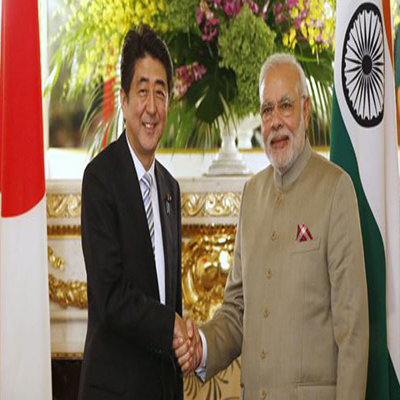
    NEW DELHI: India and Japan have agreed to expand co-operation in the films sector, particularly in co-production of animation films.

    In a joint statement issued after the meeting, both the countries have agreed to form a Joint Working Group in order to tap the huge business potential in the co-production of films and animation, skill development, exchange programs between training institutes and such other areas which are mutually beneficial to both sides.

    The agreement was signed by Information and Broadcasting Minister Manish Tewari and visiting Japanese Minister for Economy, Trade and Industry (METI), Toshimitsu Motegi in New Delhi today.

    During the discussions, Tewari extended the invitation for Japanese partnership in setting up of the proposed National Centre for Excellence in Animation, Gaming and Special Effects (NCOE) in Mohali, Punjab. He also welcomed Japanese expertise in developing special training courses at the Film and Television Institute of India, Pune and the Satyajit Ray Film and TV Institute (SRFTII), Kolkata.

    Welcoming Japan’s decision to be the Focus Country in the International Film Festival of India to be held in Goa this year, the Minister extended personal invitation to the Japanese Minister to attend IFFI, 2013.

    Motegi affirmed full Japanese cooperation in the media content industry of India. He said that a beginning has been made by way of co-production of films, particularly animation films. The Minister said there is a significant potential for growth in the media sector in India as the country is making rapid economic progress.

    Bimal Julka, Secretary I&B welcomed the initiatives outlined and stated that immediate steps would be taken to establish the Joint Working Group.

  • Join this fun ride for the family

    What does Disney stand for?

    Devika: The core value that Disney stands for is celebration of the family. Expressing yourself, following your dream – these are universal themes. When we create content, we try to locally recreate it. Best of Luck Nikki is one of the best examples of a show that‘s able to balance a very strong track that focuses on both parents and children. As it‘s a large family, there‘s something for every age group to connect with.

    Your content has evolved and today, you have various channels under the Disney umbrella. Please elaborate.

    Devika: Disney is a kid-centric family-inclusive entertainment channel. That‘s something we‘ve been very mindful of and committed to.

    Devika Prabhu says that for Disney UTV having shows that are kids-centric and family inclusive is important

    In terms of content, we started off with Disney Animation, which has sound heritage value, then adding Disney Live Action. Initially, we had a lot of the original series used by Disney USA but over the years, we felt the need to make our content more relevant to viewers in India. So, we created local series such asBest of Luck NikkiKaran and Kabir and Shake it Up, which we are proud to have pioneered in this space.

    While there have been many attempts to create live action in the past, there hasn‘t been anything created so family-focused and family-inclusive and we are happy to be the ones to initiate such programming and keep it going. In 2011, live action was only six per cent of our schedule but this year, it is nearly 18 per cent. We are committed to growing that because we want Disney to be enjoyed by all.

    As for the different channels, Disney XD is all about humour, action and passion and is also the home of our Marvel Comics content.

    Hungama celebrates the fun and mischief of childhood – something anyone of any age can relate to and appreciate.

    Disney Junior, which targets pre-school children between two and seven years of age, is literally our baby. It is the home of pre-school content and popular shows like Micky Mouse Clubhouse and The Lion King.

    While you say you are committed to growing live action at Disney, will these live action shows be originals or remakes?

    Indrajit: Great stories are great stories. So whether it‘s a version of a show written in the US or an original, we focus on great stories with great characters as wholesome entertainment for kids.

    Great stories are what catches Disney UTV‘s eye says Indrajit Ray

    Many of our shows are re-versions but at the end of the day, it‘s about great stories that are universal.

    How easy or difficult is it to adapt from an original?

    Indrajit: We contextualise it in terms of the setting such as the kind of family, which part of India will they be from and what are the characters.

    For instance, in one of the upcoming shows, there is this character of a governess which doesn‘t really fit into the Indian milieu. So, it‘s about adapting to the closest Indian character – in this case, a ‘daima‘ – who fits in. Then you go on to the dialogue – will it be in Gujarati, Punjabi, et al.

    How do you package shows to suit different age groups?

    Devika: Being in the kids‘ space, our demographic is four to 14 years. In this country, school timings are varied, so we make sure we have quality entertainment all day. We do schedule our live action post 8:00 pm so that the family can sit together and enjoy. There‘s special focus on the weekend, especially the mornings. On Sunday mornings, we have show premieres while Saturday mornings are for movies.

    What‘s the kind of response you get?

    Devika: It is important for us to understand family demographics and reflect that. For instance, we understand that kids are becoming more democratic than ever before, parents are looking to be closer to their children, and children are having a greater say in things that influence their lives.

    So we choose to keep the dialogue open, and do that through syndicated research, focus groups and facebook pages. There are many avenues for us to interact with them.

    Indrajit: In terms of structure, we are very focused and undertake research to understand the viewer better. One of the things that came out was that kids are very techno-savvy these days. They enjoy a lot of their entertainment on screens other than television as well. This kind of feedback that we get on a regular basis is worked back into the setting to make the content even more relevant to viewers.

    What is it that sets Disney apart?

    Devika: For instance, we have the magical world of Disney movies on Saturday mornings and these are what the parents have grown up with as well – The Lion KingCinderellaPeter Pan,101 Dalmatians. These stories take you down memory lane and you enjoy sharing them with your kids. The kind of content we have on Disney, keeping these aspects in mind, sets it apart.

    Neel and Yash from Shake It Up

    Indrajit: There‘s a huge thing about trust. Adults trust us with our content, and that is very important to us. Yes, there‘s always going to be competition and pressure, but these things make us what we are and what differentiate us from the rest.

    With so many GECs in the race, how does Disney UTV manage to stay on top in the minds of its audience? Vishaka Chakrapani spoke to Disney UTV Digital COO Sameer Ganapathy to understand the channel‘s social media strategy.

    How is Disney making its presence felt online?

    Disney is a family entertainment brand with content present across television, cinema, consumer products and digital.

    With the evolution of the digital space, especially social media, we believe it‘s a great way to engage fans and have a two-way communication with them. A strong online presence across YouTube, Facebook and Twitter is a significant step in that direction.

    Some statistics about the Disney App for feature phones:

    Disney App – Feature phones (Since launch)

    · 1.4 million+ downloads

    · 465 GB data streamed every month

    · 12.95 minutes streamed per user per day

    · More than 20,000 minutes of content streamed every day

    Sameer Ganapathy says that their effort is to make sure content is available on multiple platforms

    Our strategy is to provide our web users with constant updates on our programming and also create a platform for Disney fans to get together and enjoy content on their favourite franchises. Our efforts are to ensure that our content is available to viewers and fans whenever and wherever they want it.

    Of the three platforms Disney India is operating on, which one is getting the most traction? Why and how are you maintaining this?

    Currently, the Facebook page is garnering maximum engagement among fans. With Facebook, we have an average of 13 per cent engagement over the past six months.

    The Disney India Facebook page is home to all things Disney including daily contests and interactive content for our fans. In the past, we‘ve had multiple activities on the page, ranging from Disney Consumer Product franchises to show promotions and awareness. Activities like Disney Back2School, DisneyQ and Art Attack received a very positive response and we hope to continue the momentum with the release of Disney‘s Planes that is just round the corner.

    How important are mobile devices? What is the split between these and desktop viewing? Are apps big for you?

    At Disney Media Networks, our efforts are to ensure that our content is available to viewers and fans whenever and wherever they want it.

    An important part of our strategy is to ensure content availability across multiple screens including mobiles. On YouTube, we have 6.3 million views for Disney India; of which, over 1.2 million views come from mobile phones.

    Ours is a generation of screen-agers and mobile phones have emerged a personal source of entertainment to access games, videos and more. We aim to provide our users with content that can travel with them across screens, from television to computers to mobile phones. Just last year, we launched the Disney App for feature phones, which has short format videos for fans. The beauty of this app is that fans get seamless video viewing experience even on data connectivity like Edge and GPRS.

    With its niche content and programming, who are the advertisers on Disney UTV? Vishaka Chakrapani spoke to Disney UTV Media Networks ad sales executive director Nikhil Gandhi to get a feel of the kind of advertising the channel attracts.

    Who are the advertisers you have on board?

    Currently, we have several long-term advertisers on our channels like ITC Foods, Nestle, Cadbury and Hindustan Unilever to name some.

    Nikhil Gandhi says the focus on mothers gives a better prospect for media plans

    Which shows get the best/highest number of advertisements?

    There are no specific shows that are the key drivers. Advertisers are driven by two types of content – Performance driven shows or shows and movies based on saliency. We are very excited about our original productions and live action is definitely the way forward for us.

    Which categories/companies spend the most on advertising on your channels? Are there any emerging spenders?

    We have a significant number of FMCG (Fast Manufacturing Consumer Goods) advertisers on our channels. However, with our content reaching out to family audiences, there is a new genre and categories of advertisers who target families, especially mothers looking to explore our channels.

    What does advertising on such channels offer to these advertisers? Any trends and insights you can share with us?

    Families are becoming far more democratic in nature and kids today have become key influencers and more involved in the decision making process. With kids at the centre, our channels engage families, especially mothers, and therefore, offer a greater efficiency to any media plan.

    Which time band is most preferred and why?

    In the kids‘ genre, we cater to a broad segment of children across our channels. During weekdays, the afternoons become a significant band for us. Sunday mornings have already been established as an exciting band with our live action shows such as Best of Luck Nikki,Shake It Up and more. We already have the Magical World of Disney block on Saturdays, and we are focusing on building Saturday mornings as a key slot for advertisers as well.

    The Singh family from Best of Luck Nikki

    So what is the primetime for advertising?

    Like mentioned before, afternoons on weekdays since kids are generally in schools. However, with our live action shows – Sunday mornings become extremely important for us, and we are building on Saturday mornings as well.


    Do advertisers differ for weekends and weekdays?

    No. We see the same traction on weekdays as well as weekends.

  • Chhota Bheem now available on Worldoo

    Chhota Bheem now available on Worldoo

    MUMBAI: Chhota Bheem, a cartoon and animation series hero, is now available on worldoo.com.

    Worldoo is the “first-of-its-kind” ‘ever-evolving online ecosystem‘ for kids, launched this April and is targeted to kids of the age group between 6-12 years.

    Worldoo and Chhota Bheem‘s web partnership comes at a time, when the latter has launched its second film.

    Kids in Worldoo can watch Chhota Bheem videos, play Chhota Bheem games, read Comics, choose Chhota Bheem “avatars” and design their homes with specially designed Chhota Bheem themes as well.

    “Worldoo promotes popular content for young minds and Chhota Bheem is one of the most iconic characters, today. Kids can express themselves by bringing Chhota Bheem to their homes on ‘worldoo‘ and much more,” Worldoo head experience and brand Harsh Wardhan Dave said.

    “We are very happy to associate with Worldoo, their concept is very unique and opens up a wonderful world for children,” Green Gold Animation VP-strategy Srinivas Chilakalapudi added.

  • Disney’s ‘Tangled’ director in talks with Jason Bateman for new animated feature

    Disney’s ‘Tangled’ director in talks with Jason Bateman for new animated feature

    MUMBAI: Jason Bateman is set to lead the voice cast of a new Walt Disney Animation project directed by Tangled helmer Byron Howard, according to The Hollywood Reporter.
     
    As per the sources, the new project is an untitled animal comedy that does not yet have a release date.
     
    For Bateman, the project would mark his first voice-over work for a feature. The actor, who is all set to shoot for Warner Bros’ version of the Jonathan Tropper novel ‘This Is Where I Leave You’, lent his voice in the short-lived Fox series ‘Sit Down, Shut Up’, among other shows.

    Howard is well-regarded in the animation community and is one of the great directors behind Disney Animation’s recent reappearance. In 2008, he along with Chris Williams directed ‘Bolt’, which was nominated for the Oscar, and with Nathan Greno co-directed the hit ‘Tangled’.
     
    The next titles on the list from Disney Animation are Frozen, a nouveau princess tale that will be released on 27 November next year, as well as an untitled secret film project slated for 7 November 2014. DisneyToon Studios will release Planes, set in the world of cars, 7 August later this year.

  • DreamWorks Experience to unveil in Macao, China

    DreamWorks Experience to unveil in Macao, China

    MUMBAI: As part of a new partnership between DreamWorks Animation and Sands China, the studio will debut its DreamWorks Experience at the Sands Cotai central resort in Macao beginning 1 July. With the new license agreement, popularly known characters Shrek the ogre, Po the panda and other characters will appear, as reported by the Hollywood Reporter.
     
    The DreamWorks Experience will see characters from Kung Fu Panda, How to Train Your Dragon, Shrek and Madagascar attending events, shows and other offerings throughout Cotai strip resorts on the Sands Cotai Central and the Venetian Macao properties. It is supported on a wide range by the Macao Government tourist office.
     
    "All of us at DreamWorks Animation are excited to bring the DreamWorks Experience to this amazing integrated resort city," said DreamWorks Animation CEO Jeffrey Katzenberg.
     
    "Sands China is pleased to bring the hugely popular DreamWorks Experience to Macao," said Sands China president and CEO Edward Tracy.

  • FICCI submits its wishlist to Fin Min for M&E sector

    NEW DELHI: National industry body Ficci has demanded that the government must give several tax exemptions and holidays to let the animation, gaming and VFX industries, which is growing faster than the overall entertainment industry, realise its full potential.


    Ficci has demanded in the budget for 2008, the government must give a 10-year tax holiday, removal of service and sales taxes on the software used for production for 10 years, exemption of import duty on hardware for 10 years, and other facilitating measures.

    Interestingly, it says also that as there is no Indian channel with 24 X 7 indigenous animation content, 10 per cent of the time on entertainment channels must be reserved for such content. This will give local content and talent a major boost.

    The memorandum from Ficci says that though the animation, gaming and VFX industry is growing in leaps and bounds, the full potential is yet to be tapped, despite the projection that the industry would grow hugely by next year.

    Ficci estimates show that the animation industry today stands at Rs 13 billion and is expected to grow to Rs 43 billion by year 2009, with a CAGR of 35 per cent.

    Similarly, the gaming industry is expected to grow from Rs 360 million to Rs 13.50 billion by 2009, with a CAGR of 78 per cent.

    “The growth rate in these sectors are much higher than overall media & entertainment sector, which is expected to grow at a rate of 19 per cent,” says Ficci. The industry could be a major export revenue earner as well as provide massive employment.

    Ficci says that after Information Technology, the biggest export earners for India are Animation, Gaming and VFX, but the overall business model existing at present, which is a low-end BPO approach, is stunting its growth.

    The Ficci document stresses: “Exports in this vertical can be looked in two ways: one, a purely outsourcing model in which production houses provide services to overseas studios. This is low-end work in the value chain with more of a BPO approach.

    “The other is revenues earned from exporting the finished product (the intellectual property developed in India for domestic / foreign markets) to global audiences.

    “Both the models have tremendous potential for foreign exchange earning for India. But it is better in the long term if we move up the value chain and have indigenous content with both domestic and foreign appeal.”

    Ficci estimates that in the next five years, India would require more than 30,000 trained animators and gaming professionals.

    “If this industry is nurtured properly, it can meet the government‘s objective of employment generation, and the latter should aid in the setting up of centres of excellence on the lines of IITs and IIMs for the animation and gaming industry,” says Ficci.

    Ficci feels that the other direct impact of aiding these industries would be building Brand India better, by engaging the country‘s massive talent pool in creating content for Indian as well as global audiences by transferring India‘s 5,000-year-old time- tested legends into the new media.

    “Animation could be another way of creating “Brand India” among NRIs / PIOs and other global audiences. Currently when India is increasingly garnering attention in the world arena, it is the right time to reach outwards through this medium,” Ficci says.

    Ficci points out to models of Korea, China, Singapore, etc., which enjoyed their respective government support, so much so that 40 per cent of the animated content in the US is Japanese.

    “The reason for such a pattern is that countries like Japan and Canada have developed very strong domestic markets, and once a domestic market gets enough consumable content, the same can be routed for exports,” says the memorandum.

    Ficci reminds that the Korean government sees animation as the most competitive industry for the 21st century, and has provided massive tax reliefs.

    “(Korean) application guidelines specify that companies whose projects have been accepted by a Korean broadcaster can apply for up to 40 per cent of their production budget,” Ficci says, demonstrating the massive support system there.

    So far as the animation industry is concerned, Ficci says that it is now covered under Software Technology Parks of India.

    The problem, says Ficci, is that this holds good for a BPO nature of work where outsourcing is the main module and most of the studios which are getting benefited from STPI have to make sure of an export commitment of more than 85 per cent.

    “As a result many Indian studios wanting to produce original content based intellectual property and use art and talent from India to produce animation stories do not get any such benefits,” explains the memorandum.

    Creating original content in India attracts custom duty and also the freshly levied sales tax (VAT) on off the shelf software (12.2 per cent, which might increase further) and further also the income tax component.

    “This is leading to more and more studios working on foreign content and a severe lack of animated Indian stories in our domestic television schedules,” laments Ficci.

    Hence Ficci‘s key proposals for the animation, gaming and VFX industries are

    • Tax holiday for 10 (ten) years, so that cost of creating intellectual property (original content) comes down drastically and the industry becomes viable
       
    • Removal of Service Tax
       
    • Removal of Sales Tax on the Software used for Animation, Gaming & VFX production for a period of 10 years
       
    • Exemption of Import duty on hardware for a period of 10 years
       
    • Market Development Assistance for overseas business promotion
       
    • 10 per cent mandatory local content on the networks to began with

    “Finally, we feel there is negligible revenue accruing to the exchequer currently as no new Indian IP is getting created. If a tax holiday is given, revenue will flow into the exchequer funds in a couple of years as the industry will gain impetus and encouragement to grow. In this regard the IT sector can be looked at as a role model,” says the Ficci memorandum.

  • ‘Line between credibility and sensationalism is becoming thinner ‘ : Anurradha Prasad – B.A.G Films and Media Limited MD

    ‘Line between credibility and sensationalism is becoming thinner ‘ : Anurradha Prasad – B.A.G Films and Media Limited MD

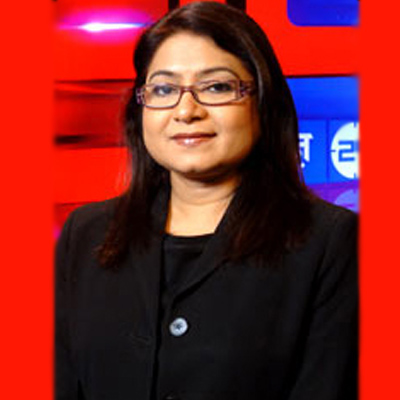
    B.A.G Films & Media Ltd. managing director Anurradha Prasad has her plate full. Having created a long list of popular TV shows, she now has her eyes fixed on FM radio, TV channels, animation and feature films.

    The company has spun separate subsidiary outfits for each of these activities. The news channels will be housed under B.A.G Newsline Network while the non news broadcasting venture will be under B.A.G Glamour.

    FM Radio is under B.A.G Infotainment and is operating under the Radio Dhamaal brand while animation will be via a joint venture with Sieindesign Co.

    In an interview with Indiantelevision.com’s Sibabrata Das, Prasad talks of the changing face of news television with the growth of tabloidisation, the excitement of FM radio and her plans to create a vertically integrated media empire.

    Excerpts:

    Are TV content companies in India under compulsion to foray into broadcasting space as an effort to scale up their business?
    We can go on doing a service job and generate ratings for the broadcasters. But the fundamental problem is that we have no ownership of those shows. So how do we do a forward and backward integration? We were already doing a 360 degree of content; now we have decided to do a 360 degree of media. If we don’t do it now, then when will we? We have taken the organisation into a position of strength. Now is the time to take the leap.

    Is the decision to have control over your destiny a fallout of B.A.G Films losing flagship shows like Sansani as Star News decided to do it themselves?
    It had nothing to do with Star retrenching our shows. It was actually a two-way process and the pullout happened in May-June. We were actually contemplating on our future course of action nine months back and last December we took a call. Having done content, we had learnt a whole gamut of things and we decided to move from B2B to B2C. The things started unfolding when we bid for FM radio stations and created a new company structure. We did our first placement in January.

    Were you looking at a model like Balaji Telefilms where a broadcaster picks up stake in the company and you venture into TV channels space enjoying an assured content supply?
    That is a good business model as it provides a huge element of security. But we wanted to be on our own. Surely, we run a higher risk. But India today is all about challenges. If we don’t take that up right now, we will have slipped an opportunity.

    You mean to say that this is the right timing?
    Media is attracting huge interest and is going to rule the entire consumer process. The whole distribution rejig is also happening. Cas (conditional access system) is being made mandatory, direct-to-home (DTH) platforms are up. Other media vehicles like mobile TV and internet are emerging . The cost paid for distribution is going to drop.

    We have created tried and proven content. We have already set up an infrastructure and have the resource network in place. What we have to do now, and correctly, is marketing, positioning and distribution. For us, it is a very calculative challenge.

    In the broadcasting space, why did you decide to get into the news and lifestyle genre?
    For the last two years, there has been growth in these genres. And they have been eating into the audience share of the general entertainment channels (GECs).

    Are Hindi news channels growing at the cost of the GECs because of crime shows and tabloidisation of news?
    The drama in the news channels is an important driver for getting eyeballs because GECs are totally focused on women. As the GECs provided no alternative for male and young viewers, they went to news channels.

    Won’t it be tough as you are entering at a time when the news market is getting fragmented among 4-5 players?
    The competition is huge and in the process people are going to any level to grab eyeballs. They are expanding the viewership through non fiction entertainment and are getting only TRP-driven. But in the process, they have never marketed their product or channel; they have sold cheap. The truth is that you can have a large number of eyeballs, but you may not necessarily enjoy fat revenues. People who watch news channels are not necessarily what the advertisers want. The perception you have created is very important. Which is why NDTV may have less viewership than some of the competitors but enjoys more revenues than them.

    Isn’t tabloidisation the winning bet for grabbing audiences in the Hindi news space?
    The non fiction entertainment in Hindi news channels has created a new kind of TV. But there are no isms being followed and the editorial staff is getting edgy in this battle for TRPs. We started tabloidisation in India with the properties (Sansani, etc) that we created for Star News. But even in that space, nobody could question our credibility. That is getting lost, especially in the last two years. And some of the good properties which are getting created outside this, are not being marketed or sold properly.

    How could you establish credibility in this genre which thrives on sensationalism?
    When we did Sansani, it was the most credible crime show. We did research and stood by our stories. We provided all the drama but also reflected the interest of the people; several tantriks who were duping people were exposed. More than programming, it was the helpline that added to the credibility. When others took the crime genre, they never did justice to it.

    As a serious organisation which is in the business of news, you can’t be doing certain things which are not credible. That line between credibility and sensationalism is very thin. And it is becoming thinner because of the growth of this genre.

    Do you see this trend growing?
    The cost of making some of this kind of programming, particularly relating to ghosts, is cheap – and there is an audience for this. But I don’t see this going on and on. It is also a happy India that we are in now.

    We plan to make a combined investment of Rs 4 billion in our broadcasting business

    Will we see opinionated news in your network?
    We will carry the opinion of the people. We should have the guts to say whatever we want to say. Otherwise, why should we be in the news business?

    How much will you be investing in your Hindi news channel?
    We plan to make a combined investment of Rs 4 billion in our broadcasting business. We are launching four channels – two in the news space, one lifestyle and `Bliss’ which will be all about mind, body and soul. For the news venture, we are pumping in Rs 2.5 billion. While the first will be a general Hindi news channel, we are still strategising on the second one. We expect to launch the Hindi news and lifestyle channels in October-November. We are using the Insat satellite and have applied for a teleport licence.

    Are you diluting 25 per cent stake each in the two broadcast companies, B.A.G Newsline Network and B.A.G Glamour, to raise Rs 2 billion?
    I can’t comment on it.

    Are India Bulls promoter Sameer Gehlaut and Kolkata-based High Growth Distributors individually picking up 12.5 per cent in each of the two companies? Have you raised Rs 1 billion each from them?
    We are a listed company. We can’t comment at this stage.

    How different will the lifestyle channel be?
    We are trying to create a new space. It will be a celebrity-driven, aspirational channel.

    For the FM radio business, would you require to raise fresh capital in B.A.G Infotainment?
    Our fund requirement is Rs 480 million. We have offloaded 10 per cent in the subsidiary company to IDBI Bank. B.A.G Films is investing through internal accruals and we have also tied up debt. We are adequately capitalised.

    Are you in talks with foreign investors?
    We will launch our brand and grow the business. We will create value before we decide to go in for a further dilution.

    When will all the 10 stations get launched?
    We have already launched Hissar and Karnal. Patiala is coming up next, followed by Muzaffarpur, Ranchi and then Jalgaon. We should have launched all our stations by August-September.

    What is the strategy behind bidding for the stations in the northern region and the sugar belt of Maharashtra?
    We believe that the towns we have selected will push for the radio revolution that has come so late in India. And the cities we have selected in the northern region falls within one extended stretch of tourist belt. Ranchi is an upcoming capital while Jabalpur is fully Hindi. In Maharashtra, the sugar belt has money.

    Will your stations have a common distinct personality?
    The tagline is `Hila ke rak de.’ This is because the belt we have selected, particularly in the north, is high on energy. We have trained our RJs accordingly. We will be a mass-based station as we have to first get the radio culture in those places.

    What are the plans for the animation business?
    We have entered into a joint venture with Sieindesign Co, a firm which has a presence in the production, distribution and licensing of animation movies and TV series. We will see this segment growing.

    How do you see growth in the parent company which will house the TV and film production business?
    We will continue to do fiction programming for general entertainment channels as we see no friction there with our new lines of broadcasting business. The scope, in fact, will broaden as a slew of new channels are in the process of being launched.

    We have also launched an international show Yeh Vaada Raha for Ary Digital, Dubai available in Pakistan, UAE, USA and UK. This is our first step towards going international. We are also foraying into Bengali feature Films with Ami,Yaseen aur amaar Madhubala. Directed by Budhadeb Dasgupta, it is set for release in October. All these efforts should give us topline and bottomline growth.

  • Frames to have sessions on radio, animation

    Frames to have sessions on radio, animation

    MUMBAI: Frames, the convention for the business of Indian entertainment organised by Ficci, will take place from 26 – 28 March in Mumbai.

    Radio and animation are two of the topics that will have sessions devoted to them.
    One session is called Creating Compelling Content for Radio. The oldest electronic medium in the world is one of the newest rage in India. Viewers will learn what it takes to create a compelling content for Radio

    Then there is a Plenary Session called Radio: Music & Beyond. In India, radio is going through a resurgence phase. The medium which once looked out and not in trend is now very much in fashion and is escalating in term of its reach day by day. Viewres will get a feel of the future on basis of success stories, which have turned around the radio business all across the globe.

    As far as the aniomation track is concerned there will be a session on gaming. Gaming offers strong business opportunities. In the US, it is believed that gaming is as big as Hollywood. In India gaming industry is expected to grow at CAGR of 78 per cent . In addition to mobile gaming, PC and console are also expected to add to pie. Lets explore…

    Theer will also be a Master Class: Scriptwriting for animation. The success of animation relies on the strength of the story telling. There is no denying that art and technology are significant but the praana of any animated product is the script. Even a good fable could wobble if scripted badly. What does it take to write an animated script?

    The plenary session looks at visual effects.

    Visual effects have become the integral part of any project. The entertainment industry is witnessing an increased amount of usage of visual effects. VFX is primarily a Hollywood phenomenon. Viewers will get an understanding of the same.

    Another session is called Developing Animation Content: 360 Degrees. As Indian animation industry is maturing the studios are fast realizing that the real action lies in creating its own IP and having it own shows. Shows produced for not just the local market but the global market. The idea behind this panel is to have broadcasters, producers, writers and licensors to share their insights. This will provide the audience a 360-degree perspective on how internationally content is created, produced and licensed.

    Frames will also look at the process of moving From Comics to Animation. One of the old means of kid’s entertainment; comics is a powerful tool of story telling. Comics are very effective in imparting cultural and social values to kids besides being highly entertaining. Now animation is the modern way of story telling, which can serve as direct extension of comics.

    Frames also looks at creating an Animation IP with Global appeal. As the market is maturing, the Indian studios are moving up in the value chain and coming out with their own IPs. Though these properties may be well accepted in India, but where do they stand in the global market? What does it take to create a product that is internationally marketable and acceptable?

  • Ficci moots 10-yr tax holiday for animation, gaming industries


    NEW DELHI: With the annual budget coming up, the Federation of Indian Chambers of Commerce and Industry (Ficci) is lobbying for a 10-year tax holiday for the animation, gaming and VFX industries.

    Ficci says the sector, which holds tremendous promise, is suffering because the present government policy is to subsidise foreign productions in India, whereas Indian companies are burdened with a slew of taxes.

    Ficci has raised an important cultural point that insiders say might sit well with I&B minister Priya Ranjan Dasmunsi, who has been talking of Indian values rather loudly of late. Ficci feels that due the tax burden, Indian animation companies are not able to produce Indian content and hence an entire generation of Indian children are growing up on a staple of foreign superheroes.


    The industry body has also proposed the removal of CVD duty for a period of 10 years. The high-end machines used for the production attracts an import duty, Ficci says, adding that at present the duty structure is high: basic duty of 12.5 per cent, CVD of 16.32 per cent, special CVD of 4 per cent.

    After including educational cess, the overall duty comes out to be 36.8 per cent, it explained.

    The provision for Service Tax is financially hitting Indian animation studios extremely hard, Ficci has said in its budget wishlist.

    “Most of these studios are those that are developing a large amount of original content. Those studios that are export oriented and are thus under STPI are not exposed to the Service Tax at all, whereas the ones that are making or planning to make any Intellectual Property (original Indian content) in India for any client or broadcaster have to pay a service tax of 12.2% (this is going to be @ 12% in the new financial year, as per the latest budget),” says the Ficci paper that indiantelevision.com accessed.


    “We all have seen a rapid boom in the software industry, thanks to their exemption from the service tax. There is a big potential for Indian animation studios to grow manifold from where they are right now, the major success of the animation sector will be in creating the original Indian content and distributing it globally,” says the paper.

    It argues that if the country can make special efforts and can exempt animation industry from paying service tax, it would really contribute to a great extent towards promoting the industry and also the traditional and creative artists.

    Explaining the issues in the sector, the Ficci note despairs that the animation as an industry in India is covered under STPI, but STPI predominantly holds good for a BPO nature of work, where outsourcing is the main module and most of the studios which are getting benefited from STPI have to make sure of an export commitment of more than 85 per cent.

    As a result, it holds, many Indian studios wanting to produce original content based intellectual property and use art and talent from India to produce animation stories do not get any such benefits.

    As creating original content in India attracts custom duty and also the freshly levied sales tax (VAT) on off the shelf software, sales tax of 12.2% (which might increase further) and further also the income tax component, the Ficci paper has held.

    Together, these act as a major deterrent against studios producing and creating original content with an Indian heritage base or any other indigenous original content creation within the shores of the country.

    Currently, there is just no encouragement of developing original Indian content to be put forth to the entire world in the form of animation.

    This is leading to more and more studios working on foreign content and is leading to a severe lack of animated Indian stories in our domestic television schedules. In fact in the current scenario there is not one television channel that is exclusively dedicated to the kids showing original Indian content.

    “Hence,” Ficci argues, “our next generations of kids are growing up on a staple diet of foreign superheroes and legends while their exposure to Indian history, culture and heritage is being restricted to school textbooks. Storybooks and comics are being quickly replaced by television content and specially animated television content.

    Ficci has also demanded that the tariff barrier on gaming consoles be reduced, as it is acting as a hindrance to developing such consoles in India and putting the related software sector in a tight spot.

    The paper has argued that the entire tariff of approximately 36.74 per cent is passed through to the customers, translating to high prices for such consoles, which affect affordability and therefore access.

    High tariffs, it says, also lead to the growth of a grey market in products, which for the gaming consoles market in the country stands at 300,000 units, and leads to a loss of revenue to the government.

    Ficci feels the growth of the grey market also limits the government’s ability to ensure high quality and safe experience for customers that desire this exciting entertainment device.


    Pricing and affordability are key aspects that can enable the development of the gaming consoles market in India. Rationalization of the tariff structures will therefore mean a more affordable pricing structure that will enable greater market access for such consoles.

    “A recent study conducted by a market research agency, estimates that by lowering the CVD alone, which currently stands at 16.32 per cent, will result in projected import of gaming consoles to the tune of 400,000 units in the next five years,” the paper says.

    Ficci quotes a Nasscomm study and says: “According to Nasscomm, a game that would cost around $3 million to $6 million to develop in the United States can be produced for only $500,000 to $3 million in India.

    “In fact 25 per cent to 30 per cent of the revenues from a blockbuster console-based game, which often match those of a blockbuster Hollywood movie, amounting to $250 million or upwards, is the developers cost,” it adds .

    In addition to this competitive edge of development cost arbitrage, Indian software developers also have the potential to tap into the potentially diverse domestic market for gaming and develop customized games in vernacular languages, thereby broadening the scope of the Indian gaming market.

    Though the Nasscomm study acknowledges that currently the gaming market in India is undeveloped, it projects a potential growth with a CAGR of 78 per cent, amounting to $ 300 million by 2009 . It also projects that the current employment scenario in India in this sector can grow from approximately 600 people employed in the gaming industry in 2005 to approximately 2,000 professionals in 2007.

  • Charact’o’mania

    Inching in slowly, the forces of Mickey Mouse, Power Puff Girls, SpongeBob, Barbie and many others have come together to invade the lives of every Indian kid! They are everywhere, on their toys, stationary, clothes, bed sheets and even underwear… this mighty world of characters is tracking these kidlings down, longing to be a part of the air they breathe. In the same way, kids are wholeheartedly welcoming their favourite television characters to have a frolicking time – a phenomena I would like to call “Charact‘o‘mania.”

    Turner‘s Cartoon Network & Pogo extend their merchandise to every domain of a kid‘s life

    The children‘s entertainment market is fast gaining pace in India, and apart from television and cinema, kid‘s centric broadcasters are channeling their energy towards building a strong foothold in the licensing and merchandising space. The emergence of organized retail in India has set this process in motion and is laying the foundation of a new era for kid‘s entertainers!

    There are really no boundaries to the scope for merchandising activities which can extend far beyond the cliché toys and board games to apparel, accessories, publishing, stationery, home décor and home videos. Kid‘s entertainment permeates into every aspect of a child‘s existence and capitalizing on this trend are kid‘s broadcasters that look to take their brand and characters into the daily lives of children.


    Although it is difficult to ascertain the size of this vast merchandise market in India, Cartoon Network Enterprises India and South Asia licensing director Jiggy George estimates that the size for both character and non character licensed products at organized retail would be in the region of Rs 3.5 billion.

    A manifestation of the unorganised market: A boy selling Dora and Mickey erasers on a local train

    Unfortunately, a large section of this market is swamped by several small unorganized players that rule the roost. Mattel Toys India head marketing Rahul Bhomik says that the market for licensed kids entertainment properties is still not yet fully recognized in India. Besides, the organized retail sector only comprises a mere 4-5 per cent. Hence it is difficult to arrive at an accurate figure of the size of the entire merchandise market. However, the size of the organized toy market alone is in the worth between Rs 250 -300 million.

    With two years experience in the Indian market, Walt Disney Company (India) Pvt Ltd director consumer products Roshini Bakshi applies a different approach to understanding the undersized organized sector. She says, “The market in India for character and non character based merchandise is not as large as Japan and the US, the reason for this is that generations of kids in India have not grown up with most of these characters and therefore a strong affinity and emotional connect has not yet been established.”

    But just as every cloud has a silver lining, there emerges a consensus among experts to the fact that this industry is likely to see 15-20 per cent growth year-on-year.

    “Although organized retail is still in its embryonic stage, we are beginning to see growth in this sector. Besides, organized retail will help to insure that intellectual property is respected,” adds George.

    Beyblades took the Indian toy market by storm in 2005

    In the last two years kids channels have flooded the market with a host of products in various categories. In 2005, Cartoon Network Enterprises (CNE) partnered with Funskool India to unleash a craze that swept across the toy market with Beyblade. The merchandising arm of Cartoon Network CNE, boasts of having sold over 100,000 units across the country within a month of launch in August.

    Funskool joined Disney to launch Disney Princess toys & accessories

    In the boys segment, Disney followed with the launch of Power Rangers in 2006 across toys, apparel, back to school products, home products like linen and footware, for which it partnered with a Dubai based firm New Boy. According to Bakshi, the strong action and play factor helped the product to fare well in the market. The year before that Disney tied up with Funskool for a range of girls toys around the Disney Princess theme, which has now been taken across categories to include accessories and make-up kits.

    However, not all properties can be used across product categories. George highlights the fact that Beyblade as apparel may not garner the same response it did with toys, primarily because the main protagonist is the toy itself. While properties like Power Puff Girls would work well on apparel and Dexter on knowledge based products.

    Galli Galli Sim Sim muppets all say cheese !!!

    The year 2006 also saw Turner bring the muppets of the Indian adaptation of Sesame Street, Galli Galli Sim Sim out of the TV sets and onto a whole range of apparel, publishing, plush and home furnishing products centered around their key characters Elmo, Biscuit Badshah, Bharat and Ernie. Apart from these, Pogo‘s MAD (Music, Art & Dance) launched a series that included home entertainment DVDs, six new book titles, stationery and activity kits.

    It might be true that kids crave for a touch and feel experience of their stars, however this may come at a heavy cost, drilling holes in their parents wallets. Bhomik admits that a premium will be charged for licensed products, however the price largely depends on the property. For instance, a movie property will have a short shelf life (4-5 months) and therefore will require a bigger bang. Similarly the price points will also be higher.

    Mattel‘s Fisher Price caters to the pre-school segment with an array of interactive toys

    “Prices will be higher than non licensed products but at the same time kids are willing to pay to own their favourite character,” says Funskool India marketing head David Selavaraj.

    In their
    attempts to expand their categories and products Bakshi asserts, “We continue to push our partners to reduce costs because that is where the market lies. Although some licensed products are expensive, our objective is to grow because we want to be a mass brand available to the middle class Indian. Infact, this is how we have expanded globally.”

    Cartoon Network Enterprises launches Pogo branded apparel in 2006

    What‘s interesting is that broadcasters are also engaging in channel branding through multiple categories of products. Both Pogo and Disney launched branded apparel and accessories last year. Prior to that, Pogo also launched a boy centric toy range Pogo Wheels and is targeting to expand its footprint in other categories in the summer months of 2007.

    But for this little world of fun and play to come alive, toy manufactures must feed on kids broadcasters and vice versa, both working in tandem. Bhomik says it‘s important for the channel to build a big property, while the manufacturer helps to make that world of fantasy and role play come alive. This in turn helps the channel to strengthen the bond of their brand and characters with children. In some cases when manufactures have their own flagship properties like Mattel‘s Barbie and Hot Wheels, channels are also roped in to air movies created by the company. Barbie has a series of nine movies and Hot Wheels has four.

    But is this phenomena only metro specific or is this ‘make believe universe‘ making inroads into smaller Indian towns? George says that the Turner pair does have a mass strategy in place and is looking to build up its distribution in the Southern states during the course of this year, “We do not want to be elitist in pricing and distribution.”

    An in-store product layout gives parents and kid‘s an opportunity to get a feel of the brand

    However, the biggest limitation that marketers and distributors face in smaller towns is the lack of a spacious outlet. Mattel also follows a mass distribution path including traditional ‘mom and pop‘ stores and food and grocery outlets in smaller towns, however Bhomik explains that the major constraint is the lack of space for display the products, a key marketing strategy to allow the brand to come alive. This is the one benefit that mutli-brand outlets provide.

    “In the smaller retail outlets we have to rely on the salesmanship of the guy at the counter rather than allow the consumer to experience a large visual display of the product,” adds Selvaraj.

    Large format stores provide space to create a kid‘s environment: A Disney Princess interactive zone was created during launch

    For Cartoon Network Enterprises, which set up shop in India in 2001, merchandising initiatives currently contribute to
    10 – 12 per cent revenues of its overall business. Having been around the longest in the market, George says, “For merchandising to work, you have to have a good property. It would depend on three key factors: A function of the equity of the characters, which has to be built over time by the network, the partnership deals for distribution and marketing and of course retail.”

    Eyeing the advantage that kids channels are leveraging in this sector, even SET India‘s youth lifestyle channel Animax, which has been quite silent over the past few months, is planning to enter the merchandising arena with globally relevant characters and icons in the second half of 2007. Speaking of their plans Animax manager marketing Supriya Bambawale says, “These will not be based on a given anime property but instead would be created by the channel and will lend itself to music, gaming, fashion and lifestyle.”

    Currently, a team in Los Angeles is working on the themes for these contemporary characters but Bambawale opines that they will also have a touch of Indianess with names such as Karina and Jasmine. Following the refresh initiative to change the proposition from kids to youth centric (15-32 years) in June 2006, the channel hopes to reach out to this English speaking urban audience via a full fledged merchandising activity.

    Nick kicks off it‘s merchandisng initiative with a range of party items

    While on one hand some kids channels may be apprehensive to foray into the licensing and merchandising sector, given its unreliable nature. Others may just be waiting to strengthen their properties in India before making this move. Although Viacom‘s Nick has a strong merchandise presence globally and has an International partnership with Mattel for a whole range of products, the channel has only recently started showing some activity in this category. Last year,
    the channel signed up with Bombay Dyeing for bed linen and this year the network is planning to beef up it‘s offerings with a SpongeBob PC game available at Planet M, Nick Jr‘s Dora the Explora apparel range and a whole collection of party accessories.

    From the way the India story is unfolding – the higher disposable incomes among the growing middle class in India and the increasing influence of kid‘s ‘pester power‘, it seems like the kid‘s mechandising industry via the organised retail route is poised to see an exponential growth. For those players that have only recently realised the mammoth opportunity and revenue stream that this business provides, along with other seasoned players, the whole industry is bound to explode. So brace yourself for a mass attack!