Tag: Animation industry

  • GUEST COLUMN: How can animation brands utilise communication tools to stay ahead

    GUEST COLUMN: How can animation brands utilise communication tools to stay ahead

    Mumbai: Animation brands have seen a considerable increase in the last three years. Animation is booming as a result of technological advancements and improved internet access. Through amusement and ingenuity, animated films and cartoons capture the interest of children of all ages. Animation is not only a terrific way to tell a story and interact with an audience, but it is also full of unlimited possibilities. People of all ages prefer animation since OTT sites such as Netflix, Disney+ Hotstar, and Amazon Prime Video cater to adults with animated material. People want to make a career in animation by mastering VFX and 3D animation and building a name for themselves. The Indian animation industry is expected to reach Rs 180 billion by 2024, with a 29 per cent annual growth rate. Animated content appeals to a wide range of age groups. Because of the shift in purchasing patterns, the industry has grown at an exponential rate. The Confederation of Indian Industries (CII) and the Boston Consulting Group (BCG) undertook a study of the Indian visual effects and animation business. It is predicted that this industry may potentially take 20–30 per cent of the global AVGC market. It currently accounts for only 10 per cent of the market. This has boosted competition in the animation sector, and brands are seeking new ways to reach a wider audience.

    The goal of public relations (PR) in animation brands is to raise brand recognition in order to pique the audience’s interest and establish thought leadership in the industry. Public relations firms are branding and communication specialists who understand how to make brands newsworthy and relevant to today’s audiences. They also provide crisis management planning and response services to help brands ensure that their message is not lost in translation. Animation Brands can employ tried-and-true public relations (PR) tactics and activities to foster positive attitudes and behaviours about their company, which will help convert interested consumers into customers. Public relations tactics are very cost-effective and often allow brands more control than more broadly targeted advertising efforts. Consider using these public relations tools to help a brand’s reputation.

    To keep them ahead, PR can benefit the animation industry in the following ways:

    Builds brand awareness

    Public relations (PR) are great for maintaining an image that will increase your audience reach. To keep ahead of the competition, animation brands can employ public relations strategies to raise brand awareness and assist them in gaining recognition. Any company or brand. They have the ability to use public relations tactics to effectively build an image and brand recognition. Public relations will help to increase brand awareness, reach, and consumer loyalty.

    Educating about brand/industry

    The animation industry is still relatively unknown, and many people believe it is primarily concerned with cartoons. However, with the advancement of technology and the internet, people are increasingly favouring animation. To keep the momentum rolling, public relations must invest in public relations. Public relations tools like blogs, newsletters, news feeds, social media posts, podcasts, and interviews can assist in educating the public about the animated film. Through public relations, brands may also inform people about how to create a career in animation and educate those who are interested in the profession.

    Better exposure and engagement

    Brand positioning and visibility can be achieved through public relations. The massive market makes it all possible; yet, one must comprehend the method for engaging the audience. Brands may use public relations to design campaigns that enhance engagement and awareness. PR techniques like press releases, social media platforms, and SEO can assist animation brands in reaching their target audience, resulting in increased brand exposure and engagement.

    Permanence

    Animation brands require longevity because they want to reach a broader audience and make their brand popular. Effective public relations techniques allow them to target their audience based on their target group’s interests, increasing their reach. Public relations can help animation brands achieve long-term success by establishing thought leadership in the industry.

    To summarise, animation brands can utilise public relations in a variety of ways to achieve their objectives. It will aid in increasing exposure, awareness, and persistence with the previously mentioned variables. If you want to generate interest in your business, you must increase spending in a profitable and friendly way.

    The author is Scenic Communication co-founder Anindita Gupta.

  • Budget2022: Govt to set up task force to promote animation, video gaming industry

    Budget2022: Govt to set up task force to promote animation, video gaming industry

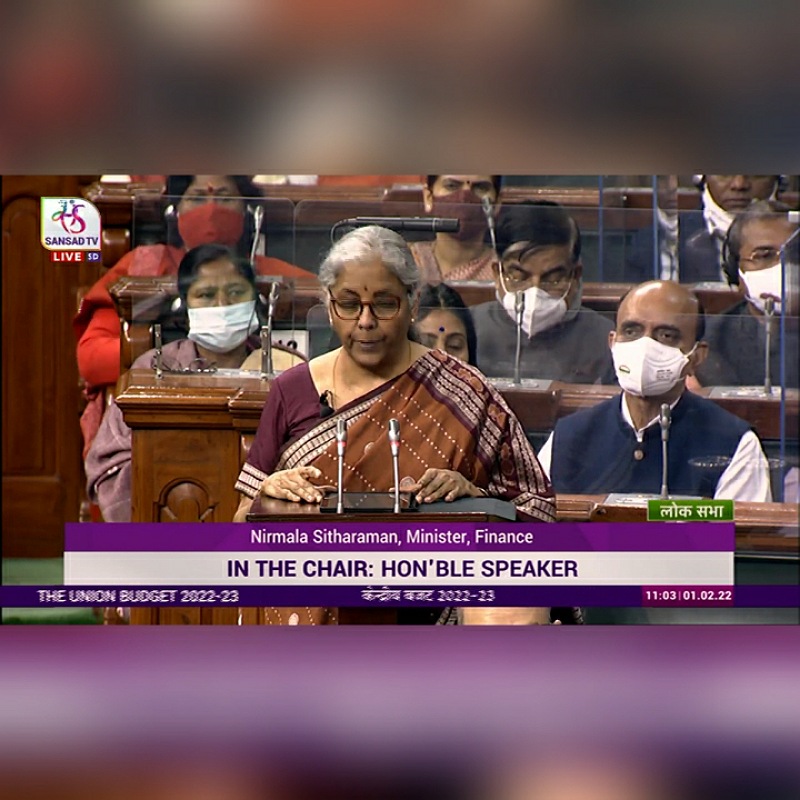
    Mumbai: The government has proposed to set up a specialised task force for the promotion of the animation, visual effects, gaming and comics (AVGC) industry. The announcement was made by finance minister Nirmala Sitharaman while presenting the annual budget 2022 on Tuesday.

    “Animation, Visual Effects, Gaming and Comics (AVGC) sector offers immense potential to employ youth. An AVGC promotion task force with all stakeholders will be set up to recommend ways to realise this and build domestic capacity for serving our markets and the global demand,” said Sitharaman.

    The announcement was welcomed by the industry, with Federation of Indian Chambers of Commerce and Industry (FICCI) hailing it as a big win for the sector.

    FICCI chairman – AVGC XR Forum and Punnaryug Artvision founder Ashish SK said that the budget announcement of the formation of task force for AVGC Promotion has come at the most appropriate time. “After setting a strong foundation in the last two decades the Indian AVGC – XR is poised to grow phenomenally in coming decade. The creative skills from India needs nurturing to a great extend to enable the growth of the sector. Setting up of a task force will definitely bring in a great focus on positioning Indian AVGC sector for services exports, co-productions, growth of Indigenous intellectual property and its consumption patterns within India and overseas,” he said.

    According to industry representatives, the Indian AVGC – XR sector is expected to have a major share of the media and entertainment industry. The horizon and use cases of AVGC – XR verticals have expanded beyond its day-to-day defined utility in architecture, life science, legal, education, industrial, urban planning, sports, digital universe, metaverse etc apart from media & entertainment.

    “The AVGC task force is a huge step by the government to promote the sector. We wholeheartedly welcome it and FICCI AVGC-XR Forum will continue to work closely with the government on various policy initiatives to realise the growth potential of the Industry. This industry vertical has tremendous scope for employment generation and exports,” said FICCI co-chairman – AVGC- XR Forum, and Graphiti Studio founder Munjal Shroff.

    In its latest report released last month, the Confederation of Indian Industry (CII) and Boston Consulting Group (BCG) had also projected that India’s media and entertainment industry which is currently valued at around $27 billion is all set to grow at 10-12 per cent CAGR to become a $55-70 billion industry by 2030. The report had also highlighted that the industry’s next phase of growth will be led by OTT, gaming, VFX and animation.

    The finance minister said the union budget seeks to lay a foundation and give blueprint of the economy over the next 25 years – from India at 75 to India at 100.

  • Netflix & Gobelins expect big things from young Indian brains in animation industry

    Netflix & Gobelins expect big things from young Indian brains in animation industry

    NEW DELHI : Animation and visual effects have become an integral part of storytelling in films, and it is practically impossible to think about a movie without special effects and computer graphics. In an attempt to find and nurture young Indian brains in the animation industry, OTT giant Netflix, in association with Gobelins and Amity School of Film and Drama conducted a 'visual storytelling' animation course from 15 to 19 March 2021. 

    The animation course helped participants to understand the art of storytelling using images, and the program indicated that India is soon going to become the powerhouse of the animation and VFX industry in the future. 

    Most participants in the course were graduates and teachers from famed animation schools in the country. 

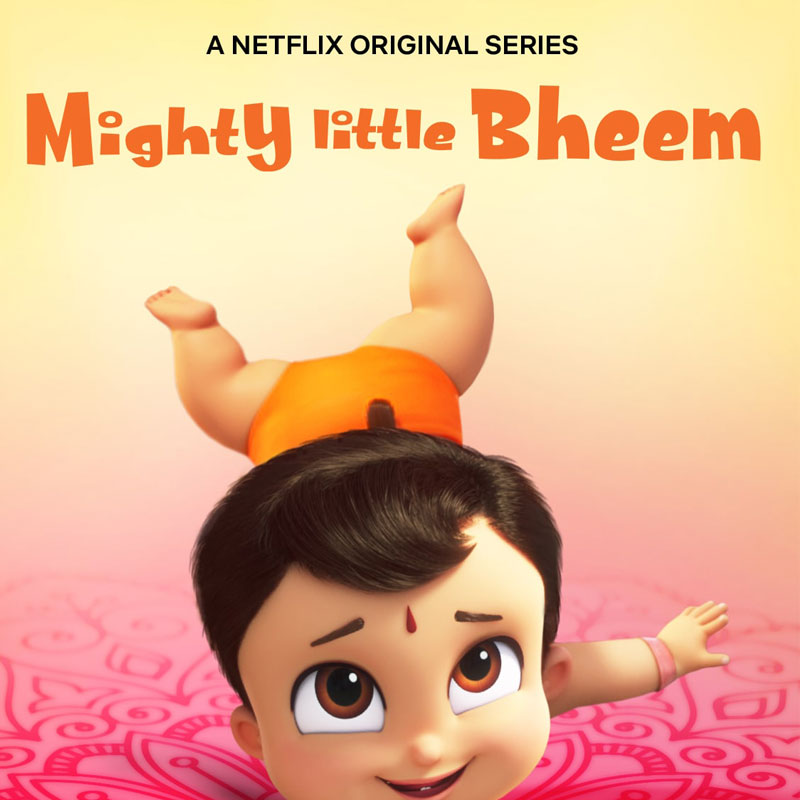
    During the session, students were introduced to storyboarding and animation principles. Some of the activities included sessions on animation principles, storytelling fundamentals, character design, storyboards, and gesture design. There were guest lectures by expert animation studio heads including Guillaume Dousse (Sun Creature) and Anish Mulani (Fractal Picture). The group also heard from Green Gold Animation founder Rajiv Chilaka, who created Netflix’s beloved preschool hit series Mighty Little Bheem. 

    Students also received personalised coaching from faculty, helping them develop personal projects for formats across film, television, and animation. As OTT giants like Netflix and institutions like Gobelins L'école de L'image are concentrating on India to pick impeccable talents, experts believe that it could celebrate India’s storytelling culture and help bring more of it to the world. 

  • DreamWorks Animation restructures film biz; cuts 500 jobs

    DreamWorks Animation restructures film biz; cuts 500 jobs

    MUMBAI: In a major restructuring exercise, DreamWorks Animation will be cutting down on the number of movies it will produce each year, which in turn will lead to a loss of approximately 500 jobs across all locations and all divisions of the studio.


    Following a full review of the business, the company will focus its feature production from three films per year down to two, maximize its creative talent and resources, reduce costs, and drive profitability. DreamWorks Animation is implementing this plan to restructure its core feature animation business to ensure the consistent and profitable delivery of films. 


    Under the leadership of newly appointed co-presidents of feature animation Bonnie Arnold and Mireille Soria, the studio’s core feature animation production will now focus on six specific movies for the next three years – one original film and one sequel each year – including Kung Fu Panda 3 (18 March, 2016), Trolls (4 November, 2016), Boss Baby (13 January, 2017), The Croods 2 (22 December, 2017), Larrikins (16 February, 2018) and How to Train Your Dragon 3 (29 June, 2018). Captain Underpants, which will be produced outside of the studio’s pipeline at a significantly lower cost, is scheduled for release in 2017. The company’s 2015 release, Home, will premiere domestically on 27 March.


    “The number one priority for DreamWorks Animation’s core film business is to deliver consistent creative and financial success. I am confident that this strategic plan will deliver great films, better box office results, and growing profitability across our complementary businesses,” said DreamWorks Animation CEO Jeffrey Katzenberg.


    DreamWorks expects to incur a pre-tax charge of approximately $290 million in connection with the restructuring and related items. These costs are expected to be incurred primarily in the quarter ended 31 December, 2014, with the remainder in 2015 and 2016. The plan will result in total cash payments of approximately $110 million incurred primarily in 2015. The restructuring plan is expected to be substantially complete by the end of 2015 and expected to result in annualized pre-tax cost savings of approximately $30 million in 2015, growing to roughly $60 million by 2017.


  • Indian animation needs a global outlook

    Indian animation needs a global outlook

    MUMBAI: Among the key issues addressed by the recently concluded FICCI MEBC (Media and Entertainment Business Conclave) (South) in Bengaluru on 29 and 30 October was the state of the animation industry in India and what can be done to improve its lot.


    The second day of the conclave saw a dedicated session titled ‘Emerging trends of Indian IP in animation and their exploitation’ with Turner International India senior director and network head for kids in south Asia Krishna Desai, Graphic India co-founder and CEO Sharad Devarajan, Shemaroo Entertainment director Jai Maroo, Krayon Pictures co-founder Nisith Takia and Greengold Animation founder and MD Rajiv Chilaka and Reliance Animation CEO Ashish Kulkarni as moderator.
    Devarajan began by highlighting the need for a cohesive ecosystem favouring the country’s animation industry.


    “Indian consumers today are used to seeing the best of the world and so, we need to transcend the national market and go to the international market,” he said, stressing the need to create content like that made by Stan Lee or Steven Spielberg. “Multi platform and global is how you have to think of stories today,” he said, pointing out how a version of Mahabharat was launched as 18 days, a re-imaging of the original by Graphic India at the San Diego Comic Con and went straight to Youtube.


    Chilaka made a special reference to Chhota Bheem as a kids’ icon while speaking of Greengold’s huge success in the field of animation. “We have grown from just four to over 300 in 12 years. No one knows which show will work, so we have to just give it a shot. Chhota Bheem started off as just 10 products and now it is available in more than 3000 across 30 country stores. We didn’t realize that it would be a phenomenon but now we are confident about making a movie every year,” he said, pointing out that while IP monetisation was happening, it was equally important to build good infrastructure around it to help harness IP better.


    Maroo said Shemaroo would help in distribution and marketing even though it wasn’t actively involved in the creation of animation. “There are people with great production and artistic capacity for whom we can work on aspects like music, distribution and marketing. The reason why characters like Bal Ganesh and Chhota Bheem work well is because of their sheer stickiness. We should have IP with an Indian soul but an international story. What the west has is sharp screenplay that translates across boundaries. That is what we lack,” he said.


    Desai opined there wasn’t enough investment in animation and pointed out the difficulties in creating animated content. “There is less advertising revenue for a kids channel (Turner), so we also have less money to invest in new content,” he said.


    Kulkarni said, “In India, animation is positioned as a kids’ genre,” to which, Devarajan gave an example of the Japanese, who have moved Anime from kids to a sophisticated audience. “Their characters have elasticity and a soul that appeals to various demographics. Why aren’t we creating any Clash of the Titans or Lord of the Rings?” asked Devarajan.


    Chilaka said they needed to come up with interesting ways of promotion to grab eyeballs, citing the example of Raju. “We timed Raju to release three weeks before the football world cup and on TV, we did a premiere during the semi-final,” he said.


    Maroo pointed out that very few screens were available across the country for animated movies, thereby restricting viewership. “This industry is the best when commerce meets creativity,” he said. Takia felt not many people understood the business even if they were superlative on the creative front. “We can call ourselves successful only when we galvanise the creative population,” added Devarajan. Maroo rounded off saying: “The future will be about how many different revenue platforms you build.”

  • China celebrates 80th birthday of cartoon & animation industry

    China celebrates 80th birthday of cartoon & animation industry

    MUMBAI: The second edition of the China International Cartoon and Animation Festival was kicked off in China on Thursday. The highlight of the festival is the 80th birthday celebrations of China’s cartoon and animation industry.

    The week-long festival has chosen “cartoon and animation make life wonderful” as its theme. The event is co-sponsored by the State Administration of Radio, Film and Television and Zhejiang provincial government.

    Eminent cartoon producers from France, Japan, the United States, Hong Kong and Croatia are participating in the festival.

    The festival will take a look at the progress made by China international cartoon and animation industry, apart from debating on the prospect the industry. A competition on cartoon and animation works in China will also be held.